You're probably doing what most couples do after they get engaged. You open a dozen venue tabs, save screenshots of barns, halls, estates, and hotels, and then hit the same confusing phrase over and over: exclusive use. Every website seems to promise privacy, flexibility, and a smooth day. Very few explain what that entails once contracts, vendors, setup times, and cleanup start affecting your budget.
That confusion matters because the venue isn't a small line item. In the U.S., the wedding industry exceeded $70 billion as of 2023, and venues take the largest share of wedding budgets at 24% to 40% of total spend, according to wedding industry statistics compiled by Zippia. For most couples, this is the single biggest wedding decision they'll make. It shapes the schedule, the guest experience, the vendor plan, and how stressed or calm the day feels.
The good news is that “exclusive use” becomes much easier to evaluate once you stop treating it like a marketing phrase and start treating it like an operations question. Private access is only part of the story. Rental window length, vendor rules, cleanup responsibilities, and hidden fees matter just as much.
Table of Contents
- Your Wedding Venue Search Is Overwhelming You
- What Exclusive Use Really Means for Your Wedding
- Exclusive Use vs Shared Use A Clear Comparison
- Your Essential Exclusive Use Venue Checklist
- How Texas Old Town Solves Common Wedding Headaches
- Your Path to the Perfect Private Celebration
Your Wedding Venue Search Is Overwhelming You
One couple starts with “rustic wedding venue.” Another starts with “Hill Country wedding venue with indoor ceremony backup.” Within an hour, both are staring at polished galleries, package names, and promises that sound similar but aren't. Private venue. Full access. Estate rental. Exclusive use. Venue buyout. The words blur together fast.
The stress gets worse when you're trying to compare apples to oranges. One property includes tables, chairs, and dressing suites. Another is a blank canvas. One gives you a tight window. Another gives you the entire day. One lets you choose your own caterer. Another limits you to a short preferred list.
A simple planning tool can help you sort this earlier than most couples do. If you haven't mapped your date decisions, attire deadlines, and booking milestones yet, a practical wedding preparation timeline can keep venue shopping from bleeding into every other part of the planning process.
Why the venue decision feels so heavy
The venue sets the tone, but it also controls the mechanics of the day. If access is short, every vendor feels it. If parking is awkward, every guest feels it. If the venue has unclear policies, you'll feel it in your contract review and your final invoice.
That's why I always tell couples to judge venues on both atmosphere and structure. The pretty photos matter. The operating rules matter more.
Practical rule: If a venue website makes the day look effortless but doesn't clearly explain access hours, vendor policy, and what's included, slow down and ask harder questions.
If you're still narrowing your options, this guide on how to choose the perfect wedding venue in Texas is useful because it pushes the conversation beyond style and into fit, logistics, and planning reality.
What Exclusive Use Really Means for Your Wedding
An exclusive use wedding venue means you have complete private access to the facility for your wedding day. You're not sharing the property with hotel guests, unrelated wedding parties, or public visitors. That's the core distinction identified in this wedding venue market analysis.

The easiest way to understand it is this. Booking exclusive use is like renting an entire private house for an important celebration. Booking shared use is like reserving one room inside a busy building. You may still have a lovely event in either setting, but they don't operate the same way.
What privacy looks like in practice
Privacy isn't just about avoiding random people in the background of your photos. It affects how the whole day feels.
With true exclusive use, your guests know where to go. Your wedding party can move between getting-ready areas, ceremony space, cocktail area, and reception without crossing paths with strangers. Your family doesn't need to ask which restroom belongs to your event. Your photographer isn't dodging unrelated guests in the most important portrait locations.
That kind of control creates calm. Couples often think they're paying for scenery, but they're also paying for fewer interruptions, fewer awkward handoffs, and fewer moments that pull them out of the experience.
What the term doesn't automatically promise
Exclusive use does not automatically mean all-inclusive. It also doesn't always mean complete freedom in every planning category.
Some exclusive use properties are dry hire or blank-canvas venues. Those can be a great fit if you want control and have the planning support to build the event from the ground up. But they often require you to source key infrastructure yourself, such as rentals, catering, and décor. The privacy benefit remains. The workload can increase.
Other venues package more essentials into the rental, which simplifies planning but can limit customization in certain areas. That's why couples should look beyond the headline and into the details.
For a practical example of what's bundled into a venue rental, reviewing a transparent wedding venue pricing page helps frame the right questions before you tour.
A venue can be exclusive in access and restrictive in policy at the same time. Those are separate issues.
Exclusive Use vs Shared Use A Clear Comparison
Couples ask this question late in the search, usually after they have seen one venue that feels private and another that looks cheaper on paper. The key decision is not just privacy. It is how many compromises you are willing to make on timing, vendor freedom, guest flow, and total cost once the wedding day starts.
Shared-use venues can be a smart fit for some weddings. Hotels, restaurants, and clubs often bundle catering, staffing, tables, and bar service in a way that reduces planning work. That convenience has value. It also usually means your event has to fit the property's operating rules, service pace, and public traffic.
The biggest operational difference
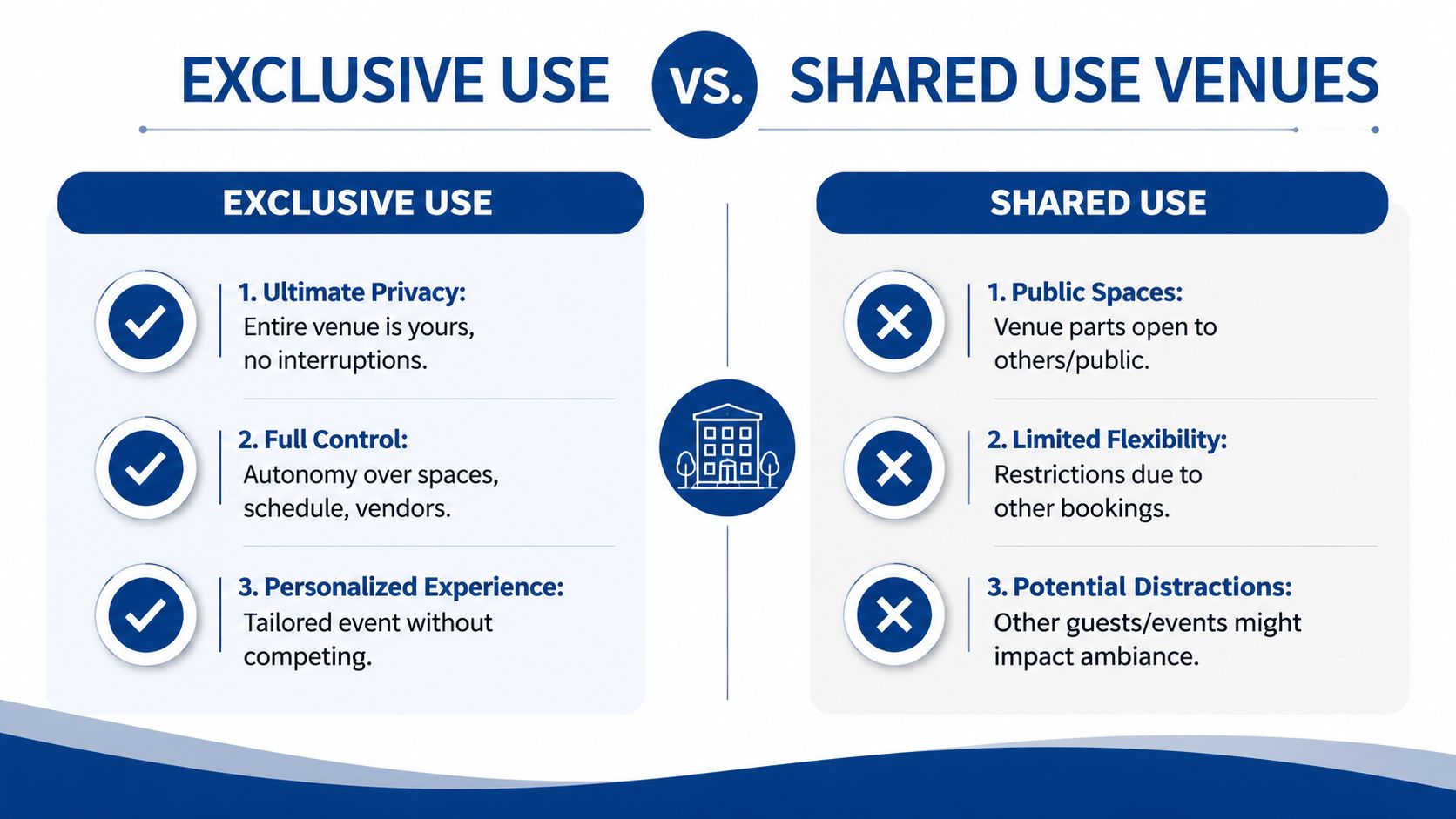
Exclusive use gives your wedding sole access to the reserved spaces for the agreed rental window. In practice, that usually means fewer interruptions, clearer signage, easier transitions, and no need to explain to guests why another party is using the next room or patio.
That matters more than couples expect.
A shared-use property can still host a beautiful wedding, but the friction points are predictable. Guests may pass through public lobbies. Photo locations may be open to hotel guests or diners. Vendors may have limited load-in times because the venue is serving regular business at the same time. Staff may be supporting your event and another function on the same property.
Where shared-use venues can still make sense
Shared use often works well for smaller weddings, shorter receptions, or couples who want most services under one roof and are comfortable giving up some control. If the package includes lodging, in-house catering, and a coordinator, the administrative side can feel lighter.
The trade-off usually shows up in places couples do not price carefully at first. A lower rental fee can come with required food and beverage minimums, valet fees, service charges, earlier access limits, or overtime costs if hair and makeup, décor setup, or breakdown run long. By contrast, a higher venue rental with a long access window can save money by reducing rush labor, rental extension fees, and timeline pressure across the whole day.
Side-by-side comparison
| Feature | Exclusive Use Venue | Shared Use Venue (e.g., Hotel, Restaurant) |
|---|---|---|
| Privacy | Reserved spaces are used for your celebration during your rental window | You may encounter hotel guests, diners, visitors, or another event |
| Timeline control | More flexibility for setup, transitions, portraits, and breakdown if the access window is long enough | Event timing usually has to fit the property's broader operating schedule |
| Vendor choice | Varies by contract. Some allow outside vendors, others require a preferred list | Often tied to in-house services or tighter vendor rules |
| Atmosphere | Feels more personal because the day is centered around one guest list | Can feel less intimate if public traffic continues around your event |
| Vendor logistics | Easier load-in and staging if access is direct and setup time is generous | Vendors may work around loading rules, service elevators, or active public areas |
| Budget structure | Higher upfront rental can buy more control and fewer last-minute workarounds | Lower initial price can rise once required services, fees, and restrictions are added |
| Guest experience | Arrival, ceremony, cocktail hour, and reception usually flow more clearly | More wayfinding, more shared spaces, and more outside activity |
The hidden comparison couples often miss
The harder question is not exclusive use versus shared use. It is exclusive use with freedom versus exclusive use with restrictions.
I see couples get caught here all the time. A venue can offer private access to the property while still limiting your caterer, bartender, planner, rentals, or décor rules. That can affect your budget as much as the rental rate itself. If the required vendor list is short, premium-priced, or built around package minimums that do not match your guest count, the venue may feel less flexible than a shared-use property with transparent in-house pricing.
Rental window length matters the same way. An extra two or three hours on paper can remove the need for early-morning delivery fees, room flips done at high speed, and overtime for planners, photographers, and transportation. That is real value, not just comfort.
If you are comparing final options, a property tour usually exposes these differences faster than a pricing brochure. This guide on whether you should tour a venue before booking it can help you know what to look for.
What tends to work best
Exclusive use usually makes the most sense for weddings with multiple spaces, custom décor, a longer guest experience, or families who care a lot about privacy and pacing. Shared use often makes sense for couples who want a shorter event, fewer moving parts, and the convenience of in-house food, bar, and lodging.
Neither model is automatically better. The better choice is the one whose contract, access window, and vendor rules match the wedding you are planning.
Your Essential Exclusive Use Venue Checklist
You tour a venue, love the ceremony view, and hear the words "exclusive use." Then the contract shows a shorter access window than you expected, a required bartender, two approved caterers, and cleanup rules that leave your family stacking chairs at 11:30 p.m. That is why this checklist matters. The label is never enough.
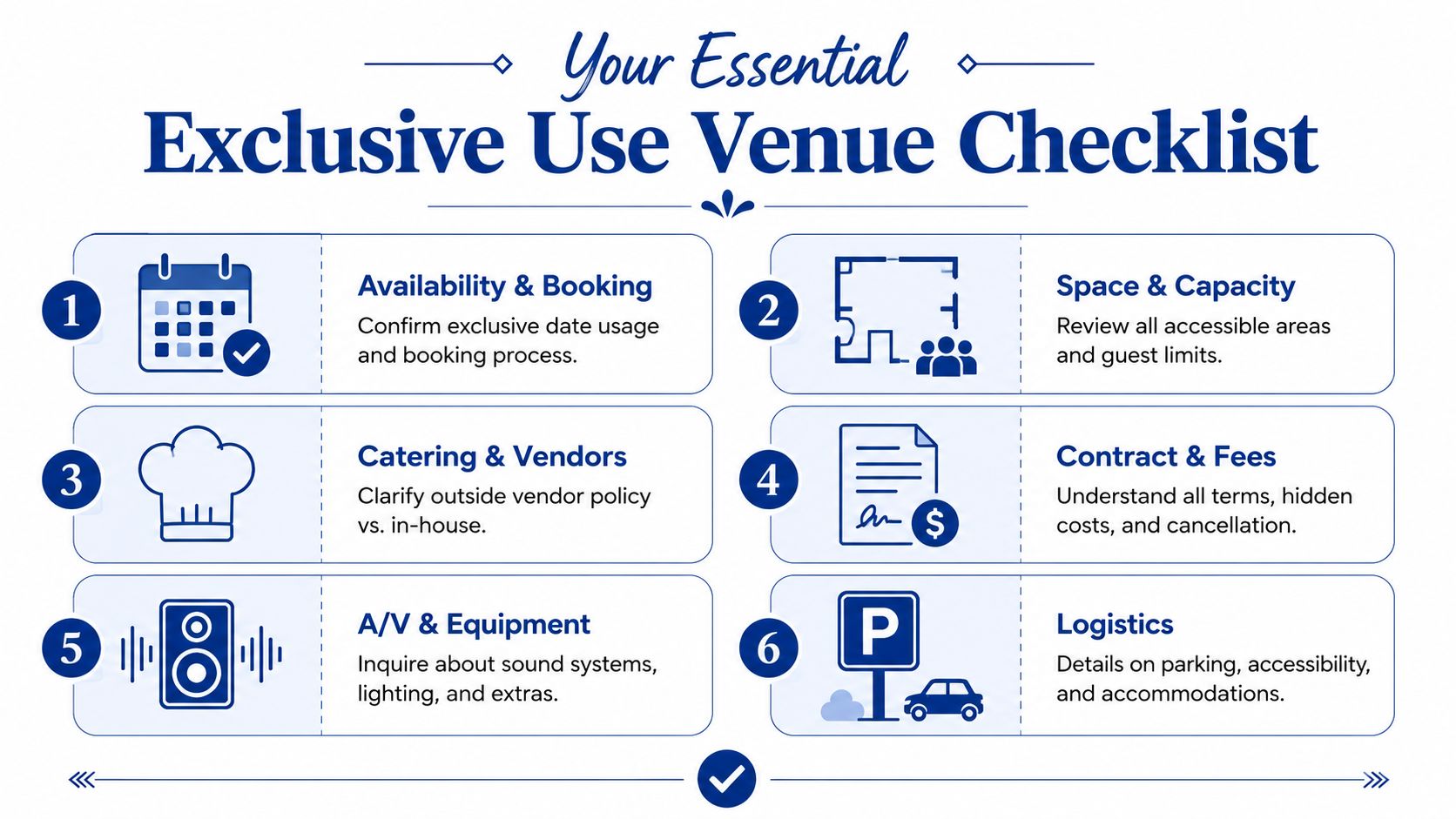
A strong venue decision comes from questions that turn sales language into operating details. Ask them early, before you build your budget around assumptions.
Questions that clarify the offer
Use these on every call and every tour:
- What spaces are exclusively ours for the full rental period? "Exclusive use" can mean the whole property, one building, or only the event areas.
- What are our exact access hours? Get the start and end time in writing for setup, guest arrival, event time, and final load-out.
- Who handles cleanup and furniture breakdown? If the answer is "your vendors" or "family can help," that has labor and overtime costs attached.
- Can we hire any licensed caterer, bartender, DJ, planner, florist, and rental company? Ask each category separately. Venues are often more flexible in one area than another.
- Are there required vendors, approval fees, or minimum spends? Such requirements often cause privacy and flexibility to diverge.
- What is the weather backup plan? Stand in the backup space and ask what changes operationally if rain hits two hours before the ceremony.
- What is included in the published price? Ask about taxes, staffing, tables, chairs, sound, security, trash removal, and end-of-night responsibilities.
- How do guests move through the property? Parking, lighting, accessibility, restroom access, and signage affect the experience as much as décor.
- What tools are included for guest organization? Even practical items such as a wedding seating chart can shape how smoothly the reception starts.
Where couples get boxed in
Restrictive vendor policy is one of the biggest blind spots in exclusive use contracts. A venue may give you private access to the property while still limiting the catering, bar service, rentals, or planner. Sometimes that structure protects service quality. Sometimes it pushes couples into higher minimums, package pricing that does not fit their guest count, or menus that miss cultural and dietary needs.
The policy itself is not the problem. The problem is vague wording.
"Preferred vendors" can mean recommendations. It can also mean "choose from this short list or pay a fee." Those are very different financial outcomes, and couples need the distinction before they pay a deposit.
Contract checkpoint: Ask the coordinator to answer this in one sentence: "May we hire any properly licensed and insured vendor in each category?" If the answer is anything other than a direct yes, ask for the written policy and read the exceptions.
The checklist I use on venue tours
Access window test
Ask for a full-day timeline from first vendor arrival to final pickup. A longer rental window often saves more money than a lower base rate because it cuts rush fees, early delivery charges, and staff overtime.Vendor policy test
Request the actual written list of approved, required, and restricted vendors. Look for category limits, buyout fees, insurance requirements, kitchen rules, and bar control.Rain plan test
Walk the backup location in person. A usable backup is not just covered space. It needs enough seating, sound, visibility, and a reasonable transition plan.Labor test
Ask who takes out trash, resets furniture, manages teardown, and oversees vendor exit. If no one owns those jobs, they usually land on the planner, wedding party, or parents.Guest flow test
Follow the route guests will take from parking to ceremony to cocktail hour to reception. This quickly reveals long walks, bottlenecks, weak lighting, and accessibility problems.Final bill test
Ask, "What do couples at this venue usually spend money on that they did not expect at first?" Good coordinators answer this clearly. That answer often tells you more than the package sheet.
What clear answers sound like
Good answers are precise. "You have the hall, courtyard, and dressing suites from 9:00 a.m. to 11:00 p.m." "You may choose any licensed caterer from our approved insurance standards." "Cleanup is included, but personal décor must be removed by midnight."
Weak answers sound polished but hard to pin down. "We are flexible." "Most couples use our people." "It depends on the event." "You will have privacy."
Privacy should be defined in the contract, priced fairly, and supported by enough time on-site to run the day well. That is what makes exclusive use worth paying for.
How Texas Old Town Solves Common Wedding Headaches
A couple books a venue that looks perfect online, then learns the rental starts at noon, the caterer can only load in through one small door, cleanup ends up on the wedding party, and the band is paying overtime by 10:30. That is how a pretty venue turns into a hard day to run.

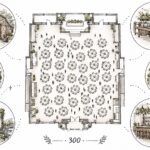
Texas Old Town is a useful case study because the setup addresses several of those pressure points at once. The property has four private halls on 55 acres in the Hill Country, indoor and outdoor ceremony options, dressing suites, built-in sound, on-site management, included cleanup and furniture breakdown, private parking, and a 16-hour rental window from 8:00 a.m. to midnight. Couples can also bring their own caterer instead of being forced into a narrow in-house list, while still having preferred options available if they want vetted vendors.
That combination matters more than the brochure language.
Why a longer rental window changes the budget
Short rentals create expensive compression. Setup crews arrive while hair and makeup are still active. Florals, rentals, catering, and entertainment all compete for the same access period. If the timeline slips, couples often pay in extra staffing hours, added delivery fees, or rushed teardown labor at the end of the night.
A longer window gives the day room to work properly. Vendors can load in in stages. Photography has time for getting-ready coverage without pushing the ceremony late. Family members are less likely to get pulled into moving chairs, packing decor, or managing exits when they should be enjoying the wedding.
I see this trade-off constantly. A venue with a lower headline rental price can end up costing more once you add the practical price of a compressed schedule.
Four headaches this model reduces
Stacked vendor timelines
A 16-hour access window gives planners and vendors time to work in sequence instead of on top of each other. That usually leads to better setup, fewer mistakes, and less stress in the final hour before guests arrive.Restrictive food and service options
Vendor freedom is not a small detail. It affects menu quality, cultural flexibility, and cost control. If a family wants a specific cuisine or already trusts a caterer they have used before, being able to choose matters. A preferred list can be helpful. A required list can contribute to a higher total budget.Cleanup falling on family
Included cleanup and furniture breakdown remove one of the least glamorous wedding problems. At many venues, parents and the wedding party discover at 11:00 p.m. that someone still has to clear tables, stack chairs, and manage trash.End-of-night confusion
On-site management helps keep departures organized, vendors moving, and the last hour from turning into a scramble.
Why guests feel the difference
Guests never read the contract, but they notice the operational results. They notice whether parking is straightforward, whether the room is ready on time, and whether transitions feel calm instead of delayed. Those details shape the mood of the wedding more than couples expect.
Planning tools help here too. Once the floor plan is set, a digital wedding seating chart can make table assignments easier to test before the final headcount is due, especially in a venue that provides clear furniture counts and layout options.
What this example gets right
The value is not only privacy. It is privacy supported by enough time, enough flexibility, and enough on-site help to keep the day from spilling extra work onto the couple and their families.
That is the standard to use with any venue you tour. A strong exclusive use property should make the wedding easier to run, not just nicer to photograph.
Your Path to the Perfect Private Celebration
An exclusive use wedding venue is usually worth serious consideration when you want the day to feel contained, personal, and easier to manage. The privacy matters, but privacy alone isn't enough. The right contract should also support how weddings work. Vendor arrivals, ceremony backup plans, cleanup, parking, setup time, and end-of-night logistics.
The smartest couples don't ask only, “Is the venue beautiful?” They ask, “How will this venue behave on a real wedding day?” That question reveals far more than the gallery page ever will.
If you're still deciding, keep your filter simple:
- Confirm what “exclusive use” covers
- Ask for the exact rental window
- Check whether vendor choice is restricted
- Get every fee and included service in writing
- Test the rain plan and guest flow in person
And once the venue is locked in, you can turn your attention back to the parts of planning that should be fun. For example, many couples feel more relaxed on the dance floor when they've had a little guidance beforehand, so scheduling first dance lessons can be a practical way to replace nerves with confidence.
A private celebration doesn't happen because a website says “exclusive.” It happens because the venue's policies, access, and support all line up with the wedding you're trying to host.
If you're comparing exclusive use options in Central Texas, Texas Old Town is one venue to review for its 16-hour access model, private venue options, flexible catering policy, and included on-site management and cleanup. A tour will tell you quickly whether its layout, logistics, and rental structure fit the kind of wedding day you want.