You've probably already done the frustrating part. You searched “small wedding venues in Central Texas,” opened a dozen tabs, and found two extremes. Half the results are really micro-wedding spots for a handful of guests. The other half are oversized event halls that technically fit your wedding, but would make 90 or 120 people feel scattered.
That's the core problem. “Small” isn't a useful category unless you define it properly.
For most Central Texas couples, the sweet spot isn't an elopement and it isn't a huge ballroom wedding. It's an intimate small wedding, usually somewhere in the 75 to 150 guest range. That guest count needs a venue with the right scale, the right flow, and pricing that won't turn into a math problem three weeks before the wedding.
Table of Contents
- Your Guide to Finding the Perfect Small Wedding Venue
- First Things First Defining Your Small Wedding Vision
- Setting a Realistic Venue Budget and Avoiding Hidden Fees
- Prioritizing Amenities for an Intimate Celebration
- How to Tour Small Wedding Venues Like a Pro
- Bringing It All Together The Texas Old Town Example
Your Guide to Finding the Perfect Small Wedding Venue
You tour a venue that looks perfect online. The photos are gorgeous. The price looks manageable. Then you stand in the reception room and realize your 110-guest wedding will either feel cramped at dinner or oddly sparse once the dancing starts. That is the problem couples in Central Texas run into all the time.
The 75 to 150 guest range gets overlooked. Micro-wedding advice does not help much, and large-wedding venue lists usually push spaces built to hold far more people than you want. If you want an intimate wedding that still feels lively, polished, and easy to run, you need to shop with a different standard.
Start with fit.
A good small wedding venue should match your guest count, flow well for the kind of celebration you want, and keep surprise costs from piling up later. In Central Texas, that usually means looking past the label on the listing and asking better questions about layout, staffing, rentals, noise rules, and what is included.
If you're still narrowing your options, this guide on finding your perfect wedding spot is also worth a read because it helps you judge practical fit before you get attached to the photos.
The right venue for 100 guests should feel designed for 100 guests, not simply capable of holding more.
My advice is simple. Stop searching for venues that are merely "small." Search for venues that are scaled correctly for an intimate wedding in the 75 to 150 guest range. That is how you get a room that feels full, a timeline that works, and a budget that does not get wrecked by hidden fees.
First Things First Defining Your Small Wedding Vision
Most couples start with a number. That's too narrow.
You need a picture of the experience first. A wedding for 80 can feel like a cozy dinner party, a lively dance-heavy celebration, or a formal seated event with layered design. Same guest count. Completely different venue needs.
Stop using guest count as your only filter
The market has a blind spot. Most online advice leans hard toward micro-weddings, while couples planning the 75 to 150 guest range get lumped in with large weddings or left to figure it out alone. That gap shows up clearly in the industry notes summarized in the verified data: content heavily favors events under 50, while couples planning for 150+ guests often struggle to find venues built for that in-between scale.
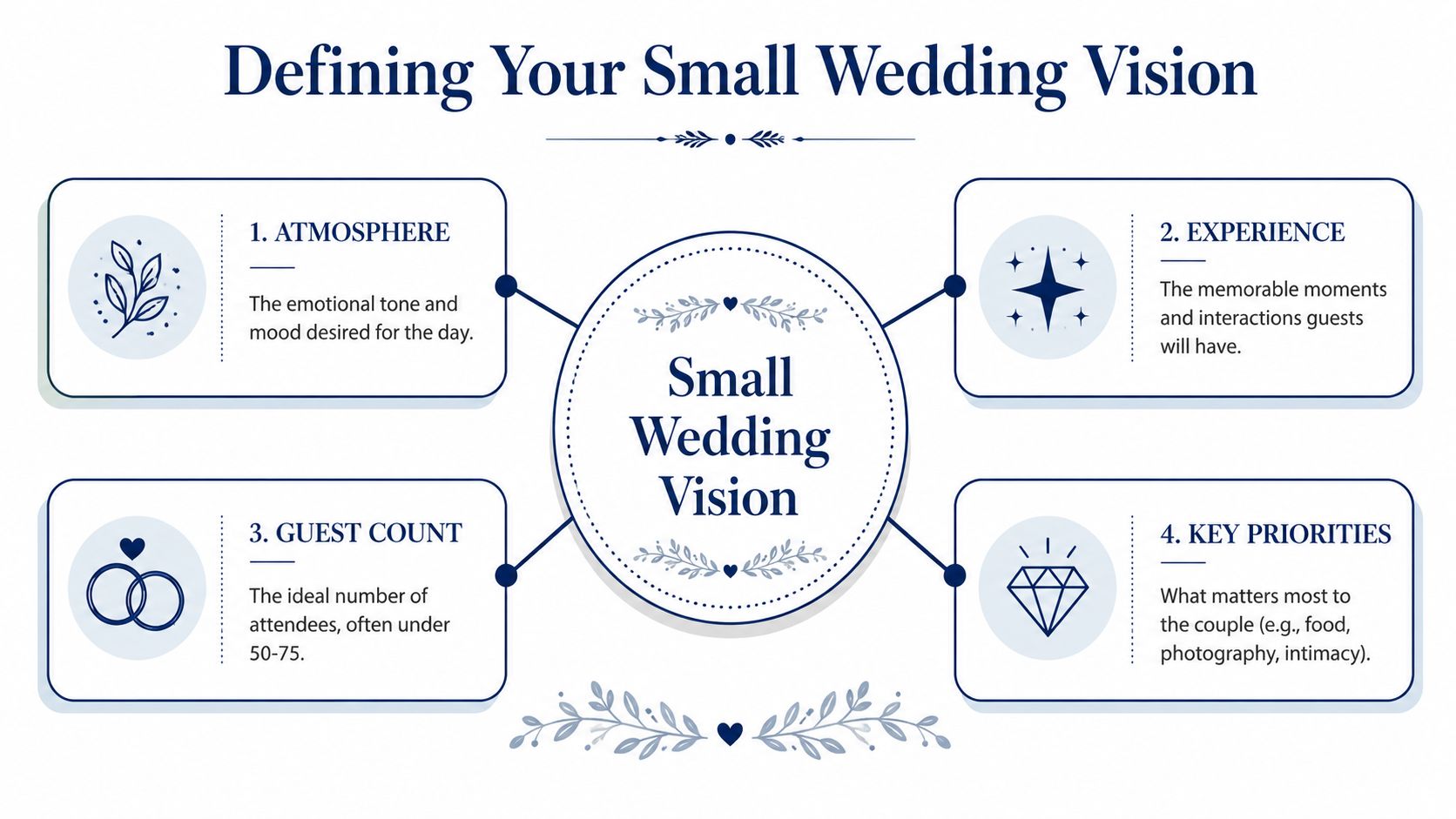
That's why I tell couples to sort their vision into four buckets:
- Atmosphere: Do you want Hill Country warmth, polished modern finishes, garden romance, or restaurant energy?
- Guest behavior: Will people mingle, sit for a long dinner, dance hard, or move between indoor and outdoor spaces?
- Visual density: Do you want the room to feel full and candlelit, or open and airy?
- Top priorities: Food, easy logistics, flexible vendors, weather backup, privacy, or budget control.
If you skip those questions, you'll waste time touring spaces that are pretty but wrong.
Build a real venue budget before you tour
Couples get in trouble when they treat the “starting at” number like a final number. It almost never is.
A better budget starts with three categories:
Venue use costs
Rental, ceremony access, tables, chairs, suites, parking, and time on site.Required add-ons
Staffing, bartending rules, cleanup, setup, breakdown, security, or vendor minimums.Event-shape costs
Costs created by the venue layout itself. Multiple rooms, outdoor flips, room turns, and separate ceremony and reception setups can all push labor and rental needs higher.
Practical rule: If a venue quote isn't detailed enough for you to explain it back to someone else, it isn't detailed enough to sign.
Couples planning intimate small weddings must remain vigilant. A venue can look affordable on paper and still be expensive once all logistics come into play. Don't let a pretty patio and a low teaser price distract you from what the day requires.
Setting a Realistic Venue Budget and Avoiding Hidden Fees
Hidden fees are the part couples hate most, and I don't blame them. You think you've found a venue in budget, then the service charge, gratuity, overtime, teardown fee, or required staffing shows up later and blows up your spreadsheet.
Verified industry data says 68% of couples named unexpected hidden fees as their top budget frustration, with service charges and gratuity often adding 15 to 20% to the quoted venue cost, based on the summary from the National Association of Wedding Professionals in the verified data set.
What the quote needs to include
When you ask for pricing, don't ask, “What's your rate?” Ask for a total cost breakdown.
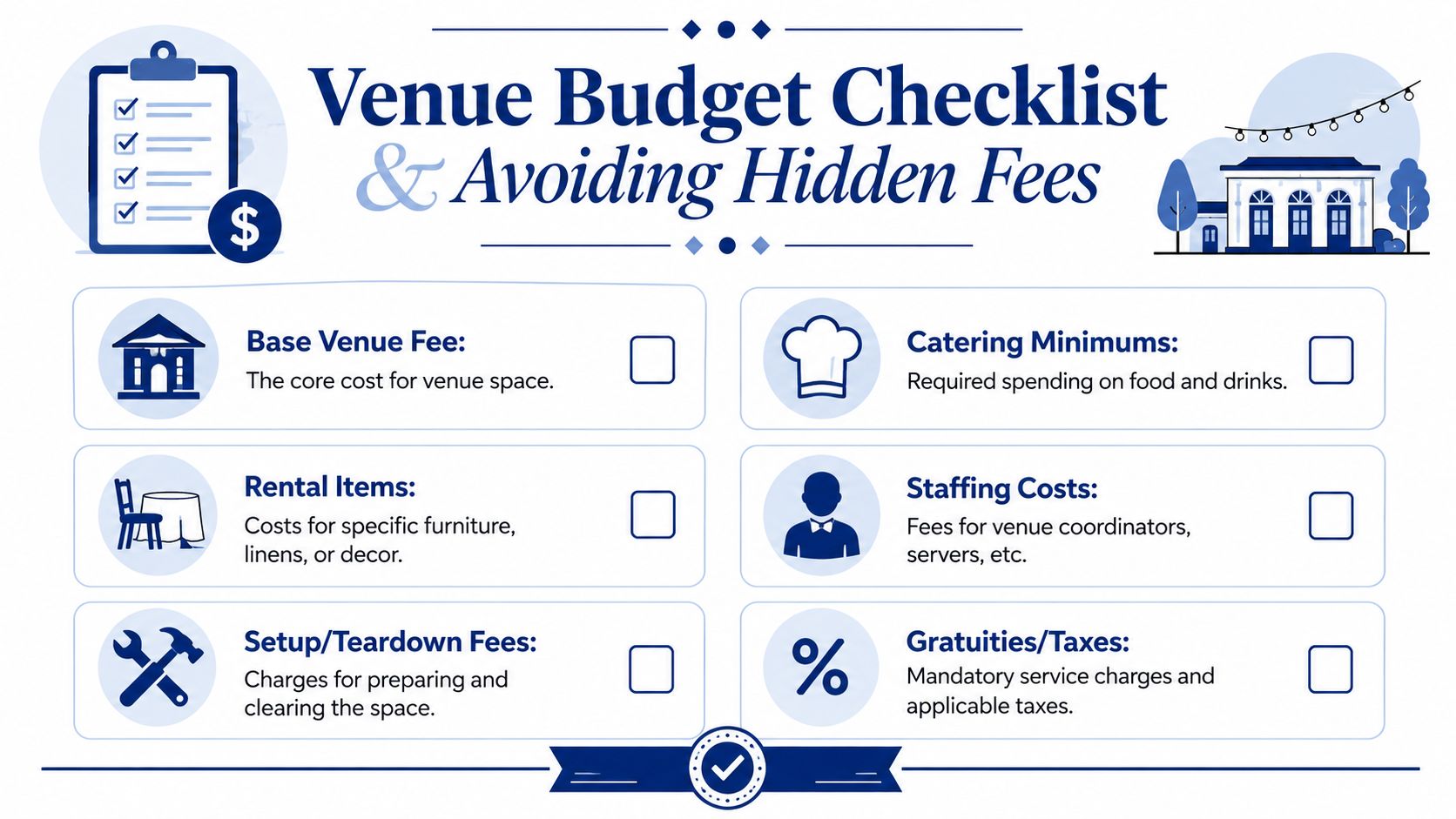
You want these line items in writing:
- Base rental fee for the venue and the actual hours you can use it
- Furniture and standard amenities included with the rental
- Setup and breakdown responsibilities
- Cleanup after the event
- Tax and gratuity if they apply
- Required vendors or staffing rules
- Overtime policy and how that's billed
- Any room separation or ceremony-site charges
If any of those answers are vague, the quote is incomplete.
Compare venues on total cost not teaser pricing
Transparent pricing isn't just nice. It changes the entire planning experience. Verified data states that transparent pricing models achieve 70% higher client retention, and venues with no hidden-fee policies see fewer budget disputes. That's exactly why I'd rather see a clean, honest quote than a lower number with missing pieces.
One useful benchmark for comparison is the Texas Old Town pricing page, because it shows the kind of straightforward structure couples should ask every venue to match. Whether you book there or somewhere else, the standard should be the same: clear inclusions, clear exclusions, and no mystery math.
Use this quick comparison method when you're deciding between venues:
| Quote Type | What it looks like | What to do |
|---|---|---|
| Starting price only | One teaser number with little detail | Ask for a full written breakdown |
| Partially itemized | Rental listed, but labor or fees unclear | Request exact mandatory charges |
| Fully transparent | Rental, inclusions, fees, and policies all spelled out | Compare this number against your actual budget |
Cheap venues aren't always cheaper. They're often just less honest on page one.
A small wedding should give you more control, not more invoice surprises.
Prioritizing Amenities for an Intimate Celebration
A beautiful venue can still be a bad venue if it fights your timeline, your guest flow, or your backup plan.
For intimate weddings in Central Texas, amenities matter more than couples think. Not luxury extras. The practical pieces that keep the day from feeling rushed, cramped, or chaotic.

Use space well or the whole room feels off
Room scale is one of the biggest planning mistakes I see. Verified industry data says venues perform best when they allow 12 to 15 square feet per seated dinner guest, and mismatched spaces create the classic “empty ballroom” problem. That same verified data notes that properly sized venues can achieve 92% higher guest satisfaction scores because the event feels full and natural rather than sparse and awkward.
Here's the practical version of that rule:
- For a seated dinner: Multiply your guest count by the benchmark space range.
- For flow: Add room for a bar, a dance floor if you want one, and paths people can move through.
- For comfort: Ask where the buffet, DJ, sweetheart table, cake, and gift table would go before you assume the room fits.
A venue can have the right capacity on paper and still feel wrong in person. Capacity is survival. Fit is atmosphere.
Amenities that actually reduce stress
These are the features I'd put on the essential list for most Central Texas couples planning a wedding in this size range:
- Long rental window: You want enough time to get in, set up, get ready, celebrate, and leave without a panic clock running in the background.
- Indoor and outdoor options: Weather changes fast here. A pretty ceremony lawn means nothing if the backup indoor setup feels like an afterthought.
- Dressing suites: Not because they're glamorous. Because having a private, usable getting-ready space keeps the day organized.
- Flexible vendor policy: Bring in the caterer and planner who fit your priorities instead of forcing your wedding into someone else's package.
- Built-in sound support: A ceremony microphone and reliable reception audio save a lot of frustration.
- Parking and accessibility: If guests can't arrive easily, everything starts stressed.
One more thing couples forget. Operational tools matter too. If you're offering guest-driven meal or item selections ahead of time, systems that help you manage wedding pre-orders can keep your catering and favor logistics much cleaner, especially for intimate events where personalization is part of the draw.
A venue earns its keep when it solves problems you never want to think about on wedding day.
Ask direct questions. Who handles furniture breakdown? Where do vendors load in? Is there a manager on site? Can the indoor ceremony setup still look intentional if weather shifts? Good venues answer fast and specifically.
How to Tour Small Wedding Venues Like a Pro
A venue tour is not a date. It's an inspection.
Couples get dazzled by oak trees, string lights, and a pretty ceremony backdrop. Then they forget to ask where the caterer enters, who resets the chairs, or what happens if the ceremony runs late. That's how you end up loving a venue and resenting the contract.
One of the smartest things you can do before booking is read guidance on why you should tour a venue before booking it. The core idea is simple. Photos don't show workflow, staffing, or policy friction.
Watch the room like a planner does
When I tour a venue with a couple, I'm not looking at it as an empty shell. I'm mentally placing the wedding inside it.
I want to know where guests gather after the ceremony, whether the bar creates a traffic jam, how far older relatives need to walk, and whether the room still feels good once tables, DJ, cake, and dancing all land in the same footprint. For an intimate small wedding, that matters even more because every layout decision is visible.
A useful local example is a venue with a dedicated smaller hall, a long rental window, included cleanup, and on-site management. That setup solves several common pain points at once. The room fits the guest count better, the day feels less compressed, and the couple isn't stuck coordinating teardown at the end of the night.
Venue Tour Essential Questions Checklist
| Category | Question to Ask |
|---|---|
| Logistics | Where would you place our ceremony, cocktail hour, dinner, and dancing for our guest count? |
| Logistics | What happens if weather changes on the day of the event? |
| Logistics | How much setup time do we actually have on site? |
| Costs | What mandatory fees are not included in the initial quote? |
| Costs | Who handles cleanup, and what specific cleanup tasks fall on us? |
| Costs | Is furniture breakdown included or billed separately? |
| Restrictions | Do we have to use specific caterers, bartenders, or rentals? |
| Restrictions | What are the rules for outside beverages, decor, candles, and exits? |
| Staffing | Will an on-site manager be present during the event? |
| Staffing | Who is the point person for vendors during setup and breakdown? |
| Guest experience | Is parking easy, and is the venue accessible for older guests and anyone with mobility needs? |
| Guest experience | Is the sound system included for both indoor and outdoor use? |
Verified data says transparent pricing models achieve 70% higher client retention, and one of the biggest audit points is confirming whether cleanup and furniture breakdown are included. That detail sounds small until the end of the night, when it becomes very big.
Ask questions that start with “who handles” and “what exactly is included.” Those answers tell you more than the tour script ever will.
Bringing It All Together The Texas Old Town Example
Saturday in Central Texas moves fast. You need a venue that can handle 75 to 150 guests comfortably, keep the day organized, and avoid the surprise charges that blow up your budget after you sign.
What this looks like in practice
The strongest fit for this guest count usually comes from locally owned venues that know how to host an intimate wedding without treating it like a micro-wedding. That difference matters. At 75 to 150 guests, you need enough room for dinner, dancing, parking, and a weather backup plan, but you do not need to pay for empty space you will never use.
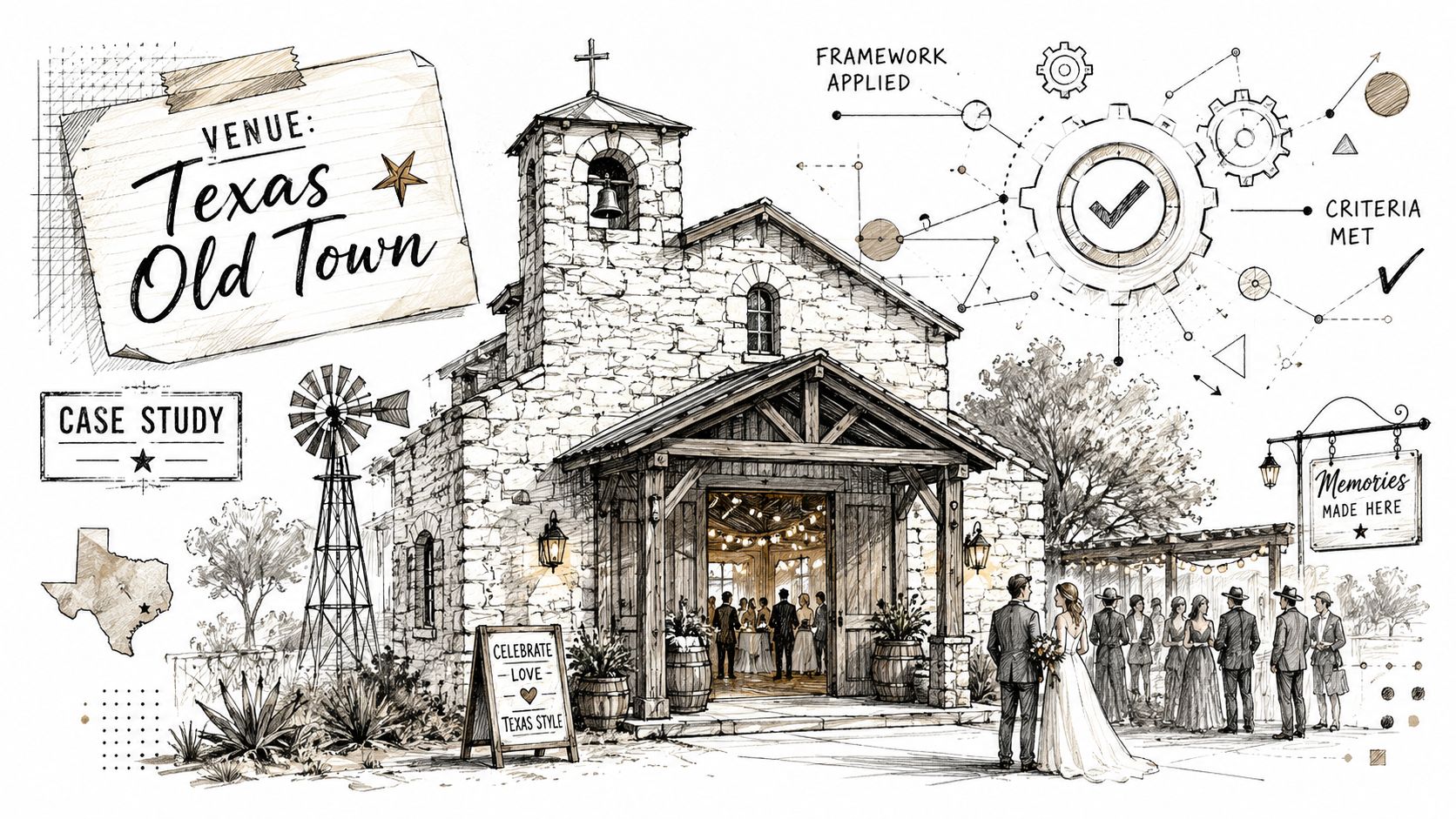
In Central Texas, why couples choose Texas Old Town between Austin and San Antonio comes down to fit and clarity. The property has four halls with different capacities, including Redbud for events up to 150 guests, plus indoor and outdoor ceremony options, open vendor flexibility for catering, dressing suites, parking, on-site management, included cleanup and furniture breakdown, and a 16-hour rental window.
That combination solves the problems couples run into most often. You are not forced into a room that feels too big. You are not piecing together basic logistics from rental add-ons. You are not finding out late that breakdown costs extra.
Use that as your filter, whether you tour Texas Old Town or somewhere else.
Pick the venue that matches your real guest count, spells out the fees in plain language, and supports the pace of the day from setup through cleanup. That is how you get a small wedding that feels intentional, not cramped, overpriced, or harder than it needs to be.