You're probably in one of two situations right now. Your original venue fell through, or life moved faster than your wedding timeline and now you need a real place, on a real date, without downgrading the whole event into a courthouse-plus-dinner situation.
Good. Ignore the advice telling you to cut the guest list in half and call it a day.
Last minute wedding venue availability is tough, but the problem usually isn't the calendar by itself. The problem is choosing the wrong type of venue, asking the wrong questions, and moving too slowly once an opening appears. If you want to keep a full-size wedding intact, you need a venue with enough rental time, enough operational flexibility, and enough administrative speed to absorb a compressed planning window.
Table of Contents
- Why Last Minute Bookings Are Harder Than They Look
- Building a Compressed Planning Timeline
- Where Open Dates Actually Hide
- Speed Wins the Booking
- Negotiating the Contract Without Losing the Experience
- A Real Short Timeline Booking in Central Texas
- Your Final Weeks Before the Wedding
Why Last Minute Bookings Are Harder Than They Look
Most couples assume a short timeline automatically means a smaller wedding. That's lazy advice. A short timeline means you need a venue built for logistics, not just pretty photos.
The market tells you how early dates usually disappear. In a 2026 wedding-weekend dataset, couples who booked a venue did so a median of 267 days before the wedding, and the first inquiry happened a median of 361 days out. The same report says the typical U.S. booking range was 200 to 344 days, based on 3,353 inquiries in the sample, which is why true late inventory is limited in major markets (wedding-weekend booking lead time benchmarks). That doesn't mean nothing is left. It means the easy inventory is gone and the remaining inventory is uneven.
What couples are actually competing against
You're not competing against the length of your engagement. You're competing against three things:
- Fast-moving reopened dates caused by cancellations, expired holds, and couples who don't complete paperwork
- Vendor availability for catering, photo, entertainment, transportation, and staffing
- Venue policies that either help a short timeline or kill it
A venue can have your date open and still be a bad fit. If it only gives you a short rental window, requires rigid vendor rules, or takes too long to turn contracts, your planning window gets crushed even further.
Practical rule: Don't ask only, “Is my date available?” Ask, “How fast can we contract, how long do we have on site, and how flexible are your vendor rules?”
The friction nobody warns you about
The hardest part of late booking usually isn't ceremony space. It's everything attached to it.
A caterer may still be available but unwilling to bend on timing. A photographer may be open but already committed to a travel-heavy weekend. Insurance paperwork, family decision-making, and final guest count wrangling can eat days you don't have. Meanwhile, venues that quote long planning lead times are often describing their normal booking cycle, not the only way they operate. That's a marketing default, not a universal operational truth.
If you want context on standard timing versus your actual options, read Texas Old Town's guide on how far in advance to book a wedding venue. Then stop treating the default planning calendar like a law of physics.
Building a Compressed Planning Timeline
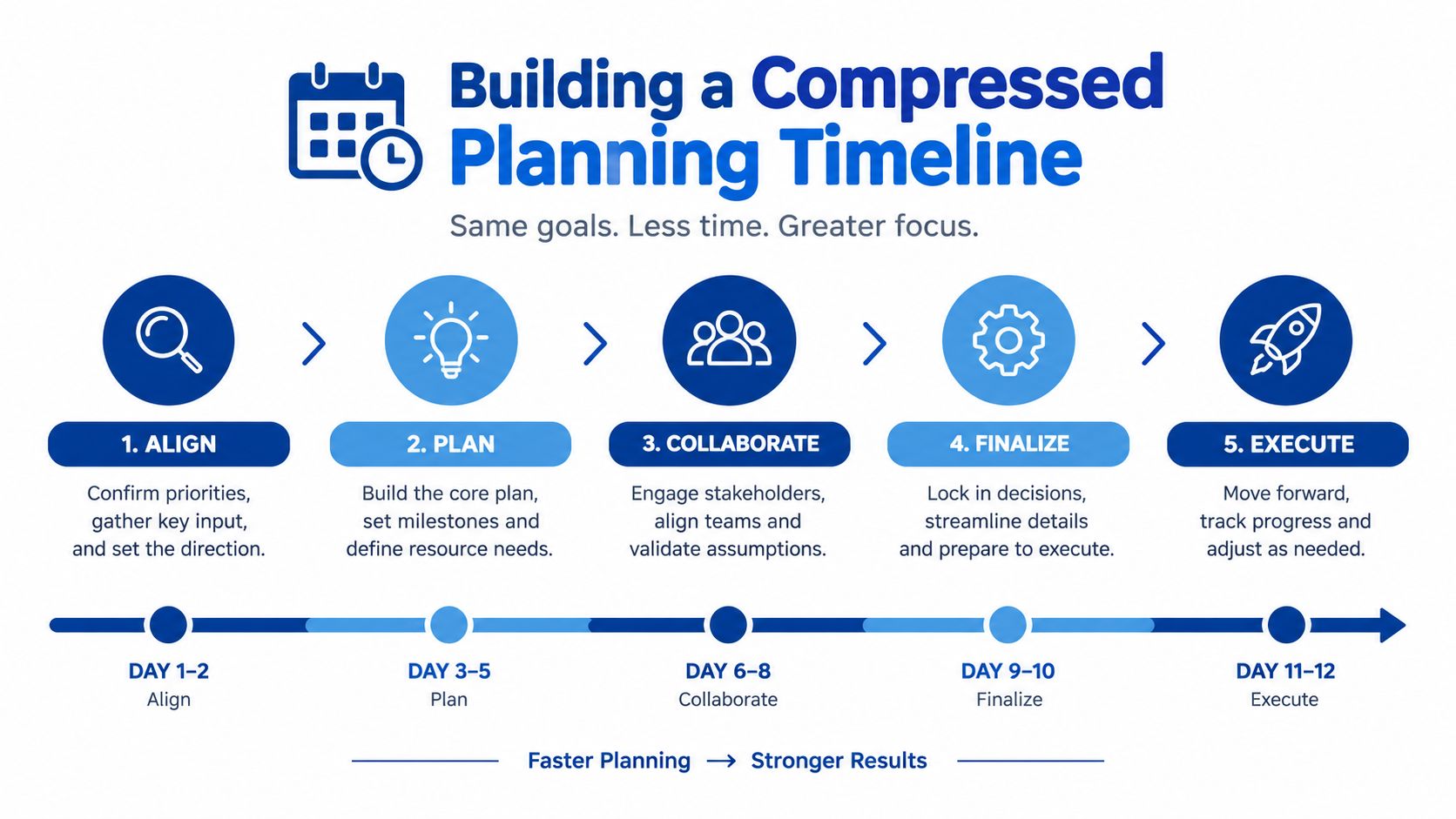
A short timeline only works when you stop planning in a neat sequence and start planning in parallel. Venue, guest list, catering, attire, and photography can't wait for one another. They all move together.
This is the mindset shift: don't think in months. Think in decision windows.
At 90 days out
This phase is about locking the framework. If the venue isn't set, almost nothing downstream stays stable.
Handle these first:
- Venue shortlist and tours. Pick a small list and move fast. You need spaces that can host your guest count, your ceremony plan, and your backup weather plan without requiring a total redesign.
- Guest list ceiling. Stop saying “around 150” if the number might be much higher. Capacity drives venue choice, catering style, table layout, parking, and staffing.
- Parallel vendor outreach. Contact catering, photography, officiant, DJ or band, and planner or coordinator immediately. Don't wait until the venue contract is fully signed to start those conversations.
- Date flexibility. Give yourself alternates. Friday evening, Sunday, and off-peak dates often save the event.
A venue with a long rental window matters most here. If setup, ceremony, cocktail hour, reception, and teardown all have to fit into a narrow access period, every vendor becomes harder to schedule.
At 60 days out
Now you're converting ideas into operating decisions.
Priorities at this stage:
- Sign venue and major vendor contracts
- Book attire fittings and alterations
- Send invitations or digital invitations immediately
- Confirm menu direction and service style
- Walk the property or floor plan with layout decisions in mind
This is also when venue flexibility starts showing its value. If the venue allows outside caterers, you have more paths to solve availability. If it offers indoor and outdoor ceremony options, you don't need a separate weather panic plan. If it gives you room to rehearse on site, your timeline tightens in a manageable way instead of becoming chaotic.
For couples trying to map this out fast, Texas Old Town's event planning timeline is useful because it forces you to assign real tasks to real windows instead of leaving everything vague.
A compressed timeline works when every major decision has an owner and a deadline. If everyone is “thinking about it,” you're already behind.
At 30 days out
This final stretch is about execution and cleanup, not big creative changes.
Focus on:
- RSVP collection and guest follow-up
- Seating chart
- Ceremony order and reception timeline
- Signage, printed materials, and rentals
- Vendor confirmations
- Rehearsal plan
- Payment schedule
The biggest mistake here is trying to preserve optionality. Don't. Last-minute weddings go smoothly when decisions harden early enough for vendors to deliver cleanly.
Where Open Dates Actually Hide
Open dates don't hide randomly. They cluster in predictable categories, and couples waste time when they chase the calendar as if every open date is equally likely.
Tagvenue's 2026 Event Planning Index reported that the share of U.S. venue enquiries made within seven days of an event rose from 8.4% in 2023 to 15.0% in 2026, which tells you short-notice demand is rising even as many venue pages still present late availability as a simple list instead of a real planning question (late-availability market gap analysis). What matters isn't just whether something is open. It's which kinds of dates are still realistically bookable.
The date categories worth chasing
If you're looking for last minute wedding venue availability in Central Texas, target the inventory that tends to survive longest:
| Date Type | Typical Availability | Trade-off | Best Use Case |
|---|---|---|---|
| Weekday wedding | Often more realistic | Guests may need time off work | Large guest count with budget flexibility elsewhere |
| Friday evening | Better than peak Saturday | Earlier setup pressure if vendors are working same day | Full wedding with party atmosphere |
| Sunday morning or afternoon | Often overlooked | Different energy than Saturday night reception | Family-focused weddings and daytime celebrations |
| Off-peak seasonal dates | More likely than spring and fall prime weekends | Weather or holiday proximity may matter | Couples prioritizing venue quality over traditional timing |
| Indoor-forward summer dates | Better during hotter stretches | Outdoor portrait timing needs planning | Couples who want a polished event without fighting the heat |
| Private dining or micro packages | Strong short-notice option | Capacity may cap out fast | Smaller weddings that still want a finished guest experience |
Prime Saturdays are not the place to start
Could a prime Saturday reopen? Yes. Should that be your only plan? No.
In Central Texas, spring and fall Saturdays are still the first dates to disappear and the hardest to replace. Better targets are Fridays, Sundays, and months when weather concerns push some couples away from otherwise strong venues. Indoor spaces often become much more practical when summer heat makes fully outdoor weddings less attractive.
If your timeline is short, flexibility beats romance. A Friday at the right venue is stronger than a Saturday at the wrong one.
One practical option in this category is a campus-style venue with multiple halls and both indoor and outdoor ceremony choices. Texas Old Town, for example, offers four separate venues with different capacities, indoor reception halls, outdoor ceremony sites, and a 16-hour rental window, which is exactly the kind of structure that helps preserve a full event on a compressed schedule.
Speed Wins the Booking
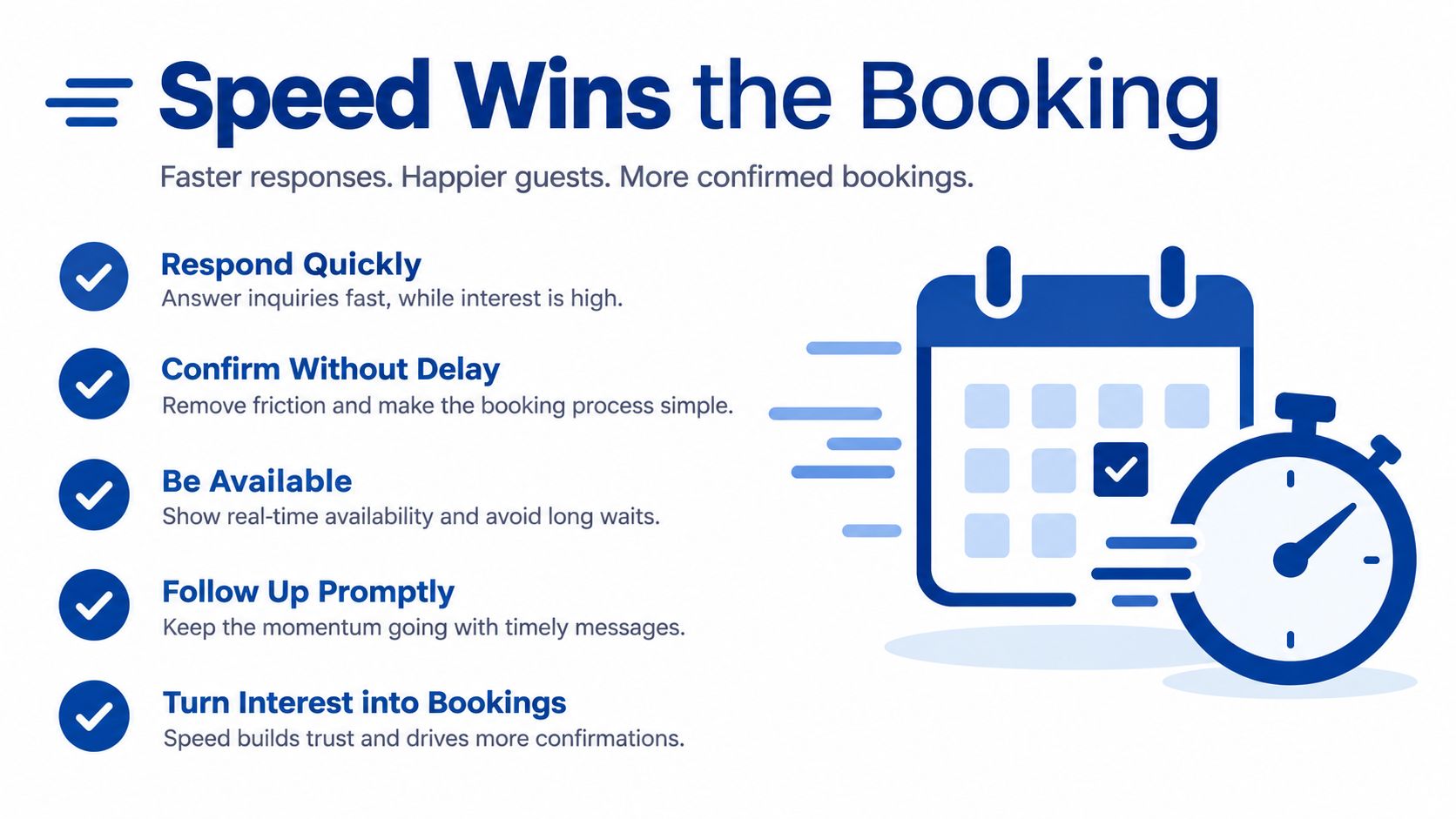
This is the part couples underestimate most. A date can be open at breakfast and gone by lunch.
Industry benchmark data from a 2026 sample of more than 1,200 wedding venues found a median first reply time of 11 hours. Top-quartile venues replied in under 8 minutes, and top-decile venues replied in under 60 seconds. The same report showed conversion rates of 32% for replies under one minute, 24% for one to ten minutes, 18% for ten to sixty minutes, 12% for one to four hours, 8% for four to twenty-four hours, and 4% after a full day (wedding vendor lead response benchmarks). If you're chasing last minute wedding venue availability, speed isn't a nice bonus. It's the game.
The same-day inquiry playbook
Most couples send a vague inquiry, wait, then start comparing options after venues reply. That's backwards. You need to behave like someone buying scarce inventory.
Use this approach:
- Call first, email second. Calling gets you answers faster and sometimes surfaces cancellations that haven't been posted anywhere.
- State your date range clearly. Give your ideal date plus a short list of alternates.
- Give a hard guest-count ceiling. Capacity kills deals late in the process. Be honest up front.
- Share your budget range. Not every venue will fit, and that's fine. Filter quickly.
- Ask the operational questions immediately. Rental hours, ceremony options, hold policy, contract turnaround, vendor flexibility, and payment timing.
What your first message should say
Keep a short template ready in your notes app:
- Preferred wedding date
- Alternate dates you'll accept
- Estimated guest count
- Indoor or outdoor ceremony preference
- Budget ceiling
- Whether you need catering flexibility
- Whether you can tour today
That message works because it lets the venue answer with precision instead of starting a long email chain.
If contracts are coming fast, review the basics before you send money. Texas Old Town's overview of venue rental contracts is a good reminder of what to verify when timing is tight.
“Can you hold the date while we think about it?” is the wrong question. Ask what it takes to secure the date today.
Negotiating the Contract Without Losing the Experience
Late-booking couples often negotiate the wrong things. They push hard on price, then accidentally give away guest experience.
Don't cut the bones out of the event just to feel like you won the deal. A weak bar setup, rushed room flip, or chopped cocktail hour will cost you more in guest experience than a modest savings ever returns.
What venues can often move on
Use your position where venues have room to adjust.
| What to Ask For | Likely Concession | What to Offer Back |
|---|---|---|
| Longer access window | Extra setup or teardown time | Fast signature and deposit |
| Weekday or Sunday rate consideration | Lower tier pricing or waived add-on | Date flexibility |
| Ceremony-related fee relief | Reduced or bundled ceremony costs | Acceptance of an off-peak date |
| Bar or package minimum adjustment | Better fit to your confirmed guest count | Faster headcount deadline compliance |
| Rehearsal access | Added rehearsal block | Willingness to use available time slot |
| Minor upgrades | Lighting, shuttle timing, or coordination support | Simplified setup plan |
What you should trade, and what you shouldn't
Reasonable trades include:
- Fast payment
- Quick final decisions
- Date flexibility
- Clean vendor communication
- A realistic confirmed guest count
Bad trades include:
- Cutting the cocktail hour too short
- Reducing bar staffing below what your guest count needs
- Eliminating indoor backup options
- Compressing setup so tightly that every vendor starts late
- Accepting a teardown plan that leaves your people doing venue work at the end of the night
Worth pushing for: rehearsal access, extra setup time, better load-in logistics, and small upgrades that don't cost the venue much but save your day.
Keep the negotiation grounded
Ask for concessions tied to the venue's actual business reality. A venue may prefer a confirmed booking on a short timeline over an empty date. That doesn't mean it can rewrite every policy, and it doesn't need to. Your goal is to protect the event flow.
One caution here. Don't negotiate so aggressively that you slow the process down and lose the date. If another couple is ready to sign, your “one more question” email can cost you the weekend.
A Real Short Timeline Booking in Central Texas
Here's what a realistic short-timeline booking looks like when the couple acts decisively and protects the event instead of overthinking every detail.
A late-season Saturday opens up after another event releases the date. The couple gets the message that morning, calls back quickly, and asks the right questions first: guest capacity, indoor backup, rental hours, contract timing, and whether preferred vendors still have room. They don't spend the first conversation discussing napkin colors.
The decisions that matter
The site visit happens right away. They walk the ceremony path, verify the rain plan, and settle the biggest design issue on the spot. If weather turns, the event can move indoors without wrecking the guest experience.
Within the next few days, they sign once the venue confirms the terms that matter most:
- enough access time for setup and breakdown
- a rehearsal option
- a guest-count structure that fits the revised list
- catering and bar logistics that still feel like a full wedding
The rest comes together because the venue's preferred network gives them a shorter path to reliable vendors. Photography, catering, floral, and coordination don't need months of deliberation when the core logistics are already clean.
What changed, and what didn't
The vision stays intact. The guest experience stays intact. The only thing that changes is the planning runway.
That's the part couples need to hear more often. A short booking window doesn't force a small wedding. It forces fast decisions and smart trade-offs.
Your Final Weeks Before the Wedding
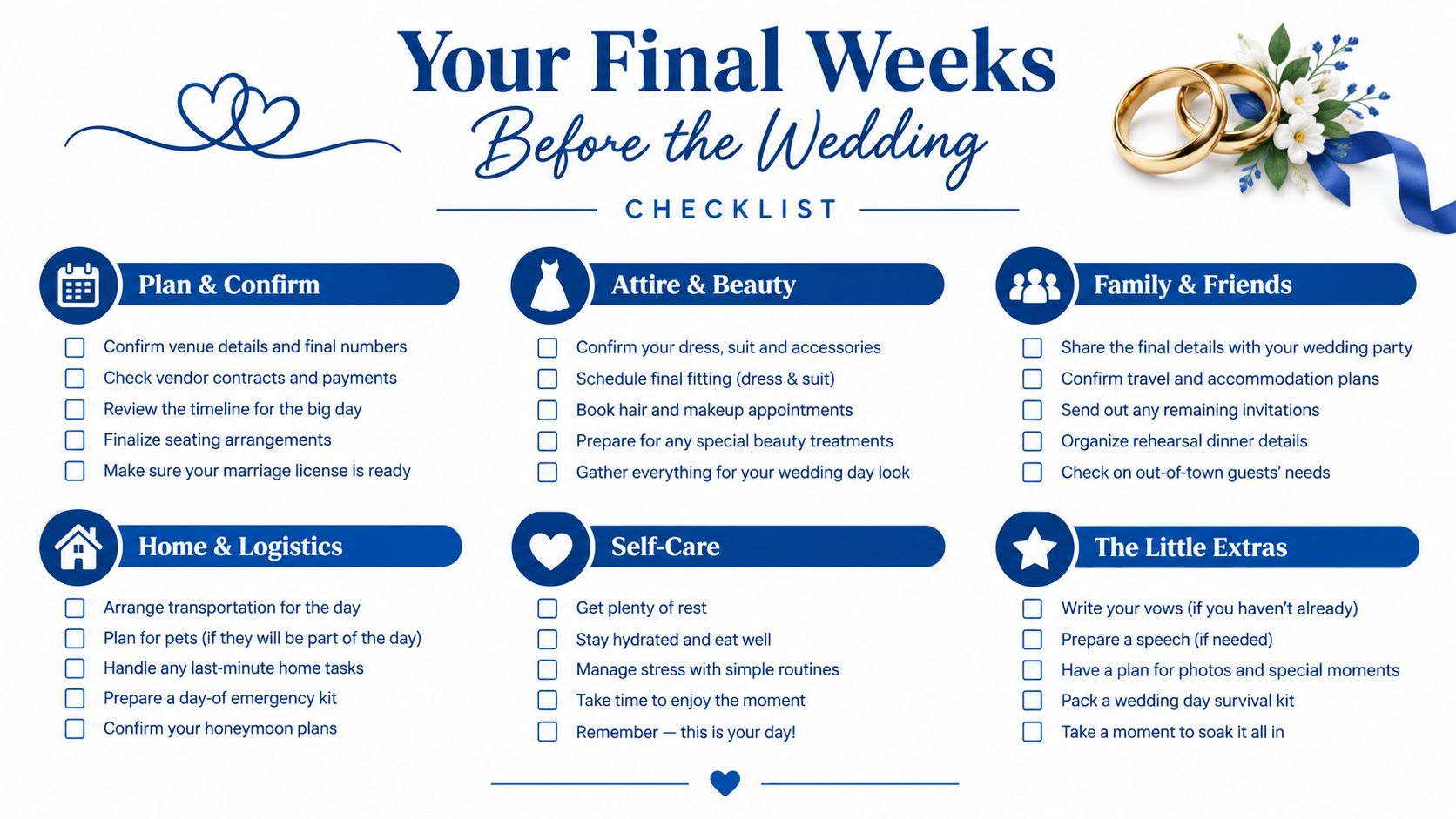
The last stretch is where short-timeline weddings either sharpen up or start leaking details. By this point, you don't need more inspiration. You need a clean operating checklist.
Print this section. Use it.
T minus 6 to 4 weeks
This is your lock-it-down phase.
- Finalize headcount direction. You may not have every RSVP, but you should know the likely attendance range.
- Confirm the rehearsal slot. Don't assume timing. Get it in writing.
- Finish seating and dietary planning. Special meals and table assignments get harder when left loose.
- Run the event timeline with the venue coordinator. Ceremony start, cocktail hour, dinner, toasts, dancing, exit, teardown.
- Reconfirm every vendor. Arrival time, load-in path, contact person, and payment status.
If you're hosting in Central Texas, this is when you also need to get serious about heat and weather. Indoor-outdoor transitions sound easy until guests are standing in direct sun or a storm line moves in. Pick the backup plan early enough that everyone can work from the same version.
T minus 3 to 1 week
This week is about money, movement, and communication.
- Complete final payments
- Pick up the marriage license
- Confirm signage and personal item delivery
- Verify decor load-in windows
- Send guest updates if timing, parking, or weather expectations matter
- Review rain plan and indoor flip plan one more time
- Check music cutoff requirements and exit timing
Friday events can create a trade-off. They may provide better venue access or rehearsal timing, but they also compress setup and coordinator prep into the workweek. That's manageable if everyone knows the sequence in advance.
Day before and day of
Your job now is handoff, not micromanagement.
Use this final checklist:
- Access time confirmed
- Vendor arrival order confirmed
- Emergency kit packed
- Marriage license assigned to the right person
- Personal decor bins labeled
- Point person designated for family questions
- Final venue contact saved and active
- Tear-down instructions understood
Your wedding day should not depend on you answering twelve logistics texts while getting dressed.
In Hill Country settings, also check the practical stuff couples forget: hydration stations, shaded waiting areas, bug control if the event moves outdoors near dusk, and clear transportation instructions if the property sits off a rural road. None of that is glamorous. All of it affects how the event feels.
A last-minute wedding succeeds when the venue gives you enough time, enough flexibility, and enough operational support to keep the original experience intact.
If you need a Central Texas venue that can support a full-size event on a short timeline, Texas Old Town offers four private halls, indoor and outdoor ceremony options, flexible catering policies, and a 16-hour rental window that reduces the schedule compression couples run into at shorter-rental venues. If your date is still open, you can move fast and still keep the wedding feeling like a real wedding, not a rushed substitute.