Most advice about wedding venue tours starts with the wrong question: Do you love the look of this place? The better question is whether the venue can carry your guest count, budget, vendors, weather plan, and timeline without forcing expensive compromises later.
A venue tour is a physical audit of decisions you've already started making online. The photographs can show gardens, ceilings, tables, and ceremony backdrops. They can't show whether guests will queue for restrooms, whether a caterer can reach the prep kitchen, whether the backup ceremony room has enough chairs, or whether the quoted price excludes services you assumed were included.
Table of Contents
- How Couples Actually Choose Venues Today
- Auditing the Quote Before You Walk the Property
- Inspecting Usable Space and Guest Flow
- Evaluating Weather Backups and Outdoor Logistics
- Comparing Rental Windows and Day-Of Flexibility
- Finalizing Your Venue Decision
How Couples Actually Choose Venues Today
A venue tour should test operations and costs, not merely confirm that a property photographs well. The The Knot Real Weddings 2025 Vendor Report analyzed 16,956 U.S. couples married during 2024 and found that 90% of wedding planning happened online. Couples spent an average of 6 hours per week researching vendors, and 64% used wedding-planning websites or apps such as The Knot and WeddingWire.
By the time you arrive, you may already know the property's advertised capacity, style, ceremony options, and headline pricing. Use the appointment to test what online research cannot show: guest circulation, sound, access, supplier routes, setup conditions, and the distance between ceremony and reception spaces. A gallery cannot reveal a queue outside the restrooms or a narrow service entrance that slows catering.
The venue often becomes the first major commitment. The same report found that 82% of couples hired their venue first. A separate study surveyed 781 U.S. couples at the venue-consideration stage and reported that nearly 80% began researching venues within two months of engagement. That early decision makes a disciplined tour more valuable than a quick viewing.
Replace the mood test with a verification test
Walk the property as a guest, then repeat the route as a vendor. Check where people arrive, wait, sit, eat, dance, use the restroom, and leave. Ask what changes if the ceremony moves indoors, the guest count shifts, or a supplier unloads while guests are arriving.
Bring a written checklist and record answers on site. If a coordinator says something is included, request the detail in the proposal or contract. Spoken reassurance may help you understand the offer, but written terms determine what you can schedule and budget.
Practical rule: Don't let a venue answer an operational question with a photograph. Ask to see the room, route, equipment, or document that proves the answer.
Timing affects your choices. A wedding venue tour timing analysis cites research on 15,700 couples and reports that 89% book a venue. It also notes that peak-season Saturday dates in major markets can be unavailable 12 to 14 months ahead. Compare properties early enough to assess genuine alternatives, rather than choosing between the few configurations still open.
For an outdoor celebration, use an outdoor ceremony venue checklist alongside the walk-through. Check the backup space, guest movement, supplier access, and weather-related changes before signing. Emotion can guide the shortlist, but operational and financial evidence should decide the venue.
Auditing the Quote Before You Walk the Property
A beautiful tour can make you emotionally commit before you understand the invoice. Request an itemized estimate before visiting, then label every line included, optional, required, or unknown. This lets you compare a low rental fee with a fuller package that already covers services you would otherwise need to arrange separately.
Budget pressure makes this audit practical, not administrative. Industry reporting has found that many engaged couples are reconsidering their budgets because of inflation, while Zola's 2025 report found that 48% struggled to reconcile realistic budgets with social-media-driven expectations. The lesson is straightforward: assess the venue against the cost of operating your event, not the attractive figure in the first email.
Read the quote as an operating document
Check whether the price includes sales tax, gratuity, furniture, setup, cleanup, furniture breakdown, management, ceremony seating, ceremony sound, reception sound, parking, and vendor access. Ask how the quote changes when the guest count, event duration, bar arrangement, or catering plan changes.
Vendor restrictions can alter the economics just as sharply. A required caterer, exclusive bar provider, mandatory security team, or limited rental list may add costs after the base fee has made the venue look affordable. Request the approved-vendor requirements in writing, then share them with your planner or caterer before comparing proposals.
| Pricing Element | Red Flag, Hidden Cost | Green Flag, Transparent Value |
|---|---|---|
| Rental fee | The headline figure excludes essential event services | The proposal identifies what the rental covers |
| Furniture | Tables and chairs are billed separately or quantities are unclear | Furniture counts and included pieces are documented |
| Cleanup | The couple or caterer must arrange post-event cleaning | Cleanup and furniture breakdown are assigned in writing |
| Access | A short window creates extra setup or overtime charges | The access period is long enough for vendors to work without rushing |
| Catering | An exclusive provider or outside-catering fee appears late | Catering choices and kitchen access are explained before booking |
| Bar service | Beverage rules, staffing, or service fees remain vague | Host-provided beverage policies and required bartending terms are clear |
| Overtime | The end time and extension rate aren't stated | The contracted end time and overtime procedure are explicit |
The contract should resolve the questions raised by the estimate. Review Texas Old Town's venue rental contract information alongside each proposal, while applying the same audit to every property. Compare the total required commitment, the decisions you control, and the financial result if the plan changes.
Ask questions that expose the true total
Use the tour to test assumptions with specific questions:
- Access: When can the couple, planner, florist, caterer, DJ, and photographer enter?
- Changes: What happens financially if the guest count or schedule changes?
- Vendors: Can you choose your caterer, and are any suppliers mandatory?
- Cleanup: Who removes décor, clears rentals, and handles furniture after the event?
- Bar: Who supplies beverages, bartenders, ice, glassware, and permits?
- Payment: Are payment-plan options available, and when does each installment fall due?
Record the answers beside each quote line. If a coordinator says a service is included, ask for that detail in the proposal or contract. Spoken reassurance can clarify an offer, but written terms determine what you can schedule and budget.
A transparent venue does not need the lowest headline price. It needs a quote you can interpret without guessing. Compare the all-in cost for the same event, including the labor and access required to deliver it. That figure gives you a more reliable basis for choosing where to invest your time and money.
Inspecting Usable Space and Guest Flow
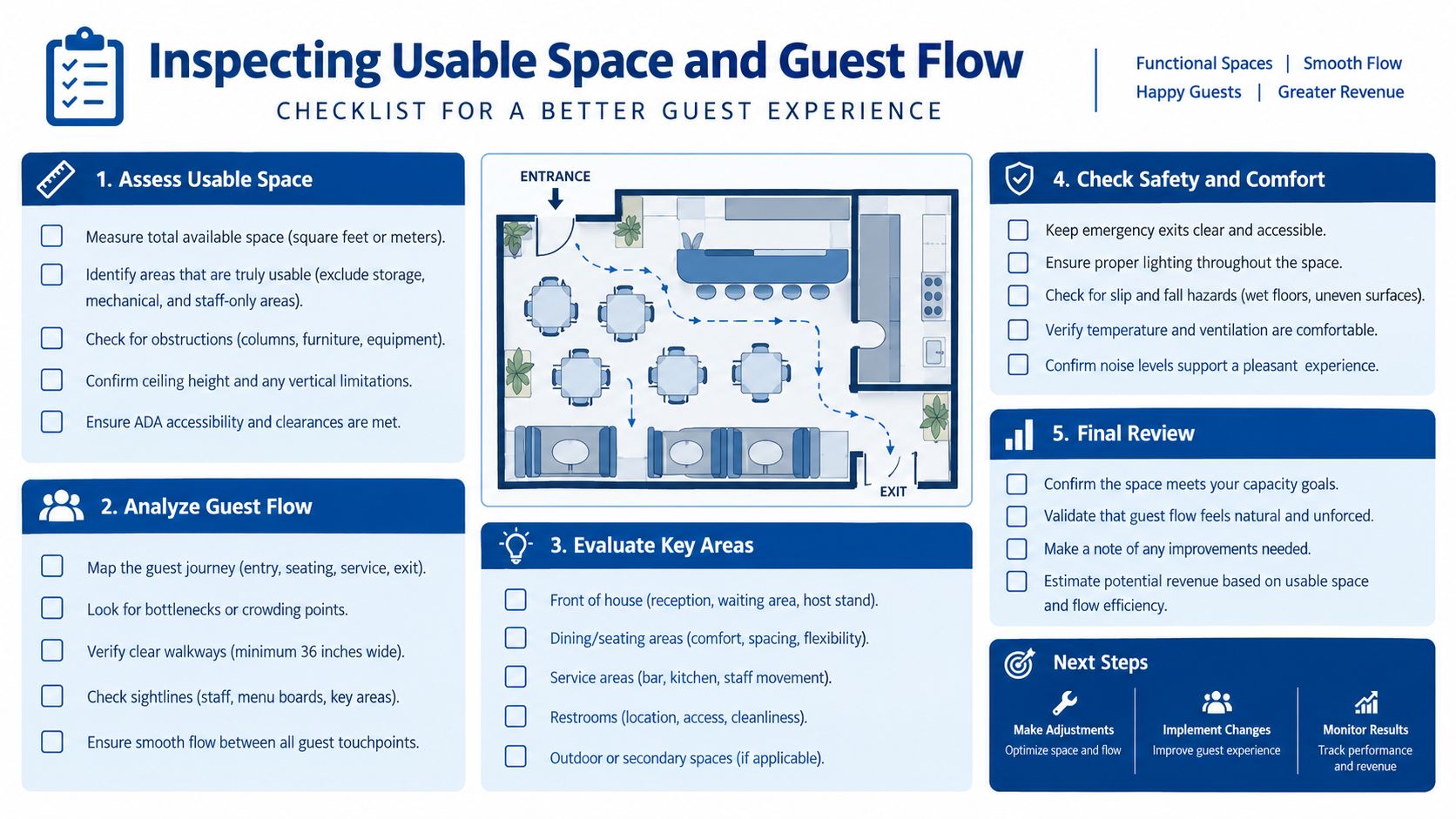
Capacity is a starting point, not a layout. A venue may advertise a maximum occupancy that becomes uncomfortable once you add banquet tables, chairs, a dance floor, a bar, buffet stations, staging, photography equipment, ceremony seating, and accessible circulation routes.
Ask to see the floor plan for your intended configuration. If the venue can't provide one, sketch the arrangement during the tour. Place the ceremony, cocktail hour, dinner, entertainment, gifts, cake, bar, and dance floor on the same plan. Then walk between them.
Follow the guest route
Start outside. Drive into the property as a guest would, identify signage, note the parking surface, and walk from the likely parking area to the ceremony entrance. Then continue through the full event route.
- Arrival: Can guests find the entrance without staff directing every car? Is unloading separated from pedestrian movement?
- Ceremony: Where do guests wait before seating? Can the processional move without crossing a service route?
- Transition: Does the path to cocktails or dinner work for older guests, children, and wheelchair users?
- Reception: Will people need to cross the dance floor to reach the bar, restrooms, or exits?
- Departure: Are exits visible and unobstructed after tables, décor, and equipment are installed?
The Texas Old Town venue inspection checklist is useful for recording room dimensions, entrances, exits, restrooms, parking, unloading, lighting, drainage, and potential obstructions. Use it while you're physically moving through the site, because distances that seem minor on a plan can feel significant when guests are dressed for an event.
Inspect the spaces vendors use
Couples often focus on the ceremony lawn and reception room, then ignore the loading route. Ask where the caterer parks, how far equipment travels, whether the kitchen has a service entrance, and whether the DJ can bring speakers and cases directly into the room. A beautiful prep area is irrelevant if suppliers must carry everything through the guest entrance.
Check the dressing suites, private restrooms, outlets, mirrors, seating, and climate control. Listen to the room as well. Hard surfaces and high ceilings may create echo that affects vows, speeches, and music. Ask which sound equipment is available and whether the indoor and outdoor ceremony locations use separate systems.
Outdoor living designers face a similar challenge when they balance how a space looks with how people move through it. Couples considering nature-centered venues may also browse the Prescott outdoor living guide for useful ideas about circulation, shade, transitions, and functional zones. Apply that same thinking to the venue, but test the paths with event furniture in mind.
Evaluating Weather Backups and Outdoor Logistics
An outdoor ceremony is only as reliable as the plan that replaces it. “We'll move inside if it rains” isn't a complete answer. It leaves the most important questions unresolved, including who decides, when the decision happens, how furniture moves, and whether guests experience a smooth transition.

Rehearse the rain plan during the tour
Ask the coordinator to show you the exact indoor layout, not just the room name. Stand where the couple would stand, identify the guest entrance, locate the sound system, and trace the route for chairs, décor, musicians, and attendants. Then ask what the reception setup looks like if the indoor room must host both the ceremony and reception.
A useful weather conversation covers:
- Decision authority: Who makes the call, and what information do they use?
- Decision timing: What is the latest practical point for moving equipment and notifying vendors?
- Capacity: Does the backup hold the same guest count with the intended seating arrangement?
- Labor: Who moves chairs, décor, microphones, and ceremony pieces, and is additional labor charged?
- Guest movement: How do guests move from arrival to ceremony, cocktails, dinner, and dancing?
- Partial changes: Can portraits remain outdoors while the ceremony moves inside?
- Sound: Does the indoor space have suitable microphones and speaker coverage?
- Access: Can every guest use the backup route comfortably and safely?
Recent guidance describes a backup plan as a logistics plan rather than just another room, with capacity, decision timing, setup labor, additional costs, and guest movement confirmed in advance. The weather contingency guidance for wedding venues supports treating the rehearsal as part of the tour itself.
Test the plan against Texas conditions
Weather affects more than rain. Heat, wind, mud, glare, and sudden changes can alter ceremony comfort, photography, flooring, signage, and equipment placement. Look at drainage, shaded waiting areas, covered transitions, and the surface guests will cross in formal shoes.
Ask whether the indoor space is climate-controlled and whether the ceremony system works there without a rushed equipment change. Confirm where vendors enter during a weather pivot and whether catering or bar service loses access when the outdoor plan changes.
The rain-day wedding guidance from Texas Old Town can help you frame those questions before the appointment. The strongest venue isn't necessarily the one with the most dramatic grounds. It's the one that can show you, step by step, how the celebration continues when the original plan no longer fits the conditions.
Comparing Rental Windows and Day-Of Flexibility
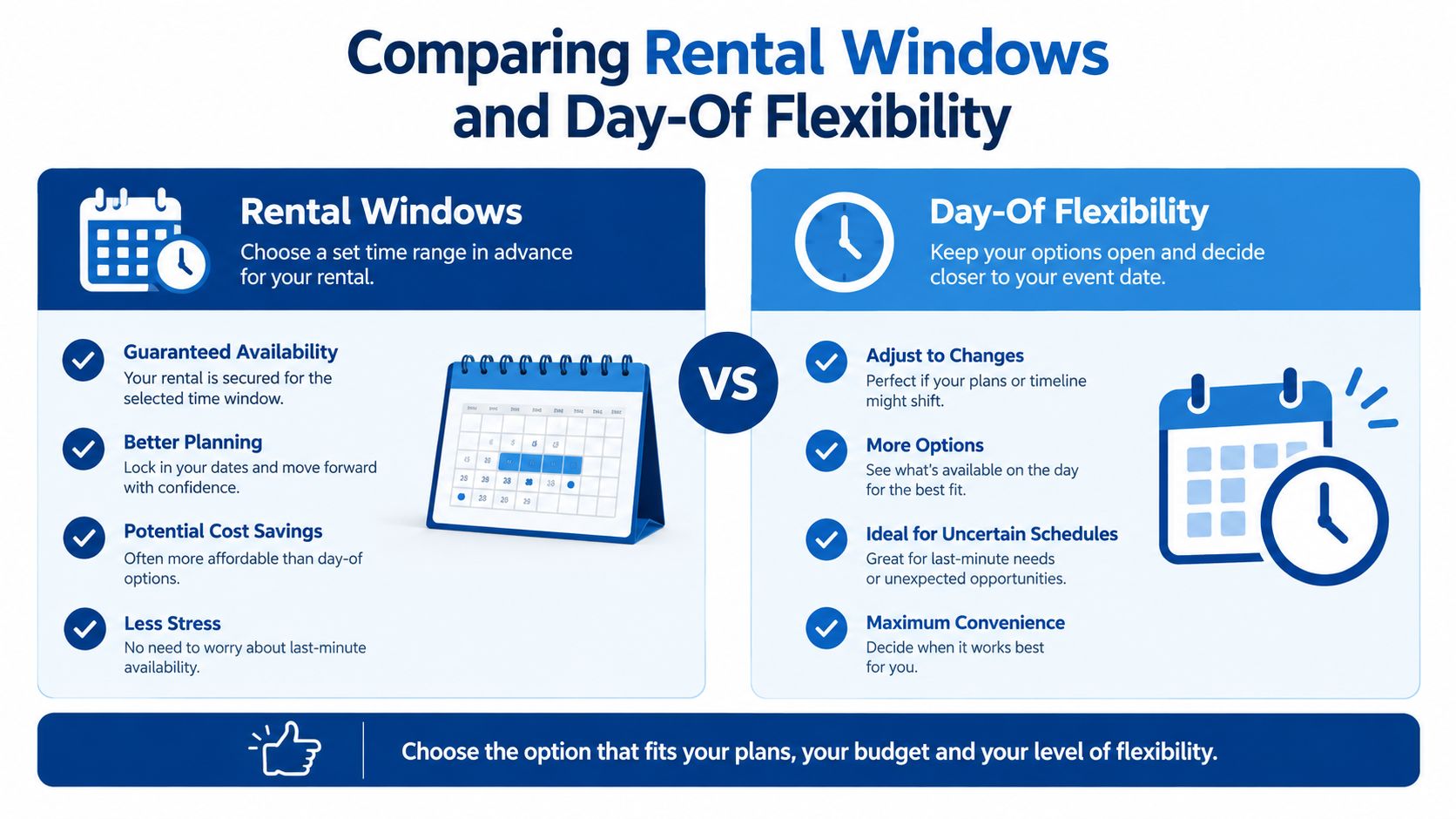
The rental window controls the pace of the entire event. A short booking period may require vendors to load in while hair and makeup are underway, compress portraits between ceremony and dinner, and leave little margin when a delivery or room transition runs late.
An extended window creates room for preparation, but only if the contract explains who can use it and what access includes. Ask whether the couple has exclusive use, whether vendors can arrive early, when cleanup begins, and whether the venue remains available after guests leave.
Compare the two operating models
| Short rental window | Extended access model |
|---|---|
| Vendors have less time to unload and set up | Suppliers can work in a planned sequence |
| Getting-ready activities may compete with setup | Dressing rooms can support a calmer preparation period |
| Portraits and room transitions need tight coordination | The timeline has more space for natural movement |
| Overtime becomes a significant risk | The contracted access period provides more usable buffer |
| Cleanup may begin immediately after the event | Breakdown can happen without rushing guests out |
The trade-off is straightforward. A venue with a shorter window may fit a budget or schedule, but you'll need a detailed production timeline and disciplined vendor coordination. A longer window may carry more value when it includes exclusive use, preparation areas, vendor access, cleanup, and on-site management rather than merely adding hours to the rental label.
Ask who owns the clock
Don't assume the venue manager, planner, and vendors interpret “access” the same way. Clarify whether the clock starts when the couple arrives, when the first vendor loads in, or when guests enter. Ask whether rehearsal time, portraits, deliveries, and final cleanup are included or separately scheduled.
Also confirm the latest music and guest departure time. A generous morning access period doesn't help if the evening cutoff forces a rushed reception. The schedule should support the event's actual sequence, from load-in to final exit.
Finalizing Your Venue Decision
After the tour, compare each property using the same evidence. Put the itemized quote beside the floor plan, weather procedure, access terms, vendor policy, and management responsibilities. If one venue looks more affordable only because furniture, cleanup, staffing, or access are missing from the first quote, adjust the comparison before making a decision.
A practical review asks four questions:
- Can it fit? Does the usable layout support the guest count, entertainment, dining, ceremony, and accessible movement?
- Can it adapt? Does the weather plan work as an actual sequence, including labor, sound, seating, and guest transitions?
- Can it stay predictable? Are the price, vendor rules, cleanup, overtime, and payment terms written clearly?
- Can the team operate it? Is there a venue manager, usable loading access, suitable preparation space, and a realistic schedule?
When a couple is choosing between a scenic outdoor property and a climate-controlled hall, the deciding factor often isn't another photo location. It's whether the venue can explain the day under normal conditions and under pressure. The strongest choice aligns the original visual priorities with a plan that vendors can execute without improvising around missing information.
Don't sign while any major answer remains verbal. Request the revised proposal, floor plan, weather procedure, and contract terms, then ask the venue to resolve inconsistencies in writing.
Texas Old Town offers private venue tours by appointment across four halls and outdoor ceremony settings on its Central Texas property, with published furniture counts, indoor and outdoor sound systems, flexible catering, exclusive 16-hour access, on-site management, and included cleanup and furniture breakdown. Visit Texas Old Town to schedule a walkthrough and audit the spaces, quote, weather plan, and event-day logistics before you commit.