You've checked the weather app again, and the forecast still shows rain. Your ceremony is outside, the flowers are designed for an arbor, and nobody has clearly said whether the indoor room is reserved, who makes the final call, or how guests will hear about a location change. That uncertainty is more stressful than the rain itself.
The answer to what to do if it rains on your wedding day is operational, not sentimental. Set a decision time, assign one person to communicate it, confirm the indoor layout, and give every vendor the information they need to work quickly. Once those pieces are documented, you and your partner can focus on getting married instead of managing wet chairs, altered access routes, and confused guests.
Table of Contents
- Reframing Rain From Disaster to Planning Variable
- Setting a Clear Weather Decision Threshold
- Running the Indoor Ceremony Switch
- Reworking the Timeline and Vendor Logistics
- Adjusting Decor and Photography for Wet Weather
- Embracing the Moment and Final Takeaways
Reframing Rain From Disaster to Planning Variable
Ten days before a wedding, a weather app is useful for identifying anxiety, not for making the final call. Forecasts shift, rain may arrive earlier or later than predicted, and an outdoor plan can look threatened long before the conditions are clear enough to act on. Couples often lose valuable planning time by refreshing the forecast while leaving the actual contingency undefined.
Rain also carries meanings that have nothing to do with failure. Folklore collected by Dartmouth's Folklore Archive describes Italian traditions that interpret wedding rain as good luck connected with fertility and growth. American folk belief often treats it as cleansing, a symbolic fresh start. You don't have to adopt either interpretation, but both offer a useful reminder: rain isn't automatically a bad omen.
Modern planning needs a more practical reframing. Monsoon's analysis of 86 years of official Met Office rainfall data found that rain risk varies sharply by date. In the example provided, June 15 had a 21.84% chance of rain, while June 29 had a 14.94% chance, according to the wedding-weather analysis and backup-plan guide. The same data identified April as the driest month on average, at 2.29 mm of daily rainfall, while August averaged 3.09 mm per day, and November 11 was identified as the wettest day of the year in the UK.
Treat the plan as part of the design
Britain averages about 156 days with measurable rainfall each year, as reported in the same analysis. That doesn't mean every wedding needs to move indoors. It means rain belongs in the original event design, alongside catering access, sound, power, guest flow, and photography locations.
A strong venue brief should answer these questions before invitations go out:
- Indoor ceremony location: Where will the ceremony happen if the outdoor site becomes unusable?
- Guest movement: Can guests reach the room without crossing exposed grass or standing in a bottleneck?
- Sound: Is there an indoor PA system, Bluetooth connection, and wireless microphone?
- Vendor access: Can rentals, catering, florals, and photography equipment use a covered or separate service route?
- Comfort: Is the backup room climate-controlled and large enough for the planned guest count?
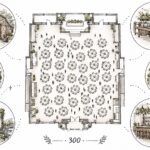
A venue with both indoor and outdoor event space gives you more than a shelter. It gives you a second version of the wedding that can be styled, sounded, and timed in advance. Couples comparing options should examine indoor and outdoor event space as one connected operating plan, not as two unrelated rooms.
Setting a Clear Weather Decision Threshold
Rain becomes difficult when the decision arrives too late. If guests are already arriving, the ceremony team, florist, rental crew, photographer, and venue staff must change course simultaneously. The couple then gets pulled into operational questions that the venue and coordinator should already be answering.
Forecasts become substantially more reliable close to the event. Use the planning window beginning around 72 hours before the event to review conditions and set the operating plan, rather than waiting for an emergency conversation on the wedding day.
Use a written trigger
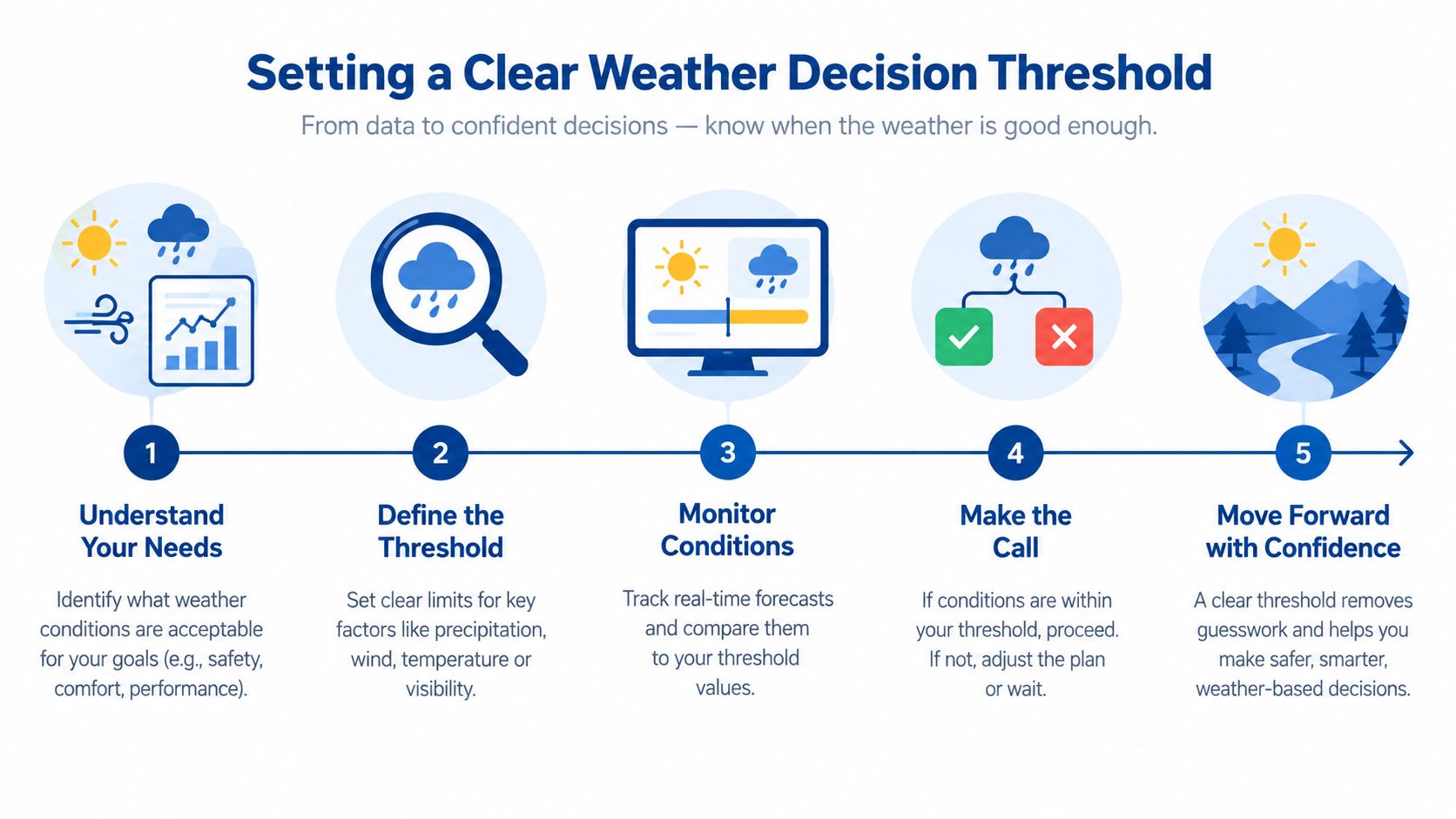
Set the primary checkpoint at 72 hours before the ceremony. Review rain probability, timing, wind, ground conditions, temperature, and the safety of moving guests through the property. A lower rain probability does not settle the question if strong wind, saturated ground, or lightning makes the outdoor site unsafe.
For a clear operating rule, many planning guides recommend switching to the indoor or tented setup at a 70% or higher rain probability, with the exact trigger documented in advance. The wedding rain backup plan guide outlines that threshold and the surrounding procedure. Your venue may set a stricter rule because of drainage, tent limitations, electrical equipment, or the ceremony site.
Put the decision process in the vendor agreement or planning document:
- Who monitors the forecast: Name one person, usually the venue manager or coordinator.
- Who makes the final call: Choose one decision-maker. The couple can decide, but both partners, parents, and vendors should not be required to reach a group consensus.
- What triggers the switch: Record the probability, timing, and safety conditions that activate the backup.
- When vendors are notified: Send the decision immediately at the checkpoint, not after another debate.
- Where the current plan lives: Keep one shared document or message thread as the source of truth.
Operational rule: A rain plan that exists only in someone's memory is not a plan. Put the trigger, decision-maker, room, and notification list in writing.
Keep flexibility under control
You can preserve an outdoor option without leaving every vendor in suspense. If conditions improve before final setup, allow the outdoor ceremony only if the reversal deadline and decision-maker are already documented. That prevents arguments while chairs, microphones, flowers, and guests are moving.
The rain contingency communication methodology recommends raising the subject with the venue early, monitoring conditions more frequently as the wedding approaches, and planning for roughly 5% extra budget for weather-related needs such as tent walls, heaters, or flooring. Treat that figure as a planning benchmark, not a guarantee. Ask the venue which changes create additional charges, who approves them, and when that approval must be given. A written communication workflow keeps the weather decision with the people managing the venue, vendors, and guest movement.
Running the Indoor Ceremony Switch
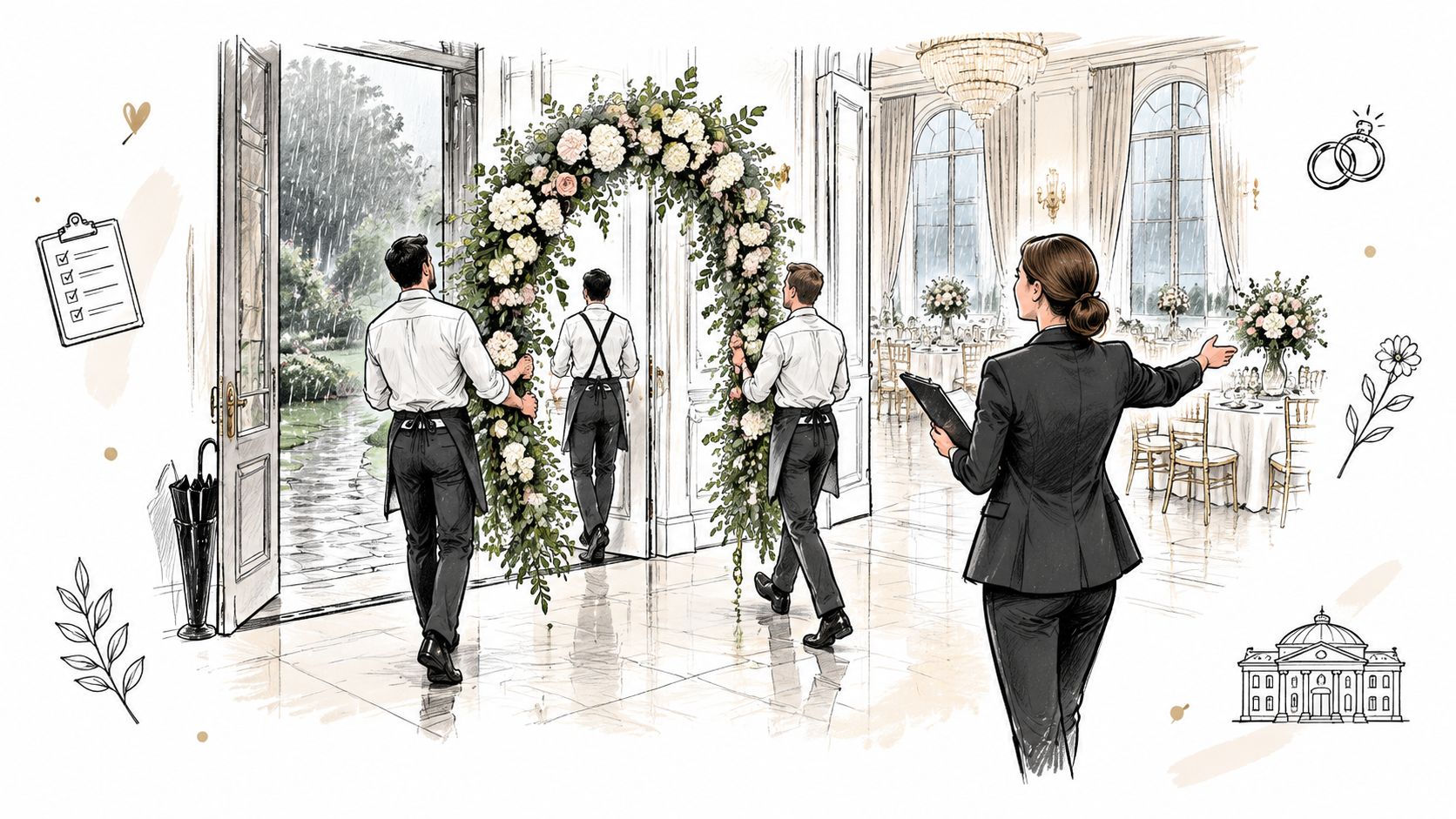
An indoor ceremony works when the room is prepared as a ceremony venue before rain arrives. Set the aisle, guest seating, officiant position, couple's standing area, floral locations, and sound setup in advance. The switch then becomes a planned room reset instead of a frantic rearrangement.
Build the room around the guest experience
Start with sightlines. Position the couple where guests can watch the vows without looking around a column, bar, buffet, or dance-floor equipment. Keep the aisle wide enough for the processional, and leave the wedding party a clear route to the front without contact with tables, furniture, or wet coats.
Test the indoor PA system in the actual room. A Bluetooth connection and wireless microphone may already cover the ceremony, but the officiant and musicians still need a sound check with the planned seating, flowers, and soft furnishings in place. An empty-room test cannot show how those elements will affect volume and clarity.
Assign each physical task to one lead:
- Furniture team: Clear or reset chairs, tables, and furniture that conflicts with the ceremony layout.
- Floral team: Move the arch, aisle arrangements, and focal pieces without dragging wet bases across finished floors.
- Sound lead: Test the microphone, processional music, and officiant volume.
- Guest-flow lead: Direct guests from parking and entrances into the ceremony room.
- Couple's attendant: Keep the couple away from operational questions and protect the getting-ready schedule.
If a tent or gazebo remains in the design, review heavy duty gazebo safety tips with the rental provider. Confirm anchoring, wind exposure, drainage, flooring, sidewalls, and the conditions requiring the structure to close or come down. A covered structure still needs a safety check.
Keep the visual transition intentional
Give the indoor ceremony one clear focal point. Place the arch behind the couple if the room allows, or move the strongest floral arrangement to the altar and reuse other pieces at the reception. Reduce overhead lighting where the venue permits, add approved decorative lighting, and keep umbrellas and coats outside the main sightline.
A day-of wedding coordination team should direct the room reset while you stay with the wedding party. Extend rental access when possible so the team has time to move furniture, protect floors, test audio, and complete the setup before guests enter. Your task is to arrive ready for the processional, not to carry chairs or negotiate with the rental company.
Reworking the Timeline and Vendor Logistics
Rain changes more than the ceremony location. It slows load-in, makes outdoor portraits less predictable, complicates parking, and increases the time guests need to move between spaces. A schedule that was comfortable in dry conditions can become compressed when every transition requires covered routes, towel-downs, equipment protection, or a room reset.
Once the rain plan is activated, send one message to the full vendor team. Include the decision, the new ceremony location, the revised arrival instructions, the service entrance, the updated portrait plan, and the person authorized to answer questions. Don't rely on separate texts that create conflicting versions of the schedule.
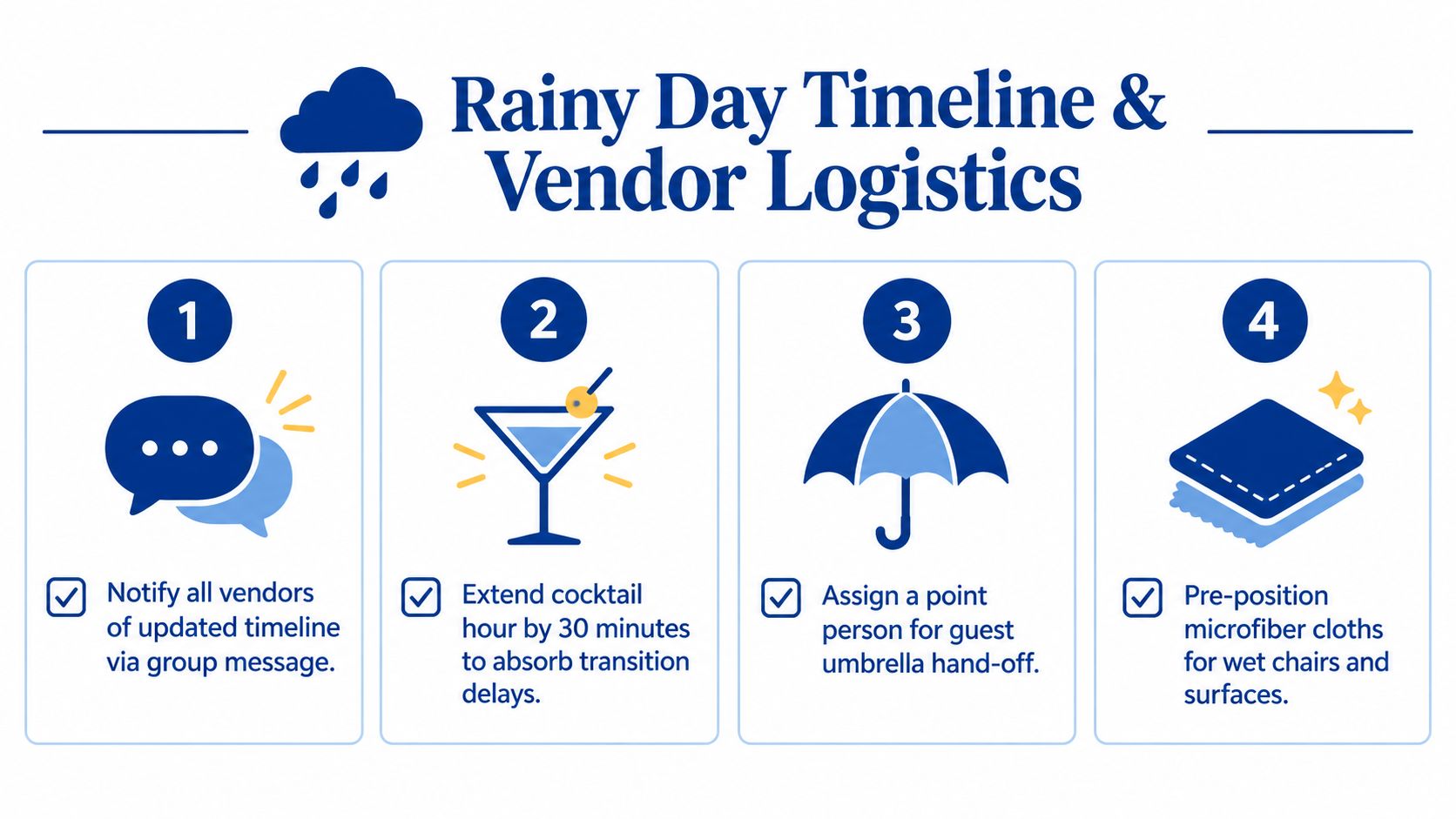
Give every vendor a specific adjustment
The caterer needs to know whether the service entrance, prep kitchen route, or buffet position has changed. The florist needs the indoor placement plan and a protected path for transporting arrangements. The photographer needs the new ceremony room, usable covered locations, indoor portrait options, and any limits on moving through wet areas.
The coordinator should confirm these points in order:
- Venue and access: Which doors are open, where vendors unload, and which areas are off-limits.
- Ceremony timing: Whether the processional remains unchanged or needs a buffer.
- Portrait plan: Which indoor and covered locations are available and when they can be used.
- Guest communication: Who sends the update and who handles questions at the property.
- Reception transition: Whether cocktail hour, dinner, speeches, or dancing must shift.
A member of the wedding party should own guest communication. That person can send the website update, answer family messages, coordinate umbrella distribution, and stand at the relevant entrance. The couple shouldn't become the help desk.
Use access time as weather insurance
An extended venue rental window gives the team room to absorb delays without forcing every task into a narrow setup period. Texas Old Town, for example, offers exclusive 16-hour access from 8:00 a.m. to midnight, along with on-site management and included cleanup and furniture breakdown, according to the publisher's venue information. That kind of access can support a slower load-in, an indoor ceremony reset, and a controlled breakdown.
Ask whether your rental window includes the time vendors need to protect equipment, dry furniture, move decor, and clear the property. A schedule that ends immediately after the last dance leaves no margin for wet-weather cleanup.
Use this event-day schedule template to assign owners, deadlines, access points, and backup locations. Add a column for weather-specific changes so the team can see the original plan and the active plan without guessing.
Adjusting Decor and Photography for Wet Weather
Outdoor decor and indoor decor solve different visual problems. Outside, the natural setting supplies scale and atmosphere. Indoors, you need to create depth through focal placement, lighting, texture, and controlled sightlines. Don't try to reproduce every outdoor detail. Choose the elements that carry the most meaning and give them a stronger indoor position.
Move the ceremony arch to the reception if it fits the room and remains structurally stable. A floral installation can frame the sweetheart table, anchor a welcome area, or sit behind the cake instead of being discarded after the vows. Smaller aisle arrangements can move to cocktail tables, the bar, or the head table, where guests will see them for longer.
| Original outdoor feature | Indoor adjustment |
|---|---|
| Ceremony arbor | Place it behind the couple, sweetheart table, or cake |
| Aisle flowers | Reuse them on cocktail tables or the bar |
| Open landscape backdrop | Use a grand staircase, finished wall, windows, or a covered porch |
| Sunlit ceremony | Use window light, approved uplighting, candles, or warmer interior fixtures |
| Grass portraits | Choose a covered walkway, porch, stair, or polished indoor hall |
Protect the photography plan
Give your photographer a location list before the wedding. Include the indoor ceremony room, covered entrances, porches, staircases, hallways with attractive finishes, and any sheltered exterior area that remains safe. That allows the photographer to plan lenses, lighting, and group movement instead of scouting while guests wait.
Indoor portraits benefit from clean backgrounds and controlled light. Stand the couple near a window or bright doorway when possible, but watch for harsh backlighting and reflections. If the room has strong architectural details, use them deliberately. A staircase can provide height and composition; a textured wall can create a quiet editorial portrait; a covered porch can preserve the outdoor atmosphere without exposing formalwear to steady rain.
For practical guidance on timing, family groupings, and portrait conditions, review these Wedding Photography Tips with your photographer. Then decide how adventurous you want to be. A short portrait session under clear umbrellas can produce a distinctive image, but it should be optional, supervised, and based on safe footing.
Rain also changes hair, makeup, shoes, and clothing. Keep towels, blotting supplies, a garment bag, and a backup pair of comfortable shoes with the attendant responsible for the couple. Ask the stylist whether a touch-up visit or a weather-tolerant hairstyle makes sense, but don't replace your entire look solely because an app shows a cloud icon.
Embracing the Moment and Final Takeaways
The successful rain plan isn't the one that preserves every original detail. It's the one that protects the ceremony, keeps guests informed, gives vendors enough time to work, and removes the couple from the chain of urgent decisions.
Rain may alter the backdrop, but it doesn't have to control the emotional tone. A covered walkway can create a quieter processional. An indoor ceremony can feel close and focused. Wet grounds, reflective surfaces, and soft skies can also give portraits a character that a bright day wouldn't provide, provided the photographer and venue team control safety and timing.
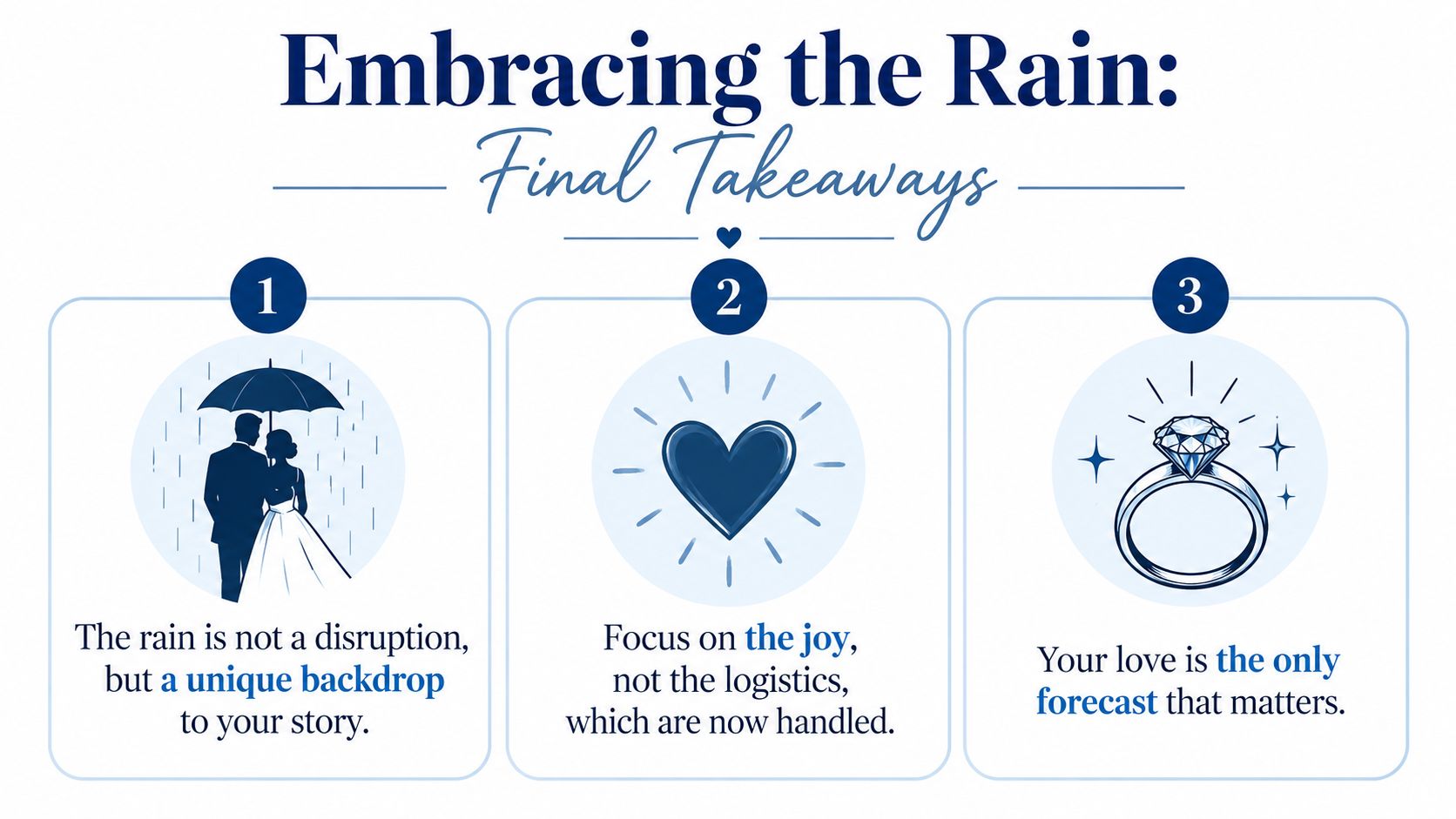
Your quick-reference rain checklist
- At booking: Confirm the indoor ceremony room, sound equipment, covered routes, access rules, and weather-related costs.
- During planning: Document the layout, vendor access points, portrait locations, guest-routing plan, and communication owner.
- At 72 hours: Review the forecast and apply the agreed decision threshold. The designated decision-maker activates the plan.
- After activation: Send one update to all vendors, publish one guest-facing message, and give the venue manager authority to coordinate the room reset.
- On the day: Keep towels, umbrellas, floor protection, and touch-up supplies in assigned locations. Let the couple stay focused on the ceremony.
You don't need to pretend rain was your original dream. You need a plan strong enough that disappointment doesn't become disorder. Once the logistics are owned by the venue team, vendors, and designated point person, you can choose whether to step outside for a few photographs, stay completely dry, or do both.
Texas Old Town offers indoor and outdoor ceremony options, climate-controlled halls, indoor and outdoor PA systems, exclusive 16-hour access, and on-site event management for weddings in Kyle, Texas. Visit Texas Old Town to tour the property, confirm the rain-plan logistics, and see how its four private venues can support your wedding in changing Central Texas weather.