The most popular advice about day-of wedding coordination is also the most misleading: hire someone who shows up only on the wedding day. By then, many of the decisions that determine whether the day feels calm or chaotic should already be settled. Vendor access, ceremony cues, floor plans, transportation, photo timing, weather alternatives, and the handoff from venue staff to the couple all need an owner before guests arrive.
A professional coordinator is brought in for the final execution phase, but that phase starts before the wedding day. The work is less glamorous than choosing flowers, yet it protects the parts guests experience, including whether the ceremony begins on time, whether the band can load in without blocking the caterer, and whether the couple gets to dinner instead of solving a missing-chair problem.
Table of Contents
- What Day of Wedding Coordination Really Means
- Core Duties and Deliverables You Can Expect
- Sample Wedding Day Timeline for Texas Old Town
- Your Pre-Wedding Coordination Checklist
- Cost Expectations and How to Choose a Coordinator
- Frequently Asked Questions for Central Texas Couples
- What's the difference between a venue manager and a day-of coordinator?
- How does coordination change for an outdoor ceremony?
- What happens if the ceremony must move inside?
- Can a coordinator work with Texas Old Town's on-site manager?
- Do couples need day-of coordination if the venue includes support?
What Day of Wedding Coordination Really Means
Day-of coordination starts well before the wedding day. In practice, many coordinators begin 30 to 45 days before the event, gathering vendor details, reviewing contracts, building the master timeline, and confirming logistics, as explained in this day-of wedding coordinator FAQ. The label describes the service level, not the full workload.
That early work matters at Central Texas venues such as Texas Old Town, where couples may have 16-hour venue access and indoor and outdoor spaces to coordinate. A venue team, caterer, bar company, florist, rental company, photographer, videographer, DJ or band, transportation provider, beauty professionals, and ceremony participants may all share the same schedule. Each can do their job well while still creating a conflict if nobody controls arrival order, setup space, sound checks, weather changes, or departures.
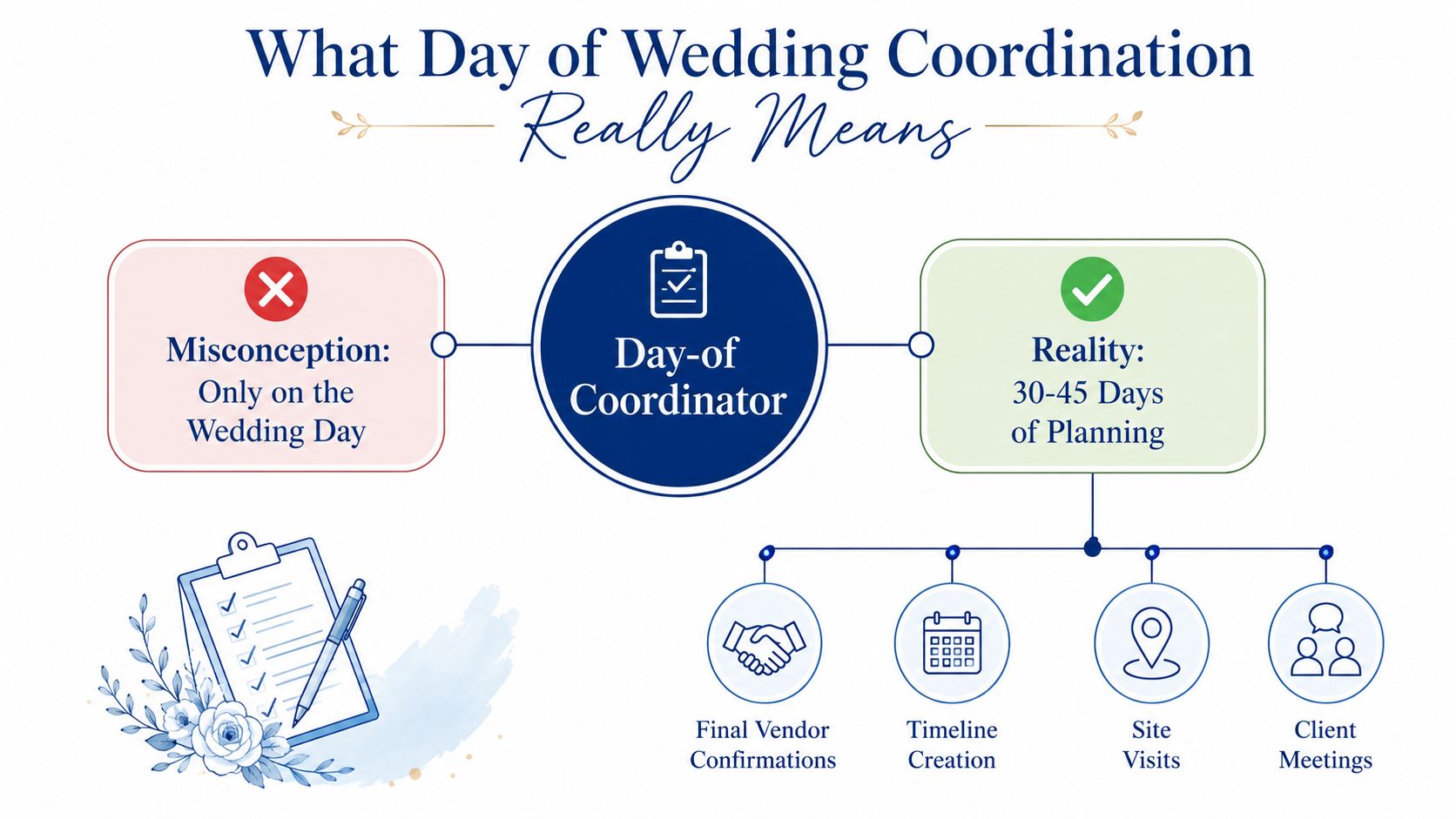
The hidden transition phase
The coordinator turns scattered information into an operating plan. That work typically includes:
- Vendor confirmation: Collecting arrival times, contact information, service commitments, power requirements, loading instructions, and departure expectations.
- Timeline construction: Scheduling the ceremony, first look, photography, meal service, speeches, dances, and send-off around actual setup and travel needs.
- Site logistics: Reviewing ceremony and reception locations, guest movement, parking, dressing areas, service entrances, indoor and outdoor options, and weather alternatives.
- Client handoff: Learning the couple's priorities, family dynamics, private moments, and decisions that should remain with them rather than a vendor.
A shared timeline should reach key vendors 2 to 4 weeks before the event. That gives the team time to identify conflicts while changes are still practical. It also lets the coordinator test the plan against venue access, deliveries, setup windows, and the indoor or outdoor backup arrangement.
Relatives, friends, and venue staff once absorbed much of this work informally. As weddings gained more vendors and tighter schedules, coordination became a distinct role. The coordinator does not replace the venue manager, caterer, or DJ. Instead, the coordinator connects their responsibilities so the couple is not managing calls and decisions during the final stretch.
Practical rule: If the couple is still answering vendor questions, locating contracts, or deciding who gives the ceremony cue during the final month, the handoff is incomplete.
Couples pay for coordination because many small decisions converge at once. The service reduces the chance that a missing detail, delayed delivery, or unclear cue reaches the couple during the celebration.
Core Duties and Deliverables You Can Expect
Day-of coordination is a document-heavy job before it becomes a visible event-day role. The coordinator turns contracts, venue rules, vendor arrival plans, and the couple's priorities into decisions that can be executed under pressure.
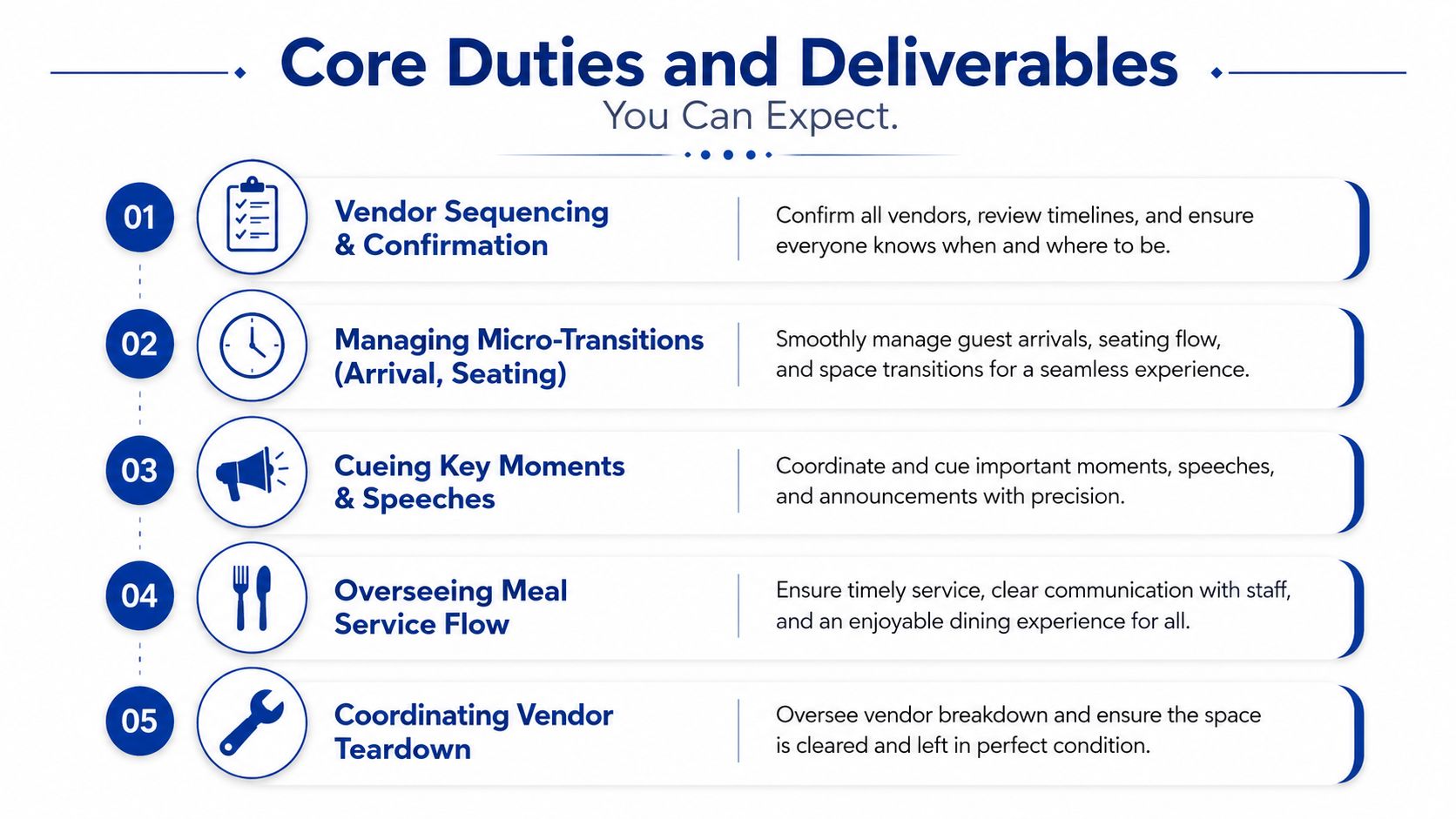
Before guests arrive
The coordinator builds the master timeline and tests it against venue access, vendor contracts, the ceremony plan, reception layout, and the indoor or outdoor setup. A useful timeline includes the work guests never see: who opens doors, where deliveries are staged, when the caterer enters the prep kitchen, when the photographer needs the couple, and who controls the ceremony microphone.
Vendor sequencing creates its own risks. If the florist, rental team, caterer, entertainment, and photographer use one route, an arrival list will not prevent congestion. The coordinator assigns load-in windows, confirms service entrances, and keeps one team's equipment from blocking another team's setup. With 8 or more vendor teams, separate windows for load-in, sound check, preparation, and breakdown help keep the schedule workable. Protecting 10 to 15 minute buffers between moving parts also gives the team room to absorb delays without moving every later task.
The coordinator should also prepare a contact sheet, escalation plan, and decision list. Vendors need to know which questions go to the coordinator, which choices remain with the couple, and what happens if weather changes the ceremony location. This hidden preparation is what lets the coordinator make a fast call during a Texas Old Town wedding without searching through messages or asking the couple to solve the problem.
During the celebration
Once guests arrive, the coordinator manages transitions that are easy to overlook but highly visible when they fail:
- Arrival and seating: Directing guests, wedding party members, and ushers away from active setup areas.
- Ceremony cueing: Confirming processional order, music, officiant readiness, microphone placement, and the start signal.
- Photo and cocktail flow: Keeping the couple's photo plan on schedule while directing guests to the next space.
- Reception cues: Calling introductions, first dance, parent dances, speeches, meal service, and open dancing.
- Problem solving: Taking vendor calls, locating misplaced items, adjusting the schedule, and keeping routine disruptions away from the couple.
A 15-minute buffer between major transitions is a practical benchmark when guests must change spaces or vendors need to reset a room. It can absorb a slow family photo, delayed shuttle, or microphone issue without cutting into dinner.
The job continues after the last dance. Breakdown oversight may include checking that personal décor is packed, gifts are collected, rental items are separated, leftover food follows the contract, and vendors know where to retrieve equipment. Even when the venue includes cleanup or furniture breakdown, personal belongings and vendor-owned items still need a final check.
For a useful comparison, review Texas Old Town's event manager responsibilities. A venue manager protects the property and venue operations. A couple's coordinator manages the couple's complete event plan across all vendors.
Sample Wedding Day Timeline for Texas Old Town
A timeline for Texas Old Town can take advantage of the venue's 16-hour access window, from 8:00 a.m. to midnight, rather than compressing every task into the afternoon. The property offers indoor and outdoor ceremony options, dressing suites, a prep kitchen with a separate service entry, indoor and outdoor sound systems, and a private parking area. Those features create flexibility, but they still need to be assigned to a schedule.
The safest method is to build backward from the ceremony and any first-look or photo blocks. Hair and makeup come first on the critical path. A 4:00 p.m. ceremony can require the first styling slot as early as 8:30 a.m. when six people each need 45 minutes, according to this practical wedding day coordination guide.
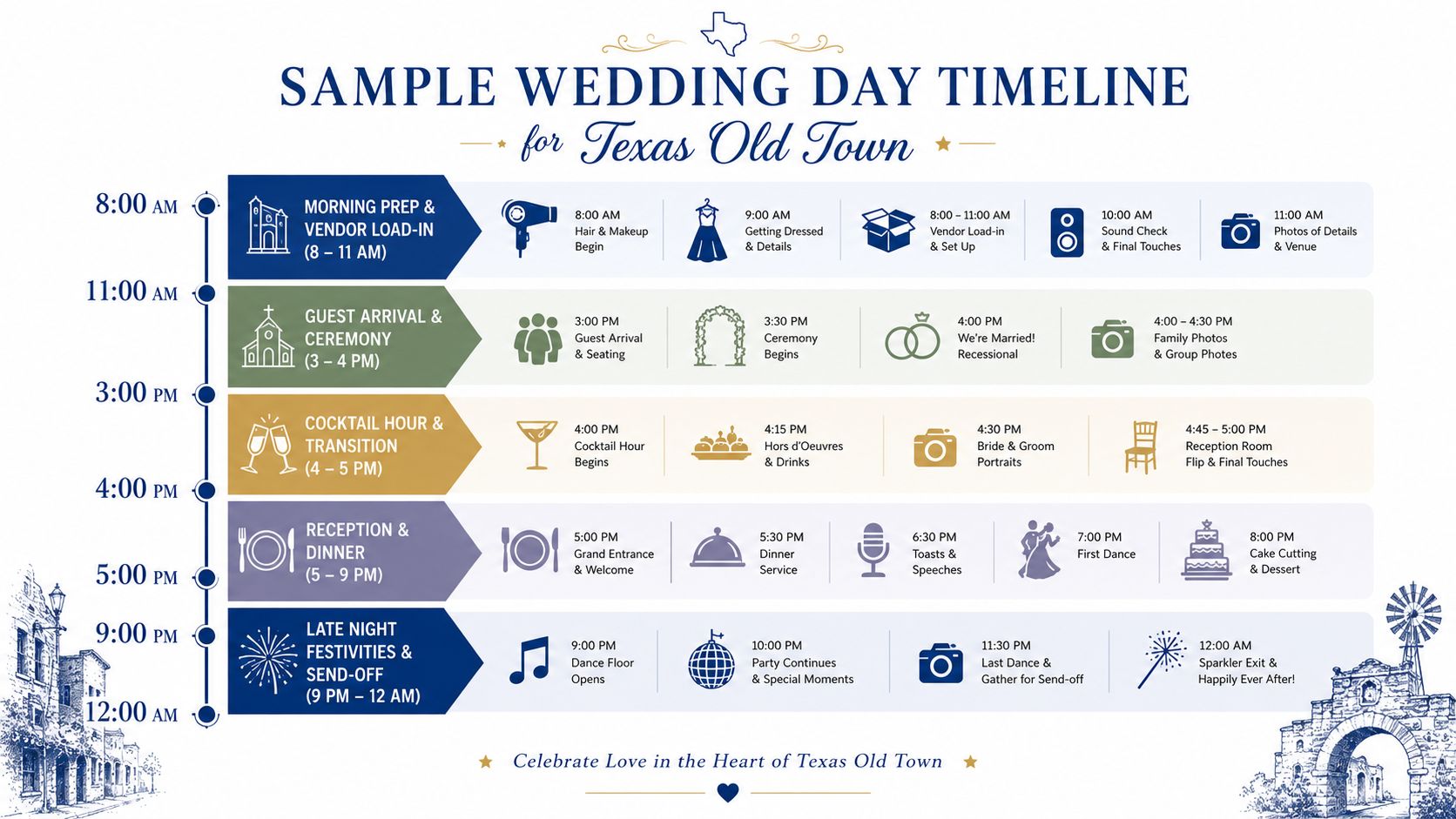
A workable example
| Time | Coordination focus |
|---|---|
| 8:00 a.m. | Venue access begins. Coordinator checks the selected hall, ceremony location, dressing suites, parking route, prep kitchen, and service entry. |
| 8:30 a.m. | Hair and makeup begins for the first person scheduled. The coordinator confirms beauty pacing and keeps the room clear for personal items. |
| 9:00 to 11:00 a.m. | Vendors load in according to staggered windows. Caterer uses the service entry, while rentals, décor, entertainment, and floral teams work in assigned areas. |
| 11:00 a.m. to 1:00 p.m. | Reception setup continues. Coordinator checks tables, chairs, bar placement, signage, guestbook, personal décor, and indoor backup arrangements. |
| 1:00 to 2:30 p.m. | Wedding party finishes preparation. Photographer captures details and preparation images. Coordinator confirms ceremony participants and transportation. |
| 2:30 to 3:30 p.m. | First look and wedding party portraits, if selected. Family photo groups receive clear call times so the ceremony isn't delayed. |
| 3:30 to 4:00 p.m. | Guests arrive and are directed to the ceremony area. Sound check, officiant readiness, processional order, and weather decision are confirmed. |
| 4:00 to 5:00 p.m. | Ceremony, recessional, guest movement, cocktail hour, and couple portraits. The coordinator manages the transition between outdoor and indoor spaces. |
| 5:00 to 9:00 p.m. | Reception introductions, dinner, speeches, dances, and open dancing. The coordinator works with the DJ or band and caterer on each cue. |
| 9:00 p.m. to midnight | Late-night activity, final guest departures, send-off, personal-item collection, and vendor breakdown. |
This schedule is a starting framework, not a promise that every wedding should follow the same clock. Couples can use a reception schedule template to document the actual ceremony length, menu service, entertainment plan, transportation, and send-off choice.
The property's extended access can reduce compression, but it can also tempt vendors to work without urgency. The coordinator should still assign deadlines for room readiness, sound checks, floral completion, and guest-facing transitions. More access is useful only when the schedule tells each person how to use it.
Your Pre-Wedding Coordination Checklist
The final month should be a handoff period, not a discovery period. A coordinator can solve an unexpected problem, but they can't responsibly manage a plan they haven't received. Send organized information, identify open decisions, and mark anything that affects guest movement or vendor access.

Lock the documents first
Start with signed vendor contracts and current contact details. Include the service description, arrival plan, payment responsibilities, meal requirements, equipment, setup expectations, and teardown obligations. A coordinator needs the actual contract language, not a memory of what was discussed during a consultation.
Then confirm the final floor plan. Mark ceremony seating, reception tables, DJ or band placement, bar location, buffet or plated-service path, cake, gifts, guestbook, signage, dance floor, and accessible routes. At Texas Old Town, the choice between an indoor and outdoor ceremony also affects sound, guest movement, weather decisions, and the timing of the room transition.
Build the cue and contingency files
A cue sheet should identify who signals the processional, who releases the wedding party, when the officiant moves, when the DJ introduces the couple, and who approves changes. Include speech order, special dances, meal cues, private dances, cultural traditions, and any moments the couple wants protected from improvisation.
For an outdoor ceremony, write down the decision process for wind, rain, heat, sound, seating, and a move indoors. The question isn't only whether a backup exists. It's who makes the call, by what time, and who communicates it to guests and vendors.
Use a final contact list with one primary contact for each vendor, the venue manager, the couple, the wedding party lead, the officiant, and transportation. Keep it in a shared digital file and a coordinator-ready format. A printed copy remains useful when a phone battery, signal, or login becomes a problem.
Prepare the people, not only the paperwork
Confirm the guest count and seating assignments, then flag sensitive situations such as divorced parents, mobility needs, children in the processional, or guests who require transportation assistance. Give the coordinator names and relationships, but don't make the couple responsible for managing those details during the event.
Beauty appointments deserve the same care as décor. Couples who are considering cosmetic or skin-related services before the wedding should discuss timing, risks, and suitability with a qualified provider, including resources for medically supervised wedding prep care. Last-minute treatments should never be added to the timeline without professional guidance.
For a broader planning sequence, use Texas Old Town's event planning timeline. The coordinator should receive the completed version with open questions clearly labeled, rather than sorting through disconnected messages.
Cost Expectations and How to Choose a Coordinator
A day-of coordinator is rarely hired only for wedding-day presence. The hidden workload often begins with reviewing vendor contracts, building the master timeline, confirming arrival windows, checking venue access, and deciding who handles each handoff. For current market context, see this wedding coordination cost discussion.
A quote can vary substantially. Guest count, vendor count, venue layout, indoor and outdoor transitions, transportation, ceremony complexity, setup expectations, and pre-wedding involvement all change the workload. At Texas Old Town, the venue's 16-hour access window and multiple indoor and outdoor options can create more coordination points than a single-room event. The lowest quote may cover only on-site presence. A higher quote may include the preparation that prevents late arrivals, missing items, and confused vendor handoffs.
Day-of Coordination Cost Factors
| Factor | Impact on Cost | Typical Range |
|---|---|---|
| Pre-wedding involvement | Meetings, document review, vendor outreach, and timeline revisions require coordinator time before the event. | Varies by package |
| Guest count | Larger groups require more attention to seating, transportation, guest flow, and meal transitions. | Varies by event |
| Vendor count | More vendors create additional arrival windows, contacts, setup conflicts, and teardown handoffs. | Varies by event |
| Venue complexity | Separate ceremony and reception areas, outdoor contingencies, long walking routes, and multiple access points add coordination work. | Varies by venue |
| Timeline length | A longer active schedule may require extended staffing or an additional coordinator. | Varies by contract |
Questions that reveal the real scope
Ask when the coordinator officially begins. The answer should identify a defined transition period, not only an arrival time on the wedding day. Request the actual deliverables, such as the master timeline, vendor contact sheet, floor plan, cue sheet, emergency plan, and final meeting schedule.
Ask who handles common failures: a late vendor, missing rental item, weather change, unplanned speech, or transportation delay. A useful response names the communication path, decision owner, and backup plan. Vague reassurance does not show how the coordinator will operate under pressure.
Review the contract for hours, overtime, assistant staffing, rehearsal coverage, setup and teardown responsibilities, meals, travel, cancellation terms, and what happens if the coordinator becomes unavailable. Confirm which duties belong to the coordinator and which remain with Texas Old Town or another venue representative.
For a Texas Old Town wedding, ask specifically how the coordinator will use the full access window. The plan should identify when vendors load in, when ceremony and reception spaces are checked, when outdoor conditions are reassessed, and who protects the transition between spaces. Those details reveal whether the quoted package matches the actual schedule.
The right coordinator does not promise that nothing will go wrong. They explain who will notice, who will decide, and how the couple stays out of the problem.
Central Texas experience helps because venue access, outdoor conditions, distances between spaces, and local vendor routes shape the plan. Experience alone is not enough. Choose someone who can show a clear process for collecting information, assigning responsibility, and turning the details into one shared operating document.
Frequently Asked Questions for Central Texas Couples
What's the difference between a venue manager and a day-of coordinator?
The venue manager focuses on the property, venue rules, building access, included equipment, safety, and venue staff. A day-of coordinator manages the couple's complete event plan, including outside vendors, family cues, personal décor, transportation, ceremony timing, photography priorities, and reception transitions. The roles can work together, but they aren't interchangeable.
How does coordination change for an outdoor ceremony?
Outdoor ceremonies add decisions about sound, seating, shade, wind, walking routes, transportation, and the timing of a move indoors. At a Hill Country venue, the coordinator should confirm the weather trigger, assign the person who makes the call, and communicate the change without sending guests through active vendor setup.
What happens if the ceremony must move inside?
The coordinator activates the pre-approved floor plan, directs vendors to the revised setup, confirms the indoor sound system, changes guest instructions, and protects the reception schedule as much as possible. A backup plan works only when the furniture, ceremony aisle, microphones, signage, and timing have been discussed before the final month.
Can a coordinator work with Texas Old Town's on-site manager?
Yes, the coordinator can coordinate the couple's vendors and event decisions with the venue's on-site management. Texas Old Town offers multiple halls and indoor and outdoor event options, so the handoff should clarify which responsibilities belong to venue staff and which remain with the couple's coordinator.
Do couples need day-of coordination if the venue includes support?
Often, the answer depends on the venue's scope and the couple's vendor load. Venue support may not include personal décor, family communication, photography schedules, transportation, or every reception cue. Read both contracts together and assign every task to a named person.
Texas Old Town offers four private halls, indoor and outdoor ceremony options, dressing suites, a prep kitchen with a separate service entry, private parking, and exclusive access from 8:00 a.m. to midnight. Visit Texas Old Town to tour the property and discuss how its venue team can fit into your day-of coordination plan.