Most reception advice starts from the wrong assumption. It assumes your job is to fit everything into a standard evening block.
That works if your venue only gives you a narrow window. It doesn't work nearly as well when you have all-day access and enough room to pace the event properly. In that setting, copying a generic reception schedule template often creates two bad outcomes: either the day still feels rushed for no reason, or the extra hours get filled with loose, unplanned downtime that makes the event feel disjointed.
A better approach is to treat time as structure, not filler. If your venue gives you a long rental block, use it to separate setup from guest time, protect photo time, build in vendor breathing room, and keep the actual reception moving with purpose. The reception itself should still feel lively and well-timed. The difference is that the pressure moves out of the guest experience and into a smarter plan.
Table of Contents
- Why Standard Reception Templates Fail at Modern Venues
- The Building Blocks of a Flawless Reception Timeline
- Downloadable Timelines for Weddings Quinceañeras and Corporate Events
- Adapting Your Timeline to Your Texas Old Town Venue
- The Vendor Coordination Checklist Your Timeline Needs
- Building a Rock-Solid Weather Contingency Plan
Why Standard Reception Templates Fail at Modern Venues
The internet is full of reception schedule template examples built around one familiar model: a short, tightly packed evening. That's useful up to a point, but it leaves a major planning gap for clients using venues with longer access windows.
The mismatch is real. Existing reception schedule templates overwhelmingly assume a 4 to 5 hour standard window, leaving couples with longer venue rentals without much guidance on how to use that extra time well. The average wedding reception lasts 5 hours, and over 30% of Reddit users report confusion when their timeline depends on venue rental length rather than a fixed duration, according to The Knot's traditional reception timeline discussion.
That confusion usually shows up in one of two ways.
First, people compress the day anyway. They have a long rental, but hair and makeup run late, decor setup overlaps with family arrivals, photos get squeezed, and the reception still starts with everyone already feeling behind.
Second, they stretch a short template into a long day without changing the logic. That creates dead air. Guests wait too long between ceremony and dinner. Formalities stack up. The dance floor opens too late. Vendors stand by for cues that should have been decided earlier.
Practical rule: A longer rental should make the event feel calmer for guests and easier for vendors. It should not make the reception itself slower.
A good plan separates the all-day venue access from the guest-facing momentum. Those are not the same thing. You might use morning and early afternoon for setup, private meals, detail photos, rehearsed entrances, and protected family time. Then you let the reception run with a clear rhythm once guests arrive.
Here's the trade-off in plain terms:
| Planning approach | What happens in real life |
|---|---|
| Standard short template copied as-is | Important moments get rushed |
| Long day with no structure | Guests feel gaps and drift |
| Purpose-built long-rental plan | Setup feels relaxed, reception still feels sharp |
The best timelines don't ask, "How do we fill sixteen hours?" They ask, "Which parts of the day deserve space, and which parts should stay tight?" That's the shift that makes a long-rental venue work in your favor.
The Building Blocks of a Flawless Reception Timeline
A reception schedule template works best when you stop treating it like one rigid script and start treating it like a set of modules. Every strong timeline uses the same core pieces. What changes is the spacing, the order of a few moments, and how much pressure you put on each block.
As a baseline, the average wedding reception lasts approximately 5 hours, usually with a 1-hour cocktail reception followed by 4 hours for dinner and dancing. Within that framework, the grand entrance often takes 10 to 15 minutes, dinner service runs 60 to 90 minutes, and toasts are kept to 15 to 20 minutes in this reception timeline guide.
That baseline matters because it gives you a reference point. You don't have to copy it exactly, but you should understand what each part is supposed to accomplish before you start moving pieces around.
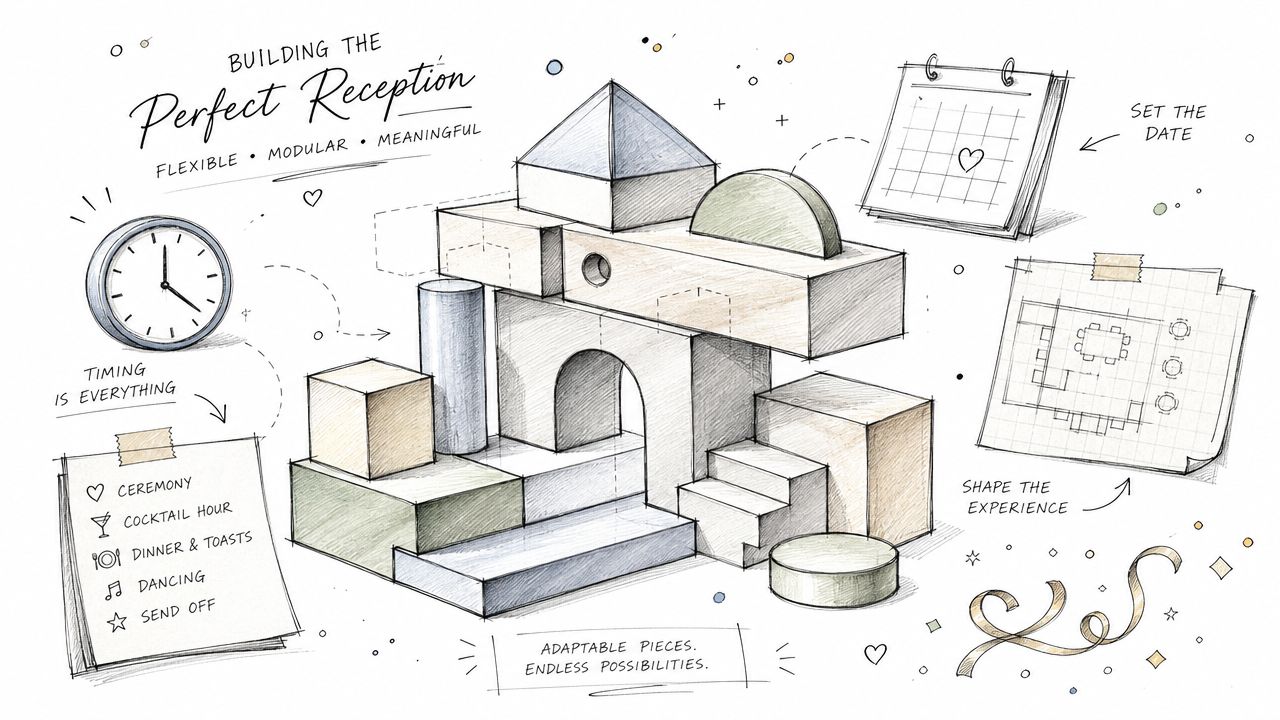
What each reception block is doing
Cocktail hour is a transition tool. Guests need a place to land after the ceremony. This is when the bar opens, passed appetizers or light bites do their job, and the couple can finish any last photos without making guests feel parked.
Grand entrance creates a clean reset. It signals that the event is moving from mingling into hosted celebration. If it drags, the room loses lift before dinner even begins.
Dinner service does more than feed people. It stabilizes the room. If guests are seated efficiently and served on time, everything after dinner gets easier. If dinner starts late, every later event gets squeezed.
How the blocks should connect
The middle of the evening is where many timelines wobble. Toasts, blessings, welcome remarks, first dances, parent dances, cake cutting, and open dancing can either build momentum or stall it.
I generally advise clients to think about these moments in three categories:
- Energy-building moments like the entrance and first dances
- Seated moments like dinner and toasts
- Release moments like opening the dance floor and late-night fun
The best reception schedule template doesn't cram every tradition into one cluster. It spaces formal attention and social energy so guests never feel trapped in their chairs for too long.
A clean flow often looks like this:
- Arrival and cocktail period: Guests settle in and the couple wraps up any last private tasks.
- Room opening and entrance: The event becomes more directed.
- Meal and brief remarks: Guests eat while the room stays focused.
- Featured dances: These work best when people are already gathered and attentive.
- Open dancing and flexible moments: Cake, photos with friends, and casual mingling happen more naturally here.
One more point matters more than people expect. The final stretch of the night needs protection. Cleanup, personal item collection, vendor pack-out, and guest send-off all compete for attention at the end of the event. If your schedule leaves no breathing room there, the whole finish feels abrupt.
When you build your reception schedule template from blocks instead of copying a generic list, you get control over pace. That's what makes the evening feel polished instead of over-programmed.
Downloadable Timelines for Weddings Quinceañeras and Corporate Events
The best template is the one that fits the event in front of you. A wedding doesn't move like a quinceañera, and neither of those should be scheduled like a corporate awards dinner. Guest count changes the pace too. Industry planning guidance commonly separates intimate events from larger celebrations and recommends allowing 60 minutes before guest arrival for final vendor coordination so the event doesn't start with a rushed feeling, as outlined in this wedding day timeline template.
That last hour before doors open is one of the most valuable hours in the entire plan. Protect it.
For planners who want help managing moving parts across vendors, guest communication, and timeline revisions, tools focused on optimizing event management with AI can help centralize details without turning your schedule into a spreadsheet maze.
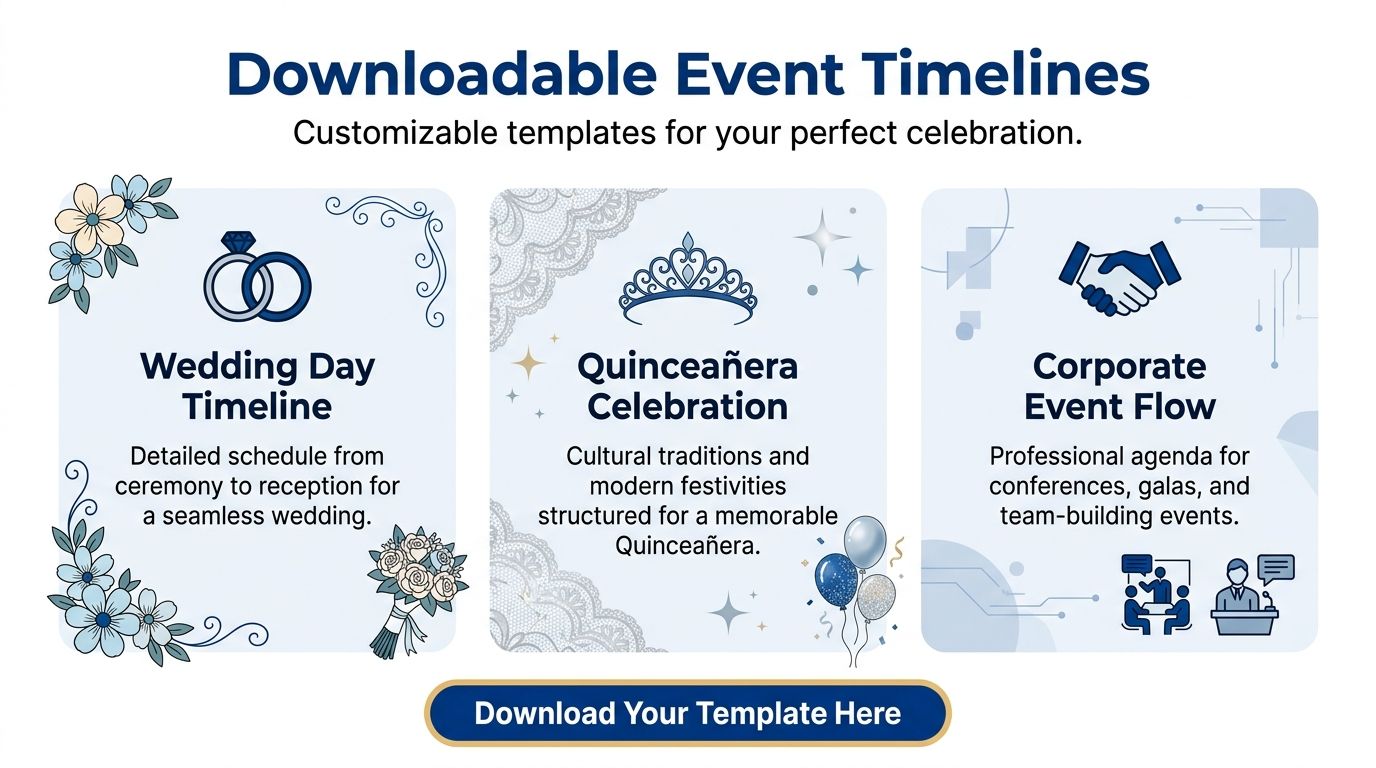
Classic wedding evening flow
This version works well when you want a familiar reception shape and a clear evening arc.
| Time | Event |
|---|---|
| 5:00 p.m. | Ceremony |
| 5:30 p.m. | Cocktail hour |
| 6:30 p.m. | Guests invited into reception space |
| 6:40 p.m. | Wedding party and couple entrance |
| 6:50 p.m. | Welcome and blessing |
| 7:00 p.m. | Dinner service begins |
| 7:45 p.m. | Toasts |
| 8:05 p.m. | First dance and parent dances |
| 8:20 p.m. | Dance floor opens |
| 9:15 p.m. | Cake cutting or dessert moment |
| 10:30 p.m. | Last dance or send-off prep |
| 11:00 p.m. | Exit |
Why it works: the transitions are obvious. Guests always know whether they're mingling, dining, or celebrating. It also gives your DJ, caterer, and photographer easy cue points.
Extended wedding flow with room to breathe
This is the version I recommend when you have a long venue rental and want the day to feel unhurried without making the reception drag.
Morning
- Venue access begins: Rentals, florals, and personal decor arrive.
- Dressing suites open: Wedding party settles in without crossing paths with setup crews.
- Private meal and downtime: The couple and immediate family eat before the ceremony rush.
Afternoon
- First look and portraits: These happen before guests arrive, which removes pressure later.
- Wedding party photos: Get these finished while everyone still looks fresh and focused.
- Quiet reset: Everyone gets a short pause before guest arrival.
Evening
- Ceremony
- Cocktail hour
- Reception with dinner, toasts, and dancing
- Private sunset photos if desired
- Send-off followed by organized pickup of gifts, decor, and personal items
This model uses extra access time for private logistics, not for stretching the public-facing reception. That distinction is what keeps the night from feeling sluggish.
A long rental is most valuable before guests arrive and after they leave. During the reception, pace still matters.
Quinceañera celebration flow
A quinceañera needs more ceremonial structure than a typical wedding reception, but it still benefits from smooth sequencing.
| Phase | Suggested flow |
|---|---|
| Guest arrival | Welcome music, seating, family greeting |
| Formal opening | Grand entrance of the court and quinceañera |
| Blessing or welcome remarks | Short and clear |
| Meal service | Start before attention fades |
| Traditions | Changing of the shoes, last doll, parent presentation, waltz |
| Dance opening | Transition from formal dance to open floor |
| Social celebration | Group dancing, photos, dessert, family moments |
| Closing | Farewell and pickup coordination |
The common mistake here is bunching every tradition together before food. That makes the room restless. Spread ceremonial moments across the evening so they feel meaningful instead of heavy.
Corporate gala and awards dinner flow
Corporate events need a different kind of discipline. Guests are often arriving from traffic, checking in, networking, and looking for cues about when the event becomes formal.
A strong gala schedule usually follows this pattern:
- Arrival and registration
- Networking reception
- Room opening and seating
- Welcome remarks
- Dinner service
- Awards or keynote segment
- Dessert or final recognition
- Networking, music, or lounge-style close
For corporate planners, the biggest risk isn't usually tradition overload. It's trying to do too much during the speaking portion. If awards, sponsor recognition, and executive remarks all stack up before dinner lands, the room gets flat fast.
If you're building editable templates for any of these event types, make them with three layers: guest-facing schedule, vendor cue sheet, and internal operations notes. That's the version people use on event day.
Adapting Your Timeline to Your Texas Old Town Venue
A reception schedule template only works if it fits the physical space. The same order of events can feel smooth in one hall and clumsy in another, depending on entry points, ceremony distance, bar placement, photo locations, and how guests move from one zone to the next.
That matters on a multi-venue property. A spacious hall can support a bigger entrance moment and more expansive dance floor timing. A more intimate room may work better with shorter transitions and tighter cueing. An outdoor ceremony site paired with a separate indoor hall needs a cleaner guest movement plan than a single-space event.
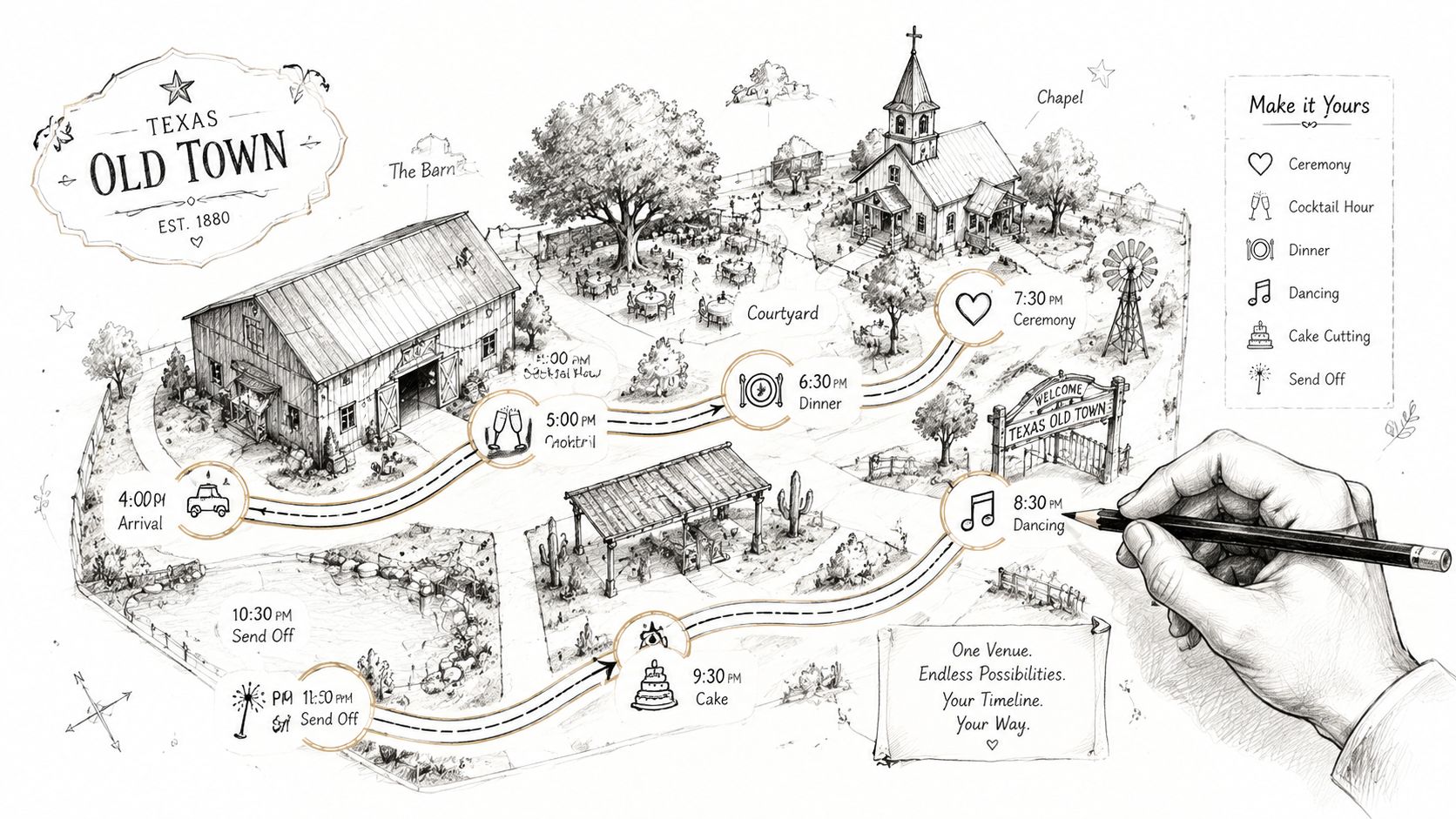
Match the hall to the pace of the event
Tejas benefits from confident staging. If you're planning a larger guest count, use that scale intentionally. Grand entrances, a strong first dance reveal, and a clearly defined dance floor opening all play well there because the room can absorb bigger moments.
Sage often works best when transitions feel effortless. If the ceremony and reception movement is naturally tucked away and quiet, you can keep guests flowing without over-explaining every shift. That makes it a good match for events that want a polished but less theatrical feel.
Stone supports a more composed visual rhythm. If sunset portraits and room ambiance matter, leave yourself enough pre-reception and dinner timing to take advantage of the grounds without delaying the meal or making guests wait for the next cue.
Redbud rewards tighter planning. In a more intimate hall, guests notice delays sooner because the room feels personal and connected. That's not a drawback. It means your entrance, toast order, and meal timing should stay especially clean.
Use movement intentionally
One of the easiest ways to improve a timeline is to map where people are standing at each phase.
Ask these questions before you finalize anything:
- Where do guests go immediately after the ceremony? Don't make them guess.
- Where is the bar relative to cocktail space? If the first stop creates a bottleneck, the whole hour feels longer.
- Where does the couple disappear for private photos? Make that movement discreet and short.
- Where will family gather for formal photos or special traditions? Give them a waiting point.
A venue with indoor and outdoor flexibility gives you options, but options only help if they're assigned clearly. That's one reason resources on indoor and outdoor venue flexibility for hosting birthdays corporate events and weddings at Texas Old Town are useful during planning. They help you think in terms of guest flow, not just room names.
If guests have to stop and ask where to go next, the timeline isn't finished yet.
I also recommend identifying two photo windows instead of relying on one. Have a primary portrait plan and a shorter fallback option. That keeps the event moving even if family wrangling, weather, or late arrivals change the pace.
Good timeline adaptation isn't about making every hall work the same way. It's about respecting what each space does well and building the order of events around that strength.
The Vendor Coordination Checklist Your Timeline Needs
A reception schedule template becomes real when vendors can act on it. If the photographer has one version, the DJ has another, and the caterer is waiting on verbal updates, the timeline is just wishful thinking.
The biggest reception slowdowns usually happen at handoff points. Dinner is ready but speeches aren't. The DJ announces a first dance while catering staff are still clearing plates. The photographer steps away for a vendor meal just before an unplanned cake cutting. Those aren't dramatic failures. They're small coordination misses that make a polished event feel loose.
Planning guidance for reception flow warns against delaying dinner for extended formalities and recommends keeping cocktail hour under 60 minutes and placing first dances right after dinner to keep momentum moving, according to this reception timeline article. That only happens when all vendors are working from the same cue sheet.
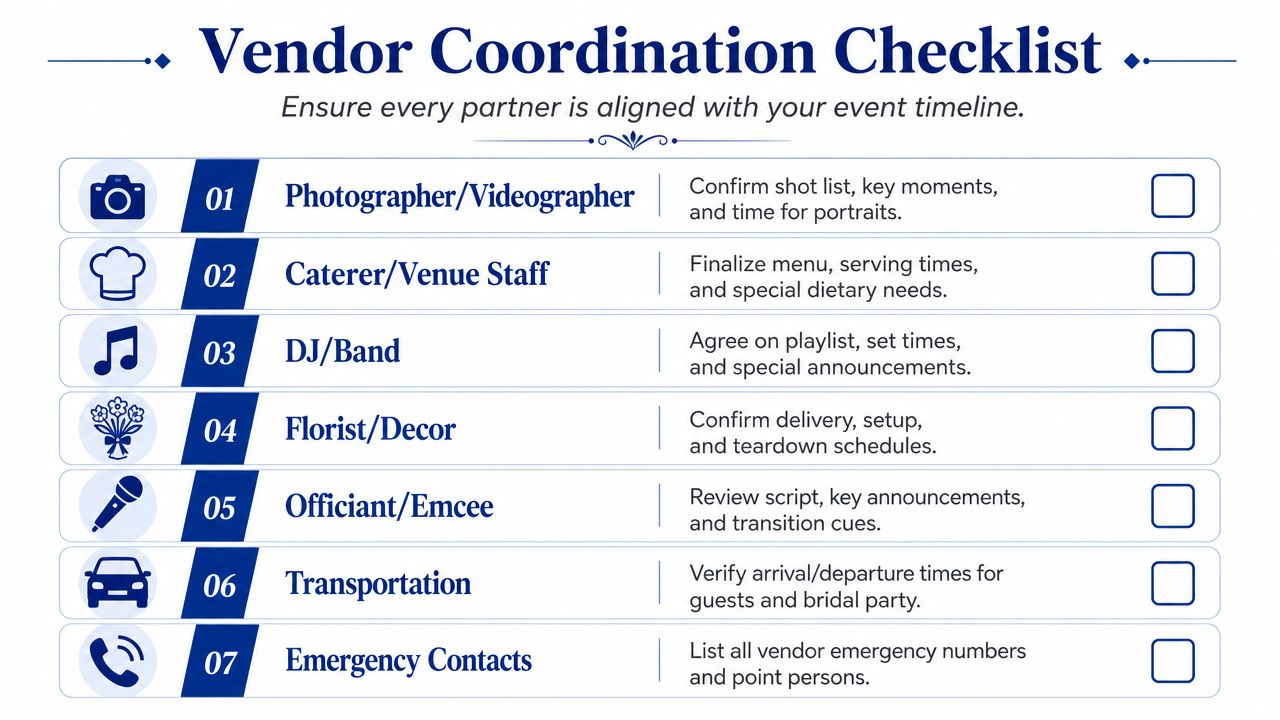
The handoff points that matter most
Use this as your working checklist, not just a planning worksheet.
- Caterer and venue staff: Confirm when guests are invited to dinner, when salads or first course land, when entrées can be served, and exactly who gives the green light for cake cutting.
- DJ or band: Lock in the pronunciation list, entrance order, toast order, first-dance cue, parent-dance cue, open-floor cue, and final announcement timing.
- Photographer and videographer: Identify family-photo wranglers, sunset-photo window, detail-shot access, and the latest possible time for any must-have moments.
- Bartender or bar service team: Confirm opening time, any signature drink plan, where the line will form, and who calls last round.
- Florist or decor team: Note delivery timing, ceremony-to-reception repurposing, and when personal items must be removed.
- Transportation: If shuttles or private pickups are involved, assign one person to confirm arrivals and departure sequence.
- Point person: Choose one decision-maker for day-of questions. Couples should not become dispatchers during cocktail hour.
What to send vendors before the event
Send one shared document, then a shorter day-of version. The long version should include addresses, load-in notes, contact names, formal event order, and venue-specific movement notes. The short version should be cue-based and easy to scan on a phone.
A good packet includes:
| Document piece | Why vendors need it |
|---|---|
| Master timeline | Full sequence and responsibilities |
| Contact sheet | Fast decisions when something shifts |
| Load-in and setup notes | Prevents entry confusion |
| Photo priority list | Protects key family and décor moments |
| Announcement script | Keeps names and order correct |
| Breakdown notes | Avoids end-of-night scrambling |
For teams that need a more organized process for collecting vendor paperwork and expectations, Superdocu's vendor onboarding guide is a practical reference. It helps turn scattered email threads into a cleaner onboarding workflow.
If you're sourcing from a preferred list or comparing professionals for fit, a dedicated Texas Old Town vendor resource can also shorten the vetting process because it gives planners and families a more stable starting point.
The timeline should answer three questions for every vendor: when do I arrive, what is my cue, and who approves the next move?
If those answers aren't visible at a glance, revise the document before event week.
Building a Rock-Solid Weather Contingency Plan
Weather planning gets framed too often as a backup. It should be treated as a parallel plan. When an event has both outdoor ceremony space and an indoor setting that can carry the ceremony beautifully, the job isn't to panic less. The job is to decide earlier and communicate better.
The strongest weather plan starts with a simple rule: write Plan A and Plan B as complete timelines, not as a note that says "move indoors if needed." That means the ceremony setup, guest arrival path, sound plan, family photo locations, and post-ceremony transition all need an indoor version.
Make the indoor plan real
An indoor weather plan fails when it feels improvised. Build it with the same level of detail as the outdoor version.
Use a checklist like this:
- Ceremony placement: Identify exactly where the ceremony would sit indoors.
- Chair layout: Know whether guest seating changes shape or orientation.
- Audio cues: Test microphones and music for the indoor setup too.
- Photo plan: Pick indoor portrait spots in advance.
- Décor adaptation: Decide which floral and aisle elements move and which stay put.
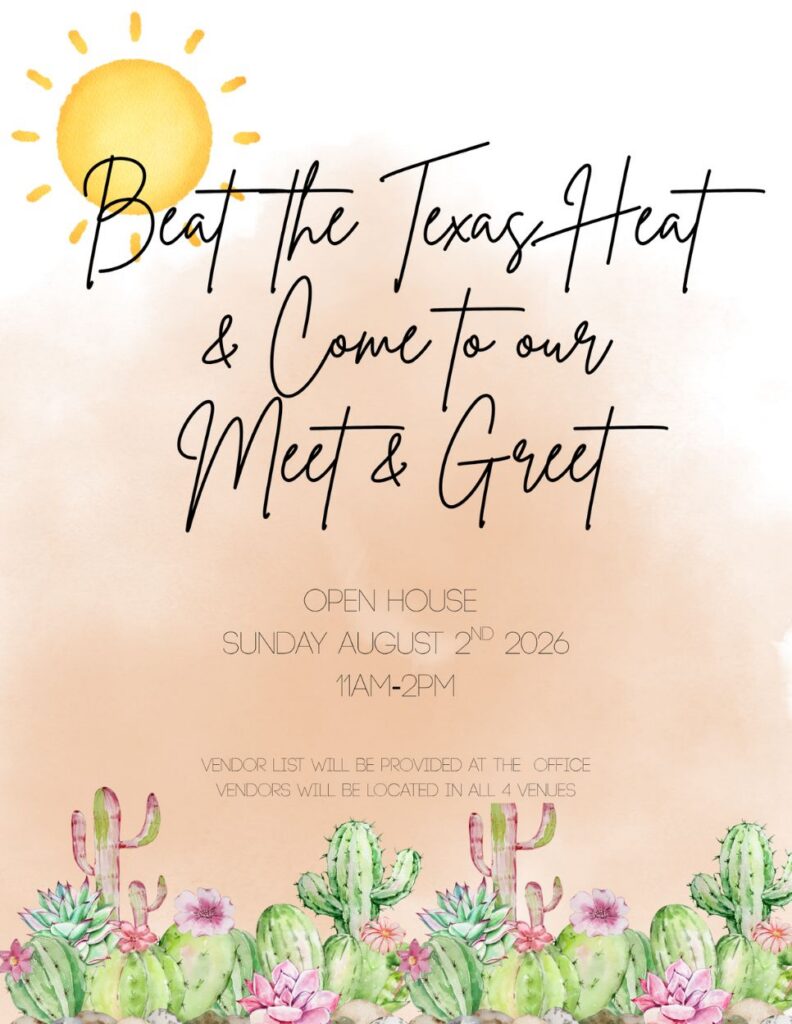
If you're planning around Texas heat as much as rain, practical guides on summer wedding tips for beating the Texas heat at Texas Old Town can help you think through comfort, timing, and guest movement before weather becomes a day-of problem.
Keep communication simple
Most weather stress comes from unclear decision-making. Pick the decision makers early. Usually that's the client, planner or designated family lead, key venue contact, and one person from photo or production if needed.
Then choose a communication chain:
- Internal decision
- Vendor notification
- Wedding party and family alert
- Guest-facing update if necessary
For family-heavy events, it also helps to organize family emergency contacts in one place so key people can be reached quickly if ceremony logistics change.
Guests don't judge an indoor switch nearly as much as they notice confusion.
An indoor move can still feel intentional, welcoming, and visually strong if everyone knows the plan and the cue timing stays clean. That's what good contingency planning does. It protects the mood of the event, not just the mechanics.
If you're planning a wedding, quinceañera, corporate gathering, or milestone celebration and want a venue that gives you enough time to build a calm, well-paced day, Texas Old Town is worth a close look. The campus offers four private venues, indoor and outdoor flexibility, and a long rental window that makes a thoughtful reception schedule template much easier to execute.