You're three months into planning, the deposit is paid, the menu draft is moving, and someone finally asks the question nobody wanted to ask earlier, what's the actual footprint of this event? That's usually the moment sustainable event planning stops sounding like a nice extra and starts looking like an operations problem, because by then the expensive decisions are already moving. The smart play is to treat sustainability as a set of venue, vendor, and waste decisions made before contracts harden, not as a decor swap at the end.
Table of Contents
- Why Sustainability Has to Start Before the Decor
- Setting Goals, Budget, and a Vendor Filter
- Catering, Bar, and Menu Choices That Cut Waste
- Using an Outdoor Hill Country Venue the Smart Way
- Waste Sorting, Recycling, and Composting on Event Day
- Guest Communication That Drives Real Behavior
- Measuring Results and Reporting Without Spreadsheets
Why Sustainability Has to Start Before the Decor
Start with the decisions that are hardest to reverse. The moment you lock in the venue, guest flow, service plan, and vendor access, you have already decided most of the event's real footprint. Linens and centerpieces matter to the look, but they rarely move the sustainability needle the way travel, load-in, and back-of-house logistics do.
That is why sustainability has to be treated as an operations decision, not a styling choice. A major industry report found the average event carbon footprint was 117 tCO2e, and 78% of that footprint came from travel, with accommodation at 7%, materials at 6%, and food and beverage at 4%. The same report covered events from April 2022 to May 2023 and included both UK and non-UK events, which makes the point plain. Guest movement is the first problem to solve. A second industry summary says travel can make up 70% to 90% of a large-scale event's total carbon footprint, and a three-day event for 1,000 people can emit about 500 tons of CO2 (Event Decision, State of Sustainability 2023).
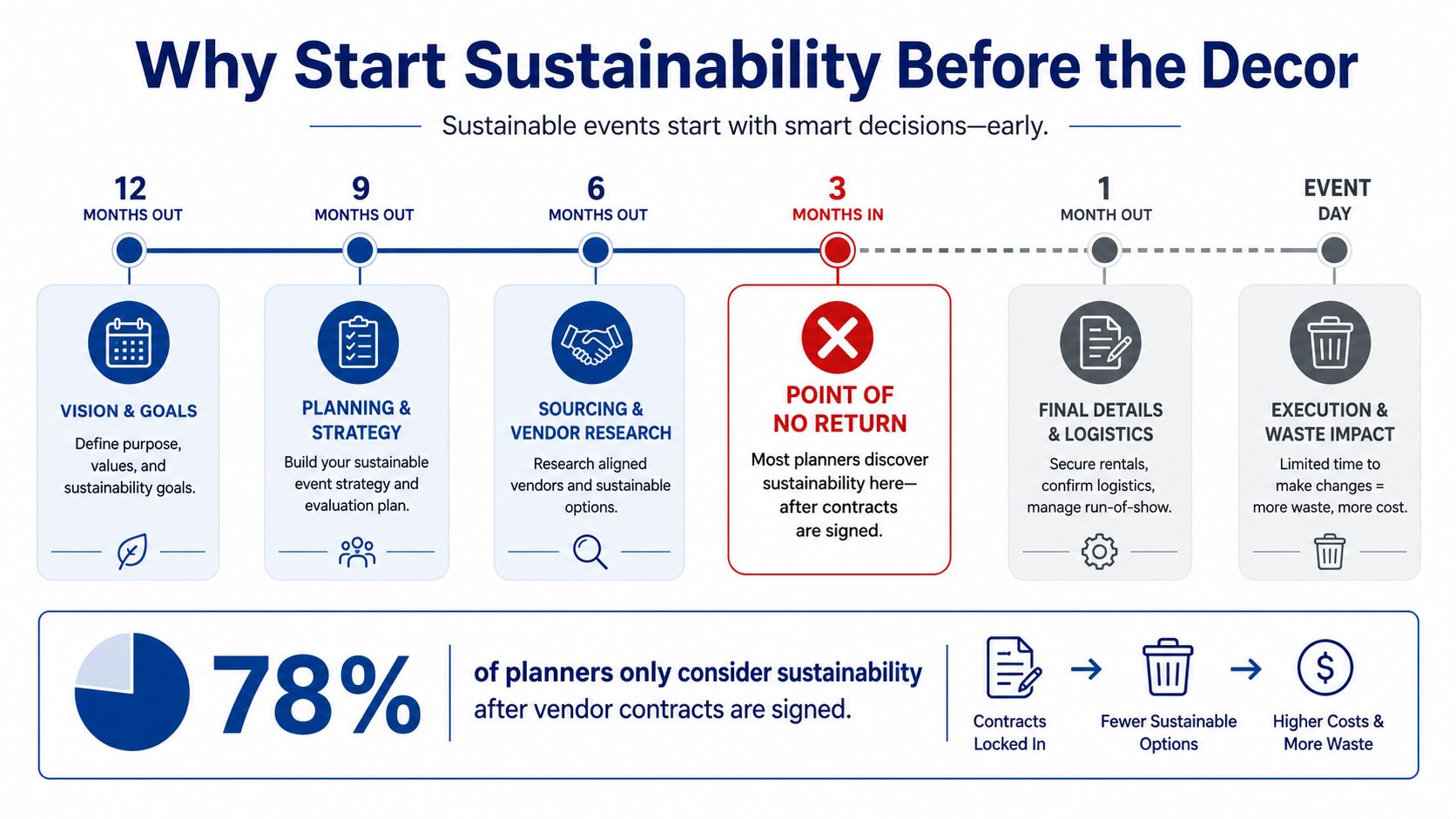
Start with the decisions that are hardest to undo
The first question is physical, not decorative. Does this event need the same format, the same location, and the same attendance pattern you originally pictured? If the answer is no, change those inputs before anyone starts approving draping or floral installs. A venue with practical access, less backtracking, and efficient setup will save more waste and labor than a stack of eco-friendly add-ons ever will.
Practical rule: if a sustainability choice cannot survive the contract phase, it is too late to count on it.
For planners comparing venue types, even a resource like the Modern Yard Landscapes turf guide can be useful when you are evaluating outdoor areas, land-use tradeoffs, and how much maintenance a property will need before event day. That kind of review matters when you are deciding whether a site will create constant upkeep, repeated supplier trips, and avoidable site work. I do not care about green language that sounds polished and changes nothing. I care about choices that reduce transport, cut unnecessary runs, and keep the event from turning into a logistics problem.
The strongest sustainable event planning starts upstream. Once the early decisions are sound, decor, rentals, signage, and even waste stations have a much better chance of working the way they should. For planners working through a multi-venue property, the Western venue at Austin is the kind of choice that can simplify access, vendor movement, and guest circulation before the styling team ever arrives.
Setting Goals, Budget, and a Vendor Filter
Most planners say they want a more sustainable event. That's too fuzzy to enforce, and it gives vendors room to nod politely while doing whatever they were going to do anyway. Write down two or three goals you can verify later, then make those goals part of the budget and vendor screen before anyone signs.
A workable set of goals sounds like this, not “be greener.” It sounds like reduce single-use serviceware, prioritize local sourcing where available, or document waste diversion after the event. Those are specific enough to brief a caterer, a rental house, and a venue coordinator without turning the conversation into a lecture.
The budget has to follow the goals. If you want compostable serviceware, sorting stations, clear bin signage, or post-event reporting, those items need a line in the estimate before catering eats the whole budget. The cleaner approach is to treat sustainability like a control system, with a baseline audit, a vendor checklist, and measurable follow-up, not a communications flourish added after the fact.
Don't ask vendors if they're “eco-friendly.” Ask what packaging they use, how they handle leftovers, what they take back, and what they can prove in writing.
A tight vendor filter should cover packaging, local sourcing, waste handling, and any certifications a planner cares about. If a florist ships in excessive wrapping or a caterer won't confirm take-back of unused prepared food, that's not a moral failure, it's a sign they're the wrong fit. For a venue search that needs to account for real logistics as much as style, this Austin western venue option can help planners think through layout, access, and practical guest movement before they overcommit to a setup that's hard to run sustainably.
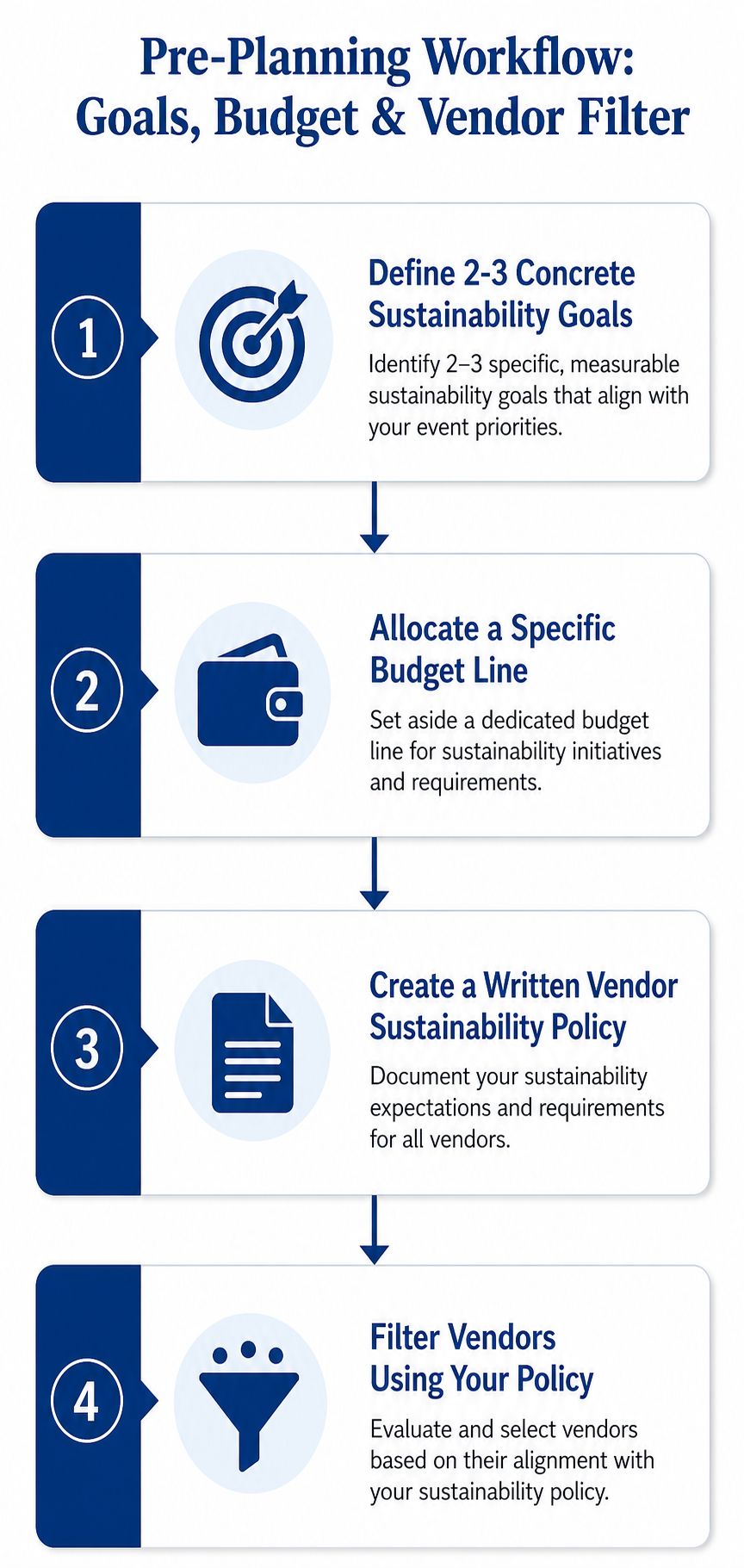
A vendor filter you can hand to your coordinator
Use a one-page filter and keep it blunt.
- Packaging: Will you use bulk dispensers, returnable crates, or minimized packaging?
- Sourcing: What can you source locally or seasonally, and what can't you?
- Waste handling: How do you separate, collect, and remove trash, recycling, and compost?
- Take-back: Will you remove unused supplies, decor, or safe surplus food?
- Proof: What can you document before the event, not after it?
That checklist works because it forces decisions early, while there's still room to switch vendors. It also keeps sustainability from becoming a vague preference that gets dropped the moment a quote comes in lower. If the goal is a credible event, the vendor list has to be filtered by operations, not by promises.
Catering, Bar, and Menu Choices That Cut Waste
Food service is where sustainability either lives or dies in the trash bin. I've watched polished events waste money here because the planner treated catering as a taste decision instead of an operations decision. The menu, the portion plan, the bar setup, and the take-back rules matter more than the printed card.
A venue team should start with the service style that matches the guest count and the pace of the event. Plated service gives the tightest portion control because the kitchen can build to a set count. Family-style works when the host wants a warmer feel and can accept some uneven leftovers. Buffet service gives the most choice, and it also gives guests the most room to overserve themselves.
| Service style | Typical food waste | Serviceware needs | Best fit |
|---|---|---|---|
| Plated | Lower when counts are accurate | Reusable or compostable plates, flatware, glassware | Formal weddings, corporate dinners |
| Family-style | Moderate, depends on table size and pacing | Reusable platters and serving pieces | Smaller groups, social events |
| Buffet | Higher if stations are overfilled | More serviceware, more signage, more replenishment control | Large guest counts, flexible eating windows |
The table is not about taste. It is about choosing the format that matches the event and the waste tolerance. A buffet with no portion guidance burns through food fast, especially when guests move between cocktail hour, dinner, and late-night service. The fix is simple, smaller initial fills, slower replenishment, and a captain who watches the line instead of guessing from the kitchen.
For detailed options on sustainable catering services at Hill Country venues, see our catering guide.
Build the menu around what is realistic for the site and the season. In Central Texas, local ingredients are a practical planning choice when the caterer is brought in early and the menu is not stuffed with items that need long-distance sourcing for no real gain. That matters on weddings and corporate dinners where the guest experience comes from timing, flavor, and service control, not from imported garnish.
For outside caterers, put the waste rules in writing before anyone loads a truck.
- Bulk service: use pumps, dispensers, and large-format containers instead of tiny packets and single-use bottles.
- Returnable transport: bring food and supplies in crates or totes that can go back.
- Take-back: remove unused prepared food when safe and permitted.
- Serviceware plan: specify reusable ware first, compostables second, disposables only when there is no cleaner option.
Give the caterer a portion plan, not a vague direction to be careful. Ask how they set plated counts per guest, how they handle family-style refills without overfilling platters, and how they portion buffet proteins so the first pass is not a pile of excess that turns into scraps. A serious team can tell you how many servings each pan produces, how much garnish they trim off before service, and what they do with unopened backup product at the end of the night. If they cannot answer those questions, they are not managing waste, they are hoping it disappears.
The bar needs the same discipline. Bottled drinks create inventory waste and packaging clutter, so bulk pours, keg service where appropriate, and a short, well-managed menu are the sensible choices. Keep the pour list narrow, match it to the guest profile, and stop ordering pretty extras that sit warm and unopened. A clean bar program saves labor, cuts glass and bottle handling, and makes cleanup faster for the crew who has to sort everything at the end of the night.
If you are sending a catering brief, ask for the same service style, the same serviceware plan, and the same take-back rules from every vendor. Compare them on execution, not just price. The vendor who can prove portion control, return logistics, and bar restraint will usually cost less to run than the one who sells a flashier menu and leaves the venue with a heavier trash load.
Using an Outdoor Hill Country Venue the Smart Way
Outdoor and indoor-outdoor venues give planners a real advantage because the property itself can do part of the sustainability work. A good site already has ceremony space, gardens, shade, and guest flow built in. That means less décor, fewer rented structures, and fewer temporary fixes that get hauled in and hauled out for one night.
Use the property instead of fighting it
If the venue has gardens, water features, or a natural ceremony site, let those elements carry the visual load. The smartest sustainable move is often subtraction, not substitution. When the backdrop is already strong, you don't need to spend on extra material just to manufacture a scene.
Indoor climate-controlled halls and outdoor sound options matter too, because comfort has sustainability consequences. If guests can move through the event without extra portable cooling, redundant generators, or awkward re-rigs, the whole operation gets cleaner. That's especially useful on properties that let one team handle setup, celebration, and breakdown within a single rental window.
A venue with a long enough access period also reduces the supplier shuffle. Fewer overnight holds, fewer next-day returns, and fewer duplicate trips all help the event run tighter. That matters more than flashy language about being “green,” because logistics are where waste really happens.
Parking, water, and rain plans deserve real attention
Parking layout sounds boring until you see the shuttle pattern get messy. If guests can park efficiently on-site, you cut transport friction and reduce the need for extra movement across the property. Water use deserves the same attention, especially on large outdoor sites where landscaping and guest comfort both matter.
The rain plan should be designed to minimize re-rigging. If the ceremony can move without rebuilding the entire event, the property stays efficient and the crew stays sane. For planners comparing Hill Country venues, the guide to choosing a Texas Hill Country wedding venue is a useful reference when you're weighing access, ceremony flexibility, and how much of the property can do useful work on event day.
A venue is more sustainable when it reduces the number of temporary things you have to bring in.
That's the test I use. If a site already supports the event with real infrastructure, you spend less on decor, transport, and backup systems. If it doesn't, sustainability becomes an expensive patch job.
Waste Sorting, Recycling, and Composting on Event Day
A great menu still ends up as landfill if the bins are confusing or hidden. Event-day waste handling has to be treated like part of the floor plan, not a custodial afterthought. The goal is simple, place the right bin in the right spot, label it clearly, and have a human available when guests need a nudge.
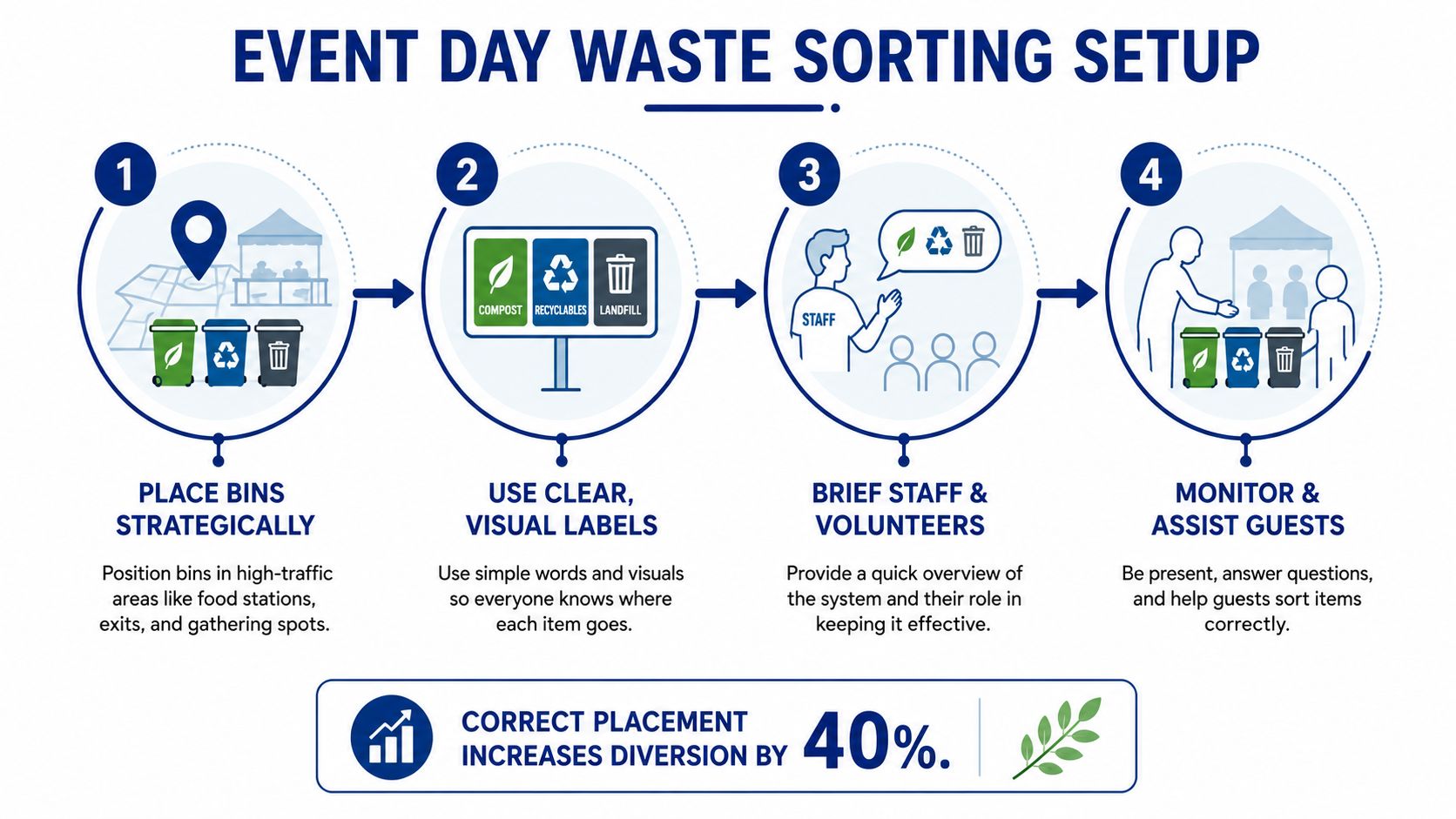
Put the stations where choices happen
Sorting stations belong where food and drink end, not where nobody walks. That usually means near buffet exits, bar returns, and hallway choke points, because that's where guests decide whether to sort properly or dump everything in the nearest opening. A three-stream or four-stream setup works only if the bins are obvious and close enough to use.
Use pictures on the signs, not paragraphs of text. First-time composters do better when the signage shows what goes where, and staff do better when they don't have to explain the same rule fifty times. Clear bin placement and simple guidance materially improve participation, which is why a good station is an operations decision, not a decor detail.
Staff the points that get crowded
The busiest windows are usually cocktail hour and buffet service. That's when plates pile up and guests move quickly, so a coordinator or assigned volunteer should stand nearby and answer questions without turning it into a scene. If the event is large, the venue clean-up team and the day-of coordinator need a handoff note that says who is checking bins, who is emptying them, and where full bags go.
Track diversion with weight or bag count, not guesses. Guesswork makes the report useless and invites inflated claims later. If you want numbers that hold up under scrutiny, the collection process needs to be boring, consistent, and documented.
Guest Communication That Drives Real Behavior
Guests don't read sustainability language the way planners hope they will. They respond to convenience, clarity, and repetition. If you want better carpooling, fewer wrong-bin tosses, and less waste, you have to tell people what to do before they arrive and again when they arrive.
Send the right message at the right time
A week before the event is when the useful reminder goes out. Keep it short, practical, and action-based, with the shuttle schedule, parking note, and any bin guidance in plain language. On the day of the event, signage and the emcee or coordinator should repeat the same points so no one has to guess.
Bilingual signage matters when the guest list includes multiple generations or attendees who don't all read English comfortably. Use the same visual cues in both languages so the message stays fast and clear. For corporate events, the travel message should focus on convenience and ease, not guilt. For weddings and quinceañeras, tone matters even more, because people are there to celebrate, not to be corrected.
A simple message works better than a polished paragraph.
“Park here, follow the signs, and use the labeled bins. If you're unsure, hand it to staff.”
That kind of instruction is direct enough to change behavior without sounding preachy.
Give people a reason to participate
The easiest incentive is social proof. If you're doing a donation in lieu of favors or a post-event impact recap, guests can see that their choices mattered in a visible way. The goal isn't to turn the event into a lecture. It's to make the sustainable choice feel normal and easy.
If you're sending pre-event communications, keep the timing tight.
- One week before: parking, shuttle, bin guidance, and any bilingual note.
- Day of: signs, staff prompts, and brief verbal reminders.
- After the event: thank-you message, donation note if relevant, and a short impact summary.
That cadence is enough for most events. Anything longer and you start teaching people to ignore you.
Measuring Results and Reporting Without Spreadsheets
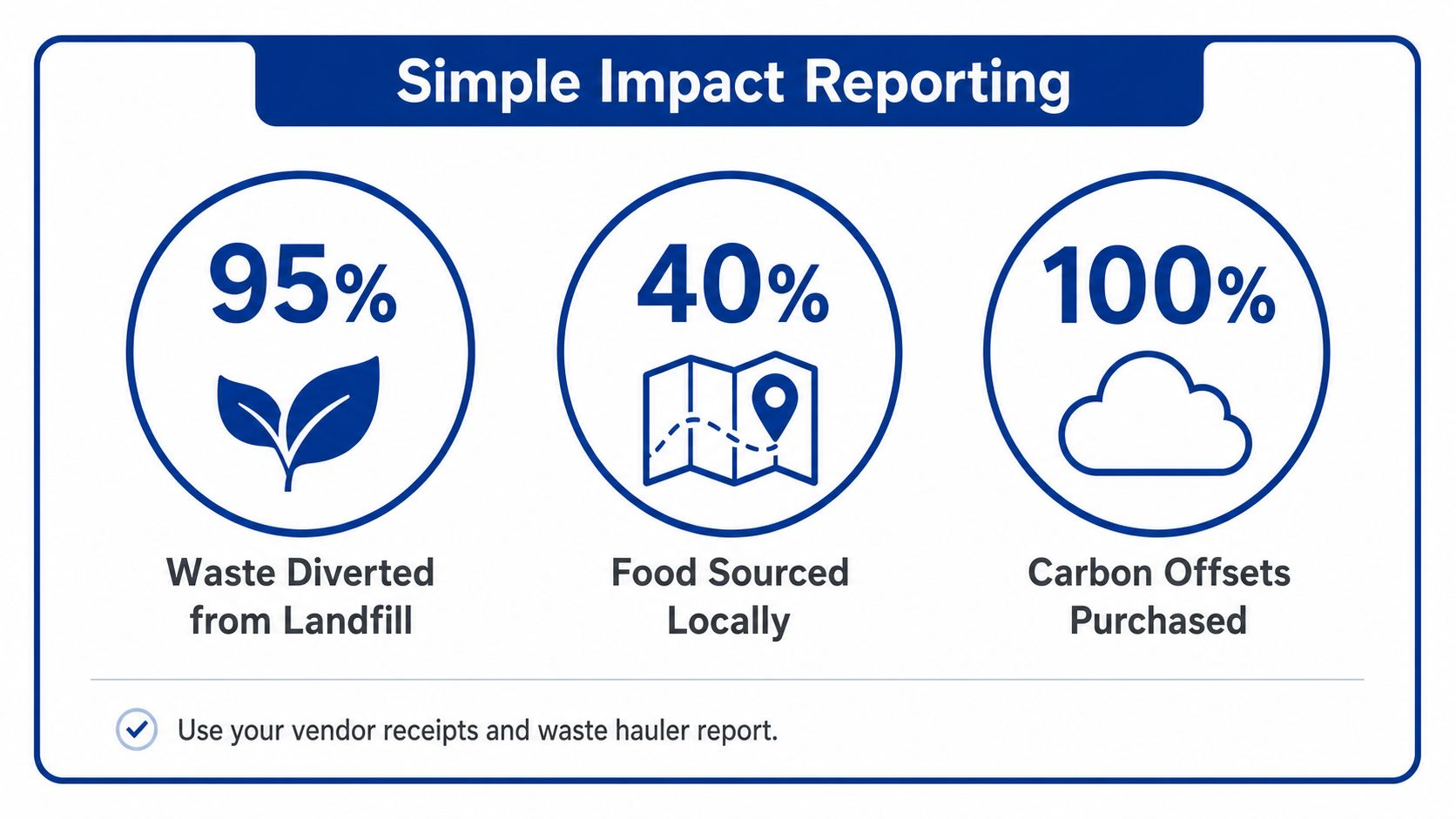
Planners get stuck here because they assume reporting has to look like a corporate dashboard. It doesn't. For weddings, quinceañeras, and smaller corporate events, you need a short, credible summary that captures the basics and doesn't take a week to assemble. The point is to prove what happened, not to dress it up.
Use a minimum data set
A solid one-page impact summary can include waste diversion by stream, a short travel and accommodation tally, a one-line menu note on local sourcing, and a brief note on decor reuse or donation. That's enough to show intent and execution without creating fake precision. It also acknowledges the fact that most planners don't have a dedicated sustainability team.
The safest way to package the results is to use vendor receipts, the waste hauler report, and a simple internal tally. If you're looking for a way to organize that data across events, top climate disclosure software can help larger teams formalize the process, but the useful part for most planners is still the discipline of collecting the same facts every time. Don't double-count the same material as both diversion and donation. That mistake makes the report look better and the numbers less trustworthy.
Keep the format short and repeatable
Use the same template every time so the venue team knows what to gather. If the summary is consistent, you can compare one wedding, one quinceañera, and one corporate event without rebuilding the method from scratch. That's how sustainable event planning becomes a system instead of a one-off effort.
A simple reporting template should have three lines:
- Waste: what was diverted, what was discarded, and who collected it.
- Food: what was sourced locally or seasonally, in plain language.
- Reuse: what decor, signage, or supplies were used again or donated.
That's enough to brief a client, satisfy procurement, and improve the next event. If the summary can't be understood in a minute, it's too complicated.
Texas Old Town gives planners the kind of Hill Country setup that makes this work in practice, with multiple halls, outdoor ceremony spaces, practical access, and on-site support that helps keep logistics under control. If you're planning a wedding, quinceañera, or corporate event and want a venue that supports cleaner setup, simpler waste handling, and more thoughtful guest flow, visit Texas Old Town and take a look at what the property can support.