You've narrowed down your date, picked the Hill Country feel you want, and started searching for a Western venue in Austin. Then the next problem shows up. The venue is only part of the decision. You still need a caterer, bartender, photographer, DJ, florist, and a plan for how all of them will work together without stepping on each other's timeline.
That's where many couples and event planners get stuck. A venue may hand over a preferred vendor list, mention outside vendors, or say it has “flexible policies,” but those phrases can mean very different things in practice. One venue might strongly encourage its list. Another might require it for some services. A third might allow exceptions, but only if you ask the right questions early.
At a Western venue near Austin, that confusion gets bigger because the setting affects logistics. Outdoor ceremony sites, separate halls, dance-floor layouts, bar service rules, and vendor arrival times all matter. If you understand how vendor lists really work, you can protect your budget, keep your style options open, and avoid contract surprises.
Table of Contents
- Introduction to Preferred Vendor Lists
- Understanding Preferred Vendor Lists
- Pros and Cons of Preferred Vendor Lists
- Texas Old Town Vendor Policies
- How to Choose and Work with Vendors
- Sample Vendor Categories and Next Steps
Introduction to Preferred Vendor Lists
A couple books a Western venue in Austin because they love the wood interior, the ceremony site, and the relaxed Hill Country atmosphere. Two days later, their inbox is full. One friend recommends a taco caterer. A cousin knows a bartender. Social media serves ten photographers in an hour. Suddenly, “freedom to choose” feels less like freedom and more like a second job.
Then the venue sends over its preferred vendor list.
That list often acts like a filtered shortlist. Instead of evaluating dozens of companies from scratch, the couple starts with vendors who already know the property, understand load-in rules, and can work smoothly with venue staff. Stress drops because the decision set gets smaller and more practical.
Preferred vendor lists aren't magic. They're planning tools. They save time when you understand what they include, what they don't, and where exceptions are allowed.
For event planners, the key question isn't whether a list exists. The core question is how rigid the venue is about using it. Some venues treat the list like a recommendation. Others use it like a gate. If you're comparing a Western venue in Austin, that difference affects both cost control and creative control.
Understanding Preferred Vendor Lists
A preferred vendor list is a venue's curated group of vendors it knows and is comfortable working with. It's comparable to a restaurant's limited menu. The chef doesn't offer every possible dish. The chef offers the dishes the kitchen can execute well, consistently, and on time. Venues do something similar with caterers, bartenders, DJs, florists, planners, and photographers.
Why venues create lists in the first place
A venue usually builds a list because repeated experience teaches it which vendors are easy to coordinate and which ones create friction. The venue may prefer professionals who arrive on time, communicate clearly, follow insurance requirements, respect the grounds, and understand service flow from ceremony to reception.
That matters more at a Western venue because the event often spreads across multiple spaces. Guests may move from an outdoor ceremony site into a hall, then into open-air gathering areas, then back inside for dancing. A vendor who already knows the pattern won't need much hand-holding.
Here's the practical value:
- Less orientation time: A familiar vendor usually knows where to unload, where prep space is, and when access begins.
- Fewer avoidable mistakes: They're less likely to set equipment where guests need to walk or block staff workflows.
- Cleaner communication: The venue team already knows who to call when questions come up.
One useful way to think about it is as a concept map. The venue sits in the middle. Around it are catering, bar service, rentals, photo, floral, and entertainment. When the lines between those people are already tested, the planning web gets simpler.
Texas Old Town is one example of a venue that combines guidance with flexibility. Its DIY venue planning approach helps show why some clients want structure without giving up control.
Preferred does not always mean required
A common point of confusion often arises. Preferred doesn't automatically mean exclusive.
A preferred list says, “These vendors work well here.” An exclusive model says, “You must choose from this group.” The difference is huge. In an exclusive setup, your options narrow quickly. In a preferred setup, you may still be able to bring in your own choice if that vendor can meet the venue's standards.
There's also a budget issue. According to Austin Best DJs' overview of Texas Old Town, the venue's quoted pricing includes sales tax and gratuity, which helps avoid hidden charges that often inflate total event costs by 15–20% at other venues. That's a good reminder that vendor policy and fee policy often overlap. A venue can seem flexible on vendors but still add cost through fees elsewhere.
Pros and Cons of Preferred Vendor Lists
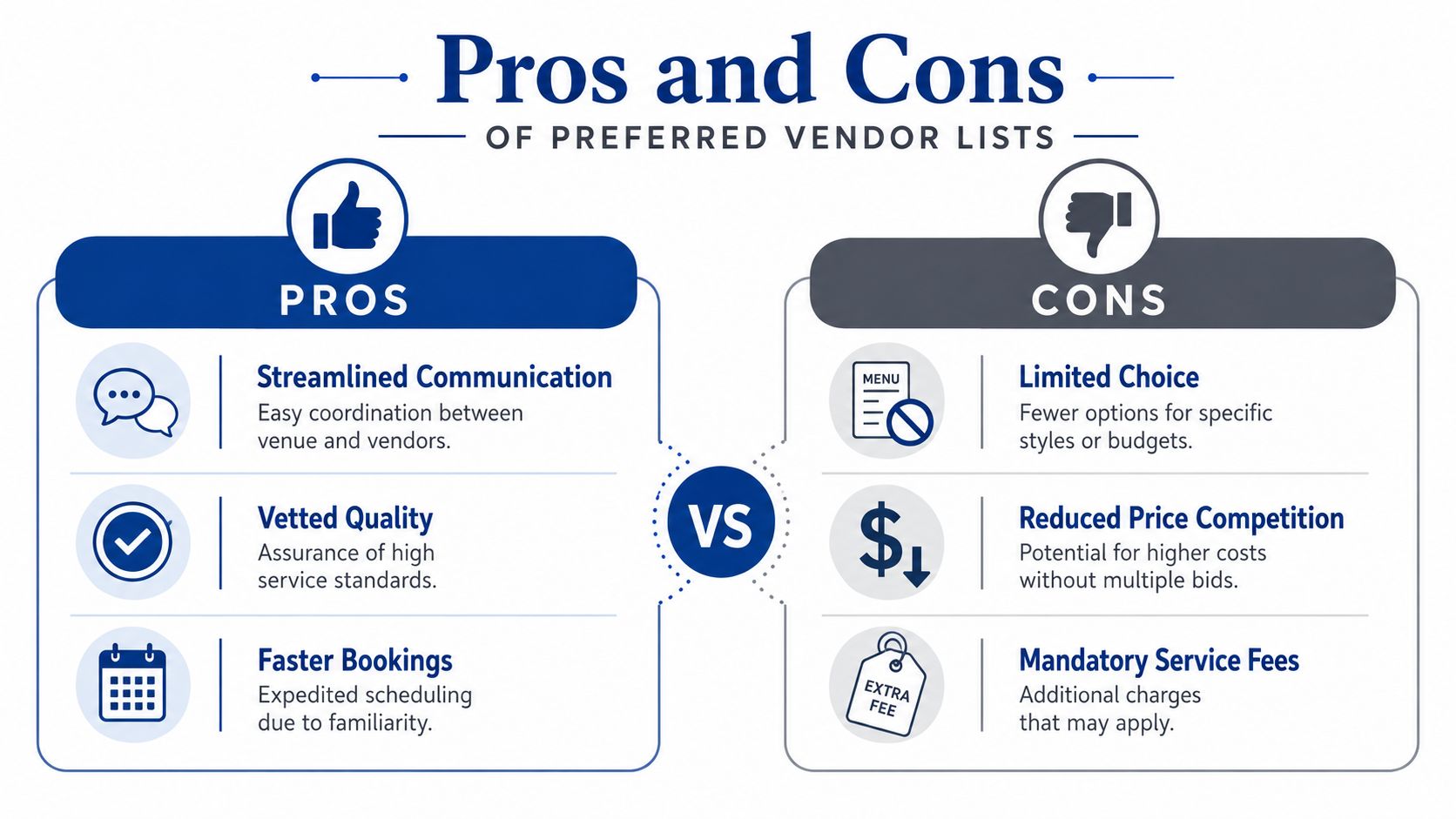
Preferred lists solve real planning problems. They also create trade-offs. If you're evaluating a Western venue in Austin, it helps to compare both sides the same way you'd compare menu options, not treat the list as automatically good or bad.
Where preferred lists help
The strongest advantage is operational ease. A caterer who's worked at the venue before will usually understand power access, prep flow, trash handling, and service timing. A DJ who knows the hall won't need long sound checks. A florist who has seen the ceremony setup can estimate placement more accurately.
A short comparison makes the trade-off easier to spot:
| Planning issue | Using a preferred vendor | Using an outside vendor |
|---|---|---|
| Learning the venue | Usually faster | Often takes more back-and-forth |
| Coordination with staff | Often smoother | Depends on communication |
| Style flexibility | May be narrower | Often broader |
| Contract review needs | Still important | Even more important |
Practical rule: A preferred list saves the most time when your priority is smooth execution, not custom sourcing.
There's also a transparency angle. The Vista West Ranch planning guide notes that 30–40% of wedding budget overruns stem from undisclosed venue fees. That's why vendor list rules matter. If a venue requires certain providers, charges outside-vendor fees, or limits bar options, those policies can change the final budget more than the rental price alone suggests.
Where planners can feel boxed in
The downside is obvious once your vision gets specific. Maybe you want a niche barbecue caterer, a bilingual DJ, or a floral designer with a less traditional style. A tight preferred list can make that harder.
There's also a pricing concern. If you only look at a short list, you may lose some comparison power. Even when every vendor on the list is solid, the market gets smaller. That doesn't always mean the cost will be higher, but it does mean you should ask sharper questions.
Watch for these friction points:
- Creative mismatch: The vendor is competent, but not your style.
- Approval delays: An outside vendor may need documents, insurance proof, or extra review.
- Policy confusion: “Allowed” may still come with conditions.
A familiar example: an on-list caterer may know the ceremony-to-reception transition perfectly. Your favorite off-list caterer may need several calls just to understand parking, kitchen access, and timing. That doesn't make the outside caterer a bad choice. It just means you're taking on more coordination work.
Texas Old Town Vendor Policies
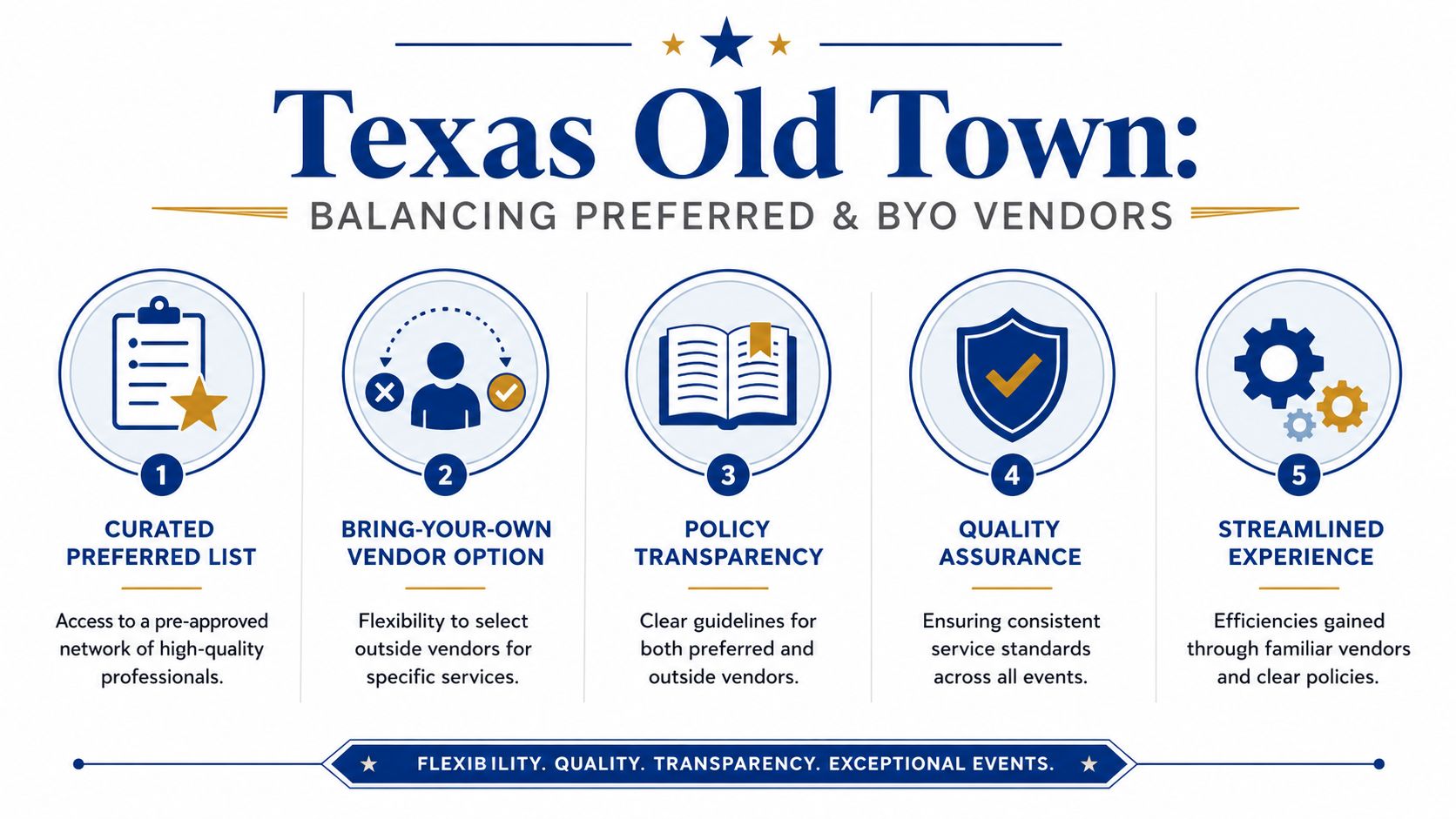
Texas Old Town is useful to study because its policy sits between two extremes. It doesn't force planners into a completely closed system, and it doesn't leave them without structure either. The venue provides a curated roster while still allowing clients to choose any caterer and bartending company rather than requiring in-house exclusives, according to the venue overview and vendor details.
How the policy works in real planning terms
This kind of setup helps two different planner types.
One group wants guardrails. They like having a known list for photographers, DJs, florists, and other categories because it cuts research time. The other group already has favorite vendors and wants a venue that won't block them unnecessarily. A mixed policy can serve both, as long as the exception process is clear and early communication is part of the contract workflow.
That's where operational thinking matters. If you want a simple template for documenting approvals, communication responsibilities, and day-of roles, Splash Access's business procedure playbook is a useful reference. It's not wedding-specific, but the logic carries over well to event planning because vendor confusion usually comes from undocumented steps.
Write down who approves what, by when, and in what format. Most “surprises” are really undocumented decisions.
Why the venue layout changes vendor decisions
The property itself affects policy. Texas Old Town operates on a 55-acre private property between Austin and San Antonio, with four separate halls and a 16-hour rental window that reduces schedule compression, according to its property information. That kind of layout changes how vendors move, stage equipment, and manage timing.
Four isolated halls also reduce cross-event interference. For planners, that means vendor access can stay more focused on the booked space instead of competing with another celebration in the same room cluster. It's a practical benefit, especially for events that need private setup windows and clean transitions.
The venue's included on-site management and breakdown support also matter because they reduce the number of loose ends a planner has to solve at the end of the night. In plain terms, the vendor policy doesn't stand alone. It works together with access time, hall separation, and day-of oversight.
How to Choose and Work with Vendors
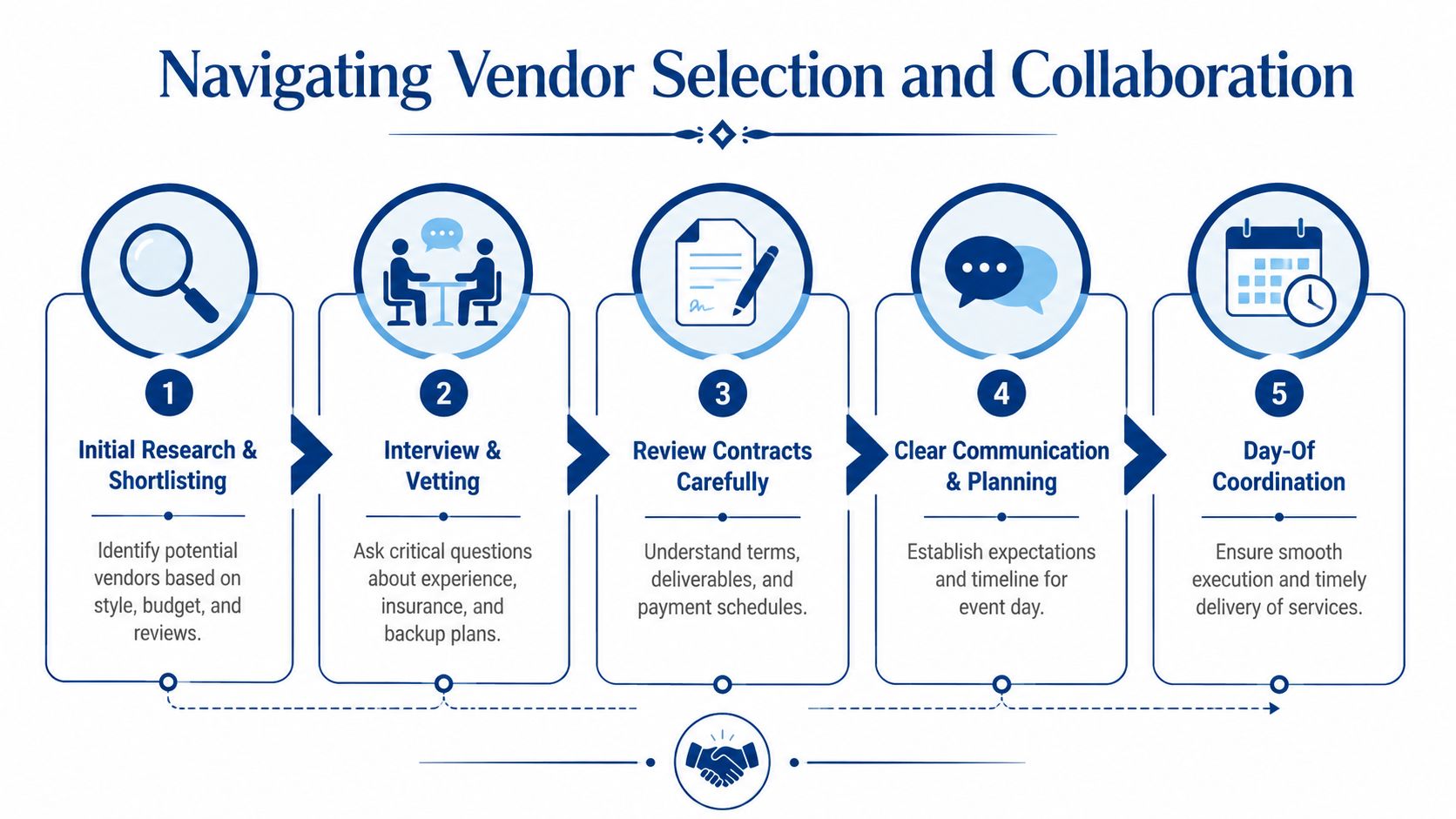
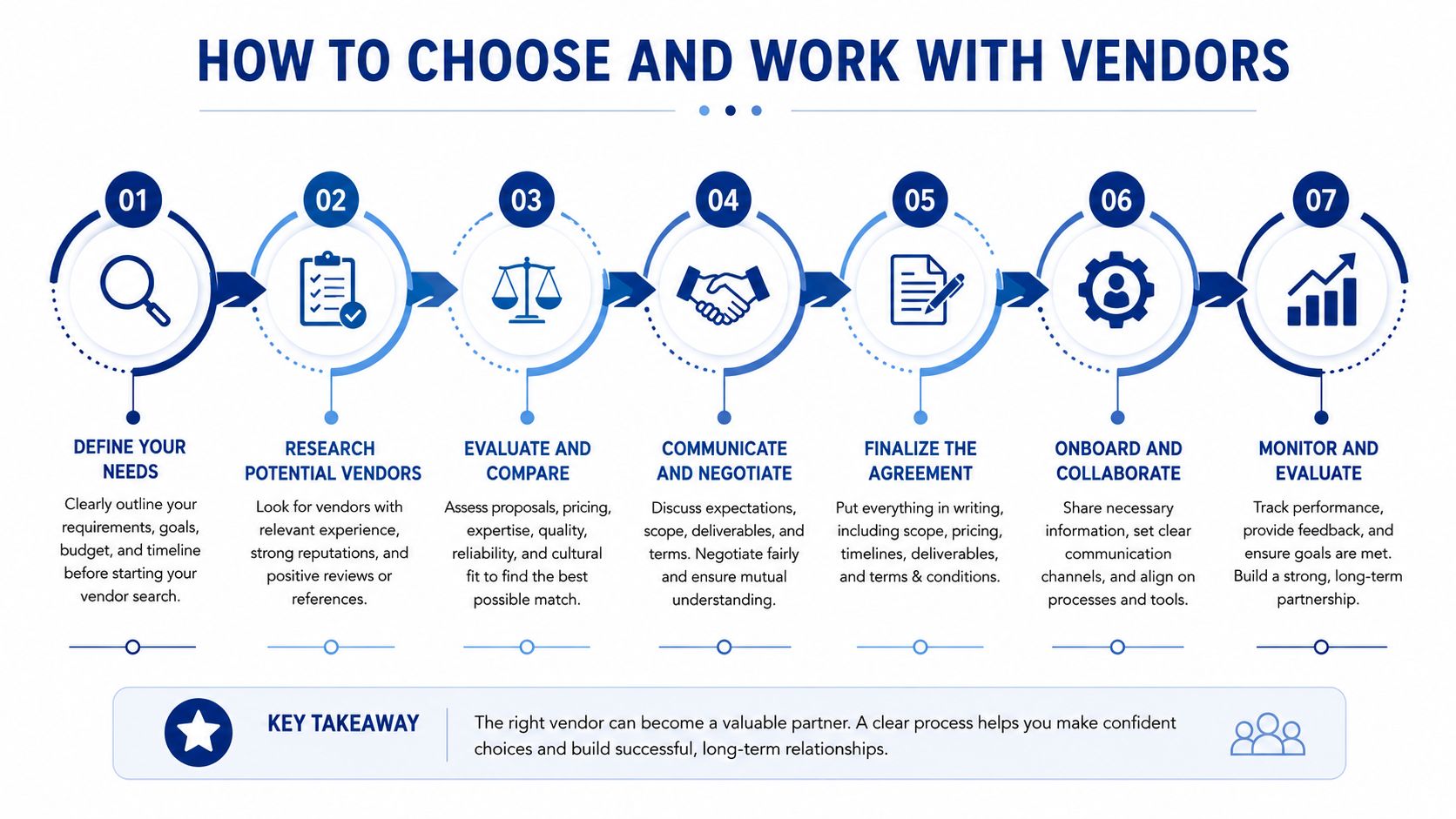
Choosing vendors for a Western venue in Austin is less about finding the most popular name and more about finding the right fit for the space, timeline, and rules. The easiest mistake is booking based on photos alone. Good vendor coordination starts with practical questions.
Questions to ask before you book
Start every vendor conversation with venue-specific questions, not general style questions.
Ask things like:
Have you worked at a similar Hill Country property before?
You're checking whether they understand outdoor transitions, load-in planning, and weather adjustments.What documents can you provide if the venue requests them?
This helps with insurance, staffing details, or service requirements.What's your backup plan?
Ask this differently for each category. For a photographer, it may mean backup gear. For a caterer, staff coverage. For a DJ, replacement equipment.How do you handle venue communication?
Some vendors are proactive. Others expect the couple to relay every detail.
If a vendor struggles to answer venue-logistics questions clearly, that's a warning sign even if their portfolio looks strong.
You should also ask for a sample contract before you commit. Look for gratuity language, overtime rules, cancellation terms, staffing assumptions, and anything that depends on venue access time.
A simple working method for approvals and contracts
Don't juggle vendor decisions in your head. Use a short tracking sheet.
Include these columns:
- Vendor category
- Preferred or outside vendor
- Approval needed
- Documents requested
- Contract reviewed
- Arrival and load-out notes
This creates a clean exception process if you want to use someone outside the venue's roster. Instead of saying, “We'd like to use our own person,” you can present a ready package with the vendor's contact, service details, and compliance documents.
For planners who also care about attendee comfort and communication flow, this guide on how organizers can improve guest confidence at events is a helpful companion resource. It's useful because vendor decisions don't just affect operations. They shape how guests experience arrival, signage, timing, and service smoothness.
How the rental window affects your timeline
Longer access changes vendor strategy more than is often acknowledged. The Stone venue details state that the 16-hour access window allows 4+ hours for setup, 8+ hours for reception, and 4+ hours for breakdown, and that this can reduce average vendor overtime costs by 18–22% compared to shorter rentals.
That matters because rushed schedules create expensive mistakes. Florals get installed in a hurry. Rental companies stack deliveries too close together. Caterers prep under pressure. Photographers lose portrait time.
A simple way to use a longer rental window well:
- Early block: Give rental, floral, and catering teams enough space to load in without crowding each other.
- Middle block: Protect guest-facing time. Ceremony, cocktail hour, dinner, and dancing should feel unhurried.
- Late block: Let cleanup happen without forcing everyone into overtime the minute the music ends.
If your venue offers broad access, use it intentionally. Don't fill every extra minute with more activity. Use the extra time to reduce conflict between vendors.
Sample Vendor Categories and Next Steps
When you compare vendor options for a Western venue in Austin, the categories look familiar. The evaluation criteria don't. Rustic and Hill Country settings create specific needs that matter more than branding language on a website.
What to check by vendor type
For caterers, ask how they handle service flow, prep access, and menu execution for your guest count. If you're planning in a larger hall, room scale affects staffing and buffet or plated layout. The Tejas Hall listing notes 7,900 sq. ft. of climate-controlled space with seating for up to 350 guests, which directly affects catering volume and floor planning.
For bartenders, focus on compliance, staffing, and service speed. At Western venues, bar placement can influence guest flow more than people expect.
For photographers, ask about outdoor ceremony timing, low-light reception work, and how they manage movement between ceremony space and hall interiors.
For florists and décor teams, ask how they install, how long setup takes, and what they need from the venue before arrival.
For DJs or bands, ask about power, sound checks, microphone needs, and how they coordinate cues with the planner or venue manager.
A menu decision often overlaps with space planning, so Texas Old Town's article on choosing the right catering menu for celebrations near Austin and San Antonio is a practical next read if food service is still one of your biggest open questions.
What to do during a venue tour
Bring a short list, not just inspiration photos.
Ask:
- Which vendor categories are fully flexible
- What approval steps apply to outside vendors
- How arrival and breakdown are handled
- What the venue manager oversees on event day
- How the hall layout changes catering and entertainment setup
A good tour should help you leave with clearer decisions, not more vague options. If the answers are specific, documented, and easy to repeat back, you're dealing with a planning system that's easier to work with.
If you're comparing Western venue options near Austin and want a property with distinct halls, long access windows, and clear planning logistics, Texas Old Town is one venue to review. A tour can help you see how vendor access, hall layout, and event flow would work for your guest list and format.