You tour a venue expecting creative freedom. Then the coordinator explains that you can choose your florist, but the bar has to use their package, setup starts later than you need, and cleanup has to be finished before the night is over. That is the moment most couples realize DIY can mean very different things from one property to the next.
For wedding planning, DIY usually works best as design it yourself, not do every job yourself. The strongest options give you room to choose your vendors, shape the guest experience, and personalize food, drinks, and decor, while still giving you enough structure to keep load-in, rain backup, and end-of-night breakdown under control.
That balance matters in the Texas Hill Country. Couples often want outdoor ceremony photos, a reception space with character, and a backup plan that does not feel like an afterthought. Vendor rules, rental windows, BYOB policies, and day-of support often have more impact on your stress level than the view alone. If you want a clearer picture of what that balance can look like, this guide to DIY wedding venues near Austin with personalized flexibility is a useful reference point.
The venues in this roundup are not all DIY in the same way. Some give you broad vendor freedom with more logistics to handle. Others narrow a few choices but make the event easier to run. That is the comparison worth making before you book.
Table of Contents
- 1. Texas Old Town
- 2. Prima Vista
- 3. San Antonio Glasshouse
- 4. Rancho Milagros
- 5. Hummingbird House
- 6. Enchanted Ranch
- 7. Williams Grove
- 7-Location DIY Venue Comparison
- Making Your DIY Venue Choice Key Questions to Ask
1. Texas Old Town
A couple wants to choose their own caterer, bring in their own design team, and still avoid turning the wedding day into a loading dock exercise for relatives. Texas Old Town is one of the better answers to that brief because it gives you room to design the event your way without stripping out the infrastructure that keeps the day on schedule.
The property has four separate halls on one Kyle campus, with guest counts that cover both moderate and larger celebrations. That flexibility matters for couples still deciding how big the day should feel, or for anyone comparing ceremony and reception flow across different room sizes instead of forcing one vision into one fixed layout. The grounds, outdoor ceremony areas, water features, and built-in indoor backup also make it easier to plan for weather and guest comfort from the start.
Why it works for design it yourself events
Texas Old Town fits the "design-it-yourself" end of the DIY spectrum better than the "start from scratch" end. You keep meaningful creative control, but the venue already covers operational basics that often get missed during early planning: furniture counts, dressing suites, a prep kitchen, indoor and outdoor PA systems, parking, and an on-site venue manager for event-day oversight. Clean-up and furniture breakdown are included too, which saves couples from assigning late-night teardown to family or the wedding party.
The 16-hour rental window, from 8:00 a.m. to midnight, is one of its strongest practical advantages.
Long access changes the whole setup plan. Florals can arrive without colliding with catering. Rentals can be placed before guests start filtering in. Hair and makeup, photography, and ceremony setup all get breathing room. That is usually the difference between a DIY-style wedding that feels personal and one that feels rushed.
Texas Old Town also makes clear trade-offs instead of hiding them inside a glossy "all-inclusive" label. Couples can choose their own caterer, which preserves a lot of budget and style control. The bar follows a structured BYOB model through an approved bartending company. That is not total alcohol freedom, but from a planning standpoint it is often a smart middle ground. You still control what is served, while staffing, service standards, and compliance stay in professional hands.
Pricing transparency is another plus. Quotes include sales tax and gratuity, so couples are less likely to get surprised by end-stage add-ons that distort the budget after they have already committed. For anyone comparing flexible venues in Central Texas, the venue's guide to DIY wedding venues near Austin and personalized weddings in Kyle gives a useful look at how they frame customization versus built-in support.
Best fit
Texas Old Town is a strong fit for couples who want to choose vendors, shape the look of the day themselves, and still rely on the venue for the hard logistics. It works especially well for events where indoor-outdoor flow matters and where setup timing could get tight in a shorter rental.
The main drawback is straightforward. You have to inquire for exact pricing, so it is not the best option for couples trying to compare final numbers from a quick website scan alone. The BYOB structure also adds one coordination point on the bar side, which some couples will see as helpful guardrails and others will see as one more vendor decision.
2. Prima Vista
Prima Vista sits in a practical middle ground. It isn't a bare-bones diy venue, and that's a good thing for many couples. You still get vendor freedom, but the property includes enough support to reduce the vendor stack you have to build from scratch.
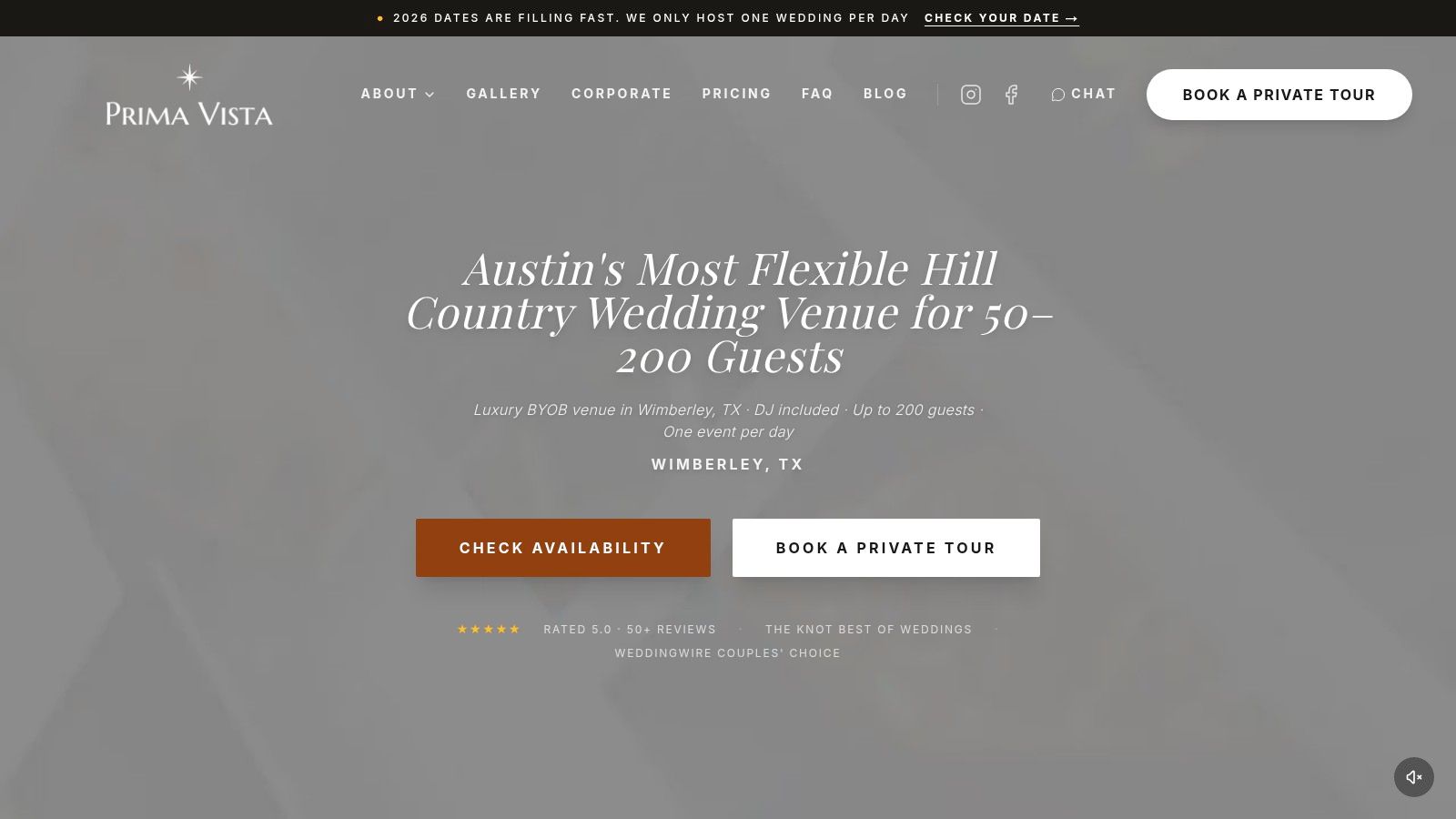
Near Wimberley, it offers a 12-hour private access window, indoor space, a covered ceremony pavilion, a sunset deck, tables and chairs, and a professional DJ. That package makes sense for couples who want to personalize food, bar, and styling but don't want to source every operational piece themselves.
Where Prima Vista lands on the DIY spectrum
Prima Vista allows BYOB with a required TABC-certified bartending partner and permits outside insured vendors. That's a healthy balance. You keep control over the drink menu and most vendor choices, but alcohol service still runs through a qualified professional.
A lot of couples think they want total venue freedom until they start mapping real setup timing. National planning guidance for Central Texas venues points to the value of a 12 to 18 hour rental window, indoor backup ceremony space, documented furniture counts, and on-site management because those features reduce schedule compression and planning friction (Central Texas venue logistics guidance). Prima Vista clears part of that bar well, especially for couples who don't have a planner.
Here's where I'd be careful. If your event design includes a large install, extensive lounge rentals, multiple food stations, or a lot of family-led setup, 12 hours can start to feel tight. If your priorities are simpler, one event per day is a real advantage because you're not trying to load in while another event is still clearing out.
- Best for moderate DIY: Good if you want custom food and bar choices without hiring every core service from zero.
- Built-in relief: Included tables, chairs, and DJ remove three common planning tasks.
- Watch the clock: Decor-heavy builds may need a longer access window than this venue provides.
Prima Vista is a strong fit for couples who want the venue to do some of the heavy lifting without forcing a full-service package. You can browse details and contact the team through the Prima Vista website.
3. San Antonio Glasshouse
San Antonio Glasshouse goes in the opposite direction. This is the pick for couples who want a true blank canvas and don't want the venue steering their vendor list, aesthetic, or production choices. The architecture does a lot of work on its own, with floor-to-ceiling glass and a clean indoor-outdoor flow that suits modern events especially well.
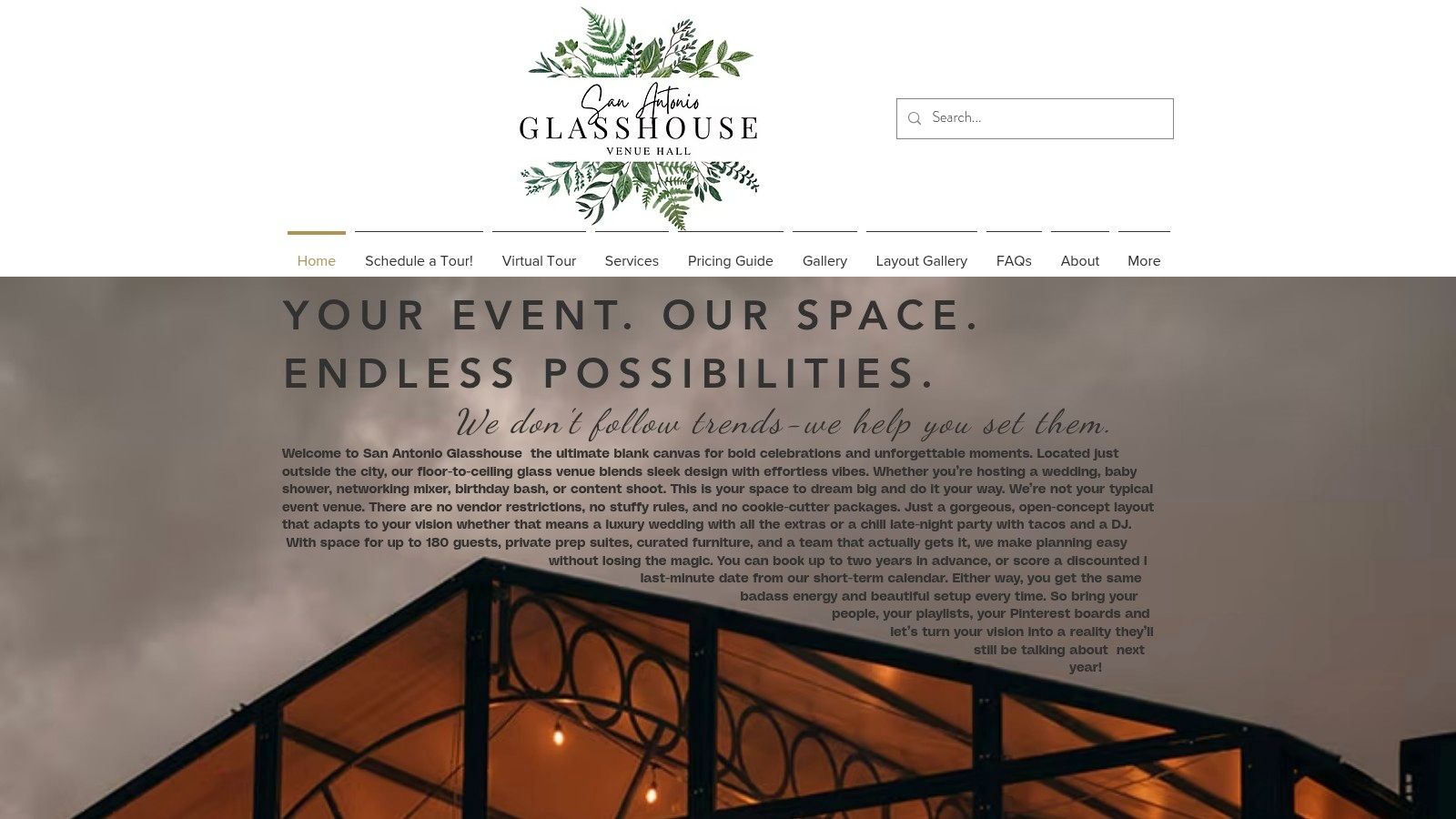
The big appeal is its stated no-vendor-restrictions approach. If you already know your caterer, planner, florist, rental company, and entertainment team, this kind of venue can be liberating. You're not paying for someone else's preferred package structure.
Who should book it
This venue works best for design-driven couples who already understand event flow, or who are hiring a planner or coordinator who does. That's because maximum freedom also means fewer built-in guardrails. You need to know who's handling power needs, load-in order, strike timing, weather contingencies, and any specialty rentals a glass-forward venue might need.
That matters because venue demand is moving toward unconventional spaces and indoor-outdoor hybrids. The U.S. wedding venue market is projected to reach $95.35 billion by 2030, outdoor venues capture roughly 65% of weddings, and 62% of engaged couples reportedly search for indoor-outdoor hybrid venues to reduce weather stress (U.S. wedding venue market outlook). San Antonio Glasshouse is aligned with that shift.
A blank-canvas venue only feels easy when your vendor team is decisive and your timeline is tight on paper before event week.
One detail I like is the presence of date-based pricing menus and short-term or last-minute discounts. Even when exact costs still require inquiry, that kind of structure helps couples think strategically about timing.
If you're still comparing venue formats, Texas Old Town's article on how to choose a wedding venue is a useful companion read because it pushes you to evaluate the support level, not just the aesthetic. For venue specifics, visit San Antonio Glasshouse.
4. Rancho Milagros
A couple wants a ranch wedding that feels like a private weekend, not a six-hour venue sprint. Rancho Milagros fits that brief. The property gives you exclusive use of the barn, ceremony meadow, saloon, and surrounding grounds, plus on-site lodging for up to 14 guests. That setup shifts this venue from do-it-yourself to design-it-yourself. You get space to shape the event your way, but you also need a plan for how the weekend will run.
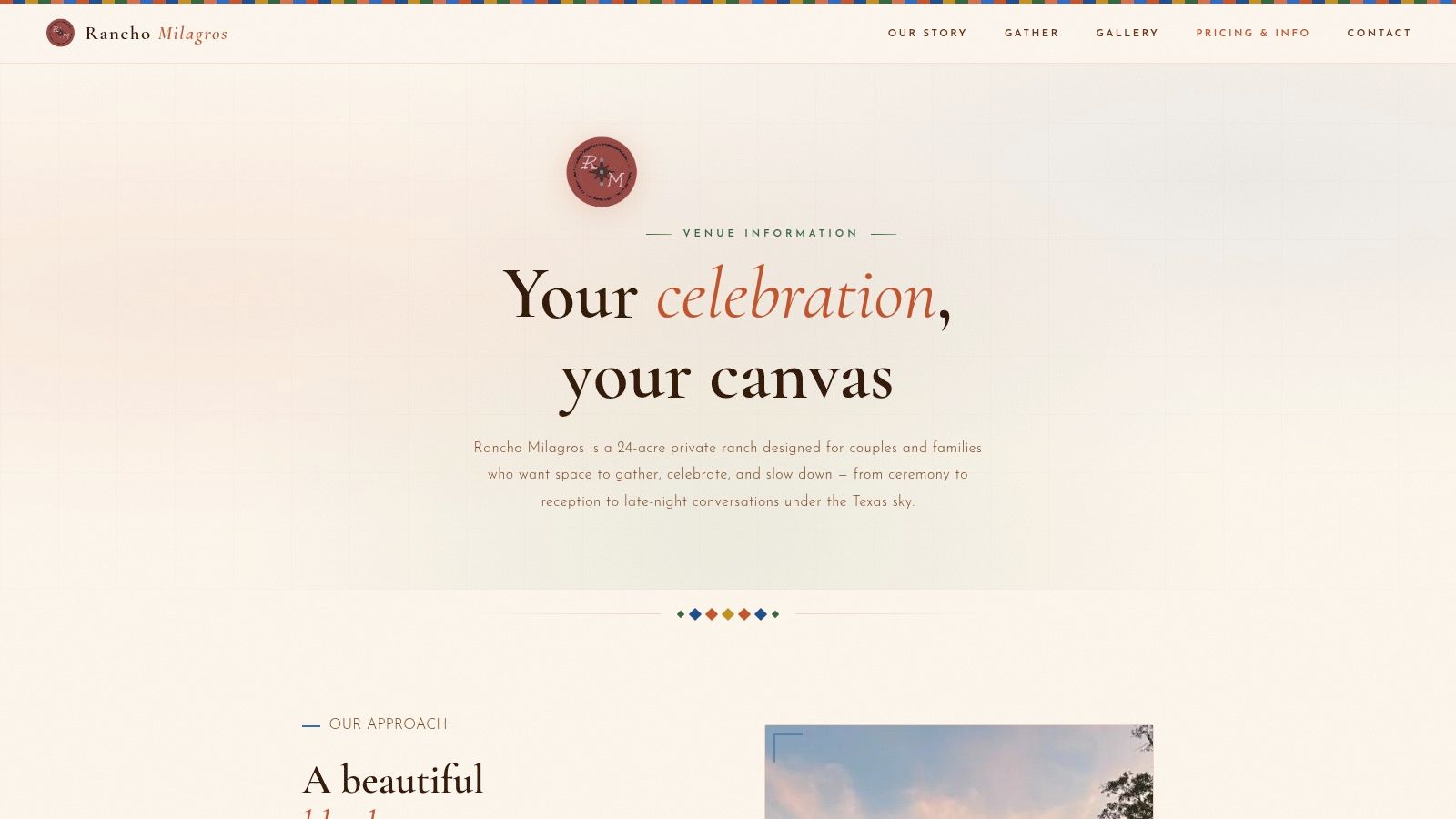
What stands out here is flexibility. Rancho Milagros allows outside caterers, bar service, florists, DJs, and other vendors, which gives couples far more control than venues with tight preferred lists. If you care about choosing your own team, comparing service styles, or building a weekend around specific priorities, that freedom matters. Couples looking at the pros and cons of a exclusive-use wedding venue will see the appeal quickly.
The trade-off is operational. Full-day access and open vendor rules sound generous, and they are, but they also put more responsibility on the couple or planner. Someone still has to map load-in, rentals, staffing, parking flow, cleanup, and the handoff between ceremony, cocktail hour, and reception. I usually recommend this type of property to couples who either have a planner or already know they want to manage decisions closely.
One practical detail I like is the tiered pricing by guest count. Clear pricing helps couples compare real value instead of guessing what the venue fee covers. It also makes Rancho Milagros easier to stack against other DIY-leaning venues in this guide, especially if you are weighing flexibility against built-in support.
The caution is specific. Larger events may require portable restrooms at the renter's expense. That is not a small add-on. It affects budget, site layout, guest comfort, and vendor setup.
- Best feature: Open vendor policy with on-site lodging for a true wedding weekend.
- Main caution: More freedom means more coordination, especially for rentals, staffing, and guest logistics.
- Who it suits: Couples who want a ranch setting with creative control and are comfortable managing details.
For rustic weddings that prioritize privacy, time on site, and vendor choice, Rancho Milagros is a strong option.
5. Hummingbird House
Late in the planning process, a lot of couples realize they do not want a blank field and a 14-hour logistics project. They want to choose the look, the bar, and parts of the guest experience, but they also want a venue with enough structure to keep the day under control. Hummingbird House fits that middle category well.
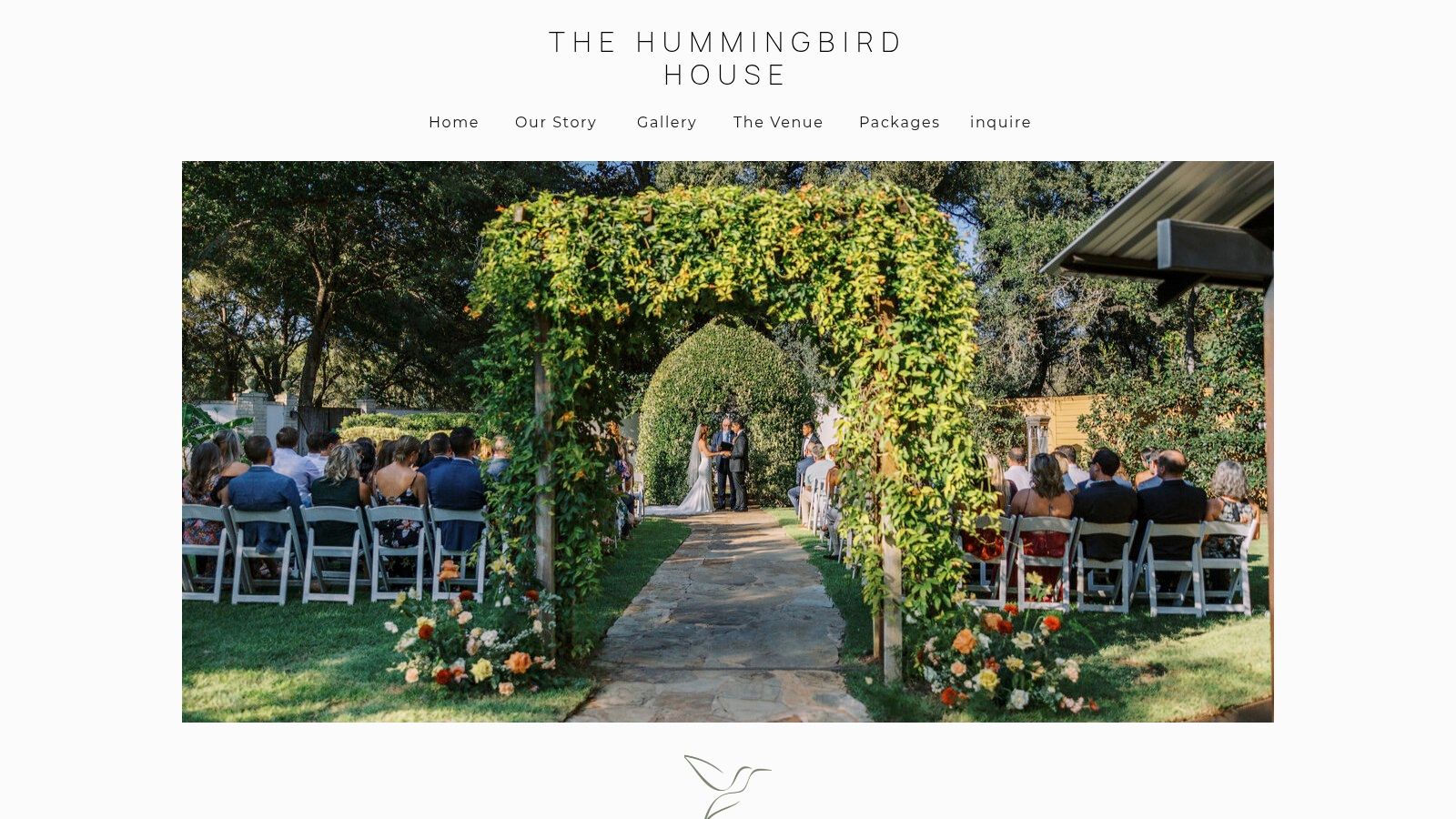
In Manchaca, it offers a garden setting, a covered reception pavilion, one event per day, food truck support, and BYOB with approved bar staff. That combination makes it a design-it-yourself venue more than a do-everything-yourself venue. You still get room to shape the event, but the venue sets guardrails around the pieces that tend to create service or liability problems.
Where it shines
The biggest strength here is balance. Couples can personalize food, bar costs, and decor style without taking on the full operational burden that comes with a fully open property. The pavilion also helps. If weather shifts, the event still feels cohesive instead of splitting into two different visual plans.
Policy clarity is another plus.
Hummingbird House does a better job than many venues of signaling where flexibility starts and stops. That matters because vendor rules, rental windows, and alcohol policies are what really determine whether a venue feels freeing or frustrating once contracts are signed. Couples comparing this to a fully private property should also read Texas Old Town's guide to exclusive-use wedding venues, since exclusive access changes setup flow, privacy, and pacing in practical ways.
Reality check: “One event per day” does not automatically mean all-day access. Ask for the exact load-in time for rentals, florist arrival, food truck setup, and personal decor.
The main trade-off is time. An 8-hour rental block is workable for a professionally managed event, but it gets tight fast if you are bringing in custom installs, large rental orders, or a lot of personal decor. I usually flag this for couples who want to DIY signage, lounge areas, ceremony installations, and late cleanup. The plan can still work, but only if setup is simple or a planner is running the timeline tightly.
Vendor flexibility is also partial, not wide open. Catering and DJ choices come from an approved or recommended list, which limits shopping power but can reduce coordination issues on the venue side. For some couples, that is a fair trade. For others, especially those with a specific cultural caterer or entertainment team in mind, it can be the reason to keep looking.
If your version of DIY means shaping the atmosphere without managing every moving piece, Hummingbird House is a smart middle-ground option. To review the property directly, visit Hummingbird House.
6. Enchanted Ranch
Enchanted Ranch works well for couples who want a larger guest count and don't want to be boxed into one food and beverage model. It openly positions itself as flexible. You can bring your own vendors or use a curated preferred list, and the property includes multiple ceremony locations with an indoor-outdoor pavilion reception space.
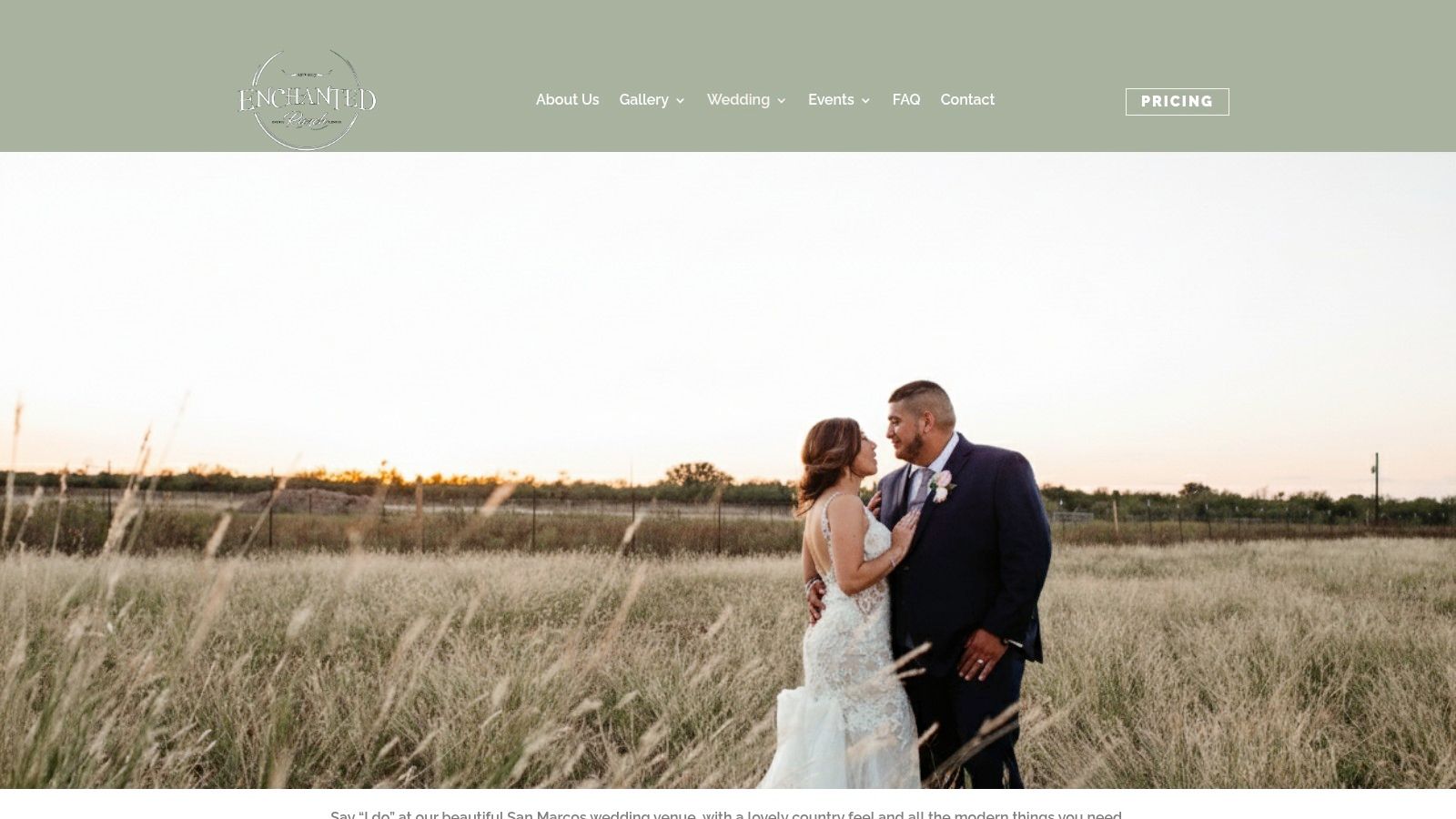
That higher capacity makes it useful for bigger celebrations that still want a diy venue feel. Not every flexible venue scales well once your guest count rises. This one is better positioned than most.
Best use case
Enchanted Ranch is a good fit if you want freedom on the front end but appreciate having venue assistance available for planning, decor setup, and bar service. That's the design-it-yourself sweet spot for a lot of couples. You keep the event personal, but you're not left alone with every operational detail.
That support matters because one of the biggest blind spots in DIY planning is setup timing under venue constraints. A social media group analysis highlighted how often DIY brides ask about coordinating weddings under tight setup windows, while very little existing content addresses that problem (tight setup window DIY planning gap)). Enchanted Ranch's value is that it doesn't force a hard all-or-nothing choice between total self-management and a full-service venue.
A few trade-offs are worth noting:
- Capacity advantage: Works better than many flexible venues for larger guest lists.
- Balanced support: Optional help with setup and bar service can save a DIY plan from becoming an exhaustion test.
- Style consideration: Pavilion spaces often need stronger decor direction if you want a very polished or dramatic look.
If you want flexibility without committing to a fully blank-canvas venue, Enchanted Ranch is a practical option on the I-35 corridor.
7. Williams Grove
A couple wants food trucks, a laid-back dinner under the trees, and the freedom to bring in their own team without venue rules dictating every decision. Williams Grove fits that brief better than almost anywhere else on this list.
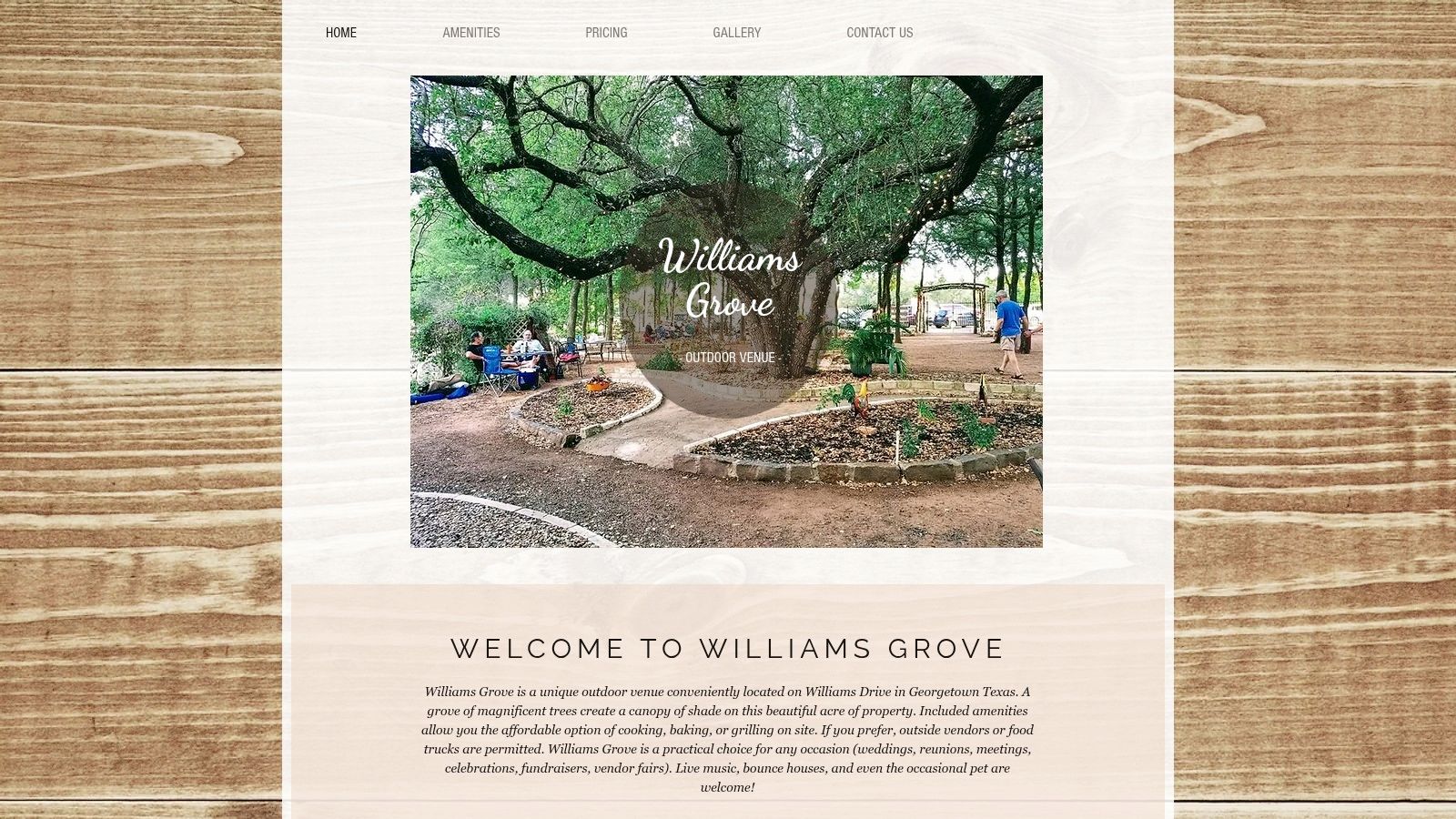
This is the closest thing here to design-it-yourself in its purest form. The venue gives you the grove, straightforward pricing, broad vendor flexibility, and unusual freedom around food service, including food trucks and on-site cooking, baking, and grilling. If you have a clear vision and want to choose your own vendors without working around a preferred list, that freedom has real value.
It also means fewer built-in buffers.
Williams Grove works best for smaller weddings, casual receptions, and couples who are intentionally keeping the event simple. Compared with venues that include more staff support or longer lists of amenities, this one asks you to build the operating plan yourself. That includes the less glamorous parts such as power, restrooms, furniture, lighting, weather backup, and who is handling setup and cleanup.
For some couples, that trade-off is exactly right. They do not need a polished package. They need an affordable outdoor setting where they can shape the event their own way and spend money where it matters to them.
For others, the low-frills model becomes expensive fast once rental needs start stacking up. Outdoor-only venues are rarely hard on the budget because of the rental fee alone. The main cost consideration is how much infrastructure you need to add to make guests comfortable and the event run on time.
A practical way to assess Williams Grove is to ask two questions early. First, do you want freedom on paper, or do you want fewer decisions to make? Second, are you comfortable managing weather backup and vendor logistics without much venue involvement? If the answer is yes, this venue gives you a lot of room to create a wedding that feels personal instead of prepackaged.
You can review the details at Williams Grove.
7-Location DIY Venue Comparison
| Venue | Implementation complexity | Resource requirements | Expected outcomes | Ideal use cases | Key advantages |
|---|---|---|---|---|---|
| Texas Old Town | Low–Medium, many amenities and on‑site manager reduce setup complexity | Moderate, BYOB with approved bartenders; staff, parking, venue supplies included | Smooth, large-scale Texas‑style celebrations with reduced day‑of stress | Large weddings, quinceañeras, corporate events (up to 320) | Four distinct halls, 16‑hour exclusive access, transparent pricing, full amenities |
| Prima Vista | Medium, DIY focus but included DJ and rentals simplify coordination | Moderate, BYOB (required bartending partner); outside insured vendors allowed | Flexible DIY events with fewer vendor logistics and a clear schedule | Couples wanting DIY freedom with some included services (≈200) | Included DJ/tables, one‑event‑per‑day, clear vendor policy |
| San Antonio Glasshouse | High, blank‑canvas requires extensive vendor coordination | High, bring all vendors/rentals; venue is vendor‑agnostic | Highly customizable contemporary events with modern glass aesthetic | Planners seeking full customization and modern look (≈180) | No vendor restrictions, floor‑to‑ceiling glass, date‑based discounts |
| Rancho Milagros | Medium–High, full‑day access supports large builds but requires DIY coordination | Moderate–High, open vendor policy; portable restrooms may be needed; on‑site lodging available | Relaxed, multi‑day or weekend ranch events with roomy setups | Multi‑day DIY weddings, rustic ranch celebrations near I‑10 | Full‑day exclusive use, transparent tiered pricing, on‑site lodging |
| Hummingbird House | Low–Medium, venue‑managed services help but 8‑hour window limits time | Low–Moderate, BYOB with approved bar staff; parking for ~100; food‑truck friendly | Intimate garden weddings with venue support and clear policies | Garden ceremonies and modest receptions seeking some venue management | Published rates/policies, food‑truck friendly, covered reception pavilion |
| Enchanted Ranch | Medium, DIY friendly with optional team assistance for setup | Moderate, BYOB/vendor flexibility; venue add‑ons available for bar/coordination | Larger DIY weddings with indoor/outdoor pavilion options | Bigger guest lists and pavilion weddings (up to ~275) | High capacity, vendor flexibility, planning/coordination support available |
| Williams Grove | High, outdoor, budget model relies on renter to manage logistics | Low cost but high effort, rentals, staffing and weather contingencies required | Affordable, hands‑on DIY celebrations under mature trees | Budget‑conscious, intimate outdoor gatherings and DIY events | Transparent low pricing, maximum DIY freedom, on‑site cooking permitted |
Making Your DIY Venue Choice Key Questions to Ask
You are standing in a beautiful space with a strong view, a generous rental window, and a price that looks manageable. Then the important questions start. Can your caterer work there? Can you bring your own alcohol? Who handles setup, breakdown, trash, parking, and vendor load-in? That is where a DIY venue choice usually gets made or broken.
The clearest way to evaluate these properties is to stop treating DIY as do-everything-yourself. Design-it-yourself is the better filter. The right venue gives you room to shape the look, flow, food, and guest experience, while still covering enough operational ground that the day does not turn into a staffing problem.
Start with the rental window. This one detail affects almost everything else. If access is short, you may need a planner, extra labor, simplified florals, and rentals that can be installed fast. If access is generous, you can usually build a more custom event without forcing every vendor into a tight schedule.
Next, get specific about vendor policy. Ask for plain answers, not marketing language. Can you hire any caterer? Is BYOB allowed, and does the venue require licensed bar staff? Are there preferred vendors, or required vendors? A venue can be flexible on paper and still limit your choices in ways that change the budget.
Then review support in operational terms. Ask who opens the site, who stays during the event, who locks up, and who handles problems when they come up. Some couples want maximum control. Others want design freedom with enough venue oversight to keep the event running on time. Both are valid. The mistake is assuming a beautiful venue includes practical support when it does not.
Layout matters too, especially for outdoor properties. Ceremony lawn, cocktail area, catering access, restrooms, parking, and weather backup all affect how much work your team will absorb. If you want a better eye for how outdoor spaces function before guests ever arrive, this guide to outdoor living space design for Austin homes is a useful reference for flow, gathering zones, and how people move through a space.
Cost review needs the same discipline. Base rental fee means very little by itself. Ask what is included in furniture, setup, breakdown, security, cleaning, and alcohol service. I also recommend asking for a full event-day outline so you can see where labor gaps show up before you sign.
One more question saves a lot of stress. Who is doing the physical work on the wedding day? If the answer is family, wedding party, or a caterer who did not agree to it in writing, the plan needs work. For the logistical side of evaluating a property, this overview of understanding event site surveys helps frame what to check before event day.
The best diy venue gives you the level of freedom you want, not the maximum amount available. For some couples, that means wide-open vendor choice and a long access window. For others, it means a venue that still lets them design the experience while taking care of the operational basics.
Texas Old Town is one of the strongest choices in the Texas Hill Country for couples and hosts who want creative freedom without giving up practical support. If you want a scenic property, flexible catering, a structured BYOB model, four distinct venue options, and a rental window long enough to breathe, schedule a tour with Texas Old Town.