The first week after an engagement usually feels like a blur. You celebrate, call family, save inspiration photos, and then the practical question lands hard: where is this wedding going to happen?
That question carries more weight than most couples expect. The venue shapes the budget, the guest count, the timeline, the catering options, the weather backup plan, and the overall feeling of the day. It even influences smaller style decisions, from florals to footwear. If you're planning an outdoor ceremony or a property with uneven paths, it helps to think about comfort early, including details like luxury wedding sandals that make sense for grass, stone, or long photo sessions.
The good news is that choosing a venue doesn't have to feel like guesswork. It works better when you treat it like a decision with a clear order: define what matters, filter hard, tour carefully, and read the contract with a skeptical eye.
Table of Contents
- From 'Yes' to the Perfect 'I Do' Location
- Defining Your Wedding Vision and Budget
- Finding and Shortlisting Potential Venues
- The Venue Tour What to Look For and Ask
- Decoding Contracts and Avoiding Costly Red Flags
- Special Considerations for a Central Texas Wedding
- Frequently Asked Questions About Choosing a Venue
From 'Yes' to the Perfect 'I Do' Location
Most couples start with aesthetics. They want the hill country view, the candlelit hall, the oak trees, the big doors, the modern barn, the garden ceremony. That's normal. The mistake is stopping there.
A venue is not just a backdrop. It's the operating system for the wedding day. If the site is gorgeous but hard to reach, too tight for your guest flow, restrictive about vendors, or rushed on timing, you'll feel those problems from setup through cleanup. Couples often realize this only after they've toured a few places and noticed that the prettiest option isn't always the easiest one to use.
Choose the venue that supports the wedding you want to host, not just the photos you want to post.
The strongest decisions usually come from couples who can answer three things before they book anything: what the day should feel like, what the guest experience should be, and what financial line they won't cross. Once those are clear, the field narrows fast.
That shift changes the search. Instead of asking, "Do we love this place?" ask, "Can this place carry our wedding without creating avoidable cost, pressure, or compromises?" That's how you get from a hundred saved tabs to one confident yes.
Defining Your Wedding Vision and Budget
Before you book tours, decide what you're trying to create. Couples who skip this step tend to compare venues on vibe alone, and that usually leads to expensive confusion later.
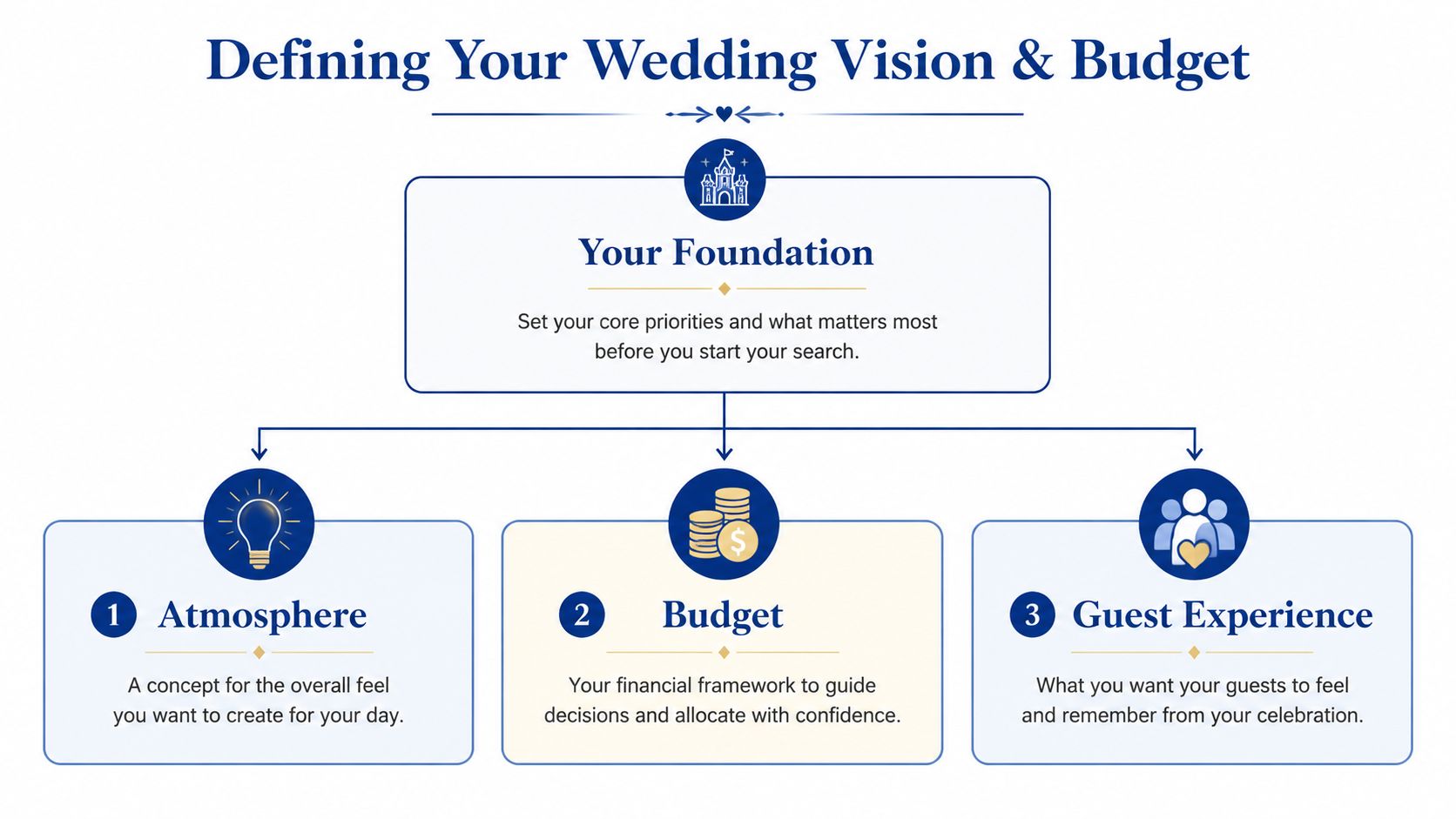
Start with three priorities
Write down your top three priorities. Keep them practical, not aspirational.
For most couples, those priorities fall into these buckets:
Atmosphere
Decide whether you want natural scenery, formal architecture, rustic character, or a clean modern look. A venue with strong built-in character can reduce how much you need to spend on décor because the setting is already doing part of the work.Guest experience
Think beyond the ceremony. Guests need a comfortable arrival, clear flow between spaces, enough room to mingle, and a plan that doesn't leave them standing in heat, wind, or confusion.Budget
Set a venue ceiling before you fall in love with a property. This keeps the rest of your planning realistic.
A lot of couples do a version of this instinctively. The better approach is to put it in writing and rank it. If atmosphere is first but guest convenience is second and budget is third, that tells you how to handle trade-offs. If budget is first, you need to be even stricter about what's included and what restrictions may add cost later.
One practical way to ground this conversation is to revisit your original engagement decisions. The same clarity that helps with ECI Jewelers' ring selection advice helps here too. You don't pick a ring well by looking at everything. You pick it by defining what matters most.
Build a budget around real trade-offs
The venue is usually the largest line item. Couples in the United States allocate approximately $12,000 to their wedding venue, representing roughly 40% of their total wedding budget, and the average total wedding cost is projected to reach $36,000 in 2025 according to wedding industry statistics for 2024 and 2025.
That number matters because it forces discipline early. If the venue takes too much of the budget, every later decision gets tighter. Catering gets squeezed. Florals get cut. Transportation becomes harder. Guest count starts shifting in stressful ways.
Use this quick planning filter before you search:
| Priority area | Question to answer now | Why it matters |
|---|---|---|
| Style | Do you want built-in charm or a blank canvas? | Built-in character can reduce décor pressure |
| Capacity | What's your realistic guest count, not your hopeful one? | Capacity affects price and comfort |
| Spending | What's the full venue ceiling, including likely add-ons? | Prevents emotional overspending |
Practical rule: If your guest list is still fluid, build the first venue search around the highest realistic count, not the lowest hopeful one.
A good venue budget isn't just a rental number. It's a decision about value. Some venues cost more upfront and include enough infrastructure to simplify planning. Others seem affordable at first but require more décor, more rentals, more staffing, or more compromises. That's why couples who know how to choose a wedding venue don't focus on sticker price alone. They look at what the property makes easier, and what it makes harder.
Finding and Shortlisting Potential Venues
Once your priorities are set, start wide and narrow fast. Don't book six or seven tours just because a venue looks attractive online. Build a long list, then cut aggressively based on your essential requirements.
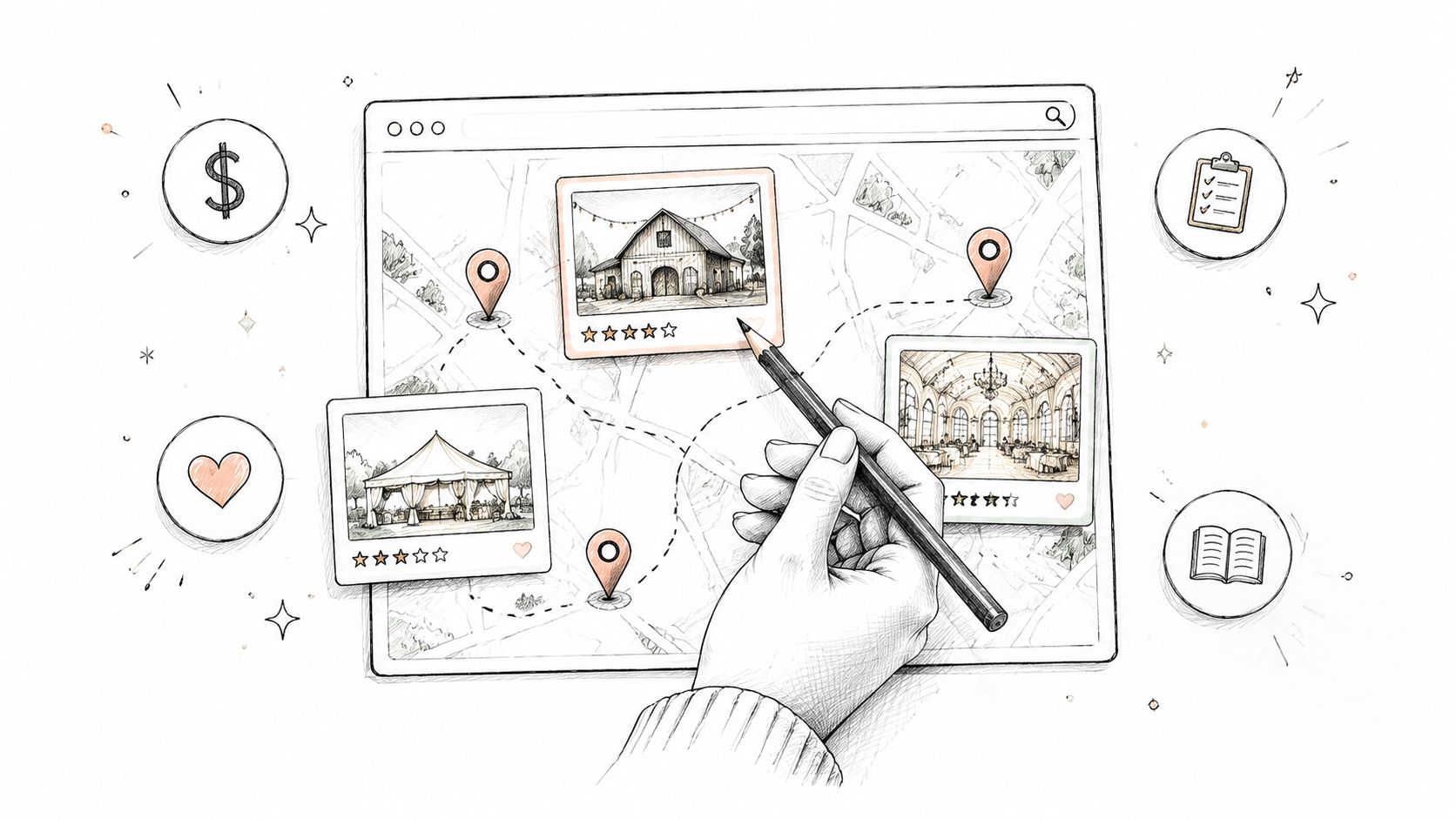
Build the long list the smart way
The most efficient search starts in places where local detail is strong. Vendor blogs, local photographers' galleries, planners' Instagram location tags, and geo-specific hashtags often tell you more than a directory listing does.
Pull together a list, then log the basics for each venue:
- Capacity: Can it hold your guest count comfortably?
- Location: Is it convenient for the majority of guests?
- Style: Does it match your atmosphere without requiring a complete visual overhaul?
- Ceremony and reception options: Can the day flow on one property?
- Rental window: How much access do you get?
For those looking in Central Texas, it's useful to compare properties that offer multiple layouts or buildings on one campus, because that can widen your options without changing the overall location. Properties with different halls or ceremony areas can accommodate different guest counts and styles more flexibly than a single-room venue.
Filter for the issues that actually affect the day
Most venue searches improve when couples filter by photo appeal and weekend availability. They should also filter by time access.
Couples who start their venue search 12 months in advance have an 85% higher success rate in securing their preferred date, and venues with 16-hour rental windows significantly reduce schedule compression, a factor cited in 45% of wedding day timeline failures at venues with standard 6 to 8 hour rentals according to this wedding venue planning guide.
That means rental duration isn't a minor detail. It's a planning variable with real consequences.
A short rental window creates pressure in predictable places:
- Setup gets rushed when florist, planner, rental crew, and catering team all arrive into the same tight window.
- Photos lose breathing room because prep, first look, and family portraits compete with venue access limits.
- Breakdown becomes stressful when everyone is trying to clear out before overtime starts.
For that reason, I tell couples to ask about exclusive-use access before they get emotionally attached to a venue. A property with a full-day window often solves problems that no amount of day-of coordination can fully fix. If you want an example of what that structure looks like, exclusive-use wedding venue access is the kind of feature worth comparing side by side with standard rentals.
A shortlist should be small. Three strong candidates is usually enough. More than that tends to blur the differences instead of clarifying them.
The Venue Tour What to Look For and Ask
A venue tour should feel less like browsing and more like inspection. You're not there to confirm that the property is pretty. You're there to find out whether the wedding can run well inside that space.
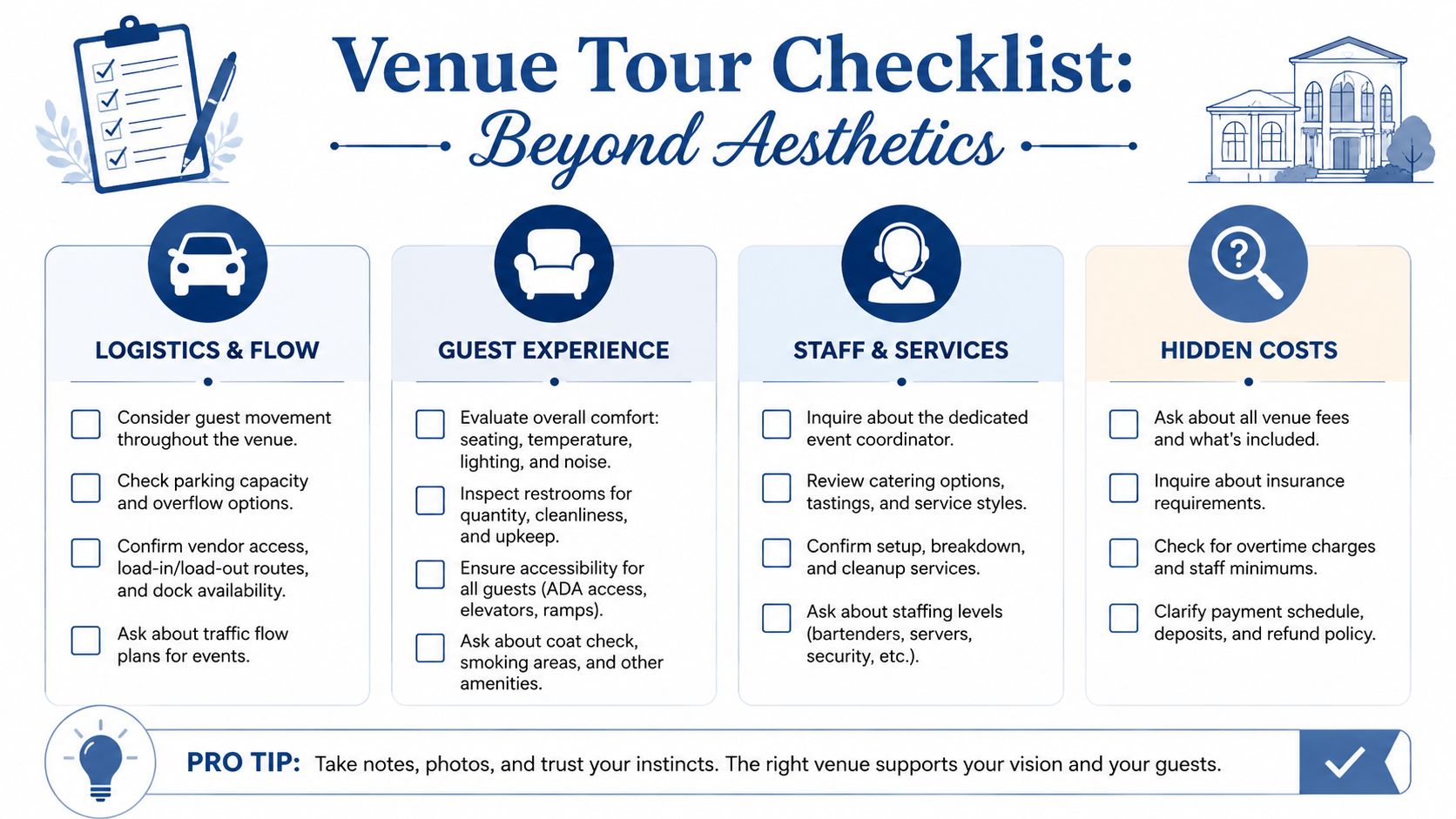
Look past the pretty parts
Walk the property in order of how the day will unfold. Start with parking and arrival, then ceremony flow, cocktail area, reception room, restrooms, prep suites, catering access, and load-out path.
Pay attention to capacity versus comfort. A room may legally fit your guest count and still feel cramped once you add a dance floor, DJ setup, buffet or bar lines, lounge furniture, and circulation space. Guests notice this immediately. They don't describe it as "poor spatial planning." They describe it as feeling crowded, leaving early, or avoiding the dance floor.
Use this quick tour checklist:
| Area to assess | What to check | Why it matters |
|---|---|---|
| Arrival | Parking, signage, ease of entry | Sets the tone before the ceremony begins |
| Ceremony backup | Indoor option, weather pivot speed, sound | Prevents last-minute chaos |
| Reception room | Table layout, dance floor clearance, bar flow | Affects guest comfort all night |
| Vendor access | Prep kitchen, unloading route, service entry | Keeps setup efficient and discreet |
A strong venue tour also includes sensory details. Look at lighting in the spaces where you'll spend time. Ask what the room feels like at the hour your ceremony would happen. Stand where the guests will sit and listen for traffic noise, HVAC noise, or awkward sound bleed between spaces.
If you leave a tour talking only about how "cute" the venue is, you didn't ask enough operational questions.
Before you go, it helps to review a working checklist like this guide on why you should tour a venue before booking it, because the right questions are easier to ask when you're not distracted by the setting.
Questions that expose cost and stress points
The most valuable tour questions are the ones that reveal limits.
Ask these directly:
Which vendors are required, and which are optional?
This tells you whether the venue is flexible or whether you'll inherit pricing and availability constraints.Are outside vendor fees charged if we don't use the preferred list?
That's where many couples get surprised.What is included in the rental, specifically?
Ask about tables, chairs, sound system, getting-ready suites, setup support, cleanup, and on-site management.What are the exact access hours for us and for vendors?
The answer may differ.How does the rain plan work in practice?
Not in theory. In practice.
The vendor question matters more than many couples realize. A 2024 survey found that 42% of couples encountered unexpected fees for using outside vendors, ranging from $500 to $1,500, and venues with flexible vendor policies can reduce total wedding costs by an average of 18% according to this wedding planning discussion summarizing those findings.
That doesn't mean every preferred list is bad. Some lists are useful and well-vetted. The issue is whether the list is a recommendation or a requirement with financial penalties attached.
One factual example of how a venue can solve this is Texas Old Town, which offers a flexible caterer policy, a prep kitchen with separate service entry, a built-in beverage bar with an approved bartending company requirement, on-site management, included cleanup and furniture breakdown, indoor and outdoor ceremony options, and a documented 16-hour access window on its Kyle property. That combination matters because it addresses two of the most common pressure points at once: vendor restrictions and compressed timelines.
Decoding Contracts and Avoiding Costly Red Flags
The contract is where venue shopping becomes real. Couples often spend hours comparing photos and only minutes reading the document that controls payment, access, cancellation, vendor rules, and overtime. That's backwards.
The most expensive problems usually come from language that looked harmless during the tour. A vague clause about approved vendors. A rental time that doesn't match what was described in conversation. Cleanup responsibilities buried in a later paragraph. If it isn't written clearly, assume it can become a dispute.
What should be itemized in writing
Ask for a version of the quote that separates the moving parts. You want to see the rental fee, service fees, taxes, overtime terms, security requirements, and any outside-vendor charges broken out clearly.
Hidden costs like service fees and taxes can inflate the initial quoted price by 20 to 30% if they're not explicitly detailed in the contract, and failing to validate a venue's vendor policy leads to 35% of post-contract disputes according to this guidance on choosing a wedding venue mindfully.
Read the contract with these questions in mind:
What's included automatically
Tables, chairs, ceremony seating, audio equipment, suites, staffing, and post-event cleanup should be named plainly.What triggers extra charges
Overtime, security, vendor access outside the stated schedule, ceremony flips, and cleanup failures are common triggers.How bar service is handled
If the venue allows host-provided beverages, verify exactly what licensed bartending support is required and whether that requirement is already reflected in your planning.
A transparent contract doesn't need sales language. It needs specifics.
Contract language that deserves a pause
Watch for terms like "may require," "subject to approval," "additional fees may apply," or "vendor must be approved by management." Those phrases aren't always a problem, but they need clarification in writing before you sign.
A good contract review also checks the parts couples tend to skim:
Cancellation and rescheduling terms
Know what happens if circumstances change.Deposit schedule
Make sure the timing works with your cash flow, not just your enthusiasm.Rain plan specifics
Confirm where the event moves, who makes the call, and whether any extra labor or room flip is involved.Exclusive-use language
Verify whether your event is private and what spaces are yours for the day.
A venue agreement should answer operational questions before they become emotional ones.
If something was promised on the tour and doesn't appear in the contract, ask for an addendum or corrected version. Verbal reassurance doesn't help once planning gets complicated.
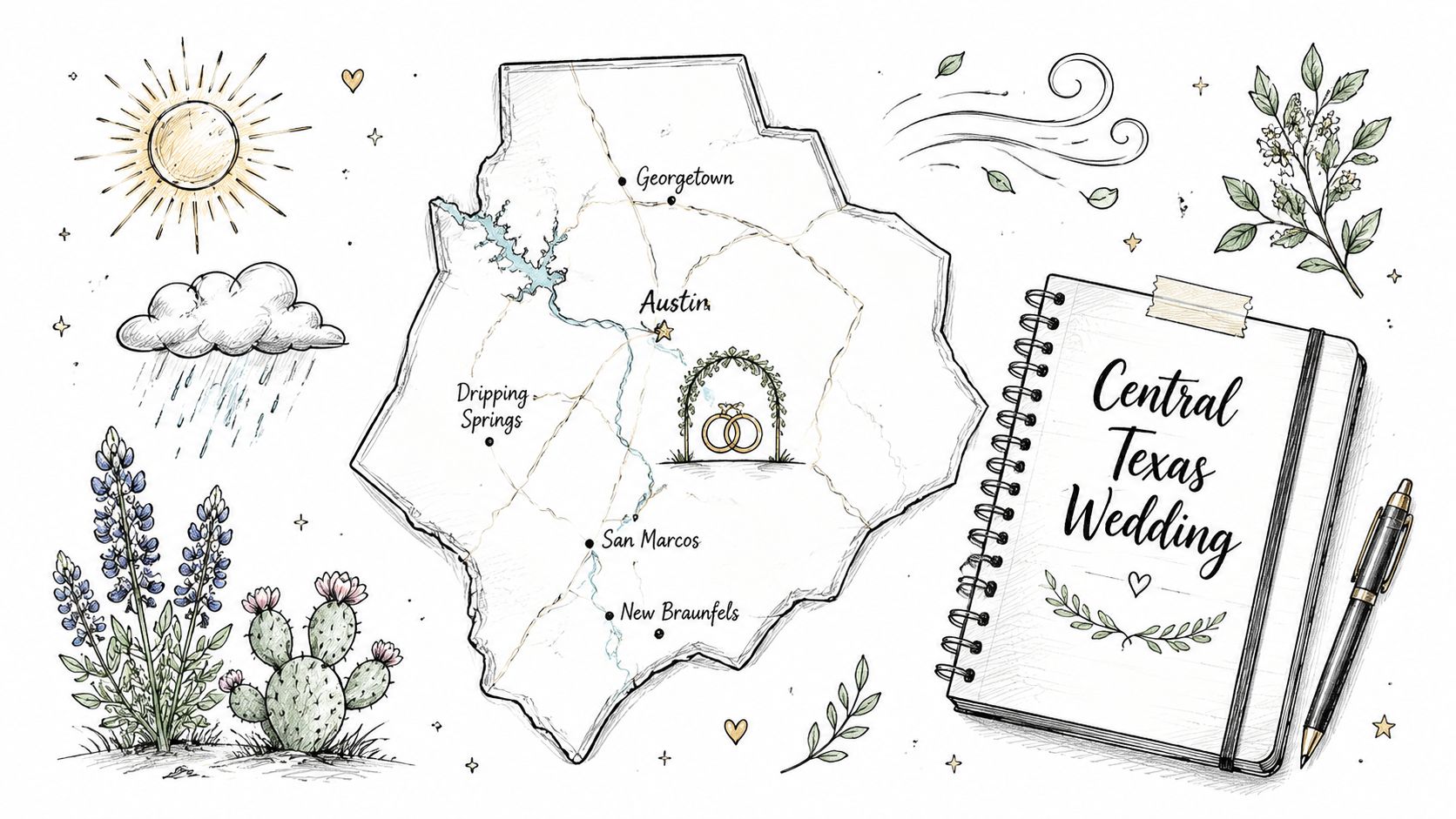
Special Considerations for a Central Texas Wedding
Central Texas rewards smart venue selection. The scenery is a major asset, but the logistics matter just as much as the views.
Weather, travel, and property layout
Weather is the first regional reality to respect. Spring can shift quickly, summer heat can drag on guests and vendors, and a beautiful outdoor ceremony site isn't enough if the indoor backup feels like an afterthought. In this region, the best properties treat indoor and outdoor use as equally functional, not as a primary space plus a compromise space.
Travel is the second. Couples often invite guests from both Austin and San Antonio, plus family flying in from elsewhere. A venue positioned along that corridor can simplify arrival times, hotel planning, and shuttle decisions. Private parking also matters more than many couples expect, especially if they want guests to arrive without downtown navigation or long walks from overflow lots.
The Hill Country look is part of why people choose this area in the first place, so it's worth favoring venues that don't need heavy styling to feel distinctly Texan. Scenic grounds, mature landscaping, water features, and flexible indoor halls can do a lot of visual work before you add a single rental item. For a planning framework specific to the region, this guide on how to choose the perfect wedding venue in Texas is a useful local reference.
Frequently Asked Questions About Choosing a Venue
A few questions come up in almost every planning process, even after couples have done the major research.
What if our guest count changes after booking
Build some cushion into your decision. Don't book a room that only works if every RSVP breaks your way. Ask the venue how layout changes are handled if your count lands lower or higher than expected, and whether the room still feels balanced at different attendance levels.
What payment terms should we expect
Every venue structures payments differently, so focus less on what's "standard" and more on what's clear. You want the due dates, deposit terms, final payment timing, and refund conditions spelled out in writing. If a venue offers a payment plan, make sure you understand whether it changes anything about cancellation or rescheduling rights.
How should we use a preferred vendor list
Treat a preferred list as a research shortcut, not an automatic answer. A good list can help you find professionals who already know the property, loading routes, and staff workflow. That's valuable.
Still, ask whether the list is optional, whether there are penalties for going outside it, and whether your own vendors can work there smoothly. If you're also thinking about attire and guest-facing polish, editorial style guides like Vivien Lauren's luxury wedding tips can help you define the tone you want without losing practicality.
The clearest sign you've learned how to choose a wedding venue is simple: you can explain why a venue works, not just why it looks good.
If you're comparing Central Texas venues and want a property with four distinct halls, indoor and outdoor ceremony options, flexible catering, exclusive 16-hour access, transparent pricing, and practical support built into the day, Texas Old Town is worth adding to your shortlist.