A famous overlook looked perfect in the photos. Then a tour group arrived, a dozen phones came out, and the quiet moment the proposer had planned became a public event. If you're working out how to plan a surprise proposal, choose the logistics before the décor: a beautiful view can't make up for having nowhere private to ask.
Secrecy works best as a small system, not a growing circle of people sworn to silence. Choose one ally, use a cover story that fits your real calendar, scout the location at the same hour, and decide in advance where you'll go if the plan stops working.
Table of Contents
- Pick a Setting That Can Stay Secret
- Coordinate the Surprise in Eight Moves
- Time the Logistics From Weeks Out to the Yes
- Capture the Moment Without Blowing It
- Fix Leaks Weather and Last-Minute Problems
- Make the Go or No-Go Call
Pick a Setting That Can Stay Secret
The right setting isn't necessarily the most dramatic one. It's the place where your partner can hear the question, you can get a private moment, and both of you can leave comfortably if the scene changes.
| Setting | Privacy | Best for | Main leak | Backup |
|---|---|---|---|---|
| Booked garden or private lawn | High if the host is briefed | One to six invited witnesses | Unbriefed staff announcing it | Indoor room on the same property |
| Restaurant booth | Medium | A normal dinner-date cover | Server or friends reacting early | Quieter corner or patio before dessert |
| Hike or overlook | Low to medium | Just the two of you | Crowds and no cell signal | Nearby covered spot already scouted |
| Home | High | Full control of people and timing | Roommates and obvious setup clues | One cleared room, rest of home normal |
| Public landmark | Low | An iconic photo | Phones, rules, and permits | Off-peak hour plus a rain plan |
| Boat or short ride | Medium | A contained audience | Motion, timing, and weather | Dockside plan if the ride is cancelled |
A booked garden or private lawn gives you more control than a public lookout. It can suit a small group of invited witnesses, provided the host knows what's happening and won't announce it. Ask the host how staff will be briefed, and keep the indoor room on the same property as your fallback. For location inspiration, browse outdoor proposal ideas.
A restaurant booth suits a believable dinner date. Brief one manager and one server, not the whole dining room, and ask before dessert in a quieter corner. The usual leak is an excited server or friend drawing attention too soon. A quieter table or patio can work as a fallback if the restaurant can move you without making a scene.
A hike or overlook is best when you both enjoy the outing already. It's a poor choice if you're relying on a famous viewpoint at its busiest hour, or if you need a phone signal to find your photographer or ally. Scout the place at the same weekday and hour, and identify a nearby covered spot you can reach without turning the outing into a search.
Home gives you control over the room and timing, but roommates, deliveries, or a visible decorating session can give away the plan. Stage one room and leave the rest of the home looking normal. If you can't clear the space, move the proposal to a setting you can control.
A public landmark offers an instantly recognizable backdrop but leaves you exposed to phones, rules, and possible permit requirements. Check the site's rules before settling on a time, aim for an off-peak visit, and choose a separate covered backup. If you're drawn to a distinctive ring but want to compare styles without making the proposal itself more elaborate, you can browse sapphire and moissanite ring options.
A boat or short ride keeps the audience contained, but motion, timing, or weather can disrupt the moment. Decide in advance whether you'll ask aboard or at the dock. If the ride is cancelled, the dockside plan should still feel like part of the same outing.
Tell no one until you need help. Then tell one trusted ally, or just the venue host if the setting requires it. Choose the place that gives you about sixty private seconds, lets your partner hear you, has a clear exit, and has a crowd or rain backup. If two choices seem equal, pick the one with fewer strangers holding phones.
Coordinate the Surprise in Eight Moves
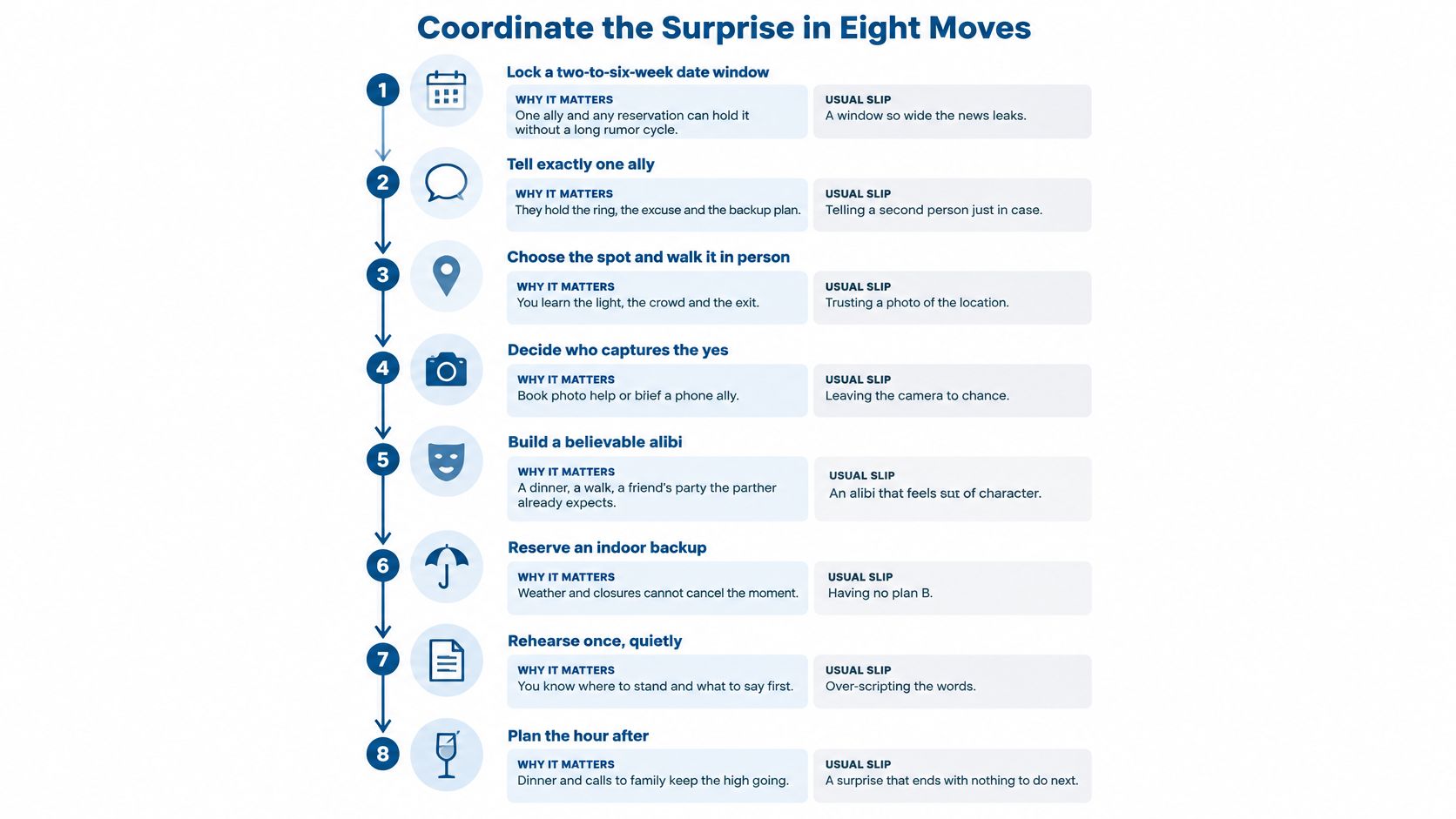
A good plan can still unravel through small, avoidable slips: someone adds a well-meaning extra guest, the cover story sounds unlike you, or you reach the spot without knowing where to stand. Keep the plan compact and put each decision in order.
Lock a two-to-six-week date window. That gives one ally and any reservation a workable target without leaving the secret open for a long rumor cycle. The usual slip is giving the window too much room, then having to keep more people informed.
Tell exactly one trusted person, in writing. Say plainly that they must not post, hint, or add anyone until you send an all-clear. The ally can help hold the ring, the cover story, and the backup plan; telling a second person “just in case” is the common leak.
Scout the spot at the same weekday and hour. Walk the route, check the light and noise, find restrooms and parking, and identify a sixty-second pocket away from foot traffic. A photo can't tell you whether a path is busy or a corner is noisy.
Reserve only what someone must act on. That could be a table, a lawn slot, or a photographer. Tell the person responsible what to do and what not to announce; involving extra staff or friends expands the circle without improving the plan.
Decide where the ring will stay, then rehearse your question. A zipped inner pocket is usually more secure than a loose jacket pocket or a bag you might set down. Say the question aloud once so you're not searching for words; trying to memorize a long speech can make you sound less like yourself.
Build a cover story from a real plan. Use a dinner you've discussed, a familiar walk, or another outing your partner would already believe. A sudden luxury trip or an unusual dress code can make the excuse feel like an alarm bell.
Set the phone rule before the day. Allies text you directly, never in a group thread, and keep their cameras down until you nod. Friends who think they're helping can expose the plan by sharing hints or posting a photograph too early.
Walk the exit the day before. Know where the keys and jacket are, what happens next, and who leaves first. Without an exit plan, you can end up trapped in a cheering circle while your partner is still taking in the moment.
If your schedule collapses, keep the minimum viable plan: the place, the ring, one ally, and the question you've rehearsed. Extra décor and guests can go; a clear plan for the ask cannot.
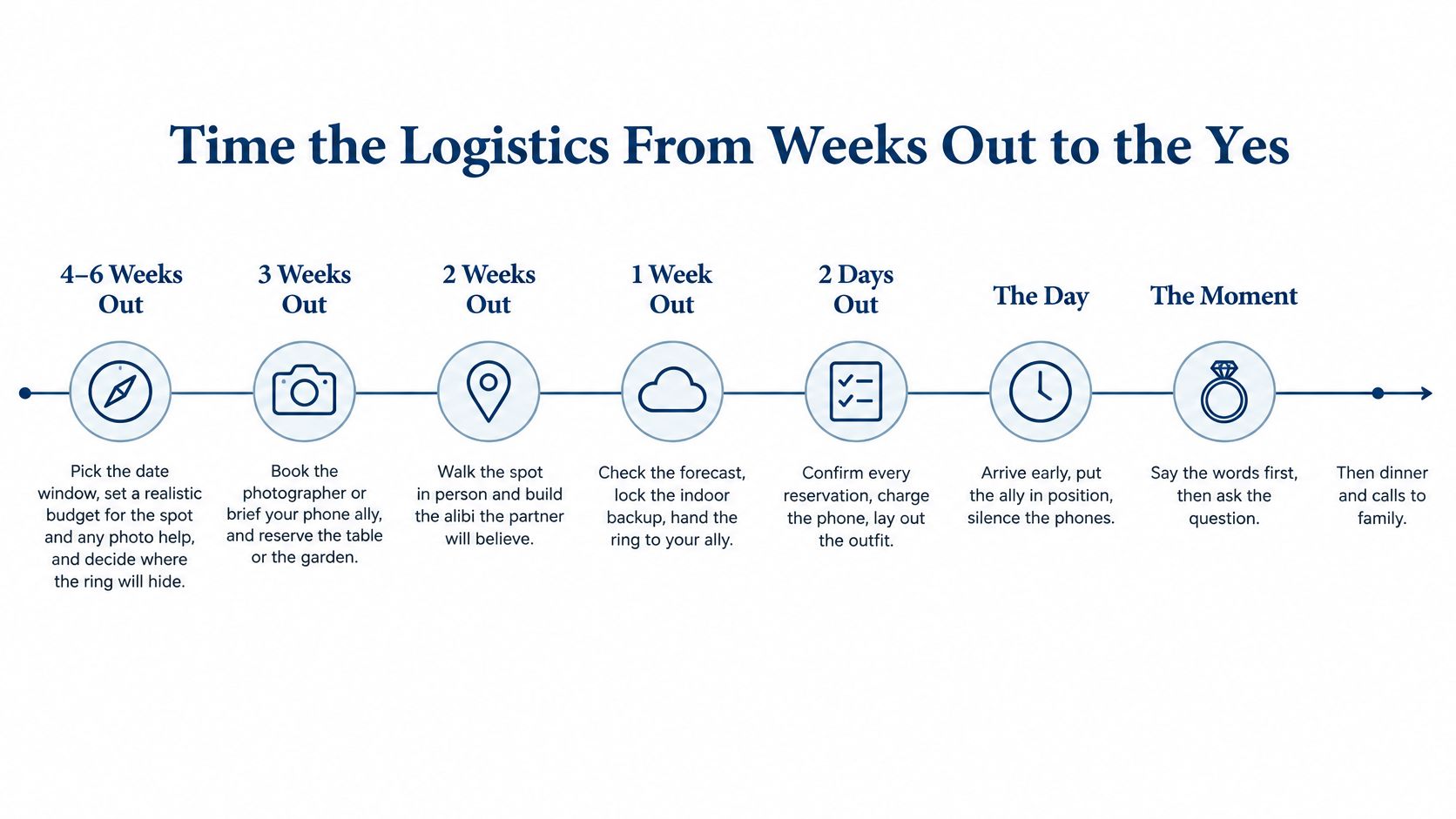
Time the Logistics From Weeks Out to the Yes
A countdown keeps decisions from piling up on the day. Put the milestones on a private calendar, and keep the knowledge circle small at each stage. If you're also planning a wedding, a guide for Aussie brides from Get Spliced can help you think beyond the proposal to the work that follows.
| Phase | When | Do this | Who knows |
|---|---|---|---|
| Idea lock | Four to six weeks out | Date window, budget, ring plan | You only |
| Hold the pieces | Two to three weeks out | One ally, reservation, photo hold | Ally and only the vendor who must act |
| Scout | One week | Same hour, light, exit, restroom | You |
| Go or no-go | Forty-eight hours out | Weather, ring pocket, cover story | You and the ally |
| Day of | That morning | Arrival order, silenced phones | Ally on standby |
| After the yes | Immediately | One all-clear, then sharing | Everyone you choose |
Four to six weeks out, choose a date window that works with your partner's real calendar. Set a realistic budget for the place and any photo help, and decide how you'll have the ring ready. If you know the size, leave time to arrange a resize rather than hoping a guess will fit.
Two to three weeks out, tell your ally and make the reservation. Put a photographer or phone helper on hold if you're using one, and make the no-post rule clear. If you're mapping the proposal alongside later celebrations, this event-planning timeline can help you organize the wider calendar.
One week out, repeat the scout at the actual hour. Check sunset or dinner timing, find a restroom, and pick the exact place to stand so your partner isn't facing a crowd. If the spot has changed since your first visit, treat that as a reason to adjust the plan, not a detail to ignore.
At forty-eight hours out, make the weather call. Confirm the ring's pocket, check that the backup is still available, and compare your cover story with your partner's actual calendar. If it no longer fits, change the outing to something they already expect.
On the morning of the proposal, silence notification previews and make sure your photographer arrives early enough to look ordinary. Keep the ally on standby unless they have a specific job on site. After the yes, send one all-clear text before anyone else shares the news.
For a proposal inside a larger party, ask before guests arrive rather than making the question compete with a room full of people. A weekday plan can also be easier to keep quiet than a Saturday sunset at a well-known photo spot.
If the week gets busy, cut extra guests first. Keep the scout and the backup place.
Capture the Moment Without Blowing It
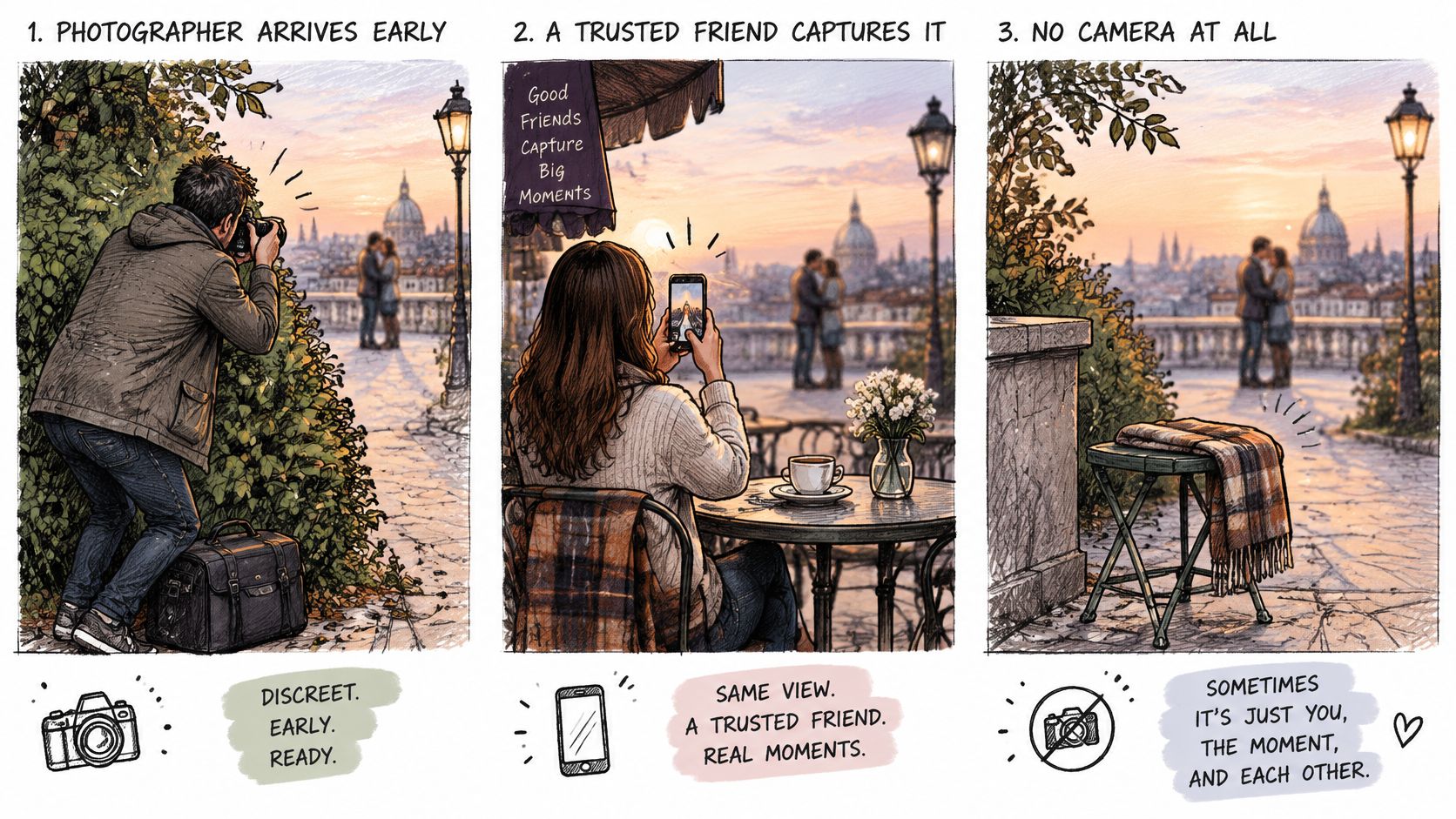
Decide who holds the camera before you invite anyone to help. The more conspicuous the setup, the more likely it is to draw attention before you ask.
A hired photographer suits a public location where you want pictures without holding your own phone. Ask them to arrive early in ordinary clothes. Tell them where you'll stand or kneel, what the short window looks like, and to start with casual pictures of the surroundings rather than pointing a lens at you as soon as you arrive.
A single ally with a phone works at home or on a booked lawn if their presence has a natural explanation, such as joining you for dinner afterward. Agree on a clear signal for when to start recording. Don't rely on them to guess the timing while watching from across the room.
Sometimes the right choice is no dedicated shooter. If another person would make your partner suspicious, leave the moment unrecorded and use a phone timer for one portrait after the yes. You can keep the memory without turning the proposal into a production.
Keep the shot list short
If you're taking pictures, keep the order simple: a wide view of the place before the ask, the question, your partner's reaction, a ring detail, and one calm portrait afterward. This gives you a small set of useful images without asking anyone to direct the moment.
Skip the drone, the flash at dusk, and a group reveal in the same minute as the question. Each one adds equipment or people at exactly the point when you're trying to keep attention on the two of you.
Camera rule: Everyone else keeps their phones away until you send the all-clear.
If your partner dislikes being filmed, keep the raw moment private. Decide afterward together what, if anything, may be posted. On the day, check the battery and storage, and make sure a second person knows the nod that means “start recording,” even if they're the only person operating a phone.
Fix Leaks Weather and Last-Minute Problems
If your partner starts asking pointed questions, the cover story may not match the plans they know. Shrink the outing to something already on the calendar, and stop adding vendors or moving parts. A smaller plan is easier to explain and less likely to attract more attention.
An ally who posts or tells someone creates a different problem: the secret may already have travelled. If the place still works, you can move the ask earlier that day. If the leaked version has become too predictable, postpone and change locations rather than trying to outwit a growing audience.
| Problem | Likely cause | Fix |
|---|---|---|
| Partner asks pointed questions | Cover story does not match real plans | Shrink the plan and use an outing already on the calendar |
| Ally posts or tells someone | No written hold until your text | Ask sooner or postpone at a different place |
| Weather turns | Outdoor-only plan | Move to the indoor or covered backup already scouted |
| Crowd swells | Peak hour at a public spot | Shift the timing or move to the reserved corner |
| Ring may not fit | Size was guessed | Use a temporary chain or resize after the yes |
| Camera gives it away | Obvious gear or lurking | Start with casual wide shots, or switch to one ally's phone |
Separate a quick fix from a new day
Weather is manageable only if the backup is already real. Use the indoor or covered place you scouted instead of inventing a new destination in the rain. If you booked a restaurant patio, ask the manager to move you inside only if they already know the plan.
A growing crowd calls for a move, not a contest of patience. Shift the timing or step into the reserved corner. If the only available moment would put the question in front of an unwanted audience, stop trying to force the setting.
A guessed ring size doesn't need to become a struggle at the moment of the proposal. Use a temporary chain or arrange a resize afterward rather than forcing a band onto a finger. If the photographer looks too obvious, have them begin with wide, casual frames or switch to the ally's phone.
A brief freeze doesn't require a perfect speech. Use the short question you rehearsed and leave out the longer lines. For a weather-focused backup plan, this guide to rainy wedding-day options offers ideas for thinking through an indoor alternative.
Some fixes take a minute, such as moving to an available corner or switching cameras. Others mean choosing a different day, especially if the partner already suspects the plan or the only backup has fallen through. A postponed private ask is better than a public one your partner already expects.
Make the Go or No-Go Call
Make the decision forty-eight hours out, using the plan rather than nerves. Go if the location still gives you about sixty private seconds, a backup is available, the ring is in its planned pocket, the ally understands the all-clear rule, and the cover story fits that day's real calendar.
No-go and pick a new day if your partner is already suspicious, the only backup has been cancelled, or weather and crowds would force the question into public view. A delay doesn't spoil the proposal. It keeps you from pressing ahead with a plan that no longer suits the moment.
Don't add extra guests, a flash mob, or a new vendor on the final day. Someone who hasn't heard the secrecy rule can create fresh clues, and a larger setup gives you more to coordinate when you should be checking the basics.
For a Central Texas couple looking for a private lawn with an indoor alternative, Texas Old Town in Kyle offers outdoor ceremony sites with water features, wooden gazebos, footbridges, and fire pits, as well as a hall if the weather shifts. Prospective clients can request a personal tour before deciding whether the property fits the plan. Engagement or bridal photoshoots at Texas Old Town must be scheduled Monday through Thursday, and availability must be confirmed five days before the shoot.
Keep the next step small: tour or scout one place at the right hour, name the one ally, and write the short question you'll ask. Save the celebration post until after the all-clear.
If a private lawn and a ready indoor option fit your plan, we offer outdoor ceremony sites and halls at Texas Old Town in Kyle. Request a personal tour of Texas Old Town to see whether the setting and its backup work for your proposal.