You're not just trying to “have an event.” You're trying to keep a room full of moving parts from colliding. The florist wants access before the band arrives, the caterer needs a clear path to the prep kitchen, the family wants a calm timeline, and someone still has to answer the question nobody asked early enough, who's in charge when the schedule slips?
That's where event manager responsibilities stop being a vague job title and start looking like operations. A strong event manager keeps the budget, vendors, timeline, guest flow, and contingency plans moving together, which is why the U.S. Bureau of Labor Statistics treats the field as a real profession with a 2023 median annual wage of $56,920 and 8% projected employment growth from 2023 to 2033 for meeting, convention, and event planners (BLS occupational outlook). In a venue like Texas Old Town, where one property can host weddings, quinceañeras, and corporate functions across multiple halls, the role becomes even more visible because every decision has to fit a live building, a fixed access window, and real people on the ground.
For a first-time client, that can feel abstract until the day starts. For a junior planner, it can feel like the job changes every hour. The simplest way to understand it is to see who owns what before, during, and after the event, because that's where accountability lives.
Table of Contents
- What an Event Manager Actually Owns on Event Day
- The Three Lifecycle Phases of Event Manager Responsibilities
- Pre-Event Responsibilities and a Realistic Planning Timeline
- How Day-Of Responsibilities Shift by Event Type
- Post-Event Responsibilities Most Planners Underestimate
- Skills, Staffing, and the On-Site Manager as Force Multiplier
- Questions to Ask Your Venue's On-Site Manager
- Common Questions About Event Manager Responsibilities
What an Event Manager Actually Owns on Event Day
A planner can arrive before sunrise and still feel behind. One vendor is at the gate, the couple has a question about seating, the caterer wants to know when the hall is clear, and the AV team needs to test sound before guests see the room. On event day, event manager responsibilities are less about “running the show” in a theatrical sense and more about making sure every handoff happens in the right order.

Who owns the decisions
The client-hired event manager usually owns the master timeline, vendor communication, issue escalation, and on-site sequencing. A venue's on-site manager owns the property-side pieces, access rules, facility coordination, and the in-house handoff points that keep the building operating safely and on schedule. Those two roles overlap, but they are not the same job, and that difference matters when something changes at the last minute.
At a venue with included on-site management, like Texas Old Town, the venue layer already exists inside the operation. That means the planner isn't trying to locate a property contact in the middle of setup, they're working with a built-in operational partner who can help keep movement, access, and breakdown aligned with the venue's own rules.
Practical rule: If the issue is about the event's design, guest experience, or vendor sequence, the event manager leads. If the issue is about property access, venue systems, or cleanup handoff, the on-site manager should be part of the decision fast.
The real job on the floor
The best event managers think in sequences. They confirm load-in order, make sure the room can shift from setup to ceremony to reception without conflict, and stay ahead of the kind of small delay that becomes a larger one five minutes later. That's why the role is tied to budgeting, scheduling, venue selection, vendor coordination, technical needs, and on-site execution in the BLS description, because all of those tasks connect in practice (BLS occupational outlook).
For a simple planning tool, many teams keep a written room-flow reference nearby. A practical example is the reception schedule template, which helps turn “we'll figure it out on the day” into a sequence with actual timing.
The Three Lifecycle Phases of Event Manager Responsibilities
The easiest mistake is to think event management starts when guests arrive. It doesn't. A late vendor check-in or an unclear contract term in the planning stage shows up later as a rushed setup, a stressed client, or a room that never fully settles into the right flow.
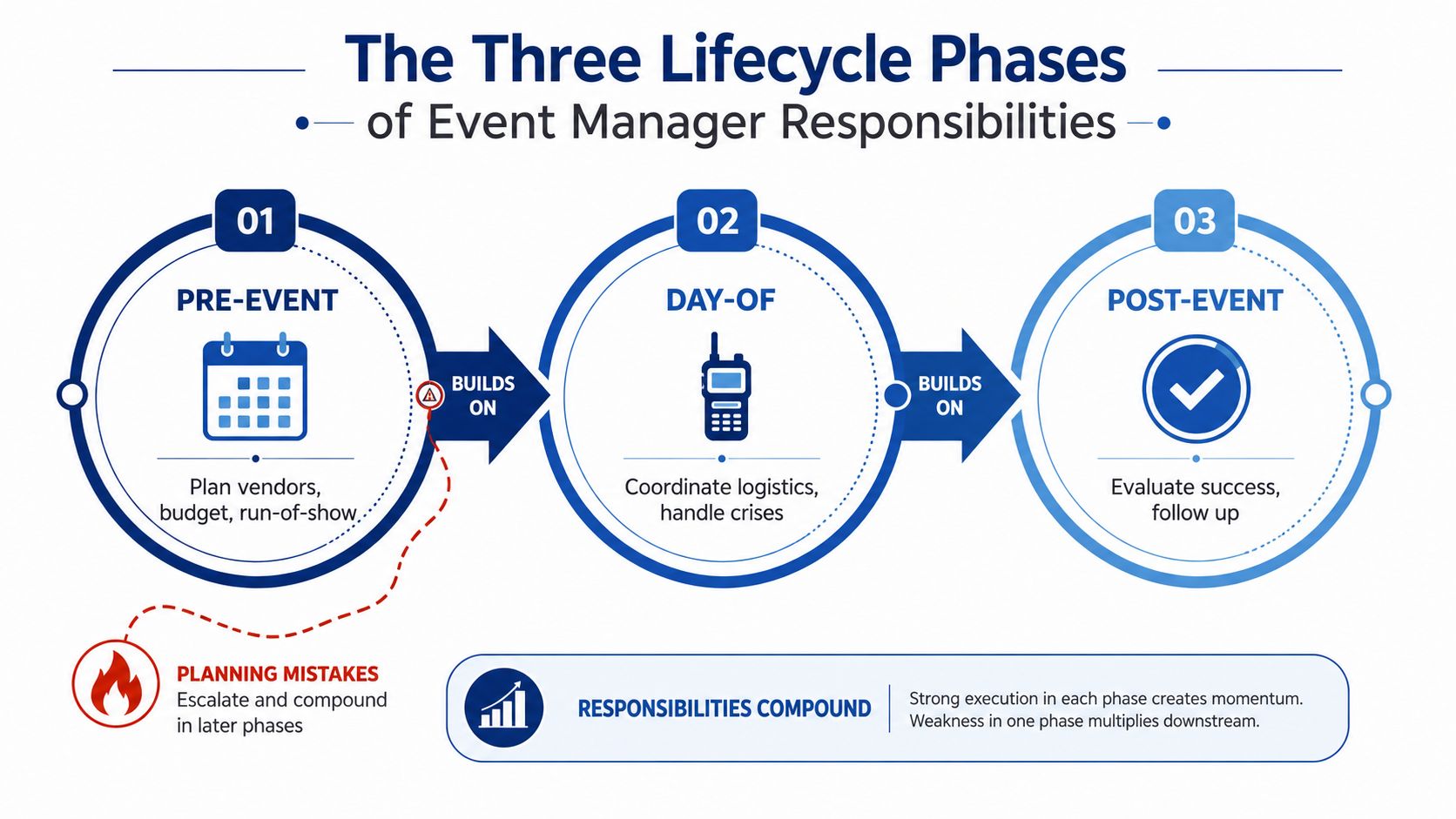
Pre-event creates the operating rules
Modern event manager responsibilities now cover planning, budgeting, vendor negotiation, marketing, staffing, logistics, and post-event analysis, not just day-of coordination (Instawork event manager job description). That broader scope matters because the pre-event phase defines the room's operating rules, from vendor arrival order to bar service requirements and setup timing.
If the planner doesn't lock those choices early, the event day inherits uncertainty. That's why a structured venue schedule, such as the one used in a Texas Old Town event planning timeline, is more than paperwork. It becomes the working map for everyone who needs access, space, and timing.
Day-of turns planning into movement
On event day, the work becomes coordination under pressure. The event manager confirms the schedule, responds to changes, and keeps vendors from overlapping in ways that block the room or slow service. In a venue with a 16-hour rental window, there's more breathing room for setup, live execution, and breakdown than in a compressed rental model, which reduces the chance that one late arrival distorts the rest of the timeline.
That extra room still doesn't remove the need for discipline. It just makes good sequencing more realistic.
Post-event closes the loop
The final phase is where accountability becomes visible. Cleanup, vendor departure, documentation, and feedback all happen here, and if the handoff is sloppy, the same problem can follow the venue or planner into the next booking. A strong event manager treats this phase as part of service quality, not an afterthought.
The event is only finished when the room is cleared, the notes are saved, and the next team can understand what happened.
Pre-Event Responsibilities and a Realistic Planning Timeline
Pre-event work is where most of the control lives. By the time guests see the room, the manager has already made decisions about budget, vendors, timing, and who is responsible for each moving part. If those choices don't line up, day-of troubleshooting becomes much harder than it needed to be.
A workable countdown
Eight weeks out, the manager should be checking venue specs, confirming the guest count range, and making sure the budget matches the scale of the event. Four to six weeks out, the focus shifts to vendor lock-in, layout assumptions, service needs, and the run-of-show. In the final stretch, the job becomes about confirmations, load-in order, staffing, and backup plans for anything that can break the flow.
That sequencing matters because venue access windows, catering delivery, and AV setup all depend on one another. If the bar setup needs approved bartending staff for BYO beverages, that requirement has to be settled before the event, not discovered during setup. A venue with documented furniture counts and a flexible vendor policy helps reduce guesswork, because the planner can work from actual inventory and actual rules instead of making assumptions.
What should be in the planner's hands
A junior planner should expect to finish pre-event work with a written budget, a confirmed vendor list, a timeline, and a room layout that matches the venue's capacity and access rules. If you're building your own checklist, a resource like flawless event planning tips can be useful as a general planning reference, but the important part is translating any checklist into the venue's actual operating schedule.
A good pre-event sequence often looks like this:
- Venue facts first: Confirm access hours, room size, furniture counts, and whether the ceremony and reception will share the same hall.
- Vendor rules next: Verify who is allowed, who needs approval, and who must coordinate directly with the venue.
- Timeline third: Put arrivals, setup, ceremony, meal service, speeches, and teardown into one run-of-show.
- Risk check last: Confirm bar staffing, weather options, parking flow, and who gets called if a delivery is late.
The better the pre-event work, the fewer surprises show up when the room starts filling.
How Day-Of Responsibilities Shift by Event Type
Day-of responsibilities don't look the same for every event. A wedding asks the manager to protect emotional timing, a quinceañera asks for family coordination across generations, and a corporate event asks for professional pacing and presentation discipline. The venue changes the work too, because the room, guest count, and service style shape what “control” means.
Weddings need ceremony choreography
In Tejas, with a larger guest capacity and a more expansive reception feel, day-of control often revolves around crowd flow, parking, and keeping the ceremony start from being crowded by last-minute arrivals. In Redbud, where the event is more intimate, the manager can focus more on guest experience details and smoother family movement because the room is working with a smaller scale.
For weddings, the event manager watches the aisle schedule, family photo timing, catering handoff, and the shift from ceremony mode to reception mode. If weather changes the plan, the venue's indoor and outdoor options matter because the pivot has to happen without confusing guests or delaying service.
Quinceañeras need multi-generational coordination
Quinceañeras often include more moving parts than first-time planners expect. There may be a ceremony, a formal entrance, family dances, speeches, and long stretches where older and younger guests are using the space differently. That makes the manager's job less about a single spotlight moment and more about holding the pace of the whole room.
Stone is a useful example for a corporate banquet or polished milestone event because it demands cleaner run-of-show discipline and stronger AV awareness. That same discipline helps quinceañera planners too, especially when there are performances, announcements, or transitions that need clear sound and room resets.
Corporate events need structure and timing
Corporate functions usually bring tighter expectations around branding, speaker order, sponsor visibility, and meal timing. The manager needs to keep the schedule readable and protect the company's image if a vendor runs late or a microphone fails. The on-site manager helps here by supporting layout changes, troubleshooting access issues, and keeping the venue side of the operation from slowing down the client side.
The shared pattern is simple. Weddings protect emotion, quinceañeras protect family flow, and corporate events protect presentation. The responsibility changes with the audience, but the manager still has to keep the room moving.
Post-Event Responsibilities Most Planners Underestimate
A lot of people think the hard part ends when the final song plays. It doesn't. The last hour of an event can create the next week's headaches if rentals aren't tracked, breakdown isn't coordinated, or damage isn't documented clearly.
What still needs to happen after guests leave
Post-event responsibilities include teardown oversight, vendor departure, final condition checks, reporting, and feedback collection. Some guides mention post-event evaluation briefly, but they often skip the practical side, which is where the risk sits. If tables, décor, or equipment are left without a clear handoff, the dispute rarely stays small for long.
That's why venues that include cleanup and furniture breakdown can materially reduce planner workload. If the venue absorbs the physical reset, the planner can focus on final counts, vendor settlement, and making sure nothing gets lost in the shuffle. For planners who also care about operational discipline, the sustainable planning discussion at Texas Old Town sustainable event planning connects well to the idea that cleanup and reuse planning are part of the event lifecycle, not separate from it.
The deliverables that should exist every time
A planner should leave with a few concrete records, even on a simple event:
- Final budget reconciliation: What was approved, what was spent, and what changed.
- Vendor closeout notes: Who arrived on time, who needed extra direction, and who should be used again.
- Lessons-learned document: A short record of what worked and what caused friction.
- Guest or client feedback: Enough detail to improve the next event without guessing.
- Damage or exception log: A plain record of anything unusual that happened.
If the event can't be explained clearly afterward, it was never fully managed.
That's the quiet value of strong post-event work. It lowers future risk, improves repeatability, and gives the next planner a better starting point.
Skills, Staffing, and the On-Site Manager as Force Multiplier
Good event managers need both technical and human skills. They need to read a budget, negotiate with vendors, and write a schedule that works. They also need the calm to make a decision when a delivery is late, a microphone cuts out, or a family member wants one more change after the room is already set.
What the manager must be able to do
The hard skills are essential. Budgeting keeps the event realistic, vendor negotiation keeps service aligned, and a clean run-of-show keeps every team from improvising against each other. The soft skills matter just as much, because event day is full of requests that sound small but change the order of operations.
A solid staffing model usually includes the planner, a day-of coordinator if the event is complex, vendor contacts with direct arrival instructions, and an approved bar team when BYO service is involved. In a venue with an on-site manager already present, that venue-side role becomes a force multiplier because it gives the planner another trained set of eyes on access, layout, and breakdown. Texas Old Town, for example, includes on-site management, which means the event team isn't working in isolation when the room gets busy.
When to add more support
Not every event needs a large staff, but larger guest counts, multiple program segments, or AV-heavy setups usually justify more help. A corporate banquet may need a stronger AV lead. A wedding with a tightly timed ceremony may need a dedicated coordinator to watch cues while the main planner handles client questions. A BYO beverage event needs clear bartending responsibility so service doesn't drift into confusion.
The key is matching staffing to risk. If one person can't realistically watch every handoff, the planner should add support before the event starts.
Questions to Ask Your Venue's On-Site Manager
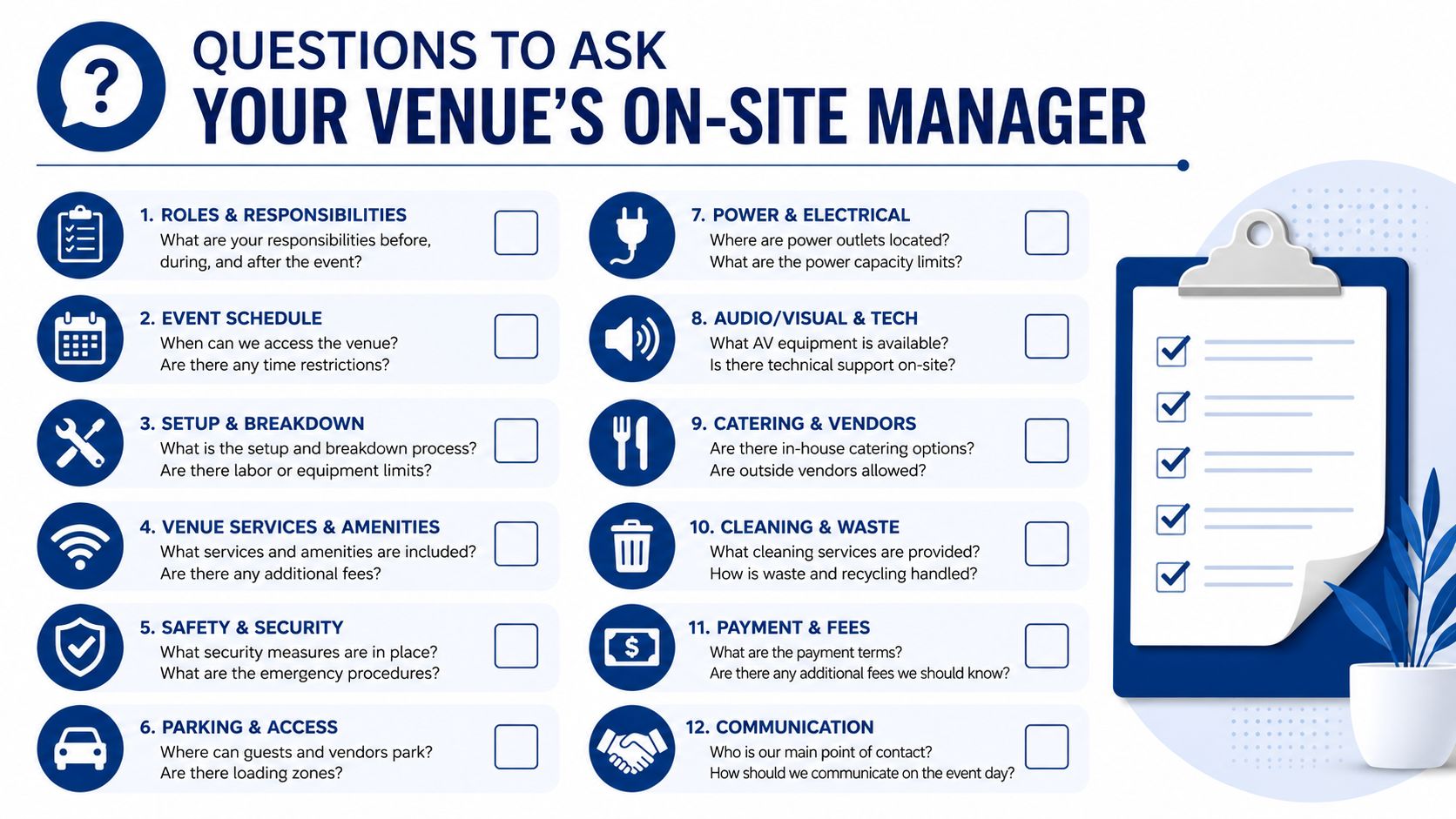
A venue tour feels smoother when you know what to ask. The right questions uncover whether a property is operationally clear or just visually appealing, and that difference affects everything from budgeting to stress level on event day.
The questions that reveal real scope
Ask who controls access times, what furniture counts are included, which vendors are approved or restricted, and how weather changes are handled if part of the event moves indoors. Ask how BYO beverages are managed, who supplies the bartending staff, and what cleanup is included at the end of the night. Those answers show whether the venue's promises are specific or vague.
A useful reference point is a practical responsibilities checklist from Superstar Nannies, because the logic is similar, clear scope beats assumptions every time. If the venue can explain the escalation chain, the included services, and the vendor rules without hedging, planning usually gets easier from there.
What good answers sound like
You want direct answers about who opens the space, who approves changes, and who handles problems if a vendor arrives late. You also want clarity on whether cleanup is part of the package or a separate burden, because that affects staffing and end-of-night timing. In a venue with multiple halls and distinct guest capacities, the on-site manager should be able to explain how the property behaves under different event sizes.
If the answers feel fuzzy, the risk is probably real.
Common Questions About Event Manager Responsibilities
Who owns vendor mistakes, the planner or the venue? It depends on the contract and on who controlled the vendor relationship, but the event manager should still track the issue, escalate it fast, and document the outcome.
What's the difference between a planner and a venue manager? The planner owns the event's goals, timeline, and vendor coordination. The venue manager owns the property-side execution, access, and venue operations.
Do included services change the planner's workload? Yes. When a venue includes on-site management, cleanup, dressing suites, and a long access window, the planner spends less time solving basic logistics and more time controlling the event sequence.
Can scope changes happen mid-event? They can, but they should go through the event manager and the venue manager together so no one makes a change that breaks the timeline or creates a safety issue.
Texas Old Town gives planners a venue structure that matches the realities of event manager responsibilities, with four halls, 16-hour access, on-site management, and clear vendor rules that support better control. If you're planning a wedding, quinceañera, or corporate event in Central Texas, visit Texas Old Town to see how those operational pieces work together in one place.