You fall in love with the photos, book a tour, and then find out the rental window is too short for setup, the bar package is required, and outside vendors come with added fees. That is how couples end up with a venue that looks right online but creates pressure everywhere else.
Austin gives you a wide range of venue styles, especially once you include Dripping Springs and the Hill Country. The challenge is not finding attractive options. The challenge is sorting through places that differ on rental hours, vendor rules, lodging, noise limits, and what the quoted price covers. A polished gallery will not answer those questions.
Start with planning filters, not aesthetics. I tell couples to compare three things first: how long you have the property, how much freedom you have with catering, bar service, planners, and rentals, and whether the pricing is clear enough to build a realistic budget from day one. Those factors shape the guest experience more than almost any floral or design choice.
A venue with a lower base rate can still cost more if the access window is tight and your vendor team has to rush setup. A venue with in-house services can save time and coordination, but only if the package matches your priorities. If budget clarity is your main concern, this guide on how to choose the right Austin wedding venue for your priorities covers the questions worth asking before you tour.
The venues below are not ranked by who photographs best. They are examined through the lens that matters during planning: rental terms, vendor flexibility, and how easy each property is to price transparently before you sign. Each one also includes a Best For callout, so you can narrow the list faster.
Table of Contents
- 1. Texas Old Town
- 2. The Addison Grove
- 3. The Arlo
- 4. Barr Mansion
- 5. Camp Lucy
- 6. Ma Maison
- 7. Villa Antonia
- Comparison of 7 Austin Wedding Venues
- Making Your Final Venue Decision
1. Texas Old Town
A common Austin-area planning problem looks like this: the venue is beautiful, but the rental window is tight, the vendor rules are restrictive, and the final bill grows once service fees and required add-ons show up. Texas Old Town stands out because it addresses those practical pressure points early.
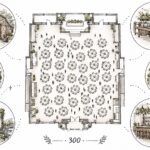
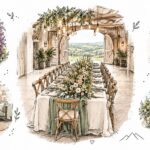
The property has four separate private venues, Tejas, Sage, Stone, and Redbud, on a large Hill Country-style setting. That matters for couples comparing aesthetics and headcount at the same time. Instead of forcing a choice between a space that feels right and a space that functions well, Texas Old Town gives more room to match the venue to the event size and layout needs.
Rental time is one of the strongest advantages here. The 8:00 a.m. to midnight access window gives couples and vendors more breathing room across the full day. In practice, that usually means a calmer load-in, fewer staffing overages caused by compressed timelines, and less pressure on hair, makeup, photography, and décor setup.
Why Texas Old Town stands out
From a planner's perspective, this venue works well for couples who want flexibility without building a wedding day from scratch. There are indoor and outdoor ceremony options, climate-controlled reception halls, dressing suites, parking, a prep kitchen, a separate service entry, on-site management, and cleanup with furniture breakdown included. Those details affect guest experience and vendor execution more than the photo gallery usually shows.
Vendor policy is another reason Texas Old Town belongs high on a practical venue list. Couples can choose their own caterer, which gives real budget control and more freedom around food style, service format, and cultural menus. For weather planning, the venue also publishes guidance on whether an indoor or outdoor wedding in Texas makes more sense, which is useful if you're weighing ceremony backup plans before you book.
Pricing clarity is also better than average for this market. The quoted pricing includes sales tax and gratuity, which helps couples compare real numbers instead of optimistic starting rates. That kind of transparency saves time during venue tours and reduces budget surprises later.
One trade-off to confirm early is the bar setup. You can bring your own beverages, but service must go through an approved bartending company. For many couples, that is a reasonable middle ground. You keep more control over alcohol purchasing, while the venue keeps service standards and liability procedures consistent.
Practical rule: Ask every venue to spell out rental hours, included furniture, cleanup scope, and alcohol policy before you get attached to the photos.
Best For
Couples planning a Hill Country wedding for roughly 150 to 320 guests who want long rental access, flexible catering, and straightforward pricing. It is also a strong fit for couples trying to avoid the common capacity gap discussed in advice on choosing the right Austin-area wedding venue.
2. The Addison Grove
The Addison Grove works well for couples who want a polished Hill Country look without going full rustic. The venue leans modern ranch rather than barn-heavy, and it's close enough to Austin that guest transportation, hotel blocks, and rehearsal logistics tend to feel simpler than at more remote properties.
The biggest practical advantage here is transparency in the early shopping stage. Many Austin wedding venues require an inquiry before you can understand whether the date and budget are realistic. Addison Grove is more useful than most because it offers date-based pricing guidance and custom estimate tools, which helps couples screen options before they spend weekends on tours.
What works well here
This venue is especially appealing if you want optional all-inclusive structure without being locked into one planning style. The ceremony and reception setup supports a full wedding day in one place, and the getting-ready suites plus prep kitchen cover the basics most couples need.
There is a trade-off. Prime Saturdays move fast, and weather planning still matters because outdoor ceremonies always need a backup path in Central Texas. That doesn't make the venue risky. It just means you should ask direct questions about rain shifts, guest flow, and whether your indoor plan still feels intentional rather than like a last-minute save.
- Best feature for busy couples: Online pricing tools make first-pass comparison easier.
- Best logistical advantage: Proximity to Austin helps with guest hotels and transportation.
- Main caution: Peak-date demand can narrow your options quickly.
Good venue shopping starts with date realism. If you're set on a peak weekend, ask about availability before you fall in love with a photo gallery.
Best For
Couples who want a clean Hill Country aesthetic, a smoother path to estimating cost, and the option of a more curated planning experience. If location convenience is high on your list, it also helps to understand why Austin works so well as a wedding destination, because guest travel and local vendor depth affect the experience more than couples expect.
3. The Arlo
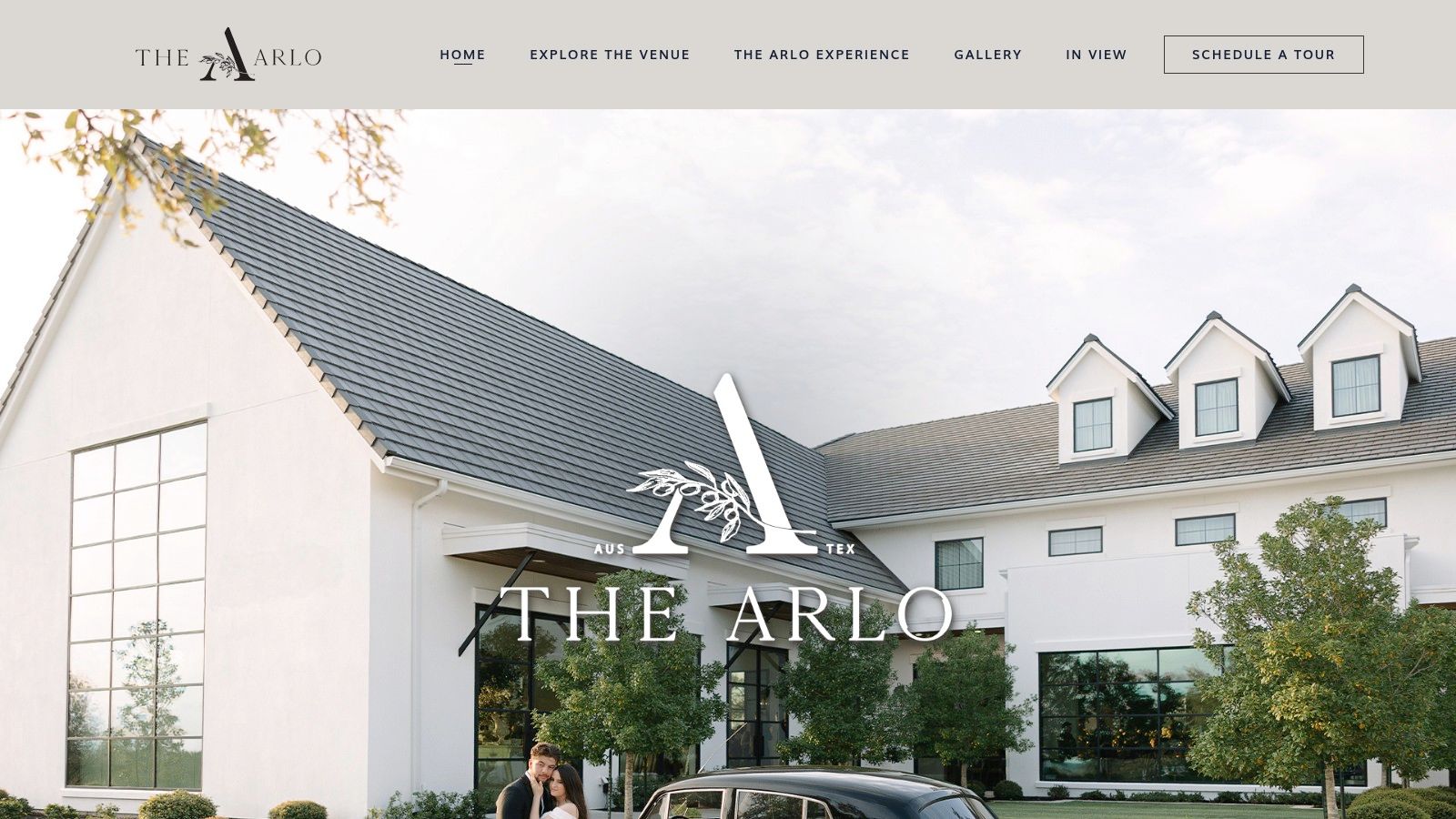
A common Austin planning scenario goes like this: the couple wants Hill Country views, but they do not want wood-heavy interiors, mason jars, or a space that pushes the design in a rustic direction. The Arlo solves that problem well. Its clean architecture and neutral finish give couples more control over the wedding style, which matters when you are trying to spend with intention instead of decorating around a venue's personality.
That design restraint has practical value. A room that already feels polished usually needs fewer statement rentals, and florals tend to read better against a simple backdrop. For larger weddings, that can protect the budget from the slow creep of added draping, upgraded chairs, specialty lounges, and extra decor meant to soften a busy room.
Where it shines
The Arlo works best for couples who care about guest flow and a polished event timeline. Purpose-built wedding venues usually perform better on logistics than properties adapted for events, and that shows here. The combination of indoor and outdoor event areas, private suites, prep space, furnishings, and on-site parking covers the operational basics that keep a wedding day running smoothly.
It is also a strong fit for couples who want flexibility without a downtown hotel feel. The setting gives you the Hill Country backdrop, but the venue itself reads modern and intentional.
The trade-off is budget clarity. Public pricing is limited, so this is not the easiest venue to screen from your laptop. You will need to ask direct questions about rental hours, what is included in the base rate, vendor rules, and any added costs tied to staffing, rentals, or timeline extensions. Guest lodging is another point to review early, since most attendees will need transportation to off-site accommodations.
Neutral venues tend to save money in less obvious places. Couples make faster design decisions when the room does not fight every color palette.
Best For
Couples who want a modern aesthetic, strong built-in infrastructure, and a Hill Country setting without a barn look. It also suits planners who compare venues by operating details, not just photos, especially if rental terms, vendor flexibility, and realistic total cost matter as much as the backdrop.
4. Barr Mansion
Rain moves the ceremony indoors, dinner service starts on time anyway, and guests still feel like they got the wedding they were promised. That is the practical appeal of Barr Mansion. It is one of the Austin area venues where the backup plan does not feel like a downgrade.
Barr Mansion suits couples who want fewer vendor handoffs and tighter operational control. The venue is known for a full-service structure, which usually means the food, bar, staffing, and on-site execution are handled under one roof. From a planning standpoint, that reduces the number of separate contracts and the chances of one vendor missing a timing cue from another.
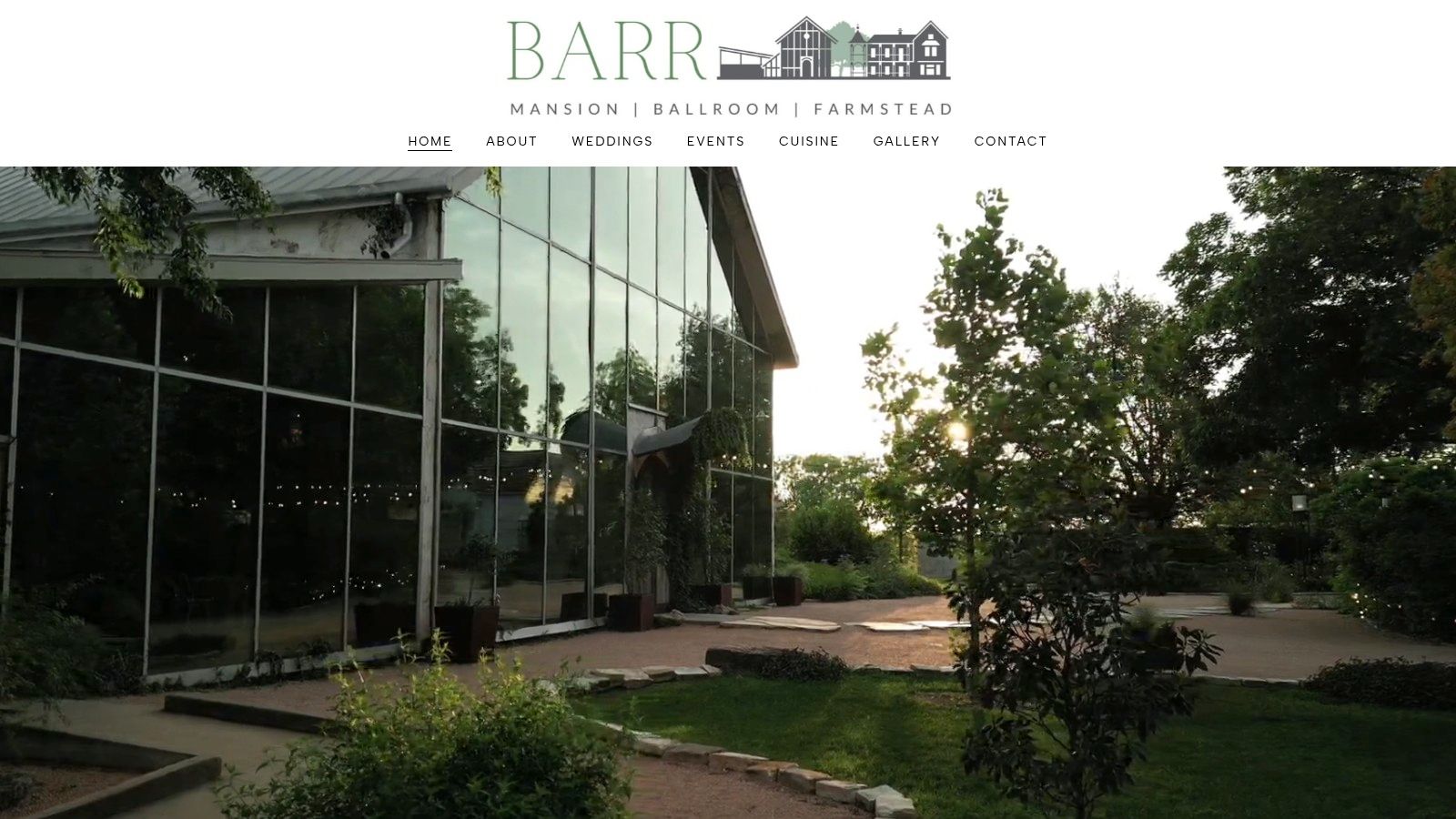
Its garden setting and glass ballroom get the attention online. The bigger decision is how much flexibility you want. Couples who already have a caterer they love, want a highly customized bar program, or prefer to source every vendor independently may find the house rules more limiting than helpful.
The Planning Trade-Off
Full-service venues can make budgeting easier to manage, but not always easier to compare. A package may cover far more than a lower base rental at another property, yet public pricing rarely shows the whole picture. Ask direct questions about rental hours, setup and breakdown windows, staffing minimums, bar structure, service charges, and whether outside vendors are allowed in any category.
Barr Mansion makes the most sense for couples who value operational simplicity and a polished rain plan. I usually recommend venues like this to clients who would rather spend their planning energy on guest experience than on coordinating six separate service teams.
A strong indoor option matters in Austin. Heat, wind, and spring storms can change the plan fast. Barr Mansion has an advantage there because both the garden and the indoor space feel event-ready.
- Best planning advantage: One team manages many of the moving parts that often cause timeline issues.
- Best guest experience feature: Indoor and outdoor spaces both feel intentional, not like a primary space and a backup room.
- Main planning trade-off: Vendor flexibility is narrower, especially for couples who want outside catering or a more custom food and beverage approach.
Best For
Couples who want an estate feel, a clearer operations chain, and a venue that performs well even if the weather shifts. It is a smart option for people comparing Austin wedding venues by rental structure, vendor rules, and realistic day-of logistics, not just by photos.
5. Camp Lucy
Camp Lucy is the destination-weekend play. If you want your wedding to feel like a retreat rather than a single event block, Camp Lucy distinguishes itself from many Austin wedding venues. The combination of multiple event spaces, on-site accommodations, dining, and resort-style atmosphere changes how the whole weekend functions.
That can be a real advantage for families coming from different cities. It keeps guests together, gives room for rehearsal dinners and next-day gatherings, and reduces the usual shuttling between hotel, ceremony, and after-party. For couples hosting a larger crowd or a layered wedding weekend, that convenience often matters more than décor style.
Planning upside and caution
Camp Lucy gives you multiple settings on one property, which creates flexibility for ceremony, reception, and backup plans. It also supports a more immersive guest experience. People aren't just attending the wedding. They're spending time there.
The trade-off is straightforward. Resort venues tend to come with premium pricing and more decisions about site movement, guest transportation, and event sequencing. If parts of the celebration happen in different areas, you need a clear movement plan so guests don't feel like they're wandering a beautiful property without direction.
A resort venue can solve a lot of weekend logistics, but only if the schedule is organized tightly enough that guests always know where they're supposed to be next.
Best For
Couples planning a destination-style wedding weekend in Dripping Springs who want lodging and celebration spaces tied together. It's especially useful when guest experience across several events matters as much as the wedding day itself.
6. Ma Maison
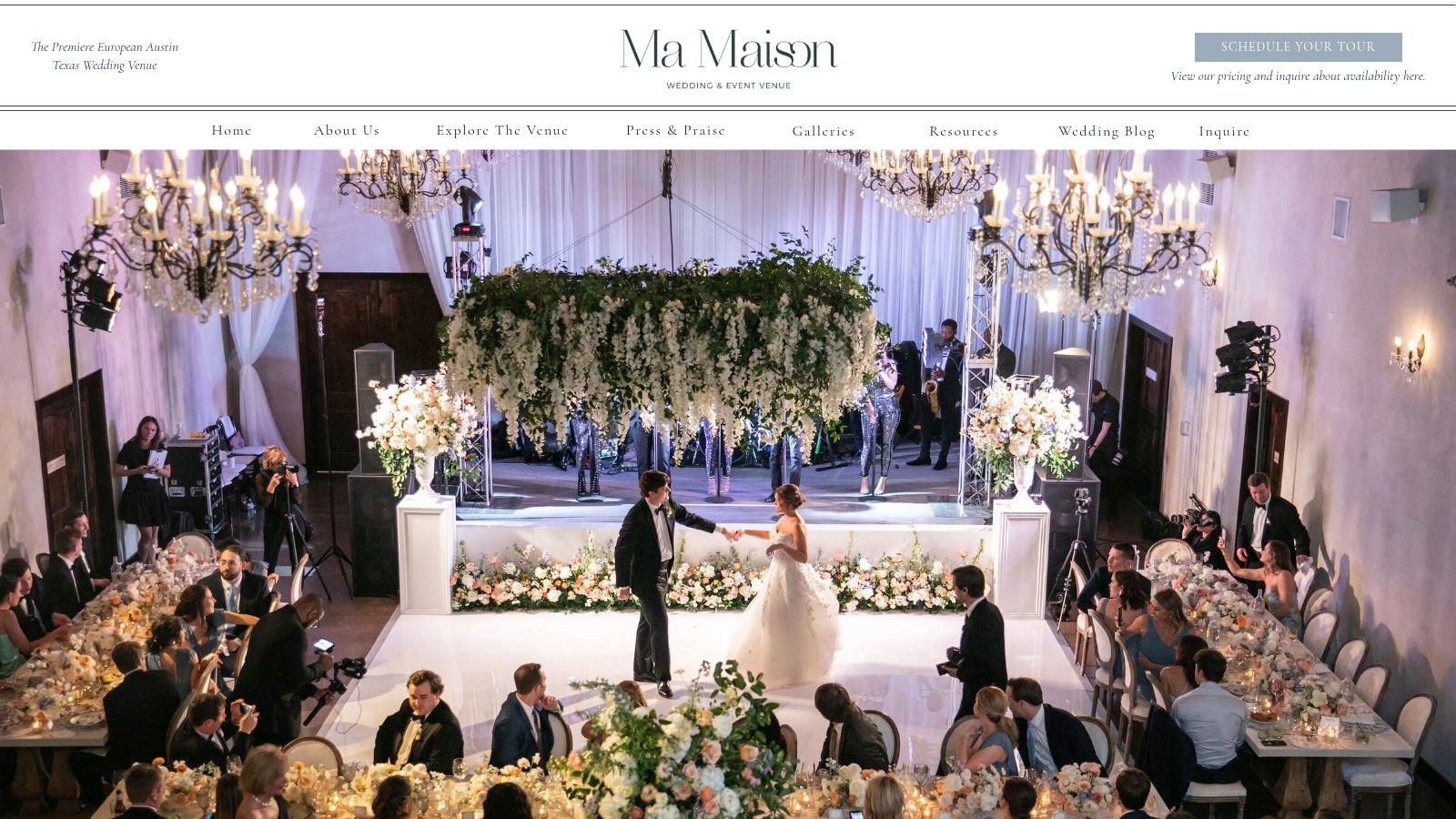
Ma Maison fits couples who want Hill Country convenience without giving up a more formal, European-style setting. The primary planning advantage is not the architecture alone. It is having multiple event spaces on one property, including an indoor chapel and reception hall, so the day can shift with the weather without forcing a full redesign.
That matters because backup plans cost money when a venue does not already support them. If rain sends you hunting for a tent, extra rentals, or a same-week layout change, the budget usually moves fast. Ma Maison reduces that risk better than many outdoor-first venues in the Austin area.
I like this property most for couples who want the day to feel layered. You can hold the ceremony in one setting, move guests to a different backdrop for cocktails, then bring everyone into the hall for dinner and dancing. The guest experience stays simple because nobody has to re-park, commute, or guess where they are headed next.
There is a trade-off. Public pricing is limited, so budget screening usually starts with an inquiry rather than a quick website check. Ask early about rental hours, what is included in the base fee, and whether vendor rules affect your flexibility on catering, bar service, or load-in timing. Those details matter more than the photos once you start building a real budget and timeline.
- Best planning strength: Multiple built-in spaces make weather pivots easier.
- Best guest experience strength: The event can feel varied without moving people off-site.
- Main caution: Cost transparency and vendor policy details usually require direct follow-up.
Best For
Couples who want a romantic estate feel and stronger contingency options than a purely outdoor venue, especially if they care about guest flow, backup planning, and keeping logistics contained to one property.
7. Villa Antonia
Villa Antonia is the obvious pick for couples chasing a dramatic aesthetic. The hilltop setting, stone terraces, courtyards, chapel, and ballroom do a lot of visual work for you. If your first priority is atmosphere, Villa Antonia delivers it quickly.
The practical question isn't whether it's beautiful. It is. The question is whether the layout works for your guests. Multi-level properties can create unforgettable movement and views, but they can also introduce complications for older relatives, anyone with mobility concerns, and vendors hauling equipment across elevation changes.
What to confirm before booking
Ask to walk the actual guest path, not just the prettiest route on the tour. That means parking to ceremony, ceremony to cocktail hour, cocktail hour to dinner, and dinner to exit. Venues with several terraces and level changes can feel magical or inconvenient depending on who's attending and how the event is staged.
This venue is also a good reminder that not all pretty spaces reduce planning work equally. Strong architecture can cut décor spend, but only if the layout and logistics match your priorities.
- Best design advantage: The setting and architecture create a built-in visual statement.
- Best operational advantage: Separate spaces can help the day unfold naturally.
- Main caution: Accessibility and terrain deserve close review.
Best For
Couples who want an Italian-villa feel near Austin and are willing to prioritize scenery and architecture while carefully managing guest mobility and flow.
Comparison of 7 Austin Wedding Venues
A venue comparison only helps if it answers planning questions that come up after the tour. How many hours do you get. Can you bring your own vendors. Is the quoted price close to what you will really spend once staffing, rentals, and bar requirements are added. That is the lens that matters here.
The table below compares these Austin wedding venues on the factors that affect budget control, setup pressure, and guest experience, not just style.
| Venue | Complexity (logistics) | Resource requirements | Expected outcomes | Ideal use cases | Key advantages |
|---|---|---|---|---|---|
| Texas Old Town | Low to Medium. On-site manager and included setup and cleanup reduce day-of coordination work | Flexible vendor model with bring-your-own caterer, approved bartenders, prep kitchen, large parking. Quote required for final pricing | Flexible Hill Country event with room to customize vendors and layout | Large weddings, quinceañeras, milestone parties, corporate events | 55-acre campus with four private venues, 16-hour exclusive rental, clear planning structure |
| The Addison Grove | Medium. Optional all-inclusive packages can make planning simpler, but popular dates book early | On-site prep kitchen, two suites, standard furniture. Choice of curated packages or outside vendors | Polished modern wedding with direct pricing tools and package options | Couples who want a modern aesthetic with clear early budgeting | Close to Austin, date-based pricing, online estimate tools |
| The Arlo | Low. Purpose-built venue and included furnishings cut setup decisions | On-site prep kitchen, two suites, limited on-site lodging, close to local vendors | Clean, contemporary event where the architecture does a lot of the visual work | Couples who want a modern venue near Dripping Springs without heavy décor spending | Bright neutral design and included furnishings reduce extra rental needs |
| Barr Mansion | Low. Full-service model keeps catering, bar, and staffing under one roof | In-house catering, bar, and staff. Glass ballroom and garden spaces. Food and beverage minimums apply | Well-coordinated service with strong food program and dependable weather backup | Couples who prefer bundled venue and catering with fewer outside decisions | Certified organic events facility with in-house culinary team and experienced staff |
| Camp Lucy | High. Resort scale and multiple sites require tighter scheduling and guest transportation planning | On-site lodging, dining, in-house culinary and bar, multiple venue options across a large property | Destination-style wedding weekend with room for multiple events on site | Destination weddings, full wedding weekends, guest-stay celebrations | Resort property with varied venues, lodging, and activities in one place |
| Ma Maison | Medium. Multiple ceremony sites add flexibility, but site selection affects timing and staffing | Several ceremony locations, Great Hall, getting-ready spaces. Pricing by inquiry | Estate-style wedding with a range of photo backdrops and indoor backup options | Couples who want a European look and several on-site setting choices | Distinct ceremony locations, strong photo variety, indoor backup spaces |
| Villa Antonia | Medium. Multi-level terrain requires careful planning for guest movement and vendor load-in | Chapel, ballroom, terraces, courtyards, in-house rentals, planning amenities, terrain considerations | Dramatic villa-style event with strong scenery and lower décor pressure | Couples prioritizing views and architecture close to Austin | Hilltop setting and architecture create a strong visual identity with less added décor |
A few patterns stand out fast. Texas Old Town gives couples more vendor freedom and a longer rental window, which usually matters most to planners trying to control budget and pacing. Barr Mansion and Camp Lucy reduce vendor coordination, but that convenience often comes with more built-in spending requirements.
The Addison Grove and The Arlo are often easier to price early because the format is more direct. Ma Maison and Villa Antonia can win on atmosphere, but the ultimate decision usually comes down to site flow, setup time, and how much logistical complexity you are willing to manage for the look.
Making Your Final Venue Decision
A final venue decision usually gets made in a very ordinary moment. You have two tabs open, two estimates on your screen, and two spaces you can already picture in photos. Then key questions come to mind. How early can vendors get in, what happens if it rains, and how much will the final invoice change once rentals, staffing, and cleanup are added.
That is the filter I use with couples. The venue has to work on paper before it works on Instagram. In Austin, rental rates vary widely, so the listed fee only matters if you also know the hours included, what furniture comes with the space, whether outside vendors are allowed, and how clearly the venue explains added costs.
Guest count still matters, but guest experience matters just as much. A room that technically fits your headcount can still feel tight if the dance floor, buffet, bar line, and indoor backup plan all compete for the same footprint. I tell couples to study flow, not just capacity. Check parking, restroom access, shade, climate control, and how far older guests need to walk between ceremony and reception spaces.
Touring in person usually settles the question fast.
During the walkthrough, skip the generic questions and ask the ones that affect the day itself. Where does the catering team stage? How many hours are available for setup and breakdown? Who flips the space, and on whose timeline? If weather forces Plan B, does the backup setup still feel intentional, or does it create a cramped room and a rushed transition?
This is also where each venue's "Best For" label should help. If you want budget control and room to customize, a venue with longer access and fewer vendor restrictions will usually serve you better than a package-heavy property. If you want less coordination, paying more for in-house structure can be the right trade-off. Neither approach is better on its own. It depends on whether your priority is flexibility, convenience, or predictability.
One practical rule matters here. Do not book until you have an itemized estimate and a sample timeline.
That combination tells you more than a styled shoot ever will. It shows whether the venue can support your guest count, your vendor team, and the pace of the day you actually want. Once those pieces line up, the choice gets much easier.
If Texas Old Town is on your shortlist, the appeal is straightforward: multiple private venue options, long access windows, flexible catering, and pricing that is easier to evaluate early. For couples comparing Austin wedding venues based on logistics, not just looks, that is a useful combination to weigh.