You're probably looking at a shortlist of venues that all seem to promise the same thing. Spacious hall. Flexible setup. Plenty of parking. Great for large groups. Then you ask for pricing and capacity, and the answers get slippery fast.
That's where most large event venue searches go sideways. A room can photograph well and still function poorly once you add round tables, a buffet line, AV, a stage, vendor load-in, and actual human movement. The practical question isn't whether a venue can technically hold your guest count. It's whether the room still works once your event becomes real.
Table of Contents
- Choosing Large Event Venues in 2026
- Decoding Venue Capacity and Layout
- Essential Logistics Beyond the Main Hall
- Navigating Pricing Transparency and Vendor Policies
- How Texas Old Town Delivers for Central Texas Events
- Your Venue Selection Checklist and Timeline
Choosing Large Event Venues in 2026
Event planning today presents greater challenges than before. The global corporate events market is valued at USD 369.65 billion in 2026 and is projected to reach USD 686.49 billion by 2031, according to Mordor Intelligence's corporate events market report. That projection matters because it reflects something planners already feel on the ground. More demand means more competition for dates, more variation in venue quality, and more pressure to make a smart call early.
Large event venues sit at the center of that decision. They aren't just backdrops. They control timing, guest flow, staffing ease, vendor coordination, and a big part of your final spend.
A polished venue search starts with three filters.
- Functional fit: Can the room support your event format, not just your guest count?
- Operational fit: Can vendors load in, set up, serve, and strike without bottlenecks?
- Financial fit: Can you understand the full cost before you sign?
Practical rule: If a venue answers aesthetic questions faster than operational ones, slow down and ask harder questions.
Most venue marketing uses broad claims because broad claims sell. “Seats 300” sounds clear. It isn't. “Flexible space” sounds reassuring. It may only mean the furniture can be moved. “Full-service” can cover anything from an in-house bar to actual day-of coordination.
The better approach is checklist-driven. Ask for square footage. Ask how the listed capacity changes by layout. Ask where caterers enter, where trash exits, where AV ties into power, and who is managing vendor timing on event day. Those answers tell you more than any gallery page will.
Decoding Venue Capacity and Layout
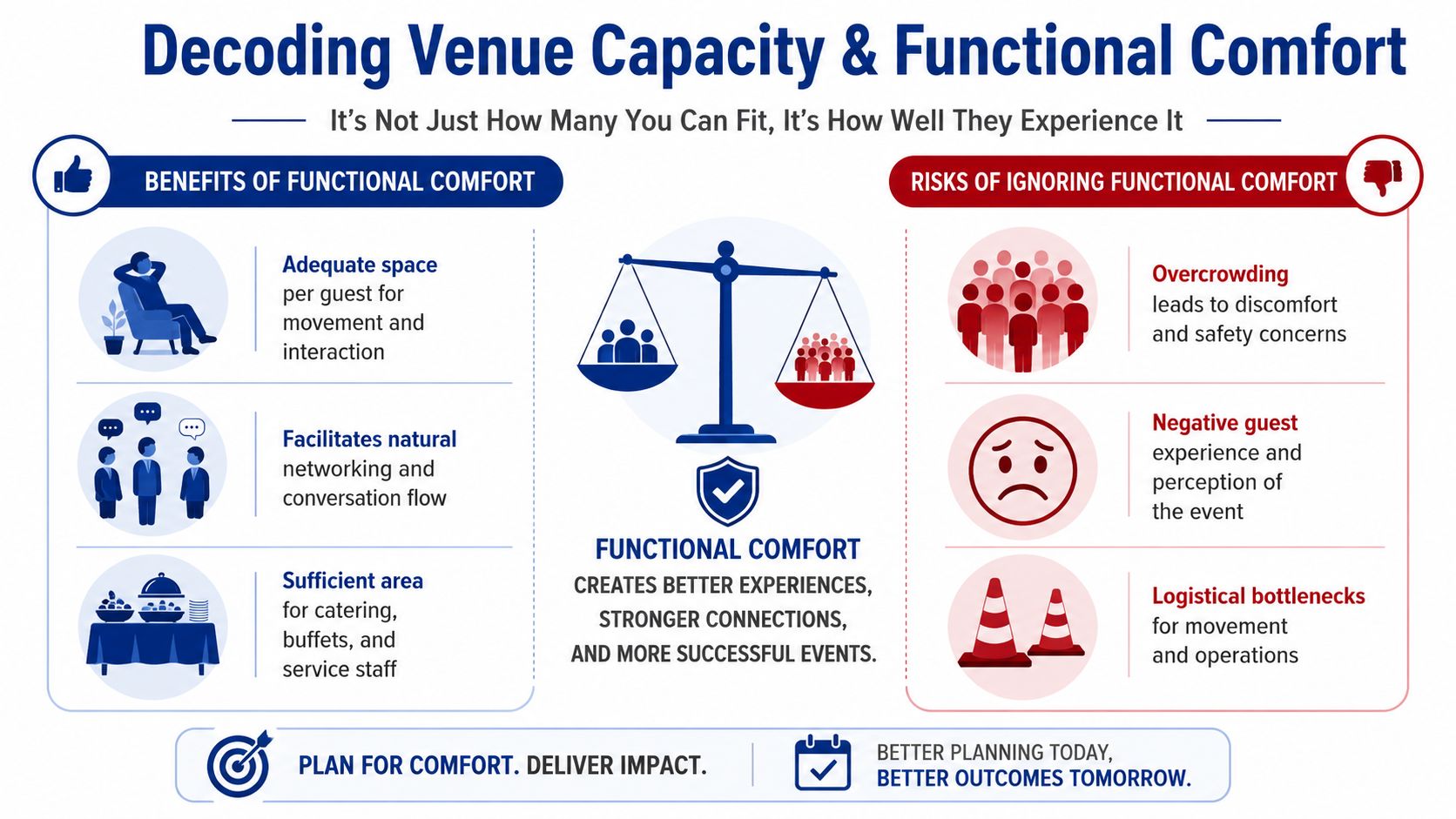
The most misleading line in a venue brochure is often the easiest one to spot. Maximum capacity looks definitive, but it rarely tells you whether guests will feel comfortable once tables, bars, staging, and circulation paths are in place.
Why maximum capacity is often the wrong number
A 2025 event design study found that 68% of large-event attendees rated overcrowding as a top dissatisfaction, while 74% of venue brochures still quoted only theoretical maximums without layout-specific capacity adjustments, based on Planning Pod's event layout guide. That gap is exactly why some events feel cramped even when the venue never technically exceeded capacity.
For large event venues, the more useful standard is functional comfort. In practical terms, that means asking how much usable room remains after the layout is built, not before.
For events with 300 to 350 guests, a venue typically needs 6,000 to 10,000 square feet, and planners should expect 15 to 18 square feet per guest for comfort and safety, according to Eventective's venue specification example. That benchmark becomes real fast when you map the room:
| Event format | What usually consumes space | Capacity risk |
|---|---|---|
| Banquet | Round tables, chairs, service aisles, buffet or bar | Guests fit on paper, staff can't move cleanly |
| Theater | Rows maximize count but reduce side circulation | Easy ingress, harder networking |
| Cocktail | Fewer seats, more standing room | Feels open early, congested near bars later |
The lesson is simple. A room that works for a presentation may not work for a dinner dance. A hall that can host a reception-style mixer may feel overstuffed when you add dining, entertainment, and photo areas.
Maximum capacity is a fire-code conversation. Functional comfort is an event-success conversation.
Temporary structures make this even more obvious. If you're comparing indoor halls with tented extensions, use practical sizing references such as these party tent dimensions to understand how quickly dining, staging, and guest flow consume usable area.
What to ask on a tour
Don't ask, “How many people does it hold?” Ask these instead:
- Show me the 300-person layout: Ask for an actual floorplan with tables, dance floor, bar, buffet, DJ or stage, and service paths.
- What changes by setup style: A theater setup, cocktail party, and seated dinner should never share one blanket capacity number.
- Where are the aisles: Perimeter walkways matter. If guests, servers, and AV crews are crossing the same narrow paths, the room will feel tight even before it's full.
- What disappears when extras are added: A photo booth, lounge area, dessert display, or indoor ceremony backup all eat into the same footprint.
When a venue can answer with diagrams and furniture counts, planning gets easier. When the answer stays abstract, assume the listed capacity is optimistic.
Essential Logistics Beyond the Main Hall
A large room can still produce a messy event day if the support systems behind it are weak. The hidden parts of the building often decide whether your schedule stays smooth or starts slipping before guests even arrive.
The operational checklist that matters
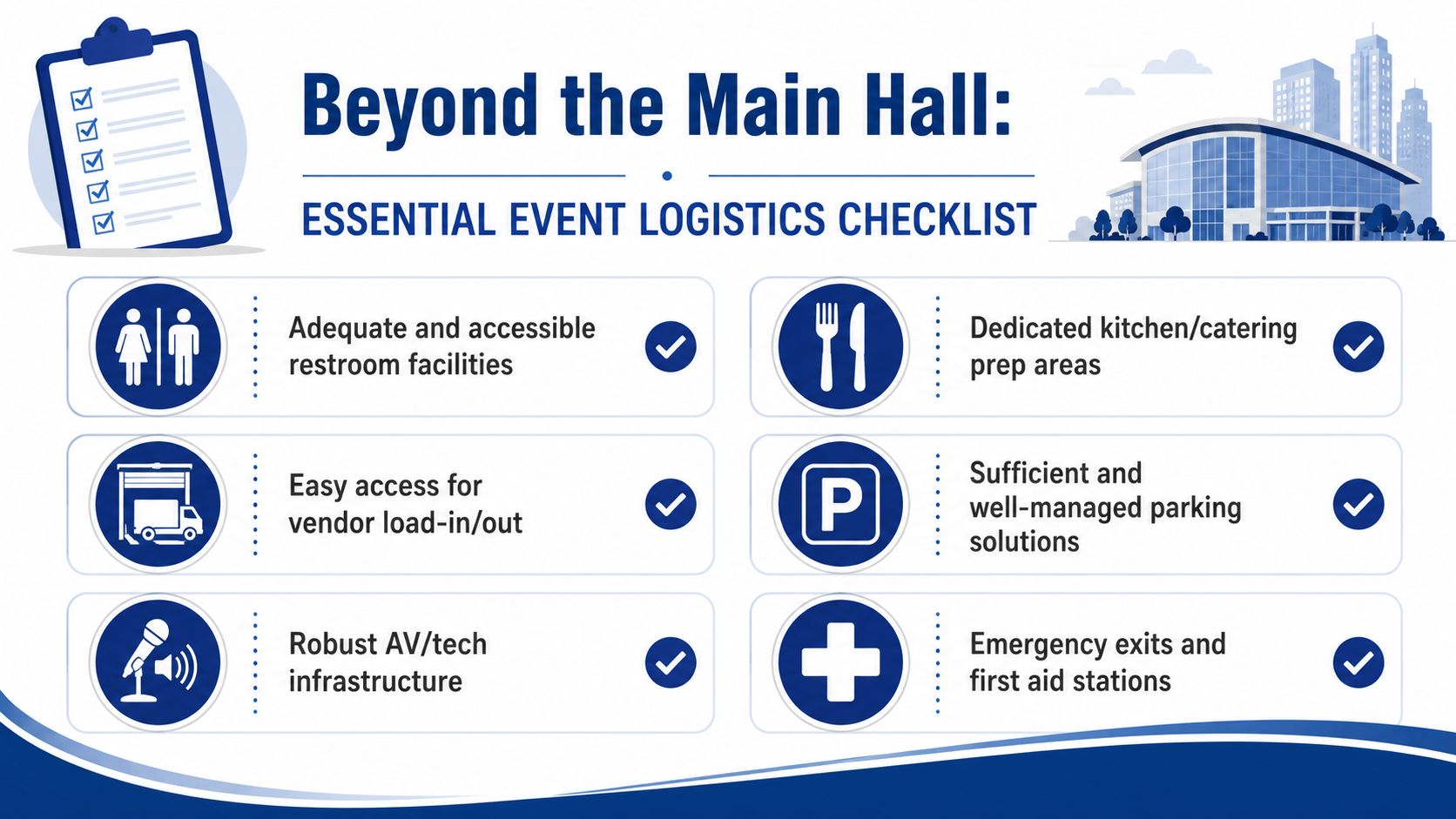
When I walk a venue for a large event, I spend less time staring at the main hall and more time tracing movement. Where do vendors enter? How far is the prep kitchen from the serving area? Can guests find restrooms without crossing a service lane? Does parking unload close to the entrance for older relatives, VIPs, or guests in heels?
Use a practical logistics screen:
- Parking and arrival: Look for a parking plan, not just a parking lot. Entry flow, lighting, signage, and drop-off matter as much as total spaces.
- Accessibility: Entrances, restrooms, pathways, and seating layouts should be easy to move through without special workarounds.
- Catering support: Ask whether the venue includes a prep kitchen, separate service entry, ice access, and holding areas for food and rentals. If you're reviewing service needs, this overview of catering options is a useful example of the questions planners should settle early.
- Restrooms: Check location, access, and whether guests have to leave the event energy to find them.
- Power and AV: Ask where power drops are, what's built in, and what must be rented.
A lot of planners now also preview guest-facing technology before signing. Tools that help with check-in visibility, seating awareness, or visitor flow can reduce confusion on event day. For a quick look at that side of planning tech, Nimbio Guestview features show the kind of live guest management capabilities that can support smoother operations.
Why on-site management changes the day
The staffing question is often framed too lightly. “Will someone be there?” isn't enough. You need to know what that person controls.
Recent data shows that 52% of corporate events experience last-minute technical failures due to uncoordinated vendor setups, but dedicated on-site managers can reduce those AV gaps by 41% through proactive checks and real-time coordination, according to Business Travel News on selecting large event venues.
That finding lines up with what planners see repeatedly. Technical problems rarely come from one catastrophic mistake. They come from a chain of small disconnects. DJ arrives before tables are placed. Caterer blocks a power path. Screen placement conflicts with décor install. Nobody owns the timing, so everyone improvises.
Ask the venue to describe who handles vendor arrival windows, setup conflicts, and same-day technical checks. If the answer is vague, the day will be too.
A venue doesn't need to provide every vendor in-house. It does need someone who can coordinate the moving parts on site. That role saves time, reduces friction, and protects your event from preventable chaos.
Navigating Pricing Transparency and Vendor Policies
A quote looks fine at 10:00 a.m. The revised version at 4:30 p.m. includes security, extra bartenders, chair setup, overtime, and a cleaning fee nobody discussed on the tour. That gap is where large event budgets usually break.
The useful comparison is total occupancy cost. Calculate what it takes to put guests in the room, serve them, staff the event, and clear the site within your contracted window. A lower rental rate often loses once the missing pieces are added back in.
Read the contract for total occupancy cost
Room size still affects pricing, but the contract tells you how expensive the room will be to operate. A hall that technically fits your guest count can still force extra spending if the layout leaves no space for a stage, buffet line, lounge furniture, vendor prep, or bar queues. I see this most often with events in the 300-person range. The room works on paper, then the planner has to rent a tent for cocktail hour or add labor to keep traffic from clogging the entry and service doors.
Review pricing line by line before you sign:
| Cost area | What to verify |
|---|---|
| Base rental | Hours included, access times, ceremony use, breakdown window |
| Furniture | Tables, chairs, setup, teardown, counts by type |
| Staffing | On-site manager, security, bartenders, cleanup crew |
| AV and power | Built-in sound, microphones, power access, vendor tie-in rules |
| Service policies | Gratuity, tax treatment, corkage or beverage handling rules |
Ask one direct question for every line item: included, available at extra cost, or required through the venue. That wording matters. “Available” and “required” have very different budget consequences.
If you want a practical example of what planners should be able to review before booking tours, Texas Old Town's event venue pricing page shows the kind of upfront detail that helps clients compare real costs instead of marketing numbers.
A clear contract protects more than the budget. It cuts approval delays, change-order disputes, and week-of surprises.
Vendor policy affects both budget and control
Vendor rules decide how much flexibility you have after signing. A preferred list can save time if the venue has partners who know the loading path, kitchen access, power limits, and teardown rules. A required list changes the math. It can narrow price competition, limit style choices, and lock you into packages that do not match the event.
Open-vendor policies give you more control, but they also put more responsibility on your planning team. Confirm insurance requirements, delivery windows, parking rules for trucks, access to prep space, and who pays if a vendor misses the contracted load-out time. Those details shape labor cost just as much as the rental fee does.
Bar policy needs the same level of scrutiny. Venue-managed bars can simplify compliance and staffing. BYOB can reduce beverage cost or give you tighter control over product selection, but only if the venue has a clear process for licensed bartenders, ice, storage, trash removal, and end-of-night reconciliation.
The right policy depends on the event. A fundraiser with sponsors may need more brand control. A wedding with 250 guests may benefit from a venue-run bar if it avoids staffing gaps and compliance issues. The point is to price the policy, not just read the label.
How Texas Old Town Delivers for Central Texas Events
The broad event economy keeps pushing venues toward flexibility. The global event services market is projected to reach $1,152,517.78 million by 2032, growing at a CAGR of 7.7%, with a significant share tied to demand for flexible, multi-purpose event spaces, according to MetaStat Insight's event services market report. That trend shows up clearly in Central Texas, where planners often need one property to handle ceremony options, reception flow, weather backups, and different event types without rebuilding the whole plan.
A venue model built around functional use
One practical example is Texas Old Town's Central Texas event venue campus, which operates on a multi-hall model rather than trying to force every event into one room. The property includes four private venues with published capacities: Redbud for up to 150 guests, Sage for up to 300, Stone for up to 300, and Tejas for up to 320.
That matters because capacity choice is tied directly to event type. A family hosting a quinceañera with a large dance component won't use space the same way as a corporate dinner with presentation seating. A campus with multiple hall sizes reduces the temptation to oversize or undersize the room just to make the booking work.
Operationally, the venue also addresses several of the friction points planners care about most:
- Extended access: A 16-hour rental window from 8:00 a.m. to midnight gives vendors time for setup and strike without compressing the celebration.
- Built-in basics: Tables, chairs, indoor and outdoor PA systems, a wireless microphone, beverage bar, dressing suites, and a prep kitchen are included in the published venue details.
- Day-of support: An on-site venue manager is present during the event, and cleanup plus furniture breakdown are included.
- Parking and access: The property provides a large private parking lot and an accessible layout.
How different event types use the same campus differently
For a Hill Country wedding, the strongest advantage is usually flexibility between outdoor and indoor use. The ceremony can happen outside, while the climate-controlled hall handles reception service. If weather shifts, the indoor hall can also host the ceremony without moving to a different property or changing vendors midstream.
For a quinceañera, the planning pressure is often on flow. You need room for family seating, a court presentation, dancing, food service, and photography moments. A venue with a dedicated beverage bar, prep support, and clear furniture counts makes it easier to stage those transitions without crowding the room.
For a corporate retreat or banquet, the useful pieces are different. Private halls, on-site management, and the ability to choose your own caterer can matter more than decorative style. The campus format also helps companies pick a hall size that fits the agenda rather than renting excess space they won't use.
Another practical point is policy structure. Texas Old Town's vendor approach allows clients to choose any caterer, and the venue uses a host-provided beverage model with approved bartending companies. That gives planners more customization than a closed in-house package, while still maintaining operational guardrails.
No single venue solves every event. But when you evaluate one through the lens of functional capacity, logistics, staffing, and pricing clarity, you can see quickly whether the property was built for real events or just marketed for them.
Your Venue Selection Checklist and Timeline
Once your shortlist is down to a few serious options, stop browsing and start scoring. A simple worksheet beats memory every time, especially when multiple venues begin to blur together after tours.
The shortlist checklist
Bring a printed or shared checklist to every tour. If you want a base document to adapt, a practical MODERN LYFE event checklist can help organize the moving parts.
Score each venue on these points:
- Capacity reality: Did the venue show a layout for your exact event style, not just a blanket maximum?
- Flow: Could guests, servers, and vendors move without obvious conflict points?
- Access window: Is there enough setup and breakdown time for your vendor team?
- Operations: Are parking, restrooms, prep space, and load-in routes easy to understand?
- Staffing: Will an on-site manager actively coordinate the day?
- Contract clarity: Can you identify what is and isn't included without chasing addendums?
- Vendor rules: Do the policies support your budget and preferred partners?
- Weather backup: If part of the event is outdoors, is the indoor fallback workable?
The best venue tour ends with fewer assumptions, not more excitement.
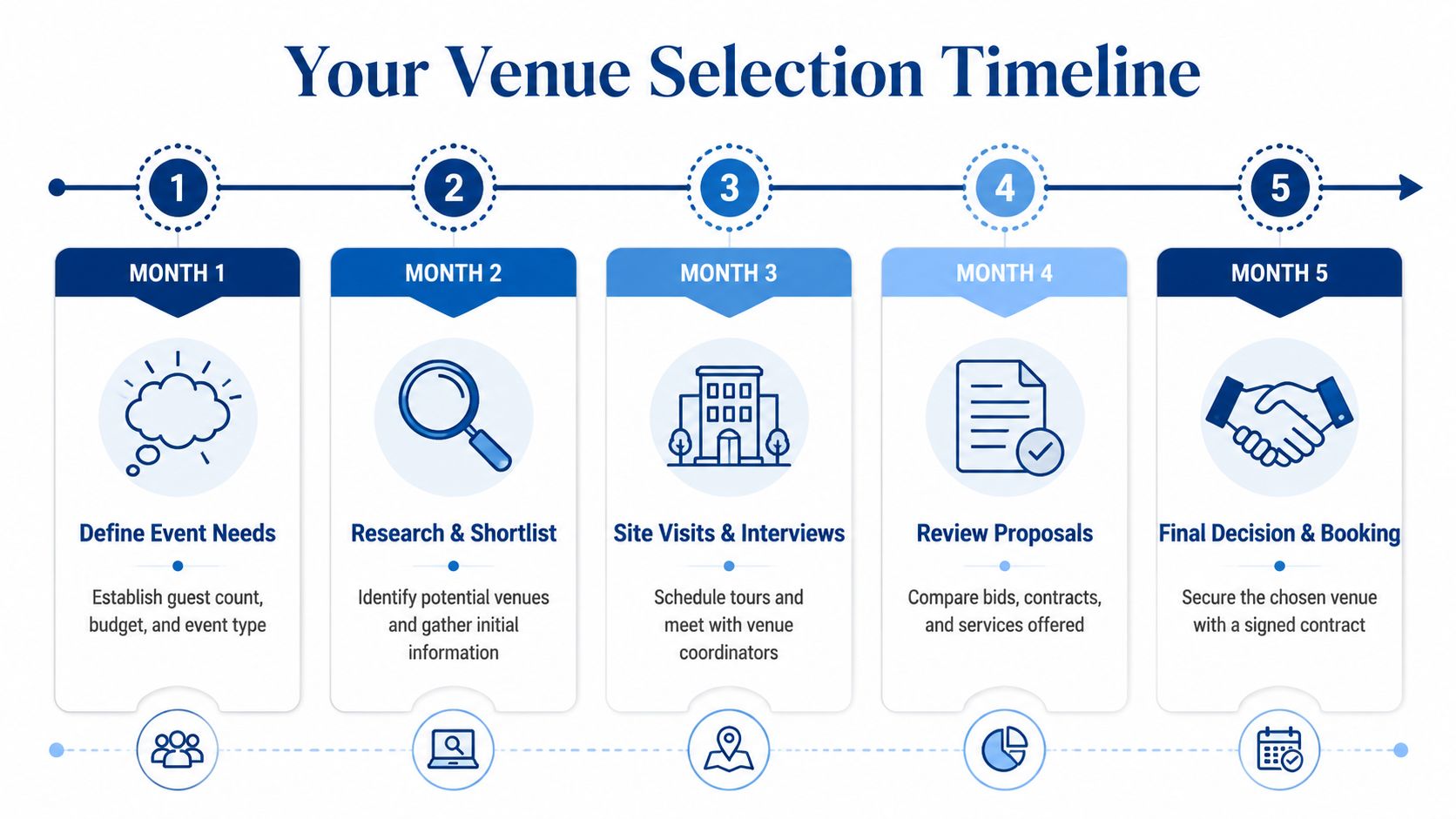
A simple booking timeline
Use a decision timeline that forces key questions early.
Month 1
Define guest count range, event style, must-have logistics, and spending priorities.Month 2
Build a shortlist. Request floorplans, inclusion lists, rental windows, and policy documents before touring.Month 3
Tour the top venues in person. Walk the parking lot, service entry, prep areas, and restrooms. Don't stay only in the pretty spaces.Month 4
Compare proposals side by side. Mark missing items, policy restrictions, and any unclear charges.Month 5
Book the venue once the layout, staffing, access window, and total cost all make sense together.
The goal isn't to find a venue that says yes to everything. It's to find one that makes the hard parts legible before event day.
If you're comparing large event venues in the Austin and San Antonio corridor, Texas Old Town is one option to review for weddings, corporate events, quinceañeras, and other milestone gatherings. Its published hall capacities, 16-hour access window, on-site management, and flexible catering policy make it the kind of venue that's easiest to evaluate with the checklist above.