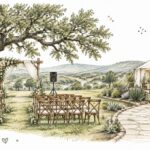
The light turns gold about twenty minutes before sunset at a Hill Country overlook, and that's the moment couples picture. A hand hovers over a pocket. The ring is there. The speech has been rehearsed in the car. What nobody rehearses is where the photographer stands, what happens when the wind picks up, or how a grandmother with a walker gets from the parking lot to the rail without a stumble.
A great outdoor proposal is 80 percent logistics and 20 percent romance. Every idea below is built as an executable plan: when to arrive, what to scout, what to do when the weather turns, and the trade-offs nobody mentions on Pinterest. The memory survives on the details you settled in advance, not the ones improvised on the spot.
Central Texas suits several of these especially well. Wildflowers, water, and wide skies do a lot of the decorating for you, and the region's weather rewards anyone who plans two versions of the same evening. For broader inspiration before you lock a date, this collection of creative proposal planning tips is worth a read.
Table of Contents
- 1. Sunrise or Sunset Hilltop Proposal
- 2. Bluebonnet Field Proposal
- 3. Stargazing Proposal
- 4. Picnic Proposal Under a Shade Tree
- 5. Lakeside Kayak or Canoe Proposal
- 6. Hot Air Balloon Proposal
- 7. Garden Courtyard Proposal with String Lights
- 8. Scenic Overlook or Summit Hike Proposal
- 9. Creekside or Waterfall Proposal
- 10. Guest-Surprise Outdoor Celebration Proposal
- 10 Outdoor Proposal Ideas at a Glance
- From Yes to the Celebration, Making It Happen in the Hill Country
1. Sunrise or Sunset Hilltop Proposal
The Knot's 2021 Jewelry & Engagement Study found that 73% of engagements happened outdoors in 2021, up from 40% in 2020, and that 35% of proposals took place at a scenic location such as a mountaintop or a city view, according to the study announcement. Elevation buys you a view, and a view buys you a photograph that needs no staging.
Timing is the entire plan. Look up sunrise or sunset for your exact date, then work backward 30 to 45 minutes so you're standing in place before the light changes. Say sunset lands at 8:12 p.m. You want to be at the rail by 7:35, parked by 7:15, and on the road before 6:30.
What the Elevation Costs You
Ridges are windy, and the temperature drops quickly once the sun is down, even in spring and fall. Walk the route in daylight once to check gravel, footing, and the distance from the car.
- Scout in daylight: Confirm the view, the exact standing spot, and where a photographer can work without blocking the skyline.
- Pack a layer: One light jacket each, plus a blanket if you plan to sit and call family afterward.
- Set a rain date: Choose the alternate evening and an indoor location before you tell a single person the plan.
- Check access rules: Some overlooks close at dusk or require a permit for professional photography.
Wind rule: if a flag on the ridge is snapping, move to the leeward side. Hair across the face ruins more photographs than flat light ever will.
2. Bluebonnet Field Proposal
The bluebonnet field is the most Texan backdrop on this list, and the one with the shortest window.
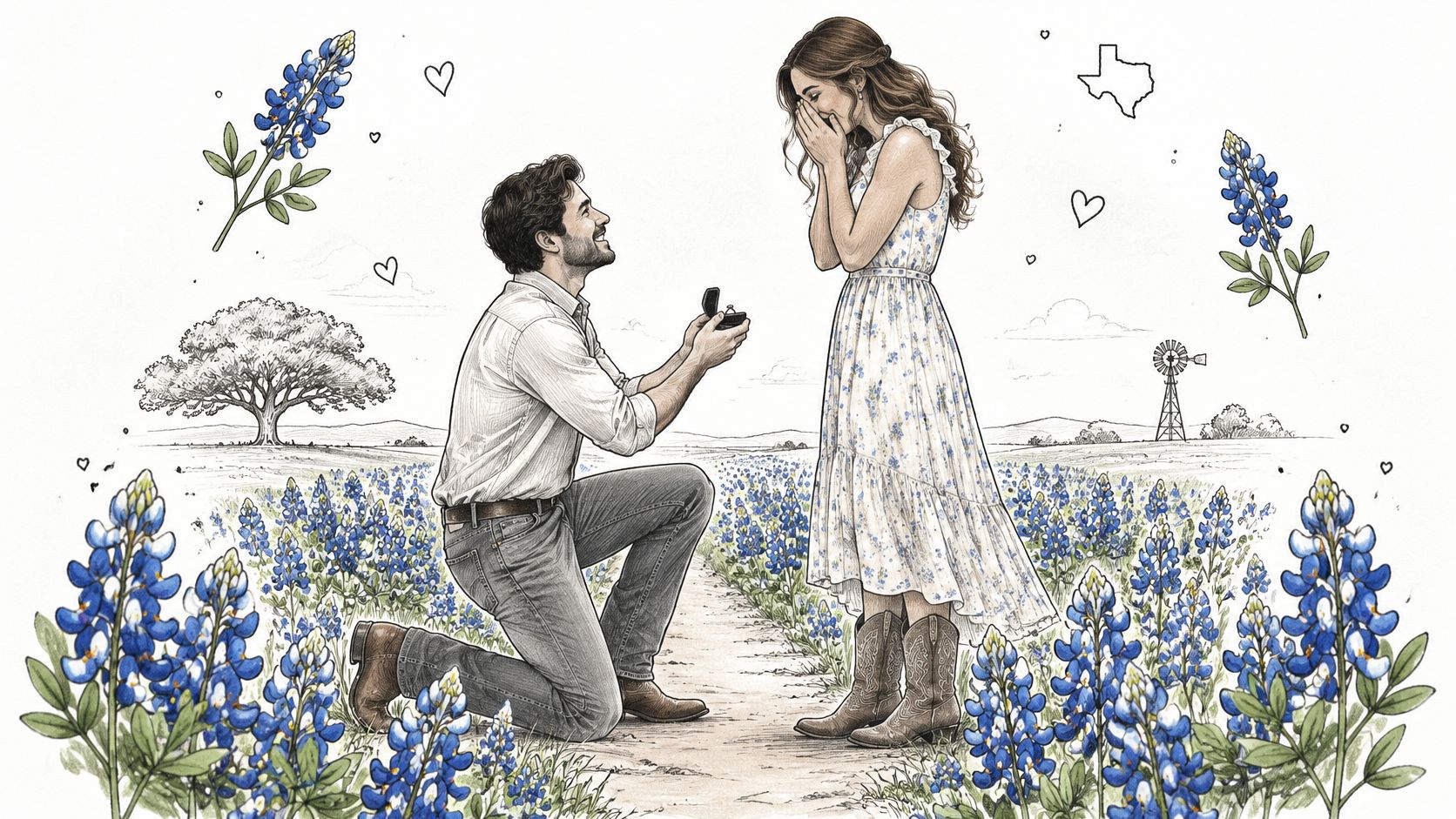
The Knot's proposal-trend data puts 17% of proposals at a location with special significance to the relationship and 11% at a public garden, park, or zoo, according to the engagement trends survey. A bloom field hits both columns: it's a place, and in Texas it's a memory.
Peak bloom shifts every year, so check current reports rather than booking against last spring's calendar. A warm February pushes fields early; a late cold snap holds them back a week or two.
- Go early on a weekday: A Tuesday at 7:30 a.m. gives you a clean frame. Saturday at noon gives you strangers in every shot.
- Stay on marked paths: Picking and trampling flowers is prohibited on most public land, and roadside fields are often private property.
- Walk in from the road: Put 100 yards between the shoulder and your spot so traffic noise and passing trucks stay out of the video.
- Plan the portraits too: If the proposal doubles as the start of your session, schedule engagement photo shoots around the bloom window instead of guessing at dates.
3. Stargazing Proposal
The quietest option on this list also has the least margin for error, because you're proposing in the dark. That's the appeal: no crowd, no audience, nothing but the two of you and a sky most city dwellers never see.
Pick the night around the moon, not just the weather. A new moon gives you the darkest sky, a bright moon washes out everything faint, and a partly cloudy forecast at 10 p.m. can clear by midnight. Check both before you commit.
Build the Scene Before She Arrives
- Bring two blankets: One to sit on, one to pull over your legs when the temperature drops at 11 p.m.
- Use a red-filter flashlight: White light kills night vision for twenty minutes. Red preserves it and keeps the mood.
- Repellent and a thermos: Insect pressure stays high well into fall near water, and a hot drink buys you another hour outside.
- Confirm the site: Ranch gates, parks, and greenbelts all have rules about after-dark access. Get permission in writing if it's private land.
Say the plan is a Friday in October. A new moon that weekend plus a property 40 minutes west of Austin removes most of the city glow, and a stargazing app lets you point out a constellation before you reach for the ring.
A telescope isn't required. A blanket, a clear sky, and a planned pause in the conversation do more work than equipment.
4. Picnic Proposal Under a Shade Tree
Shade is a photographic decision as much as a comfort one. Joy's guide to capturing a proposal notes that shaded outdoor scenes commonly work around ISO 200 while direct sunlight favors ISO 50 to 100, and that scheduling near golden hour reduces harsh facial shadows. That's the difference between a proposal photo and a proposal photo where neither of you can open your eyes.
Pick a tree with a wide canopy and check where the shadow falls at your chosen hour, not just at noon. A spot that's shaded at 1 p.m. can be full sun by 5.
- Pack a cooler, not a hamper: Cheese, fruit, bread, and something chilled hold up for two hours in Texas heat. Skip anything with mayonnaise or a cream filling.
- Anchor the cloth: Weights or a cooler on each corner, because a gust that lifts the blanket also takes the ring box with it.
- Plan the moment: Decide in advance that the question comes after dessert, so you're not waiting through small talk for a natural opening.
- Check the rules: Amplified music, open flames, and alcohol all have park-specific restrictions.
Say the two of you have a standing Sunday lunch tradition. Pack that same meal, serve it at 5 p.m. under a live oak, and the proposal reads as an extension of your life rather than a performance.
5. Lakeside Kayak or Canoe Proposal
Water raises the stakes in a way land doesn't, and the weather risk is real. Skift's event-planning coverage reports an 86.5% increase in reported event disruptions caused by extreme weather, with major storms a significant contributor. On a lake, that shows up as wind chop and afternoon thunderstorms rolling in fast.
Launch early. Morning water is calmer, the wind typically builds through the afternoon, and a paddle that feels easy going out can turn into a grind coming back.
Keep the Ring Out of the Water
- Double-bag the ring: A hard case inside a waterproof pouch, tethered to the boat with a lanyard. A dropped box sinks in three seconds and doesn't come back.
- Rent from a licensed operator: You want a stable, wide two-person boat, properly sized life jackets, and a staff member who knows the water.
- Watch wind, not just rain: Sustained wind above about 10 mph makes open water unpleasant and photography nearly impossible.
- Put a photographer on shore: A second boat works too, but a long lens from the bank is cheaper and steadier.
Say you launch at 6:30 p.m. on a calm evening. Paddle 20 minutes to a quiet cove, let the boats drift, and the question lands with nothing behind it but tree line and sky.
6. Hot Air Balloon Proposal
A balloon is the highest-production idea on this list, which makes it the one most likely to be planned under pressure. The Knot's 2025 Real Engagements & Weddings Survey, summarized by the Plumb Club, found that more than half of proposers felt pressure to make the moment highly unique, most planned for one to three months, and about one-quarter hired a photographer or another vendor.
Balloons fly at dawn for a reason, and wind is the deciding factor. A flight can be scrubbed the morning of with no notice, so build a second date into your plans from the start.
What the Pilot Needs From You
- Book a licensed, insured operator: Confirm the certificate, the insurance, and the cancellation and refund policy in writing.
- Brief the pilot before takeoff: Where the ring is, when you want to ask, and whether the crew can film from the ground.
- Keep the ring in a zipped pocket: A basket is a small space, and a fumbled box goes over the side.
- Plan the landing: Chase vehicles, a toast at the field, and a ride home you don't have to drive.
Ask the pilot first, propose second. Most pilots have flown proposals before and will happily time the burners and the altitude for a better shot.
Say the flight is booked for a Saturday at sunrise. You tell her it's a birthday gift, the pilot knows to level off over open ranch land, and the ground crew is already filming when you turn around.
7. Garden Courtyard Proposal with String Lights
A lit courtyard gives you the polish of an indoor venue without giving up the sky, and it's the easiest setting to control once the sun is down. It's also the one where venue rules decide your design, not the other way around.
Confirm three things before you commit: whether proposals are allowed, whether you can hang or stake lighting, and how early you can get in to set up. Ask for the setup window in writing, because a two-hour access slot changes the entire plan.
Lighting Rules Most Venues Enforce
- Use LED and battery candles: Open flames are restricted at most properties, and unprotected candles are usually banned outright for safety.
- Test the bulbs on site: Warm white reads romantic; cool white reads parking garage. Buy in one batch so the color matches.
- Plan for outlets and cords: Extension cords get taped, not draped, and tape across walkways is a trip hazard after dark.
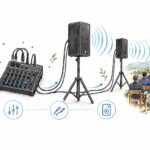
- Check the sound plan: A small speaker for a playlist, and a microphone if anyone is giving a toast.
If string lights are the centerpiece, this guide to outdoor wedding lights covers spacing, color temperature, and the setups that photograph best.
Say the courtyard seats 30 guests for a reveal dinner afterward. You need a lighting run that arrives before the guests do, a path that's lit without glare in the photos, and a host who knows when to dim everything.
8. Scenic Overlook or Summit Hike Proposal
Enchanted Rock State Natural Area draws hikers for exactly the reason that makes it a strong proposal spot: a granite dome, a wide view, and a sense of arrival. It also comes with rules that will kill a plan made at the last minute.
Texas state parks take reservations, and popular Hill Country destinations fill for weekend mornings. Check hours, fees, and whether the park requires a day pass before you build the day around it.
- Match the trail to the couple: A 1.5-mile round trip with modest gain beats a summit scramble if one of you doesn't hike often.
- Start early: Texas heat climbs fast, and a midday ascent with a formal outfit is a bad idea in any month from May to September.
- Carry more water than you think: Two liters per person for a short summer hike, and salty snacks alongside.
- Secure the ring: A zipped pocket or a small pouch on a lanyard, never a loose jacket pocket on a steep grade.
Say you're both casual hikers. Pick a lookout with a clear top-out, arrive by 8 a.m., and take the photos in the twenty minutes before the sweat sets in and the crowds arrive.
9. Creekside or Waterfall Proposal
A couple wants the sound of water in the video they'll send to parents. The right call is a small Hill Country creek with a two-minute walk from the road, because a remote swimming hole adds a scramble down a bank and a slow exit if weather turns. Moving water does two useful things at once: it supplies a soundtrack with no speaker, and it fills the frame so a small spot reads as a setting rather than a patch of gravel.
Water also creates a risk that dry-land venues don't have. Levels rise quickly after upstream rain, and a creek that's ankle-deep at noon can run brown by dinner. Check the forecast for the whole watershed, not just your location.
- Stay on stable ground: Wet limestone is slick. Choose a flat rock shelf or a bank with firm footing over anything that requires balance.
- Keep the ring away from the water: Pocket or pouch only, never balanced on a rock for a photograph.
- Set an exit route: Know how you'd leave quickly if the water rises or weather turns.
- Check guest access: If family is joining, make sure they can reach the spot on a path that's firm and level.
A loud creek masks nerves and awkward pauses. Position the two of you three or four feet from the water and the audio still records clean.
If the spot earns a return visit for the ceremony or engagement photos, keep décor light and weighted so nothing ends up in the water. These outdoor wedding décor ideas for natural settings follow the same rules a creekside setup does.
10. Guest-Surprise Outdoor Celebration Proposal
Enlisting family and friends is the highest-risk, highest-reward format, and the numbers say few partners want to be surprised in front of a crowd. A survey of more than 1,200 Americans found that 90% believed public proposals create pressure to say yes, while 56% said they would dislike being proposed to publicly and 77% preferred a surprise proposal, according to the Shane Co. proposal survey. Read your partner carefully before you invite 40 people.
If you're going ahead, treat the guest list as a secret you control. Tell three people, not thirty. The story that gets leaked is almost always the one that started with a group chat.
Cue the Moment Without a Megaphone
- Name one cue person: Someone who knows the exact minute, holds the playlist, and signals the sound operator.
- Rehearse the reveal walk: Where she thinks she's going, where she goes, and who's standing out of sight.
- Book a venue with an indoor twin: A space that works equally well in a courtyard and in a covered hall, so rain changes the room and not the plan.
- Assign a photographer wrangler: One person whose only job is keeping guests out of the photographer's sightline.
Say a backyard party for a 60th birthday becomes the cover story. The guests know to stay in the house until the cue, the cake comes out, and the proposal happens where the light was scouted a week earlier.
10 Outdoor Proposal Ideas at a Glance
| Item | Setting | Best Time | Planning Effort |
|---|---|---|---|
| Sunrise or Sunset Hilltop Proposal | Elevated hilltop with an open view | Sunrise or sunset; clear weather | Low; scout the site and prepare a weather backup |
| Bluebonnet Field Proposal | Texas bluebonnet field | Late March through April; check bloom reports | Low to moderate; timing depends on blooms and crowds |
| Stargazing Proposal | Dark, open site away from city lights | Clear night, ideally near a new moon | Low to moderate; check conditions and nighttime access |
| Picnic Proposal Under a Shade Tree | Shaded park, garden, or private property | Mild weather; avoid summer heat | Low; plan food, shade, and personal touches |
| Lakeside Kayak or Canoe Proposal | Calm lake, river, or pond | Sunrise or sunset in calm weather | Moderate; arrange a rental and check safety conditions |
| Hot Air Balloon Proposal | Balloon flight over the countryside | Early morning or evening, weather permitting | High; book an operator and coordinate around weather |
| Garden Courtyard Proposal with String Lights | Landscaped garden or courtyard | Evening | Moderate; book the venue and coordinate décor |
| Scenic Overlook or Summit Hike Proposal | Hiking trail with a scenic summit or overlook | Early morning to avoid heat and crowds | Moderate; plan the route, supplies, and park access |
| Creekside or Waterfall Proposal | Safe creek, stream, or waterfall area | Spring or early summer; check water conditions | Moderate; check safety, water levels, and access |
| Guest-Surprise Outdoor Celebration Proposal | Outdoor venue, garden, or backyard gathering | During a planned celebration; weather permitting | High; coordinate guests, venue, and event details |
From Yes to the Celebration, Making It Happen in the Hill Country
Choose the idea that matches how the two of you spend a Saturday, not the one with the best hashtag potential. A couple who hikes will love a summit proposal and resent a balloon flight they were talked into. Match the format to the personality, then build the logistics around it.
Three tasks close the loop. Lock the date and name the backup date in the same conversation, before anyone books a photographer. Scout the location in person at the hour you'll be there, because shade and light move. Then write the timeline down, share it with the two people who need it, and put the ring somewhere that doesn't require you to pat your pocket every ten minutes.
If a polished setting handled by professionals is part of the plan, Texas Old Town in Kyle offers private outdoor ceremony sites across 55 scenic acres, with water features, wooden gazebos, footbridges, and fire pits. Engagement photo shoots can be scheduled Monday through Thursday, with availability confirmed five days before the shoot, and prospective clients can request a personal tour of the venues before booking.
The best outdoor proposal ideas share one quality: every logistical detail is settled before the question is asked. Light, access, photographer position, weather call, and the ride home. Get those right and you get to spend the moment where you should be, which is looking at the person in front of you.
Texas Old Town hosts proposals and engagement photo shoots across 55 scenic acres in Kyle, Texas, with water features, garden paths, gazebos, and footbridges that make a natural backdrop without a single prop. If you want a Hill Country setting where the light, the access, and the backup plan are already handled, visit Texas Old Town to see the four venues and request a tour before you settle on a date.