You've found a ceremony spot you love. You can already see the flowers, the aisle, and the Hill Country backdrop in your photos. Then you start thinking about your grandmother walking from the parking lot, guests waiting in the afternoon sun, and where everyone would go if the weather changed.
A workable outdoor wedding setup starts with those questions, not the arch. Judge the site by the guest who tolerates heat and walking least comfortably. Then pair every outdoor decision with an indoor layout your vendors can execute.
Table of Contents
- Mapping Your Site and Accessible Routes
- Building a Weather Backup Plan Early
- Budgeting for Shelter, Power, and Rentals
- Laying Out Staging, Sound, and Power
- Keeping Guests Cool and Seated in Heat
- Comparing Outdoor Ceremony Options at Texas Old Town
- Booking a Site Visit to Confirm Your Plan
Mapping Your Site and Accessible Routes
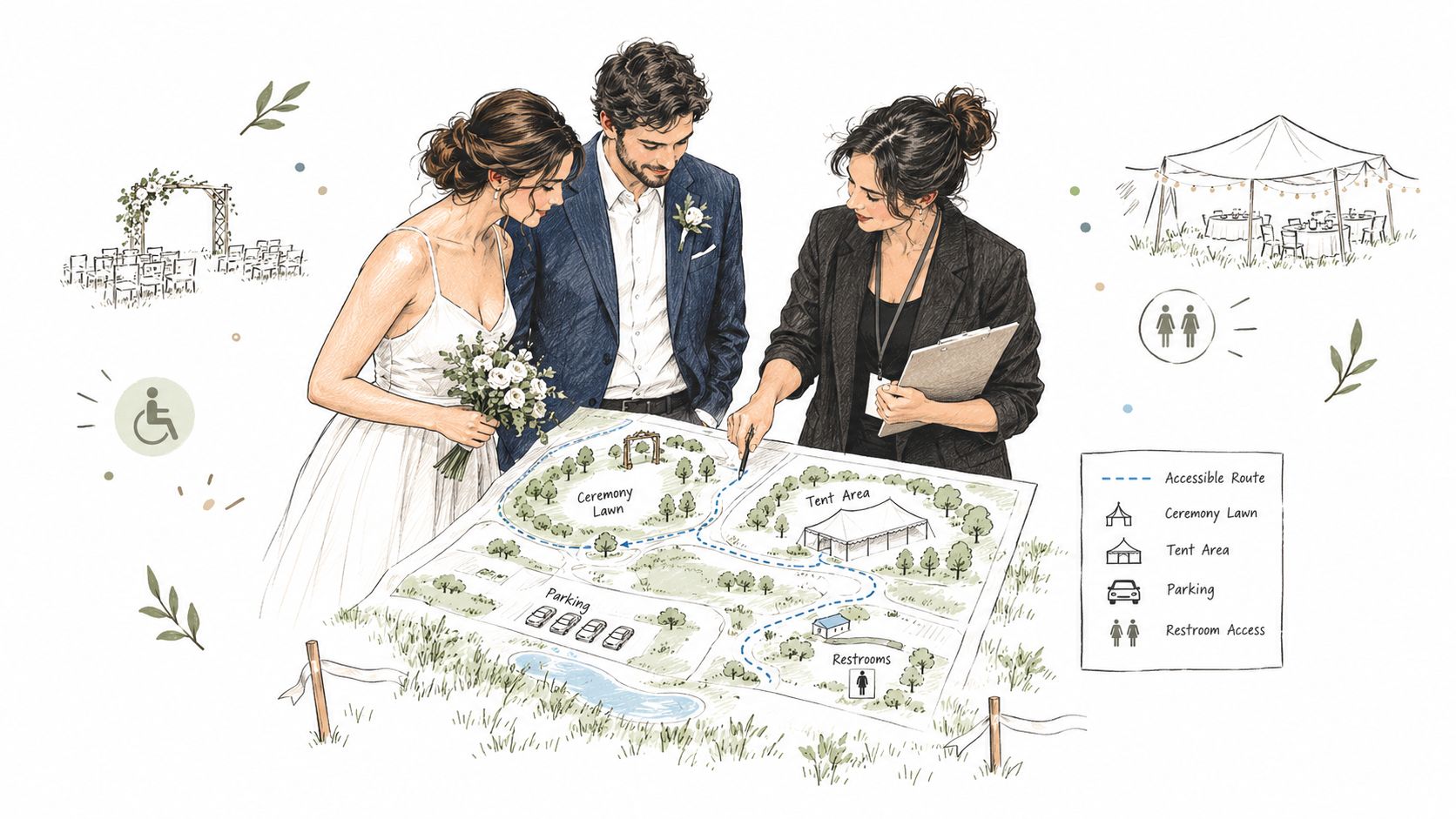
Bring a printed site map to your walkthrough. Mark parking, guest drop-off, the ceremony, reception, restrooms, dressing suites, and any activity areas. Trace the routes between them rather than drawing a single arrow from parking to the aisle.
Walk those routes in the order guests will use them. Look for loose gravel, soft grass, slopes, drainage channels, and awkward thresholds. A pretty path beside a stream may work for portraits without being the right arrival route for everyone.
Reserve the route before placing furniture
Use the ADA National Network's temporary-event accessibility guidance to plan an unobstructed route at least 36 inches wide, allowing approximately 60 inches where passing or two-way traffic is expected, and a ramp slope no steeper than 1:12 where ramps are required. The same guidance calls for firm, stable, slip-resistant routes and accessible shelters in major outdoor activity areas, with access to more moderate temperatures above 80°F or below 50°F.
Treat those measurements as layout constraints, not space you can borrow for decorations. Ask the venue team to review proposed temporary mats, roll-out flooring, or ramps before ordering them. A decorative rug isn't a substitute for a suitable accessible surface.
- Follow the complete journey. Include dining, restrooms, and the indoor fallback, not just the ceremony entrance.
- Keep seating connected. Guests using mobility devices should reach comfortable viewing positions without taking a separate route behind the celebration.
- Mark vendor crossings. Flag every place delivery traffic, equipment, or cables could interfere with guests.
For lounge arrangements, Woodstock Furniture & Mattress Outlet's outdoor layout advice for homeowners can provide a useful starting point for thinking about furniture placement. At a wedding, however, circulation and accessible access must take priority over a symmetrical grouping.
Inspect the finished setup
Review the venue's accessibility features before your visit, then ask how they connect with your proposed floor plan. Don't assume an accessible property makes every furniture arrangement accessible.
After chairs, flowers, signs, and cables are installed, walk the route again with a wheelchair, walker, and stroller as practical checks. Look especially at chair legs near aisle edges and cable crossings added during sound setup. Record anything that needs correction before guests arrive.
Building a Weather Backup Plan Early
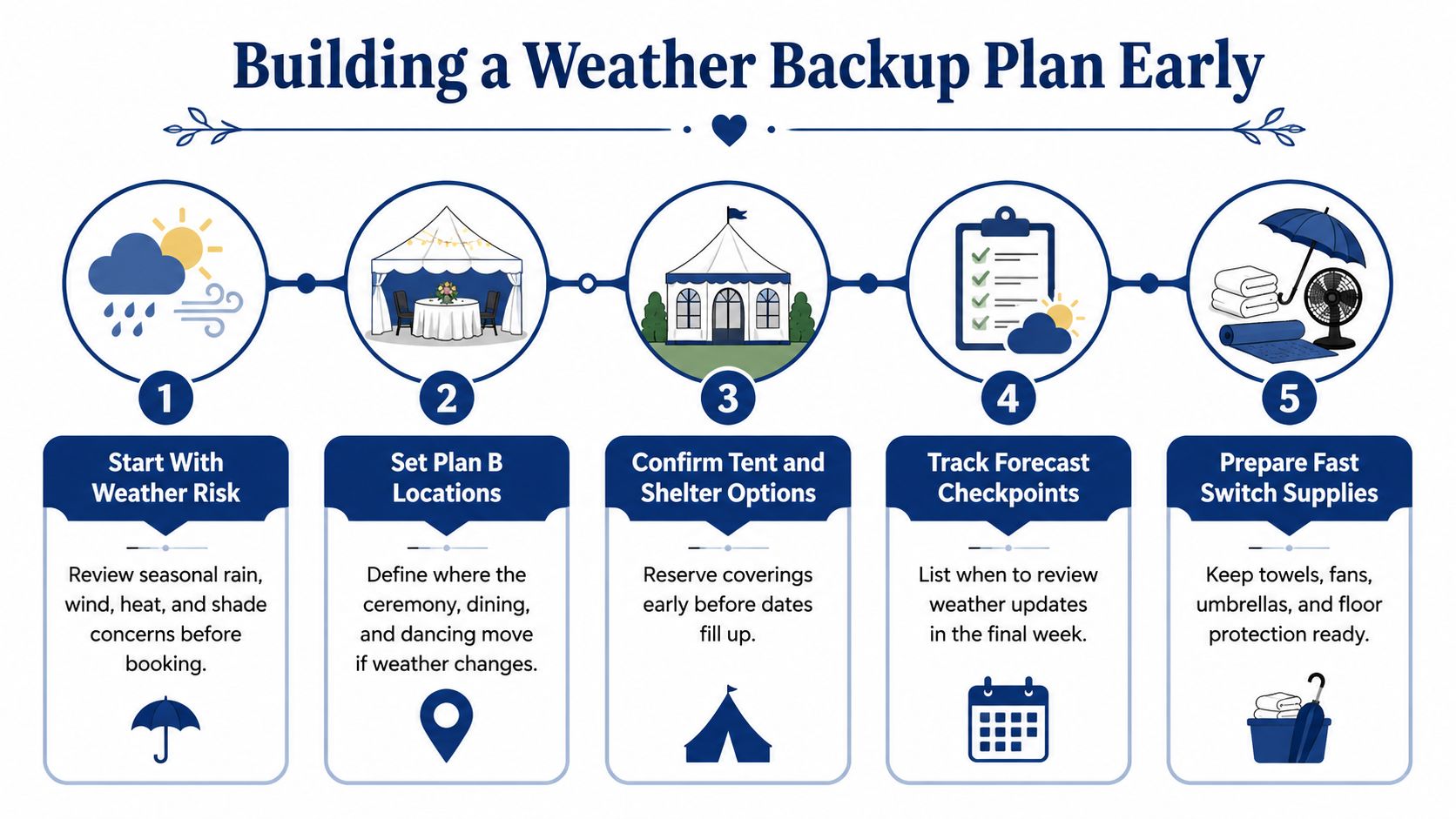
A weather plan should describe a change your team has already rehearsed on paper. “We'll move inside” isn't enough if nobody knows where the ceremony goes, who moves the microphone, or whether guests will arrive before the room is ready.
Published planning estimates vary: nearly 1 in 5 outdoor weddings experiences weather disruption in one estimate, compared with 35% in another; reported problems include summer thunderstorms at 45%, extreme heat at 30%, and high winds at 15%, while vendors commonly need a decision 24 to 48 hours before the event, according to this weather-backup planning overview. These aren't precise odds for your wedding date. They're a reason to make the decision deadline part of the schedule.
Give each weather risk a response
Rain, wind, and heat require different changes. Rain raises drainage and equipment-protection questions. Wind affects exposed decorations and rental structures. Heat can make an otherwise dry ceremony uncomfortable.
| Weather concern | Setup question | Planned response |
|---|---|---|
| Rain | Can guests reach shelter without crossing wet or unstable ground? | Activate the approved indoor route and ceremony layout. |
| Wind | Which structures and decorations need professional assessment? | Follow the rental supplier's and venue's operating instructions. |
| Heat | Can vulnerable guests wait comfortably before seating begins? | Change the guest holding area, timing, or ceremony location. |
| Lightning | Who directs guests to the designated safe location? | Follow the venue's safety procedures and designated decision-maker. |
Don't invent a universal weather threshold for every property. Agree on triggers with the venue and relevant vendors, including who can stop outdoor activity if conditions change during the celebration.
Assign authority before the forecast becomes urgent
Name the person who makes the location decision and a backup contact. Give the caterer, rental company, musicians, photographer, and venue manager the same written instructions. Include how the wedding party and arriving guests will hear about a change.
Practical rule: A backup plan is ready when the people carrying it out can explain their jobs without calling the couple.
Use the venue's guidance on what to do if it rains on your wedding day to prepare questions for your coordinator. Confirm the on-site manager's role, but don't assume that role includes moving every vendor's equipment.
Keep a simple transition sheet with the alternate floor plan, contact names, guest message, and equipment responsibilities. That's more useful during a weather change than a long email thread.
Budgeting for Shelter, Power, and Rentals
A scenic ceremony site can still expose guests to long walks and rising heat. Compare quotes by asking what shelter, cooling, flooring, and power the outdoor setup needs, then check that each choice also works with the indoor fallback. The least heat-tolerant guest's comfort is a useful test: consider cumulative time in the sun and the distance between parking, ceremony, and shelter.
Price the setup you plan to operate, then price the version you would use if conditions change. Comparing a complete indoor quote with an outdoor estimate that leaves rentals or installation out will not show the actual cost.
Published Outdoor Setup Cost Estimates
The published outdoor wedding infrastructure estimates are planning references, not local bids or promises of availability.
| Item | Published Estimate | What to Confirm |
|---|---|---|
| Tent and climate equipment | A tent for approximately 100 to 150 guests: $2,000 to $8,000; a basic 20-by-20-foot party tent: $200 to $600 per day; wedding-specific configurations often over $1,200; an installed 20-by-20-foot frame tent: $800 to $1,500; heaters or fans: $200 to $500 each. | Confirm which configuration the estimate describes. Ask whether installation is included, and price flooring, anchoring, delivery, and climate equipment separately. |
A basic party tent and a wedding-ready structure serve different needs. Compare design, weather-resistant materials, installation, and intended use. Ask the supplier what conditions the structure can handle and who is responsible for monitoring it. Include the indoor fallback in the comparison: a tent may address sun exposure, but it does not replace a usable indoor option.
Read the quote by responsibility
List each item beside the supplier responsible for it. Include portable flooring, generators, lighting, fans or heaters, restrooms, staging, dance floors, and protected paths where the layout requires them. Check whether those same items are needed for the indoor setup or only for the outdoor one.
- Venue-provided items. Confirm which seating, tables, sound equipment, preparation areas, parking, management, and cleanup are included.
- Vendor-provided items. Assign delivery, installation, operation, and collection to a named company.
- Conditional items. Mark rentals required if you switch to the alternate plan.
Ask the venue team to confirm how its inclusions apply to your event, including taxes, gratuity, cleanup, and furniture breakdown. Keep these responsibilities separate from the caterer's packing, the florist's collection, or the rental company's pickup.
A longer access window can ease installation, but deliveries and collection still need a schedule. Confirm arrival times, when guest areas must be clear, and who stays for pickup. Compare the complete operating cost, not just the rental headline.
Laying Out Staging, Sound, and Power
Mark the ceremony position first. Add the aisle, officiant, wedding party, guest seating, and any musician positions before deciding where speakers belong. The microphone has to serve that arrangement, not dictate an awkward ceremony layout.
Then draw the indoor version alongside it. Decide which equipment stays in place and which pieces must move. A fallback that depends on dismantling the entire outdoor sound setup needs a different transition plan from a room with equipment ready to use.
Test coverage where guests will sit
Ask the sound operator to test speech from the actual ceremony position. Listen from the back and sides of the seating area, not just beside the speaker. Check intelligibility before increasing volume.
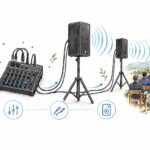
Review the included equipment through the venue's event sound-system information. Confirm how the indoor and outdoor systems, Bluetooth connection, and wireless microphone fit your ceremony and reception needs. Don't assume a musician's technical requirements match the equipment already available.
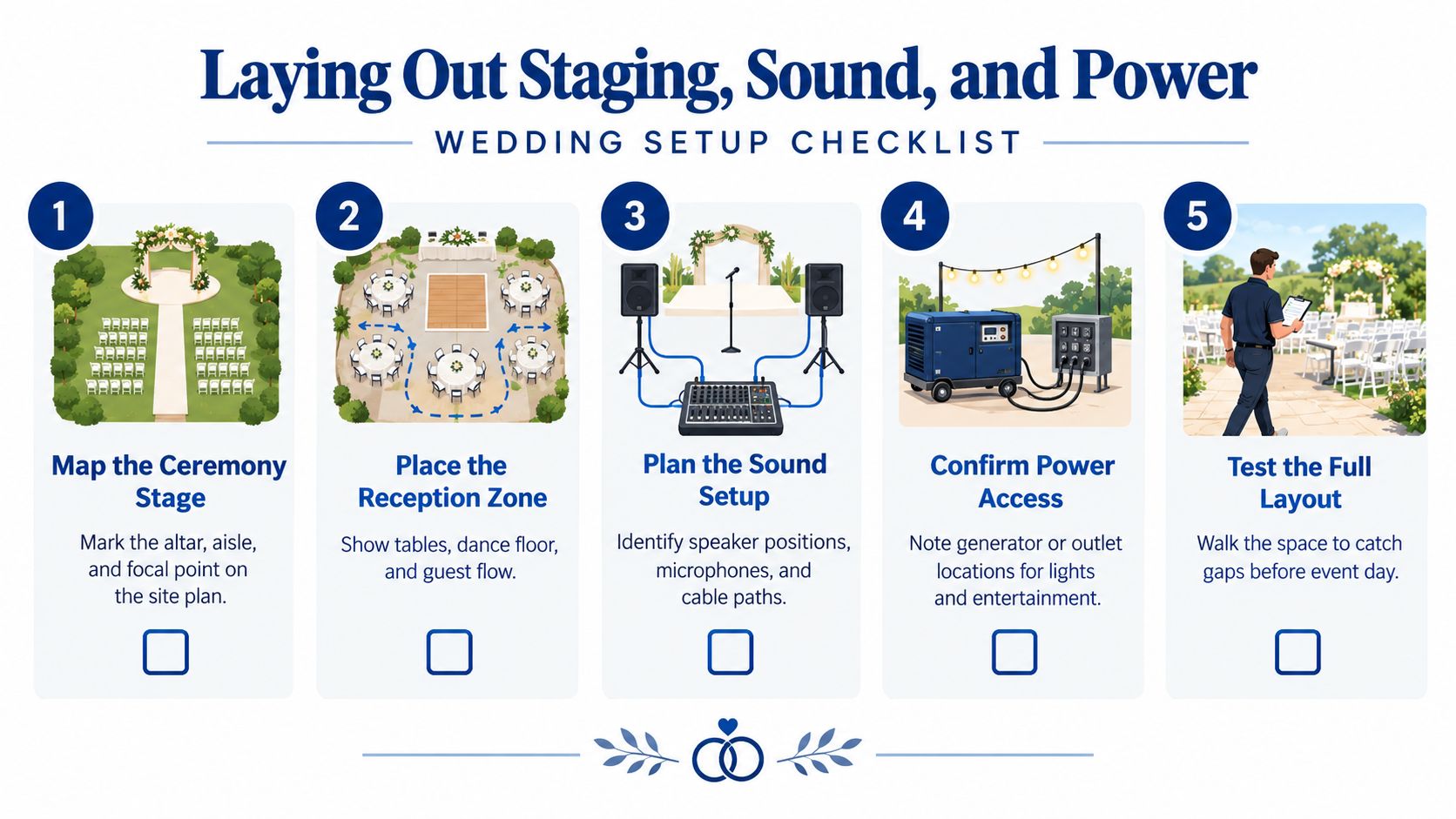
Map power from the source to lighting, entertainment, and food or beverage equipment. Have the appropriate supplier or qualified electrical professional confirm the distribution plan. An outlet's convenient location doesn't establish that it can support everything vendors want to connect.
If generator backup is proposed, Black Rhino Electric's Generator Interlock vs Transfer Switch: A Homeowner Guide is background reading for questions about building-connected backup power. It isn't an event wiring specification or permission to improvise a connection.
Verify the working layout before arrival
Use a day-of checklist that assigns an owner to each task:
- Sound check. Test vows, announcements, processional music, and the indoor ceremony position.
- Cable inspection. Keep runs away from guest circulation and have suppliers approve protection where crossings cannot be avoided.
- Weather protection. Confirm that sound and electrical equipment have the protection their operators require.
- Service access. Leave the prep kitchen's service entry and bartending work area clear.
- Final approval. Ask the venue manager and relevant vendors to review the installed layout against the agreed plan.
Place the bar queue and food-service traffic on the map, too. Guests shouldn't have to cross a working service route to reach their seats. Resolve those conflicts before the couple leaves for photographs, when the room may be busiest and harder to rearrange.
Keeping Guests Cool and Seated in Heat
A rain backup doesn't solve a hot, sunny afternoon. Guests can become uncomfortable before the ceremony begins if arrival, walking, waiting, and seating all happen outdoors.
My planning measure is cumulative exposure, especially for the guest who handles heat least comfortably. Don't count only the vows. Include the walk from the car, the welcome gathering, the wait for the processional, and any outdoor photographs afterward.
Shorten the whole outdoor experience
Warm-weather planning coverage recommends ceremonies of roughly 15 to 20 minutes, drinks before the ceremony, shade or cooling equipment, and later scheduling to avoid peak heat, as outlined in this outdoor wedding guest-experience guide. Treat these as planning suggestions, not a guarantee that every guest will be comfortable.
A short ceremony won't help much if you seat guests early and delay the entrance. Hold guests in a comfortable space until the ceremony team is ready. Tell the coordinator who releases guests and who confirms that the wedding party, officiant, and sound operator are in position.
The most useful shade is where guests actually wait, not where it looks attractive on the floor plan.
Walk the seating area near the intended ceremony time when practical. Check where shade falls, then consider whether the ceremony orientation or guest holding area should change. Don't reserve comfortable seating only for people who know to request it.
Put comfort within easy reach
- Drinking water. Offer it before guests take their seats, with someone assigned to replenish supplies.
- Resting places. Provide seated options near the arrival and waiting areas.
- Restroom access. Keep the route clear and easy to identify without sending guests searching across the grounds.
- Personal assistance. Ask guests privately about useful accommodations rather than guessing from age or appearance.
Apply the accessibility guidance discussed earlier when deciding whether the outdoor environment remains appropriate. Moving inside should happen before guests have endured an uncomfortable wait, not after the couple notices empty chairs.
The indoor fallback must already fit the guest count, ceremony arrangement, and sound requirements. An air-conditioned room only helps if guests can enter it and sit down without waiting for a hurried reset.
Comparing Outdoor Ceremony Options at Texas Old Town
Choose the operating plan before choosing the decorative details. An outdoor-first wedding, an indoor-first wedding, and a mixed celebration place different demands on the couple and vendors.
The property offers outdoor ceremony areas alongside climate-controlled halls that can also accommodate ceremonies. That gives you a practical choice, but it still requires a room plan, agreed responsibilities, and a realistic guest journey.
Compare the plans by setup load
| Approach | What you gain | What you need to resolve |
|---|---|---|
| Outdoor-first | The landscape becomes the ceremony backdrop. | Outdoor seating, sound, comfort provisions, and the alternate setup must all be ready. |
| Indoor-first | The ceremony location doesn't depend on keeping guests outdoors. | Design the aisle, focal point, dining arrangement, and any room change around the celebration. |
| Mixed | You can use outdoor areas selectively while keeping the main gathering indoors. | Clearly define which activities move and which remain fixed. |
Outdoor-first suits a couple who values the natural setting enough to plan the supporting logistics. The trade-off is preparing arrangements you may not use. Decide which decorative pieces are worth moving and which can stay outside if the ceremony relocates.
Indoor-first can be the more comfortable choice when your guest list includes people who need a shorter, simpler arrival. It doesn't mean abandoning outdoor photographs. It means separating the couple's portrait plans from the conditions guests must tolerate.
Match the hall to the actual floor plan
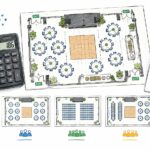
Compare Tejas, Sage, Stone, and Redbud using the current venue specifications and your proposed layout. Ask the team to show ceremony seating, dining tables, the dance floor, service access, and accessible circulation together. Don't choose from a maximum-capacity label alone.
Tejas offers a country dance-hall setting, while Sage, Stone, and Redbud provide different settings and finishes. Visit the halls that fit your style, then test the practical questions: where guests enter, where they wait, and how vendors work without crossing the ceremony.
Decision test: Choose the plan you can explain clearly to every vendor and guest.
A workable summary might be: “The ceremony is outdoors if the agreed conditions allow, and otherwise guests go directly into the prepared hall.” If that sentence hides a furniture move, a missing microphone, or an uncertain entrance, the plan still needs work.
Booking a Site Visit to Confirm Your Plan
Book a tour by appointment and bring your working documents. A phone album of ceremony inspiration helps explain style, but the site map, vendor responsibilities, and alternate floor plan will help confirm whether the wedding works on the ground.
Start at guest arrival, not at the ceremony backdrop. Walk from parking and drop-off to the waiting area, ceremony, restrooms, and hall. Ask where guests would go if they arrived while the team was changing locations.
Bring questions that require clear answers
- Included equipment. Which furniture and sound components belong to the selected venue, and what must vendors supply?
- Rental installation. When can suppliers arrive, where can they unload, and who approves anchoring or wind-related requirements?
- Day-of authority. What does the on-site manager coordinate, and which tasks remain with the couple's coordinator or vendors?
- Service requirements. How does caterer access work, and what must the approved bartending company provide?
- Closeout duties. What cleanup and furniture breakdown are included, and who removes flowers, personal belongings, and rented equipment?
Ask to stand in the proposed indoor ceremony position. Look at the guest entrance, the aisle, and the area behind the officiant. Review how that arrangement affects dining and entertainment rather than treating it as spare space.
Leave with an agreed next step
Photograph relevant route transitions and equipment locations with the venue team's permission. Mark unresolved questions on the map and assign each to the person who can answer it. Send vendors the same updated plan rather than separate descriptions.
Schedule the tour, bring the checklist, and ask every vendor to agree to the weather decision deadline before you sign their contracts. You'll make better choices when the location, costs, and responsibilities are visible together.
Texas Old Town offers outdoor ceremony sites paired with climate-controlled halls, included ceremony seating, and on-site venue management. Visit Texas Old Town to arrange a tour and walk both your preferred outdoor setup and its indoor fallback with the venue team.