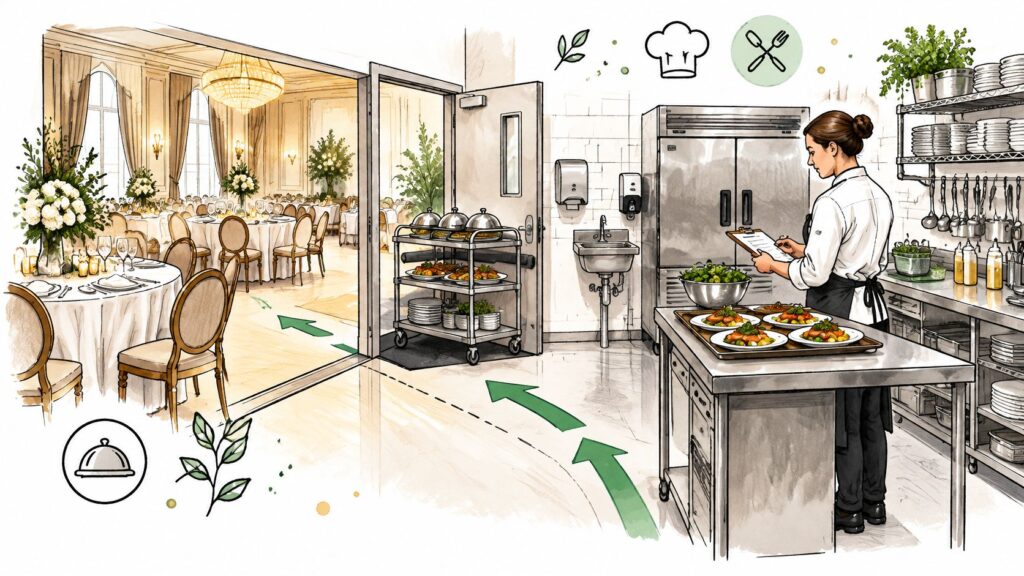
Banquet Hall with Kitchen: What to Check
The most popular advice about choosing a banquet hall with kitchen is also the least reliable. People tell you to pick the prettiest room that lets you bring any caterer you want, then sort out the menu later. Don't do that. A beautiful hall can still stall a meal if deliveries cross the dance floor, the only sink is full of salad, or the caterer has nowhere to hold hot food during speeches. Think in the opposite order. First prove the kitchen can receive, hold, serve, and clean up at your actual guest count. Then talk about decor, dates, and taste. A listed prep kitchen isn't automatically a production kitchen, and every permission, appliance, or shortcut you add changes both the bill and the food-safety risk until it's written into the contract. Table of Contents What the Kitchen Must Be Able to Do Why This Room Carries So Much of the Budget The Functions That Must Work Together How to Walk the Kitchen Before You Book Walk It in Service Order What You're Really Testing What the Meal Operation Will Cost Where the Extra Money Hides Contract Questions and Event-Day Failures Questions That Prevent Specific Problems Ventilation Is a System, Not a Hood Shape Book a Kitchen Walk Before You Sign What to Ask Us to Show You What the Kitchen Must Be Able to Do A prep kitchen and a production kitchen are different rooms, even when a listing uses the words as if they're interchangeable. A prep kitchen is built around receiving food that's mostly prepared elsewhere, holding it safely, reheating or assembling it, staging plates or buffet pans, and sending waste out. It doesn't automatically include ranges, fryers, a certified cooking hood, or a full dish pit. A production kitchen goes further. It lets a caterer cook from raw ingredients on site, which adds exhaust, fire suppression, grease handling, more power, and more separation between raw and ready-to-eat foods. If your menu needs searing, frying, or finishing sauces to order, you need production capability. If your caterer plans to transport food hot, chill it, reheat it, and plate it, a strong prep kitchen can be enough. Why This Room Carries So Much of the Budget The venue isn't just a room rental. The Wedding Report's 2025 U.S. wedding statistics recorded approximately 2,011,044 U.S. weddings in 2025 and total wedding spending of $66.16 billion, or an average of $32,899 per wedding, while the median was $18,231. That gap matters because high-spending celebrations pull the average up, and the venue package is where catering, alcohol, rentals, staffing, and coordination often meet. That doesn't mean every event costs that much. It means the hall is the operating platform for capacity, food, drinks, furniture, timing, and cleanup. In Texas, the same infrastructure has to serve weddings, quinceañeras, corporate banquets, and milestone parties, often with the same back hallway doing very different jobs in one weekend. The Functions That Must Work Together Start with receiving. A caterer needs a service entry and a named delivery window, not a vague promise that they can come in sometime that afternoon. If the rental van, florist, bar team, and cake baker all arrive at once through one guest door, your timeline is already fragile. Next comes cold holding. Ask to see working refrigeration, not a plan to line coolers along a wall. Your caterer should be able to measure temperatures with a calibrated thermometer and keep raw items apart from plated salads and desserts. Coolers in a parking lot don't give you that control on a hot afternoon. Hot holding has to match your service style. A plated dinner needs a quiet plating line where entrées stay hot while servers move in sequence. A buffet needs wells, ovens, or rented holding equipment with tested power, plus a refill path that doesn't force staff through the photo line. Chafing dishes alone aren't a plan if nobody's checked which outlets can carry them. Handwashing, warewashing, waste, and permits are where vague answers get expensive. Hands need a dedicated sink, not the sink where lettuce is rinsed. Dishes need a three-compartment sink on site or a written agreement that the caterer brings warewashing capacity and takes dirty items out. Grease needs a procedure and a bin, never a floor drain. Food prepared at home and stored at home isn't a shortcut you should accept as normal. Any caterer is flexible only when the contract lists what we supply, what the caterer brings, and who owns each job after service ends. Kitchen functions to confirm before you book Function Confirm this Treat as a red flag if Receiving Separate service entry and a timed delivery window Food must cross the guest lobby or dance floor Cold holding Working fridge or freezer plus room for a calibrated thermometer The only cold storage is coolers in a lot or hallway Hot holding Ovens, wells, or a written plan for caterer equipment and power Chafing dishes have no tested outlet plan Handwashing Dedicated sink at a minimum of 85°F / 29.4°C Hands are washed in the food-prep sink Warewashing Three-compartment sink on site, or the caterer must bring it Dishes would be washed in a restroom or left dirty on site Cooking ventilation Hood, suppression, and makeup air matched to approved appliances A portable fryer or griddle is allowed under an unrated hood Waste and grease Bins, a grease procedure, and pest control named in writing Grease is expected to go down a floor drain Permits Caterer's local license and any health permit named in the contract Home kitchen prep or storage is treated as acceptable Don't request a date hold until you've marked every row. For each one, write venue provides, caterer brings, or not allowed. If a row stays blank, you don't have flexibility. You've inherited an unpriced problem that'll show up when the room is full and the food is cooling. How to Walk the Kitchen Before You Book Treat the tour as a mock service, not a