Uncategorized

How to Choose a Caterer for a Wedding That Wows

Most couples start shopping for a caterer the same way. They ask who has good food, who fits the date, and who can work within budget. That's a sensible start, but it's rarely enough. At a flexible-vendor Hill Country venue, the caterer affects far more than dinner. They shape when guests eat, how long lines get, whether cocktail hour feels relaxed, whether grandparents get served smoothly, whether allergy concerns are handled carefully, and whether the room turns over cleanly for dancing instead of stalling out in the middle of the night. A beautiful menu on paper doesn't fix weak staffing, vague contracts, or a team that can't handle your guest count and layout. I've seen weddings where the food was simple but the service was so steady that the whole night felt polished. I've also seen the opposite. A menu can sound impressive, then struggle once real timing, real guests, and real venue logistics enter the picture. That's usually where couples realize they weren't just hiring someone to cook. They were hiring a production team. Table of Contents Introduction to Choosing a Wedding Caterer With Confidence What actually separates strong caterers from risky ones Setting Your Budget and Matching Service Style to Your Wedding Start with a realistic range Wedding Catering Service Styles Compared Match the format to the room, not just the menu Ask for itemized proposals every time Vetting Caterers Through Tastings Staffing and Safety Checks Run a tasting like an operations review Staffing reveals whether the service plan will hold up Safety checks should be plain, specific, and easy to explain Decoding the Catering Contract and Uncovering the True Total Cost Read the quote as an operations document Expect the first number to rise Review the legal language with the same care Aligning Your Caterer With Venue Logistics and Guest Experience Logistics shape guest experience more than couples expect Bar timing, floor plan, and cleanup affect the meal Final Checklist for Booking the Right Caterer With Confidence The pre-booking test that actually works What I'd trust and what I wouldn't Introduction to Choosing a Wedding Caterer With Confidence A couple sits down after touring venues, opens three catering PDFs, and immediately gets stuck. One quote looks affordable but says very little about staffing. Another has a polished menu but rolls bar, rentals, labor, and service fees into one total. A third has food they loved at a tasting, but they're not sure that team can serve a large guest list on time in a Hill Country setting with indoor and outdoor movement. That's a normal place to be. Catering decisions feel personal because food is personal. Guests remember whether they were fed on time, whether the meal felt generous, and whether the service matched the tone of the wedding. But from the venue side, catering is also a logistics decision. It touches load-in, prep space, power use, trash flow, timeline management, bar support, rental coordination, and cleanup. Practical rule: Choose your caterer the way you'd choose both a chef and an operations manager. You need both. At flexible-vendor properties, that matters even more. Having options is a real advantage. You're not locked into one kitchen or one package. But freedom creates work. Couples have to compare vendors who may use very different pricing structures, service models, and staffing assumptions. Two proposals can look similar at first glance and lead to very different wedding-day experiences. A good caterer does more than serve tasty food. They arrive with a plan. They know how many staff they need for your service style. They understand how to serve efficiently without turning the reception into a waiting game. They can explain how they'll handle special meals, where they'll stage service, how they'll reset after dinner, and what their team is responsible for before they leave. That's the standard to use when deciding how to choose a caterer for a wedding. What actually separates strong caterers from risky ones Some differences show up early if you know where to look: Clear proposals: Good caterers break out food, labor, rentals, bar, and service charges so you can compare real totals. Operational confidence: They can describe setup, service timing, and cleanup without sounding vague. Staffing transparency: They tell you who is serving, supervising, bartending, and supporting the kitchen. Dietary seriousness: They treat allergies and mixed-diet service as execution issues, not side notes. If a caterer can only talk about the menu, you still don't know how your wedding will run. That's why the smartest process starts before you sign anything. Budget first. Then service style. Then tasting, staffing, safety checks, and contract review. That order saves money and avoids the most common surprises. Setting Your Budget and Matching Service Style to Your Wedding Catering gets expensive fast because it scales in two directions at once. Guest count pushes the total up, and service style changes the labor behind it. Recent U.S. wedding market data puts the average wedding catering spend at about $6,927, with a national average of roughly $80 per person, while regional averages can range from $62 to $123 per guest depending on location, according to The Knot's wedding catering cost guide. The same source notes that a 200-guest wedding at $80 per person lands near $16,000 before add-ons, and domestic destination weddings average about $104 per person, which is useful context if travel and logistics are part of your event. That doesn't mean your wedding should hit those exact numbers. It means you need a working baseline before you start collecting quotes. Start with a realistic range Another pricing guide shows buffet service commonly falls around $40 to $70 per person, while plated dinners often run $80 to $150 per person. That same guide says wedding catering and bar can account for about 20% to 30% of the total wedding budget. A couple spending $30,000 overall might reasonably expect $6,000 to $9,000 to go toward catering and beverages before upgrades, according to Paperlust's wedding catering pricing overview. Those numbers are useful
Last Minute Wedding Venue Availability Guide

You're probably in one of two situations right now. Your original venue fell through, or life moved faster than your wedding timeline and now you need a real place, on a real date, without downgrading the whole event into a courthouse-plus-dinner situation. Good. Ignore the advice telling you to cut the guest list in half and call it a day. Last minute wedding venue availability is tough, but the problem usually isn't the calendar by itself. The problem is choosing the wrong type of venue, asking the wrong questions, and moving too slowly once an opening appears. If you want to keep a full-size wedding intact, you need a venue with enough rental time, enough operational flexibility, and enough administrative speed to absorb a compressed planning window. Table of Contents Why Last Minute Bookings Are Harder Than They Look What couples are actually competing against The friction nobody warns you about Building a Compressed Planning Timeline At 90 days out At 60 days out At 30 days out Where Open Dates Actually Hide The date categories worth chasing Prime Saturdays are not the place to start Speed Wins the Booking The same-day inquiry playbook What your first message should say Negotiating the Contract Without Losing the Experience What venues can often move on What you should trade, and what you shouldn't Keep the negotiation grounded A Real Short Timeline Booking in Central Texas The decisions that matter What changed, and what didn't Your Final Weeks Before the Wedding T minus 6 to 4 weeks T minus 3 to 1 week Day before and day of Why Last Minute Bookings Are Harder Than They Look Most couples assume a short timeline automatically means a smaller wedding. That's lazy advice. A short timeline means you need a venue built for logistics, not just pretty photos. The market tells you how early dates usually disappear. In a 2026 wedding-weekend dataset, couples who booked a venue did so a median of 267 days before the wedding, and the first inquiry happened a median of 361 days out. The same report says the typical U.S. booking range was 200 to 344 days, based on 3,353 inquiries in the sample, which is why true late inventory is limited in major markets (wedding-weekend booking lead time benchmarks). That doesn't mean nothing is left. It means the easy inventory is gone and the remaining inventory is uneven. What couples are actually competing against You're not competing against the length of your engagement. You're competing against three things: Fast-moving reopened dates caused by cancellations, expired holds, and couples who don't complete paperwork Vendor availability for catering, photo, entertainment, transportation, and staffing Venue policies that either help a short timeline or kill it A venue can have your date open and still be a bad fit. If it only gives you a short rental window, requires rigid vendor rules, or takes too long to turn contracts, your planning window gets crushed even further. Practical rule: Don't ask only, “Is my date available?” Ask, “How fast can we contract, how long do we have on site, and how flexible are your vendor rules?” The friction nobody warns you about The hardest part of late booking usually isn't ceremony space. It's everything attached to it. A caterer may still be available but unwilling to bend on timing. A photographer may be open but already committed to a travel-heavy weekend. Insurance paperwork, family decision-making, and final guest count wrangling can eat days you don't have. Meanwhile, venues that quote long planning lead times are often describing their normal booking cycle, not the only way they operate. That's a marketing default, not a universal operational truth. If you want context on standard timing versus your actual options, read Texas Old Town's guide on how far in advance to book a wedding venue. Then stop treating the default planning calendar like a law of physics. Building a Compressed Planning Timeline A short timeline only works when you stop planning in a neat sequence and start planning in parallel. Venue, guest list, catering, attire, and photography can't wait for one another. They all move together. This is the mindset shift: don't think in months. Think in decision windows. At 90 days out This phase is about locking the framework. If the venue isn't set, almost nothing downstream stays stable. Handle these first: Venue shortlist and tours. Pick a small list and move fast. You need spaces that can host your guest count, your ceremony plan, and your backup weather plan without requiring a total redesign. Guest list ceiling. Stop saying “around 150” if the number might be much higher. Capacity drives venue choice, catering style, table layout, parking, and staffing. Parallel vendor outreach. Contact catering, photography, officiant, DJ or band, and planner or coordinator immediately. Don't wait until the venue contract is fully signed to start those conversations. Date flexibility. Give yourself alternates. Friday evening, Sunday, and off-peak dates often save the event. A venue with a long rental window matters most here. If setup, ceremony, cocktail hour, reception, and teardown all have to fit into a narrow access period, every vendor becomes harder to schedule. At 60 days out Now you're converting ideas into operating decisions. Priorities at this stage: Sign venue and major vendor contracts Book attire fittings and alterations Send invitations or digital invitations immediately Confirm menu direction and service style Walk the property or floor plan with layout decisions in mind This is also when venue flexibility starts showing its value. If the venue allows outside caterers, you have more paths to solve availability. If it offers indoor and outdoor ceremony options, you don't need a separate weather panic plan. If it gives you room to rehearse on site, your timeline tightens in a manageable way instead of becoming chaotic. For couples trying to map this out fast, Texas Old Town's event planning timeline is useful because it forces you to assign real tasks to real windows instead of leaving everything

Ceremony and Reception Same Venue Made Simple

You're probably somewhere between excitement and spreadsheet fatigue right now. You've found a venue you like, or maybe three, and the big question is whether keeping the ceremony and reception in one place will make the day feel smooth or make everyone stand around while the room gets turned over. That's the part couples often miss at first. A ceremony and reception same venue setup isn't only about convenience. It's about what happens in the in-between. The vows end, guests clap, and then one of two things happens. People either flow naturally into the next part of the celebration, or the energy drops while everyone wonders where to go, what to do, and why dinner still isn't starting. The good news is that same-venue weddings can work beautifully when the property, timeline, and transition are planned on purpose. The cocktail hour isn't just a pleasant extra. In many weddings, it's the working bridge that gives staff time to reset the space and gives guests a clear next step. Table of Contents Why Couples Are Choosing One Place for Everything What couples are really buying Where confusion usually starts How a Same Venue Wedding Actually Works Two common ways the format works Why exclusive access matters Benefits and Trade Offs to Weigh Honestly Where same-venue setups shine Where couples should pause Same Venue vs Separate Venues at a Glance Designing Zones That Keep Guests Moving Naturally The four zones that do the heavy lifting What good flow looks like on the ground Questions worth asking on a tour Timeline and Room Flip Without the Stress A realistic transition sequence Where dead time comes from Sound Lighting and Flow Details That Make It Seamless Sound should follow the day Lighting does more than make photos pretty Service flow should stay mostly invisible Deciding If One Venue Is Right for Your Celebration Quick decision checklist Why Couples Are Choosing One Place for Everything A lot of couples start with the obvious benefit. One address is easier than two. Grandparents don't need a second set of directions. The wedding party isn't piling into cars between events. Vendors aren't racing the clock across town. That practical appeal isn't a fringe preference anymore. A major UK wedding-industry summary found that up to 77% of ceremonies in 2023 took place at the same venue as the reception, and that share had been rising steadily since 2018, which points to a longer shift toward all-in-one planning rather than a passing trend (UK wedding industry overview). For couples, that shift makes emotional sense too. Once the ceremony starts, nobody wants the day to feel broken into separate errands. People want the celebration to keep its rhythm. What couples are really buying They're not just buying one location. They're buying: Less travel stress so guests can settle in once Cleaner timing because the day isn't vulnerable to traffic between venues More usable celebration time instead of transition time A simpler guest experience from arrival through the last dance A U.S. wedding analysis from The Knot noted that in 2019 nearly one-third of couples hosted their receptions both indoors and outdoors, and it also observed that couples increasingly preferred to hold the ceremony, cocktail hour, dinner, and dancing within the same venue. That same analysis reported the average U.S. wedding size in 2019 was 131 guests, down from 141 in 2010, which helps explain why flexible one-property layouts became more attractive as couples focused on experience and convenience (The Knot wedding changes analysis). The best same-venue weddings feel like one continuous gathering, not two events stitched together. Where confusion usually starts Couples hear “same venue” and picture an easy day. Sometimes that's true. Sometimes it only looks easy because the hard work is hidden behind a strong floor plan, a realistic cocktail hour, and staff who can flip a room without guests seeing the scramble. That's why the key question isn't just, “Can we do both here?” It's, “What will our guests experience in the 30 to 60 minutes after the ceremony ends?” How a Same Venue Wedding Actually Works Hosting a big dinner party at a house is a good analogy. You wouldn't ask guests to stand in the kitchen while you clear plates, set dessert, dim the lights, and rearrange chairs. You'd move them somewhere else for a bit. Maybe the patio for drinks, then back inside for dinner. A wedding on one property works the same way. The day moves through different phases in different spaces, or through the same space at different times. Two common ways the format works The first version is a multi-zone property. You hold the ceremony in one area, guests move to another space for cocktails, and the reception begins in a hall or separate lawn. This is usually the smoother option because staff and vendors can work in parallel. The second version is a single-room flip. The ceremony and reception both happen in one main room. Guests leave for cocktails while staff reset chairs, tables, decor, lighting, and audio. This can work well, but it puts more pressure on timing. Guidance from venue operators consistently emphasizes that same-venue weddings work best when the site has distinct zones for ceremony seating, cocktail circulation, dressing rooms, and reception dining or dancing because that layout reduces friction and lets vendors reset one area while guests enjoy another (same-venue layout guidance). Why exclusive access matters If your venue gives you full use of the property for the day, the timeline usually feels calmer. Your florist can stage early. Your DJ can sound-check without rushing. Your planner can place signage, rehearse entrances, and solve little issues before guests arrive. That matters just as much as the pretty backdrop. Here's a practical way to evaluate a venue tour: Ask where guests go after the ceremony. If the answer sounds improvised, the transition may feel improvised too. Ask where staff stage tables, linens, and decor. A smooth flip needs a hidden work path. Ask what happens in bad

How to Use Wireless Microphone for Weddings and Events

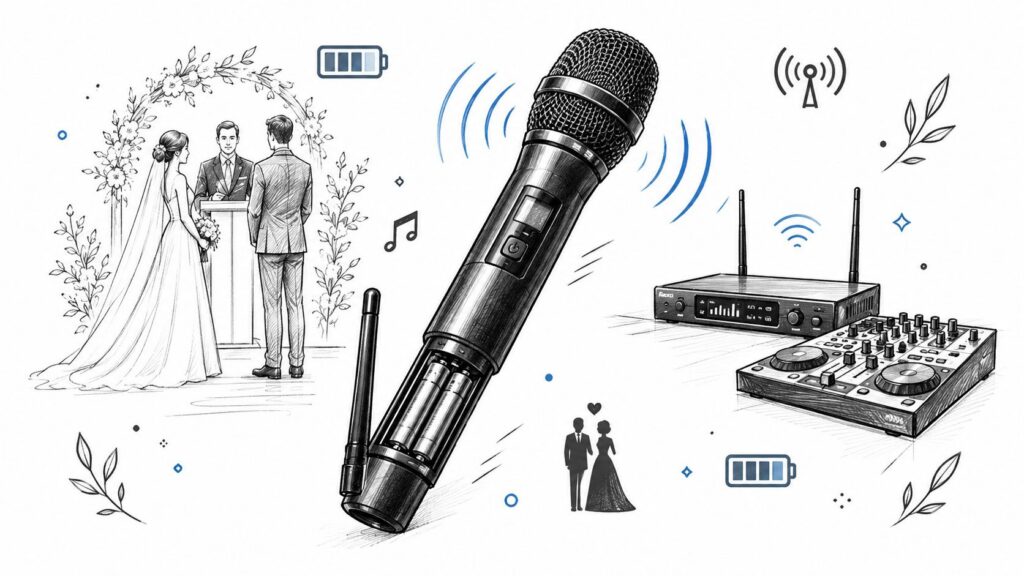
The officiant is halfway through the vows when guests in the back rows start leaning forward. The receiver is powered on, the transmitter is clipped neatly to a lapel, and the DJ booth appears ready, but the sound cuts in and out as the ceremony moves from the garden toward the reception hall. Later, a toast-giver holds the microphone too far away, a guest brushes the antenna, and the final story disappears into room noise. That's the practical reality behind how to use a wireless microphone at a wedding. The job involves legal frequency selection, RF coordination, receiver placement, microphone technique, battery management, gain staging, and clear handoffs between the officiant, DJ, venue manager, and speakers. On a Hill Country property with indoor halls, outdoor ceremony sites, guest phones, Wi-Fi, Bluetooth devices, and several event areas, pairing the microphone is only the beginning. Table of Contents Why Wireless Microphones Make or Break Your Ceremony Sound One event can contain several sound environments Before You Power On What to Check About Frequencies and Gear Start with the legal operating window Inventory the complete signal path Scan at every operating position How to Set Up and Pair Your Wireless Microphone Without Guesswork Establish the receiver position first Scan, select, and sync in order Walk the actual coverage area Positioning the Microphone for Clear Speech in Every Moment Match placement to the ceremony Make the handheld handoff boring Battery Gain and Feedback Control During the Event Run levels from the operating position Keep monitors and microphones apart Troubleshooting Dropouts Interference and Last Minute Fixes Diagnose by symptom Why Wireless Microphones Make or Break Your Ceremony Sound At a multi-venue Hill Country property, the microphone may begin at an outdoor garden altar, move through an indoor hall, and end up in a toast line with several different speakers. Each change affects signal path, room acoustics, microphone technique, and who is responsible for the handoff. Pairing the transmitter and receiver is only the starting point. A well-managed wireless system lets the officiant move without cables across the aisle, keeps vows intelligible for guests at the back, and gives the DJ a practical handheld for announcements and toasts. The result should feel ordinary to the audience: a steady voice, controlled volume, and no attention drawn to the equipment. One event can contain several sound environments At the garden altar, distance, wind, foliage, guests, and changes in body position can affect the radio path and speech clarity. In a stone hall, reflective walls and hard surfaces can make the same microphone sound louder, harsher, or more prone to feedback when a speaker faces a loudspeaker. The fix is not identical in both spaces. Outdoor coverage depends heavily on receiver placement and a clear path, while indoor control also requires careful speaker placement and gain. The handoff creates another risk. An officiant may use a lavalier or headset, the DJ may take a handheld for announcements, and toasters may pass that microphone between people who hold it at different distances. Before the ceremony, identify who will mute, unmute, collect, and redistribute each transmitter. A quick instruction to keep a handheld near the mouth and away from its grille or antenna can prevent an otherwise avoidable change in level. Practical rule: Assign one person to own the microphone from setup through the last toast. Guest phones, Wi-Fi equipment, Bluetooth devices, and other event systems can add RF congestion, especially when several areas share the property. The operator should know which receiver serves which space, keep the receiver where its signal path remains practical, and avoid treating a successful soundcheck at one location as proof that every handoff will work. For couples and planners, a sound plan should state which system is supplied, where it will be tested, who monitors it, and who manages each transition. The venue's broader sound system information can clarify available equipment and connections. Couples can also explore ceremony release while assigning ceremony responsibilities. Good preparation keeps the garden ceremony, Stone hall, DJ booth, and reception speakers working as one coordinated event. Before You Power On What to Check About Frequencies and Gear At a Hill Country property, the ceremony may begin in a garden, move into the Stone hall, and finish with toasts near the reception speakers. A microphone that passes a quick test outdoors can fail after the receiver moves indoors, especially when guest phones, Wi-Fi equipment, Bluetooth devices, and production systems add RF congestion. Check the operating plan before anyone powers up. Start with the legal operating window Read the transmitter and receiver labels, confirm their tuning range, and review the manufacturer's documentation and local requirements. The 617–652 MHz and 663–698 MHz ranges are no longer available for wireless microphone operation, and the 700 MHz range, 698–806 MHz, is prohibited. Depending on the equipment and authorization, permitted choices can include 614–616 MHz, the 657–663 MHz unlicensed 600 MHz duplex gap, VHF and UHF TV channels 2–36, 902–928 MHz, 1920–1930 MHz, 2.4 GHz, and 5 GHz. Check the FCC frequency and operation requirements before buying or deploying a system. The post-auction rules make exact frequency blocks more important than a broad label such as “UHF.” Licensed users can operate in the 653–657 MHz duplex gap, while unlicensed users may use 614–616 MHz and 657–663 MHz, subject to the applicable rules. The FCC's post-incentive-auction wireless microphone guidance explains the available operating choices. Inventory the complete signal path Put every component on the table before the ceremony setup: Receiver: Match it to the transmitter and inspect the power connection. Transmitter: Check the bodypack or handheld, capsule, mute control, display, and battery compartment. Antennas: Confirm that detachable antennas are present, firmly connected, and undamaged. Audio cable: Identify whether the receiver feeds the mixer, powered speaker, PA, camera, or another device. Power and backup: Prepare charged batteries or the manufacturer-approved power solution, plus a wired microphone if available. A receiver light only confirms that the unit has power. Confirm that it sends a clean signal to the

7 Wedding Venues for 100 Guests in Central Texas

You've narrowed the guest list to about 100 people, but the venue search still feels surprisingly difficult. A room can be technically large enough and still leave guests crowded around dinner tables, force the dance floor into a traffic lane, or make a weather backup feel like an afterthought. A much larger venue can create the opposite problem, with a reception that feels underused and costs that reflect space you don't need. This roundup compares wedding venues for 100 guests in Central Texas by the details that shape the actual wedding day: capacity fit, indoor and outdoor flow, rental access, included services, catering and bar policies, weather planning, parking, lodging, and day-of support. The goal is to help you choose a venue that works operationally, not just one that looks good in photographs. For additional visual planning inspiration, browse this wedding portfolio for metro Atlanta couples. Capacities, pricing, availability, and policies can change, so confirm every detail directly with the venue before signing. Table of Contents 1. Texas Old Town What makes the logistics easier 2. The Allan House Where this Austin option stands out 3. The Addison Grove A package-led planning model 4. Pecan Springs Ranch Plan for movement across the property 5. Prospect House Efficient services with fewer outside decisions 6. The Grand Lady A private estate with practical reach 7. Camp Lucy The Vineyard Best for a wedding weekend Comparison of 7 Wedding Venues for 100 Guests Match Your Guest Count to Your Best-Fit Venue 1. Texas Old Town For a 100-guest wedding, Texas Old Town gives couples several ways to keep the layout proportional to the guest list. The Kyle property covers 55 acres and includes streams, water features, maintained gardens, indoor halls, and outdoor ceremony settings. That range lets you select a reception room based on dining, dancing, weather, and guest flow instead of filling a single oversized ballroom. The campus has four private halls. Redbud accommodates up to 150 guests, while Tejas, Sage, and Stone accommodate up to 320, 300, and 300 guests. The venue's published information identifies those capacities. Redbud is the most practical first tour for 100 guests because its smaller limit can keep tables, aisles, the bar, and the dance floor connected without leaving the reception visually underused. Rental access also supports a full wedding schedule. Couples receive 16 hours of exclusive access, from 8 a.m. to midnight, allowing time for setup, décor, the ceremony, reception, and breakdown. Climate-controlled halls provide indoor ceremony options, while indoor and outdoor PA systems include Bluetooth connectivity and a wireless microphone. What makes the logistics easier Texas Old Town documents furniture counts and provides dressing suites with private restrooms, a prep kitchen with a separate service entrance, a built-in beverage bar, private parking, and an on-site venue manager. Cleanup and furniture breakdown are included. Couples may bring their own caterer, but the bar requires host-provided beverages and an approved bartending company. Confirm that process, including vendor arrival and service rules, before signing. Ask the venue to draw a sample 100-guest floor plan for every realistic hall. It should show the dance floor, buffet or catering stations, bar, aisles, and DJ or band footprint. No flat rental price is posted online, so request a written quote that separates included services from extra costs. Review the venue's wedding venue floor plans before touring, then compare catering, rentals, bar service, taxes, gratuity, and staffing with competing venues. Best for: Couples who want multiple room choices, a long access window, outside-caterer flexibility, substantial parking, and on-site day-of oversight. Trade-off: The quote is customized, and the approved bartending requirement adds coordination. 2. The Allan House The Allan House works best when the setting itself is a priority. This restored 1883 Victorian home in downtown Austin combines parlors, verandas, and a tree-canopied courtyard, creating a natural indoor-outdoor progression for a garden-style wedding. A 100-guest celebration can use the courtyard for the ceremony or reception while guests move through the historic interiors for cocktails, dinner, or climate relief. The venue lists courtyard capacity up to 200 guests and furniture for up to 150, according to the official Allan House site. That gives a 100-person event useful room for a seated layout and dancing, but the interior backup requires closer scrutiny. The listed indoor ceremony capacity is 65, which means a rain plan for all 100 guests may require tenting, a significant room reconfiguration, or a ceremony and reception layout that uses the courtyard differently. Where this Austin option stands out The Allan House includes a documented furniture inventory, lighting, a prep kitchen, and two private changing suites. An outdoor stage and built-in lighting support live entertainment or a DJ without relying on an entirely external production setup. Downtown access also makes nearby hotels and post-reception transportation easier for guests who aren't staying on the property. Parking is the main constraint. The venue lists approximately 50 on-site spaces, so a 100-guest wedding should plan for rideshare, hotel transportation, carpooling, or nearby parking instructions rather than assuming every guest will park on-site. For this venue, ask three direct questions: What happens if the ceremony must move indoors, where will the dance floor go, and how will the venue communicate parking and transportation to guests? The Allan House is a strong choice for a polished downtown garden wedding, but its weather backup and parking plan need to be settled before you commit. Best for: Couples who want historic Austin character, a courtyard reception, and convenient access to downtown hotels. Trade-off: The indoor ceremony capacity and limited parking make contingency planning essential. 3. The Addison Grove The Addison Grove gives a 100-guest wedding room to breathe while preserving a modern-rustic atmosphere. Located near the Austin and Dripping Springs line, the venue lists capacity up to 300 guests on its official experience page. That upper limit is much larger than your guest count, so the important question isn't whether the property can hold everyone. It's how the team will scale the reception area so the tables,

How Much Does It Cost to Rent a Banquet Hall in 2026

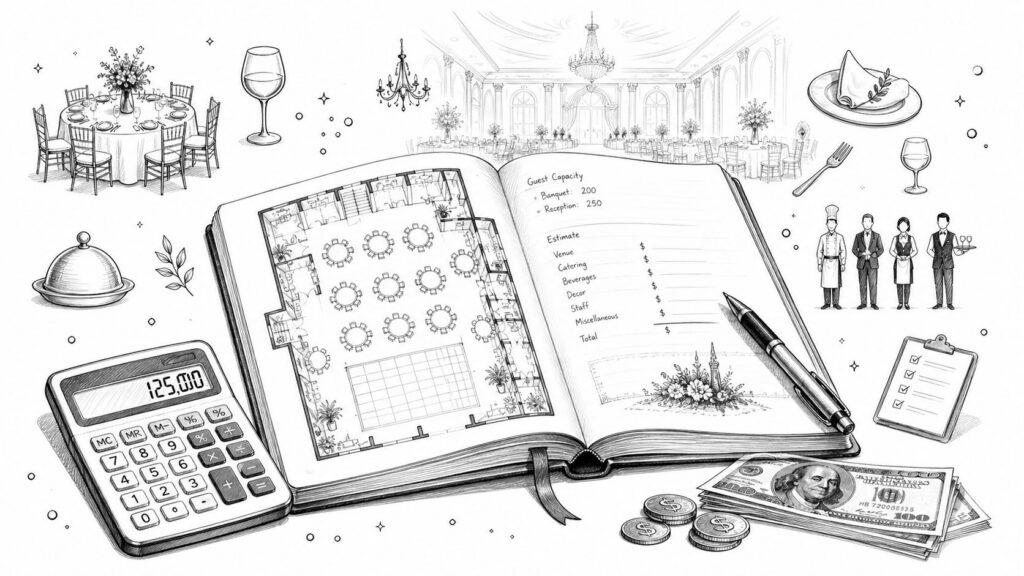
A banquet hall rental in 2026 can cost anywhere from $45 to $500 per hour, while banquet halls in some markets average about $1,200 per hour. That base fee is only one slice of the final bill, because catering, bar service, staffing, taxes, gratuity, equipment, and required minimums can change the economics completely. You're probably asking because a venue quote is sitting in your inbox and the number feels both specific and incomplete. The rental line may look manageable until you add the hours needed for setup, the guest count, food and beverage commitments, and every service the venue doesn't include. For a Central Texas wedding, corporate banquet, quinceañera, or milestone celebration, the right question isn't “How much does it cost to rent a banquet hall?” Ask instead: What will this event cost after the venue delivers everything I need? Table of Contents What Banquet Hall Rentals Actually Cost in 2026 Build the budget in layers What's Included in a Banquet Hall Quote The venue and access lines Staffing, food, and beverage Inventory and add-ons The Biggest Factors That Drive the Price Capacity changes more than the room Date and day of week create demand pressure Location affects the same square footage Amenities decide whether the quote is honest How Central Texas Halls Compare on Cost Three Sample Budgets for Real Events Wedding scenario Corporate banquet scenario Quinceañera scenario Why Transparent Pricing Beats the Lowest Headline Audit the contract, not the brochure Smart Ways to Lower Your Total Cost Planning Your Next Step With Confidence What Banquet Hall Rentals Actually Cost in 2026 Start with the rental model, not the advertised package name. Neutral pricing guidance places banquet hall rentals across a broad $45–$500-per-hour range, with mid-sized properties often clustering around $150–$500 per hour. A national 2026 pricing guide reports that banquet halls average about $1,200 per hour, with rates ranging from $200 to $3,800 per hour depending on location, amenities, guest count, and included services. See the national 2026 event-space pricing guide for that market-wide comparison. For a first-time planner mapping a 150-guest Central Texas wedding, a $1,500–$7,500 rental quote can be a practical working band for the site fee, depending on the day, hall size, access window, and what the contract bundles. That figure is not a verified statewide average. It's a budgeting framework for comparing local proposals without mistaking the room fee for the event total. Build the budget in layers Treat the quote as a stack: Venue access: The room, grounds, rental period, and exclusive use. Operational delivery: Tables, chairs, linens, setup, breakdown, manager, security, and cleaning. Guest experience: Catering, bar service, cake service, entertainment, and décor. Financial obligations: Taxes, gratuity, service charges, deposits, insurance, and minimum spends. All-in event spending can commonly land between $8,000 and $45,000 once catering, bar service, staffing, taxes, and gratuity are included. That range is a practical planning band rather than a national statistical average, and it reflects how dramatically a simple room rental differs from a full-service wedding or banquet package. Practical rule: Compare the final contracted total, not the first number in the brochure. A wedding venue benchmark places the average U.S. venue cost at $8,573 in 2025, while another industry guide puts the broader 2026 national average at $13,200. The contrast itself is useful. Wedding venue cost data shows why geography, capacity, and bundled services matter more than a single national average. For Central Texas buyers, use the rental quote as the starting checkpoint. Then ask what it takes to host guests comfortably, serve them efficiently, and leave the property without a second invoice. A useful local reference is the reception hall rental information from Texas Old Town, especially when you're comparing access time, included inventory, and venue operations. What's Included in a Banquet Hall Quote A transparent quote should let you identify the price of the room, the price of serving guests, and the price of operating the event. If those categories are blended into a single “package” without an itemized explanation, you can't compare it fairly with a venue that separates each cost. The venue and access lines The base rental fee covers the physical space and the right to use it for a defined period. Confirm the exact start and end times, because setup and teardown can consume a significant portion of the booking window. Ask whether vendor loading, décor installation, rehearsal access, and furniture breakdown happen inside the paid period or trigger additional hours. A refundable damage deposit protects the venue against damage, missing inventory, or rule violations. It isn't the same as a nonrefundable booking payment. Your contract should state the amount, refund conditions, inspection process, and expected return timing. The quote should also identify: Service charges: An administrative or operational percentage applied to selected services. Sales tax: Central Texas planners should ask the venue to show the applicable Texas sales tax line. The plan for this article references 8.25% in Central Texas counties, but the venue should confirm the exact tax treatment for your contract. Gratuity: Determine whether gratuity is included, separately calculated, or expected on top of a service charge. Overtime: Get the hourly rate for late departures, extended bars, and delayed vendor pickup before signing. The wedding package pricing details from Texas Old Town provide a useful example of the kind of inclusions and pricing structure buyers should look for when auditing a proposal. Staffing, food, and beverage Staffing minimums often include an event captain, servers, bartenders, security, and cleanup personnel. The venue may calculate staffing against guest count, service style, alcohol service, or event complexity. A plated dinner usually requires more coordinated service than a buffet, while a hosted bar can require bartenders for the full reception period. Bar pricing usually follows one of two structures. Per-consumption billing charges for what guests drink. A hosted minimum requires the event to reach a predetermined beverage spend whether or not guests consume that amount. Ask whether the minimum includes bartender labor, mixers, glassware, ice, and nonalcoholic drinks. Catering minimums

How to Plan Corporate Events That Deliver Real Results

You've got a sales kick-off confirmed eight weeks out, a leadership offsite booked six weeks ago, and both events have landed on the same team's calendar. The budget hasn't expanded, key speakers are still being confirmed, and the venue shortlist keeps changing because every decision affects the next one. That's the practical reality behind how to plan corporate events. Corporate planning rarely follows the leisurely timeline used in wedding guides or long-lead conferences. One industry compilation reports that the average corporate event took 8 weeks to plan in 2023, while 60% of companies planned within 4 to 6 weeks (Sweap event planning statistics). A successful plan therefore starts with priorities, not decoration. Table of Contents The Shape of a Corporate Event Plan Work backward from the outcome Defining Objectives, Audience, and Budget Decide what the event must achieve Build the budget around control points Building the Timeline and Master Checklist Twelve weeks or more Eight to twelve weeks Four to eight weeks One to four weeks Event week Choosing the Venue, Floorplan, and AV Setup Start with the room, then test the show Catering, Bar, Transportation, and On-Site Staffing Design the attendee journey Staff for ownership, not headcount alone Contingency Planning for Weather, Tech, and Staffing Gaps Write the trigger and response together Post-Event Follow-Up and Measuring ROI Use one post-event report The Shape of a Corporate Event Plan A sales kick-off is eight weeks away, the leadership offsite is six weeks out, and both depend on the same operations team. The budget is fixed, speakers are not final, and one venue decision can force changes to catering, AV, travel, and staffing. Under that pressure, the plan must connect decisions instead of treating each workstream as a separate project. Corporate events can operate at meaningful scale. Industry reporting places average attendance at 475 people, with events of 1,000 or more attendees representing 18% of events and international attendees accounting for 18% of attendance in 2023 (Sweap event planning statistics). The figures do not dictate a large venue for every event. They do require early decisions about capacity, travel, accessibility, communication, and movement between rooms. Work backward from the outcome Write the business result in one sentence. A sales kick-off may need to align the team around a new strategy and increase confidence in executing it. A leadership offsite may need to resolve stalled decisions across departments. A client event may focus on stronger relationships, qualified conversations, or a commercial objective. Then order the plan by decisions that can invalidate later work: Objective: What must attendees understand, decide, do, or change? Audience: Who needs to attend, and how does the role mix affect the format? Budget: Which costs are fixed, which can move, and where is the reserve? Timeline: What must be contracted now because delay makes it expensive or unavailable? Venue and AV: Does the space support the agenda, sightlines, power, sound, and movement? On-site operations: Who owns registration, catering, transport, speakers, vendors, and changes? Contingencies and measurement: What happens when something fails, and how will value be shown? Venue and on-site logistics usually save more time than late creative refinements. A guide on maximise corporate event impact is useful when business outcomes and attendee experience compete for the same budget. The master plan should also assign responsibility for vendor coordination, schedule control, and day-of decisions. A clear outline of event manager responsibilities helps prevent ownership gaps. Practical rule: If a decision does not affect the objective, guest movement, safety, budget, or measurement, it should not outrank those decisions on a compressed timeline. The U.S. events market was estimated at about $302.7 billion in 2025, while the global events industry was valued at roughly $1.4 trillion (BoomPop event management statistics). The scale explains why corporate planning requires disciplined operations. Time is saved by setting priorities early. It is wasted when departments build disconnected versions of the same event. Defining Objectives, Audience, and Budget A budget isn't useful until it reflects the audience and the objective. Treat those three decisions as one design exercise. Suppose a sales kick-off has 120 attendees, runs for three days, and needs to align the team around Q2 strategy while motivating the sales group. A practical outcome measure could be a confidence score collected before and after the event. The number of attendees matters because it affects room size, food service, transportation, seating, and the amount of time required for registration. The audience mix matters too. Executives may need a private working room, while individual contributors may need classroom seating, hands-on sessions, or structured networking. Decide what the event must achieve Write the objective so the producer can make a decision without calling another meeting. “Make the team feel motivated” is too broad to guide a venue or agenda. “Align the sales team around Q2 priorities and measure change in rep confidence before and after the event” gives the content team, facilitator, and measurement owner a shared direction. Use three questions: What should attendees know? This defines content and speaker requirements. What should attendees do? This shapes workshops, commitments, and follow-up. What evidence will show progress? This determines the pre-event and post-event survey design. A larger audience isn't automatically better. Recent industry coverage says planners are shifting toward ROI and engagement metrics rather than simple headcount, with practical attention moving toward attendance quality and post-event follow-through (Conference News corporate event trends for 2026). That supports a selective guest list when a smaller group can make better decisions or have more relevant conversations. Build the budget around control points Separate expenses into fixed and variable categories. Fixed costs usually include the venue, food and beverage minimums, audiovisual scope, transportation commitments, and required staffing. These are the lines that can force a redesign if they exceed the approved budget. Variable costs include giveaways, entertainment, decorative elements, upgraded menus, and optional activations. These are safer places to reduce spend because they can often be simplified without changing the event's core purpose. Keep a 15% to 20% contingency line

What to Do if It Rains on Your Wedding Day

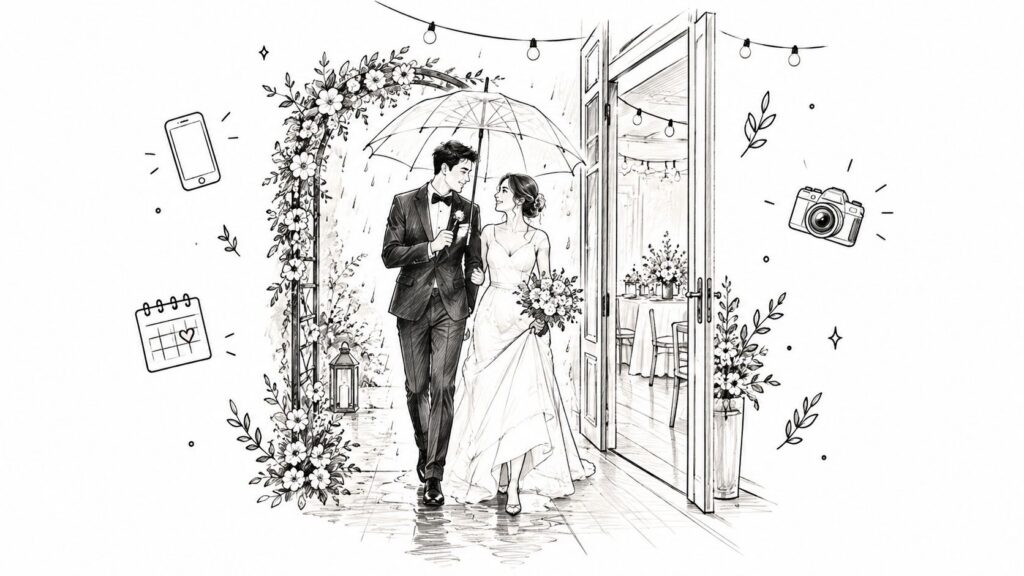
You've checked the weather app again, and the forecast still shows rain. Your ceremony is outside, the flowers are designed for an arbor, and nobody has clearly said whether the indoor room is reserved, who makes the final call, or how guests will hear about a location change. That uncertainty is more stressful than the rain itself. The answer to what to do if it rains on your wedding day is operational, not sentimental. Set a decision time, assign one person to communicate it, confirm the indoor layout, and give every vendor the information they need to work quickly. Once those pieces are documented, you and your partner can focus on getting married instead of managing wet chairs, altered access routes, and confused guests. Table of Contents Reframing Rain From Disaster to Planning Variable Treat the plan as part of the design Setting a Clear Weather Decision Threshold Use a written trigger Keep flexibility under control Running the Indoor Ceremony Switch Build the room around the guest experience Keep the visual transition intentional Reworking the Timeline and Vendor Logistics Give every vendor a specific adjustment Use access time as weather insurance Adjusting Decor and Photography for Wet Weather Protect the photography plan Embracing the Moment and Final Takeaways Your quick-reference rain checklist Reframing Rain From Disaster to Planning Variable Ten days before a wedding, a weather app is useful for identifying anxiety, not for making the final call. Forecasts shift, rain may arrive earlier or later than predicted, and an outdoor plan can look threatened long before the conditions are clear enough to act on. Couples often lose valuable planning time by refreshing the forecast while leaving the actual contingency undefined. Rain also carries meanings that have nothing to do with failure. Folklore collected by Dartmouth's Folklore Archive describes Italian traditions that interpret wedding rain as good luck connected with fertility and growth. American folk belief often treats it as cleansing, a symbolic fresh start. You don't have to adopt either interpretation, but both offer a useful reminder: rain isn't automatically a bad omen. Modern planning needs a more practical reframing. Monsoon's analysis of 86 years of official Met Office rainfall data found that rain risk varies sharply by date. In the example provided, June 15 had a 21.84% chance of rain, while June 29 had a 14.94% chance, according to the wedding-weather analysis and backup-plan guide. The same data identified April as the driest month on average, at 2.29 mm of daily rainfall, while August averaged 3.09 mm per day, and November 11 was identified as the wettest day of the year in the UK. Treat the plan as part of the design Britain averages about 156 days with measurable rainfall each year, as reported in the same analysis. That doesn't mean every wedding needs to move indoors. It means rain belongs in the original event design, alongside catering access, sound, power, guest flow, and photography locations. A strong venue brief should answer these questions before invitations go out: Indoor ceremony location: Where will the ceremony happen if the outdoor site becomes unusable? Guest movement: Can guests reach the room without crossing exposed grass or standing in a bottleneck? Sound: Is there an indoor PA system, Bluetooth connection, and wireless microphone? Vendor access: Can rentals, catering, florals, and photography equipment use a covered or separate service route? Comfort: Is the backup room climate-controlled and large enough for the planned guest count? A venue with both indoor and outdoor event space gives you more than a shelter. It gives you a second version of the wedding that can be styled, sounded, and timed in advance. Couples comparing options should examine indoor and outdoor event space as one connected operating plan, not as two unrelated rooms. Setting a Clear Weather Decision Threshold Rain becomes difficult when the decision arrives too late. If guests are already arriving, the ceremony team, florist, rental crew, photographer, and venue staff must change course simultaneously. The couple then gets pulled into operational questions that the venue and coordinator should already be answering. Forecasts become substantially more reliable close to the event. Use the planning window beginning around 72 hours before the event to review conditions and set the operating plan, rather than waiting for an emergency conversation on the wedding day. Use a written trigger Set the primary checkpoint at 72 hours before the ceremony. Review rain probability, timing, wind, ground conditions, temperature, and the safety of moving guests through the property. A lower rain probability does not settle the question if strong wind, saturated ground, or lightning makes the outdoor site unsafe. For a clear operating rule, many planning guides recommend switching to the indoor or tented setup at a 70% or higher rain probability, with the exact trigger documented in advance. The wedding rain backup plan guide outlines that threshold and the surrounding procedure. Your venue may set a stricter rule because of drainage, tent limitations, electrical equipment, or the ceremony site. Put the decision process in the vendor agreement or planning document: Who monitors the forecast: Name one person, usually the venue manager or coordinator. Who makes the final call: Choose one decision-maker. The couple can decide, but both partners, parents, and vendors should not be required to reach a group consensus. What triggers the switch: Record the probability, timing, and safety conditions that activate the backup. When vendors are notified: Send the decision immediately at the checkpoint, not after another debate. Where the current plan lives: Keep one shared document or message thread as the source of truth. Operational rule: A rain plan that exists only in someone's memory is not a plan. Put the trigger, decision-maker, room, and notification list in writing. Keep flexibility under control You can preserve an outdoor option without leaving every vendor in suspense. If conditions improve before final setup, allow the outdoor ceremony only if the reversal deadline and decision-maker are already documented. That prevents arguments while chairs, microphones, flowers, and guests are moving. The

How to Plan a Quinceañera on a Budget and Save Smart

A family usually starts with a hopeful number, then adds the dress, the venue, the food, the DJ, the photographer, the flowers, and the little details that seemed harmless at first. Suddenly, the budget is gone before anyone has decided how many guests will attend. If that sounds familiar, take a breath. Planning a quinceañera on a budget isn't about making every part cheap. It's about choosing the parts that matter most and refusing to overspend on the rest. I've watched families in Central Texas create elegant celebrations by making one decision early: they set a firm guest count and choose a venue that fits it. That choice affects catering, tables, chairs, linens, décor, staffing, and even the amount of time vendors need to set up. A 2026 review of 80 real quinceañera budgets found totals ranging from $2,000 to $60,000, with the middle of the group around $15,000 to $20,000 and half of the budgets between roughly $10,000 and $27,000. You can review that real-budget quinceañera cost analysis for the full range. The practical path is straightforward. Decide what must be memorable, build the budget around the guest list, compare venues by their total included value, then negotiate the vendors and protect a contingency reserve. Texas Old Town will appear later as one Central Texas example of how venue capacity, access, and included amenities can influence the final plan, not as the only answer. Table of Contents Introduction to Budget Smart Quinceañera Planning Setting Priorities and Building Your Budget Framework Use the guest list as your first control Put decisions in writing Choosing the Right Sized Venue and Using Included Amenities Compare the full package, not the headline price Check vendor and beverage policies early Smart Ways to Save on Vendors Decor and Food Without Losing Style Control food and entertainment costs Make décor look intentional Use vendor freedom strategically Sample Budget Breakdown and Payment Plan Tips Sample Quinceañera Budget Breakdown by Guest Count Build a payment calendar before booking Final Checklist for a Beautiful Celebration on Budget Introduction to Budget Smart Quinceañera Planning Start with the guest count. Before choosing a theme, ask the birthday girl what she wants guests to remember: the entrance, dress, dance floor, meal, photos, or Hill Country setting. Then set a monthly payment amount that parents can manage without financial strain. That decision controls more than the invitation list. Guest count, venue choice, food, and entertainment drive quinceañera costs, and budgeting guides place typical U.S. celebrations between $5,000 and $20,000. Larger productions can exceed $30,000 or $50,000, as summarized in The Bash's quinceañera budget guide. Compare events with similar attendance and service levels, not a small gathering with a formal celebration for several hundred people. Practical rule: Pick the guest tier before you pick the theme. A 150-person celebration requires more food, seating, table settings, service labor, and floor space than an intimate family event. Choose a right-sized hall, then compare what the venue includes, such as access time, tables, chairs, linens, setup support, and vendor flexibility. One well-fitted venue can reduce several separate rental and labor charges at once. A reported 2019 nationwide platform survey of 525,000 quinceañeras placed average celebration costs at $21,781, or about $28,372 after inflation, according to KPBS coverage of rising quinceañera costs. Use that figure as context, never as a spending target. Sort every idea into three lists: Must protect: Details that define the celebration for your family. Can simplify: Items suited to a standard package, borrowed pieces, or smaller designs. Can skip: Extras that will not change the guest experience or the birthday girl's memories. The goal is deciding where the money should be visible and where it can stay in the bank. Setting Priorities and Building Your Budget Framework Set the guest-count math before you approve a theme or request detailed quotes. Divide the amount your family can spend by the planned number of guests to establish a per-guest ceiling. Test catering, rentals, décor, and service proposals against it. If a quote breaks the ceiling, adjust the guest count, menu, date, or service level before signing. Use this planning framework as a starting point: approximately 20–30% for the venue, 20–35% for food and beverages, 8–15% for photo and video, 8–12% for music or entertainment, and 8–12% for attire. Hold back 5–15% for contingency, as outlined in this budget guide for planning a quinceañera. These bands should follow your priorities. Put more toward photography if those images matter most, or shift money toward a dance production by simplifying favors and décor. Use the guest list as your first control Write every possible guest before cutting the list. Include relatives, friends, court members, church connections, and people your parents expect to invite. Sort those names into definite, possible, and not essential. Do not book a hall or finalize food from a rough count. Venue and catering commonly take about 40–50% of the total budget. The top three categories, venue, catering, and attire, can reach 60–70%. Use those figures with the allocation bands above as one budgeting framework, not as separate rules. A right-sized hall can lower the guest-driven costs attached to meals, seating, linens, décor, and labor. Cutting small favors will not fix an oversized guest list. Put decisions in writing Create a one-page budget showing the total available, target guest count, per-guest ceiling, and contingency reserve. For every category, record the quote, deposit, remaining balance, due date, and person responsible for payment. Ask venues to identify included amenities and access time in writing, because those items can replace separate rental and setup charges. End the priority exercise with three firm choices: One experience the birthday girl cares about most. One category where the family accepts a simpler option. One spending limit no vendor may exceed. That page keeps later decisions tied to the guest count and the value included with the venue. Choosing the Right Sized Venue and Using Included Amenities A lower rental fee doesn't automatically produce a lower event total. An oversized hall

10 Retirement Party Venue Ideas for Texas Celebrations

A retirement party often brings together people who don't normally share a guest list: longtime coworkers, close family, former colleagues, neighbors, and friends from different stages of the retiree's life. The challenge is finding a setting that feels personal without creating difficult logistics for the people you most want there. The strongest retirement party venue ideas should be judged by more than appearance. Atmosphere, guest capacity, indoor and outdoor comfort, schedule flexibility, accessibility, weather protection, vendor control, staffing, parking, and total-cost clarity all shape the experience. Planning guidance recommends booking at least 6–8 weeks in advance, particularly when the event needs a specific date or a venue with flexible spaces. Retirement party planning guidance also notes that gatherings may range from smaller groups of 20–30 guests to celebrations exceeding 100, so the right venue should fit the actual event rather than force every party into the same room. The 11 concepts below organize the decision around the issues that matter most: setting, capacity, rental time, vendors, weather, pricing, staffing, private preparation space, photography, travel, and reception format. Texas Old Town in Kyle provides a useful Central Texas reference, with a 55-acre Hill Country property, four halls, indoor and outdoor options, exclusive access, and practical event amenities. If you're also planning another milestone gathering, this guide to best bridal shower venues offers a related way to compare atmosphere and guest comfort. Table of Contents 1. Rustic Hill Country Ranch Setting Make the landscape work for guests 2. Multi-Hall Venue Complex With Capacity Options Match the room to the retiree 3. Extended Rental Window for Leisurely Celebrations Build a pace that respects the guest of honor 4. Vendor Flexibility and Preferred Vendor Network Ask operational questions before booking 5. Indoor and Outdoor Ceremony Options Protect the plan from Texas weather 6. All-Inclusive Amenities With Clear Pricing Read “included” carefully 7. On-Site Event Management and Professional Staffing Give the manager usable information 8. Dressing Suites and Private Restroom Facilities Plan suite access instead of treating it as storage 9. Scenic Photo Opportunities and Engagement Photo Package Options Create an accessible photo plan 10. Convenient Central Texas Location Along the Austin–San Antonio Corridor Make arrival simple 11. Flexible Indoor Reception Hall for Formal or Casual Themes Design zones around the way people will use the room Retirement Party Venue: 11-Point Comparison Choose the Venue That Makes Retirement Feel Effortless 1. Rustic Hill Country Ranch Setting A Hill Country ranch creates a strong sense of place without requiring elaborate décor. Native grounds, gardens, streams, and water features can give the celebration a Texas identity, especially when the retiree has a connection to the outdoors, ranch life, or the region. Texas Old Town's 55-acre campus illustrates how a large property can provide several scenic settings while still supporting an indoor reception plan. The trade-off is exposure to heat, uneven ground, insects, and longer walking distances. A beautiful outdoor site isn't automatically comfortable for older guests. Keep the ceremony or welcome portion in the cooler morning or late afternoon, and place shaded seating close to parking wherever possible. Make the landscape work for guests Use the scenery as decoration, but don't make guests cross the entire property to enjoy it. Provide shaded areas with fans or misters, clearly marked paths, and seating that offers firm back support. If the event includes a creek, garden, or scenic overlook, treat it as an optional photo destination rather than a required stop. An indoor ceremony or reception backup matters in Central Texas. Confirm how quickly the venue can move indoors if heat, storms, or lightning make the outdoor plan uncomfortable. Ask whether transportation is available between parking, ceremony sites, and the main hall. Practical rule: A ranch venue works best when the scenery enhances the party, not when guests have to work around it. For décor inspiration that complements a rustic setting without covering up the property's character, review these retirement party decoration ideas. Choose simple memory displays, family photographs, or career mementos that connect the retiree to the surroundings. 2. Multi-Hall Venue Complex With Capacity Options A property with several halls gives planners room to match the event's size and personality. Texas Old Town has four distinct venues, including Redbud for gatherings of up to 150 guests, Tejas for up to 320, and Sage and Stone for up to 300 each, according to the venue's published specifications. That range can support a close family dinner, a mixed colleague-and-family celebration, or a larger milestone event without changing properties. The main risk is choosing a room that feels too large. An oversized hall can make a retirement party feel sparse, especially when the guest list is closer to the smaller end of the range. Estimate attendance conservatively, then compare the usable floor plan, not just the maximum capacity. Match the room to the retiree Redbud may suit an intimate dinner with family, close friends, and a focused tribute program. Tejas can support a larger, more distinctly Texas celebration, while Sage or Stone may work better when the event needs separate zones for dining, speeches, photographs, and conversation. Ask for the furniture inventory before signing. Tables and chairs determine whether the room can support banquet rounds, a head table, lounge seating, a slideshow area, or a dance floor. Tour every available hall if the property offers multiple options. The room's finishes and atmosphere should feel consistent with the retiree, whether that means rustic, polished, casual, or career-focused. A multi-hall complex also simplifies planning when the guest list changes. You may not need to redesign the entire event, but you should confirm whether moving to another hall changes the rental terms, amenities, staffing, or layout options. 3. Extended Rental Window for Leisurely Celebrations Short rental windows create pressure before guests even arrive. Vendors unload at the same time, décor teams rush to finish, photographers lose flexibility, and family members may spend the opening portion of the party solving setup problems. A venue offering exclusive access from 8:00 a.m. to midnight, such as

Scroll to Top