Uncategorized

Affordable Wedding Venues Texas: 7 Top Picks for 2026

You find a venue with a site fee that looks manageable. Then the proposal adds tables, chairs, setup, cleanup, security, bartender requirements, and a six-hour access window that forces a rushed timeline. By the time the full total is clear, the "budget" venue is no bargain at all. Affordable wedding venues in Texas need a stricter definition than a low starting price. What matters is the full cost, what is included on day one, and which add-ons are likely to show up later. Couples often get tripped up at this stage because two venues with similar base pricing can produce very different final budgets. That is why this guide looks at value in practical terms. Price brackets matter. Included rentals matter. Vendor flexibility matters. So does enough access time to set up, celebrate, and clean up without paying for extra hours. One venue that regularly comes up in these conversations is Texas Old Town's affordable wedding venue option near Austin and San Antonio. It works well as a case study because couples can compare the listed fee against the pieces that often inflate costs elsewhere. The goal is simple. Help you spot true value, avoid hidden costs, and choose a Texas venue that fits your budget without giving up the wedding experience you envision. Table of Contents 1. Texas Old Town Why it stands out Best fit and trade-offs 2. Chapel Dulcinea Where it saves money 3. The Springs in Katy Who this works for 4. Houston Botanic Garden Private Rentals Best use of the space 5. The Parador What the price really means 6. Zedler Mill Pavilion Where the value shows up 7. The Texas Hall 7 Affordable Texas Wedding Venues Comparison Finding Value Is Your Most Important I Do 1. Texas Old Town Texas Old Town earns the featured spot because it solves the problems that usually make “affordable” venues expensive later. It's a Hill Country campus in Kyle with four separate venues, outdoor ceremony sites, long access hours, and a planning structure that gives couples much more clarity than the usual “starting at” quote. The property includes Tejas, Sage, Stone, and Redbud, with capacities ranging from intimate celebrations up to larger weddings of 320 guests. That matters because couples can match the room to the guest list instead of paying for a space that's too big or squeezing into one that's too tight. On a 55-acre property with water features, streams, and maintained gardens, it also gives you the Hill Country look many couples want without needing to venue-hop for ceremony and reception. Why it stands out The biggest differentiator is the 16-hour exclusive rental window, from 8:00 a.m. to midnight. That's notable in a Texas market where the average venue rental duration is 12 hours, according to Texas wedding industry statistics summarized by WiFiTalents. In practice, that extra time changes the whole day. Vendors aren't rushing load-in, couples aren't getting dressed under pressure, and cleanup doesn't feel like a sprint at the end of the night. Texas Old Town also includes the logistical pieces couples often forget to price out separately: indoor and outdoor PA systems, dressing suites with private restrooms, a prep kitchen with service entry, documented furniture counts, built-in beverage bar infrastructure, large private parking, on-site venue management, cleanup, and furniture breakdown. Practical rule: A venue quote is only affordable if you can understand the full day from setup to breakdown without guessing at add-ons. Another strength is transparency. Texas Old Town emphasizes that quoted pricing includes sales tax and gratuity, and it offers personalized payment plans. That's especially valuable in a market where a 2025 Texas Wedding Industry Survey found that 68% of couples under budgeted by an average of $2,300 because of unquoted fees such as bartender minimums, cleanup penalties, and climate-control add-ons, as noted by Stonehouse Villa's discussion of hidden venue costs. For couples comparing Hill Country options, their own overview of affordable wedding venues near Austin and San Antonio is worth reading because it reflects the same planning-first approach. Best fit and trade-offs Texas Old Town works best for couples who want venue flexibility without losing budget control. You can bring any caterer, which is a major advantage when food costs start climbing, and the venue also keeps a preferred-vendor list for couples who want a shorter shortlist. The trade-off is that pricing isn't posted as a flat public rate, so you need to request a quote or schedule a tour. It's also not a fully all-inclusive model. If you want everything bundled into one invoice, this won't be the simplest option. Still, for couples who care about long access, clear inclusions, indoor and outdoor ceremony options, and fewer surprise charges, it's one of the strongest value plays in Central Texas. Website: Texas Old Town 2. Chapel Dulcinea If your ceremony is the emotional centerpiece and the reception can happen elsewhere, Chapel Dulcinea is one of the smartest budget moves in Texas. It's an open-air limestone chapel on an Austin bluff with Hill Country views, and the ceremony site fee is $0. Couples reserve a 90-minute slot online, with a refundable no-show fee used to hold the time. That structure makes it very different from a full-service venue. You're not paying for a ballroom, a full-day rental, or bundled staffing. You're getting a beautiful ceremony setting, access to the Spence Pavilion, two private dressing rooms, and a process that's straightforward to book. Where it saves money This is the kind of venue that works when you're intentionally separating the wedding into pieces. Ceremony here. Dinner or reception somewhere else. That can be a very effective way to control costs, especially for smaller celebrations, elopements, or weddings where photography and vows matter more than a large formal reception setup. Texas also has a growing micro-wedding segment. The Facebook group post cited in the verified data notes that current content often misses micro-wedding packages under $5,000 and the need for flexible timing. Chapel Dulcinea fits that conversation because it's lean by

Top 7 Texas Wedding Venues Hill Country for 2026

Finding the right Hill Country venue usually starts the same way. You open six tabs, save a dozen Instagram posts, and realize every place looks gorgeous at sunset. Then the important questions hit. Can your guests get there easily, will the rain plan still feel beautiful, and are you comparing actual costs or just teaser pricing? That's where most couples get stuck with Texas wedding venues in the Hill Country. The scenery is easy to fall in love with. The logistics are what make or break the weekend. In this part of Central Texas, those logistics matter even more because the market is dense, demand is high, and venues can look similar online while operating very differently in practice. Dripping Springs alone grew from a single venue two decades ago to more than 35 venues within a 15-square-mile radius, and that corridor now hosts about 1,000 weddings a year, according to Texas Monthly's report on Dripping Springs' wedding industry. That concentration gives couples real choice, but it also means you need a sharper filter than “pretty views.” This guide is built for that moment. It starts with a practical venue framework, then moves into seven strong options, with a deeper spotlight on Texas Old Town so you can see how an experienced planner evaluates a property beyond the photo gallery. Table of Contents How to Choose Your Perfect Texas Hill Country Venue 1. Finalize Your Guest Count & Budget 2. Match the Venue Style to Your Vision 3. Prioritize Your Ideal Ceremony Indoor vs Outdoor 4. Understand the Inclusions & Policies 1. Texas Old Town Why It Stands Out Best Fit 2. Camp Lucy Where It Excels 3. The Addison Grove Planning Notes 4. Canyonwood Ridge Why Planners Like It 5. Ma Maison Where It Shines 6. The Arlo Who It Serves Best 7. Prospect House Style and Trade Offs Texas Hill Country Wedding Venues, 7-Venue Comparison From Venue Tour to I Do Your Next Steps Venue Spotlight A Deeper Look at Texas Old Town The Ultimate Booking Checklist & Timeline Frequently Asked Questions How to Choose Your Perfect Texas Hill Country Venue Before you tour anything, get honest about what matters most. Couples waste time visiting venues that were never right for them because they started with aesthetics instead of fit. A good shortlist should already match your budget, guest count, travel pattern, and tolerance for coordination work. The Hill Country has a wide range of pricing and venue styles. All-in wedding costs in the region typically range from $8,000 to $35,000, while venue rental fees commonly fall between $3,000 and $15,000 depending on location, amenities, and season, based on this Hill Country venue pricing overview. That spread is exactly why “it depends” isn't a useful planning strategy. 1. Finalize Your Guest Count & Budget Guest count decides almost everything. It affects venue fit, catering minimums, parking pressure, bar setup, room layout, and whether the dance floor feels lively or empty. Don't shop for a venue as if your guest list is flexible if it really isn't. If you're inviting a larger crowd, capacity ceilings matter fast. Vista West Ranch is listed at about 350 guests, Camp Lucy at around 300, and venues like Ma Maison and The Milestone around 250, according to the same regional venue and pricing summary. Even when a venue can technically hold your number, I always tell couples to ask what the room feels like at that count, not just what the legal maximum says. Practical rule: Build your venue budget around the full event footprint, not the rental line alone. If a venue looks affordable but pushes you into extra rentals, transportation, or restricted vendors, it may stop being the deal you thought it was. 2. Match the Venue Style to Your Vision The Hill Country can do rustic, polished, modern, European-inspired, and resort-style very well. What it doesn't do well is becoming the opposite of what it already is without a lot of money. If you want crisp modern architecture, don't force a ranch venue to act like a gallery. If you want warm Texas character, don't choose a blank white room and then spend your floral budget trying to soften it. A venue should carry part of the visual load for you. Mature oaks, limestone, clean interior lines, historic buildings, or a dramatic dance hall can all save money because they already give the day a point of view. 3. Prioritize Your Ideal Ceremony Indoor vs Outdoor Texas weather asks for humility. Couples love an outdoor ceremony until the forecast says wind, heat, or rain. The key question isn't whether a venue has a backup. Almost all strong venues do. The primary question is whether you'll still feel good getting married in that backup location. Some venues have an indoor option that feels intentional. Others have a backup that feels like tables got shoved aside at the last minute. Ask to see photos of both setups. Ask where guests wait if the weather changes late. 4. Understand the Inclusions & Policies Two venues can quote similar prices and deliver very different planning experiences. One may include furniture, setup, cleanup, sound equipment, dressing suites, and on-site support. Another may hand you an empty room and a list of restrictions. Neither model is wrong, but they are not equal in workload. For families split between Austin and San Antonio, location policy is also part of logistics. Texas Old Town points out a planning gap many venue roundups miss. Kyle sits at the midpoint of the Austin-San Antonio corridor, which helps couples avoid pushing one side of the guest list too far past the airport, as explained in Texas Old Town's guide to Hill Country venue access between both cities. 1. Texas Old Town If convenience matters as much as scenery, Texas Old Town belongs near the top of the list. It's set in Kyle on a Hill Country campus with four distinct halls, so couples can match guest count and aesthetic without

7 Anniversary Venue You Should Know

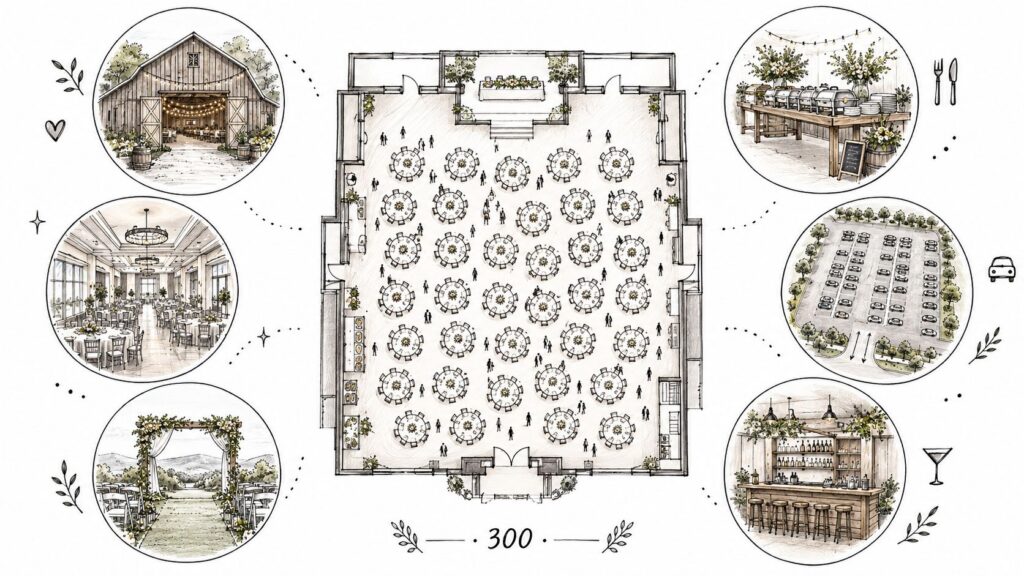
You're probably in one of two situations right now. Either you're planning a milestone anniversary and realizing that a restaurant private room feels too small, too rushed, or too generic, or you're helping parents or relatives host a celebration and need a venue that can handle speeches, dinner, photos, and dancing without turning the day into a logistics problem. That's where the right anniversary venue matters. In the Texas Hill Country and greater Austin area, venue options range from intimate spaces for family dinners to large properties that can host several hundred guests. Regional venue pricing typically falls between average Hill Country venue pricing and capacity benchmarks, and what you pay usually depends on guest count, seasonality, weekday versus weekend timing, and how many services the venue includes. If you're still deciding how guests should move between ceremony, cocktails, dinner, and dancing, this guide to event venue layouts is a useful starting point. This list focuses on venues people often compare for anniversary parties, vow renewals, and milestone family celebrations. The goal isn't to crown one perfect choice for everyone. It's to show where each venue fits best, what practical tradeoffs matter, and which details are easy to miss until you're deep into planning. Table of Contents 1. Texas Old Town Why Texas Old Town stands out Best fit for anniversary planning 2. Camp Lucy Where Camp Lucy fits best 3. The Addison Grove Why planners like the format 4. The Arlo What makes The Arlo easy to use 5. Ma Maison Where the value shows up 6. The Allan House Why city hosts choose it 7. Brazos Hall Best use cases for Brazos Hall Anniversary Venue Comparison, Top 7 Final Thoughts 1. Texas Old Town A common anniversary planning problem looks simple on paper and messy in real life. The family wants Hill Country views, room for dinner and dancing, enough parking, time for setup, and a space that does not feel oversized or cramped. Texas Old Town stands out because it addresses those needs as a venue system, not just a pretty backdrop. The property includes four separate halls with different looks and capacities. That gives you a better chance of matching the room to the event instead of forcing the event to fit one fixed layout. For an anniversary, that matters more than many hosts expect. A 50th anniversary dinner for 90 people feels very different from a 200-guest celebration with a live band, speeches, and a vow renewal. Why Texas Old Town stands out The biggest planning advantage is time. Texas Old Town offers exclusive access from morning through midnight, which changes how the day feels for everyone involved. Setup can happen without rushing vendors through the door. Family photos do not have to compete with catering arrivals. Cleanup happens after the celebration instead of during the last dance. That rental window works like giving a cook a full kitchen instead of one burner. You have more room to sequence the day properly. The four halls also solve a problem many articles skip. Room fit affects energy. Tejas suits a larger guest count and has the classic Texas dance hall character many families want for a milestone party. Sage and Stone give you other visual directions, depending on whether you want something more tucked-away or more polished. Redbud is the useful option for smaller anniversaries, because a right-sized room keeps conversation, toasts, and dance-floor activity from feeling scattered. Included features cover several practical friction points. You get indoor and outdoor ceremony options, a climate-controlled reception area, dressing suites, a prep kitchen, indoor and outdoor PA systems with Bluetooth and a wireless microphone, tables and chairs based on published furniture counts, on-site venue management, cleanup, and furniture breakdown. If your event includes a slideshow, live music, or older relatives who need clear movement between spaces, those details stop being minor and start shaping the whole night. Practical rule: Ask what happens in the last hour. If your family is responsible for breakdown, trash, and vendor exit, a lower venue fee can turn into a longer, harder night. Budgeting is another strength here. The venue says quoted pricing includes sales tax and gratuity, which makes estimates easier to read. It also offers personalized payment plans. Vendor flexibility helps too. Hosts can choose their own caterer, and the beverage setup allows you to provide your own beverages while using an approved bartending company. Best fit for anniversary planning Texas Old Town fits best for Central Texas families planning a larger milestone anniversary with mixed age groups and several moving parts. That might mean grandparents who need easy access to seating, adult children coordinating a slideshow and speeches, and a couple of honor who want space to enjoy the evening instead of spending it in a compressed timeline. Capacity choice is part of that advantage. The halls range from a smaller setting in Redbud to a much larger one in Tejas, so you can choose based on guest count and event style. That is more useful than it sounds. A venue that is too big can make a warm family event feel thin. A venue that is too small creates lines, crowding, and noise problems that are hard to fix once the night starts. However, there are a few tradeoffs. You will need to request pricing instead of comparing flat public rates online. And if you want a venue that bundles beverages into one package, the BYOB structure adds one more coordination step. Even with those limits, Texas Old Town covers the details that often get glossed over. Time on site, staffing, furniture, sound support, parking, and cleanup are part of the planning picture from the start. For anniversary hosts, that usually matters as much as the scenery. 2. Camp Lucy Camp Lucy makes sense when the anniversary isn't just a party. It's a full weekend. Some families want guests to arrive early, stay on property, gather for more than one meal, and turn the event into a shared

Best Texas Wedding Venues: Top Picks for 2026

You shortlist a venue because the ceremony lawn looks perfect at sunset. Then critical questions start. Will 180 guests fit comfortably for dinner? How many hours are included? Can you bring in your own caterer, or are you locked into a short preferred list? If rain moves everything indoors, does the floor plan still work? Those are the decisions that shape the wedding day. In a busy Texas market, strong venues book early and pricing shifts fast, especially around Austin, San Antonio, Dallas, and Houston. Good photos help narrow the search. Clear policies, realistic capacity, and a workable timeline decide whether a venue is a fit. This guide sorts standout Texas wedding venues by region, then compares them the way planners do: rental hours, guest count, vendor flexibility, weather backup, and how the space handles flow from ceremony to cocktail hour to reception. For couples who want a practical starting point before touring, this guide to choosing a wedding venue covers the questions worth asking before you book. Texas Old Town gets a closer look here for a reason. It shows what planner-friendly venue design looks like in practice, with multiple event spaces, clear operational structure, and the kind of logistics that make setup, guest movement, and backup plans easier to manage. Table of Contents 1. Texas Old Town Quick stats Why planners like working here 2. Camp Lucy Quick stats Best fit 3. The Addison Grove Quick stats What works well here 4. Ma Maison Quick stats Where it stands out 5. The Bell Tower on 34th Quick stats Best use case 6. Dallas Arboretum & Botanical Garden Quick stats Planner perspective 7. Hotel Emma at Pearl Quick stats Who should book it Top 7 Texas Wedding Venues Comparison How to Choose and Book Your Perfect Texas Venue 1. Texas Old Town A couple wants Hill Country character, room for 100-plus guests, and enough time on site that hair and makeup, vendor load-in, portraits, ceremony, and cleanup do not pile on top of each other. Texas Old Town is one of the first venues I bring up for that combination. The property sits on 55 acres in Kyle and includes four separate halls, each with its own ceremony site, layout, and capacity range. That matters in practice. Couples can choose a room that fits the guest count and flow of the day instead of paying for space they will not use or squeezing a larger reception into a prettier but less functional floor plan. For a closer look at the venue options on the property, see these Central Texas wedding venues at Texas Old Town. Quick stats Region: Central Texas, between Austin and San Antonio Venue count: Four private halls on one campus Capacities: Redbud up to 150, Sage up to 300, Stone up to 300, Tejas up to 320 Access window: Exclusive use from 8:00 a.m. to midnight Vendor policy: Open caterer policy, approved bartending company required for hosted beverages Ceremony options: Outdoor ceremony sites plus indoor reception halls that can also host the ceremony Why planners like working here The main advantage is operational. A long rental window, private suites, a prep kitchen, indoor and outdoor PA systems, included cleanup, furniture breakdown, and an on-site venue manager solve several timeline problems before they start. Rental hours are a bigger factor than couples expect. At venues with shorter access windows, the florist is waiting on the rental company, the band is sound-checking while family photos are still happening, and setup decisions get rushed because every vendor is working in the same narrow block of time. Texas Old Town gives enough runway to build a calmer day, which usually leads to better photos, fewer delivery conflicts, and less overtime risk. I also like the pricing structure. Quoted rates include sales tax and gratuity, which makes budgeting more straightforward than the standard low-base-price, add-fees-later model. Couples can compare real numbers earlier and decide where to spend more freely on catering, entertainment, or rentals. There are trade-offs. An open catering policy gives couples more food flexibility, but it also means the planner has to confirm service standards, kitchen readiness, insurance, and load-in timing with the chosen caterer. The bar side is more controlled, since hosted alcohol has to go through an approved bartending company. For many couples, that is a fair balance. They get menu choice without turning beverage service into a compliance issue. Texas Old Town works especially well for couples who want venue flexibility without resort pricing and without giving up control of the vendor team. That combination is harder to find than it looks on a venue shortlist. 2. Camp Lucy Camp Lucy works best for couples who want the wedding to feel like a destination weekend instead of a single event block. The property is expansive, the architecture has presence, and the on-site lodging changes the guest experience in a real way. If your families are traveling in, that convenience can outweigh a lot of other trade-offs. It also offers multiple venue looks on one property, which is helpful when couples want a chapel-style ceremony and a different reception setting without changing addresses. Quick stats Region: Texas Hill Country Website: Camp Lucy Format: Resort-style property with multiple event spaces Guest experience: Ceremony, reception, lodging, dining, and amenities on one campus Food and beverage: Strong in-house model Best for: Weekend weddings and high guest travel counts Best fit Camp Lucy's strength is consolidation. Guest rooms, event spaces, dining, and leisure amenities all live on the same property, which reduces transportation planning and makes the weekend feel cohesive. For couples who don't want guests spread across several hotels, that's a strong advantage. The trade-off is flexibility. Venues with strong in-house catering and bar systems usually give you less room to self-manage food and beverage choices. That's not automatically bad. It often means a smoother execution. But couples who want full outside vendor freedom may feel boxed in here. The large campus is beautiful, but it requires intentional scheduling.

Top 7 Texas Outdoor Wedding Locations for 2026

Say “I do” under the Big Texas sky, and the backdrop can do a lot of heavy lifting. Hill Country oaks, lake views, coastal sand, and formal gardens all look fantastic in photos. But pretty isn't enough when you're comparing Texas outdoor wedding locations for a real event with real guests, real weather, and a real budget. Texas is a high-volume wedding market. In 2025, the state recorded 175,052 weddings and generated a $5.53 billion market, with couples spending an average of $31,577 per event, according to KXAN's reporting on Texas wedding costs and city rankings. When budgets are this substantial, venue logistics matter just as much as the ceremony view. This guide gets to the point. You'll find seven strong Texas outdoor wedding locations, with practical venue cards focused on capacity, amenities, backup plans, and policy trade-offs. There's also a closer look at Texas Old Town in Kyle, which stands out for its long rental window and multi-venue setup. If you're choosing between charm and function, the best venues give you both. Table of Contents 1. Texas Old Town Venue card Why it works in practice 2. Dallas Arboretum and Botanical Garden Venue card 3. Houston Botanic Garden – Woodland Glade Venue card 4. Camp Lucy Venue card 5. Ma Maison Venue card 6. The Grand Lady Venue card 7. Margaritaville Beach Resort – South Padre Island Venue card 7 Texas Outdoor Wedding Venues Comparison From Dream to ‘I Do' Your Planning Guide How to Choose the Perfect Texas Outdoor Venue Consider the Season and a Rain Plan Ask About Permits Parking and Power Prioritize Guest Accessibility Outdoor Wedding Timeline & Checklist Your Perfect Texas Venue Awaits 1. Texas Old Town A couple books an outdoor ceremony in Central Texas for a spring Saturday. By the wedding week, the forecast shows wind at the ceremony hour, a guest count that crept up by 40, and a vendor team asking when they can load in. That is where venue structure starts to matter more than the photo gallery. Texas Old Town works well for couples who want Hill Country atmosphere but do not want to build the wedding day from scratch. The 55-acre property in Kyle is organized around four separate venues, Tejas, Sage, Stone, and Redbud, rather than one shared event setup. Each one has its own outdoor ceremony site and its own indoor hall, which gives couples more control over guest flow, weather backup, and privacy. Venue card Best for: Couples who want Hill Country scenery with a defined event system Guest fit: Redbud up to 150, Sage up to 300, Stone up to 300, Tejas up to 320 Outdoor setup: Private ceremony site with seating at each venue Indoor backup: Included on-site, with no off-property room flip required Rental window: Exclusive 16-hour access from 8:00 a.m. to midnight Notable amenities: Dressing suites, private restrooms, vanity areas, prep kitchen, indoor and outdoor PA with Bluetooth hookup, wireless microphone, tables and chairs, beverage bar, large private parking Vendor policy: Flexible catering policy, BYOB with an approved bartending company Operational support: On-site venue manager, clean-up, and furniture breakdown included Why it works in practice The biggest operational advantage is the 16-hour rental. From a planner's side, that extra time changes the whole day. Hair and makeup can start without squeezing the photographer. Rentals can be placed without rushing the florist. If the ceremony runs late or sunset photos take longer than expected, the reception does not immediately fall behind. The four-venue model also solves a problem couples often overlook during tours. Guest counts move. Ceremony plans change. Families ask to add people. A venue with only one layout can start to feel tight or oversized once the final RSVP number comes in. Here, there is a clearer fit by event size, and each space keeps the same basic advantage: outdoor ceremony, indoor reception, one property. Policy clarity helps too. Texas Old Town does not list flat pricing publicly, so couples will need to request a quote. In practice, that is a trade-off, not a dealbreaker. What matters more is whether the venue explains what is included, who handles cleanup, what the alcohol rules are, and how teardown works. Hidden labor and bar costs are where outdoor wedding budgets usually drift. Practical rule: Ask for the full operating picture, not just the site fee. Setup time, breakdown responsibility, staffing, alcohol service, and rain backup affect the real budget more than the starting number. The BYOB structure is another point couples should evaluate early. Some prefer it because they can choose what to serve and control beverage costs more closely. Others would rather have an in-house package and one fewer moving part. Neither approach is automatically better. It depends on whether you want flexibility or simpler bar administration. For ceremonies outside, the venue's planning resources are useful. Their outdoor ceremony planning tips line up with what I tell clients in Texas: confirm shade, confirm sound coverage, and confirm the weather backup in writing before invitations go out. Texas Old Town is a strong fit for couples planning 150-plus guests, couples who want a real rain plan, and couples who need a venue that can support a full wedding day instead of a compressed booking window. The main trade-offs are inquiry-based pricing and a bar setup that requires more decision-making from the couple. For many outdoor weddings in Central Texas, that is a reasonable exchange for time, flexibility, and a cleaner event flow. 2. Dallas Arboretum and Botanical Garden For couples who want a polished garden wedding with strong institutional support, the Dallas Arboretum is one of the safest choices in the state. It gives you the visual payoff of a destination-style garden event without requiring a blank-canvas buildout from scratch. The appeal here is range. You're not booking one lawn and hoping it fits. You're choosing from a broad campus with formal gardens, shaded spaces, and lake-facing views. Venue card Best for: Couples who want a formal garden setting with established

Top 7 Event Center Austin Picks for 2026

You've scrolled through beautiful galleries, saved screenshots, and probably built a shortlist based on lighting, ceremony backdrops, and whether the room feels “Austin enough.” That's normal. It's also how people end up choosing a venue that photographs well but creates day-of problems with load-in timing, parking, vendor restrictions, or a rental window that squeezes setup and teardown into the same stressful afternoon. Choosing the right Event Center Austin option goes deeper than aesthetics. Budget clarity, guest flow, indoor-outdoor flexibility, and how much coordination the venue absorbs matter just as much as the look. This guide compares seven strong picks through a planner's lens so you can judge what affects event-day success. If you're also thinking about how venues get discovered online, Virtual Tour Easy explains virtual tour SEO. Table of Contents 1. Texas Old Town Why planners keep this one on the shortlist Best fit and trade-offs 2. Palmer Events Center Where Palmer works best 3. Fair Market What to watch before you book 4. 800 Congress Best use case 5. The Allan House Where the charm helps and where it doesn't 6. The LINE Austin 7. The Driskill The practical trade-off 7 Austin Event Centers Comparison From Shortlist to Signed Contract Your Next Steps 1. Texas Old Town A common Austin-area planning problem looks like this. Vendors need early access, family wants time for photos, the couple wants an outdoor ceremony, and guests still need parking that does not turn arrival into a scavenger hunt. Texas Old Town earns shortlist status because its setup solves several of those friction points at once. The venue is on a 55-acre Hill Country campus in Kyle with four private halls and outdoor ceremony areas. In practice, that gives planners more control over flow. Arrival, ceremony, cocktail hour, portraits, and reception can happen in separate zones without forcing guests through tight resets or long transitions. The biggest advantage is the rental window. Every booking includes a 16-hour exclusive rental period from 8:00 a.m. to midnight. That extra time changes the budget math. It can cut rush delivery fees, reduce overtime risk, and give catering, floral, photo, and entertainment teams enough space to work in sequence instead of stacking load-in at the same hour. Why planners keep this one on the shortlist Texas Old Town works well for hosts who want flexibility without starting from a blank warehouse. The campus includes Tejas, Sage, Stone, and Redbud, with room for mid-size to larger guest counts depending on the hall and whether the event uses both indoor and outdoor areas. For couples comparing options, this wedding venue selection guide is useful because it frames the questions that affect cost and execution. The practical details matter here: Vendor flexibility: Outside catering is allowed, which gives you more pricing range and menu control than venues tied to one food package. A prep kitchen and separate service entry also help back-of-house timing. Bar setup: Hosts can provide their own beverages, but service must go through an approved bartending company. That often saves money on alcohol, but it adds one vendor approval step. On-site support: A venue manager is present during the event, and cleanup plus furniture breakdown are included. That reduces the amount of labor your planner or family has to cover late at night. Pricing clarity: The quoted rate includes sales tax and gratuity with no hidden fees, which makes side-by-side budget comparison easier. One planner rule applies here. Long rental windows do not just buy comfort. They prevent expensive mistakes. Best fit and trade-offs This venue fits weddings, quinceañeras, milestone parties, and company events that need indoor-outdoor options on one private property. It is also a practical choice for guest lists that would struggle with downtown parking, multiple room flips, or tight access rules. The trade-offs are manageable, but they are real. Exact pricing still depends on your date, hall, and setup, so the shortlist process requires a quote request and site visit. The bring-your-own beverage model can lower the total bar spend, but only if someone on the planning side tracks alcohol purchasing, bartending requirements, and service timing carefully. Texas Old Town also brings a long operating history, including Hall of Fame recognition from 2013 through 2022. I would not book any venue based on awards alone, but consistent longevity usually signals a team that understands event-day execution, not just marketing photos. 2. Palmer Events Center If your event center Austin search is really about scale, Palmer Events Center usually makes the shortlist fast. It's a city-run facility near Butler Park, and its main strength is a footprint that can flex for large galas, conferences, trade shows, and social events that need production room rather than atmosphere doing the heavy lifting. The venue offers divisible, column-free exhibit space, covered outdoor canopies, and upstairs meeting rooms. On paper, that combination is excellent for programs with registration, breakout needs, sponsor activations, or separate reception flow. Where Palmer works best Palmer is easiest to justify when your event is complex enough that infrastructure matters more than built-in character. The adjacent parking garage is a practical advantage, especially compared with venues that expect guests to fend for themselves block by block. If your event may outgrow a boutique venue, it's worth comparing your needs against larger event venue formats in Central Texas. What doesn't work as well is assuming a city-operated venue will feel turnkey. It usually won't. The flexibility is real, but so is the coordination. Modular rental structures often mean the base booking is only part of the total, especially once equipment, utilities, and production support enter the picture. Palmer rewards organized planners. It can punish vague budgets. Traffic is the other factor. The location is convenient until load-in overlaps with downtown congestion, city events, or peak arrival times. For polished corporate programs, that's manageable. For guest-driven social events where people arrive on their own schedule, it requires stronger communication than many hosts expect. Use Palmer when you need a big box that can become almost anything.

Your Reception Schedule Template for a Flawless Event

Most reception advice starts from the wrong assumption. It assumes your job is to fit everything into a standard evening block. That works if your venue only gives you a narrow window. It doesn't work nearly as well when you have all-day access and enough room to pace the event properly. In that setting, copying a generic reception schedule template often creates two bad outcomes: either the day still feels rushed for no reason, or the extra hours get filled with loose, unplanned downtime that makes the event feel disjointed. A better approach is to treat time as structure, not filler. If your venue gives you a long rental block, use it to separate setup from guest time, protect photo time, build in vendor breathing room, and keep the actual reception moving with purpose. The reception itself should still feel lively and well-timed. The difference is that the pressure moves out of the guest experience and into a smarter plan. Table of Contents Why Standard Reception Templates Fail at Modern Venues The Building Blocks of a Flawless Reception Timeline What each reception block is doing How the blocks should connect Downloadable Timelines for Weddings Quinceañeras and Corporate Events Classic wedding evening flow Extended wedding flow with room to breathe Quinceañera celebration flow Corporate gala and awards dinner flow Adapting Your Timeline to Your Texas Old Town Venue Match the hall to the pace of the event Use movement intentionally The Vendor Coordination Checklist Your Timeline Needs The handoff points that matter most What to send vendors before the event Building a Rock-Solid Weather Contingency Plan Make the indoor plan real Keep communication simple Why Standard Reception Templates Fail at Modern Venues The internet is full of reception schedule template examples built around one familiar model: a short, tightly packed evening. That's useful up to a point, but it leaves a major planning gap for clients using venues with longer access windows. The mismatch is real. Existing reception schedule templates overwhelmingly assume a 4 to 5 hour standard window, leaving couples with longer venue rentals without much guidance on how to use that extra time well. The average wedding reception lasts 5 hours, and over 30% of Reddit users report confusion when their timeline depends on venue rental length rather than a fixed duration, according to The Knot's traditional reception timeline discussion. That confusion usually shows up in one of two ways. First, people compress the day anyway. They have a long rental, but hair and makeup run late, decor setup overlaps with family arrivals, photos get squeezed, and the reception still starts with everyone already feeling behind. Second, they stretch a short template into a long day without changing the logic. That creates dead air. Guests wait too long between ceremony and dinner. Formalities stack up. The dance floor opens too late. Vendors stand by for cues that should have been decided earlier. Practical rule: A longer rental should make the event feel calmer for guests and easier for vendors. It should not make the reception itself slower. A good plan separates the all-day venue access from the guest-facing momentum. Those are not the same thing. You might use morning and early afternoon for setup, private meals, detail photos, rehearsed entrances, and protected family time. Then you let the reception run with a clear rhythm once guests arrive. Here's the trade-off in plain terms: Planning approach What happens in real life Standard short template copied as-is Important moments get rushed Long day with no structure Guests feel gaps and drift Purpose-built long-rental plan Setup feels relaxed, reception still feels sharp The best timelines don't ask, "How do we fill sixteen hours?" They ask, "Which parts of the day deserve space, and which parts should stay tight?" That's the shift that makes a long-rental venue work in your favor. The Building Blocks of a Flawless Reception Timeline A reception schedule template works best when you stop treating it like one rigid script and start treating it like a set of modules. Every strong timeline uses the same core pieces. What changes is the spacing, the order of a few moments, and how much pressure you put on each block. As a baseline, the average wedding reception lasts approximately 5 hours, usually with a 1-hour cocktail reception followed by 4 hours for dinner and dancing. Within that framework, the grand entrance often takes 10 to 15 minutes, dinner service runs 60 to 90 minutes, and toasts are kept to 15 to 20 minutes in this reception timeline guide. That baseline matters because it gives you a reference point. You don't have to copy it exactly, but you should understand what each part is supposed to accomplish before you start moving pieces around. What each reception block is doing Cocktail hour is a transition tool. Guests need a place to land after the ceremony. This is when the bar opens, passed appetizers or light bites do their job, and the couple can finish any last photos without making guests feel parked. Grand entrance creates a clean reset. It signals that the event is moving from mingling into hosted celebration. If it drags, the room loses lift before dinner even begins. Dinner service does more than feed people. It stabilizes the room. If guests are seated efficiently and served on time, everything after dinner gets easier. If dinner starts late, every later event gets squeezed. How the blocks should connect The middle of the evening is where many timelines wobble. Toasts, blessings, welcome remarks, first dances, parent dances, cake cutting, and open dancing can either build momentum or stall it. I generally advise clients to think about these moments in three categories: Energy-building moments like the entrance and first dances Seated moments like dinner and toasts Release moments like opening the dance floor and late-night fun The best reception schedule template doesn't cram every tradition into one cluster. It spaces formal attention and social energy so guests never feel trapped in their chairs

Best Wedding Venues Kyle TX: Your 2026 Planning Guide

You've probably opened fifteen tabs already. One venue looks gorgeous at sunset, another seems affordable until you start wondering what the quote doesn't include, and a third has the right style but vague policies on catering, bar service, cleanup, and timing. That's the point where venue shopping stops feeling fun and starts feeling like project management. Kyle is a smart place to look when you want Hill Country atmosphere without guests traveling to a far-flung destination. It sits in a practical corridor between Austin and San Antonio, and that matters more than most couples realize at the start. Guest travel, vendor access, rehearsal logistics, hotel blocks, and end-of-night transportation all get easier when the map works in your favor. The bigger issue is this: most guides to wedding venues in Kyle TX focus on scenery, ceremony backdrops, and reception photos. Those matter. But the venues that feel easy on the wedding day are usually the ones that solved the operational details long before the first guest arrived. Table of Contents Starting Your Search for the Perfect Kyle Wedding Venue Start with the decisions that affect the whole day Decoding the Kyle TX Venue Landscape How to narrow the field quickly What venue style changes in practice The Hill Country Decision Indoor vs Outdoor Ceremonies What outdoor weddings do well Why indoor plans often feel calmer Crafting Your Kyle Wedding Budget and Timeline How to read a venue quote correctly A practical booking timeline Spotlight A Tour of Texas Old Town's Four Venues A side by side look at the halls How each hall fits a different wedding The Hidden Logistics That Ensure a Stress-Free Day What couples ask too late What a well managed venue changes Final Questions for Your Kyle Wedding Venue Questions worth asking before you sign What gives couples confidence Starting Your Search for the Perfect Kyle Wedding Venue Most couples don't begin with a clean spreadsheet and a perfectly ranked shortlist. They begin with a mood board, a guest estimate that keeps changing, and a lot of uncertainty about what matters once the wedding day is in motion. That's normal. In practice, the venue search gets easier when you stop asking, “Which place is prettiest?” and start asking, “Which place will still feel workable at 10:00 a.m. during setup, at 5:30 p.m. when the ceremony starts late, and at the end of the night when everyone is tired?” The prettiest venue in photos can become the hardest one to manage if its policies create friction all day long. Kyle gives couples a strong mix of Hill Country character and accessible geography. It works well for local weddings, hybrid guest lists, and families pulling people from both the Austin and San Antonio sides. That convenience helps, but it doesn't replace due diligence. Before touring, it's worth reviewing a practical venue selection checklist like this guide on how to choose a wedding venue, because the right questions save more stress than the right Pinterest board. Start with the decisions that affect the whole day I advise couples to lock in four basics before falling in love with a space: Guest count reality: Not your dream number. Your likely number. Indoor fallback: Not whether a venue has one, but whether it's somewhere you'd want to marry. Vendor freedom: Especially catering and bar service. Rental window: Enough time for setup, celebration, and breakdown without rushing every vendor. Practical rule: If a venue makes simple logistics sound complicated during the tour, they won't become simpler on the wedding day. A good Kyle venue should function like a partner, not just a backdrop. That's the standard worth keeping in mind from the start. Decoding the Kyle TX Venue Landscape A couple tours three Kyle venues in one Saturday and comes home with the same reaction every time: all of them looked good, and none of the comparisons felt clear. That usually happens because they are comparing style before they compare operations. Kyle gives you several distinct venue models. Some are simple space rentals with a lower starting price and more self-management. Some are polished properties with stronger infrastructure, clearer process, and more on-site support. The hard part is not finding attractive options. The hard part is figuring out which one will still feel manageable once contracts are signed, vendors are booked, and the wedding day is in motion. How to narrow the field quickly The fastest filter is the venue's operating model. That means asking how the property runs a wedding. Does it allow outside catering, or are you working from a short approved list? Is bar service bundled, restricted, or fully flexible? Who manages ceremony-to-reception transitions? How much setup time is included before your florist, planner, DJ, and rental team start paying for extra hours? Couples who sort venues this way usually get to better finalists faster than couples who sort only by architecture or photo appeal. If you are still weighing ceremony format at the same time, this guide on indoor versus outdoor weddings in Texas helps frame the decision around guest experience and backup-plan quality. Here's the first filter I use with clients: Venue type Usually suits Watch for Rustic barn or dance hall Larger guest lists, relaxed celebrations, strong dance floor energy Heat control, acoustics, rain backup quality Stone manor or estate Formal or semi-formal weddings, classic photo style Vendor restrictions, room flow, parking distance Garden or outdoor-forward venue Nature-driven ceremonies, softer visual style Weather exposure, ground conditions, lighting after sunset Hybrid indoor-outdoor property Couples who want flexibility without losing atmosphere Whether both ceremony options feel equally intentional What venue style changes in practice Style changes the work behind the scenes. A rustic hall with direct access to the ceremony site can save real time during transitions and simplify audio coverage. A large estate may photograph beautifully but create longer walks, more staffing needs, and harder logistics for grandparents or guests in heels. A hybrid property can be the most forgiving choice, but only if the indoor

Best Rehearsal Dinner Venues Austin for 2026

Finding the perfect start to your wedding weekend means balancing emotion with logistics. Your rehearsal dinner isn't just a meal. It's where families meet, the wedding party exhales, and the whole weekend starts to feel real. In Austin, that's the hard part. There are plenty of beautiful rooms, patios, and restaurants, but not every space handles speeches well, not every private dining setup gives you enough time, and not every venue is easy for grandparents, vendors, or a mixed-age guest list. The best rehearsal dinner venues in Austin work on two levels. They feel special, and they operate cleanly behind the scenes. You need the right room size, a realistic rental window, a plan for weather, and a venue team that won't make simple coordination harder than it needs to be. That's where couples usually get stuck. This guide keeps the focus where planners keep it. Capacity, privacy, AV, layout flexibility, vendor policy, and how each venue functions for a live event. If you're comparing rehearsal dinner venues Austin couples use, these are the spots I'd put on the short list first. Table of Contents 1. Texas Old Town Why planners like it 1. Texas Old Town Why planners like it 2. Mattie's at Green Pastures Best fit 3. Hestia Where it works best 4. Lenoir What to watch 5. Eberly Planner take 6. Lamberts Downtown Barbecue Who should book it 7. Il Brutto Good practical use cases 7 Austin Rehearsal Dinner Venues Compared How to Choose Your Ideal Rehearsal Dinner Venue 1. Texas Old Town A common rehearsal dinner problem in Austin starts around 6:30 p.m. The restaurant is full, speeches are hard to hear, and the staff needs the room back before the night has settled in. Texas Old Town solves a different kind of planning problem. It gives you a private venue setup with enough time and flexibility to run the evening the way you want. The trade-off is location. Texas Old Town is in Kyle, not central Austin, so it works best for couples hosting a Hill Country wedding weekend or keeping guests south of downtown. If your room block is in the city core and you want everyone walking or ridesharing short distances, that drive may be a drawback. If privacy, parking, and fewer service restrictions matter more, the venue earns a hard look. The property includes four separate event spaces across a large campus, and each one pairs indoor reception space with an outdoor area. That matters for rehearsal dinners that are doing more than dinner. I recommend venues like this when the event also includes welcome drinks, family photos, toasts, kids moving around, or a guest count that has outgrown a standard private dining room. Why planners like it The biggest operational advantage is the rental window. You get extended access instead of a compressed dinner slot, which makes load-in, vendor timing, and speech setup much easier to manage. The venue also includes an on-site manager, cleanup, furniture breakdown, dressing suites, PA support, and a prep kitchen with a separate service entry. Those details save time in ways couples usually do not see until the schedule is under pressure. Food logistics are also easier here than at venues that lock you into a narrow service model. If you're comparing catering approaches, this guide to planning the right wedding event catering menu near Austin and San Antonio is a useful starting point because it gets into guest flow, menu format, and service style. Texas Old Town is not the choice for every couple. It is the right fit for hosts who want room to stage the evening properly, make announcements without fighting restaurant noise, and keep weather backup built into the plan. For larger rehearsal dinners or welcome-party hybrids, that control is often worth more than a downtown address. 1. Texas Old Town If your priority is control over the event instead of squeezing into a restaurant's service schedule, Texas Old Town is the strongest featured option on this list. It's in Kyle rather than central Austin, which will be either a benefit or a deal-breaker depending on where your guests are staying. For couples doing a Hill Country wedding weekend, that trade often works in their favor because the venue gives you room, privacy, and a lot fewer operational constraints. The biggest advantage is the setup itself. Texas Old Town has four separate private venues on a 55-acre property, each with indoor reception space and an outdoor ceremony site. Tejas accommodates up to 320 guests, Sage up to 300, Stone up to 300, and Redbud up to 150. That matters because rehearsal dinners don't always stay small. Some are dinner-only. Some become welcome parties. Some need space for toasts, mingling, kids, and an early dance floor. Why planners like it The rental window is what makes this venue stand out. You get exclusive 16-hour access from 8:00 a.m. to midnight, plus an on-site venue manager, clean-up, furniture breakdown, dressing suites, indoor and outdoor PA systems with Bluetooth, and a prep kitchen with a separate service entry. In practice, that means your caterer isn't fighting a tight turnover, your toast setup isn't improvised, and your family isn't rushing out because the room is booked right after you. Practical rule: If you know your rehearsal dinner will include speeches, playlist cues, or a welcome-party flow, longer access beats a prettier room with a compressed timeline. Texas Old Town also keeps the vendor side flexible. You can bring your own caterer, and the beverage policy gives you room to build the bar program you want, though you'll need an approved bartending company. That's one extra coordination step, but many couples prefer that over being locked into a preset food and beverage structure. A few practical trade-offs matter: Best for custom events: You can shape catering, bar service, and layout around your priorities instead of choosing from a narrow restaurant package. Best for weather backup: Indoor and outdoor options are already built into the venue flow.

A Planner’s Guide to BYOB Wedding Venues in 2026

You're probably looking at a venue listing that says BYOB and thinking, good, we'll save money on the bar. Sometimes you will. Sometimes you won't. The difference comes down to one thing most couples miss: total beverage expenditure, not the alcohol purchase alone. That's where BYOB wedding planning goes sideways. Couples compare bottle prices but forget bartenders, insurance, ice, mixers, setup rules, delivery timing, storage, cleanup, and venue restrictions. Then the contract shows up and the “cheap bar” suddenly looks a lot less simple. I'm firmly pro-BYOB when the venue has a clean process and you understand the rules before you sign. I'm against it when the venue markets freedom but hands you a maze of operational requirements after the deposit clears. Good BYOB wedding venues give you control. Bad ones give you chores. Table of Contents What Exactly Are BYOB Wedding Venues BYOB is a policy family, not one single setup How to read the policy without getting burned The Pros and Cons of a BYOB Policy Why couples love it Why some couples regret it Navigating the Rules and Logistics of BYOB Approved bartenders are not a nuisance The hidden line items that change the budget What organized beverage service looks like Cost Comparison BYOB Venue vs All-Inclusive Bar Compare total beverage expenditure, not just alcohol Where BYOB actually saves money Where all-inclusive often wins The practical recommendation Your BYOB Wedding Planning Checklist and Timeline 12 plus months to 6 months out 3 months out to wedding week How Texas Old Town Perfects the BYOB Experience The venue solves the expensive problems Why the structure works Essential Questions to Ask Every BYOB Venue What Exactly Are BYOB Wedding Venues A BYOB wedding venue doesn't always mean you can haul in coolers, assign your cousin to pour wine, and call it done. In practice, BYOB usually means you provide the alcohol, while the venue controls how service happens. That distinction matters. A lot of confusion starts because venues use the same phrase for completely different operating models. One venue means true outside alcohol freedom. Another means you buy the alcohol, but only their approved bartending partner can touch it. Both get labeled BYOB. BYOB is a policy family, not one single setup Think of BYOB like airline tickets. “You booked a seat” doesn't tell you whether bags, seat selection, or flexibility are included. “BYOB” works the same way. Here are the models you'll run into: Full BYOB: You supply alcohol, mixers, bar tools, and often much of the service planning. Partial BYOB: The venue covers part of the beverage setup and you supplement specific items. Corkage fee model: Outside alcohol is allowed, but only with added per-bottle or per-guest charges. Preferred vendor list model: You bring alcohol or choose from approved supply channels, but the venue limits who serves it. The most common version today is structured BYOB. That means the venue gives you bar access, may allow broad alcohol choice, but requires insured professionals to manage service. That's the model I recommend most often because it keeps the control where it helps and removes the chaos where it hurts. Practical rule: If the venue says “BYOB,” your next question should be, “Who is allowed to serve it, store it, and clean it up?” How to read the policy without getting burned Don't rely on the venue listing headline. Read the alcohol clause in the contract and look for four things: Service rulesDoes the venue require approved bartenders, or can your caterer's team serve? Supply boundariesAre you bringing only alcohol, or also mixers, ice, garnishes, cups, and napkins? Timing rulesWhen can alcohol be delivered, unloaded, chilled, and removed? Fee triggersCorkage, bar setup, cleanup, security, trash handling, and insurance requirements all belong in writing. A strong BYOB policy is boring in the best way. It's specific, operational, and easy to price. A weak one sounds flexible until you start asking questions. The Pros and Cons of a BYOB Policy BYOB wedding venues can be smart. They can also be exhausting. The right fit depends less on your taste in wine and more on your tolerance for coordination. Why couples love it The upside is obvious first. You control the bar menu. If you want a Texas craft beer, a family-favorite tequila, a natural wine selection, or just a simple beer-and-wine setup, you can build that deliberately instead of buying a generic package. That control usually creates a better guest experience than couples expect. Guests notice when the bar feels personal instead of copied from a banquet menu. BYOB also helps couples avoid paying for beverage options they don't even want served. The less obvious advantage is decision clarity. With BYOB, you make intentional calls on bar style: Beer and wine only for a simpler, cleaner service flow One signature drink if you want personality without overcomplicating prep Full bar if your guest list expects variety and you're willing to manage the moving parts Why some couples regret it The downside is work. BYOB adds a planning category that many couples underestimate. Somebody has to count, order, transport, chill, restock, and remove everything connected to the bar. And no, “we'll figure it out later” doesn't work here. Beverage service breaks down fast when nobody owns the details. A BYOB bar succeeds because someone built a system for it. It fails when everyone assumes someone else is handling it. The other problem is emotional. Couples choose BYOB for freedom, then discover they've signed up to manage inventory on top of seating charts, catering, rentals, and family politics. If you hate logistics, BYOB can become a bad bargain. Here's the blunt version: Good fit for BYOB Bad fit for BYOB You want control over drink choices You want bar service fully handled You're comfortable comparing vendor rules You don't want to read fine print You have an organized planner or coordinator You're already overloaded You like transparent cost-building You prefer one packaged number BYOB is strongest when you treat it as a

Scroll to Top
Texas Old Town Open House August 2026