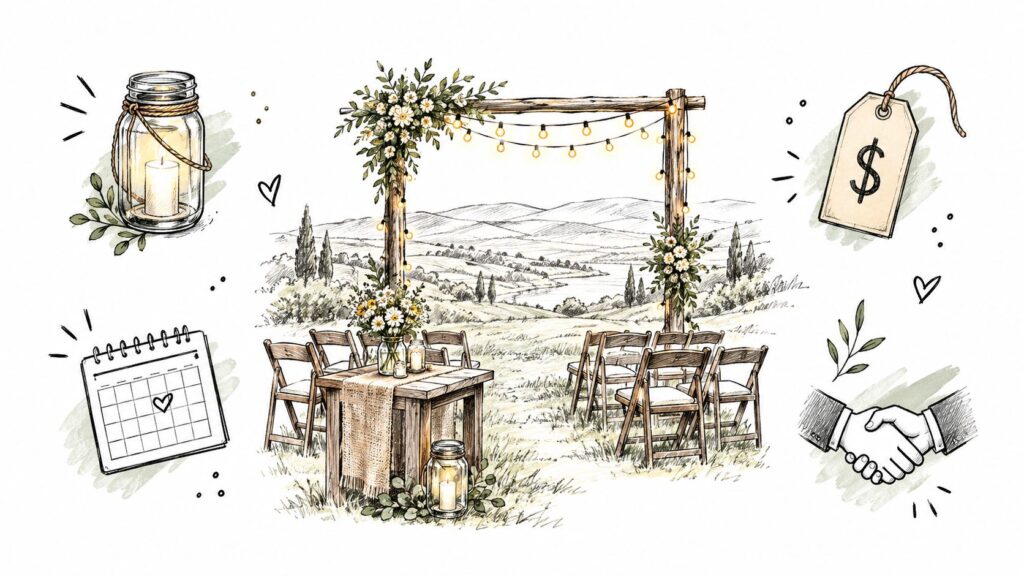
10 Outdoor Wedding on a Budget Ideas for 2026
A couple can fall in love with the idea of an outdoor wedding, then hit the first real bill and feel the whole plan tighten up. The guest list looks too big, the ceremony site adds another rental, and every extra chair, microphone, and hour of setup starts to matter. That pressure is exactly why outdoor wedding on a budget ideas need to start with the biggest cost drivers, not with the centerpieces. The fastest savings usually come from the choices made before anyone picks napkins. Guest count, date, venue layout, and what the property already includes can move the budget more than small décor swaps. The ten ideas below use the Texas Old Town campus in Kyle as a working example, because one property with outdoor ceremony space, indoor backup, included furniture, PA systems, and full-day access shows how the math changes when infrastructure is already there. Table of Contents 1. Use the On-Site Outdoor Ceremony Site with an Indoor Backup 2. Choose a Weekday, Off-Peak, or Shoulder-Season Date 3. Right-Size Your Guest List and Match It to the Right Venue Hall 4. Bring Your Own Beverages with an Approved Bartending Company 5. Hire a Flexible Caterer or Choose Central Texas Barbecue or Food Truck Catering 6. DIY Hill Country-Inspired Décor Using Natural and Budget Materials 7. Use the Included Tables and Chairs Instead of Renting Extras 8. Run Music from the Included PA System Instead of Hiring a Full Band or DJ 9. Build a Structured Payment Plan and Savings Timeline 10. Combine the Ceremony and Reception at One Property with Full-Day Access 10-Point Budget Outdoor Wedding Comparison Turn These Ideas Into One Budget Outdoor Wedding Plan 1. Use the On-Site Outdoor Ceremony Site with an Indoor Backup The cleanest savings start with the ceremony itself. If the venue already has an outdoor ceremony site with mature grounds and a climate-controlled hall that can host the ceremony too, you avoid paying for a second location, shuttle logistics, and a fresh round of setup and teardown. At Texas Old Town, that combination is built into the property, so the couple can keep the day on one site and keep the backup close by. A late-afternoon outdoor ceremony works well in Central Texas if you schedule around the sun and heat. A couple can keep the ceremony on the grounds, move inside for dinner, and still feel like the whole wedding belonged to one setting. That saves on ceremony décor too, because the natural surroundings themselves become the backdrop. Practical rule: if the backup space can host the ceremony with almost no rearranging, you're buying flexibility instead of paying for panic. A sun-direction walkthrough matters here. Ask where the light lands at the ceremony time you want, then confirm how fast the hall can be flipped if weather changes. It also helps to test the wireless microphone and Bluetooth connection during the tour or rehearsal, because a pretty outdoor site doesn't help if guests can't hear the vows. For a venue-specific rain plan example, Texas Old Town's own guidance is a useful reference, What to Do If It Rains on Your Wedding Day. 2. Choose a Weekday, Off-Peak, or Shoulder-Season Date Date choice is one of the most underused budget tools. A Friday, Sunday, or weekday often leaves more room in the budget than a peak Saturday, and shoulder-season dates can be easier to book without competing with the most in-demand weekends. In Central Texas, spring and fall usually give you the best balance of outdoor comfort and venue demand. The biggest savings here are broad. A less competitive date can lower venue pressure, reduce vendor markups, and make it easier to secure the exact hall or ceremony layout you want without upgrading to a more expensive option. It also gives you more room to choose an outdoor setting that already looks good, instead of overpaying to transform a space. A couple planning a Friday in late October gets a useful middle ground. The weather is often friendlier for guests, and the event avoids the highest-pressure Saturday slot in the same month. The budget gains show up in more than one line item, especially when vendors don't need to block off their busiest night. Ask for two quotes, one for your first-choice date and one for the cheaper alternative. That comparison tells you whether the savings are real or just marketing. Avoid holiday weekends and major Austin event dates if you can. Those weekends can push up lodging and vendor availability, which creates stress before the ceremony even starts. Share the date early with guests too, because a budget date only works if the people you care about can still come. 3. Right-Size Your Guest List and Match It to the Right Venue Hall Guest count is one of the strongest budget levers in wedding planning. The Knot's Real Weddings Study surveyed 10,474 U.S. couples married between January 1 and December 31, 2025, and found that couples spending under $12,000 hosted an average of 92 guests, compared with 117 guests for weddings costing $12,000 to $41,000 and 141 guests for weddings exceeding $41,000, according to The Knot's average wedding guest list size data. That pattern makes sense, because every extra guest affects food, rentals, beverages, invitations, and ceremony seating. Texas Old Town's four halls give that math some real shape. A couple with about 120 guests doesn't need to default to the biggest room on the property. Matching the guest count to the smallest suitable hall helps prevent empty space, extra tables, and a bigger catering footprint than the event needs. Build the list in tiers. Start with must-invite guests, then move to would-like-invite, then optional. That makes it easier to see what happens to the budget if you trim just a little. Ask for the published furniture counts and layout diagrams before you choose a hall, because the seating plan should be driven by the room, not by wishful thinking. Build a tiered list first: It shows the