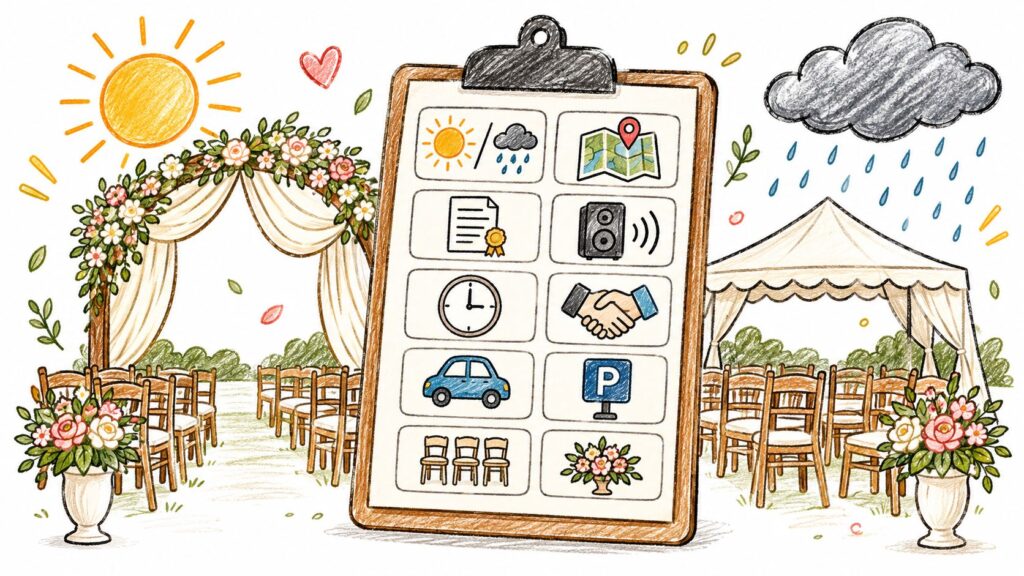
Outdoor Wedding Checklist: 10 Essentials for 2026
The forecast looked beautiful when you checked it last week. Now it's wedding morning in Central Texas, there's a heat advisory, and your ceremony chairs are sitting in full sun. The difference between a rushed scramble and a calm adjustment isn't optimism. It's a written plan that tells the coordinator where guests should go, which vendors need to move, and who can authorize the change. Say you've already approved an indoor ceremony layout, saved the processional music for either location, and assigned someone to send the guest update. You can keep getting dressed while the team makes the switch. Without those decisions, the same people spend your preparation time asking you questions. An outdoor wedding trades a controlled environment for scenery, natural light, and atmosphere. That trade can be worthwhile, but you'll need to plan for the less photogenic details, including wet ground, warm drinking water, dark parking routes, and microphones that pick up wind. Treat your outdoor wedding checklist as a calendar of decisions, not a shopping list. Start with booking-time commitments, then work through rental approvals, vendor confirmations, final forecast decisions, and post-event breakdown. Give every milestone a named owner, a due date, and a clear completion test. A task isn't finished because someone discussed it. It's finished when the person responsible knows what to do. Table of Contents 1. Weather Contingency Plan Write the triggers before emotions get involved 2. Shade, Seating, and Cooling Stations 3. Sound System and Microphone Setup Test from the back row 4. Lighting for Evening Events Approve power before adding fixtures 5. Insect, Wildlife, and Ground Safety 6. Beverage Service and Alcohol Compliance Plan the queue as carefully as the menu 7. Catering and Food Safety in Heat Choose the service style around the site 8. Parking, Accessibility, and Guest Transportation Publish directions people can use 9. Restroom and Dressing Suite Access Protect preparation time and privacy 10. Day-of Coordination and Post-Event Clean-Up Assign the finish before the celebration starts Outdoor Wedding Checklist at a Glance From Checklist to Celebration Putting It All Together Separate commitments from event-day checks 1. Weather Contingency Plan Lock this before booking. An indoor backup only works if the full guest count fits and the team knows how to arrange the ceremony without blocking dinner service. Approve layouts for both locations, including the aisle, reserved seating, musicians, and accessible entry. Put the relocation labor in writing. Moving chairs is a staffing assignment, not something to leave for whoever happens to arrive early. The DTN event-weather planning paper supports a weather decision deadline 24–48 hours before the event, with named authority, hazard monitoring, and communication procedures. Treat that as the planned setup decision, not permission to ignore deteriorating conditions afterward. Write the triggers before emotions get involved Decision owner: Authorize the coordinator or another designated lead to activate the backup. Conditions monitored: Include lightning, wind, heat, flooding, and smoke, not just rain. Communication: Prepare separate messages for guests and vendors. Transition: Identify who relocates flowers, signs, seating, and ceremony audio. For example, if storms threaten the arrival period, the coordinator can direct guests straight indoors while the florist installs the ceremony arrangement there. Nobody needs to debate the layout while guests wait outside. Use our rainy wedding-day planning guidance to work through the transition. Keep a printed backup timeline with the people running it. 2. Shade, Seating, and Cooling Stations Reserve heat protection when you reserve rentals. A basket of handheld fans won't compensate for exposed seating, inaccessible water, or a long wait before the processional. Walk the ceremony site at the intended ceremony time before finalizing chair placement. Shade over the lawn during a morning tour may leave guests exposed later. Plan against forecast heat conditions and available cooling, not air temperature alone. The CDC's extreme-heat guidance recommends shade, regular breaks, fluids, air-conditioned spaces, and scheduling outdoor activities during cooler parts of the day. Build those protections into the arrival experience, especially for older adults, children, and guests wearing heavy formal clothing. Practical rule: Guests should reach drinking water without joining the alcohol-service line. For a late-day ceremony, position water before the seating entrance, reserve shaded seats for guests who need them, and keep an indoor waiting option available. Have an attendant invite guests outside when the ceremony team is ready rather than seating everyone while preparations continue. Before the final rental order, confirm canopy placement, anchoring permission, fan power, and who replenishes water. Fans move air, but they aren't a substitute for an indoor relocation when conditions become unsafe. Assign someone to respond to illness, and seek emergency medical assistance if heat stroke is suspected. 3. Sound System and Microphone Setup A ceremony can look perfect while guests hear wind instead of vows. Approve the audio plan during the vendor walkthrough, then test the actual equipment before guests arrive. Start with the people speaking. Decide whether the officiant will use a lavalier microphone or handheld, how the couple's vows will be captured, and who handles readings. Don't assume a microphone attached to the officiant will clearly capture someone speaking softly beside them. Test from the back row Have the audio operator listen from the farthest guest seats while someone speaks at ceremony volume. Check for feedback, wind noise, uneven coverage, and competing sounds from nearby activity. Use a proper microphone windscreen rather than trying to solve wind entirely through volume. Playback owner: Name the person who starts and stops each processional track. Backup equipment: Provide a spare microphone, fresh batteries, and locally saved music. Weather switch: Identify which equipment moves indoors and which stays protected. Power route: Keep connections sheltered and cables out of guest paths. For example, a phone connected through Bluetooth can receive an unexpected call or notification. Use a dedicated playback device with interruptions disabled, and keep an appropriate wired connection available. Finish with a rehearsal of cues, not just a speaker test. The operator needs to know when the officiant invites guests to stand, when music fades, and which announcement directs