rehearsal dinner planning

How to Build a Rehearsal Dinner Seating Chart That Works

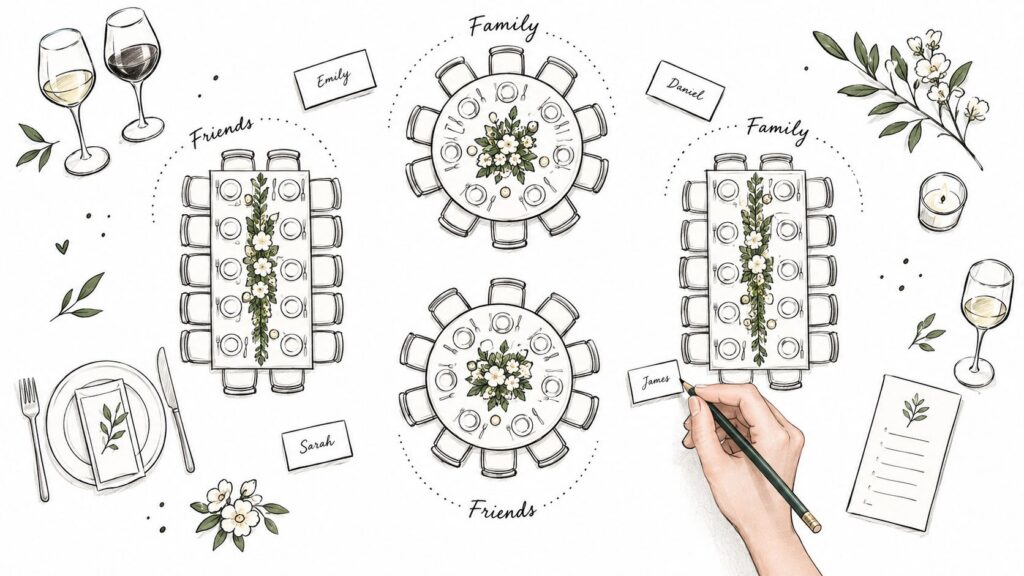
The floor plan is blank, the rehearsal dinner is only days away, and both families have started asking where they'll sit. One parent wants to be near the couple. Another parent's remarried spouse shouldn't share a table with an ex. The officiant knows nobody, a grandparent needs step-free access, and an out-of-town guest is hoping not to spend the evening alone. That's where a rehearsal dinner seating chart earns its keep. A good plan makes the dinner feel welcoming and effortless. A careless one turns the first shared family event into a public negotiation. The advice below will help you choose the right level of formality, build the chart in the right order, manage complicated family relationships, and hand the final plan to the venue without last-minute chaos. Table of Contents Why the Rehearsal Dinner Needs Its Own Seating Plan Deciding How Formal Your Seating Needs to Be Use this decision table Don't confuse casual with unplanned Building Your Chart in the Right Order Pass one locks the people Pass two maps the room Pass three places the constrained guests Pass four fills the flexible seats Grouping Guests So Conversation Actually Happens Run the lonely-guest audit Handling Divorced Parents, Blended Families, and Tricky Dynamics Choose the structure families can handle Communicate a nontraditional plan without embarrassment Finalizing the Chart and Your Venue Walkthrough Why the Rehearsal Dinner Needs Its Own Seating Plan A rehearsal dinner often brings the couple, wedding party, immediate family, officiant, and traveling guests into one room for the first time. Everyone arrives carrying different expectations. Some people want to meet relatives. Others want familiar company. A few may already know exactly whom they should avoid. The couple in this situation usually starts with a harmless idea: “We'll let everyone sit wherever they want.” Then guests enter, claim seats beside the people they already know, and create separate conversational islands. One family settles at one end of the room, the wedding party forms another group, and the officiant ends up beside people who assume someone else will include them. That outcome isn't caused by bad manners. It's caused by a missing plan. Practical rule: Treat the seating chart as a hospitality tool, not a test of wedding formality. Rehearsal dinners are a relatively modern wedding tradition, with historical accounts generally placing their emergence in the late nineteenth century in the United States and wedding-industry historians identifying the 1950s as the period when they became more widely established. The tradition grew alongside larger, more coordinated weddings where participants needed to practice entrances, positions, music cues, and ceremony timing. The Los Angeles Times' rehearsal-dinner guide reflects that shift from a practical walk-through to a social pre-wedding gathering. That history explains why the chart has two jobs. It must support room logistics, including service, movement, and toasts, while also managing relationships and introductions. Parents should feel acknowledged, the couple should remain central, and guests who have traveled should have a familiar anchor. The person paying for or hosting the dinner may not be the person creating the layout, so settle ownership early. Couples often ask a parent, planner, or venue coordinator to handle the working chart, while they make the decisions about sensitive relationships. This practical division is also consistent with guidance on who plans the rehearsal dinner. By the time you print anything, you should know whether you need open seating, table assignments, or individual places. You should also know which family members need distance, which guests can bridge unfamiliar groups, and how the actual room will affect the plan. Deciding How Formal Your Seating Needs to Be Don't assign individual chairs just because wedding planning websites make it sound proper. Choose the format that matches the size and social complexity of the dinner. For a dinner under approximately 20 guests, open seating can work well if the group already knows one another or will sit at one shared table. From roughly 20 to 40 guests, assigned seats become useful because several social circles may need gentle direction. Above 40 guests, manage the dinner like a small reception and assign tables explicitly. These thresholds come from rehearsal-dinner seating guidance at PlanSeats. Use this decision table Guest Count Recommended Format Main Risk If Wrong Under approximately 20 Open seating, with reserved places for priority guests if needed Guests may still cluster by familiarity, leaving one or two people outside the conversation Roughly 20 to 40 Assigned seats or clearly assigned tables Guests may choose comfortable groups and avoid meeting the other family Above 40 Explicit table assignments, with an alphabetical guest index Unassigned guests can scatter unevenly, confuse service, or miss natural introductions Open seating is appropriate when it gives guests freedom without creating uncertainty. A small backyard dinner with one long table may not need place cards. A restaurant dinner with several tables, timed toasts, and guests who have never met is a different matter, even if the atmosphere is casual. The hidden problem with unassigned seating is social self-sorting. People choose the safest available option. A group of college friends sits together, a parent brings a sibling into the same cluster, and an out-of-town guest waits too long before taking a chair. By the time that guest sits down, the table may contain strangers with no obvious connection. Don't confuse casual with unplanned You can keep the dinner relaxed while still assigning tables. Let guests choose their own chair once they reach the right table, or use a simple display that directs them without making the room feel ceremonial. Individual place cards make more sense when the dinner is intimate, the host wants precise relationships, or dietary and accessibility requirements make seat-level control important. A larger dinner should also include an alphabetical guest index with table numbers. It's faster than asking guests to inspect every table, especially when several people arrive together. Keep the guest-facing system simple. The complexity belongs in your planning file, not at the entrance. Building Your Chart in the Right Order Most seating-chart

Who Plans the Rehearsal Dinner: Roles and Etiquette

Traditionally, the groom's family plans and hosts the rehearsal dinner. Today, the couple, both families, or a shared hosting group may plan it instead, while one or more people contribute to the cost. You're probably dealing with this question because the wedding is close enough for relatives to start asking who's inviting whom, a parent has offered to pay without choosing a venue, or everyone assumes someone else is handling the details. That confusion is normal, but it's also preventable. The person paying and the person planning don't have to be the same person. After coordinating rehearsal dinners around Central Texas, I've found that tradition matters less than a clean assignment of authority. Decide who owns the guest list, who books the venue, who approves the menu, and who runs the timeline. Once those decisions are written down, family contributions feel generous instead of controlling. Table of Contents Who Plans the Rehearsal Dinner The Traditional Role of the Groom's Family What the traditional host controls Does the custom still apply? Modern Hosting Models and How to Choose Four workable models Make the decision before vendor calls Planning Authority Versus Who Pays the Bill Assign decisions by category Use clean lines when families co-host Coordinating the Rehearsal Dinner at Your Venue Build the evening around the rehearsal Confirm food, beverage, and vendor rules Prepare for the weather, not the forecast When a Welcome Party Works Better Choose the larger format when A Short Checklist for the Week Of Assign the final checks Who Plans the Rehearsal Dinner The classic answer is the groom's family, particularly the groom's parents. Historically, they hosted the event before the wedding, and that custom remains the default in English-language wedding etiquette across the United States and other major markets. The Los Angeles Times' rehearsal-dinner guidance also reflects the modern alternative, where the couple, the bride's family, or both families may plan and host. The practical answer is different: whoever accepts planning responsibility should receive decision-making authority. A parent who says, “We'll pay,” hasn't necessarily agreed to build the guest list, compare venues, track RSVPs, coordinate vendors, and manage the evening. Likewise, a couple that wants complete control shouldn't hand planning decisions to relatives simply because those relatives are contributing money. Four arrangements work reliably: The groom's family fully hosts, including payment and planning. Two parties split the scope, with each owning a defined piece. The couple hosts, often because they're local, independent, or already managing the wedding. A shared group contributes, with each person assigned a specific responsibility. Choose the model before speaking with venues. If you're considering a property such as Texas Old Town, the person handling venue questions should understand the event space, access window, catering policy, beverage arrangements, and day-of management. The venue's event manager responsibilities can help clarify which tasks belong to the venue team and which still require a family point person. Practical rule: One person can receive money from several contributors, but one person must own the master plan. A rehearsal dinner isn't difficult because the menu is complicated. It becomes difficult when three people approve the guest list, two people contact the caterer, and nobody knows who can make the final call. Assign that authority early, then let the tradition serve the family rather than dictate the workflow. The Traditional Role of the Groom's Family The groom's family traditionally hosts the rehearsal dinner as a gesture of welcome to the bride's family and the people closest to the couple. The custom developed alongside an older wedding-cost structure in which the bride's family handled the wedding reception, leaving the groom's family with a defined role before the ceremony. That traditional role was broad. The groom's parents typically selected the location, created the guest list, sent invitations on behalf of the couple, and paid for the meal, drinks, and related extras. They might also organize toasts or present gifts to the couple and members of the wedding party. The arrangement still appeals to families because it gives the groom's parents a visible way to participate. It can also prevent the bride's family from absorbing every pre-wedding expense, especially when that family is already carrying major wedding responsibilities. A rehearsal dinner hosted thoughtfully by the groom's family can feel like a genuine welcome rather than an obligation. What the traditional host controls If the groom's family is fully hosting, I recommend assigning them these decisions: Format: Decide whether the evening is seated, family-style, buffet, or relaxed cocktail service. Guest list: Approve the people included beyond the wedding party and immediate family. Venue: Select a location that fits the family's preferred atmosphere and practical needs. Budget: Set the spending ceiling before anyone signs a contract. Program: Approve speeches, gifts, entertainment, and the order of events. The couple should still provide essential information. They know the wedding-party roster, dietary requirements, family sensitivities, and wedding-weekend schedule. They should also have veto power over anything that would make the evening uncomfortable or conflict with the ceremony rehearsal. Does the custom still apply? Yes, if the groom's family wants the role and can carry it comfortably. No, if everyone is using tradition as an excuse to avoid making a decision. Modern etiquette is more flexible. The couple may host, the bride's family may host, or both families may share the work. The old default remains useful as a starting point, but it shouldn't override a family's finances, geography, relationships, or preferred level of involvement. Modern Hosting Models and How to Choose Pick the hosting model that matches your family dynamics, not the one that sounds most traditional. The important question is not only who pays. It's who has enough availability, confidence, and authority to keep the event moving. Four workable models The groom's family fully hosts. The groom's parents pay and plan, while the couple supplies the wedding details they need. This fits families who are eager to entertain, live near the wedding location, and want a clear pre-wedding role. The planning authority sits with the

Scroll to Top