Retirement Party Planning Checklist: 10 Steps for 2026
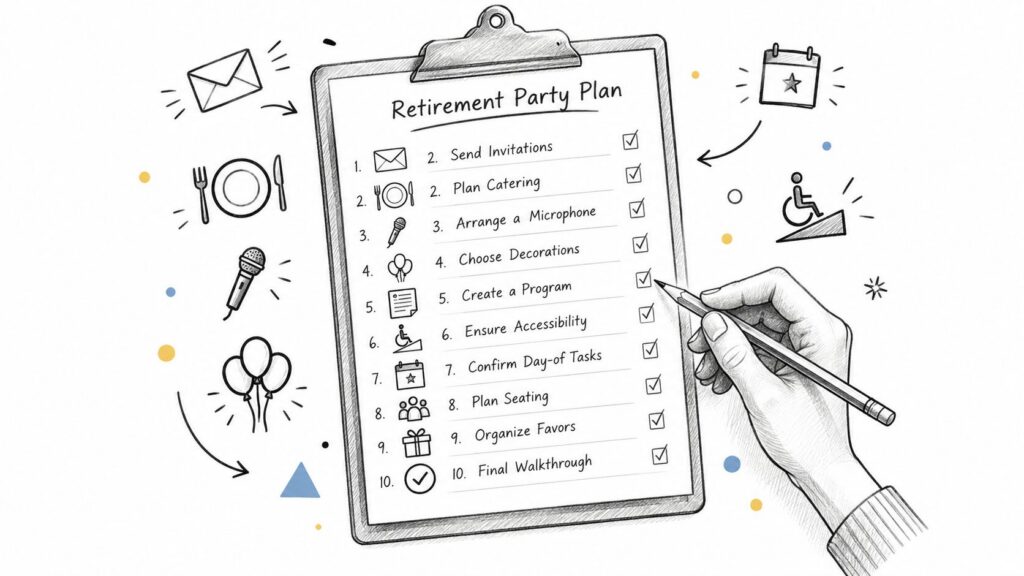
You've agreed to host a retirement party, and the date is getting close. The caterer isn't booked, nobody knows who's bringing the microphone, and three different people think they're managing the guest list. The celebration may be heartfelt, but without an owner and a sequence, small gaps become expensive last-minute problems. A useful retirement party planning checklist starts with decisions that protect the decisions after them. First define the purpose, budget, and guest count. Then secure the date and venue, confirm the food and beverage plan, build the program, and assign someone to run the day. The checklist below follows that order and connects each task to the practical demands of a venue, including setup, vendor access, guest movement, speeches, cleanup, and follow-up. The aim isn't to create a complicated production. It's to make sure the honoree feels recognized, guests can participate comfortably, and the planning team knows exactly what must happen before, during, and after the party. Table of Contents 1. Define Goals, Budget, and Guest Count 2. Set the Date and Build a Backward Timeline Put every deadline beside an owner 3. Select the Venue and Floor Plan Check the complete guest journey 4. Plan the Program and Recognition Moments Protect the honoree's preferences 5. Choose Catering and Food Service Build the menu around participation 6. Arrange Beverages and Bar Service Match service to the crowd 7. Plan Décor, Theme, and Memory Elements Plan setup and removal together 8. Send Invitations and Manage RSVPs Set a firm information deadline 9. Arrange Entertainment, Music, and Audio-Visual Needs Rehearse the transitions 10. Plan Day-of Logistics, Staffing, and Guest Experience Close the accessibility and privacy gaps 10-Point Retirement Party Planning Comparison Lock In the Details and Keep Your Checklist Moving 1. Define Goals, Budget, and Guest Count Start with the reason for the event. A workplace luncheon honoring a long career needs a different format from a family dinner or a gathering that thanks colleagues and celebrates a new chapter. Ask the retiree how they want the transition described, especially if they'll consult, work part-time, or remain professionally active. The Employee Benefit Research Institute's 2025 Retirement Confidence Survey found that about half of workers expect to transition gradually into retirement, while roughly three-quarters of retirees reported stopping full-time work completely. The party shouldn't call something a final goodbye if the honoree doesn't see it that way. Set the budget before touring venues. Separate venue hire, catering, beverages, staffing, décor, entertainment, photography, gifts, printing, transportation, and contingency funds. Get written quotes that show taxes, gratuity, service fees, setup charges, and cleanup responsibilities. A lower venue fee can stop being economical if it requires separate furniture, security, bartenders, or cleanup crews. Build the first guest estimate high enough to protect your venue and food decisions, then refine it through RSVPs. Identify relationships from different career stages, including former colleagues, mentors, clients where appropriate, family, and community contacts. Practical rule: One person should own the master budget and guest list. Shared input is helpful, but shared ownership usually means nobody updates the final version. 2. Set the Date and Build a Backward Timeline Choose the date with the honoree first. Confirm the exact retirement date, whether the event marks a final working day or a later milestone, and which guests matter most. A Saturday afternoon or early evening can work well for a mixed guest list, but a weekday luncheon may suit a workplace audience better. Check local events, holidays, school schedules, travel plans, and other retirement celebrations before signing a contract. Once the date is fixed, write deadlines backward from it. Reserve the venue and core vendors first. Then send invitations, collect memories and photos, finalize the menu, confirm the headcount, approve the program, and distribute the run sheet. The Texas Old Town event-planning timeline can help you turn the event date into a sequence of booking and preparation tasks. A venue with a 16-hour exclusive-access window, from 8:00 a.m. to midnight, gives the planning team room for setup, sound checks, the celebration, and breakdown without compressing every task into a narrow rental period. Confirm exactly when vendors may arrive, when décor can be delivered, and when the venue must be clear. That detail affects the labor plan as much as the party schedule. Put every deadline beside an owner Use a shared document or event platform, but assign one person to each decision. A deadline without a named owner is only a suggestion. Include vendor deposit dates, invitation dates, RSVP closure, final catering numbers, speech submissions, media approvals, and the final site walk-through. 3. Select the Venue and Floor Plan The venue determines how guests enter, eat, listen, talk, and leave. Compare capacity, parking, climate control, indoor and outdoor options, furniture, sound equipment, kitchen access, beverage rules, accessibility, and cleanup. A 150-guest event may fit an intimate rustic hall such as Redbud, while a larger company celebration may need Tejas, Sage, or Stone. Texas Old Town's retirement party venue ideas provide examples of how different spaces can support different event styles. Tour at the time of day you expect to host the party. Light through windows, outdoor heat, traffic noise, and room acoustics can change the experience. Ask the venue manager to show the parking-to-entrance route, restrooms, food-service path, presentation area, storage location, and any transition between indoor and outdoor spaces. Request a documented floor plan and furniture inventory. Sketch the room before you finalize the menu or entertainment. The layout should leave clear sightlines to the honoree and speakers, comfortable paths between tables, enough room for the food line, and a practical location for gifts and memory displays. Check the complete guest journey Accessibility is more than a step-free entrance. The World Health Organization's guidance on loneliness and social isolation among older people connects social isolation and loneliness with serious effects on physical and mental health, quality of life, and longevity. Guests need to be able to arrive, find a seat, hear the program, use the restroom, and participate in