
texas hill country venues

Company Retreats Texas: Your 2026 Planning Guide

You're probably already in the middle of it, comparing a Hill Country ranch, a hotel ballroom, and a venue brochure while leadership keeps asking the same question, “Will this feel like a real retreat, or just a nicer meeting?” That's the right question. The wrong move is treating a company offsite in Texas like a scenic day trip and hoping the strategy part will happen by accident. A productive company retreats Texas project starts with a hard truth. A key challenge is that many Texas retreat guides focus on scenic settings but fail to address the practical needs of a productive offsite in 2026, such as reliable Wi-Fi, ample breakout space, and formats that support hybrid teams. That gap matters because corporate offsites have to deliver focused work and collaboration, not just a change of scenery, as noted in Texas corporate retreat planning guidance. If the event also has to feel memorable, useful, and easy to defend internally, it helps to think like an operator, not a guest. I've found that planners move faster when they borrow a few principles from organizing memorable team events and apply them before they ever book a venue. The result is a retreat that has a clear purpose, a workable schedule, and fewer surprises for everyone involved. Table of Contents Beyond the Barbecue: Planning a Texas Retreat That Works Aligning Your Retreat Goals with Business Objectives Choosing the Right Venue for Your Company Retreat Building an Agenda That Balances Work and Connection Navigating the Logistics of Your Texas Retreat Measuring Your Retreat's ROI and Post-Event Follow-Up Beyond the Barbecue: Planning a Texas Retreat That Works The first version of a Texas retreat usually sounds simple. Get the team out of the office, put them somewhere pretty, feed them well, and hope the energy improves. That's how people end up with a fun trip that doesn't move the business forward. The better version starts when someone asks what the retreat needs to change once everyone gets back. A corporate planner I'd trust will usually spot the tension right away. The CEO wants morale. The department lead wants alignment. Finance wants the spend justified. Hybrid teams want a format that doesn't punish the people who can't sit in the room all day. Those aren't conflicting goals if you design the retreat around them from the start. The strongest company retreats Texas programs use the state's range of venue types to match the format to the objective. Texas venues support intimate leadership offsites for 15–30 guests, mid-size gatherings for 15–80, and large company events for 150–200+ attendees, which matters because the room count, meeting space, and activity style should fit the outcome you're after, not the other way around, according to Texas retreat venue roundups. Practical rule: if the agenda is serious, the venue has to be serious about the basics, Wi-Fi, breakout rooms, acoustics, and a layout that doesn't force the team to improvise between sessions. That's where a lot of scenic venues fall short. They sell the feeling of being away, but they don't always support the work that happens once the novelty wears off. For a leadership session, that means the room must support focus. For a mixed in-person and remote meeting, that means the venue has to function like a meeting space, not just a backdrop. Texas Old Town is a useful example of the right mindset. It's one option among several for planners who need a venue with flexible rooms, a 16-hour rental window, and practical logistics between Austin and San Antonio. That combination is what keeps the event from collapsing into schedule compression, especially when the goal is both connection and output. Aligning Your Retreat Goals with Business Objectives A Texas retreat works only when the business goal comes first. If you skip that step, the rest of the plan gets vague fast, from the agenda to the meal format to whether breakout rooms even belong in the design. A leadership alignment retreat should not look like a culture outing, and a culture outing should not be built like a sales kickoff. Start with one primary objective and keep it narrow. If the retreat is about leadership alignment, the sessions need to produce decisions, not just open discussion. If it is about cross-functional collaboration, the agenda should build shared context and give teams one real problem to work on together. If it is a milestone celebration, the structure still needs room for recognition without turning the whole event into a social-only trip. The useful test is what changes after everyone goes home. Did managers leave with the same priorities? Did two departments agree on a handoff process? Did the team spend enough time together to replace email back-and-forth with direct conversation? Those are stronger indicators than whether the group had a good time, because a pleasant event and a productive one are not the same thing. Budget also shapes how the objective gets framed. A separate industry report estimates that in 2025, the average corporate retreat cost in North America ranges from $1,800 to $4,500 per employee, with premium leadership retreats exceeding $6,000 per person, which is why planners need a sharper business case for every line item, as outlined in corporate retreat cost data. Once the spend reaches that level, the retreat stops looking like a perk and starts looking like a strategic investment. That shift changes the planning conversation. The goal is no longer to put people in a nice setting and hope the result is useful. The goal is to take them out of the usual workflow so they can solve something that gets blurred in daily operations, then check every choice against that outcome. Write the objective in one sentence and do not widen it. “Align the leadership team on next quarter's priorities” gives you something to build around. “Create a memorable experience for everyone” does not. The first can be tested against the agenda, the venue, and the follow-up. The second only sounds complete until

Top Quinceañera Venues San Antonio for 2026

Finding the perfect stage for her big day starts the same way for most families. You have a date in mind, a guest list that keeps changing, a vision board full of dresses and décor, and a growing suspicion that the venue decision will shape everything else. That instinct is right. The room size affects the court presentation, the rental window affects hair, photos, and setup, and the vendor rules affect your budget more than most families expect. For quinceañera venues in San Antonio, the range is wide. San Antonio listings include spaces for intimate events around 50 guests and large banquet halls that can handle up to 800 guests, including venues such as El Agavero by Liz's Events, Plaza San Antonio Hotel & Spa, and Rancho La Mission, according to San Antonio Quinceañera reception hall listings. That gives families options, but it also creates noise. A beautiful ballroom can still be the wrong fit if the access window is too short or the venue only works with a narrow vendor list. This guide keeps the focus on what matters when you're comparing venues. Capacity, rental hours, logistics, and how much coordination the venue absorbs versus how much your family has to manage. If your event includes bilingual guests or vendors, planning also gets easier when you think early about communication support such as multilingual event interpreting. Table of Contents 1. The Emporium by Yarlen What stands out 2. Las Fuentes Banquet Hall Best fit 3. Red Oak Ballroom San Antonio North Park 4. Garcia Event Centers What to confirm before booking 5. BlueWing Ballroom Who benefits most 6. La Hacienda Ballroom Trade-offs to weigh 7. Texas Old Town A Hill Country Quinceañera Escape San Antonio Quinceañera Venues, 7‑Venue Comparison Choosing the Venue That Tells Her Story 1. The Emporium by Yarlen The Emporium by Yarlen works well for families who want a polished ballroom and hands-on guidance instead of a blank room they have to build from scratch. It presents itself as a venue that understands quinceañeras specifically, which matters more than people realize. A ballroom can look elegant online and still struggle with court flow, grand entrance timing, or family-style planning communication. The biggest draw here is service style. Family-owned venues that actively market to quinceañeras often do a better job walking parents through decisions in plain language, especially when multiple relatives are helping make choices. The bilingual team is also a practical advantage, not just a nice extra. What stands out The venue offers multiple banquet rooms, private parking, and a gallery-forward planning experience that helps families visualize the event before signing. That visual process tends to reduce confusion around layout and décor expectations. If your family is comparing themes, throne placement, cake table position, or dance floor use, that kind of guidance saves time. There's also a sister-property advantage. If your preferred date disappears or you need a backup option, families can also review where to host a daughter's quinceañera for broader planning ideas while considering alternate-date flexibility through related venue options. Practical rule: If a venue doesn't publish pricing, ask for the full list of inclusions before the tour ends. Don't leave with only a room quote. A fair caution applies here. Premium presentation often means the venue won't compete with bare-bones halls on entry price, and public pricing isn't laid out in detail online. For some families, that's worth it because they want a venue team to help shape the whole experience. For others, especially families with strong outside vendor relationships, the first question should be how flexible the package structure really is. 2. Las Fuentes Banquet Hall Las Fuentes Banquet Hall makes sense for families who want room to spread out without leaving San Antonio. Its positioning is different from a downtown ballroom. The appeal here is the indoor and outdoor flow, beautiful grounds, and campus feel that softens the usual banquet-hall look. For a large quince court, this matters. Families often underestimate how crowded a ballroom can feel once you add a sweetheart setup, cake display, DJ, buffet or catering flow, photo booth, and family tables. A venue that gives guests breathing room usually runs more smoothly from arrival through the final dance. Best fit Las Fuentes is designed for events in the roughly 100 to 400 guest range. That makes it a practical middle ground for families who know a small hall won't work but don't want to pay for a massive ballroom they won't fill. The package-driven approach can also simplify decision-making if you want preferred vendors lined up instead of sourcing every service independently. A lot depends on your planning style. Choose Las Fuentes if you want structure: Preferred vendors and package framing reduce the number of separate contracts your family has to manage. Think twice if you want full DIY control: Venues built around preferred partners can limit flexibility on catering, décor, or entertainment choices. Use the grounds strategically: Indoor and outdoor areas help with portraits, cocktail-style transitions, and giving older relatives quieter space away from the dance floor. Families considering both city ballrooms and destination-feel properties may also want to compare quinceañera venues near Austin and San Antonio that match the moment to see whether a scenic setting justifies extra travel. What I like about this type of venue is that it can feel substantial without looking corporate. What I'd verify before booking is vendor policy detail. “Simple packages” can be a plus, but only if the package contents align with what your family wants. 3. Red Oak Ballroom San Antonio North Park A common quince planning problem looks like this. The guest list is too large for a boutique hall, but the family still wants clear operating rules before paying a deposit. Red Oak Ballroom San Antonio North Park stands out because it publishes the details families usually have to chase down by phone. The layout gives you two size lanes to work with. Ballroom A is listed at about 4,200 square feet with capacity

Scroll to Top
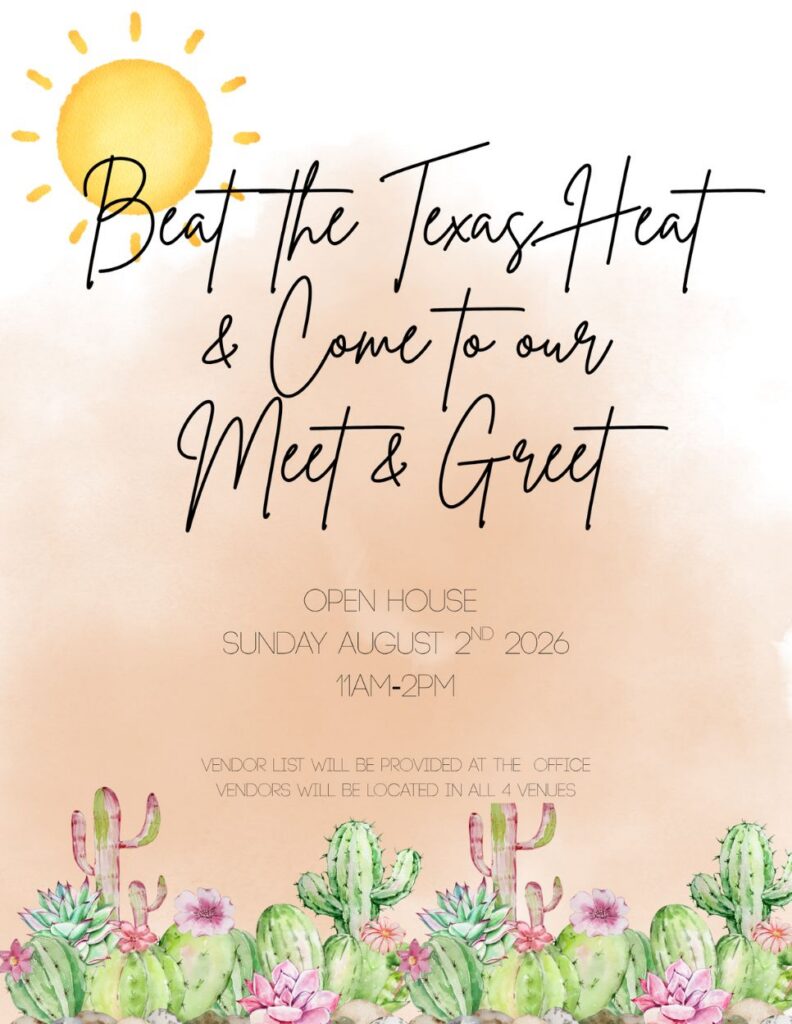
Texas Old Town Open House August 2026