Payment Plans for Weddings: How to Budget and Pay Over Time
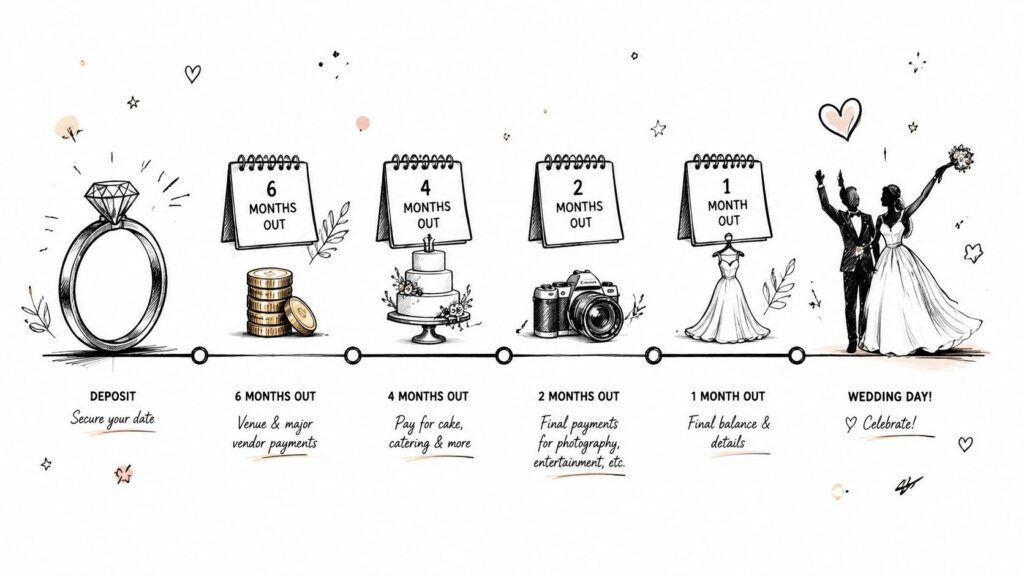
You can love the venue, the photographer, and the menu, then freeze the moment the contracts arrive. One payment is due now, another in a few months, and the dress shop wants its own schedule, while travel and guest counts are still moving around. That's where payment plans for weddings stop being a nice extra and start becoming a cash-flow tool you need to manage on purpose. The couples who handle this well don't just ask, “Do you offer installments?” They map every due date against what's in their savings account, then decide what can be paid now, what should wait, and what needs to be negotiated. That matters in a year where the average U.S. wedding cost is $36,000 and venue spending alone averages $8,573 (Zola's 2026 First Look Report). If you're trying to keep the wedding beautiful without creating a post-engagement debt hangover, the plan has to fit the calendar, not just the headline price. Couples also aren't looking for this by accident. Carats & Cake reported that 65.7% of couples were interested in flexible payment solutions and 78.8% expected to go over budget, which tells you exactly why this topic keeps coming up at venue tours and vendor calls (LendingTree's wedding debt survey summary). If you and your partner are trying to stay organized together, a simple tool that helps you track progress on shared goals can keep the wedding from taking over every money conversation. Table of Contents Why Wedding Payment Plans Matter More Than Ever The Three Main Types of Wedding Payment Plans Wedding Payment Plan Types Compared Building a Month-by-Month Wedding Payment Timeline Vendor Plans Versus Credit Cards Versus Saving Longer How Texas Old Town Structures Its Wedding Payment Plans Negotiation Tips and Budgeting Strategies for Any Venue Frequently Asked Questions About Wedding Payment Plans Why Wedding Payment Plans Matter More Than Ever A wedding budget can look fine on paper and still fall apart in practice. The trouble usually starts months before the final bill arrives, when the venue wants a deposit, the caterer wants a retainer, and the dress shop expects another payment before the bridal shower. Payment plans for weddings matter because they control timing, and timing is where couples get squeezed. That pressure gets worse when venue, catering, and bar services eat a large share of the budget, as shown in Zola's 2026 First Look Report. Installments help only if they match the rest of the wedding calendar. They spread the cost across the engagement instead of letting several big bills land in the same month. That matters because a low monthly payment can still collide with the florist, the photographer, and the final dress balance. If you do not map those dates first, the payment plan just hides the strain until it shows up again. Couples also make a bad habit of confusing a manageable installment with actual affordability. A smaller payment does not fix a budget that is already overloaded with venue fees, vendor retainers, attire, and travel. The better order is simple. Build the payment calendar first, then choose the vendors and financing that fit inside it. There is a reason this problem keeps coming up. LendingTree found that many engaged couples planned to take on debt for wedding expenses, often through credit cards, personal loans, or help from friends and family. That tells you how common wedding financing has become. It also shows why couples need a plan before the first deposit leaves the account. Practical rule: If a payment plan does not lower the risk of a mid-engagement cash crunch, it is not helping. It is just changing which bill hurts first. For Texas couples planning around a Hill Country venue or a regional guest list, the timing problem gets even tighter. Travel, attire, and vendor travel fees can stack on top of venue obligations, so the payment schedule has to cover the whole event, not just the reception space. Couples who want to track progress on shared goals should treat wedding payments the same way, as part of a bigger cash-flow plan that protects the rest of life, not a separate pile of bills. The Three Main Types of Wedding Payment Plans Wedding payment plans usually fall into three buckets, and you should know the difference before you sign anything. The first is the event-date anchored plan, where a deposit secures the date and the rest is tied to how close you are to the wedding. The second is a monthly amortization plan, which breaks the balance into equal monthly installments across the engagement. The third is a milestone-based plan, where payments land when specific planning steps are reached, like a tasting, final headcount, or design approval. The event-date anchored model is the one you'll see most often with venues. Industry templates for venues recommend a 30% deposit, a second payment at 90 days out, and final payment at 14 days out (VenueBill). A more advanced venue structure uses three to four installments with a first retainer of 25% to 50%, a mid-project payment of 25% to 30%, and the remainder before the wedding (HBMS). Venues like this because they're protecting a date that they can't sell twice. The monthly model works differently. It smooths out the pain if your engagement is long enough and your income is predictable. The downside is that it can make people feel more comfortable than they should, because the payment is small enough to ignore while other vendors build up. Milestone plans are useful when the vendor's workload really does move in stages, but they're less useful for couples who need a stable calendar more than a project rhythm. Wedding Payment Plan Types Compared Plan Type Typical Structure Payment Timing Best For Event-date anchored Deposit, mid-interval payment, final balance Tied to the wedding date Venues and couples who need clear deadlines Monthly amortization Equal monthly payments Spread across the engagement Longer engagements with steady savings Milestone-based Payments tied to planning checkpoints Tied to deliverables or approvals Vendors