10 Outdoor Wedding Decor Ideas for Texas Hill Country
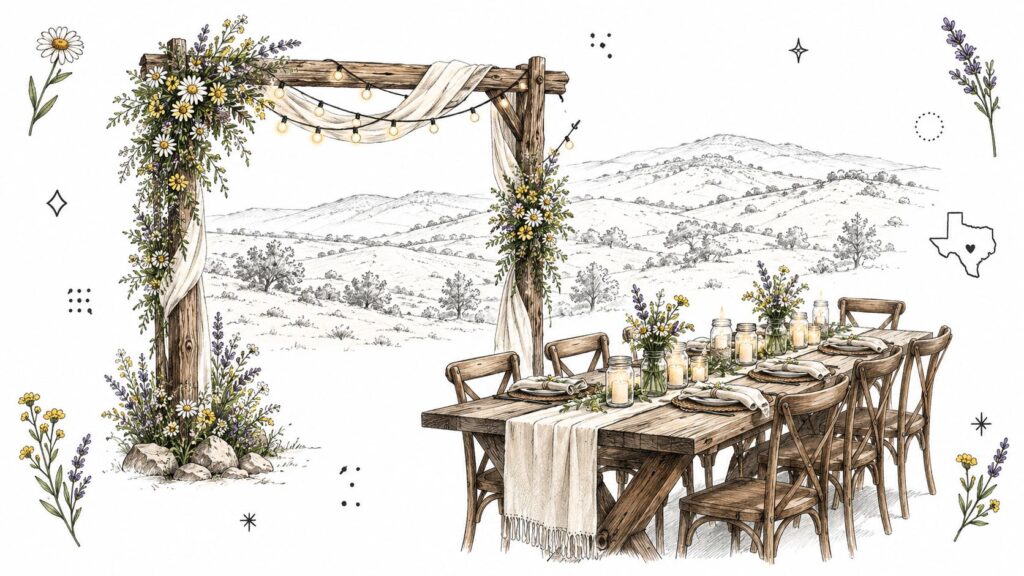
A couple falls for a lawn full of string lights, then the practical questions arrive: Will the afternoon sun bake the ceremony seats? Can the evening gusts shake the lighting loose? Will heels sink into dry, uneven grass? Outdoor wedding decor has to look good in photos and work for guests, vendors, and the weather. The best outdoor wedding decor ideas for Central Texas start with the setting, not a mood board. On a Hill Country property such as Texas Old Town's 55-acre campus in Kyle, native greenery, gardens, water features, and open lawns already shape the scene. With four venues and outdoor ceremony sites, couples can also plan decor that works across more than one area, or move key pieces if the weather changes. The ideas below are ranked by how reliably they handle heat, wind, and uneven ground. For more on the practical side of an outdoor celebration, see these tips for planning an outdoor wedding. Table of Contents 1. Native Texas Wildflower Arrangements 2. Festoon String Lighting and Canopy Lighting 3. Communal Farm Tables with Pine or Reclaimed Wood 4. Greenery and Floral Ceremony Arch 5. Lanterns and Flameless Candlelight 6. Dried Pampas Grass and Heat-Tolerant Boho Florals 7. Outdoor Lounge and Conversation Seating Areas 8. Western and Texas Heritage Accents 9. Shade, Comfort, and Heat-Management Structures 10. Water-Edge and Creekside Ceremony Styling 10 Outdoor Wedding Decor Ideas: Comparison Guide Choose Your Signature Elements and Lock In the Details 1. Native Texas Wildflower Arrangements Performance in Central Texas: Strong in season, less reliable in direct sun. Native and regionally grown flowers look at home against Hill Country grasses and gardens, but fresh stems still need careful handling in heat. Bluebonnets, Indian paintbrush, Mexican hat, black-eyed Susans, and Gaura bring a sense of place without making the arrangements feel imported from a different setting. For a spring ceremony, a florist might pair bluebonnets and Indian paintbrush in loose bouquets, then repeat those colors in mason jars along the aisle. In late summer, black-eyed Susans and Gaura can work better in long, low arrangements on farm tables than in tall designs that catch the wind. Confirm seasonal availability with a florist before settling on a palette. Bloom timing can shift, and a locally grown substitute may be the better choice. Heat rule: Keep flowers shaded until setup, and give stems a reliable water source. Water tubes can help; floral foam is a poor sustainability choice because it's a single-use material that doesn't biodegrade. The University of Surrey's guidance on floral waste offers alternatives such as reusable vase systems and composting flower waste. Never pick wildflowers from roadsides, parks, or public land. Buy from licensed growers, or plan ahead to grow suitable flowers yourself. Texas Old Town's native floral design ideas can help you explore arrangements that suit the regional setting. 2. Festoon String Lighting and Canopy Lighting Performance in Central Texas: High after sunset, with careful rigging and power planning. Festoon lights define a dining or dance area without building a solid visual wall around it. Warm-white globe bulbs can cross above the reception, while lanterns or small table lights add a lower layer. On a large property, repeat the lighting language at the ceremony exit or along the route to the reception so guests can find their way after dark. Before choosing a layout, ask the venue where power is available and whether the proposed load can share circuits with catering or audio equipment. Outdoor lighting is a temporary electrical system, not just decoration. The technical guide to outdoor tent lighting recommends weather-rated fixtures, GFCI protection, protected cable crossings, and electrician review of generator needs. Have a qualified electrician confirm the plan rather than relying on a rough estimate. A dusk test can reveal what a daytime walkthrough misses. Check bulb brightness, shadows on dinner tables, and whether the dance floor feels separate from the surrounding lawn. Uplighting on selected trees can add depth, but don't attach fixtures or cables to tree trunks without venue approval. For more planning details, review Texas Old Town's guide to outdoor wedding lights. 3. Communal Farm Tables with Pine or Reclaimed Wood Long farm tables bring guests together and suit the handcrafted wood character of a Hill Country reception. Performance in Central Texas: Good on level, firm ground, but uneven lawns can make table surfaces and benches wobble. Ask the rental team to check each table's footing at the actual setup location, not just on a flat loading area. Pine or reclaimed barn wood can look finished without much dressing. A linen or burlap runner, greenery, and a few small flower arrangements leave room for plates and conversation. For a rustic reception, pair the tables with wildflower jars and overhead lights. For a more polished look, use restrained florals and clean-lined place settings rather than layering every surface with rustic props. Practical rule: Map table lengths against walkways, service routes, and the dance floor before confirming the seating plan. Guests and servers need clear paths, and benches can be harder to enter and exit than individual chairs. A long table works best when the seating plan gives people familiar faces nearby. Group guests who share connections, and check that the arrangement still leaves enough room for servers to carry food and clear dishes. If a lawn slopes, choose a more stable dining area or switch to separate tables. The visual payoff isn't worth a meal spent balancing glasses. 4. Greenery and Floral Ceremony Arch Performance in Central Texas: High as a focal point, but wind makes secure anchoring essential. A wood or metal arbor gives the ceremony a clear visual center and frames the couple in photos. Keep the design restrained when the backdrop already includes trees, gardens, or a water feature. A greenery-only arch can look deliberate without relying on flowers that may wilt before the ceremony begins. For a spring or fall ceremony, use greenery that holds up well in the local conditions, and add flowers where they'll be