You book a venue because the ceremony site looks great at golden hour. Two weeks later, you are asking the questions that actually shape the wedding day. How long do you have the property? What is the rain plan? Which vendors are required, and which ones can you bring in yourself? How many rentals do you need before the room feels finished?
Those details decide whether the day feels organized or rushed. In Texas, couples have a lot of country venue options, but the right choice usually comes down to operations, not just appearance. A beautiful property can still create problems if load-in is tight, the backup ceremony space feels like an afterthought, or the pricing leaves out basic pieces you assumed were included.
That is the lens for this roundup. It compares seven Texas country wedding venues based on the planning points couples often miss on the first tour: rental hours, vendor flexibility, weather coverage, and pricing clarity.
Texas Old Town gets special attention because it is a useful example of how venue amenities can remove common planning headaches before they become budget or timeline problems. Couples considering a barn setting can also review these barn weddings in the Texas Hill Country with rustic charm and modern elegance at Texas Old Town to get a clearer sense of how style and function can work together.
If you're still collecting ideas for your overall look, these charming rustic wedding accents can help you translate the venue style into your décor choices.
Table of Contents
- 1. Texas Old Town
- 2. Camp Lucy
- 3. Ma Maison
- 4. The Addison Grove
- 5. Canyonwood Ridge
- 6. Gruene Estate
- 7. Hayes Hollow at Hidden Falls
- 7-Point Comparison: Texas Country Wedding Venues
- From Venue Search to We Do
1. Texas Old Town
You feel venue pressure fastest on the wedding morning. Hair and makeup are setting up, rentals are arriving, a florist needs cooler access, family wants early photos, and the catering team is asking where they can stage. Texas Old Town earns its place on venue shortlists because the property is set up to handle that real schedule, not just the ceremony and reception photos.
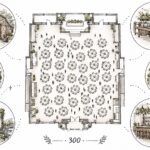
Texas Old Town has four separate halls on one Hill Country property in Kyle, which gives couples useful range in guest count and layout. Tejas holds larger weddings, Sage and Stone work well for mid-size events, and Redbud is the smaller option for a more contained celebration. That variety matters. A country venue only works when the room fits the guest list and the event never feels swallowed by empty space or cramped at dinner.
The bigger operational advantage is the rental window. Couples get 16-hour exclusive access, from 8:00 a.m. to midnight. In practice, that extra time protects the timeline in ways couples usually do not notice until they compare contracts side by side. Vendors can load in without fighting the glam schedule, portraits can happen before guests arrive, and cleanup does not have to start while the last dance is still going.
Why planners keep coming back
This venue solves a lot of common Hill Country problems before they become problems. Outdoor ceremony sites give couples the setting they want. Climate-controlled halls give them a workable backup when weather turns, and in Central Texas, that matters in every season. Spring storms, summer heat, and winter wind can all change a plan fast.
The included infrastructure is also strong where it counts. Dressing suites help keep the morning organized. Indoor and outdoor PA systems, Bluetooth capability, and a wireless mic reduce the need to rent basic audio separately. Built-in beverage bars, a prep kitchen with a separate service entry, documented furniture counts, and on-site event management with cleanup and furniture breakdown included all make the day easier to run.
Couples also get more vendor flexibility than they do at many venues in this category. Any caterer is allowed, which is useful for multicultural menus, family-style service, or couples who already have a trusted catering team. At the same time, the venue maintains a curated vendor list for couples who want options that have already worked on site. If you want a clearer sense of how the venue blends rustic architecture with a more finished event experience, their feature on barn weddings in the Texas Hill Country with modern amenities is a helpful reference.
Practical rule: A venue should give your vendors enough time, access, and built-in support to keep the day on schedule.
Where it solves real planning problems
Pricing clarity is another reason planners keep recommending it. Quotes include sales tax and gratuity, which makes budget comparisons cleaner and cuts down on the usual surprise line items that appear late in the booking process. Payment plans are available too, which can help couples protect cash flow while they are still booking photography, catering, and entertainment.
There are trade-offs, and they are manageable if you ask about them early. The beverage setup is BYOB, but hosts must use an approved bartending company. That can keep bar service organized and often helps with compliance and insurance, but it is still one more vendor decision to make. The venue also does not post a single flat online package price, so serious budget shoppers should ask for a detailed quote before they fall in love with a specific hall.
For couples comparing Texas country wedding venues, this is the kind of property that makes life easier after the contract is signed. It gives you indoor and outdoor flexibility, enough access time to build a realistic timeline, and venue policies that leave room for personal choices without creating chaos on the wedding day.
2. Camp Lucy
Camp Lucy works best for couples who want the wedding to feel like a weekend experience instead of a single event. It has the destination-resort advantage that stand-alone venues can't replicate easily. Guests can stay on property, dine on site, and spread the celebration across more than one setting.
For some couples, that's the whole point. They don't want to shuttle everyone between hotel blocks, rehearsal locations, and a venue that only opens for the wedding window. Camp Lucy reduces that friction by keeping the core experience in one place.
Best fit
The practical appeal is variety. With multiple venue options on one ranch property, couples can choose a look that leans more chapel, garden, or estate without changing campuses. That also creates backup flexibility, which is valuable in Hill Country weather.
The trade-off is control. Resort venues often come with a more structured food and beverage approach, and Camp Lucy is better for couples who want convenience than for couples who want full BYO freedom. It also sits at the premium end of the market, which makes sense for the lodging and hospitality layer but won't suit every budget.
If your guest list includes a lot of out-of-town family, on-site lodging can save more stress than almost any décor upgrade.
This venue is strongest when the guest experience matters as much as the ceremony backdrop. If you want everyone in one place, and you're comfortable paying for that convenience, Camp Lucy makes a lot of sense.
3. Ma Maison
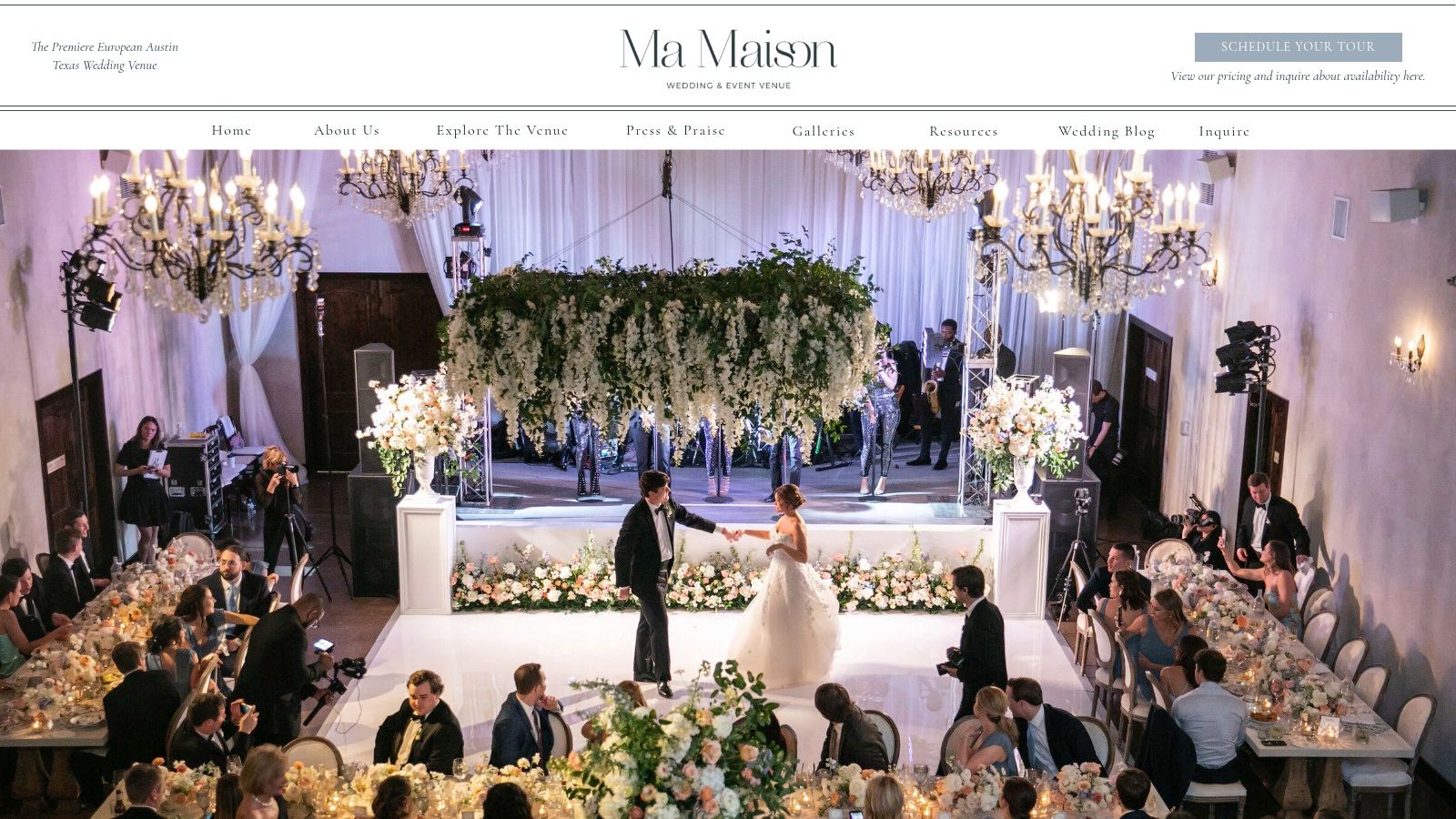
Ma Maison usually appeals to couples who want Hill Country views with a more polished estate feel. The property brings in European-inspired architecture, which changes the tone of the day right away. Instead of a ranch-forward aesthetic, the setting reads as garden estate with country surroundings.
That matters for planning, not just for photos.
Ma Maison gives couples several event spaces on one property, including outdoor ceremony sites and a large indoor hall. That setup helps when the ceremony, cocktail hour, and reception need to feel distinct without adding transportation, a church rental, or a room flip that slows the timeline.
What stands out
The strongest practical advantage is visual range. The Grove, the Green Cathedral, the Trellis, and the Great Hall each create a different atmosphere, so couples can build a day that shifts naturally from ceremony to reception instead of asking one space to do everything. For planners, that usually makes design decisions easier because the venue already provides contrast.
The trade-off is the research phase. Pricing is not presented in a simple public format, so couples need to ask direct questions about rental hours, inclusions, rain backup, and vendor rules before they compare it fairly with other properties. That step filters out a lot of confusion later, especially for couples still learning how to choose the perfect Texas Hill Country wedding venue.
I recommend Ma Maison for couples who care about atmosphere and want an elegant setting without leaving the country venue category. Just make sure the logistics match the look. A beautiful property only works if the access window, floor plan, and planning policies support the wedding day you envision.
4. The Addison Grove
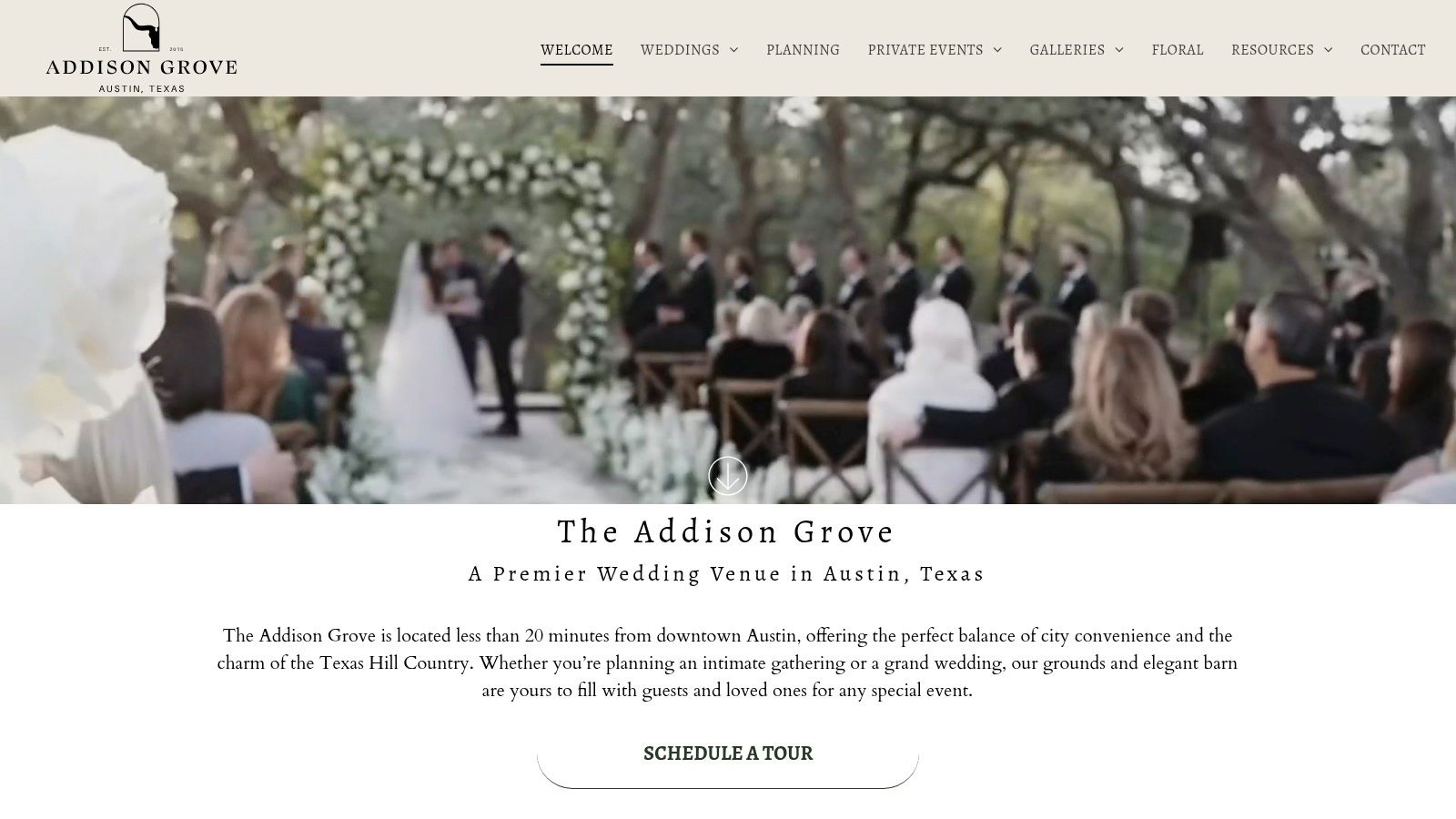
A couple wants a clean, modern event space, but they also want oak trees, open air, and a guest experience that does not involve a long rural drive. The Addison Grove fits that brief well. Its location near Austin and Dripping Springs helps with hotel access, transportation costs, and arrival timing, especially for weddings with a larger guest count.
What makes this venue stand out is not just the look. It is the planning structure behind it. The custom estimator and package options give couples a faster read on whether the venue fits the budget before they spend weeks building a design around it. That kind of pricing visibility saves time, and it usually leads to better early decisions about guest count, rental priorities, and where to spend versus where to pull back.
Where it works best
The Addison Grove is a practical fit for couples choosing between two planning styles. One group wants a polished venue shell and plans to bring in their own team within the venue's rules. The other wants more guidance and prefers working from an established vendor network. Both approaches can work here, but couples should ask specific questions about vendor flexibility, setup access, and how the rain backup changes the flow of the day.
That last point matters in Texas. A venue can photograph beautifully and still create stress if the ceremony backup feels like an afterthought or if the rental window is too tight for a weather pivot. The Addison Grove tends to appeal to planners who want fewer unknowns built into the schedule. Couples comparing similar properties should also review practical tips for planning a rustic Texas Hill Country wedding before they sign, because the right venue is usually the one that holds up under timeline pressure.
A few trade-offs deserve a direct look:
- Bar service: In-house bar service simplifies staffing and compliance, but it gives couples less freedom than a BYOB venue.
- Weekend demand: Popular dates can get expensive quickly, so flexibility on season or day of week helps.
- Guest count fit: The value is stronger for medium to large weddings that can use the venue's scale.
I would shortlist The Addison Grove for couples who want a country-modern setting with more structure than a blank-slate ranch. It is less suited to couples who want total control in every vendor category. The upside is a clearer planning process, and that usually matters more than couples realize once contracts, weather calls, and setup timing start affecting the actual wedding day.
5. Canyonwood Ridge
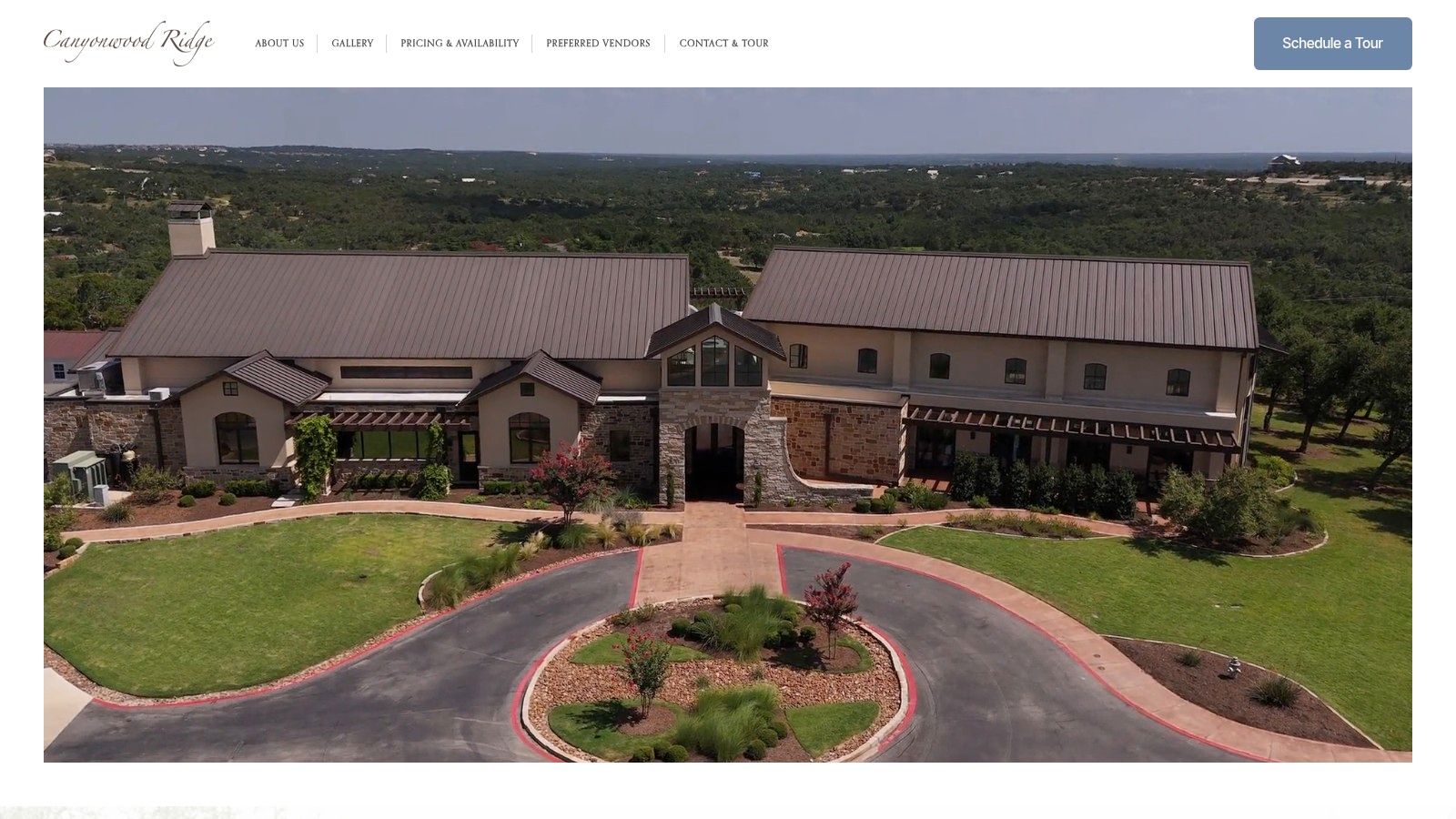
Canyonwood Ridge appeals to practical planners for one simple reason. Its weather backup is built into the property, not patched together at the last minute. The combination of an indoor chapel, outdoor ceremony option, and reception hall removes a lot of uncertainty that comes with open-air Texas weddings.
That matters more than couples expect. A scenic lawn sounds perfect until rain, wind, or heat forces a same-day shift and every vendor has to reroute.
Why it works for cautious planners
The venue is refreshingly clear about rental ranges and availability, which helps couples filter quickly. Beyond that, it addresses a common budget blind spot. Texas Hill Country venue guides often skip weather contingency costs, even though 32% of Texas outdoor weddings faced unexpected weather-related expenses and couples spent an average of $1,200 to $3,500 on emergency tents, indoor move-in fees, or PA rerouting. A venue with a built-in indoor option reduces the odds of that painful surprise.
Book the rain plan you can live with before you need it. Decisions made during a storm are almost always more expensive.
Canyonwood Ridge also benefits from being purpose-built for weddings. The layout, support structure, and planning rhythm usually feel smoother than at general event properties that happen to host weddings.
For couples weighing properties across the region, these essential tips for planning a rustic Texas Hill Country wedding are the same questions I'd ask on a tour. Where does the ceremony move if weather changes? How fast can the team pivot? What costs appear only when the forecast gets ugly?
6. Gruene Estate
Gruene Estate fits couples who want the weekend to feel distinctly Texan from the moment guests arrive. The open-air chapel, farmhouse pavilion, and historic setting give it a sense of place that reads differently from the more polished Dripping Springs circuit.
I usually recommend it to couples who care as much about guest experience outside the ceremony as the ceremony itself. New Braunfels and Gruene give people somewhere to eat, shop, and spend time before and after the wedding, which matters more than many venue tours acknowledge. A pretty property is helpful. A pretty property near an actual town is often easier on guests.
Who should book it
The venue also solves a few planning headaches upfront. On-site lodging helps with hair and makeup timing, first-look logistics, and late-night exits. Included pieces such as farm tables, decor items, the fire pit, and the game yard can trim your rental list and reduce how many moving parts your planner or family has to track.
The trade-off is exposure to the weather.
An open-air chapel photographs beautifully, but it asks for a clear-eyed rain, wind, and heat plan. Couples considering Gruene Estate should ask direct questions on the tour. What is Plan B for the ceremony? How quickly can staff reset the layout? Which rentals or labor charges tend to appear only if the forecast turns? Those answers matter more than the ceremony view.
That is also where venue comparisons get more useful. Texas Old Town, for example, often comes up in the same broader search because couples want Hill Country character with different levels of built-in weather protection and event flow. Gruene Estate can be the better fit if the priority is charm, weekend atmosphere, and a setting that feels rooted in old Texas. It works best for couples who are comfortable trading some weather protection for that character and who budget for contingencies before they fall in love with the chapel.
7. Hayes Hollow at Hidden Falls
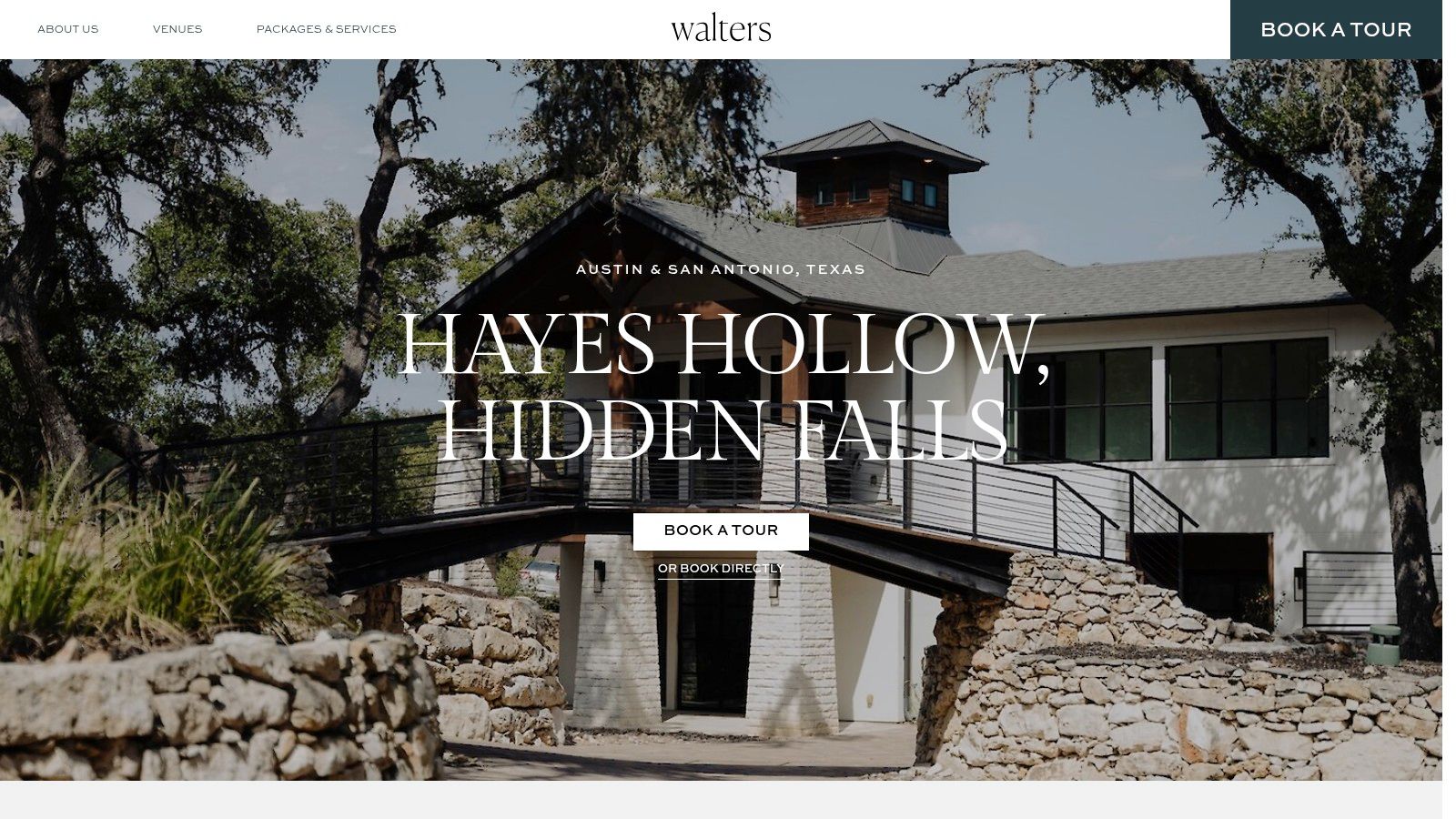
A couple tours Hayes Hollow after seeing a string of barn venues that blur together. Then they reach the limestone backdrop, the water feature, and the oak-covered grounds, and the question shifts from "Is it pretty?" to "How tightly managed is the wedding day going to be?" That is the right question here.
Hayes Hollow at Hidden Falls fits couples who want Hill Country drama but do not want to build every part of the event system themselves. The setting has more visual weight than a standard barn-and-field property, and the managed-venue model usually brings clearer processes, steadier communication, and a more consistent event flow.
Operational trade-offs
That structure solves real problems. Couples who do not want to coordinate a long list of independent vendors often prefer a venue group with established procedures, because fewer handoffs usually means fewer timing mistakes on the wedding day. The trade-off is flexibility. If your priority is choosing every vendor, bringing in unusual beverage plans, or customizing each rule, this format can feel narrower than a fully open venue.
That does not make it worse. It makes it a fit question.
Saturday demand is heavy in this category, so availability should come up early in the conversation. Ask for realistic date options, not just a pricing packet. Also ask what is included in the venue's planning support, how vendor approvals work, how much setup access you have, and what weather backup looks like in practice. Those details affect stress level more than the waterfall does.
Hayes Hollow is usually strongest for couples who value a guided planning process and want a polished Hill Country setting without reinventing the wheel. Couples comparing it with Texas Old Town are often deciding between two different planning styles. Hayes Hollow can offer more structure through its management model. Texas Old Town often appeals more to couples who want longer rental windows and broader vendor choice. That distinction is practical, and it tends to shape the budget, timeline, and vendor experience from the first booking call onward.
7-Point Comparison: Texas Country Wedding Venues
| Venue | Implementation complexity | Resource requirements | Expected outcomes | Ideal use cases | Key advantages |
|---|---|---|---|---|---|
| Texas Old Town | Moderate, on-site manager simplifies logistics; BYO beverage policy adds coordination | Flexible vendor policy (any caterer); host supplies drinks; approved bartenders required; AV and prep kitchen included | Relaxed timeline, versatile indoor/outdoor flow, reliably managed events | Couples wanting long rental windows, vendor flexibility, and large guest counts (150–320) | 16‑hour rental, transparent pricing, multiple halls, on-site event management, award recognition |
| Camp Lucy | Moderate, dedicated resort events team handles most planning tasks | Full‑service resort: on‑site lodging, restaurant, spa, staff and catering options | Seamless destination experience with upscale guest amenities | Multi‑day/resort weddings and guests who want on‑site lodging and dining | On‑site accommodations, restaurant and spa, multiple distinct venues on one property |
| Ma Maison | Moderate, estate coordination needed; popular dates require early booking | Multiple ceremony sites and a Great Hall; planning materials provided by venue | Refined, Old‑World aesthetic across varied scenic settings | Couples seeking a sophisticated European‑inspired estate near Austin | Multiple ceremony looks on a landscaped estate and a grand indoor Great Hall |
| The Addison Grove | Low, online estimator and packages streamline budgeting and choices | Option for all‑inclusive packages or venue‑only; in‑house bar service and vetted partners | Clear cost expectations and reliable execution for larger weddings | Large guest lists and couples wanting transparent budgeting and a rain plan | Online cost estimator, large capacity, curated packages, dependable rain plan |
| Canyonwood Ridge | Low-to-moderate, purpose‑built layout reduces complexity; coordination recommended for full service | On‑site chapel, team support, published rental ranges and availability calendar | De‑risked weather with indoor chapel and predictable pricing ranges | Couples prioritizing clear published pricing and a built‑in weather backup | Published rental ranges, on‑site chapel, experienced venue team |
| Gruene Estate | Moderate, historic property logistics and weather planning required | Open‑air chapel and pavilion, on‑site lodging, included tables/decor and amenities | Authentic Texas country character with simplified inclusions for planners | Couples wanting historic farm charm close to dining/entertainment | Historic character, on‑site lodging, inclusive décor and practical amenities |
| Hayes Hollow at Hidden Falls | Moderate, managed‑estate processes standardize planning but may limit BYO flexibility | Outdoor limestone/waterfall sites, modern ballroom, standardized staff and nearby lodging options | Dramatic ceremony visuals with consistent venue operations | Couples seeking striking natural backdrops within a professionally managed portfolio | Waterfall and limestone features, enhanced lighting/landscaping, standardized estate operations |
From Venue Search to We Do
A venue usually feels easy at the tour stage. The stress test comes later, when the timeline is tight, the rental clock is running, the band is loading in, and the forecast changes two hours before the ceremony. That is why smart venue selection starts with operations, not photos.
In this market, strong dates book quickly. Couples who avoid expensive surprises usually compare the same few items first. They ask how long they have the property, what happens if it rains, whether outside vendors are welcome, how setup and breakdown work, and which fees show up after the initial quote.
The venues in this guide each solve a different planning problem. Camp Lucy works well for a full wedding weekend. Ma Maison fits couples who want a polished estate setting. The Addison Grove helps with early budget planning and larger guest counts. Canyonwood Ridge makes weather planning easier. Gruene Estate brings historic Texas character with practical inclusions. Hayes Hollow offers dramatic scenery within a more standardized operating model.
Texas Old Town deserves a close look for one simple reason. It addresses several of the planning issues that commonly create friction. The four-hall setup gives couples better fit across guest counts and style preferences. Extended access helps protect the timeline from getting compressed. Indoor and outdoor options make weather backup easier to handle. A flexible vendor policy gives couples choices without forcing an all-or-nothing planning approach.
Tour with a planner's eye. Stand at the ceremony site and ask what changes in bad weather. Walk the catering path. Ask when vendors can arrive, who resets the space, who handles cleanup, and how late music can run. Those answers are usually more useful than another hour spent scrolling galleries. If you want broader planning help while you're still weighing options, ABC Hire's wedding planning guide is a useful companion resource.
If Texas Old Town is on your shortlist, schedule a tour and review it like an operations meeting, not just a design appointment. Compare the halls in person, ask how the access window affects your full-day timeline, and request a line-by-line quote so you can judge the venue on real planning value, not just appearance.