Your venue is booked, the date is nine months out, and the list still grows every time someone sends a link. Dress samples, guest counts, a coordinator, a playlist, a bar plan. None of it feels finished, and none of it should be random.
The bride-to-be must-haves below are the backbone. Every other detail hangs on them: what you wear on which surface, who runs the day, how the hours are blocked, what the camera covers, where you get ready, whether guests can hear the vows, what you have already spent, and how food and drinks move through the building. Each note below is a task you can date, not a mood board.
This is written for a Central Texas day with an outdoor ceremony option, a climate-controlled hall, a long rental window, and real vendor rules. Put these eight on a shared calendar before you add favors or one more inspiration folder.
Table of Contents
- 1. Wedding Dress
- 2. Wedding Planner or Day-of Coordinator
- 3. Detailed Wedding Day Timeline
- 4. Wedding Photographer and Bridal Portraits
- 5. Bridal Beauty Trial and Dressing Suite Setup
- 6. Ceremony Sound System and Music Plan
- 7. Wedding Budget and Payment Plan
- 8. Catering and Bar Service Plan
- Bride to Be Must Haves at a Glance
- Turn This Checklist Into Your Plan, Starting This Week
1. Wedding Dress
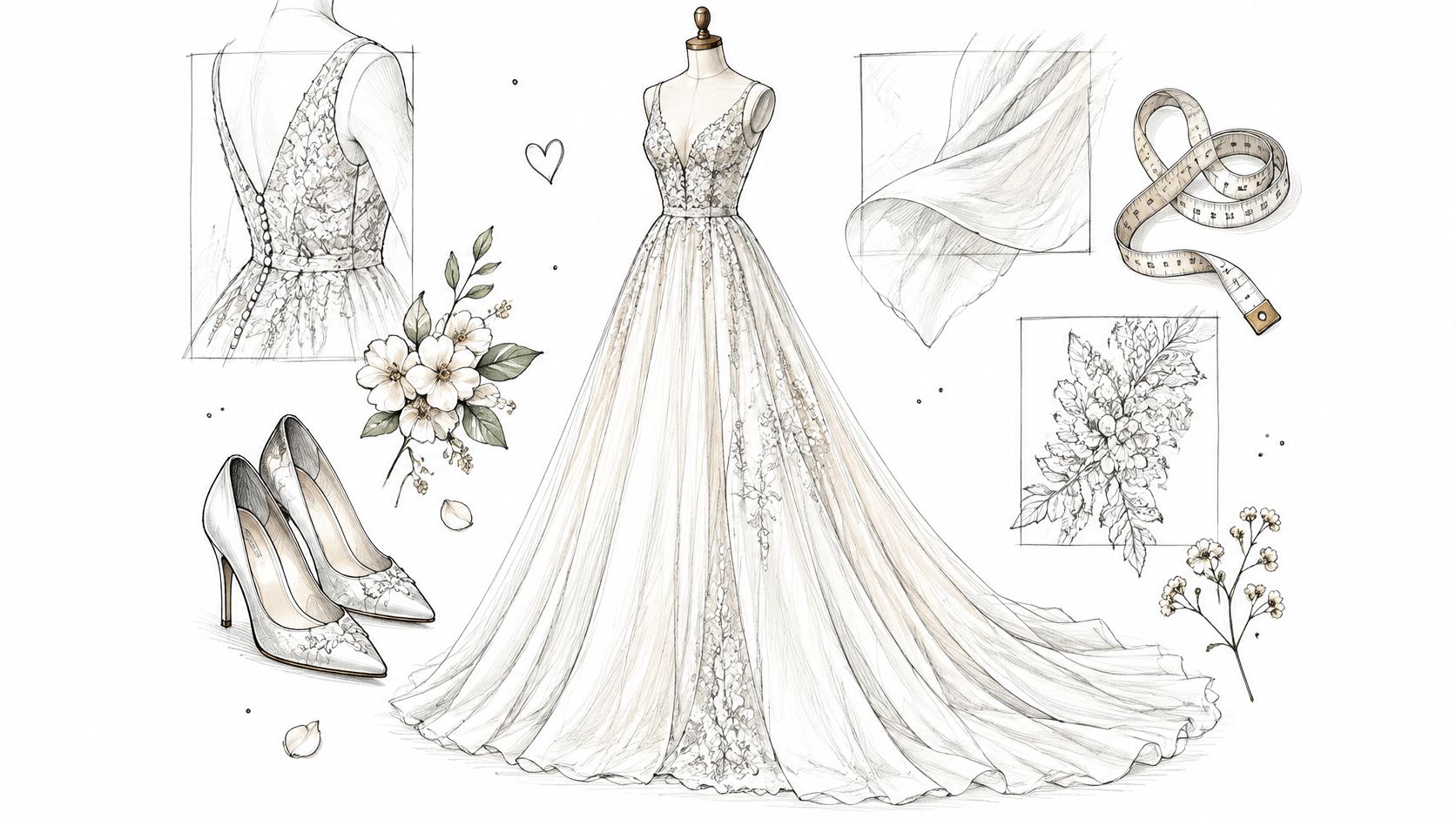
The gown is usually the longest lead on the whole day, and it has to survive more than the aisle. In The Knot Worldwide's 2025 Real Weddings Study of 16,956 U.S. couples married in 2024, 91% prioritized the wedding dress, so this is not a late add-on.
Queen Victoria's white gown in 1840 helped set the color most brides still expect, and a 2025 U.S. wedding report from Shane Co. found wedding attire was the favorite part of planning for 17% of respondents. The work around that dress is less romantic: fitted undergarments, shoes you can walk in, a veil only if you want one, and a small repair kit with fashion tape, safety pins, stain remover, needle, thread, and spare buttons.
Match the silhouette to the site
A satin ball gown reads well against pine tables in a large dance hall such as Tejas, which holds up to 320 guests. A chiffon A-line is the smarter call for an afternoon ceremony on grass, footbridges, and garden paths. Heavy beading and a long train look stunning in photos and miserable once the Hill Country heat hits the train.
Practical rule: Ask about heat and humidity before you lock fabric. A gown has to work for portraits, vows, dinner, and dancing, often moving from sun to air conditioning.
- Start early: Shop 9 to 12 months out so ordering and alterations are not racing the date.
- Bring the heel you'll wear: Fittings lie if the shoe height is wrong.
- Book the last fitting: Two to four weeks out is the window that still leaves time for a hem fix.
- Plan the send-off: Birdseed, organic petals, wands, bubbles, and sparklers are fine for your exit. Paper confetti, glitter, silk petals, sand, and unprotected candles are not.
Say you pick lightweight chiffon for a garden ceremony and keep a shorter bustle for the reception. You will dance. A cathedral train that is not bustled will not.
2. Wedding Planner or Day-of Coordinator
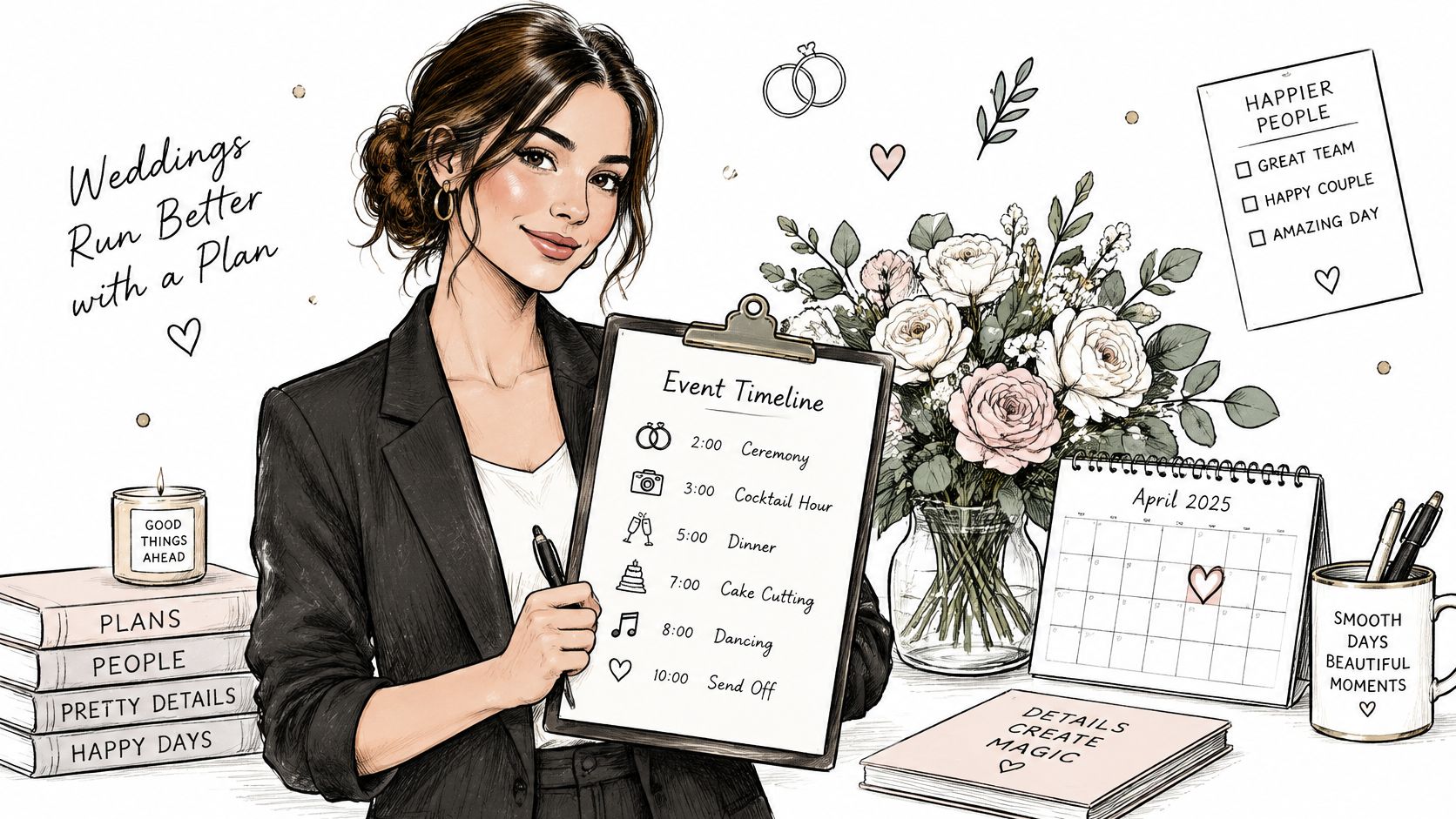
A full planner carries contracts, design, and vendor search from the start. A day-of coordinator owns the last weeks and the event itself. I recommend the day-of role even when the venue already has a manager on site, because those two jobs are not the same.
Our on-site manager covers the property: access, furniture, cleanup, and the building. Your coordinator should own vendor arrival, the cue sheet, and the relative who cannot find the ceremony chairs. Overlap is how people get paid twice to do one task, or how a task gets done by nobody.
The Knot Worldwide's 2025 trends research reported that 20% of couples used AI tools, double the 10% reported in 2023, mostly for writing, etiquette, inspiration, and itineraries. Use that for a first draft of a vendor email. Do not let it set alcohol rules, capacities, or what your contract says. Save the prompt, the edit, and the vendor's written confirmation.
A couple with a 16-hour rental, from 8:00 a.m. to midnight, still needs one person watching catering, rentals, and guest flow while they are in photos. The same logic holds for a quinceañera that stacks a ceremony, dinner, and dance. Ask planners for recent references from halls of a similar size, send capacity and the preferred vendor list early, and read how day-of wedding coordination splits venue duties from coordinator duties before you sign.
3. Detailed Wedding Day Timeline
A timeline is a set of blocks with owners, not a pretty schedule card. Hair, photos, ceremony, cocktails, dinner, dancing, and departure each need a start, a stop, and a person who is allowed to move the next block.
With exclusive use from 8:00 a.m. to midnight, you can load in without stealing cocktail hour, and you can load out without a midnight argument in the parking lot. Shorter rentals are where speeches get cut and florists get rushed. The failure is usually a missing buffer, not a bad song.
What belongs in the file
- Buffers: Hold 15 to 30 minutes between major blocks. Portraits run long. They always do.
- Owners: One point person per block, named on the page, not “the bridal party.”
- Vendor windows: Load-in and load-out for catering, florals, and rentals, using the separate kitchen service entry.
- Send date: Final timeline to every vendor at least one week out.
A 10:00 a.m. garden ceremony and a 1:00 p.m. reception in Tejas can sit inside that 16-hour window with setup before guests arrive and breakdown after the last dance. Skip the buffer and the band is still sound-checking when dinner should start.
Build it in a shared file your planner, family, and venue manager can open on a phone. Our event day schedule template is the skeleton. Drop in your real times, then stop editing it the week of the wedding unless a vendor confirms a change in writing.
4. Wedding Photographer and Bridal Portraits
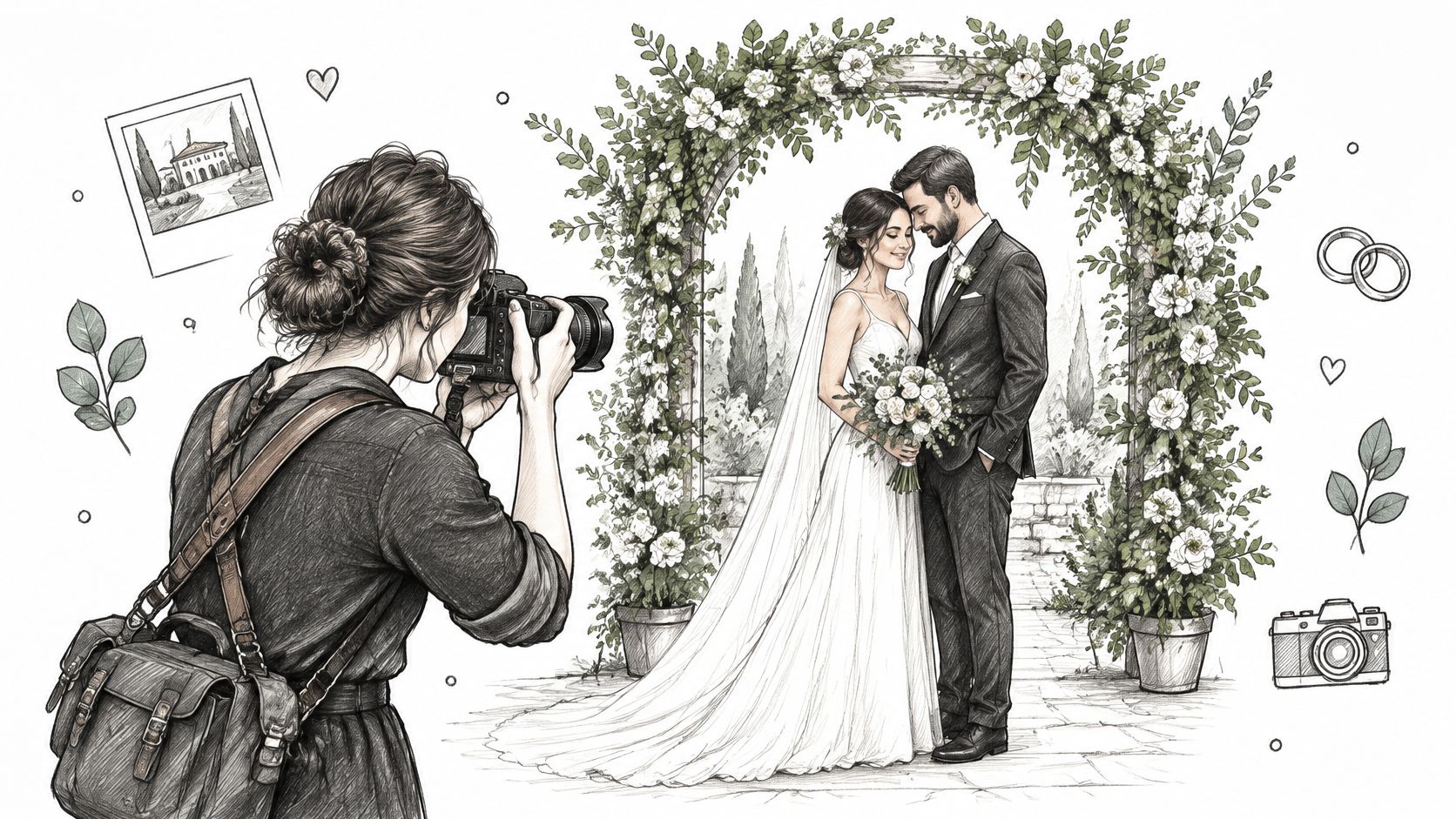
Hire for the hours you will live, not for a highlight reel. Full galleries show how someone handles harsh noon light, a dim dance hall, and a grandmother who will not stand for a third pose.
Coverage length and a second shooter matter more than a preset filter. A single photographer cannot be on the footbridge and at the sweetheart table at the same time. If family combinations are essential, they go on a written shot list: parents, siblings, the people who traveled.
Zola's First Look Reports found that in 2025, 75% of couples said social media directly inspired their wedding choices, while only 3% wanted a wedding designed primarily for online attention. Pull a pose from a post if you like it. Do not restage the reception so the grid looks busier than the room.
Engagement photos and bridal portraits on our grounds are available by appointment, and they have to be scheduled Monday through Thursday, with availability confirmed five days before the shoot. That session is a lighting test: streams, gardens, gazebos, and the difference between open shade and direct sun. A couple who walks the ceremony site then already knows which bridge works and which path will eat a train. Do it a few weeks out, not the day before alterations are due.
5. Bridal Beauty Trial and Dressing Suite Setup
A trial is a test under the light you will have, not a makeover for its own sake. Book it in a warm month if your ceremony is midday and outdoors. Foundation that looks right in a studio often slides once you are on a garden path in May.
Bring the neckline, or a swatch, plus the veil or headpiece. A low bun that fights a comb is a problem you want on a Tuesday, not while guests are parking. Each hall has a dressing suite with a private restroom and an extra vanity, so the bridal party does not share a hallway mirror with guests.
What to pack and when to start
Have the artist in the suite at least 30 minutes before the planned start. That half hour is for outlets, light, and a chair that is not in the way of the processional path.
Your touch-up kit stays with one person, not in a car:
- Oil control: Blotting papers and setting powder.
- Structure: Bobby pins, the same ones used at the trial.
- Repair: Fashion tape and a lip color you already tested on camera.
If you want simpler products in the weeks before, discover natural ingredients for radiant skin and then still run those products through the trial. A new serum the night before is how a calm face becomes a reactive one. The suite is for finishing a tested look, not inventing one.
6. Ceremony Sound System and Music Plan
If guests cannot hear the vow, the rest of the décor does not matter. We provide indoor and outdoor PA systems with Bluetooth and a wireless microphone, so the same plan can cover a garden ceremony and the hall if weather moves you inside.
That is a hospitality issue, not a tech hobby. The Knot's 2025 study, reported by Business Wire, found 72% of couples named making guests feel taken care of as their top priority, and 45% deliberately chose accessible venues. Hearing the officiant, a short walk from parking, reserved seats, shade, and water belong on that list with the microphone.
A live acoustic guitar plus a wireless mic for the officiant is a clean outdoor setup. A quinceañera playlist for the entrance, dances, and cake works the same way if it is offline.
- Test your phone: Pair Bluetooth with the device you will use, not a planner's laptop.
- Keep a second copy: Download playlists and duplicate them. Venue Wi-Fi is not your backup.
- Name the cue person: One human advances tracks. Not a group text.
- Sound-check at rehearsal: Ask the venue manager to run it then, while the space is still empty.
Quiet grounds make a weak mic obvious. What sounded fine in a living room disappears across seated rows and a breeze.
For the reception, choreography ideas for engaged couples are useful only after the song file, the cue, and the dance-floor timing are already on the timeline. A first dance with no assigned track is a stall, not a surprise.
7. Wedding Budget and Payment Plan
Another shopping list will not fix a budget that keeps moving. In a 2025 Zola survey, 71% of couples said they were unprepared for the sheer number of decisions, 55% struggled with budget management, and separate reporting found 74% exceeded their original expected budget.
What works is a one-page priority rank, a sheet that splits committed costs from optional ones, and a guest-count trigger. Each added table changes catering, rentals, seating, and staffing. What does not work is hunting discounts while the guest list and the vision both stay unlimited. Limiting choices saves more than a coupon.
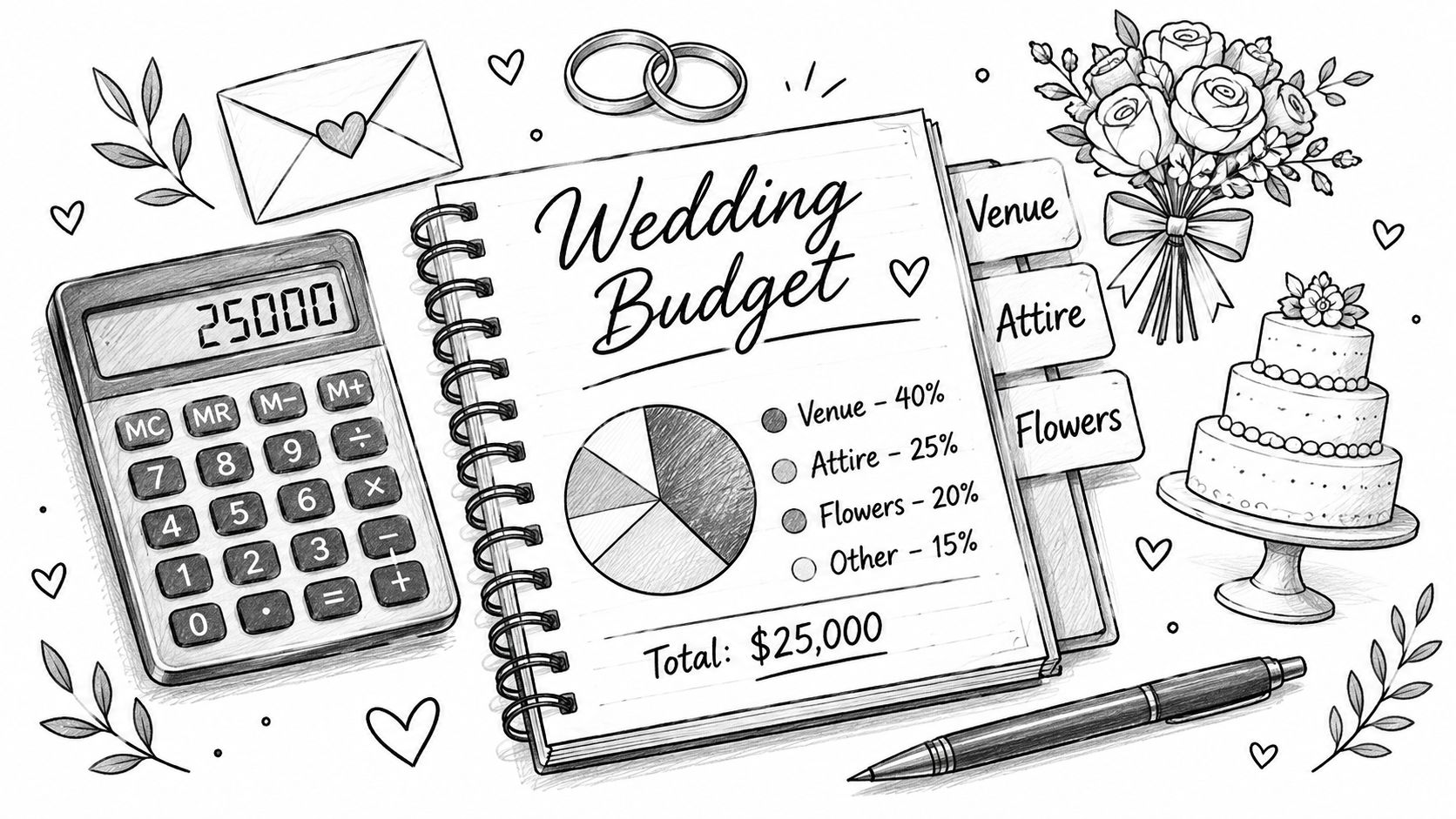
Set the total first, then assign shares to venue, food, photos, and attire. Ask every vendor whether tax, gratuity, and delivery sit inside the number. Our quotes include sales tax and gratuity, which is the comparison point you want before you call a lower figure a savings. Track deposits in one shared sheet, note when each becomes nonrefundable, and keep a contingency of about a tenth for the thing you did not price. Freeze new purchases in the final week.
A couple spacing deposits for a 300-guest reception in Stone, or a family capping a Redbud milestone party by guest count, is doing the same job: deciding before the invoice decides. Map due dates with our wedding payment plans, and use straightforward budget tracking for wedding expenses so optional items cannot hide inside “we'll figure it out.”
8. Catering and Bar Service Plan
Food and drinks are where guest comfort and your largest variable cost meet. You can bring any caterer. The prep kitchen has its own service entry, so trays should not cross the ceremony lawn while guests are seated.
Bar service is the exception to vendor freedom. You may bring the beverages. Service has to run through an approved company, and alcohol service is contracted with Texas Ritas, an independent TABC firm. Booking “a friend who pours” is the plan that fails the week of the event.
A local barbecue team serving family-style in Tejas is a different operation from a buffet and dessert station in Sage. Both need a written arrival time, a load-in path, and a list of equipment that is not already in the hall. Book caterers and bartenders three to six months out, and taste the menu before you sign. A menu you have not eaten is a guess.
Estimate drinks from headcount, hours, and heat. An outdoor cocktail hour in July is not the same pour as a winter reception indoors. Share dietary needs as a count the kitchen can plate, not as a note on the invitation. Then put service start, last call, and kitchen exit on the same timeline as the band. If those clocks disagree, dinner waits on a speech or the bar runs dry during dancing.
Bride to Be Must Haves at a Glance
| Item | When to Lock It In | Primary Role | Who It Involves |
|---|---|---|---|
| Wedding Dress | Start 9–12 months before the wedding; schedule final fitting 2–4 weeks before | Establishes bridal style and supports comfort and movement | Bride, bridal shop, seamstress |
| Wedding Planner or Day-of Coordinator | Book early in planning; confirm responsibilities before the event | Coordinates vendors, timelines, and guest logistics | Couple, planner or coordinator, venue manager, vendors |
| Detailed Wedding Day Timeline | Draft during planning; share the final version with vendors at least one week before | Organizes event activities and keeps the day on schedule | Couple, coordinator, vendors, wedding party, venue manager |
| Wedding Photographer and Bridal Portraits | Book months to a year ahead; schedule portraits a few weeks before | Captures the wedding and helps plan portrait locations and lighting | Couple, photographer, wedding party, family |
| Bridal Beauty Trial and Dressing Suite Setup | Schedule the trial 4–8 weeks before; arrange suite setup for the wedding day | Tests hair and makeup and provides an organized getting-ready space | Bride, beauty artist, bridal party, venue |
| Ceremony Sound System and Music Plan | Finalize music cues in advance; test the system during rehearsal | Ensures vows, readings, and music are clearly heard | Couple, officiant, sound operator, venue manager, musicians or DJ |
| Wedding Budget and Payment Plan | Set early, before booking major vendors; track deposits and due dates | Allocates spending and manages payments | Couple, family contributors, venue, vendors |
| Catering and Bar Service Plan | Book caterers and bartenders 3–6 months before the event | Plans food and beverage service and vendor logistics | Couple, caterer, bartending company, venue manager |
Turn This Checklist Into Your Plan, Starting This Week
Open the shared calendar and give each of these eight a deadline and a name. The gown search starts this month if you are inside a year. The coordinator and photographer go on hold before peak Saturdays disappear. The timeline gets a first draft as soon as the ceremony hour is real. Beauty, sound, budget, and catering follow on dates you can point to, not “sometime this spring.”
Tour the property in person before those deadlines harden. Walk the ceremony ground, the distance from parking, the suite, and the hall you think you want. Tejas, Sage, Stone, and Redbud are different rooms, from 150 guests to 320, each with its own outdoor site. A photo and a floor plan will not show you the sun at 4 p.m. or how far grandparents walk from the lot. Vehicles other than the couple's and handicapped guests use the lot for that hall.
Confirm the policies that change your biggest decisions while you are standing there. You choose your own vendors and décor, with bartending as the structured exception, and a preferred list is there when you want Austin-area names you do not have to vet from zero. The rental is exclusive for 16 hours, 8:00 a.m. to midnight, which is the window your timeline has to fit. Quoted pricing includes sales tax and gratuity, and personalized payment plans exist so deposits are a schedule instead of a surprise. Rehearsal dinners, proposals, and weekday portrait sessions can be added when the date is still open.
Texas Old Town in Kyle, TX, sits on 55 acres between Austin and San Antonio, with water features, gardens, indoor and outdoor sound, dressing suites, and on-site management plus cleanup. That is the logistics layer under the eight tasks above. Book the tour, bring the questions your spreadsheet cannot answer, and leave with dates on a calendar rather than another open tab.
Texas Old Town gives you a 16-hour exclusive rental, indoor and outdoor ceremony options, and room to turn dress, timeline, sound, and catering choices into a schedule that fits the day. If you are planning a Central Texas wedding and want those bride-to-be must-haves tied to a real hall and grounds, visit Texas Old Town and set a tour.