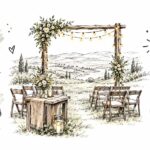
You're standing on a Hill Country property with your phone full of screenshots, trying to decide whether the place feels like a real western wedding or just a barn with a few lanterns hung up for the tour. That's the right instinct. A cowboy themed event space only works when the mood, the movement, and the guest experience line up, not when the decor is trying too hard.
The best version feels unhurried and grounded. Guests hear boots on wood, music carrying cleanly from the dance floor, and people talking without shouting over a bad sound system. The worst version looks fine in photos and falls apart the second the weather shifts, the vendor team arrives, or dinner service starts.
Table of Contents
- What a Cowboy Themed Event Space Feels Like
- Defining the Rustic Hideaway Cabin Look
- Matching Hill Country Halls to the Cowboy Vibe
- Styling Checklist for a True Cabin Hideaway
- Ceremony and Reception Layouts That Flow
- Vendors, Photography Spots, and a 16-Hour Day
- Weather and Backup Plans for Hill Country Events
- Your Pre-Tour Planning Checklist
What a Cowboy Themed Event Space Feels Like
A true western setting doesn't announce itself with gimmicks. It greets people with lantern light, warm wood, open air, and enough breathing room that nobody feels boxed into a theme. Guests settle faster in a space like that, and the room feels confident without trying to prove anything.
The cabin-hideaway version of this style is quieter than the usual rodeo look. It relies on texture, not novelty. Oak trees, pine tables, stone, soft lighting, and a room that lets the Hill Country do most of the talking set the tone. That is why the property matters more than the props.
A venue like Texas Old Town's western-themed venues works when the atmosphere holds up in real use, not just in one styled corner. Guests remember the way the ceremony space feels at dusk, how the room carries sound, and how easily they move from cocktail hour to dinner without confusion.
Practical rule: If the space still feels western after the decor is packed away, you have the right foundation.
Skip the cowboy look built on overdone signage, plastic props, or too many staged details. The goal is a grounded, easy setting where the space and the layout do the heavy lifting. That is what guests feel, even if they cannot name it.
Defining the Rustic Hideaway Cabin Look
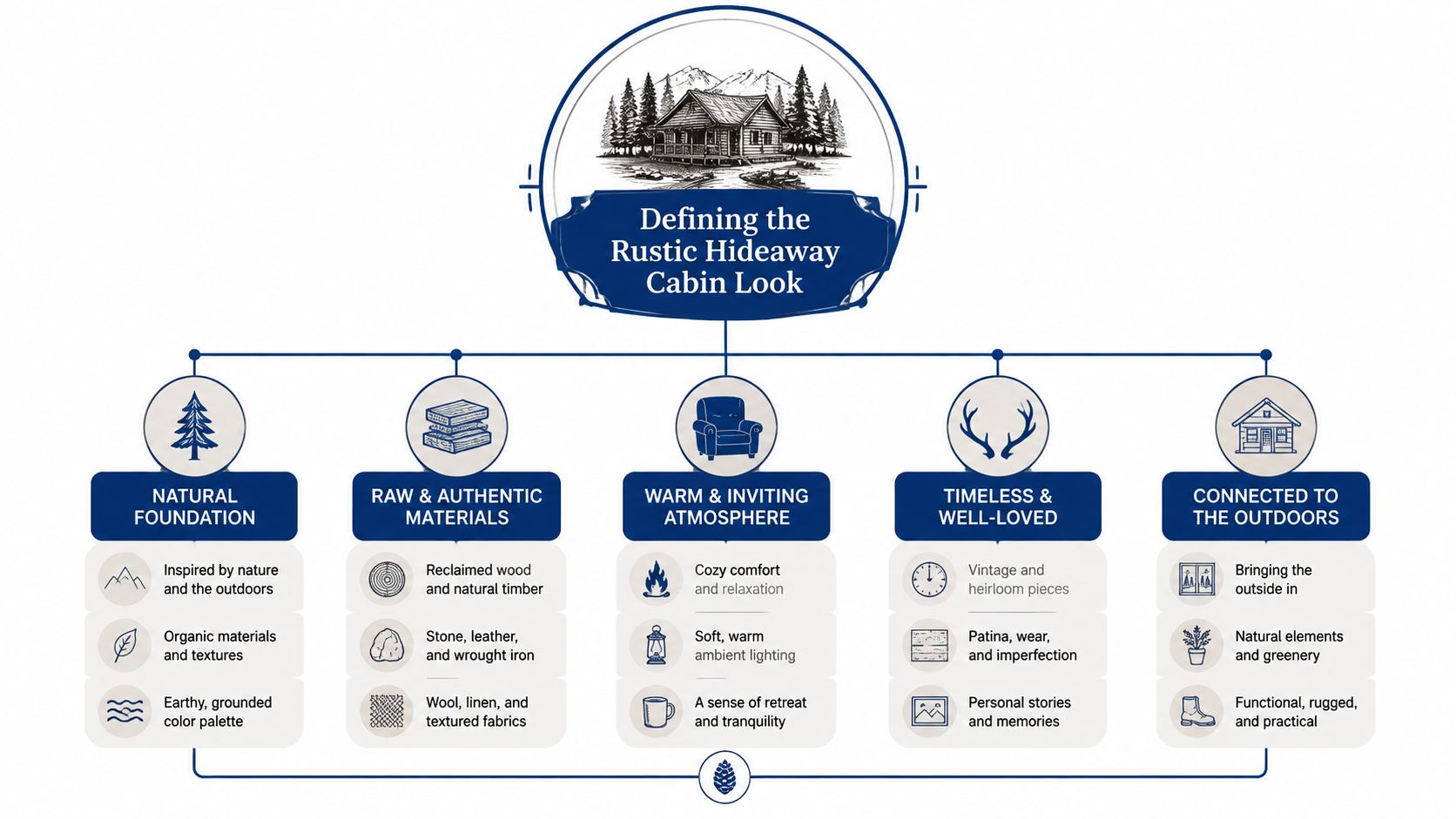
“Rustic hideaway cabin” is a design language, not a pile of decorations. The look is built on reclaimed wood, wrought iron, leather, wool, vintage ranch details, and unpolished stone or masonry. These materials create warmth and texture without making the venue feel staged. The result should feel collected, not manufactured.
What the room needs to say
Start with surfaces. Pine, stone, metal, and worn leather do the heavy lifting because they read as authentic even when the rest of the styling stays simple. Mason-jar lighting, wagon-wheel references, and ranch signage can support the look, but they should stay in the background. If the venue needs a stack of extra rentals just to look believable, the base space is weak.
Then check the functional features. A room that is climate-controlled, has dressing suites, includes a built-in bar, and offers a clean outdoor ceremony site already gives you the bones of the vibe. That matters because a venue can photograph western and still fail western in practice. Guests do not care how rustic the walls looked if they were sweating through dinner or waiting in an awkward hallway.
The test is simple. Ask whether the venue works before styling begins. If the answer is yes, your decor becomes an accent instead of a rescue mission. If the answer is no, the design budget gets eaten up fixing problems that should have been handled by the space itself.
For a styling reference that is useful, this rustic western decor guide from Texas Old Town matches real event flow better than a generic mood board does.
Structural features that matter more than Pinterest
- Climate control keeps the room usable in Hill Country weather.
- On-site dressing suites protect the timeline and keep the wedding party out of guest traffic.
- A built-in bar keeps service tidy instead of scattered across the hall.
- An outdoor ceremony area gives you the western backdrop without making the whole event depend on weather.
Matching Hill Country Halls to the Cowboy Vibe
The four-hall layout at Texas Old Town is a practical way to judge cowboy style because each room handles the mood differently. Guest count, privacy, and finish level shape the experience more than most couples expect. One hall fits a rougher dance-hall feel, another works better as a hideaway, and another lands in polished-rustic territory.
How the halls read on the ground
Tejas is the strongest fit for a larger western wedding because it reads like a true Texas country dance hall, with handcrafted pine tables and space for up to 320 guests. Choose it when you want movement, noise, and a crowd that can spread out without the room losing its energy.
Sage also holds up to 300 guests, but its secluded placement near the grand entrance changes the experience. It suits couples who want a private arrival and a little more ceremony before the reception opens up.
Stone, also up to 300, leans more polished-rustic because of its upscale finishes. If your version of cowboy is cleaner and more refined than rugged, this is the better match.
Redbud is the intimate option at up to 150 guests, and it comes closest to a real cabin-hideaway mood. Smaller guest counts work here because the room feels deliberate instead of empty.
| Hall | Max Guests | Style | Best For |
|---|---|---|---|
| Tejas | 320 | Authentic Texas country dance hall | Large western weddings and high-energy receptions |
| Sage | 300 | Secluded western setting | Private arrivals and dramatic guest flow |
| Stone | 300 | Polished-rustic | Refined western events |
| Redbud | 150 | Intimate rustic hall | Cabin-hideaway weddings and smaller guest lists |
Choose the hall based on the feeling you want guests to have in the room, prioritizing atmosphere over raw capacity. A small guest list in a big hall can feel thin. A bigger crowd in an intimate room can feel cramped and hard to move through.
If the guest count is close, pick the hall that matches the mood first and the photo style second.
For a venue comparison lens, Texas Old Town's Hill Country venue guide is useful because it keeps the focus on layout and flow instead of decor alone.
Styling Checklist for a True Cabin Hideaway
Good styling finishes the room with a few strong choices in the right places, then lets the venue's wood, stone, and natural setting carry the rest. Use a few strong choices in the right places, then let the venue's wood, stone, and natural setting carry the rest. That approach works in a cowboy themed event space because the hall already brings real texture. Your job is to add structure, warmth, and a clear visual line from the entrance to the tables to the bar.
Entry, tables, bar, and light
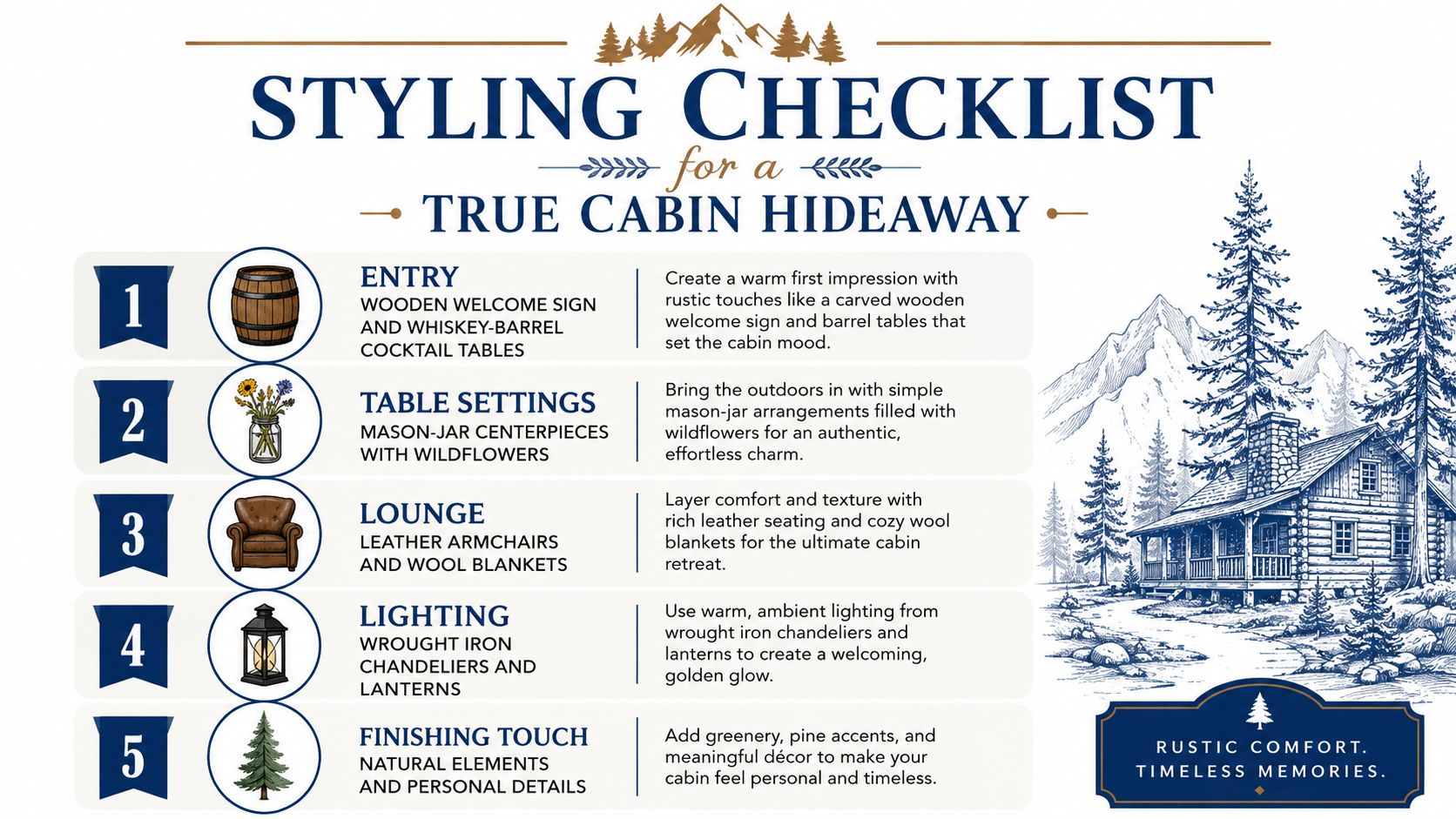
Start at the entrance. A reclaimed-wood welcome sign and whiskey-barrel cocktail tables set the tone without overexplaining it. Guests should read the style in seconds. If the first thing they see is a pile of props, the room feels crowded before the party even starts.
On the tables, keep it tactile. Mason-jar centerpieces, simple runners, leather menus, and natural florals read western without turning kitschy. Chairs and linens should support the hall, not fight it. Use materials that look like they belong in the Hill Country, not ones that try to impersonate a movie set. For couples who want ideas that translate cleanly into event decor, shop Bridle Up Hope home items is useful for texture, finish, and color direction.
The bar should stay clean and functional. A built-in beverage bar works best when the glassware, stirrers, and signage stay coordinated and easy to reach. Keep service areas open and readable so the staff can work without cutting across guest flow. Lighting carries the whole mood here. String lights over the dance floor, lanterns along the aisle, and uplighting on stone walls make the room feel finished. Harsh white light kills the cabin effect fast. Warm light does the opposite.
What to skip
- Oversized novelty props that make the event look like a costume party.
- Too many themed signs that distract from the architecture.
- Cheap faux-rustic pieces that clash with real wood and stone.
- Heavy-handed cowboy imagery when the venue already carries the mood on its own.
Ceremony and Reception Layouts That Flow
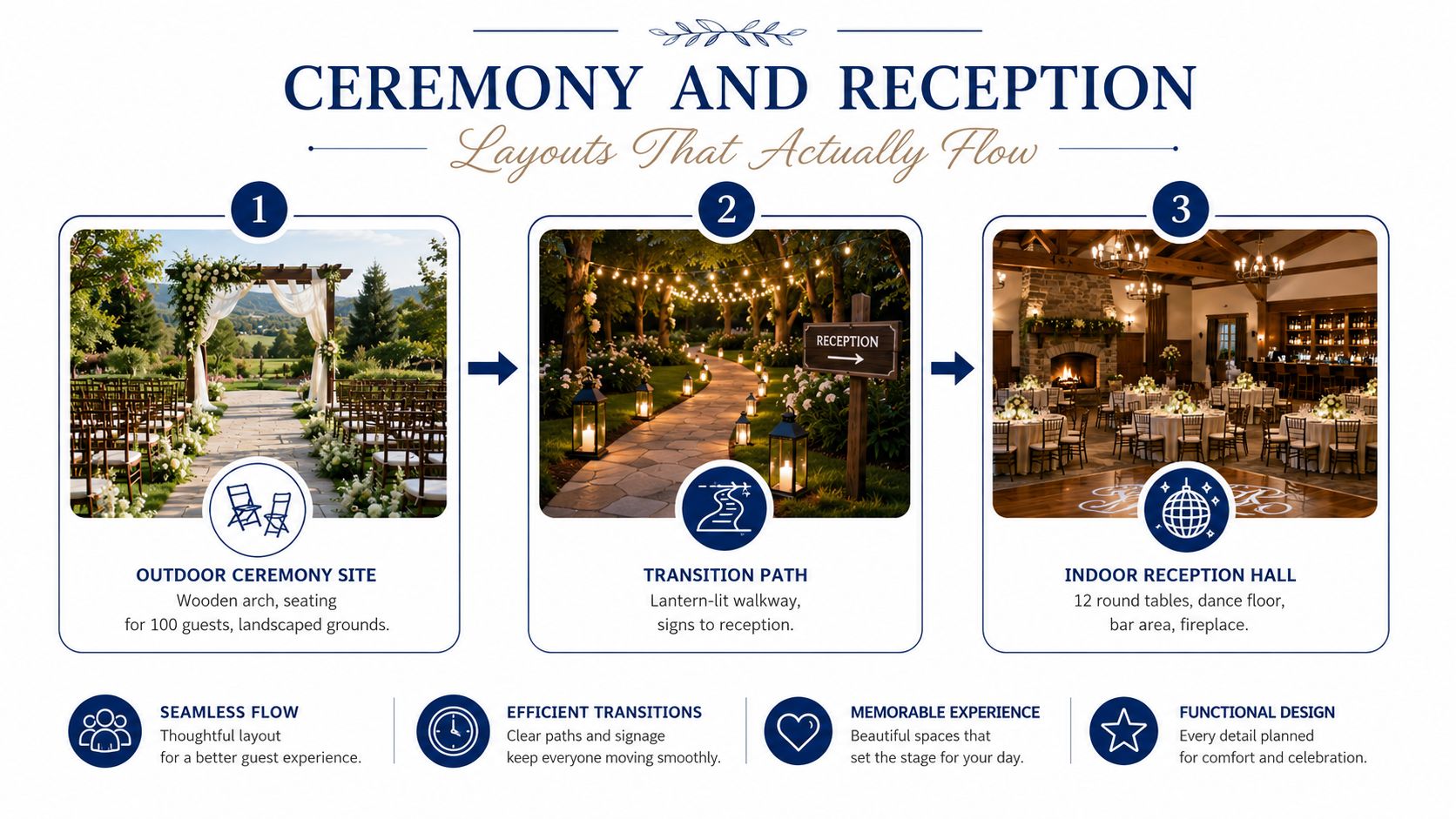
The strongest western weddings move guests through the property as one designed experience, from ceremony to reception without interruption. On a Hill Country campus, the outdoor ceremony site, the transition path, and the indoor hall should read like one story, not three separate setups.
Build the day in layers
Start with the ceremony lane. Place the aisle where the setting frames the couple and keeps guests out of harsh sun or glare. Under oak canopies, the scene reads naturally western because the trees already carry part of the visual weight. Keep the seating lines clean, and do not overcrowd the space.
Then handle the handoff. Guests need a transition path that feels intentional, not like everyone drifted off in separate directions. Lantern-lit walkways, clear signage, and staff direction keep the pace calm and preserve the visual language from outdoors to indoors.
Inside, the reception layout should protect the dance floor and the head table. Put the bar where traffic does not cut through speeches, and keep the band or DJ from competing with dinner service for room and attention. The indoor and outdoor PA setup with Bluetooth hookup and a wireless microphone is there to keep announcements and music clear in either setting, so use it.
Layout rule: Put guest movement, not decor, at the center of the floor plan.
The built-in beverage bar should handle the pour without making the room feel crowded. That lets bartenders work efficiently while the rest of the hall stays visually clean. It also keeps the reception from feeling like a chain of side stations instead of one organized event.
Vendors, Photography Spots, and a 16-Hour Day
Vendor freedom is the difference between a western event that runs smoothly and one that creates friction. If the venue lets you bring in your own caterer, you can build the menu around barbecue, plated service, or a more specialized spread without forcing the whole plan to fit house rules. That kind of flexibility matters when you are coordinating everything from a western string band to a leather-boot station or a horse-drawn arrival.
What Makes the Day Easier
A venue with a flexible vendor policy and a curated preferred list keeps the day moving. You still need a capable caterer, a bartending team that stays on schedule, and entertainment that understands event timing, but you should not have to fight the property just to book them. That matters on a western event where several moving parts need to work together without dragging the whole timeline down.
The 55-acre setting gives you real photography options, not one pretty backdrop. Streams and water features, maintained gardens, oak-shaded ceremony areas, and the exterior of each hall give photographers enough variety to keep the album from feeling repetitive. Use those spots with a plan, especially for portraits before guests arrive and for quick couple shots during cocktail hour.
A practical reference for beverage planning is the wine-buying checklist from McLaren Vale Cellars, which helps when you are coordinating bottles, bar service, and guest count without overbuying.
Map the 16-hour window early
The 16-hour rental window, from 8:00 a.m. to midnight, gives the day room to breathe. It covers load-in, getting ready, portraits, ceremony, cocktail hour, reception, and breakdown without forcing every part of the event into a rush. That matters because the timeline shapes how calm the whole day feels.
Use that time to stage the property with purpose. Vendors need space to set up, and the photographer needs room before guests fill the background with movement. The day reads more polished when the schedule is built around real setup needs, not around wishful timing.
Weather and Backup Plans for Hill Country Events
Hill Country weather will show up regardless of how the venue photographs. Spring storms, summer heat, and winter cold snaps all affect outdoor events on these properties. A cowboy-themed event space only works when it handles those shifts without forcing the day into crisis mode.
The indoor backup ceremony option is required. If the weather turns, the ceremony needs to move fast without changing the guest experience or the sound setup. Dressing suites and a clear internal path matter because the wedding party needs a comfortable place to wait while the team makes the switch.
The indoor and outdoor PA systems with Bluetooth hookup keep music and announcements consistent either way. You do not need to rebuild the audio plan just because the ceremony moved inside. The same goes for guest comfort. If a delay hits, people need shade, seating, and clear updates so the room stays calm.
Weather rule: Decide the move point before the rehearsal dinner, not during the storm.
A printed weather-trigger timeline should cover three moments. First, when the ceremony moves indoors. Second, when cocktail hour shifts under the covered area. Third, when the on-site manager becomes the single point of contact for all vendor instructions. That keeps the couple out of the role of project manager on their own wedding day.
The right venue absorbs weather changes so the event continues without disruption. That is the difference between a pretty western setting and one that can host a Hill Country event without drama.
Your Pre-Tour Planning Checklist
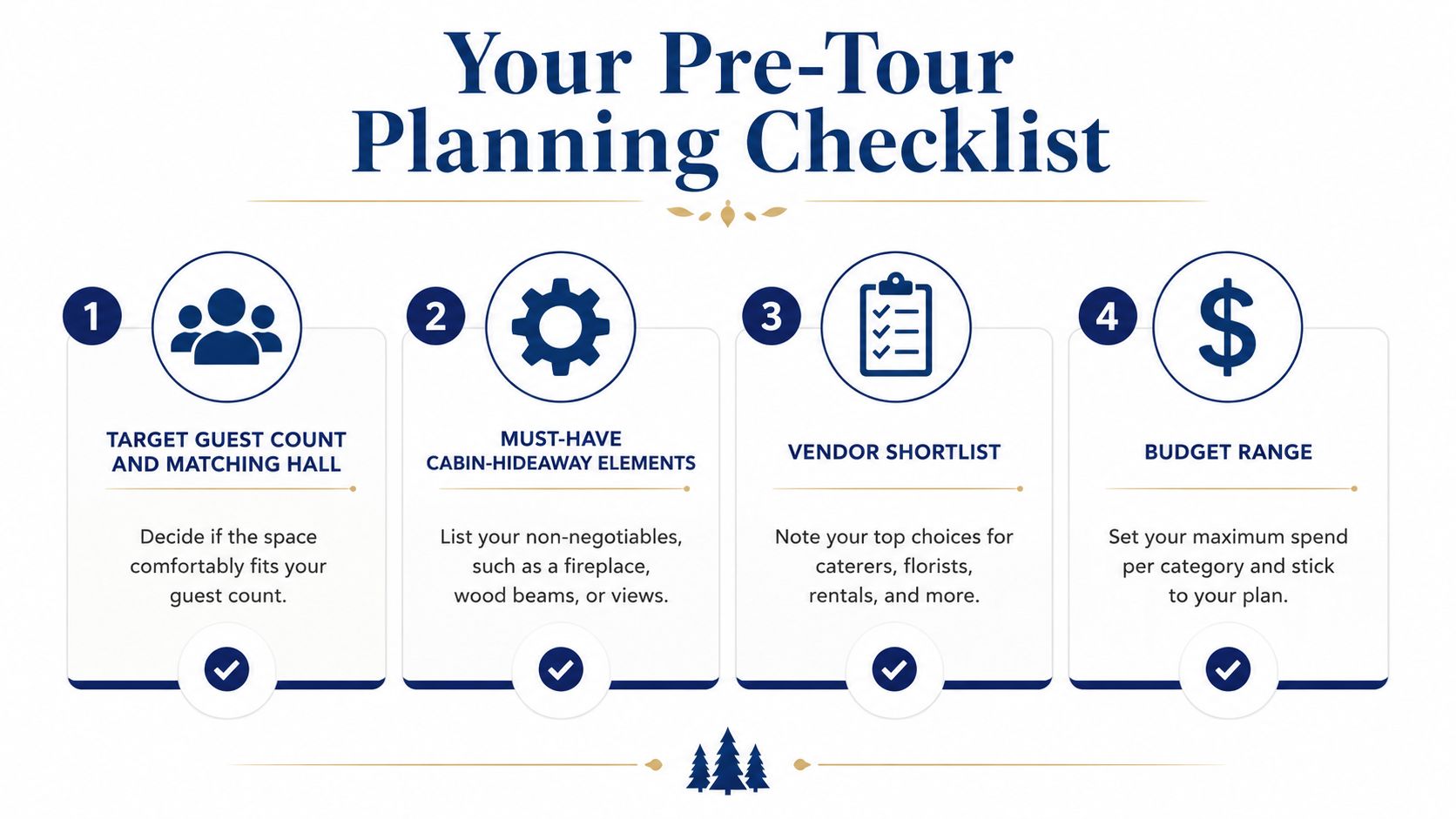
A cowboy themed event space can look perfect and still fail your day if the basics are vague. Before you tour any property, lock in your target guest count, the cabin-hideaway features you will not compromise on, your vendor shortlist, your weather backup posture, and how the rental window fits your timeline. If you skip that work, you will spend the tour staring at lighting fixtures and miss the questions that decide whether the venue can host your event.
Bring this list to every tour
- Guest count and hall match: Know whether you need an intimate room or a larger dance hall.
- Required features: Write down the structural details you need, like indoor backup space or a built-in bar.
- Vendor shortlist: Bring names for catering, entertainment, and any specialty rentals.
- Weather plan: Ask how fast the venue can move the event indoors if needed.
Tours by appointment help because they let you see how the property handles real movement instead of just a staged setup. Texas Old Town also supports rehearsal dinners, proposals, and engagement or bridal portrait sessions on the property, which makes pre-event planning easier if you want to test the camera angles or confirm the flow before the wedding day.
Use the tour to check how the venue works, not just how it photographs. Ask where guests enter, where vendors stage equipment, how quickly the team can shift between indoor and outdoor spaces, and whether the hall you are standing in fits the pace of your event. That is the kind of detail that keeps a cabin-hideaway plan from turning into a pretty but impractical setup.
The cowboy-cabin-hideaway vibe depends on logistics first, guest flow, weather readiness, and vendor coordination, then decor.