A family usually starts with a hopeful number, then adds the dress, the venue, the food, the DJ, the photographer, the flowers, and the little details that seemed harmless at first. Suddenly, the budget is gone before anyone has decided how many guests will attend. If that sounds familiar, take a breath. Planning a quinceañera on a budget isn't about making every part cheap. It's about choosing the parts that matter most and refusing to overspend on the rest.
I've watched families in Central Texas create elegant celebrations by making one decision early: they set a firm guest count and choose a venue that fits it. That choice affects catering, tables, chairs, linens, décor, staffing, and even the amount of time vendors need to set up. A 2026 review of 80 real quinceañera budgets found totals ranging from $2,000 to $60,000, with the middle of the group around $15,000 to $20,000 and half of the budgets between roughly $10,000 and $27,000. You can review that real-budget quinceañera cost analysis for the full range.
The practical path is straightforward. Decide what must be memorable, build the budget around the guest list, compare venues by their total included value, then negotiate the vendors and protect a contingency reserve. Texas Old Town will appear later as one Central Texas example of how venue capacity, access, and included amenities can influence the final plan, not as the only answer.
Table of Contents
- Introduction to Budget Smart Quinceañera Planning
- Setting Priorities and Building Your Budget Framework
- Choosing the Right Sized Venue and Using Included Amenities
- Smart Ways to Save on Vendors Decor and Food Without Losing Style
- Sample Budget Breakdown and Payment Plan Tips
- Final Checklist for a Beautiful Celebration on Budget
Introduction to Budget Smart Quinceañera Planning
Start with the guest count. Before choosing a theme, ask the birthday girl what she wants guests to remember: the entrance, dress, dance floor, meal, photos, or Hill Country setting. Then set a monthly payment amount that parents can manage without financial strain.
That decision controls more than the invitation list. Guest count, venue choice, food, and entertainment drive quinceañera costs, and budgeting guides place typical U.S. celebrations between $5,000 and $20,000. Larger productions can exceed $30,000 or $50,000, as summarized in The Bash's quinceañera budget guide. Compare events with similar attendance and service levels, not a small gathering with a formal celebration for several hundred people.
Practical rule: Pick the guest tier before you pick the theme.
A 150-person celebration requires more food, seating, table settings, service labor, and floor space than an intimate family event. Choose a right-sized hall, then compare what the venue includes, such as access time, tables, chairs, linens, setup support, and vendor flexibility. One well-fitted venue can reduce several separate rental and labor charges at once.
A reported 2019 nationwide platform survey of 525,000 quinceañeras placed average celebration costs at $21,781, or about $28,372 after inflation, according to KPBS coverage of rising quinceañera costs. Use that figure as context, never as a spending target.
Sort every idea into three lists:
- Must protect: Details that define the celebration for your family.
- Can simplify: Items suited to a standard package, borrowed pieces, or smaller designs.
- Can skip: Extras that will not change the guest experience or the birthday girl's memories.
The goal is deciding where the money should be visible and where it can stay in the bank.
Setting Priorities and Building Your Budget Framework
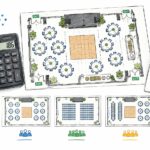
Set the guest-count math before you approve a theme or request detailed quotes. Divide the amount your family can spend by the planned number of guests to establish a per-guest ceiling. Test catering, rentals, décor, and service proposals against it. If a quote breaks the ceiling, adjust the guest count, menu, date, or service level before signing.
Use this planning framework as a starting point: approximately 20–30% for the venue, 20–35% for food and beverages, 8–15% for photo and video, 8–12% for music or entertainment, and 8–12% for attire. Hold back 5–15% for contingency, as outlined in this budget guide for planning a quinceañera. These bands should follow your priorities. Put more toward photography if those images matter most, or shift money toward a dance production by simplifying favors and décor.
Use the guest list as your first control
Write every possible guest before cutting the list. Include relatives, friends, court members, church connections, and people your parents expect to invite. Sort those names into definite, possible, and not essential. Do not book a hall or finalize food from a rough count.
Venue and catering commonly take about 40–50% of the total budget. The top three categories, venue, catering, and attire, can reach 60–70%. Use those figures with the allocation bands above as one budgeting framework, not as separate rules. A right-sized hall can lower the guest-driven costs attached to meals, seating, linens, décor, and labor. Cutting small favors will not fix an oversized guest list.
Put decisions in writing
Create a one-page budget showing the total available, target guest count, per-guest ceiling, and contingency reserve. For every category, record the quote, deposit, remaining balance, due date, and person responsible for payment. Ask venues to identify included amenities and access time in writing, because those items can replace separate rental and setup charges.
End the priority exercise with three firm choices:
- One experience the birthday girl cares about most.
- One category where the family accepts a simpler option.
- One spending limit no vendor may exceed.
That page keeps later decisions tied to the guest count and the value included with the venue.
Choosing the Right Sized Venue and Using Included Amenities
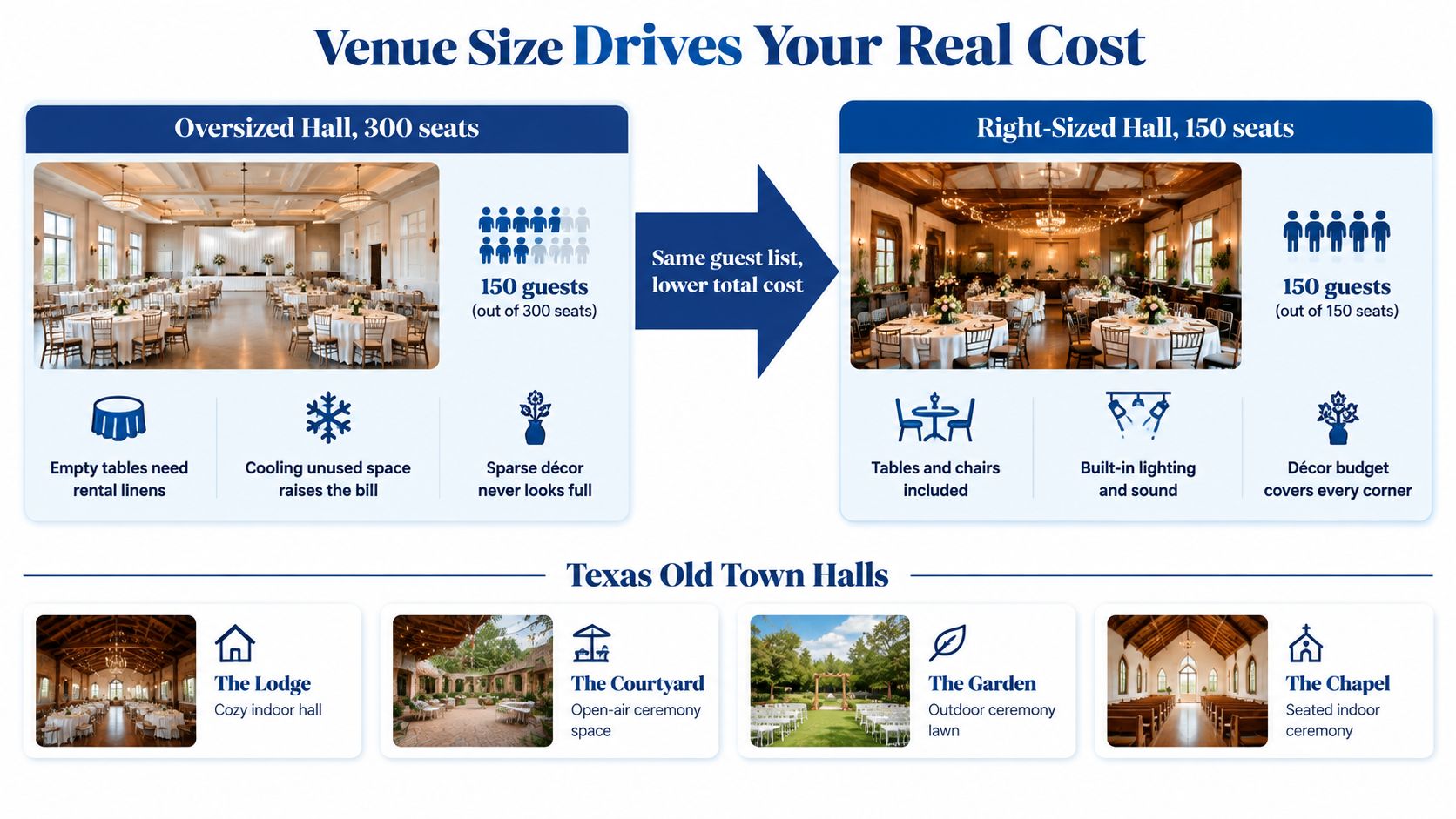
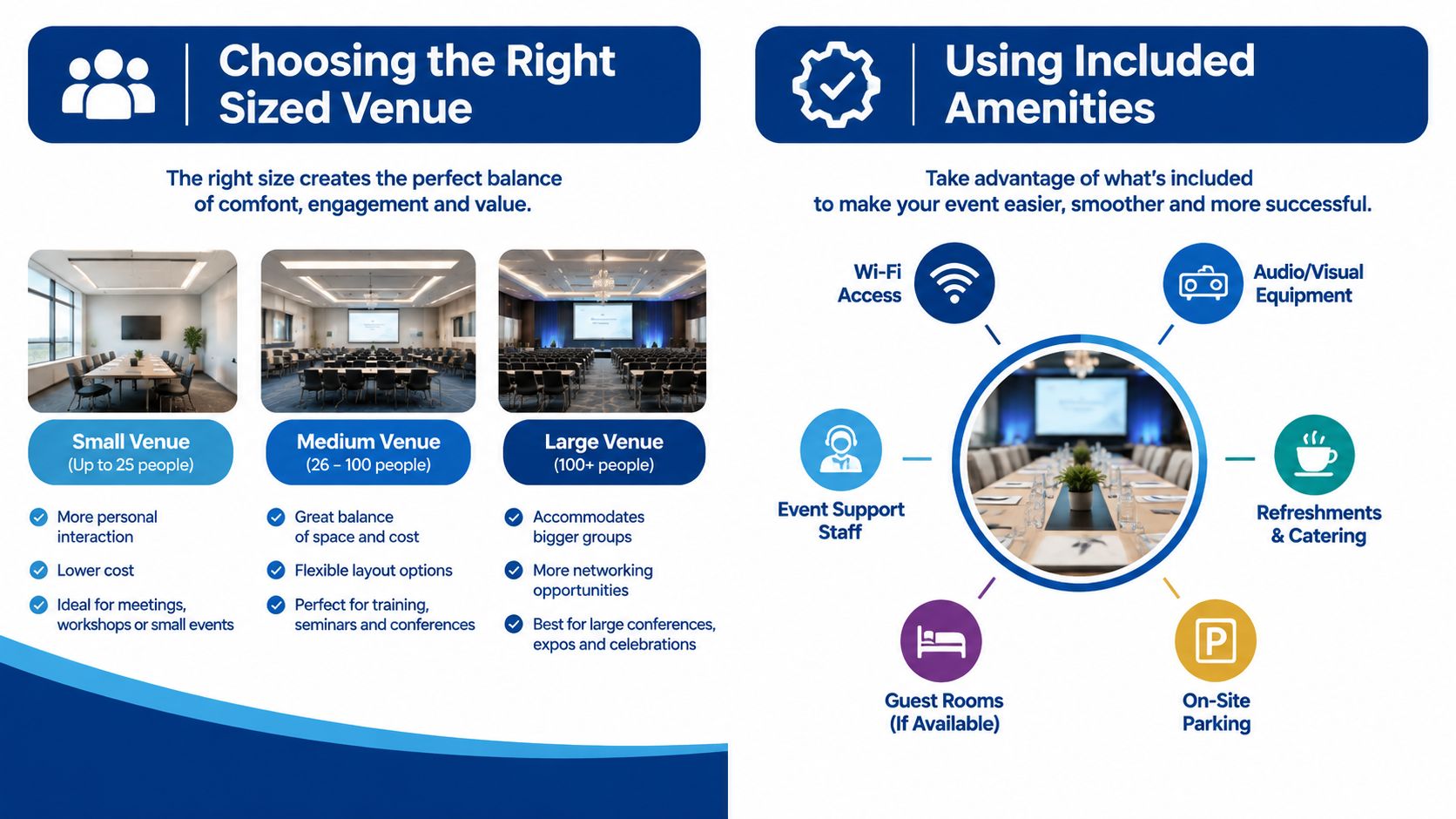
A lower rental fee doesn't automatically produce a lower event total. An oversized hall may require more décor to feel full, more linens and rentals to cover unused tables, and more labor to create a comfortable layout. The right room gives the guest list enough space for dinner and dancing without making the family decorate empty corners.
For an intimate celebration, Redbud at Texas Old Town accommodates up to 150 guests. Other halls on the property accommodate as many as 300 or 320 guests, so the useful comparison isn't "small venue versus large venue." It's whether the room matches the confirmed attendance and the desired floor plan. Families considering a 150-person event can review venue options for 150 guests before touring.
Compare the full package, not the headline price
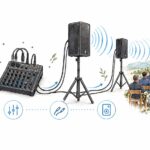
A venue quote becomes more useful when you inventory what you'd otherwise rent separately. Texas Old Town's published venue features include exclusive access from 8 a.m. to midnight, tables and chairs, indoor and outdoor PA systems with Bluetooth and a wireless microphone, dressing suites, a prep kitchen, an on-site manager, and clean-up with furniture breakdown.
Those inclusions affect both money and schedule. A long access window gives the family and vendors room to set up without paying for a rushed separate arrangement. A dressing suite keeps the birthday girl and court from needing another preparation location. A prep kitchen supports caterer logistics, while included sound equipment can eliminate a separate audio rental.
Check vendor and beverage policies early
Flexible vendor rules can matter more than a preferred package. If a venue lets you choose your caterer, you can compare menus and service styles rather than accepting one fixed food option. A bring-your-own beverage policy can also give the family control over beverage purchasing, provided the venue's approved bartending requirements are followed.
Ask these questions before paying a deposit:
- What furniture is included, and how many tables and chairs are available?
- Is clean-up included, or does the family need to hire a separate crew?
- Can the family bring its own caterer and beverages?
- What audio equipment is already installed?
- How much exclusive setup and breakdown time is included?
- Are taxes, gratuity, overtime, and required staffing clearly documented?
The cheapest room on paper may become expensive after rentals, labor, and overtime. A right-sized venue with useful inclusions can protect the budget across several categories at once.
Smart Ways to Save on Vendors Decor and Food Without Losing Style
Once the venue and guest count are set, control costs by simplifying production without cutting the moments guests notice. A right-sized room reduces food, rental, and décor needs at the same time. Protect clear speeches, comfortable seating, good food, photography coverage, and an open dance floor. Those choices matter more than custom details guests may never remember.
Control food and entertainment costs
Ask each caterer for two or three menu formats. Buffet, family-style, and plated service create different labor and rental requirements, so compare the full proposal rather than the entrée price alone. Use the tasting to select the dishes that matter most, then remove duplicate sides and oversized appetizer displays. A smaller guest list also lowers every per-person food cost, which is why the headcount should stay firm before final orders.
Request a quinceañera-specific DJ proposal. It should list introductions, the waltz, the surprise dance, microphones, announcements, setup, and service hours. If the venue already has a PA or wireless microphone, ask the DJ to use that equipment instead of charging for duplicate rentals.

Make décor look intentional
Choose one visual focal point, such as a strong backdrop, floral entrance, or polished sweetheart table. Standard linens, candles, greenery, and coordinated table numbers can support it without making every surface expensive.
Reuse ceremony florals at the reception. Assign one person to move arrangements to the cake table, sweetheart table, or entrance after the ceremony. Borrow jewelry, shoes, shawls, or court accessories when they will not appear prominently in close-up photos.
Skip favors guests are likely to leave behind. If the family wants a takeaway, choose one useful or edible item and order it after the RSVP count is stable.
Use vendor freedom strategically
Compare preferred vendors with outside proposals when the venue allows it. Require each quote to show service hours, staffing, rentals, delivery, setup, breakdown, taxes, and overtime separately. A simple spending tracker, including how Compass+ tracks spending, helps the family monitor deposits, balances, and approved changes.
Review this guide to BYOB event venues before choosing beverage purchasing and bartending arrangements. Confirm the venue's rules, required staff, and any service fees before booking.
Spend where guests feel the difference: sound, food quality, photography coverage, and room comfort. Cut duplicated rentals, excessive custom printing, unnecessary floral volume, and details that do not improve the evening. Flexible vendors and venue-included equipment let one good decision reduce several separate charges.
Sample Budget Breakdown and Payment Plan Tips
The table below gives families a starting model for two guest counts. These are planning examples built from the allocation bands, not universal prices or quotes. Adjust each line after you receive local proposals, and keep the contingency amount untouched until a real overage appears.
Sample Quinceañera Budget Breakdown by Guest Count
| Category | 100 Guests Budget | 150 Guests Budget |
|---|---|---|
| Venue | $3,000 | $4,500 |
| Food and beverages | $5,000 | $7,500 |
| Attire | $2,000 | $2,500 |
| Photo and video | $1,500 | $2,000 |
| Music and entertainment | $1,250 | $1,750 |
| Décor and florals | $1,250 | $1,750 |
| Contingency | $1,000 | $2,000 |
| Sample total | $15,000 | $22,000 |
The per-guest math is simple. The 100-guest example averages $150 per guest, while the 150-guest example averages about $147 per guest. Those figures are only internal planning targets, so replace them with the actual quotes you receive. The important point is that the larger celebration needs more money in food, venue, décor, and contingency, while several categories remain comparatively stable.
Build a payment calendar before booking
Book the venue only after the family knows how the deposit and future payments fit its cash flow. Ask whether the venue offers a personalized payment plan, then record every due date beside the responsible contributor. Texas Old Town provides details about payment plans for weddings and events that families can use as a reference when comparing arrangements.
Use a shared spreadsheet with separate columns for quoted price, paid amount, balance, due date, and contract change. Request written confirmation for every adjustment. The venue contract should identify included furniture, access hours, clean-up, sound equipment, taxes, gratuity, and any required vendors. Clear documentation prevents a family from discovering late in the process that a supposedly included item carries an added rental or overtime charge.
Final Checklist for a Beautiful Celebration on Budget
A budget survives when someone checks it deliberately. Before the event, confirm these decisions in writing:
- Guest count: Lock the list before final catering, seating, favors, and cake quantities.
- Venue fit: Choose a room that feels full and comfortable, not merely available.
- Included value: Verify tables, chairs, sound, dressing space, kitchen access, management, and clean-up.
- Vendor freedom: Confirm whether you can select your caterer, bring beverages, and use outside décor professionals.
- Contract details: Review access hours, furniture counts, deposits, payment dates, taxes, gratuity, overtime, and cancellation terms.
- Priority spending: Protect the dress, food, photography, music, or ceremony details that the birthday girl ranked highest.
- Contingency: Keep the reserve available for genuine changes instead of spending it on upgrades early.
- Final walkthrough: Give vendors one timeline with arrival, setup, ceremony, dances, dinner, speeches, and breakdown details.
For a smaller guest list, a right-sized hall such as Redbud can keep the room proportionate and the design focused. A Central Texas venue with indoor and outdoor ceremony options also gives the family a practical backup when weather or guest comfort changes the plan.
Visit Texas Old Town in Kyle, between Austin and San Antonio, and walk through the Hill Country property before committing. Seeing the halls, ceremony areas, parking, dressing suites, and service flow in person makes the budget easier to judge because you can evaluate the whole experience, not just a rental line.
Texas Old Town offers four private halls, indoor and outdoor ceremony settings, included event amenities, flexible catering options, and on-site management for quinceañeras in Central Texas. Tour Texas Old Town to compare capacities and build a celebration that fits your guest list and your budget.