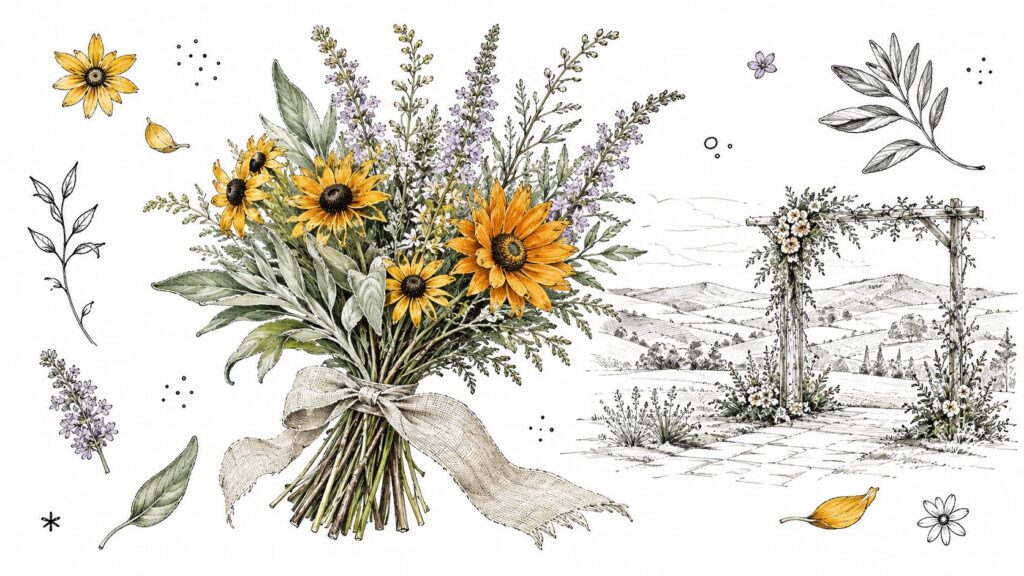
Native Floral Designs for Hill Country Weddings (2026 Guide)
You're standing in a Hill Country field with a Pinterest board open on your phone. The board is full of peonies, garden roses, and eucalyptus runners, while the September thermometer sits near 90 degrees. The ceremony is still hours away, but you're already wondering whether those flowers will look fresh through the toasts. That concern is practical, not pessimistic. Inspiration photos often reflect different climates, growers, transportation systems, and hydration schedules. A stem that photographs beautifully in a cool studio can lose its shape quickly in full Central Texas sun. Native floral designs solve that execution problem first, then deliver the style. The right regionally adapted flowers can hold their structure through outdoor vows, photographs, dinner, and dancing. Black-eyed Susan, Mexican sunflower, horsemint, and Gregg's mistflower fit the heat, low humidity, and limestone conditions that define many Hill Country sites. Texas Old Town's halls and outdoor ceremony areas also create different demands, from ornate indoor millwork to exposed lawns and arbors. If you're planning a rustic Texas celebration, start with the practical questions. What blooms during your wedding month? Which stems tolerate heat? Where should each arrangement go? Which pieces deserve professional labor, and which can be simplified? The recommendations below answer those questions directly, including the trade-offs that matter at a real venue. For broader planning considerations, review these essential tips for planning a rustic Texas Hill Country wedding. Table of Contents When Hill Country Inspiration Meets a Real Wedding Day Design for the conditions you actually have Build around the venue schedule What Makes a Floral Design Native Native doesn't mean sparse Texas Hill Country Seasonal Bloom Calendar The late-summer gap needs a different strategy Styling Native Florals Across the Four Halls and Outdoor Ceremony Site Magnolia Stone Scheel Lilian Pecan Grove Bouquet, Centerpiece, and Arbor Concepts That Travel Well Loose Hill Country Sculpted Native Foraged Wild Budgeting Native Florals for a 150 to 200 Guest Hill Country Wedding Three workable budget tiers Vendor, Hybrid, and DIY Execution Paths Compared Full vendor Hybrid DIY Your Native Floral Planning Checklist and Common Pitfalls Start early Avoid predictable mistakes When Hill Country Inspiration Meets a Real Wedding Day A wedding flower plan fails when it's designed for the photograph instead of the schedule. A bridal bouquet may leave the cooler in good condition, sit through a first look, travel to the ceremony, wait through family portraits, and remain in the reception room for hours. Outdoor arches face an even harder test because their mechanics, foliage, and water sources absorb heat before guests arrive. Design for the conditions you actually have I'd rather build a restrained arrangement from durable regional material than promise a lush imported design that needs constant rescue. The Hill Country is not a mild garden climate. From late spring through early fall, ceremony pieces may face direct sun, reflected heat from stone or pale surfaces, wind, and long stretches without convenient shade. Native floral designs work because the plant palette starts with local performance. Black-eyed Susan gives you a strong yellow focal point, Mexican sunflower brings height and saturated orange, horsemint adds airy vertical texture, and Gregg's mistflower contributes cool purple tones. These choices don't make a wedding look rough or unfinished. They give the designer material that can stay visually intentional after the weather starts working against it. Field rule: If a centerpiece only looks right inside a cooler, it isn't ready for an outdoor ceremony. Build around the venue schedule Put fragile flowers in shaded or climate-controlled locations. Reserve the toughest stems for the aisle, arbor, welcome sign, and other pieces that sit outside before guests arrive. Keep bouquets out of direct sun, and make sure someone knows exactly when ceremony flowers move to the reception. That level of planning also supports the property itself. Native planting guidance recommends clustered patches, layered vegetation, and regionally adapted species because those choices support pollinators, reduce water demand, and create more reliable habitat function than isolated ornamental planting. The same logic applies to event design. A palette that belongs to the surrounding area usually looks more convincing and requires fewer artificial corrections. What Makes a Floral Design Native A floral design isn't native because it looks loose, meadow-like, or slightly untamed. Wildflower style describes an aesthetic. Native describes origin, ecological fit, and seasonal availability. Three tests make the distinction useful: Regional origin. The plants naturally occur within the local Hill Country ecoregion or come from a closely adapted regional palette. Ecological fitness. The plants can handle local soil, heat, drought patterns, and growing conditions. Seasonal availability. The flowers are used when they naturally grow and can be sourced, rather than being forced year-round in a greenhouse. A bouquet of imported cosmos and Mediterranean annuals can look like a native meadow, but the label doesn't make it locally adapted. Conversely, a refined arrangement of native grasses, salvia, yarrow, and silver foliage can look polished enough for a formal hall while still reflecting Central Texas. Native doesn't mean sparse The old idea that native plants look like weeds belongs in the bin. Hill Country selections offer warm yellows, orange, dusty purple, white, pale pink, and silvery green, along with varied heights and flower forms. A designer can create a compact Victorian-inspired bouquet, a structured modern centerpiece, or a loose field-style arbor without relying on imported garden roses. Native plants also make sense around wedding properties that border natural habitat. Clustered blooms give pollinators easier access than scattered single plants, while grasses, shrubs, and trees provide vertical layers. Guidance on native plantings similarly emphasizes grouping plants and combining flowering species with broader habitat structure. Couples interested in carrying the idea into their home garden can use this practical overview of using natives in your yard. The strongest native floral designs sit at the intersection of beauty and logistics. They respect the wedding's visual language, but they also account for harvest timing, hydration, transport, installation, and the actual conditions at the venue. Texas Hill Country Seasonal Bloom Calendar A wedding date