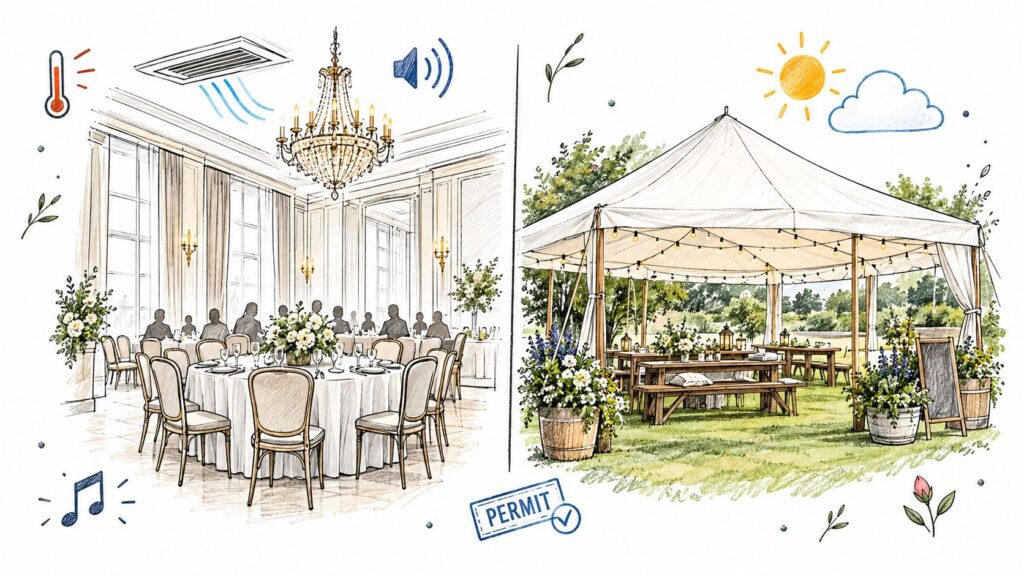
Difference Between Indoor and Outdoor Events: Planning Guide
Most advice about the difference between indoor and outdoor events starts with the wrong question: “Which one is more reliable?” After hundreds of weddings and milestone events, I'd ask something more useful: Which parts of this event belong outside, and which parts should stay inside? A ceremony may deserve the scenery and openness of a lawn. Dinner may work better in a climate-controlled hall. Cocktails can go either way, depending on shade, air quality, and the distance guests must travel. Dancing usually benefits from a stable floor, controlled acoustics, and predictable temperature. Treating the entire event as one indoor-or-outdoor decision creates avoidable problems. The right comparison uses five lenses: climate control, weather exposure, acoustics, logistics, and guest comfort. Those lenses reveal the core trade-offs behind the visual choice. Outdoor space offers natural air movement, scenery, and room to spread out, while indoor space offers control over temperature, sound, lighting, and transitions. Table of Contents Why the Indoor Versus Outdoor Question Is Bigger Than It Looks Climate Control, Air Quality, and Indoor Comfort What planners should verify indoors Weather Exposure, Heat, and Seasonal Reliability Acoustics and Sound in Halls Versus Open Lawns Outdoor ceremony sound Indoor reception sound Decorating, Lighting, and Vendor Logistics by Setting Guest Comfort, Accessibility, and Inclusion Choosing Element by Element and Planning for a Hybrid Event Bringing It All Together for Your Event Why the Indoor Versus Outdoor Question Is Bigger Than It Looks A venue decision affects every part of the guest experience, but not every part needs the same environment. Couples often choose an outdoor ceremony because it feels memorable, then move dinner and dancing indoors because guests need dependable comfort. That isn't a compromise. It's usually the more deliberate plan. An experienced coordinator separates the event into ceremony, cocktail hour, dinner, dancing, and late-night activities. Each element has different needs. A ceremony can tolerate a shorter period of exposure if seating is shaded and the schedule avoids the harshest sun. Dinner demands stable temperature, food-service access, comfortable seating, and reliable lighting. Dancing depends on flooring, sound coverage, and enough climate control to keep guests on the floor. Practical rule: Don't ask which setting wins. Ask which setting creates the fewest problems for each activity. Central Texas makes this distinction especially important. A beautiful afternoon can become uncomfortable quickly when guests sit in direct sun, while an indoor hall can feel crowded if the HVAC system isn't prepared for full occupancy. Outdoor space also introduces pollen, smoke, wind, and changing ground conditions. Indoor space removes some of those variables, but it doesn't eliminate responsibility for ventilation, air exchange, or emergency access. The strongest hybrid plans make the indoor move part of the original design. Guests should know where they go next, vendors should know when equipment moves, and the entertainment plan should work in both locations. A backup isn't a second-rate version of the event. It's a pre-approved version that can be activated without confusion. Climate Control, Air Quality, and Indoor Comfort Indoor comfort depends on more than air conditioning. It depends on whether the building can replace indoor air, manage heat generated by people and equipment, and keep doors from undermining the system. The U.S. Environmental Protection Agency identifies air exchange as a key factor in indoor pollutant concentration, with infiltration, natural ventilation, and mechanical ventilation all contributing to replacement of indoor air. EPA guidance on indoor air quality explains why ventilation deserves the same attention as temperature. The indoor environment is also where pollutants can accumulate. The EPA reports that Americans spend approximately 90% of their time indoors, and concentrations of some indoor pollutants are commonly 2 to 5 times higher than typical outdoor concentrations. Many volatile organic compounds can reach indoor levels up to 10 times outdoor levels, while painting or paint stripping can temporarily raise levels to 1,000 times typical outdoor background concentrations. These figures come from the EPA's indoor air quality overview. What planners should verify indoors A packed reception isn't automatically comfortable because it happens inside. Before signing off on the room, ask direct operational questions: HVAC performance: Will the system run during setup, dinner, and dancing, not just before guests arrive? Peak occupancy: Can the hall maintain comfort when every seat is filled and the dance floor is active? Door policy: Will exterior doors remain open for catering, smoking areas, deliveries, or guest circulation? Ventilation: Does the building bring in outdoor air and maintain effective filtration? Cooking and cleaning: Are food preparation, candles, cleaning products, or décor materials likely to affect the room? Fallback capacity: Can guests move to another climate-controlled area if conditions change? Outdoor air usually disperses emissions into a much larger volume, so it avoids the same buildup mechanism. That doesn't make it automatically healthier or more comfortable. Guests remain directly exposed to pollen, wildfire smoke, heat, humidity, and ambient particulate matter. The WHO estimates that ambient outdoor air pollution caused 4.2 million premature deaths worldwide in 2019, while household air pollution from polluting fuels affects roughly 2.4 billion people and causes about 3.2 million premature deaths annually. These are global public-health figures, not event predictions, but they show why indoor and outdoor air require different controls. See the WHO overview of ambient outdoor air pollution-air-quality-and-health). For venue planning, check local air-quality alerts and smoke conditions before committing to an outdoor cocktail period. If the property has an indoor hall near the ceremony site, that fallback is practical. At Texas Old Town, the indoor reception halls and outdoor ceremony areas are on the same 55-acre property, so a change can be planned as a short operational transition rather than a completely different booking. For a deeper look at heating-system considerations that affect indoor comfort, insights from Pinnacle Property Media can help planners understand why equipment selection and building conditions matter. Weather Exposure, Heat, and Seasonal Reliability Outdoor reliability is decided element by element, not by asking whether the whole event is “inside” or “outside.” A sunny ceremony can work beautifully while an exposed cocktail