Event Venue Amenities: A Practical Buyer’s Guide
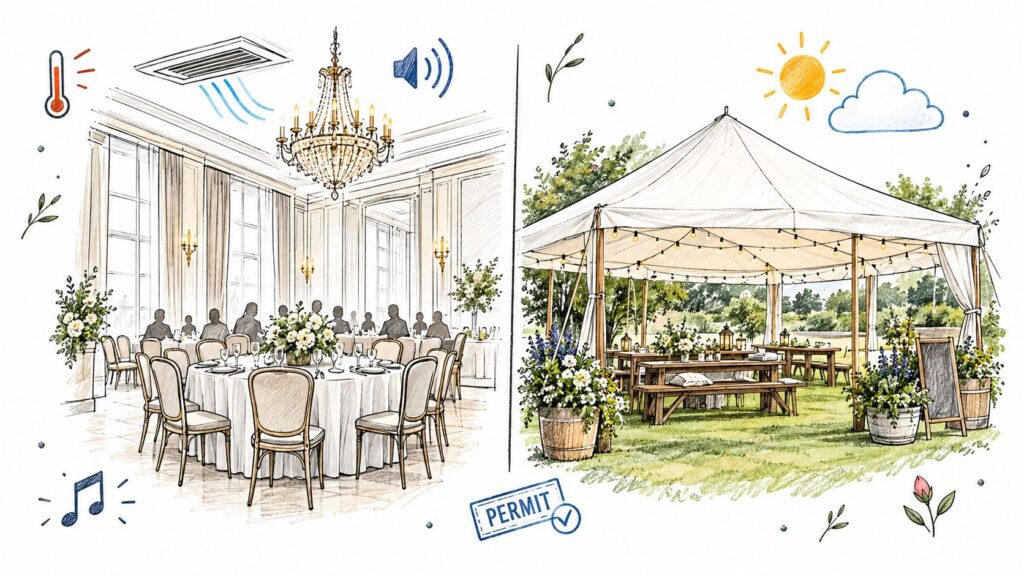
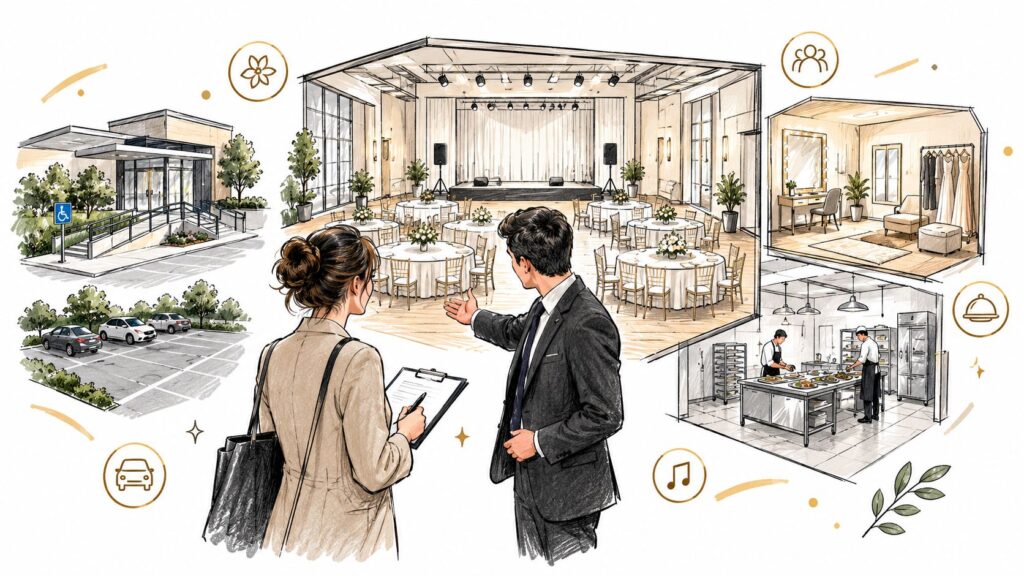
Prioritize event venue amenities that keep guests comfortable and vendors working: dependable audiovisual equipment, power, climate control, accessible routes, and clearly assigned staffing. With audiovisual needs identified as a major expense by 66% of planners, technical inclusions deserve scrutiny before decorative extras. You're comparing beautiful properties, trying to understand what the rental price covers, and wondering whether a longer inclusion list means an easier event. The useful question isn't how many amenities a venue advertises. It's which problems those amenities solve, who operates them, and what happens when the original plan changes. Table of Contents Why Amenities Decide How the Day Actually Feels Translate the brochure into tasks Defining Event Venue Amenities in Functional Terms Give each amenity a job Distinguish availability from usability How Amenities Differ Across Venue Types Amenity Coverage by Venue Type Match the property to your compromises The Production Stack Audio Visual Power and Climate Follow the signal and the electricity Check comfort under event conditions Service and Staffing Amenities Behind the Scenes Price the work, not just the room Examine the rules that affect your suppliers Accessibility as an End-to-End Guest Experience Walk the route guests will actually use Ask for documentation without making assumptions The Buyer's Amenity Checklist Before You Tour Initial research and site visit Contract review and final preparations Putting It All Together Before You Book Why Amenities Decide How the Day Actually Feels On the morning of an event, vendors arrive while a coordinator searches for an extension cord. The catering van stops across the parking lot because nobody identified a service entrance, and the wedding party asks where they're supposed to get dressed. That's an illustrative scenario, not an inevitable disaster. But it exposes the difference between a property that photographs well and a property your team can operate without improvising. Event venue amenities are working infrastructure. A dressing suite protects preparation time. A service entrance keeps equipment carts out of guest traffic. A usable indoor alternative gives the coordinator somewhere to move the ceremony when outdoor conditions become unsuitable. Translate the brochure into tasks Start with the language venues use, then ask what your team can do. Complimentary parking: Where do guests park, where do vendors unload, and who directs arrivals? Climate-controlled hall: Can staff adjust conditions during setup, dinner, and dancing? Full bar: Does that mean a built-in counter, beverage service, staffing, glassware, or some combination? On-site support: Who is present, what decisions can they make, and when does their responsibility end? Don't accept an adjective where you need an operating answer. Spacious, flexible, and convenient aren't specifications. Practical rule: If an amenity matters to your timeline, ask someone to demonstrate how it works. The economic context reinforces why these details deserve serious attention. U.S. meetings generated approximately $325 billion in direct spending in 2016, according to the meetings industry economic-impact analysis published by ICCA. That historical figure isn't a forecast for your event, but it puts venue infrastructure in perspective: these spaces support substantial work across hospitality, transportation, catering, and production. Put amenity questions into your initial shortlist, not your post-deposit planning session. If an essential capability is missing, you need time to price the workaround, find the right vendor, or choose another property. Discovering the gap after committing limits your options. Defining Event Venue Amenities in Functional Terms A useful definition is simple: event venue amenities are the spaces, equipment, permissions, and services that let people deliver the event. Treat them as a toolbelt, not a collection of perks. I organize that toolbelt into production infrastructure, guest experience, logistics, and service. Accessibility belongs across every family, because a feature isn't useful if a guest or vendor can't reach or use it. Give each amenity a job Production infrastructure includes electricity, sound, lighting, climate systems, and connectivity. Its job is to support what people need to hear, see, operate, and communicate. A microphone belongs here, but so does the power supply serving the presentation equipment. Guest experience covers dressing areas, restrooms, comfortable seating, arrival spaces, and movement between activities. Evaluate these features from a guest's position rather than from the doorway during an empty-room tour. Logistics includes delivery access, preparation areas, furniture inventory, storage, and usable layouts. A beautiful room can still be awkward to operate if caterers have nowhere to stage trays or rental crews can't store empty cases. Service determines who turns those physical resources into a functioning event. Management, cleanup, vendor permissions, operating hours, and escalation procedures belong in this family. Distinguish availability from usability Use a simple test when reviewing an inclusion: Present: Does the feature exist in the specific space you're renting? Usable: Does it suit your event format, equipment, and guest needs? Supported: Who prepares it, operates it, and resolves problems? Included: Is its use covered by the quoted agreement? A prep kitchen illustrates the distinction. The room may exist, yet your caterer still needs to confirm appliances, refrigeration, permitted activities, and access arrangements. Don't translate “kitchen” into “full cooking capability” without checking. The same applies to furniture. Included tables are useful only when their dimensions, condition, quantities, and layout suit your meal service. Name the job first, then judge whether the amenity performs it. How Amenities Differ Across Venue Types Choose the venue model before getting attached to a particular package. A hotel, standalone ballroom, multi-hall property, and rural estate can all accommodate a celebration, but you shouldn't evaluate them with identical assumptions. The comparison below is a touring framework, not a promise about every property. Each cell identifies what to investigate rather than declaring that a venue category automatically includes it. Amenity Coverage by Venue Type Amenity Category Ballroom Hotel Venue Multi-Hall Property Outdoor / Estate Parking Check dedicated allocation Clarify guest and overnight use Separate hall-specific and shared areas Inspect surfaces and arrival routes Dressing suites Confirm private preparation space Separate guestrooms from event inclusions Verify suites assigned to your hall Confirm indoor preparation facilities A/V inventory Request room-specific equipment Clarify equipment and technician charges Identify systems