wedding budget

Banquet Hall Wedding Costs, Layout and Timeline

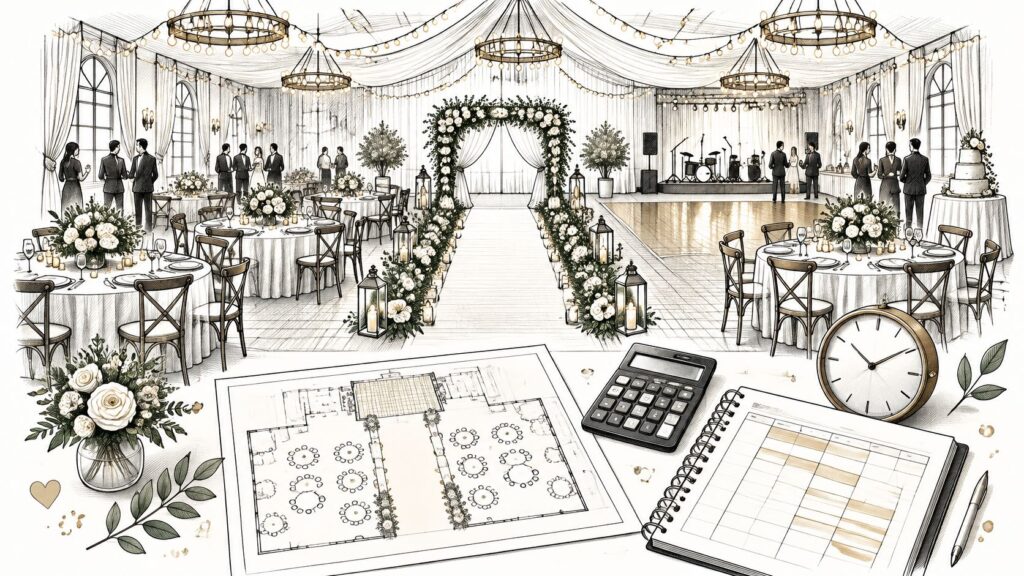
Most wedding advice tells you to fall in love with the room, then haggle the fee. That order is backwards. A banquet hall wedding is not a photo of round tables under a chandelier. It is the operating system for the day: hours on the clock, dollars that move with every guest, and whether grandparents can hear the vows without a jam at the door. A low room fee can look like a win until setup labor, a short rental window, and overtime land on the final invoice. Décor photos hide the same problem from the other side. They show an empty room at golden hour, not a full dinner, a hot buffet line, and a microphone that smears every toast. Judge the hall by two tests only. First, the full event price, not the advertised rental. Second, the guest journey from the parking lot to the last song. If either test fails, the pretty room is the wrong room. Table of Contents The Real Cost of a Banquet Hall Wedding Fixed lines versus per-head lines Questions the contract has to answer What a Banquet Hall Wedding Is and When to Choose One Hall, hotel, or lawn Seating Layout Décor and Room Comfort Place the floor, then the flowers Summer heat is a layout choice Sound and Speech Intelligibility A sound check you can put in the contract Timeline From First Tour to Last Dance Guest Journey Checks and the Booking Decision Where the path breaks Four checks, then yes or no The Real Cost of a Banquet Hall Wedding Most couples compare halls by the number on the ad. That number is usually just the room, and the room is the small line. A national venue-only rental sits near $6,000, but a usable package for 100 guests runs about $11,600 to $14,300. The Knot Worldwide's 2026 Real Weddings Study put average 2025 wedding spending at $34,000, with about $292 per guest, $8 higher than in 2024. Keep the two 2025 averages apart. The Wedding Report recorded 2,011,044 U.S. weddings that year, average spending of $32,899, and total spending of about $66.2 billion. Use the Knot per-guest figure in the worksheet below. Don't blend the two studies into one "typical" wedding. Venue plus catering is the heavy share. A summary in the Grand View Research wedding-services market assessment puts venue and catering at about 40% to 45% of budgets in the United States and India. On a $34,000 wedding, that share is about $13,600 to $15,300. Fixed lines versus per-head lines Fixed items are the room, a staffing minimum, sales tax, gratuity, and any ceremony-space fee. Variable items are food and bar per head, rentals when furniture is extra, and overtime past the contracted hour. Cost line Planning figure Fixed or variable What changes the number Venue rental only about $6,000 Fixed Hours, furniture, and cleanup may be excluded Full venue package, 100 guests $11,600–$14,300 Mixed Taxes, gratuity, staffing, and overtime Venue plus catering share 40–45% of budget; about $13,600–$15,300 on a $34,000 wedding Mixed Package minimums versus à la carte Average spend per guest, 2025 $292 Variable $8 higher than 2024; region and menu shift it 100 guests at $292 $29,200 Variable Still excludes attire, photo, and florals 150 guests at $292 $43,800 Variable Often above the national wedding average 250 guests at $292 $73,000 Variable Kitchen, bar, and restroom throughput 300 guests at $292 $87,600 Variable Confirm seated capacity and HVAC, not standing max The $292 figure scales with the list, and it is a whole-wedding planning number, not the hall's invoice. 100 guests is about $29,200. 150 guests is about $43,800. 250 guests is about $73,000. 300 guests is about $87,600. Attire, photos, and florals still sit outside those products. A category-by-category sort is in our notes on how to plan a wedding budget. Practical rule: A lower room fee is not cheaper if the couple must hire separate setup labor, accept a short rental window, or buy a rain tent. Questions the contract has to answer Tax and gratuity: Are both already inside the quote? Furniture and breakdown: Are tables, chairs, setup, and teardown included? Sound: Is equipment included indoors and outdoors? Ceremony backup: Is an indoor room in the same building already in the price? Overtime: What is the rate after the contracted hour, and who can approve it? A mandatory package or a four-hour window can erase a cheap rental once labor and a weather tent show up on the same invoice. What a Banquet Hall Wedding Is and When to Choose One A banquet hall wedding is not automatically the cheaper or easier choice. Judge the venue by the full event price and the route guests take through the day: arrival, ceremony, dinner, dancing, and departure. A hall puts those moments under one roof, and some indoor reception halls can also serve as the ceremony space. The Knot's 2023 global wedding report, produced with Hitched, Bodas.net, and regional partners, surveyed more than 25,000 couples. It found banquet halls were the preferred reception setting in North and South America, while couples in Western Europe favored villas and those in the United Kingdom favored hotels. Guest counts also varied: India averaged 285, Mexico 145, and Brazil 125. For a large family gathering, one hall can bring the meal, speeches, and dancing together. The practical question is whether its capacity and guest flow fit your plans. Hall, hotel, or lawn Factor Banquet hall Hotel Outdoor-only Best fit Large guest list wanting one roof for dinner and dancing Most guests staying overnight Small guest count, tolerance for tent and generators Weather backup Indoor room in the same building Indoor ballrooms built in Requires a tent or a contracted indoor room Own caterer Check the venue policy Often restricted Usually allowed Main risk Short rental window rushes teardown Banquet-event-order minimums Tent, generator, and rental costs Choose a banquet hall if dinner and dancing should share a roof and you want an indoor option for the ceremony or
What Vendors Do You Need for a Wedding

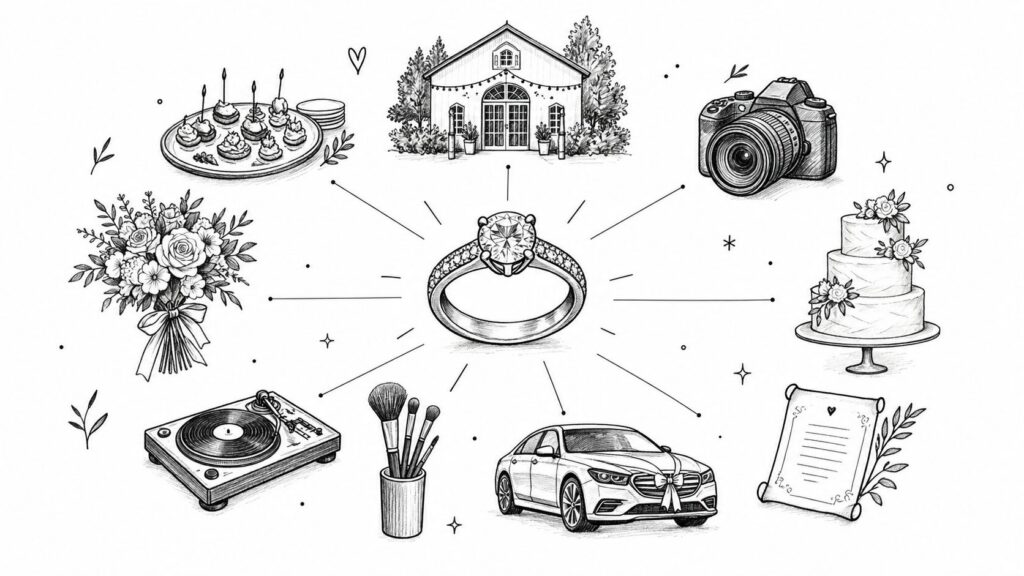
You've opened a wedding checklist and found a wall of vendor names: venue, caterer, photographer, florist, rentals, transportation, beauty, cake, entertainment, coordinator, and more. The list makes every hire look equally urgent, but they aren't. The right question isn't what vendors do you need for a wedding. It's which professionals your venue, guest count, format, and priorities require. A typical couple works with an average of 14 vendors, according to The Knot's wedding vendor resources. That number sounds intimidating until you separate the team into layers. A venue and a few high-impact specialists establish the structure, while other vendors add comfort, style, convenience, and personality. Table of Contents Building Your Core Wedding Vendor Ecosystem Think in layers, not obligations Essential Vendors You Must Book First Start with the venue Add the people who control the day Secure ceremony and reception leadership Secondary and Optional Vendors to Elevate the Day Compare necessity with enhancement Spend on the experience guests notice How Your Venue Choice Changes Your Vendor List Ask what the contract eliminates Budgeting and Contract Tips for Your Vendor Team Protect the money before you sign Timeline for Hiring Your Wedding Vendors Begin with the fixed conditions Work backward from the wedding day Finalizing Your Vendor Roster and Next Steps Build one operational plan Building Your Core Wedding Vendor Ecosystem Your vendor list should function as a system, not a shopping spree. Each provider either creates a hard logistical condition, fulfills a legal or operational requirement, or improves the atmosphere and guest experience. Once you classify vendors that way, the planning process becomes much easier to control. Start with the venue, because it determines the shape of everything else. Guest capacity, ceremony and reception locations, catering rules, furniture, sound equipment, parking, access hours, cleanup, and preferred-vendor policies all influence who you'll need to hire independently. A venue that includes tables and chairs removes one decision. A venue with in-house catering changes another. A venue without day-of management may make coordination a priority. The core ecosystem usually includes: Venue: Provides the physical setting and establishes the event's operational boundaries. Planner or coordinator: Manages decisions before the wedding or directs the day itself. Photographer: Preserves the visual record and affects portrait timing, family-photo organization, and lighting needs. Caterer and bar team: Handles food, beverage service, staffing, equipment, and service flow. DJ or band: Provides music, announcements, sound reinforcement, and reception pacing. Officiant: Leads the ceremony and handles the required formalities for your wedding format. Florist and décor team: Shapes the visual environment, though these services may be scaled or replaced with venue décor. Attire and beauty professionals: Prepare the couple and wedding party for the ceremony and photographs. The most recent vendor data from The Knot says couples hire the dress-purchase category at 91%, venues at 90%, and photographers at 87%, with an average vendor team of 14 providers. Those figures show a useful pattern: the venue, attire, and photography sit near the center of the planning workflow, while the rest of the team depends more heavily on the wedding's design and format. Preferred-vendor lists such as this one from Texas Old Town can also reduce research time by giving couples a starting point for local providers. Think in layers, not obligations The first layer keeps the event possible. The second makes it run smoothly. The third makes it feel like your wedding. That distinction protects your budget. You may need a caterer if the venue doesn't provide food, but you might not need a separate rental company if the venue supplies furniture. You may need a DJ for announcements and sound, but you might skip a separate emcee. You may want a florist, but a ceremony in a naturally green setting may require less décor than a blank ballroom. Practical rule: Don't add a vendor until you can name the specific problem they'll solve or the experience they'll improve. Write your first draft in three columns: required by the venue or law, needed for smooth operations, and chosen for style or convenience. That simple filter prevents a generic checklist from dictating your wedding. Essential Vendors You Must Book First Some vendors control the conditions under which every other provider works. Book those first, because a late decision can force changes to guest count, menus, load-in plans, power requirements, photography timing, or the ceremony schedule. Start with the venue The venue is your first serious contract. Confirm the date, capacity, ceremony options, access window, rain plan, catering rules, beverage policy, furniture, sound equipment, dressing rooms, parking, cleanup, and required insurance before you compare other vendors. Venue policies create downstream decisions. A caterer needs to know whether there's a prep kitchen and service entrance. A band needs to know about electrical access, sound limits, stage dimensions, and load-in routes. Your photographer needs to understand where portraits can happen and how much time the venue allows before guests arrive. Industry planning guidance places the venue and planner first, followed by photography or videography, catering, and entertainment, because sought-after providers may be reserved 9 to 18 months ahead in major markets. The booking sequence and lead-time guidance are summarized in The Knot's wedding vendor checklist. Add the people who control the day A planner or coordinator is the next decision if you don't have strong venue management or family members who can handle logistics without becoming guests responsible for the event. A full-service planner helps with design, sourcing, contracts, and scheduling. A day-of coordinator takes over the operational load closer to the wedding. Your photographer deserves early attention because the photographer's availability and working style influence the timeline. Ask how they handle family portraits, dark interiors, difficult weather, large wedding parties, and coordination with videography. Don't choose on portfolio style alone. You'll spend much of the day near this person, so communication matters. Catering is a major operational hire, not just a menu choice. Review staffing, service format, rentals, dietary accommodations, kitchen requirements, bar responsibilities, setup, cleanup, and overtime. Use this practical guide to

How to Plan Wedding Budget: A Practical Guide

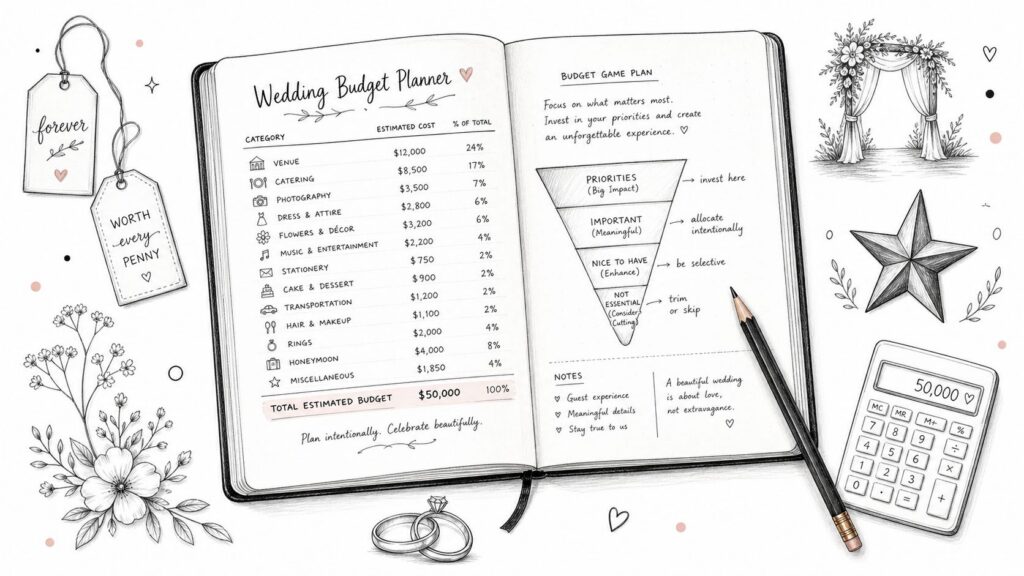
You're engaged, the venue tour is on the calendar, and the budget is still a moving target. That's the moment couples usually get into trouble. They start with a number that feels reasonable, then let guest count, upgrades, and contract fine print drag them into a wedding they didn't plan to buy. If you want a clean answer to how to plan wedding budget, stop treating the budget like a wish list. Build it from cash, not vibes, then let the venue and guest list tell you what kind of wedding you can afford. That's the only way to avoid falling in love with a date, a room, and a menu before you know what the math can support. How I Picked These Wedding Budget Strategies I've spent years watching couples build budgets around Hill Country venues, and the methods described here survived a simple filter. A budgeting approach earned a place here only if it passed three tests: it had to account for what the venue already includes, it had to scale cleanly when the guest count changed, and it had to respect a realistic payment timeline instead of assuming all the money shows up at once. What disqualified a method was just as important. Flat-percentage formulas got cut when they ignored contingency reserves or assumed every venue costs the same to outfit. Any advice that told couples to "set a number" without auditing the venue quote first got cut too, because that's exactly how couples end up short on service charges they never saw coming. The guidance below has been refined through repeated booking seasons, and I've adjusted it after watching the same overruns happen in the same categories, florals and staffing most often. If a rule didn't hold up when real contracts and real deposits were on the table, it didn't make this article. Setting a Realistic Total Before You Book Anything The first mistake couples make is calling a number a budget when it's really just a hope. You don't need a prettier guess. You need a hard ceiling built from what's available, then a working budget underneath it. Start with three buckets. Add up liquid savings, confirmed family contributions, and the monthly amount you can set aside before the wedding date. That total is your ceiling, not your spending target. Keep a separate working budget below it, because you should reserve contingency money before you assign a dollar to flowers, linens, or signature drinks. Practical rule: Don't touch a vendor spreadsheet until you've carved out your cushion. If you spend the contingency on upgrades, you're not "staying flexible," you're just removing the only protection you have. Couples usually need a reality check from someone who sees contracts all day. Budget planning guides from EasyRegistry's budget wedding advice make the same basic point, keep the total honest and cut waste early. That's right, but it's still too vague on its own. The better move is to decide, in writing, what the wedding can cost before you tour a venue with gorgeous landscaping and a seductive cocktail hour. One tool that has helped couples in my experience is putting the three-bucket math into a dedicated system rather than a notes app. Superchat's guide to AI personal finance assistants walks through how these tools can track savings progress and flag spending drift, which is useful when your wedding savings window is only 10 or 12 months long. Use the venue hunt as a filter, not a fantasy builder. If you're still narrowing where to marry, this wedding venue selection guide helps you compare spaces without pretending every site costs the same. Book nothing until your ceiling, cushion, and first-priority categories are set. What a Wedding Budget Actually Looks Like in Central Texas National headlines are only useful if you know how to read them. The Knot's Real Weddings data reported an average U.S. wedding cost of about $34,000 in 2025 (The Knot). Guest count moves the total fast, too: weddings with 50–75 guests average around $21,500, while 150–200 guests average $45,000 (Zola). Is $10,000 or $30,000 realistic in Texas? In my general observation of Hill Country weddings, $10,000 can absolutely work in Central Texas if the guest list stays under about 60 people and the venue absorbs rentals and logistics. Tables, chairs, cleanup, and on-site management included in one package change that math more than any other single decision. At 150 guests, $10,000 stops being workable because food and service alone become the dominant expense at seated-meal prices. A larger budget, meanwhile, performs more comfortably for a mid-size Central Texas wedding at a full-service venue. Historical data reminds us that even modest shifts in the national average can move your personal line items through inflation, overtime, delivery charges, and staffing (The Knot). The 50/20/30 split is a draft heuristic I use as a starting frame for couples who begin with a hard ceiling: roughly 50% of the budget to the venue-and-catering core, 20% to photography and attire priorities, and 30% spread across everything else. In my general observation, it works well for couples who set a ceiling first, though many still underestimate site fees and service charges, so treat the split as a draft, not a contract. Where the money goes first The smartest budget planners don't start with decor. They start with the categories that swallow the biggest share. The Knot's 2026 Real Weddings Study found venue and rentals at 29%, catering, cake, and drinks at 24%, and photographer and videographer at 10% (The Knot). Those are the lines that set the tone, eat the fastest, and punish underestimates. Now add a Hill Country venue into the equation. A property with tables, chairs, cleanup, on-site management, and a long rental window absorbs expenses many generic budget guides assume you'll pay separately. That doesn't make the venue cheap. It makes the math more honest. You're not just buying a room, you're removing several outside rentals and a chunk of day-of coordination from your budget. Category Share of

Payment Plans for Weddings: How to Budget and Pay Over Time

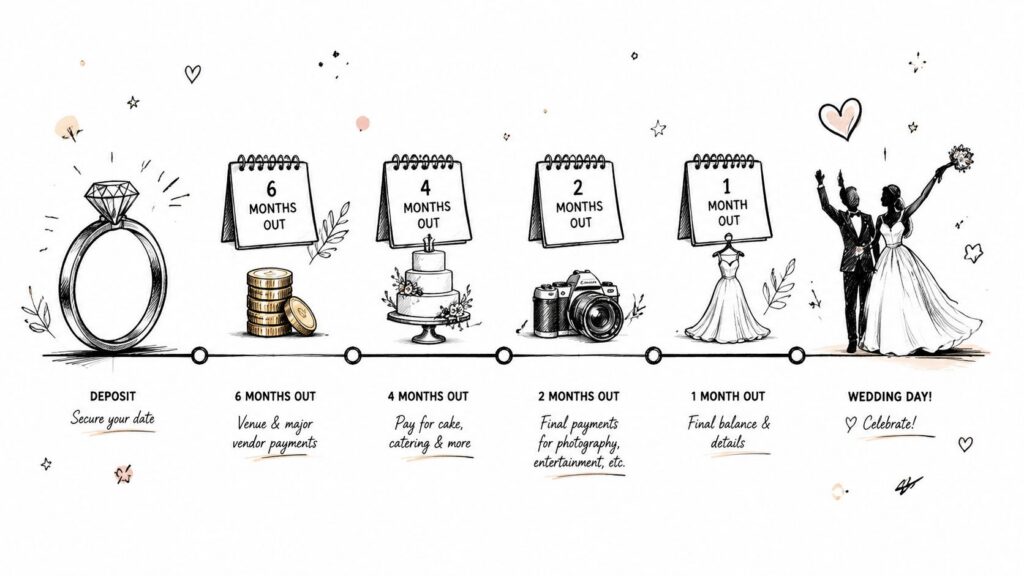
You can love the venue, the photographer, and the menu, then freeze the moment the contracts arrive. One payment is due now, another in a few months, and the dress shop wants its own schedule, while travel and guest counts are still moving around. That's where payment plans for weddings stop being a nice extra and start becoming a cash-flow tool you need to manage on purpose. The couples who handle this well don't just ask, “Do you offer installments?” They map every due date against what's in their savings account, then decide what can be paid now, what should wait, and what needs to be negotiated. That matters in a year where the average U.S. wedding cost is $36,000 and venue spending alone averages $8,573 (Zola's 2026 First Look Report). If you're trying to keep the wedding beautiful without creating a post-engagement debt hangover, the plan has to fit the calendar, not just the headline price. Couples also aren't looking for this by accident. Carats & Cake reported that 65.7% of couples were interested in flexible payment solutions and 78.8% expected to go over budget, which tells you exactly why this topic keeps coming up at venue tours and vendor calls (LendingTree's wedding debt survey summary). If you and your partner are trying to stay organized together, a simple tool that helps you track progress on shared goals can keep the wedding from taking over every money conversation. Table of Contents Why Wedding Payment Plans Matter More Than Ever The Three Main Types of Wedding Payment Plans Wedding Payment Plan Types Compared Building a Month-by-Month Wedding Payment Timeline Vendor Plans Versus Credit Cards Versus Saving Longer How Texas Old Town Structures Its Wedding Payment Plans Negotiation Tips and Budgeting Strategies for Any Venue Frequently Asked Questions About Wedding Payment Plans Why Wedding Payment Plans Matter More Than Ever A wedding budget can look fine on paper and still fall apart in practice. The trouble usually starts months before the final bill arrives, when the venue wants a deposit, the caterer wants a retainer, and the dress shop expects another payment before the bridal shower. Payment plans for weddings matter because they control timing, and timing is where couples get squeezed. That pressure gets worse when venue, catering, and bar services eat a large share of the budget, as shown in Zola's 2026 First Look Report. Installments help only if they match the rest of the wedding calendar. They spread the cost across the engagement instead of letting several big bills land in the same month. That matters because a low monthly payment can still collide with the florist, the photographer, and the final dress balance. If you do not map those dates first, the payment plan just hides the strain until it shows up again. Couples also make a bad habit of confusing a manageable installment with actual affordability. A smaller payment does not fix a budget that is already overloaded with venue fees, vendor retainers, attire, and travel. The better order is simple. Build the payment calendar first, then choose the vendors and financing that fit inside it. There is a reason this problem keeps coming up. LendingTree found that many engaged couples planned to take on debt for wedding expenses, often through credit cards, personal loans, or help from friends and family. That tells you how common wedding financing has become. It also shows why couples need a plan before the first deposit leaves the account. Practical rule: If a payment plan does not lower the risk of a mid-engagement cash crunch, it is not helping. It is just changing which bill hurts first. For Texas couples planning around a Hill Country venue or a regional guest list, the timing problem gets even tighter. Travel, attire, and vendor travel fees can stack on top of venue obligations, so the payment schedule has to cover the whole event, not just the reception space. Couples who want to track progress on shared goals should treat wedding payments the same way, as part of a bigger cash-flow plan that protects the rest of life, not a separate pile of bills. The Three Main Types of Wedding Payment Plans Wedding payment plans usually fall into three buckets, and you should know the difference before you sign anything. The first is the event-date anchored plan, where a deposit secures the date and the rest is tied to how close you are to the wedding. The second is a monthly amortization plan, which breaks the balance into equal monthly installments across the engagement. The third is a milestone-based plan, where payments land when specific planning steps are reached, like a tasting, final headcount, or design approval. The event-date anchored model is the one you'll see most often with venues. Industry templates for venues recommend a 30% deposit, a second payment at 90 days out, and final payment at 14 days out (VenueBill). A more advanced venue structure uses three to four installments with a first retainer of 25% to 50%, a mid-project payment of 25% to 30%, and the remainder before the wedding (HBMS). Venues like this because they're protecting a date that they can't sell twice. The monthly model works differently. It smooths out the pain if your engagement is long enough and your income is predictable. The downside is that it can make people feel more comfortable than they should, because the payment is small enough to ignore while other vendors build up. Milestone plans are useful when the vendor's workload really does move in stages, but they're less useful for couples who need a stable calendar more than a project rhythm. Wedding Payment Plan Types Compared Plan Type Typical Structure Payment Timing Best For Event-date anchored Deposit, mid-interval payment, final balance Tied to the wedding date Venues and couples who need clear deadlines Monthly amortization Equal monthly payments Spread across the engagement Longer engagements with steady savings Milestone-based Payments tied to planning checkpoints Tied to deliverables or approvals Vendors

How to Choose a Wedding Venue: A Complete 2026 Guide

The first week after an engagement usually feels like a blur. You celebrate, call family, save inspiration photos, and then the practical question lands hard: where is this wedding going to happen? That question carries more weight than most couples expect. The venue shapes the budget, the guest count, the timeline, the catering options, the weather backup plan, and the overall feeling of the day. It even influences smaller style decisions, from florals to footwear. If you're planning an outdoor ceremony or a property with uneven paths, it helps to think about comfort early, including details like luxury wedding sandals that make sense for grass, stone, or long photo sessions. The good news is that choosing a venue doesn't have to feel like guesswork. It works better when you treat it like a decision with a clear order: define what matters, filter hard, tour carefully, and read the contract with a skeptical eye. Table of Contents From 'Yes' to the Perfect 'I Do' Location Defining Your Wedding Vision and Budget Start with three priorities Build a budget around real trade-offs Finding and Shortlisting Potential Venues Build the long list the smart way Filter for the issues that actually affect the day The Venue Tour What to Look For and Ask Look past the pretty parts Questions that expose cost and stress points Decoding Contracts and Avoiding Costly Red Flags What should be itemized in writing Contract language that deserves a pause Special Considerations for a Central Texas Wedding Weather, travel, and property layout Frequently Asked Questions About Choosing a Venue What if our guest count changes after booking What payment terms should we expect How should we use a preferred vendor list From 'Yes' to the Perfect 'I Do' Location Most couples start with aesthetics. They want the hill country view, the candlelit hall, the oak trees, the big doors, the modern barn, the garden ceremony. That's normal. The mistake is stopping there. A venue is not just a backdrop. It's the operating system for the wedding day. If the site is gorgeous but hard to reach, too tight for your guest flow, restrictive about vendors, or rushed on timing, you'll feel those problems from setup through cleanup. Couples often realize this only after they've toured a few places and noticed that the prettiest option isn't always the easiest one to use. Choose the venue that supports the wedding you want to host, not just the photos you want to post. The strongest decisions usually come from couples who can answer three things before they book anything: what the day should feel like, what the guest experience should be, and what financial line they won't cross. Once those are clear, the field narrows fast. That shift changes the search. Instead of asking, "Do we love this place?" ask, "Can this place carry our wedding without creating avoidable cost, pressure, or compromises?" That's how you get from a hundred saved tabs to one confident yes. Defining Your Wedding Vision and Budget Before you book tours, decide what you're trying to create. Couples who skip this step tend to compare venues on vibe alone, and that usually leads to expensive confusion later. Start with three priorities Write down your top three priorities. Keep them practical, not aspirational. For most couples, those priorities fall into these buckets: AtmosphereDecide whether you want natural scenery, formal architecture, rustic character, or a clean modern look. A venue with strong built-in character can reduce how much you need to spend on décor because the setting is already doing part of the work. Guest experienceThink beyond the ceremony. Guests need a comfortable arrival, clear flow between spaces, enough room to mingle, and a plan that doesn't leave them standing in heat, wind, or confusion. BudgetSet a venue ceiling before you fall in love with a property. This keeps the rest of your planning realistic. A lot of couples do a version of this instinctively. The better approach is to put it in writing and rank it. If atmosphere is first but guest convenience is second and budget is third, that tells you how to handle trade-offs. If budget is first, you need to be even stricter about what's included and what restrictions may add cost later. One practical way to ground this conversation is to revisit your original engagement decisions. The same clarity that helps with ECI Jewelers' ring selection advice helps here too. You don't pick a ring well by looking at everything. You pick it by defining what matters most. Build a budget around real trade-offs The venue is usually the largest line item. Couples in the United States allocate approximately $12,000 to their wedding venue, representing roughly 40% of their total wedding budget, and the average total wedding cost is projected to reach $36,000 in 2025 according to wedding industry statistics for 2024 and 2025. That number matters because it forces discipline early. If the venue takes too much of the budget, every later decision gets tighter. Catering gets squeezed. Florals get cut. Transportation becomes harder. Guest count starts shifting in stressful ways. Use this quick planning filter before you search: Priority area Question to answer now Why it matters Style Do you want built-in charm or a blank canvas? Built-in character can reduce décor pressure Capacity What's your realistic guest count, not your hopeful one? Capacity affects price and comfort Spending What's the full venue ceiling, including likely add-ons? Prevents emotional overspending Practical rule: If your guest list is still fluid, build the first venue search around the highest realistic count, not the lowest hopeful one. A good venue budget isn't just a rental number. It's a decision about value. Some venues cost more upfront and include enough infrastructure to simplify planning. Others seem affordable at first but require more décor, more rentals, more staffing, or more compromises. That's why couples who know how to choose a wedding venue don't focus on sticker price alone. They look at what the property makes easier,

Scroll to Top