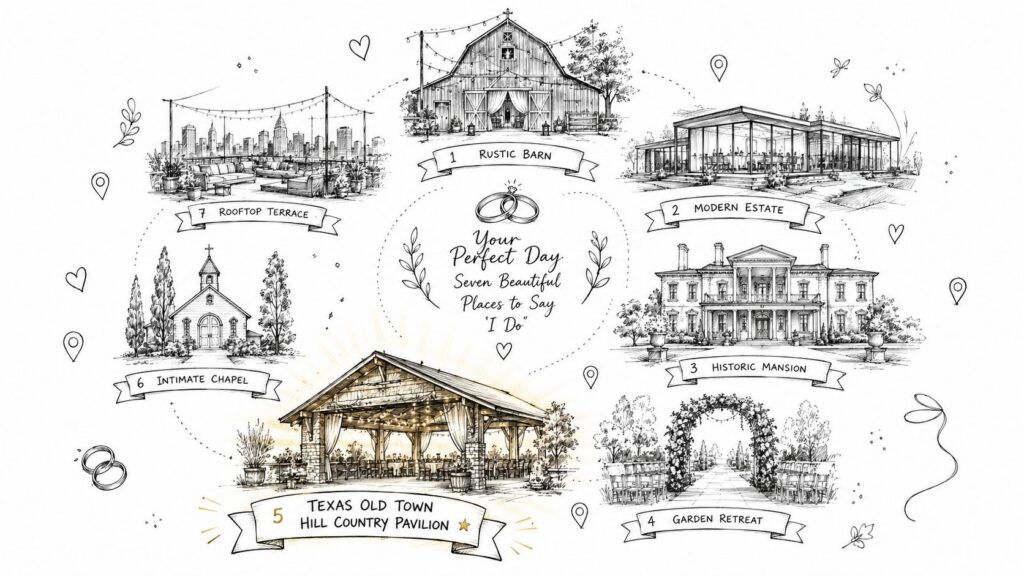
7 Top Austin Wedding Venues for 2026
You fall in love with the photos, book a tour, and then find out the rental window is too short for setup, the bar package is required, and outside vendors come with added fees. That is how couples end up with a venue that looks right online but creates pressure everywhere else. Austin gives you a wide range of venue styles, especially once you include Dripping Springs and the Hill Country. The challenge is not finding attractive options. The challenge is sorting through places that differ on rental hours, vendor rules, lodging, noise limits, and what the quoted price covers. A polished gallery will not answer those questions. Start with planning filters, not aesthetics. I tell couples to compare three things first: how long you have the property, how much freedom you have with catering, bar service, planners, and rentals, and whether the pricing is clear enough to build a realistic budget from day one. Those factors shape the guest experience more than almost any floral or design choice. A venue with a lower base rate can still cost more if the access window is tight and your vendor team has to rush setup. A venue with in-house services can save time and coordination, but only if the package matches your priorities. If budget clarity is your main concern, this guide on how to choose the right Austin wedding venue for your priorities covers the questions worth asking before you tour. The venues below are not ranked by who photographs best. They are examined through the lens that matters during planning: rental terms, vendor flexibility, and how easy each property is to price transparently before you sign. Each one also includes a Best For callout, so you can narrow the list faster. Table of Contents 1. Texas Old Town Why Texas Old Town stands out Best For 2. The Addison Grove What works well here Best For 3. The Arlo Where it shines Best For 4. Barr Mansion The Planning Trade-Off Best For 5. Camp Lucy Planning upside and caution Best For 6. Ma Maison Best For 7. Villa Antonia What to confirm before booking Best For Comparison of 7 Austin Wedding Venues Making Your Final Venue Decision 1. Texas Old Town A common Austin-area planning problem looks like this: the venue is beautiful, but the rental window is tight, the vendor rules are restrictive, and the final bill grows once service fees and required add-ons show up. Texas Old Town stands out because it addresses those practical pressure points early. The property has four separate private venues, Tejas, Sage, Stone, and Redbud, on a large Hill Country-style setting. That matters for couples comparing aesthetics and headcount at the same time. Instead of forcing a choice between a space that feels right and a space that functions well, Texas Old Town gives more room to match the venue to the event size and layout needs. Rental time is one of the strongest advantages here. The 8:00 a.m. to midnight access window gives couples and vendors more breathing room across the full day. In practice, that usually means a calmer load-in, fewer staffing overages caused by compressed timelines, and less pressure on hair, makeup, photography, and décor setup. Why Texas Old Town stands out From a planner's perspective, this venue works well for couples who want flexibility without building a wedding day from scratch. There are indoor and outdoor ceremony options, climate-controlled reception halls, dressing suites, parking, a prep kitchen, a separate service entry, on-site management, and cleanup with furniture breakdown included. Those details affect guest experience and vendor execution more than the photo gallery usually shows. Vendor policy is another reason Texas Old Town belongs high on a practical venue list. Couples can choose their own caterer, which gives real budget control and more freedom around food style, service format, and cultural menus. For weather planning, the venue also publishes guidance on whether an indoor or outdoor wedding in Texas makes more sense, which is useful if you're weighing ceremony backup plans before you book. Pricing clarity is also better than average for this market. The quoted pricing includes sales tax and gratuity, which helps couples compare real numbers instead of optimistic starting rates. That kind of transparency saves time during venue tours and reduces budget surprises later. One trade-off to confirm early is the bar setup. You can bring your own beverages, but service must go through an approved bartending company. For many couples, that is a reasonable middle ground. You keep more control over alcohol purchasing, while the venue keeps service standards and liability procedures consistent. Practical rule: Ask every venue to spell out rental hours, included furniture, cleanup scope, and alcohol policy before you get attached to the photos. Best For Couples planning a Hill Country wedding for roughly 150 to 320 guests who want long rental access, flexible catering, and straightforward pricing. It is also a strong fit for couples trying to avoid the common capacity gap discussed in advice on choosing the right Austin-area wedding venue. 2. The Addison Grove The Addison Grove works well for couples who want a polished Hill Country look without going full rustic. The venue leans modern ranch rather than barn-heavy, and it's close enough to Austin that guest transportation, hotel blocks, and rehearsal logistics tend to feel simpler than at more remote properties. The biggest practical advantage here is transparency in the early shopping stage. Many Austin wedding venues require an inquiry before you can understand whether the date and budget are realistic. Addison Grove is more useful than most because it offers date-based pricing guidance and custom estimate tools, which helps couples screen options before they spend weekends on tours. What works well here This venue is especially appealing if you want optional all-inclusive structure without being locked into one planning style. The ceremony and reception setup supports a full wedding day in one place, and the getting-ready suites plus prep kitchen cover the basics most couples