wedding venues texas

Guide to Large Event Venues: From Capacity to Cost

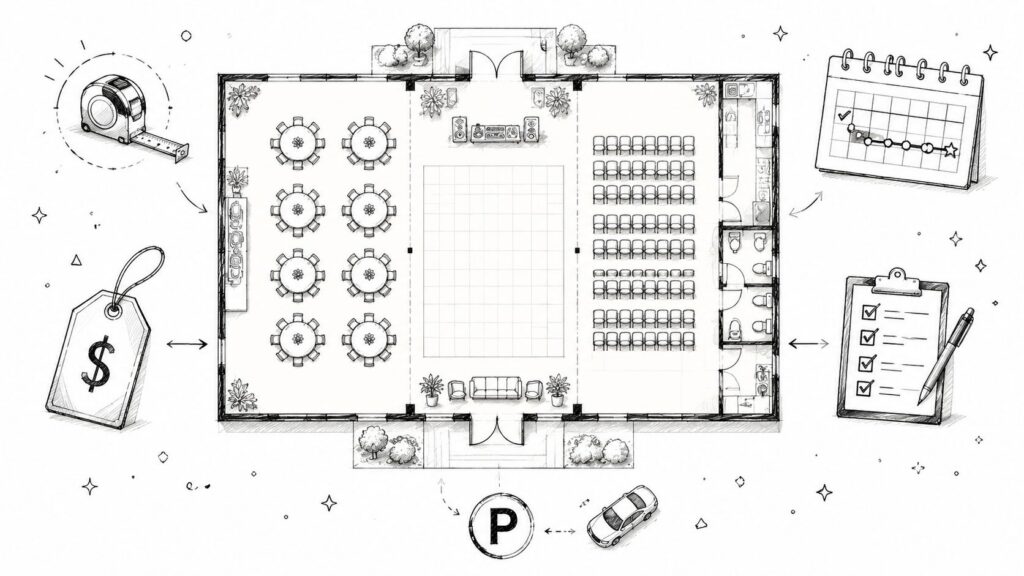
You're probably looking at a shortlist of venues that all seem to promise the same thing. Spacious hall. Flexible setup. Plenty of parking. Great for large groups. Then you ask for pricing and capacity, and the answers get slippery fast. That's where most large event venue searches go sideways. A room can photograph well and still function poorly once you add round tables, a buffet line, AV, a stage, vendor load-in, and actual human movement. The practical question isn't whether a venue can technically hold your guest count. It's whether the room still works once your event becomes real. Table of Contents Choosing Large Event Venues in 2026 Decoding Venue Capacity and Layout Why maximum capacity is often the wrong number What to ask on a tour Essential Logistics Beyond the Main Hall The operational checklist that matters Why on-site management changes the day Navigating Pricing Transparency and Vendor Policies Read the contract for total occupancy cost Vendor policy affects both budget and control How Texas Old Town Delivers for Central Texas Events A venue model built around functional use How different event types use the same campus differently Your Venue Selection Checklist and Timeline The shortlist checklist A simple booking timeline Choosing Large Event Venues in 2026 Event planning today presents greater challenges than before. The global corporate events market is valued at USD 369.65 billion in 2026 and is projected to reach USD 686.49 billion by 2031, according to Mordor Intelligence's corporate events market report. That projection matters because it reflects something planners already feel on the ground. More demand means more competition for dates, more variation in venue quality, and more pressure to make a smart call early. Large event venues sit at the center of that decision. They aren't just backdrops. They control timing, guest flow, staffing ease, vendor coordination, and a big part of your final spend. A polished venue search starts with three filters. Functional fit: Can the room support your event format, not just your guest count? Operational fit: Can vendors load in, set up, serve, and strike without bottlenecks? Financial fit: Can you understand the full cost before you sign? Practical rule: If a venue answers aesthetic questions faster than operational ones, slow down and ask harder questions. Most venue marketing uses broad claims because broad claims sell. “Seats 300” sounds clear. It isn't. “Flexible space” sounds reassuring. It may only mean the furniture can be moved. “Full-service” can cover anything from an in-house bar to actual day-of coordination. The better approach is checklist-driven. Ask for square footage. Ask how the listed capacity changes by layout. Ask where caterers enter, where trash exits, where AV ties into power, and who is managing vendor timing on event day. Those answers tell you more than any gallery page will. Decoding Venue Capacity and Layout The most misleading line in a venue brochure is often the easiest one to spot. Maximum capacity looks definitive, but it rarely tells you whether guests will feel comfortable once tables, bars, staging, and circulation paths are in place. Why maximum capacity is often the wrong number A 2025 event design study found that 68% of large-event attendees rated overcrowding as a top dissatisfaction, while 74% of venue brochures still quoted only theoretical maximums without layout-specific capacity adjustments, based on Planning Pod's event layout guide. That gap is exactly why some events feel cramped even when the venue never technically exceeded capacity. For large event venues, the more useful standard is functional comfort. In practical terms, that means asking how much usable room remains after the layout is built, not before. For events with 300 to 350 guests, a venue typically needs 6,000 to 10,000 square feet, and planners should expect 15 to 18 square feet per guest for comfort and safety, according to Eventective's venue specification example. That benchmark becomes real fast when you map the room: Event format What usually consumes space Capacity risk Banquet Round tables, chairs, service aisles, buffet or bar Guests fit on paper, staff can't move cleanly Theater Rows maximize count but reduce side circulation Easy ingress, harder networking Cocktail Fewer seats, more standing room Feels open early, congested near bars later The lesson is simple. A room that works for a presentation may not work for a dinner dance. A hall that can host a reception-style mixer may feel overstuffed when you add dining, entertainment, and photo areas. Maximum capacity is a fire-code conversation. Functional comfort is an event-success conversation. Temporary structures make this even more obvious. If you're comparing indoor halls with tented extensions, use practical sizing references such as these party tent dimensions to understand how quickly dining, staging, and guest flow consume usable area. What to ask on a tour Don't ask, “How many people does it hold?” Ask these instead: Show me the 300-person layout: Ask for an actual floorplan with tables, dance floor, bar, buffet, DJ or stage, and service paths. What changes by setup style: A theater setup, cocktail party, and seated dinner should never share one blanket capacity number. Where are the aisles: Perimeter walkways matter. If guests, servers, and AV crews are crossing the same narrow paths, the room will feel tight even before it's full. What disappears when extras are added: A photo booth, lounge area, dessert display, or indoor ceremony backup all eat into the same footprint. When a venue can answer with diagrams and furniture counts, planning gets easier. When the answer stays abstract, assume the listed capacity is optimistic. Essential Logistics Beyond the Main Hall A large room can still produce a messy event day if the support systems behind it are weak. The hidden parts of the building often decide whether your schedule stays smooth or starts slipping before guests even arrive. The operational checklist that matters When I walk a venue for a large event, I spend less time staring at the main hall and more time tracing movement. Where do vendors enter? How far is the prep
Exclusive Use Wedding Venue: Your Dream Day Unlocked

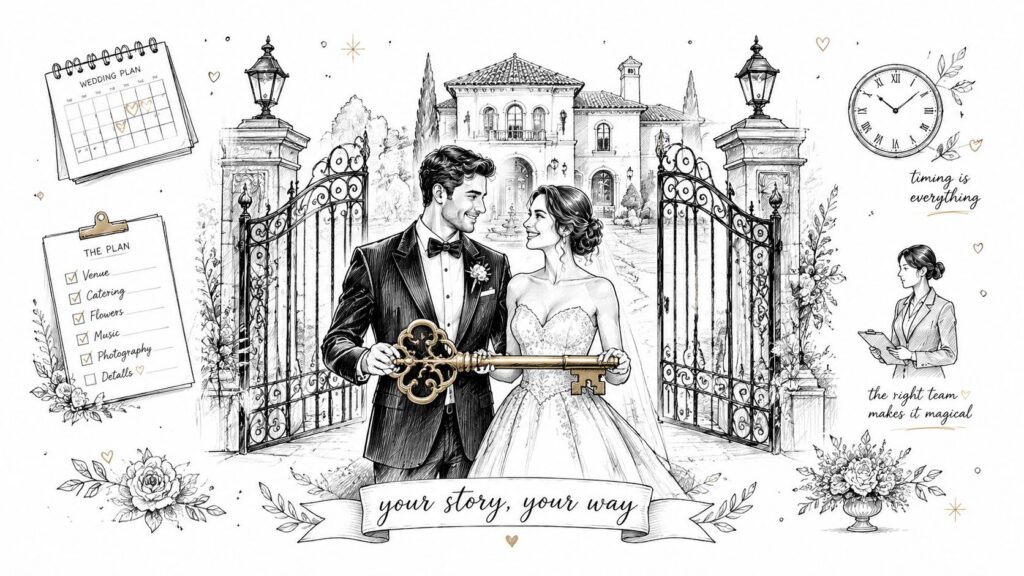
You're probably doing what most couples do after they get engaged. You open a dozen venue tabs, save screenshots of barns, halls, estates, and hotels, and then hit the same confusing phrase over and over: exclusive use. Every website seems to promise privacy, flexibility, and a smooth day. Very few explain what that entails once contracts, vendors, setup times, and cleanup start affecting your budget. That confusion matters because the venue isn't a small line item. In the U.S., the wedding industry exceeded $70 billion as of 2023, and venues take the largest share of wedding budgets at 24% to 40% of total spend, according to wedding industry statistics compiled by Zippia. For most couples, this is the single biggest wedding decision they'll make. It shapes the schedule, the guest experience, the vendor plan, and how stressed or calm the day feels. The good news is that “exclusive use” becomes much easier to evaluate once you stop treating it like a marketing phrase and start treating it like an operations question. Private access is only part of the story. Rental window length, vendor rules, cleanup responsibilities, and hidden fees matter just as much. Table of Contents Your Wedding Venue Search Is Overwhelming You Why the venue decision feels so heavy What Exclusive Use Really Means for Your Wedding What privacy looks like in practice What the term doesn't automatically promise Exclusive Use vs Shared Use A Clear Comparison The biggest operational difference Where shared-use venues can still make sense Side-by-side comparison The hidden comparison couples often miss What tends to work best Your Essential Exclusive Use Venue Checklist Questions that clarify the offer Where couples get boxed in The checklist I use on venue tours What clear answers sound like How Texas Old Town Solves Common Wedding Headaches Why a longer rental window changes the budget Four headaches this model reduces Why guests feel the difference What this example gets right Your Path to the Perfect Private Celebration Your Wedding Venue Search Is Overwhelming You One couple starts with “rustic wedding venue.” Another starts with “Hill Country wedding venue with indoor ceremony backup.” Within an hour, both are staring at polished galleries, package names, and promises that sound similar but aren't. Private venue. Full access. Estate rental. Exclusive use. Venue buyout. The words blur together fast. The stress gets worse when you're trying to compare apples to oranges. One property includes tables, chairs, and dressing suites. Another is a blank canvas. One gives you a tight window. Another gives you the entire day. One lets you choose your own caterer. Another limits you to a short preferred list. A simple planning tool can help you sort this earlier than most couples do. If you haven't mapped your date decisions, attire deadlines, and booking milestones yet, a practical wedding preparation timeline can keep venue shopping from bleeding into every other part of the planning process. Why the venue decision feels so heavy The venue sets the tone, but it also controls the mechanics of the day. If access is short, every vendor feels it. If parking is awkward, every guest feels it. If the venue has unclear policies, you'll feel it in your contract review and your final invoice. That's why I always tell couples to judge venues on both atmosphere and structure. The pretty photos matter. The operating rules matter more. Practical rule: If a venue website makes the day look effortless but doesn't clearly explain access hours, vendor policy, and what's included, slow down and ask harder questions. If you're still narrowing your options, this guide on how to choose the perfect wedding venue in Texas is useful because it pushes the conversation beyond style and into fit, logistics, and planning reality. What Exclusive Use Really Means for Your Wedding An exclusive use wedding venue means you have complete private access to the facility for your wedding day. You're not sharing the property with hotel guests, unrelated wedding parties, or public visitors. That's the core distinction identified in this wedding venue market analysis. The easiest way to understand it is this. Booking exclusive use is like renting an entire private house for an important celebration. Booking shared use is like reserving one room inside a busy building. You may still have a lovely event in either setting, but they don't operate the same way. What privacy looks like in practice Privacy isn't just about avoiding random people in the background of your photos. It affects how the whole day feels. With true exclusive use, your guests know where to go. Your wedding party can move between getting-ready areas, ceremony space, cocktail area, and reception without crossing paths with strangers. Your family doesn't need to ask which restroom belongs to your event. Your photographer isn't dodging unrelated guests in the most important portrait locations. That kind of control creates calm. Couples often think they're paying for scenery, but they're also paying for fewer interruptions, fewer awkward handoffs, and fewer moments that pull them out of the experience. What the term doesn't automatically promise Exclusive use does not automatically mean all-inclusive. It also doesn't always mean complete freedom in every planning category. Some exclusive use properties are dry hire or blank-canvas venues. Those can be a great fit if you want control and have the planning support to build the event from the ground up. But they often require you to source key infrastructure yourself, such as rentals, catering, and décor. The privacy benefit remains. The workload can increase. Other venues package more essentials into the rental, which simplifies planning but can limit customization in certain areas. That's why couples should look beyond the headline and into the details. For a practical example of what's bundled into a venue rental, reviewing a transparent wedding venue pricing page helps frame the right questions before you tour. A venue can be exclusive in access and restrictive in policy at the same time. Those are separate issues. Exclusive Use vs Shared Use A

Scroll to Top
Texas Old Town Open House August 2026