You're probably juggling three things at once right now. A parent wants a beautiful setting, your budget wants discipline, and the guest list keeps pulling you toward either a downtown hotel or something farther out in the Hill Country. That's exactly where a venue near San Antonio earns a serious look, especially if you need room for a real event, not just a photo backdrop.
San Antonio isn't a tiny venue market. The city has 458 hotels and more than 48,000 guest rooms, and the Henry B. Gonzalez Convention Center brings over 1.3 million square feet of event space into the market, which is why planners here are often choosing in a crowded, high-capacity corridor rather than a niche destination (Cvent venue market data). In that kind of environment, the smartest venues don't just look pretty. They solve logistics, protect your timeline, and make the day feel calm.
Table of Contents
- Why Choose a Venue Near San Antonio
- The Four Halls and What Each One Handles Best
- Included Services, Policies, and On-Site Logistics
- Pricing Expectations and Booking Timeline for 2026
- A Sample Wedding Day Schedule Built Around the 16-Hour Window
- How Wild Onion Ranch Compares to Other Central Texas Venues
- Matching the Right Hall to Your Event Type
- Planning Questions Worth Asking Before You Book
Why Choose a Venue Near San Antonio
Most couples begin with a downtown San Antonio ballroom, then realize the day starts to feel like a hotel conference with flowers. Others look west at ranch venues and find the drive harder than they want for older relatives, vendors, and anyone hauling gear. The Hill Country corridor between Austin and San Antonio solves that problem better than the city core does, which is why it keeps earning real tours instead of casual clicks.
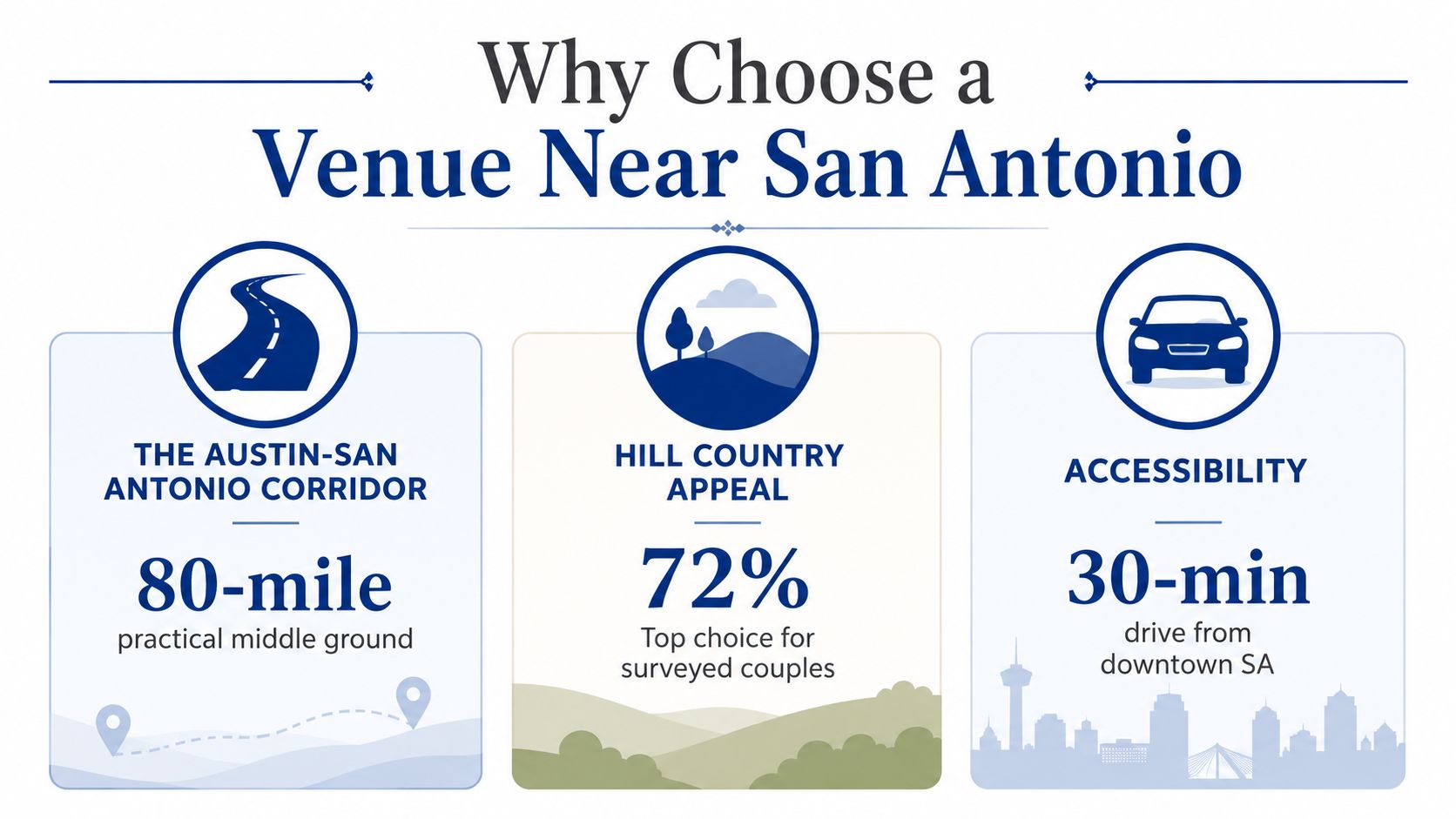
Why the corridor matters
San Antonio's venue market is crowded, but crowding does not make the search easier. PartySlate lists wedding venues near San Antonio, and that alone shows how much competition couples are sorting through before they ever see a floor plan (PartySlate venue results). In a market like that, a single-property campus stands out because you are comparing real guest flow, parking, rain backup, and rental rules instead of trying to decode hotel package language.
Practical rule: If the venue cannot clearly explain guest flow, parking, rain backup, and rental hours, keep looking.
That is the advantage of a four-hall campus near San Antonio. You get range built into one property, from smaller gatherings to bigger guest counts, without forcing every celebration into the same room shape or the same hotel setup. For couples who want a broader explanation of why Hill Country properties keep pulling attention away from the city, this wedding venue near San Antonio guide gives that context in plain English.
The location also works because it respects the people who have to show up. Families coming from both sides of Central Texas, vendors unloading decor, and guests who need direct access all do better when the venue functions like a campus instead of a tight urban room. If you want to sort the layout from polished photos, a private wedding album for venues gives you a cleaner read on the space before you tour.
The Four Halls and What Each One Handles Best
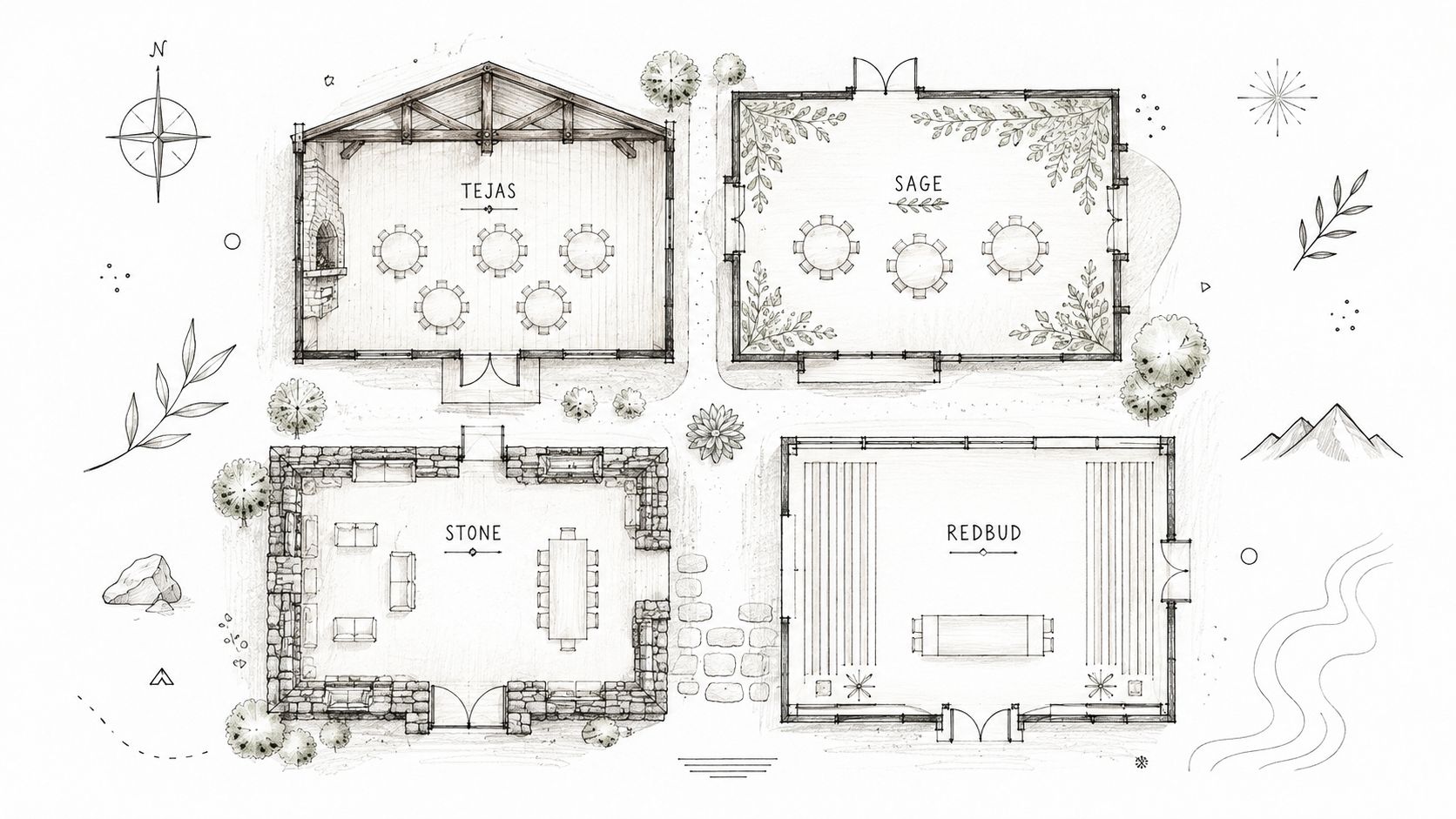
One of the smartest things about a four-hall property is that you stop pretending every event belongs in the same room. Tejas, Sage, Stone, and Redbud each serve a different kind of host, and if you match the hall to the event properly, you avoid the common mistake of overbooking space just because it feels safer. The right hall is the one that gives your guests enough breathing room without making the event feel empty.
Tejas, Sage, Stone, and Redbud
Tejas is the obvious pick when the guest list is large and the tone leans Texas-forward. It's the hall I'd point to first for a 320-guest country dance hall wedding, because that kind of celebration needs confident circulation, a strong dance floor, and space that doesn't collapse under the weight of dinner service and a full reception program. If you want the event to feel lively, not crowded, Tejas is the right starting point. For a closer look at that hall, see the venue's Tejas space page.
Sage fits couples who want a large gathering without the look of a massive ballroom. It works well when you need ceremony-to-reception flow and want the room to feel tucked into the natural setting instead of flattened by it. I'd put Sage high on the list for events that need scale but still want some softness in the atmosphere.
Stone is the hall for hosts who want the more polished side of the Hill Country without losing flexibility. It's a good fit for dinners, milestone celebrations, and corporate programs that need a room to feel professional during speeches and relaxed later in the night. Stone tends to make sense when the decor needs to look refined without becoming fussy.
Redbud is the intimate choice, and that matters. For a 150-guest micro-wedding or a smaller family event, Redbud gives you the proportions you need instead of making you rent extra square footage you'll never use. It's also the hall I'd favor when the guest list is close-knit and the event needs to feel warm, not compressed.
How to think about outdoor pairings
Each hall gets stronger when the ceremony plan is aligned with it. An outdoor ceremony with a natural backdrop gives you a smooth transition into the indoor hall, while the indoor option keeps weather risk under control without changing the whole event style. That pairing is the advantage of a campus like this, not just the number of rooms.
The point isn't to memorize specs. It's to shortlist correctly before you tour. Four halls sound like a lot until you realize they're really just four different answers to the same question: how much space do your people need?
Included Services, Policies, and On-Site Logistics
The rental package matters more than the pretty photos. A venue can look gorgeous and still create a miserable event day if you're buying every operational piece separately, from sound to cleanup to vendor coordination. The reason this property works for Central Texas planners is that the infrastructure is already there, and that lowers the number of things that can go wrong.
The day runs on built-in logistics
The 16-hour rental window, from 8:00 a.m. to midnight, is the backbone of the whole experience. It gives you time for hair and makeup, vendor setup, a full event, and teardown without forcing everyone to sprint through the day. That's a real scheduling advantage in a market where shorter access windows can make even a simple wedding feel rushed.
The other pieces are just as practical. You get indoor and outdoor PA systems with Bluetooth hookup and a wireless microphone, dressing suites with private restrooms and vanity areas, a prep kitchen with a separate service entry, and clean-up plus furniture breakdown at the end of the night. Those details sound small until you've seen a wedding day stall because someone had to rent a speaker, borrow a mic, or scramble for a place to stage the catering crew.
Why this matters: Permanent sound, climate control, and on-site management reduce your dependence on last-minute rentals and outside coordination.
The vendor policy also matters. You can choose your caterer, and that flexibility is a good thing if you're working with a family recipe caterer, a preferred chef, or a cultural menu that doesn't fit a standard hotel package. Just as important, beverages are host-provided, and an approved bartending company is required. That's the part couples tend to miss when they skim a website, then get surprised later.
For an operational venue packet perspective, the broader event industry has been pushing tighter documentation around technical requirements, temporary structures, and safety planning, which is why a venue that already bakes in staffing and support saves you time and stress (Venue Coalition tech pack reference). If you want another look at how venues in this region frame cost and booking structure, the venue's pricing overview is worth reading before you compare quotes.
Pricing Expectations and Booking Timeline for 2026
A couple walks into the pricing conversation at a venue near San Antonio with one question, and it is usually the wrong one. They ask for the lowest number first, then spend the next week trying to figure out what that number buys. At a four-hall property, the smarter move is to compare the quote against the included setup, staffing, and on-site support before you compare it to anything else.
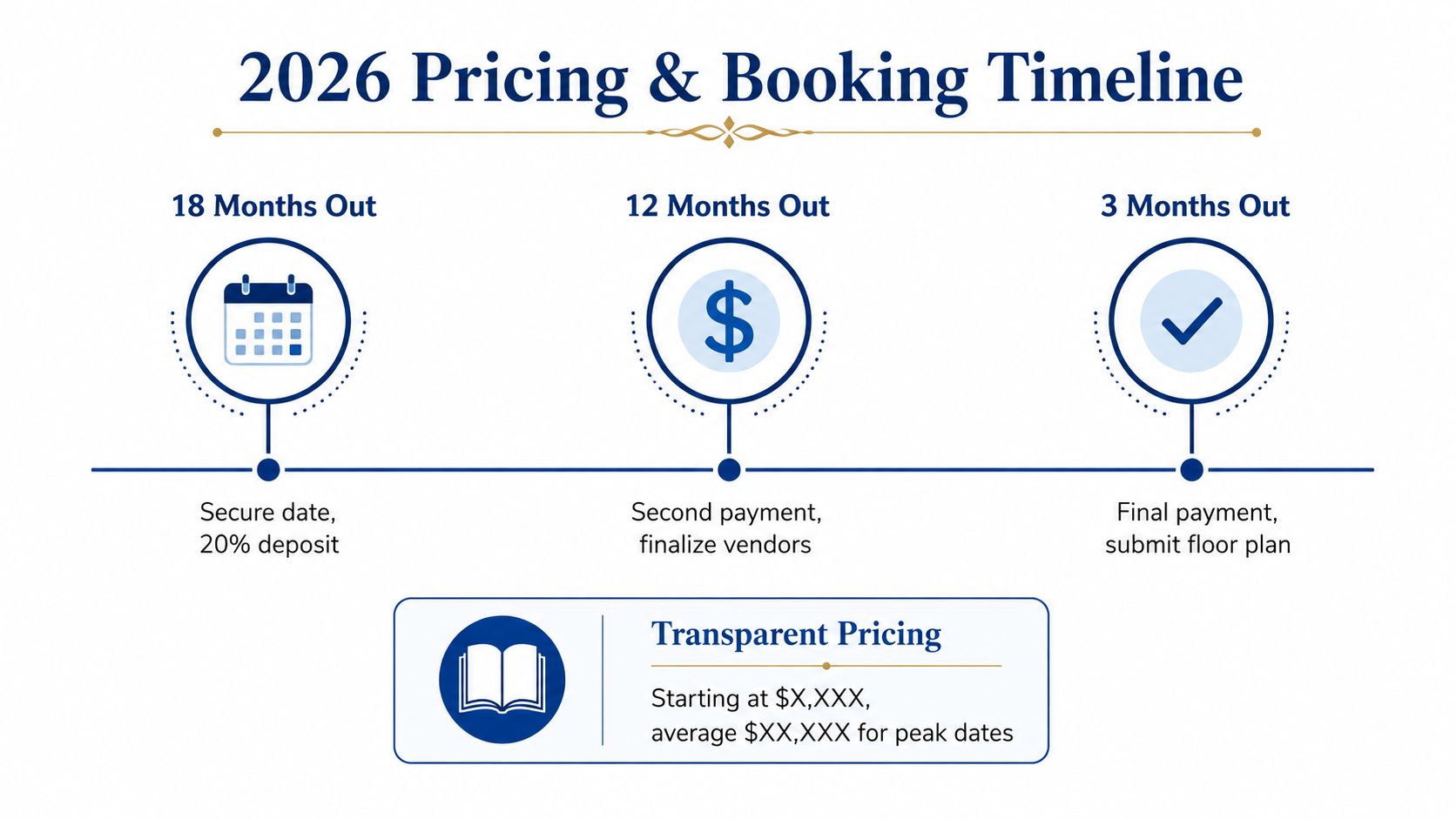
What competitive pricing looks like
Recent San Antonio wedding coverage says venue-only pricing commonly sits around $6,000 to $8,000, while all-inclusive options can exceed $10,000 (San Antonio wedding pricing and trends). That range is useful because it gives you a reality check. If a quote includes sales tax and gratuity and does not bury you in extras, it deserves a closer look than a lower headline price with a long add-on list.
That range is also a practical filter for comparing a single-property campus against the wider San Antonio market. Once you start sorting through hotel ballrooms, independent venues, and package-driven properties, the difference is rarely the base rate alone. It is what the venue forces you to rent, what it already has in place, and how much time you lose chasing answers.
The timing side is just as important. Popular San Antonio venues often book 12 to 18 months ahead in peak spring and fall windows, which means short-timeline buyers need flexibility or they will get squeezed out (San Antonio planner guidance). Flexible payment plans help, but only if the venue also has multiple hall sizes and open dates to match different guest counts. That is the key advantage of a four-hall property, because it gives you more ways to fit the date, the guest list, and the budget together.
How to judge your own timeline
If you are planning a 300-guest wedding, do not wait until every linen and centerpiece decision is locked before you tour. The room choice should come first, because hall size, date availability, and budget move together. Smaller, more intentional guest lists fit the current market better anyway, and the range from 150 to 320 guests gives you room to adjust without walking away from the property.
The booking packet matters as much as the room count. Read the venue's pricing overview before you compare any quote, because a clear payment structure tells you more than a glossy brochure ever will. If the venue shows you deposits, due dates, and what is included without making you chase three separate people for the same answer, that is a stronger sign than a low starting price with vague fine print.
A quick planning note matters here too. The MAJC guide to speculation rules is a useful technical reference for how modern sites can support quicker page loading, but the practical question for couples is simpler, can you see dates, understand inclusions, and move fast enough to secure them?
My advice is blunt. If the venue gives you clear pricing, a real payment structure, and enough room options to match the guest list, it belongs on your short list. If it does not, keep moving.
A Sample Wedding Day Schedule Built Around the 16-Hour Window
An 8:00 a.m. to midnight rental window changes the entire mood of the day. You're not trying to beat the clock, and your vendors aren't building the event around panic. The schedule below is the kind of day I'd walk a couple through at a property like this, because it uses the room, the grounds, and the staff in a way that makes sense.
Hair and makeup starts in the dressing suites while the rental clock is just beginning. Vendors load in, tables get placed, the bar setup is checked, and the ceremony site gets the final touch-ups without anyone needing to work around a previous booking. That early start is what keeps the rest of the day from feeling compressed.
By late afternoon, guests arrive with enough time to park without confusion, and the ceremony happens outdoors if the weather cooperates. If the forecast turns, the indoor hall becomes the backup without destroying the program flow. Cocktail hour can spill into the grounds, then guests move inside for dinner, toasts, and dancing.
The last hour matters too. When the venue handles clean-up and furniture breakdown, the family doesn't get stuck stacking chairs while still wearing formal clothes. That single detail saves a wedding day from ending in exhaustion.
A workable sample rhythm looks like this:
- 8:00 a.m. to 11:00 a.m. Vendors arrive, couple gets ready, ceremony items are staged.
- 11:00 a.m. to 2:00 p.m. Decor installs, catering setup, final sound checks.
- 3:00 p.m. to 4:00 p.m. Photos, guest arrival, ceremony rehearsal if needed.
- 4:00 p.m. to 5:00 p.m. Ceremony.
- 5:00 p.m. to 6:00 p.m. Cocktail hour.
- 6:00 p.m. to 9:00 p.m. Dinner and reception.
- 9:00 p.m. to 11:30 p.m. Dancing and closing events.
- 11:30 p.m. to midnight Vendor exit and final venue wrap.
That's what a real rental window buys you, time to breathe.
How Wild Onion Ranch Compares to Other Central Texas Venues
Venue shopping goes wrong fast when couples prioritize style over operations. A downtown hotel ballroom looks convenient, a ranch venue looks scenic, and a four-hall campus looks flexible. The decision comes down to capacity fit, exclusivity, vendor freedom, and how much work the venue removes from your plate.
| Criterion | 4-Hall Hill Country Campus | Downtown Hotel Ballroom | Standalone Ranch Venue |
|---|---|---|---|
| Capacity flexibility | Multiple hall sizes let you match guest count to space | Strong for large indoor groups, less flexible on room feel | Often beautiful, but usually one primary room shape |
| Exclusivity | Private, single-event focus | Shared hotel environment with other guests nearby | Usually private, but operations can be less structured |
| Vendor policy | Flexible, with your own caterer options | More likely to use in-house or preferred vendors | Varies widely, often restrictive |
| Pricing clarity | Clearer when tax and gratuity are included up front | Packages can be easy to quote but hard to customize | Can be opaque if many services are separate |
| Guest flow | Large lot and campus layout help parking to ceremony movement | Easy for overnight guests, harder for ceremony separation | Good scenery, but the walk between areas can be long |
| Included services | PA systems, dressing suites, prep kitchen, manager, cleanup | Often bundled, but tied to hotel rules | Depends on the property, sometimes limited |
A downtown hotel ballroom makes sense when your guest list is tight and many attendees are staying overnight in the same place. That is real convenience, and I would not dismiss it for an urban rehearsal dinner or a polished corporate banquet. Hotel properties also reduce the number of moving parts you have to manage on your own. The downside shows up fast if you want more control over timing, vendor access, or the feel of the room. Hotel rules can start to act like guardrails you did not ask for.
Standalone ranch venues win on scenery, and plenty of couples should still choose one. If your entire goal is a rustic setting and you are comfortable managing more pieces yourself, a ranch can be the right call. The tradeoff is that many ranch properties make you work around less predictable logistics, especially for load-in, weather, and vendor staging. That is where the day can get harder than it looks on a photo tour.
Wild Onion Ranch sits in a different lane. The campus format gives you private-event focus without forcing every celebration into the same room shape, and that matters when guest counts, room usage, and program flow do not line up neatly. It handles weddings, receptions, and mixed-format events better than a single-room property because the halls let you match the event to the space instead of forcing the event to fit the space.
That said, each hall has limits. A campus only helps if you choose the right room, and the wrong hall can still feel too large, too compact, or too formal for the event you are planning. The advantage is not that every hall does everything. The advantage is that you can pick a room with a clear job and build the day around it.
Bottom line: The right venue is the one that matches your program, not the one that photographs best.
For couples comparing options across Central Texas, that is the question I would put first. Wild Onion Ranch makes sense when you want the control of a private venue, the flexibility of multiple halls, and fewer surprises in how the day runs. It is a stronger fit than a hotel ballroom if you need room to shape the event yourself, and a better fit than many standalone ranches if you want scenic surroundings without giving up operational structure.
Matching the Right Hall to Your Event Type
The common mistake is assuming bigger always means better. It doesn't. A 300-guest event can feel elegant in the right hall and awkward in the wrong one, while a 150-guest celebration can feel upscale or sparse depending on how much room you rent.
My direct recommendations
For a 300-guest Hill Country wedding, I'd start with Tejas or Sage. Tejas makes more sense if the party is dance-heavy and you want the room to carry a bold Texas identity. Sage is better if you want the scale without quite as much visual force.
For a 150-guest intimate celebration, Redbud is the cleanest answer. You get the cozy feel that smaller guest counts need, and you don't waste energy trying to fill a room that's too large for the group. Stone can also work if you want the evening to feel a little more polished.
For a quinceañera with a large court, I'd lean toward Tejas first and Stone second. The room needs to handle entrances, family seating, photo moments, and a dance program that keeps moving. You also need a layout that doesn't punish grandparents or younger kids as they move between tables and the dance floor.
For a corporate dinner or retreat, Stone is usually the strongest fit because it reads professional without feeling sterile. Sage works when the agenda includes more social time and less formal presentation. Either way, the campus format gives you room to separate arrival, program, and dinner in a way a hotel meeting room often can't.
What to ask about on a tour
Parking and guest flow matter more than most venue lists admit. A large private lot is a real advantage when you've got older relatives, a large bridal party, or corporate shuttles that need simple drop-off and pickup. Ask how guests move from parking to ceremony to reception, because that's where the day either feels smooth or starts to bog down.
Also ask about accessibility on the exact path your guests will use. If a venue can't give you a straight answer, it's not the right venue for a family-heavy event.
Planning Questions Worth Asking Before You Book
If you're making calls this week, keep the questions tight. Don't ask for generic reassurance, ask for the operational facts that decide whether the venue fits your event.
What's included in the rental price? Ask specifically about tax, gratuity, cleanup, furniture, sound, and staffing. A clear quote beats a cheaper-looking number with add-ons hiding underneath it.
How far ahead should I book for spring or fall? If your date is in a peak season, start early and assume the good weekends move fast. That's not pessimism, it's basic market reality in San Antonio.
Can we bring our own caterer and beverages? The caterer policy is flexible, but the beverage setup still needs approved bartending. Don't assume a bring-your-own-drinks policy means a free-for-all.
What does the rain backup look like? For any outdoor ceremony, ask where the plan moves, how quickly the switch can happen, and whether the indoor hall needs a different layout.
If you're comparing this kind of flexibility to an outdoor-first venue, OutdoorBrite Money is a good place to review practical outdoor event budgeting before you lock in extra rentals or weather contingencies.
The short version is this. A good venue should answer your questions before you have to chase them. If the venue can't explain the day in plain language, keep looking.
Texas Old Town gives you the same kind of four-hall, Hill Country-centered planning structure I'd want if I were comparing options near San Antonio. If you want a property that handles indoor and outdoor flow, real logistics, and a 16-hour rental window without turning the day into a scramble, take a closer look at Texas Old Town and book a tour while your preferred dates are still open.