Beyond the scenery, this decision usually gets real when you start comparing contracts instead of photo galleries. One venue looks perfect until you notice the short rental window. Another has great views but locks you into a narrow vendor list. A third seems affordable until bar service, staffing, and cleanup start showing up as separate line items.
That's why choosing a wedding venue in Texas Hill Country works better when you evaluate it like a planner would. Rental hours affect your timeline. Vendor rules affect your budget and your stress level. Indoor backup space matters more here than many couples expect, especially if you're planning an outdoor ceremony and assuming the weather will cooperate. If you want to boost event planner communication, venue clarity matters from the first inquiry.
This guide keeps the list practical. These seven venues stand out not just because they're beautiful, but because they solve different logistical problems for different kinds of events.
Table of Contents
- 1. Texas Old Town
- 2. Camp Lucy
- 3. Ma Maison
- 4. The Addison Grove
- 5. Canyonwood Ridge
- 6. Hidden Falls Remi's Ridge and Hayes Hollow Walters Wedding Estates
- 7. The Arlo
- Top 7 Texas Hill Country Wedding Venues Comparison
- Making Your Final Decision Key Factors to Consider
1. Texas Old Town
A couple based in Austin wants Hill Country character without sending guests an hour past the airport, and the family in San Antonio wants the drive to feel manageable. Texas Old Town is one of the few venues that solves that problem cleanly because Kyle sits in the middle. That location affects more than convenience. It usually widens your vendor pool, shortens transportation runs, and makes hotel coordination less complicated for mixed guest lists coming from both cities.
The property has four separate venue options on one campus: Tejas, Sage, Stone, and Redbud. According to an overview of Hill Country venue capacity ranges, venues in this region can host anything from around 50 guests to 300 or more depending on layout and property design. Texas Old Town fits that range well, which is why planners use it for weddings, larger family celebrations, and events that need room to scale up without changing markets.
Why planners like the setup
The operational advantage is time. The 16-hour access window, from 8:00 a.m. to midnight, gives the day breathing room for hair and makeup, vendor load-in, portraits, ceremony, reception, and breakdown. At tighter venues, every delay pushes into the next vendor's schedule. Here, the timeline is easier to build and easier to protect.
The included support also covers the parts couples often forget to price separately. Documented furniture counts, dressing suites, indoor and outdoor PA systems, on-site venue management during the event, cleanup, furniture breakdown, and parking all reduce how many extra rentals or labor add-ons you need to patch in later.
Short rental windows create expensive problems fast.
Pricing structure matters here too. The venue's approach is straightforward, with quoted pricing that includes sales tax and gratuity, plus payment plan options. A guide to Texas Hill Country venue pricing notes that many venues in the region fall between $5,000 and $15,000 for standard packages, while luxury properties can run past $20,000 depending on season, headcount, and inclusions. That context helps when comparing Texas Old Town against venues that look cheaper at first glance but add mandatory costs later.
Best fit and trade-offs
Texas Old Town works well for couples who want structure without a fully bundled venue model. You can choose your own caterer, which matters for cultural menus, family-style service, or couples who already have a restaurant or specialty vendor in mind. Beverage flexibility is another advantage, since you can bring your own alcohol, but bar service still has to run through an approved bartender.
That setup saves money for some couples and adds coordination for others. If you want one contract that wraps bar, catering, staffing, and rentals together, this will feel more hands-on than a venue with in-house packages. If you want more control over food and beverage costs, it is a smart option.
The other practical note is pricing transparency versus published pricing. Texas Old Town is clear in the quote process, but you will still need to request numbers rather than compare a public rate sheet online. Couples early in the search process should review this guide on how to choose the right Texas Hill Country wedding venue for your priorities before booking tours, especially if rental hours, vendor rules, and weather backup plans matter as much as aesthetics.
2. Camp Lucy
Camp Lucy is what I recommend when a couple says they want the venue to carry the whole weekend, not just the ceremony and reception. It's less of a single event space and more of a full hospitality property. That changes how you build the schedule.
The estate offers multiple venue settings across a large property, plus on-site lodging, dining, spa access, and in-house planning support. For destination-style weddings, that combination removes a lot of moving parts. Guests don't have to bounce between hotel blocks, dinner reservations, and transportation plans nearly as much as they do with a standard venue-only model.
Where it shines
Camp Lucy works best when the wedding weekend is the product. Welcome gatherings, rehearsal dinner, wedding day, and brunch all make more sense when the venue already has the hospitality infrastructure to support them. It also helps couples who want one aesthetic family but not one look. You can choose between very different settings without changing properties.
The biggest advantage here isn't just beauty. It's continuity. Your guests arrive, settle in, and stay in the same orbit all weekend.
There's also value in having planning, catering, rentals, and food and beverage tied closely together. When one organization controls more pieces, there are usually fewer handoff errors.
What to watch
That same convenience reduces flexibility. If you're the kind of couple who wants to handpick every outside vendor, especially food and bar, Camp Lucy can feel more structured than ideal. It's generally a better fit for people who want a polished system than for people who want a blank slate.
The other obvious factor is budget. Resort-style venues usually sit in the premium tier, and they make the most sense when you'll use the lodging and weekend experience enough to justify that structure.
3. Ma Maison
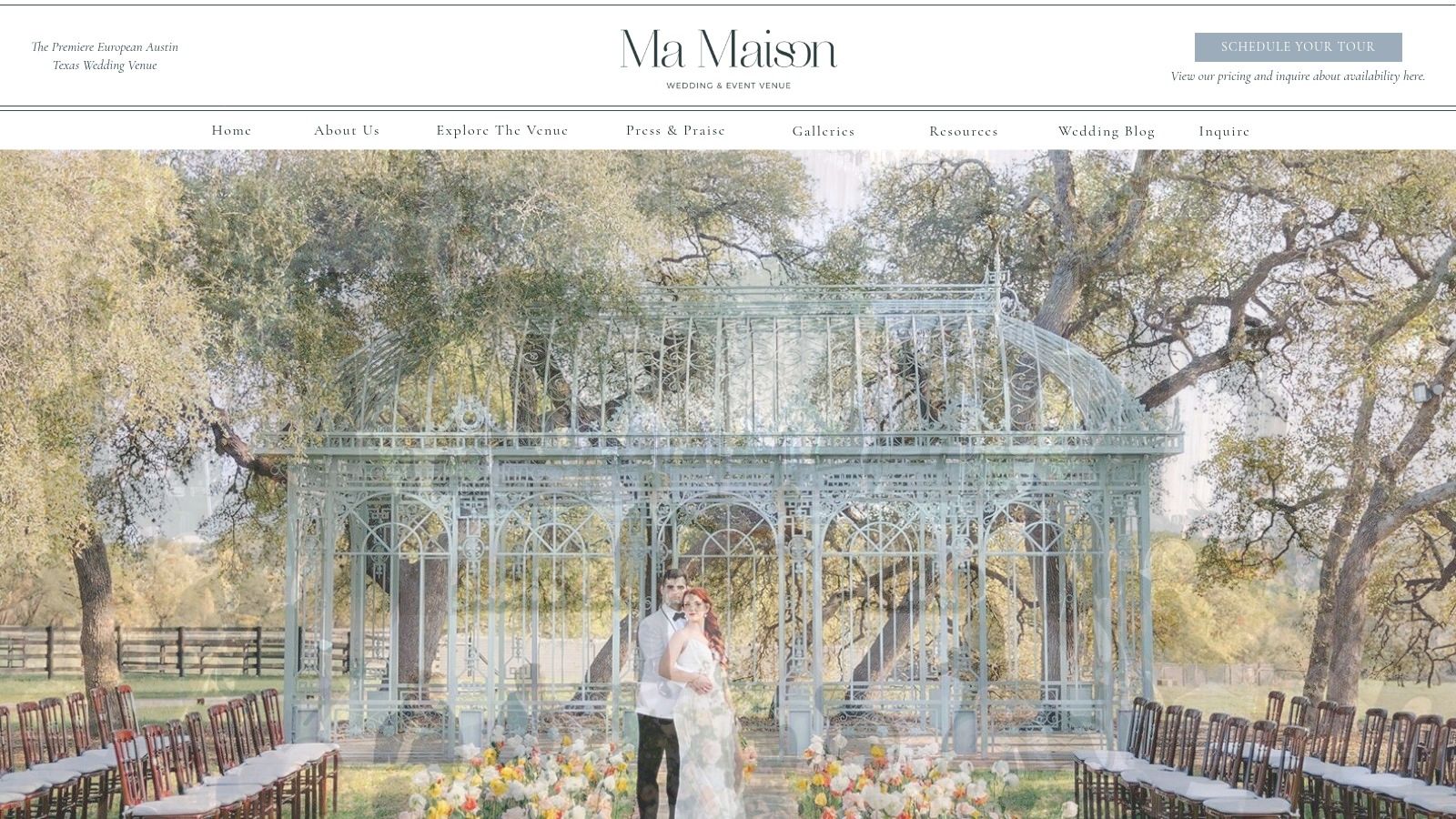
Ma Maison fits couples who want a polished Hill Country setting without taking on the scale, room block pressure, and price structure of a resort property. The design language is already established, so you do not have to spend as much forcing character into a blank venue. That matters for couples trying to keep floral and rental budgets in check while still getting a refined look.
From a planner's standpoint, the big selling point is how the ceremony backup functions. The Trellis and The Grove give you strong outdoor options, but the indoor Chapel and Great Hall mean weather calls do not automatically turn into a covered-patio compromise or a rushed room flip. An article on Hill Country venue weather realities reported that 42% of outdoor weddings required last-minute indoor relocation due to unforecasted weather events, and only 15% of venues in the region offer climate-controlled indoor ceremony options with dual PA systems. Ma Maison stands out because its backup plan still feels like a real event space, not leftover square footage.
That distinction saves stress on wedding week.
I also like venues that answer practical questions before contracts become complicated. Ma Maison is usually clearer than average on alcohol rules, rain procedures, and baseline operating policies, which makes budgeting and timeline planning more accurate early on. Couples sorting through those trade-offs can also review these planning tips for a rustic Texas Hill Country wedding to compare what matters most before they book.
The trade-off is flexibility. Couples can often bring their own alcohol with licensed bartending, which helps on bar cost, but catering comes from an approved list. For some weddings, that is a fair exchange because vetted caterers usually know the load-in flow and kitchen limitations. For couples who want a very specific cultural menu or a family caterer, it can be restrictive.
Rental hours deserve a close look here too. Access is not as forgiving as at some venues with longer standard windows, so large floral installs, complex draping, multiple outfit changes, or tea ceremony to reception transitions need a tighter timeline. For weddings with many moving parts, I would confirm setup start time, rehearsal access, and vendor strike rules before treating Ma Maison like a plug-and-play option.
4. The Addison Grove
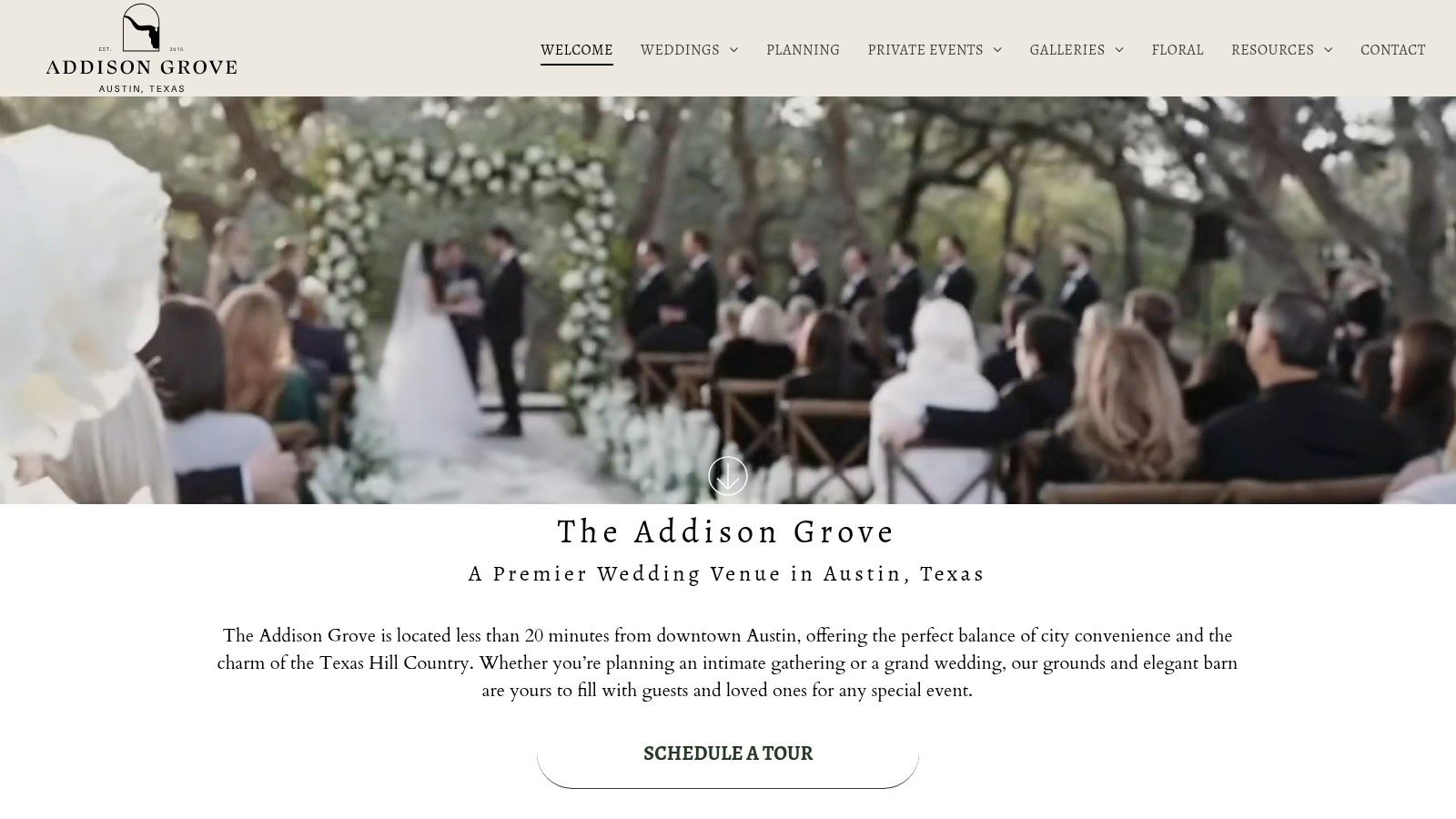
The Addison Grove sits in a useful middle ground. It has the capacity and polish to support a larger wedding, but it doesn't feel as operationally dense as a full resort venue. If your guest list is big and you still want a warm Hill Country look, it's a strong contender.
Its climate-controlled barn and covered porch are the practical backbone of the property. That combination gives planners room to pivot without making the event feel like it got downgraded to Plan B. The standard rental window is also generous, which helps with larger installs and longer receptions.
The practical advantage
This venue is good at giving couples enough structure to stay organized. Furniture counts are specified, rehearsal time is included, and there's a dedicated client coordinator. Those details reduce a lot of back-and-forth during planning.
A long rental period is one of the reasons venues near Austin and Dripping Springs stay popular with couples who want scenic views without losing operational sanity. That balance is part of what keeps the region attractive for intimate weddings and larger celebrations alike, especially when venues can support a wide range of layouts and capacities, as noted earlier in the broader Hill Country market.
- Best for larger guest lists: The barn layout works well for couples who need room for dinner, dancing, and a weather backup under one roof.
- Best for semi-guided planning: You're not left with a blank shell. The venue gives enough structure to keep decisions moving.
- Best for Austin access: It's easier for local vendors and city-based guests than some deeper Hill Country properties.
Who should book it
Book The Addison Grove if you want a rustic-modern look and you're comfortable with a more controlled food and beverage setup. Don't book it if your top priority is open vendor freedom. Bar service runs through the venue's in-house beverage program, and catering is limited to partner options.
That model works well for couples who want predictability. It's less appealing for couples with a very specific caterer or a custom cultural menu in mind.
5. Canyonwood Ridge
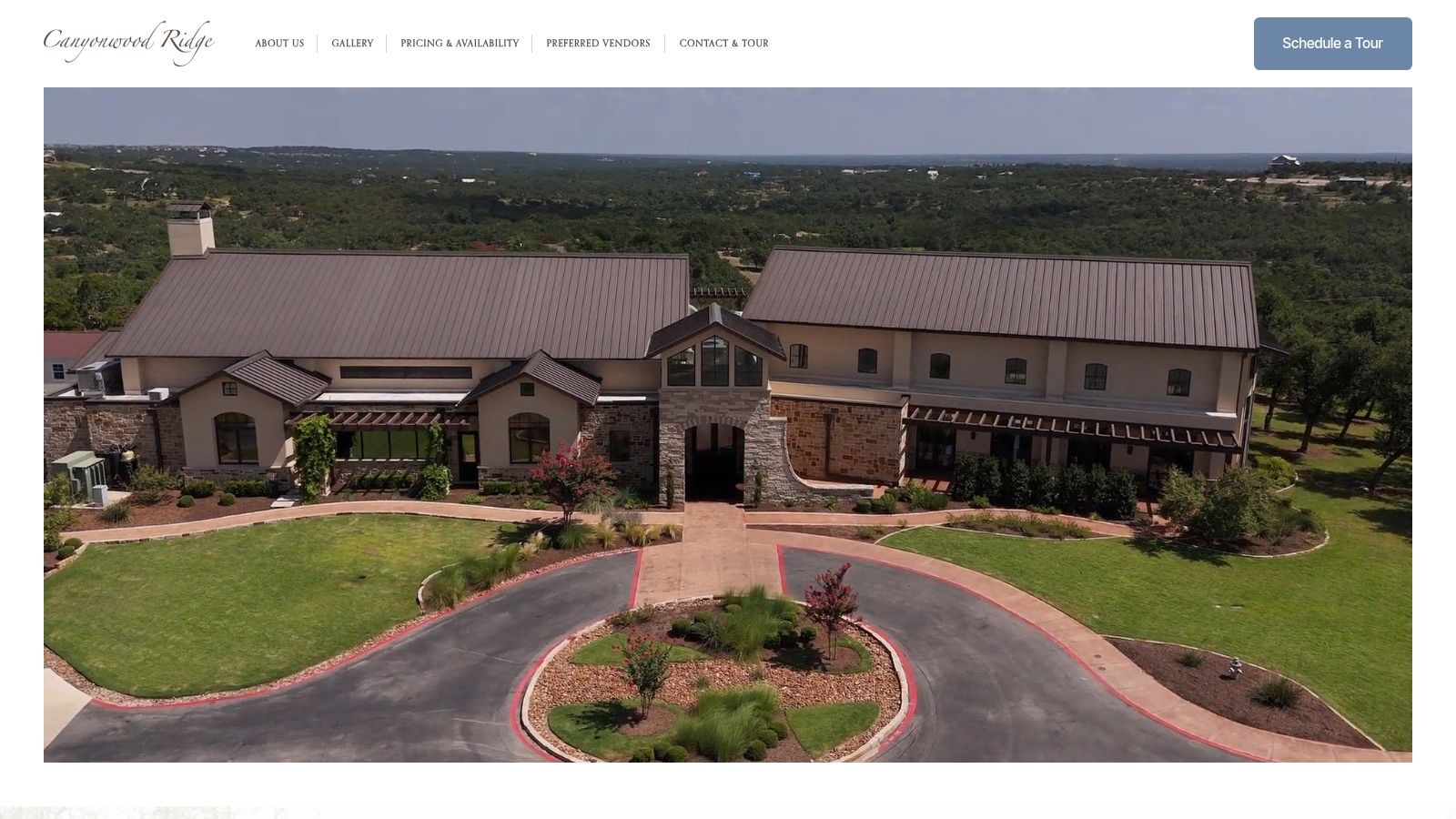
Canyonwood Ridge is one of the easier venues to evaluate because it's purpose-built for weddings. You can tell when a property started as an event venue instead of being adapted into one later. Flow is usually better, and weather backup tends to be more intentional.
The standout feature is the indoor Chapel placed right next to the reception hall, with an outdoor lawn available when conditions cooperate. That makes transitions simpler for guests and vendors. It also cuts down on the chaos that happens when a backup ceremony space feels like an afterthought.
Why weather-conscious couples shortlist it
If a couple tells me they're worried about wind, sound, or a sudden storm but still want Hill Country views, Canyonwood Ridge usually goes on the tour list. The built-in speakers in the Chapel and power at the outdoor ceremony site are small details that matter a lot on event day. They give DJs and AV teams cleaner options than makeshift setups.
Public pricing guidance is another plus. In a region where many couples struggle to understand total cost until late in the process, any venue that shares a clearer rental baseline saves time. One discussion of Hill Country wedding budgeting notes that hidden charges around catering, bar service, and staffing are a common pain point for couples comparing venues with very different package structures.
A venue doesn't need to be all-inclusive to be easy to budget. It does need to be clear.
The planning trade-off
The main limitation is coordination scope. If you want a venue team to handle more than baseline venue services, you may need to pay for expanded coordination or bring in your own planner. For organized couples, that's manageable. For couples with complicated family logistics or a large guest count, it's something to decide early.
For anyone planning a rustic-style celebration and comparing built-for-events venues against more decorative options, these essential tips for a rustic Texas Hill Country wedding help frame the right questions.
6. Hidden Falls Remi's Ridge and Hayes Hollow Walters Wedding Estates
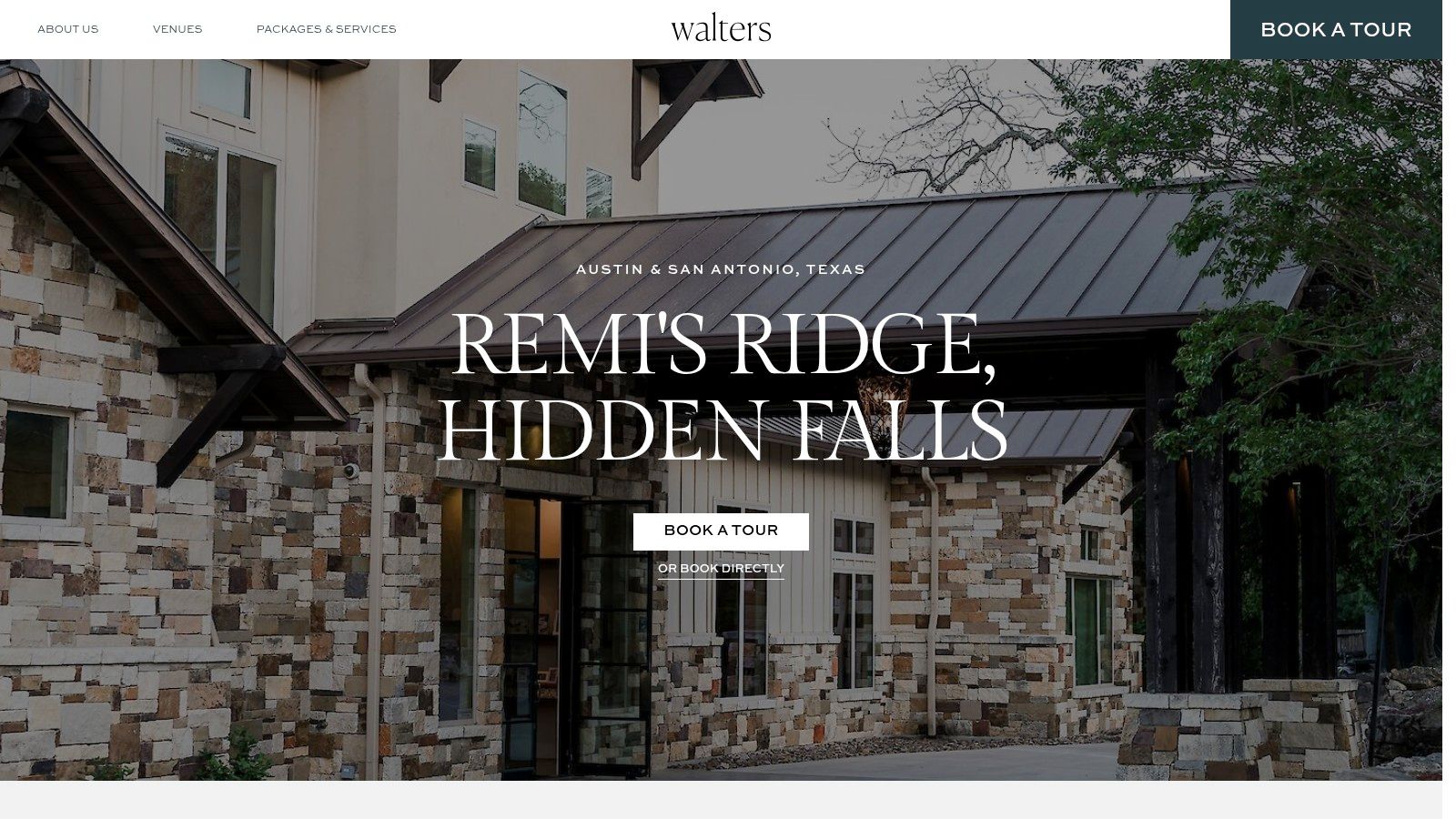
Hidden Falls at Walters Wedding Estates is a good answer for couples who want dramatic natural scenery without taking on a fully DIY property. The waterfalls, ponds, and built event spaces give it a stronger visual identity than a lot of generic barn venues.
There are two sister venues on the property, Remi's Ridge and Hayes Hollow, which gives couples some style flexibility. The on-site casitas and rental homes are also a practical advantage. Even limited lodging for the wedding party and immediate family can reduce transportation headaches and late-arrival stress.
What makes it different
The all-inclusive model is the main differentiator. Planning, catering, bar, setup, and teardown can be bundled into a more managed experience. That's appealing for couples who don't want to source every vendor individually or coordinate too many moving parts themselves.
The water features do more than make photos look good. They create distinct ceremony locations that feel finished without requiring as much rental décor. That can make a meaningful difference if you'd rather invest in guest experience than in filling visual gaps.
- Best for scenic impact: The natural backdrops do a lot of heavy lifting.
- Best for partial destination feel: On-property accommodations help anchor the core group.
- Best for couples who want packaged planning: Fewer separate contracts usually means fewer decision points.
Best use case
This is a strong fit for couples who value ease and are happy with a guided package model. It's less ideal for highly customized food and beverage plans. If your family expects a very specific caterer, or you want full control over every line item, the Walters model may feel too contained.
Spring and fall demand can also make the best dates competitive. If this venue fits your priorities, it's worth touring early rather than waiting until your planning gets more detailed.
7. The Arlo
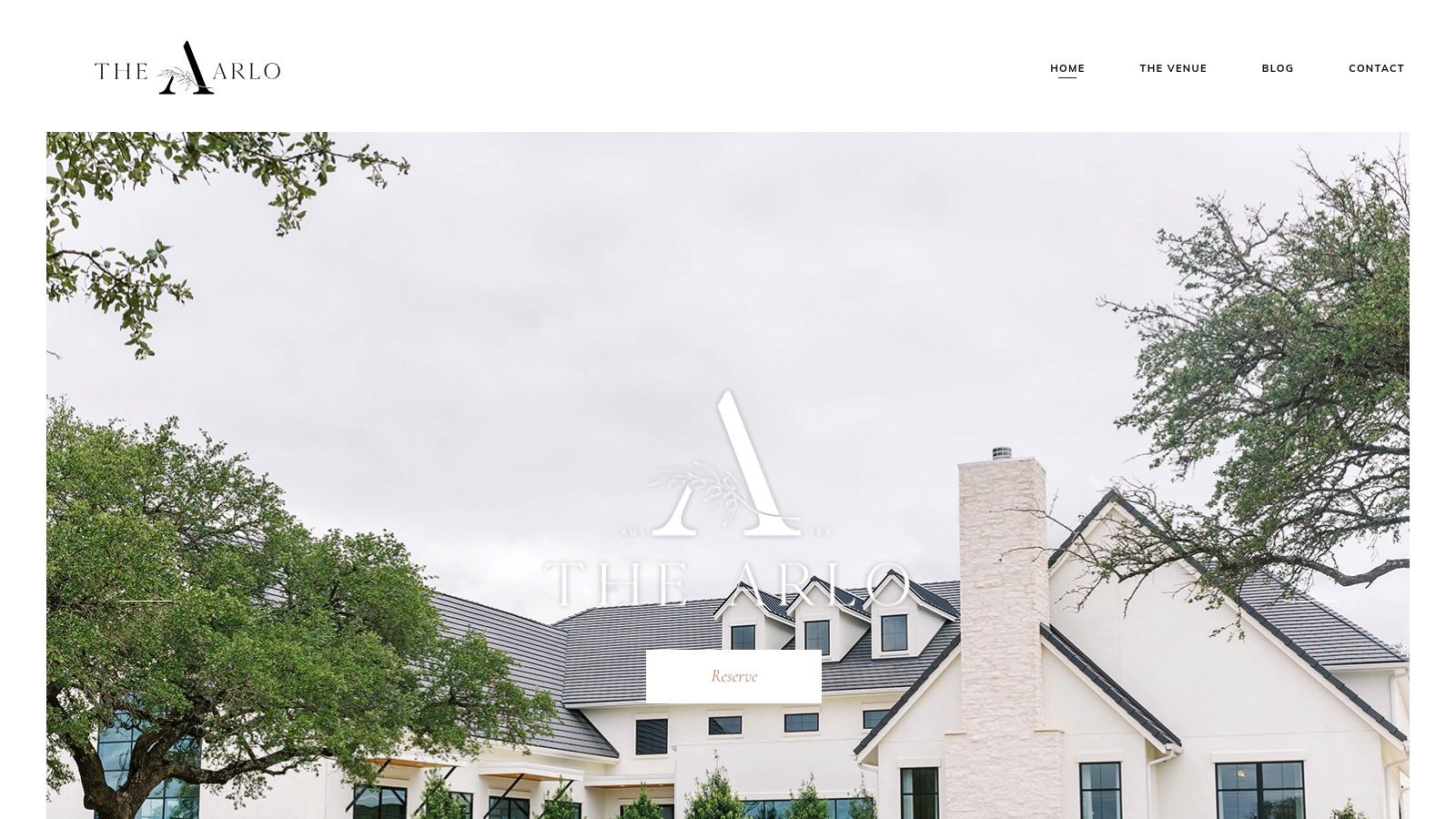
The Arlo is for couples who want a clean, modern canvas near Austin. Some Hill Country venues come with a strong rustic or ranch identity that can be hard to design around. The Arlo gives you more neutrality, which is useful if your style leans editorial, formal, minimalist, or contemporary.
The architecture does a lot of the work here. Tall ceilings, bright interiors, and multiple event spaces create flexibility without visual clutter. For planners, that usually means cleaner sightlines, easier diagramming, and fewer decor decisions made just to offset the room.
What modern couples like here
Weekend rentals include all event spaces within a fixed event window, plus core furniture like tables, cocktail tables, and cross-back chairs. There's also a rehearsal hour and a prep kitchen, which are the kind of inclusions that keep a vendor team moving efficiently.
I also like this venue for couples pulling heavily from Austin-based vendor rosters. Travel is manageable, hotel options are easier, and guests who don't want a remote Hill Country stay tend to be more comfortable here.
If you want Hill Country access without a rustic template, The Arlo is one of the cleaner options.
The key limitation
The biggest thing to verify is guest count fit. The venue page doesn't make public maximum seated capacity especially easy to compare at a glance, so you should confirm your layout directly with the venue before getting attached to a floor plan.
The rental window is also shorter than some competing venues. That doesn't make it a problem. It just means couples with elaborate installs, extended cultural programming, or a very layered event timeline need to map the day carefully.
Top 7 Texas Hill Country Wedding Venues Comparison
| Venue | Implementation complexity | Resource requirements | Expected outcomes | Ideal use cases | Key advantages |
|---|---|---|---|---|---|
| Texas Old Town | Low–Moderate, planner-friendly operations and on-site management | Flexible vendor policy; BYOB with approved bartender; request quote for pricing | Reliable, well-paced event with multiple style options and long setup/teardown | Couples/planners wanting variety on one campus and smooth logistics | 16‑hour exclusive access, multiple halls, transparent policies, included logistics |
| Camp Lucy | Low if using in-house services; higher if bespoke customization required | High budget; on-site lodging, spa, in-house catering and planning support | Full-service, resort-style multi-day wedding with cohesive guest experience | Destination weddings and multi-day events needing comprehensive amenities | On-site lodging/spa/dining, multiple venue types, in-house event teams |
| Ma Maison | Moderate, cohesive aesthetic with defined vendor rules | Moderate–High budget; required shortlist caterers; BYO with TABC service | Elegant, European-inspired single-event experience with clear policies | Couples seeking classic/old‑world style and exclusive estate use | Indoor chapel and weather backup, cohesive design, clear logistics |
| The Addison Grove | Moderate, offers venue-only or all-inclusive packages with coordinator | Moderate budget; in-house beverage program; limited caterer list | Rustic-modern large wedding with long rental window and rehearsal time | Larger guest counts needing climate-controlled barn and extended access | 14‑hour window, capacity ~300, included furniture and rehearsal hour |
| Canyonwood Ridge | Low–Moderate, purpose-built for straightforward execution; add-on coordinator may be needed | Moderate budget; may require external coordinator for full services | Weather-resilient ceremony/reception with transparent baseline pricing | Couples prioritizing indoor backup and clear public pricing | Indoor chapel, engineered weather resilience, publicly posted rates |
| Hidden Falls (Remi's Ridge / Hayes Hollow) | Low for all-inclusive packages; higher for custom requests | High budget; on-site casitas/rental homes; tiered all-inclusive packages | Dramatic nature-backed event with reduced transportation needs | Couples wanting waterfall backdrops and on-property lodging | Striking water features, on-site lodging, turnkey all-inclusive options |
| The Arlo | Low, modern, neutral canvas with clear rental inclusions | Moderate budget; close to Austin vendors and lodging | Contemporary, polished event adaptable to many styles | Couples wanting a modern venue near Austin with straightforward planning | Large flexible indoor space, clear furniture/inclusion lists, prep kitchen |
Making Your Final Decision Key Factors to Consider
A Hill Country venue can look perfect at golden hour and still create a hard wedding day if the access window is tight, the rain plan feels cramped, or vendors spend half the day working around house rules. The better choice is the one that fits your guest flow, budget structure, and planning style from load-in to final pickup.
Start with time on site. Rental hours affect hair and makeup arrival, photo timing, ceremony setup, dinner pacing, breakdown, and whether your vendor team is rushing by mid-afternoon. I always tell couples to price the timeline, not just the venue fee. A venue with a longer rental block can cost less in practice if it reduces staffing overages, delivery fees tied to narrow windows, or the need to book extra off-site prep space.
Then review vendor policy line by line. Some venues give you freedom with catering and bar service. Others narrow the list, which can save decision fatigue but limit the menu, service style, or budget flexibility. If you are inviting guests from both Austin and San Antonio, ask about shuttle access, parking flow, and how late departures work. Kyle matters here too. It sits in a practical middle ground for many guest lists and vendor teams, which is one reason Texas Old Town stays on so many shortlists.
Weather should be treated like a planning assumption, not a last-minute concern. In the Hill Country, heat, wind, and fast-moving storms all change guest comfort and timeline flow. A good backup plan keeps the ceremony intact, preserves sightlines, and does not force a compromised room flip. Ask to see the indoor option set for an actual ceremony or reception, not just an empty room.
Touring is where the true answer usually shows up.
Walk the route your guests will take. Check how far parking is from the ceremony site, whether elderly relatives need golf cart support, where the catering team stages service, and how private the getting-ready spaces feel once the day is busy. Those details tell you more than styled photos ever will.
Once you have a final shortlist, a strong wedding guest list management system can make the rest of planning much easier, especially if you're coordinating family groups, hotel blocks, and transportation across multiple cities.
If Texas Old Town is in your mix, it is worth touring with a logistics-first lens. The Kyle location helps with regional access, the venue styles cover different capacities and aesthetics, and the long rental window gives planners more room to build a calm timeline. Ask about current availability, exact inclusions, vendor requirements, and how the team handles ceremony moves for weather. Those answers will tell you quickly whether it fits your event.