You've probably opened fifteen tabs already. One venue looks gorgeous at sunset, another seems affordable until you start wondering what the quote doesn't include, and a third has the right style but vague policies on catering, bar service, cleanup, and timing. That's the point where venue shopping stops feeling fun and starts feeling like project management.
Kyle is a smart place to look when you want Hill Country atmosphere without guests traveling to a far-flung destination. It sits in a practical corridor between Austin and San Antonio, and that matters more than most couples realize at the start. Guest travel, vendor access, rehearsal logistics, hotel blocks, and end-of-night transportation all get easier when the map works in your favor.
The bigger issue is this: most guides to wedding venues in Kyle TX focus on scenery, ceremony backdrops, and reception photos. Those matter. But the venues that feel easy on the wedding day are usually the ones that solved the operational details long before the first guest arrived.
Table of Contents
- Starting Your Search for the Perfect Kyle Wedding Venue
- Decoding the Kyle TX Venue Landscape
- The Hill Country Decision Indoor vs Outdoor Ceremonies
- Crafting Your Kyle Wedding Budget and Timeline
- Spotlight A Tour of Texas Old Town's Four Venues
- The Hidden Logistics That Ensure a Stress-Free Day
- Final Questions for Your Kyle Wedding Venue
Starting Your Search for the Perfect Kyle Wedding Venue
Most couples don't begin with a clean spreadsheet and a perfectly ranked shortlist. They begin with a mood board, a guest estimate that keeps changing, and a lot of uncertainty about what matters once the wedding day is in motion.
That's normal.
In practice, the venue search gets easier when you stop asking, “Which place is prettiest?” and start asking, “Which place will still feel workable at 10:00 a.m. during setup, at 5:30 p.m. when the ceremony starts late, and at the end of the night when everyone is tired?” The prettiest venue in photos can become the hardest one to manage if its policies create friction all day long.
Kyle gives couples a strong mix of Hill Country character and accessible geography. It works well for local weddings, hybrid guest lists, and families pulling people from both the Austin and San Antonio sides. That convenience helps, but it doesn't replace due diligence. Before touring, it's worth reviewing a practical venue selection checklist like this guide on how to choose a wedding venue, because the right questions save more stress than the right Pinterest board.
Start with the decisions that affect the whole day
I advise couples to lock in four basics before falling in love with a space:
- Guest count reality: Not your dream number. Your likely number.
- Indoor fallback: Not whether a venue has one, but whether it's somewhere you'd want to marry.
- Vendor freedom: Especially catering and bar service.
- Rental window: Enough time for setup, celebration, and breakdown without rushing every vendor.
Practical rule: If a venue makes simple logistics sound complicated during the tour, they won't become simpler on the wedding day.
A good Kyle venue should function like a partner, not just a backdrop. That's the standard worth keeping in mind from the start.
Decoding the Kyle TX Venue Landscape
A couple tours three Kyle venues in one Saturday and comes home with the same reaction every time: all of them looked good, and none of the comparisons felt clear. That usually happens because they are comparing style before they compare operations.
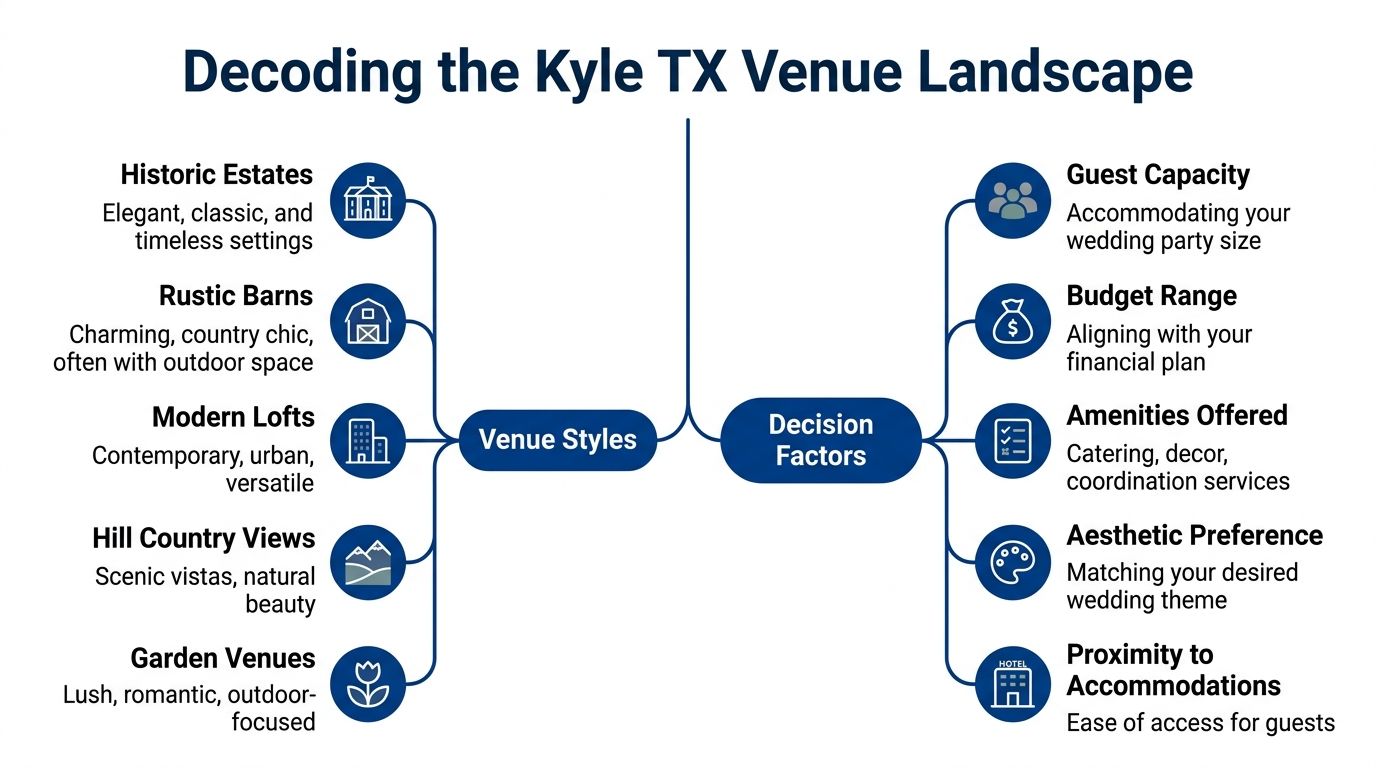
Kyle gives you several distinct venue models. Some are simple space rentals with a lower starting price and more self-management. Some are polished properties with stronger infrastructure, clearer process, and more on-site support. The hard part is not finding attractive options. The hard part is figuring out which one will still feel manageable once contracts are signed, vendors are booked, and the wedding day is in motion.
How to narrow the field quickly
The fastest filter is the venue's operating model.
That means asking how the property runs a wedding. Does it allow outside catering, or are you working from a short approved list? Is bar service bundled, restricted, or fully flexible? Who manages ceremony-to-reception transitions? How much setup time is included before your florist, planner, DJ, and rental team start paying for extra hours? Couples who sort venues this way usually get to better finalists faster than couples who sort only by architecture or photo appeal.
If you are still weighing ceremony format at the same time, this guide on indoor versus outdoor weddings in Texas helps frame the decision around guest experience and backup-plan quality.
Here's the first filter I use with clients:
| Venue type | Usually suits | Watch for |
|---|---|---|
| Rustic barn or dance hall | Larger guest lists, relaxed celebrations, strong dance floor energy | Heat control, acoustics, rain backup quality |
| Stone manor or estate | Formal or semi-formal weddings, classic photo style | Vendor restrictions, room flow, parking distance |
| Garden or outdoor-forward venue | Nature-driven ceremonies, softer visual style | Weather exposure, ground conditions, lighting after sunset |
| Hybrid indoor-outdoor property | Couples who want flexibility without losing atmosphere | Whether both ceremony options feel equally intentional |
What venue style changes in practice
Style changes the work behind the scenes.
A rustic hall with direct access to the ceremony site can save real time during transitions and simplify audio coverage. A large estate may photograph beautifully but create longer walks, more staffing needs, and harder logistics for grandparents or guests in heels. A hybrid property can be the most forgiving choice, but only if the indoor option feels planned rather than improvised.
Hidden costs often surface at this stage. A lower venue fee can still lead to a more expensive wedding if the property requires extra generators, shuttles, tenting, security, or rental labor. On the other hand, a venue with a higher base price may save money later if it includes ample parking, practical vendor access, strong climate control, and a staff process that keeps the day on schedule.
Texas Old Town is a useful example of that distinction. Its appeal is not only the Hill Country setting. It is also the operating structure: dedicated venue staff, clear flow between event spaces, and flexibility that helps couples use their own vendor team without creating confusion on the wedding day.
A venue category only helps if it tells you how the day will function.
When couples feel stuck, I recommend touring fewer places and comparing them with the same operational questions each time. The right venue usually becomes obvious once you stop asking, “Which one is prettiest?” and start asking, “Which one gives us the fewest problems after booking?”
The Hill Country Decision Indoor vs Outdoor Ceremonies
This is the Kyle question almost every couple wrestles with. They want the oaks, the sky, the Hill Country atmosphere, and the softness that outdoor ceremonies can bring. They also want guests comfortable, audio clear, and a backup plan that doesn't feel like a compromise.
That tension is real, and there isn't one correct answer.
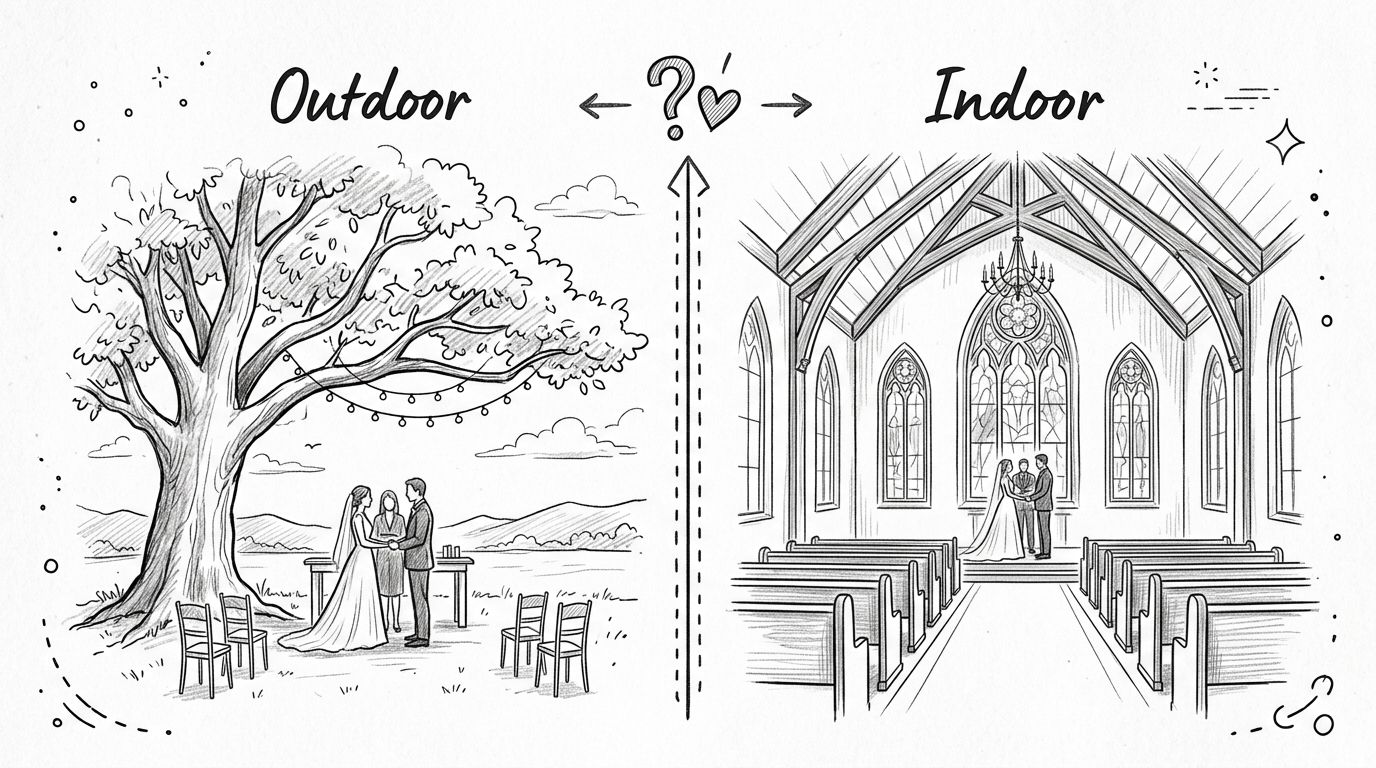
For couples trying to weigh the trade-offs, this indoor or outdoor wedding in Texas guide is a useful starting point because it frames the decision around actual day-of conditions instead of aesthetics alone.
What outdoor weddings do well
Outdoor ceremonies can feel expansive in a way indoor rooms rarely match. Guests settle in differently when they can see the natural setting, and photographers usually get a softer environmental backdrop without needing much added styling.
They also work beautifully for couples who want a relaxed procession, live acoustic music, or a more organic layout. If the property has mature trees, solid pathways, and an indoor reception space close by, the transition can feel natural rather than disruptive.
Still, outdoor ceremonies ask more from everyone involved. Vendors need extra clarity. Guests need shade or at least realistic comfort planning. Hair and makeup timelines may need adjusting. Sound matters more than many couples expect, because open air can swallow voices.
Why indoor plans often feel calmer
Indoor ceremonies rarely win the early Pinterest battle, but they often win the planning battle. Climate control, predictable acoustics, easier lighting management, and a built-in rain plan reduce the number of live decisions someone has to make on the wedding day.
That doesn't mean indoor has to feel formal or stiff. In many Hill Country venues, the strongest setup is a hybrid approach: use the outdoor site when the conditions are good, but choose a venue where the indoor ceremony option would still feel intentional and beautiful if you had to pivot.
A simple comparison helps:
- Choose outdoor first if your priority is atmosphere, natural scenery, and you're comfortable building a weather backup plan into the design.
- Choose indoor first if guest comfort, timing control, and reduced uncertainty matter most.
- Choose a hybrid property if you want both options without rewriting the whole day if conditions shift.
Don't treat the backup location like an emergency room. If you wouldn't be happy getting married there, it isn't a real Plan B.
That standard alone eliminates a surprising number of venues.
Crafting Your Kyle Wedding Budget and Timeline
Venue pricing only feels straightforward at first glance. Couples see the base number, compare three properties, and assume they're looking at equal offers. They usually aren't.
For Central Texas weddings with 150 guests in Kyle, the average venue rental cost is $6,863 and represents about 16% of the total wedding budget, which is lower than the national average where venues often consume 25% of total costs, according to Zola's Kyle wedding venue market data. That local context is helpful, but it doesn't answer the question couples need to have answered: what is included, and what will you still have to solve separately?
How to read a venue quote correctly
I tell clients to separate venue pricing into two buckets.
The first bucket is the published rental figure. The second is the operational cost of making that venue workable. Sometimes a lower quote stops looking cheaper once you add rentals, outside cleanup, extended staffing, or transportation complications.
When you review proposals, look for these pressure points:
- Taxes and gratuity: Are they already built into the quote, or added later?
- Cleanup responsibility: Who is handling trash, breakdown, and end-of-night reset?
- Vendor policy: Can you bring your own caterer, or are you limited to a list?
- Access hours: Will your photographer, planner, florist, and DJ have enough time to do their jobs well?
Budget check: A transparent quote isn't always the lowest quote. It's the one most likely to stay accurate.
Transportation belongs in this conversation too. If your ceremony and reception timing includes hotel pickups, guest shuttles, or a getaway car, it helps to read practical transportation planning advice early. The piece on All Black Limo wedding advice is useful because it focuses on timing and service coordination, not just vehicle style.
A practical booking timeline
Every couple's timeline is different, but the strong sequence usually looks like this:
- Set the true guest range first. A venue that feels intimate at one count may feel tight at another.
- Tour with logistics in mind. Bring questions about access, rain plans, parking, vendor load-in, and teardown.
- Review the contract before comparing emotion. Excitement is easy. Restrictions are expensive.
- Book once the date, scope, and policy fit all align. Don't delay a good-fit venue while chasing perfect certainty.
The calmest planning process usually starts with a venue that's clear on the front end. Clarity is part of the value.
Spotlight A Tour of Texas Old Town's Four Venues
A property with multiple halls can solve a problem couples often run into in Kyle: they like the location and operating style, but not every room fits every guest list or wedding tone. One reason this model works is that it lets couples match the celebration to the space instead of forcing the space to do all the work.
Texas Old Town sits on a 55-acre property and includes four distinct halls: Tejas for 320 guests, Stone for 300, Sage for 300, and Redbud for 150. The venue is also noted by The Knot for Hall of Fame recognition from 2013 through 2022, as reflected in The Knot marketplace listing for Texas Old Town. If you want to review the layout and venue types directly, the Texas Old Town venue overview shows how the halls differ.
A side by side look at the halls
| Venue Hall | Max Capacity | Style | Best For |
|---|---|---|---|
| Tejas | 320 | Authentic country dance hall | Big guest lists and high-energy receptions |
| Stone | 300 | Upscale, polished interior | Couples wanting a refined indoor look |
| Sage | 300 | Secluded Hill Country hall | Weddings that want privacy and a tucked-away feel |
| Redbud | 150 | Intimate rustic space | Smaller gatherings and more contained layouts |
How each hall fits a different wedding
Tejas Hall makes sense for the couple inviting a wide circle. If your wedding includes extended family, family friends, work friends, and a full dance floor crowd, a room built for that scale keeps the energy up without squeezing tables too close together.
Stone Hall is the one I'd point formal-leaning couples toward. Its published specs include a 5,800 square-foot climate-controlled indoor venue, a 500 square-foot raised stage, and dual indoor/outdoor PA systems with Bluetooth connectivity according to the Stone Hall venue details. Those specifics matter because they affect sound, transitions, and entertainment setup in ways couples can feel during the event.
Stone also publishes furniture counts. It includes 300 white padded ceremony chairs, 300 dark resin reception chairs, and 38 60-inch round tables seating 6 to 8 guests, which makes guest flow planning more precise when you're mapping the room with your planner or caterer. It also has two private parking lots and a separate service entry for the prep kitchen, both of which help vendors work without colliding with guest arrival patterns.
Sage Hall fits couples who want a quieter setting on the same broader property. It's often the right emotional match when the wedding is still sizable, but the couple wants the day to feel tucked away rather than expansive.
Redbud Hall is for a different pace entirely. Smaller weddings need proportion. A room that's too large can make an intimate guest list feel scattered, while a more contained hall gives the event shape and warmth from the start.
The right room doesn't just fit your guest count. It fits the way you want people to experience the day.
The Hidden Logistics That Ensure a Stress-Free Day
A couple can fall in love with the ceremony view, sign the contract, and still run into trouble six weeks later. The florist asks where to load in. The caterer needs prep access. Family members want to know who is clearing gifts, directing vendors, and handling cleanup after the send-off.
Those are venue questions too.
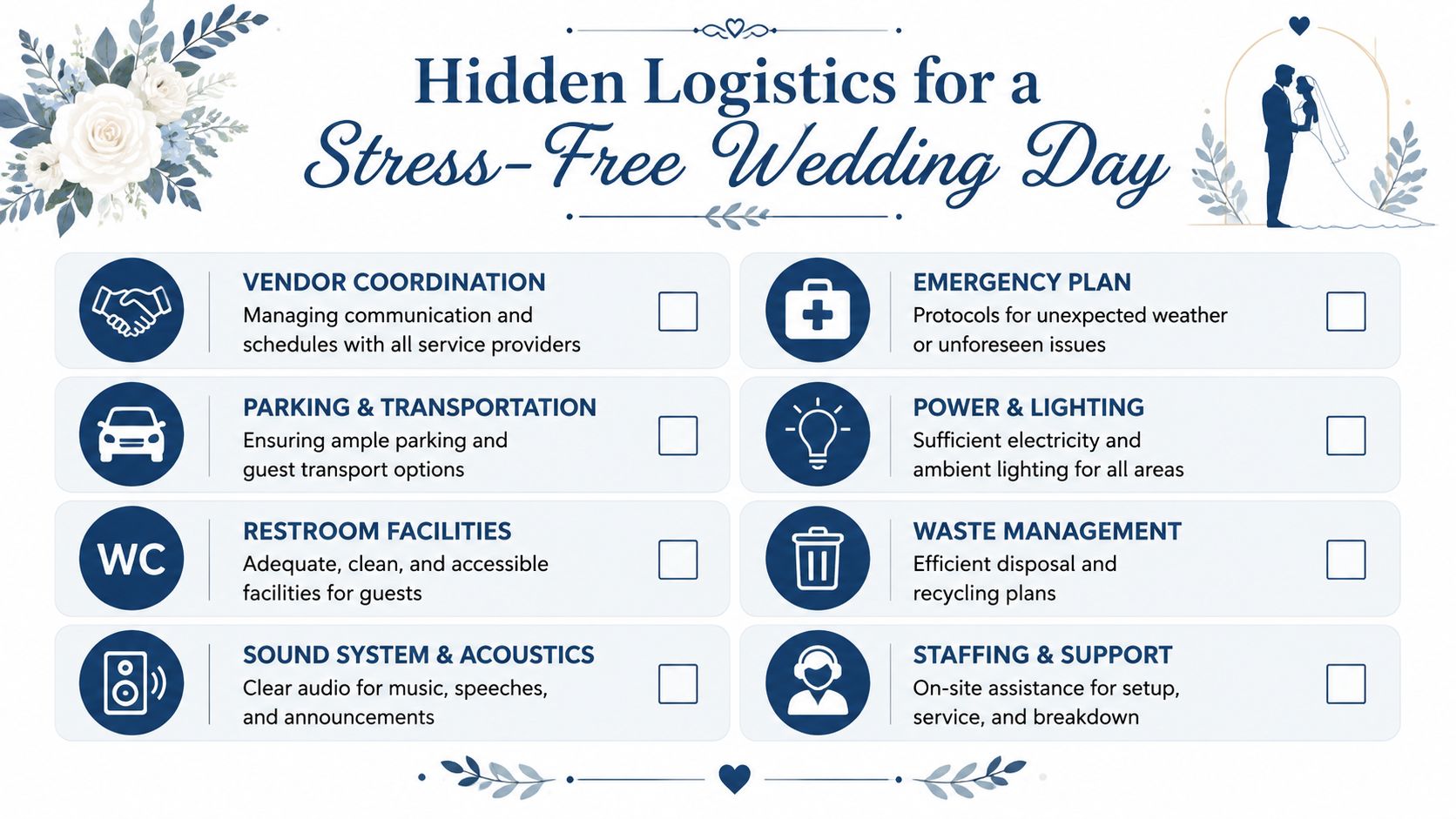
In practice, the roughest wedding days usually do not fall apart because the room was unattractive or the guest count was slightly off. They get tense because no one clarified who is running the timeline once guests arrive, how vendors enter and exit, what happens if setup runs late, or who is still on-site at 11:30 p.m. to solve problems. Couples rarely ask those questions on the first tour. They should.
What couples ask too late
By the final planning call, these details suddenly matter a lot:
- Vendor load-in: Is there a dedicated service entry, or will catering carts and floral deliveries come through the same path guests use?
- Parking flow: Will older relatives and out-of-town guests know exactly where to go without extra signage or last-minute texting?
- End-of-night cleanup: Who resets furniture, removes trash, and closes out the space after the reception ends?
- Day-of oversight: Is a venue manager present and active, or are your planner and vendors expected to solve every operational issue themselves?
None of that shows up well in styled photos. All of it affects how the day feels.
Rental window is part of the same conversation. A tight access period forces every vendor to rush, and rushed setups create mistakes. A longer window gives the hair and makeup team room to recover from delays, lets rental crews install without cutting into family photo time, and keeps cleanup from landing on parents, siblings, or the wedding party at the end of the night.
What a well managed venue changes
Good venue operations reduce handoffs. That is the value.
When the policies are clear, vendors know where to go, the bar rules are documented, furniture counts are confirmed in advance, and cleanup is assigned to the venue team, the event has fewer points where confusion can spread. Couples feel that difference most during transitions. Ceremony to cocktail hour. Cocktail hour to reception. Last dance to exit.
Texas Old Town is a useful case study because its operating model speaks to those pressure points directly. It publishes 16 hours of exclusive access from 8:00 a.m. to midnight, allows couples to choose any caterer, and includes on-site management plus clean-up with furniture breakdown, as outlined in this Kyle venue logistics article. That kind of structure helps couples avoid two common problems after booking. Hidden labor costs and last-minute responsibility gaps.
Flexible vendor policies matter for another reason. They let families bring in the food, service style, and cultural details that fit the event, without losing operational control. That balance is harder to find than couples expect.
Beautiful spaces get attention. Well-managed spaces protect your energy.
That is what guests may never notice, and what couples remember with relief afterward.
Final Questions for Your Kyle Wedding Venue
By the time you're close to booking, the big questions are usually answered. The remaining ones are practical, and they should be. Confidence stems from these practical details.
Questions worth asking before you sign
Ask the venue to walk you through alcohol service in plain language. If a property allows host-provided beverages, find out whether it requires an approved bartending company, how delivery works, and what the bar setup looks like inside the hall. “BYOB” can mean flexibility, but it still needs structure.
Parking deserves a direct question too. Don't settle for “we have plenty.” Ask where guests park, how they reach the ceremony site, whether vendors use the same route, and how accessible the layout is for older relatives.
Then ask about related event use. Some venues can also host rehearsal dinners, proposals, engagement sessions, or bridal portraits depending on availability. If keeping multiple events in one location matters to you, raise that before the contract is finalized.
What gives couples confidence
The strongest venues answer operational questions quickly and specifically. They can tell you what's included, who manages the day, what happens if weather changes, and how cleanup works without speaking in generalities.
That's usually the sign you're dealing with a venue team that has done this enough times to know where weddings get stuck.
If you're comparing wedding venues in Kyle TX, choose the place that gives you clear answers before you need them. That clarity tends to predict the experience better than the photo gallery does.
If you want a venue that combines indoor and outdoor ceremony options, a long rental window, flexible catering, and on-site event support in Kyle, take a look at Texas Old Town. It's a practical option for couples who care as much about smooth execution as they do about the setting.