You've got a 4:30 p.m. ceremony, a photographer asking for 90 minutes of portraits, and a band that wants the room by 7:00. Three facts, already fixed, and everything else has to bend around them. Most timeline stress comes from writing the schedule in the wrong order: starting with hair and makeup, then discovering that portraits, the room flip, and the sunset are all fighting over the same 40 minutes.
A wedding day itinerary example is only useful if it shows those collisions before they happen. The seven below are built as timed blocks, hour by hour, and each one is matched to a specific ceremony format or constraint: a traditional mid-afternoon ceremony, a first look, a golden-hour ceremony, a split-site evening, a Texas dance hall night, a rain decision point, and a full 16-hour exclusive window.
Use the times as a starting draft. Swap in your own sunset, guest count, and vendor load-in windows, then pressure-test the result against the venue's access hours.
Table of Contents
- 1. Traditional Ceremony-Then-Reception Timeline
- 2. First Look Photography Timeline
- 3. Golden Hour Outdoor Ceremony Itinerary
- 4. Multi-Venue Split Itinerary
- 5. Texas Dance Hall Reception Itinerary
- 6. Rain-Plan Hybrid Itinerary
- 7. Full 16-Hour Exclusive Access Itinerary
- Wedding day schedule formats at a glance
- Turn These Schedules Into Your Wedding Day Plan
1. Traditional Ceremony-Then-Reception Timeline
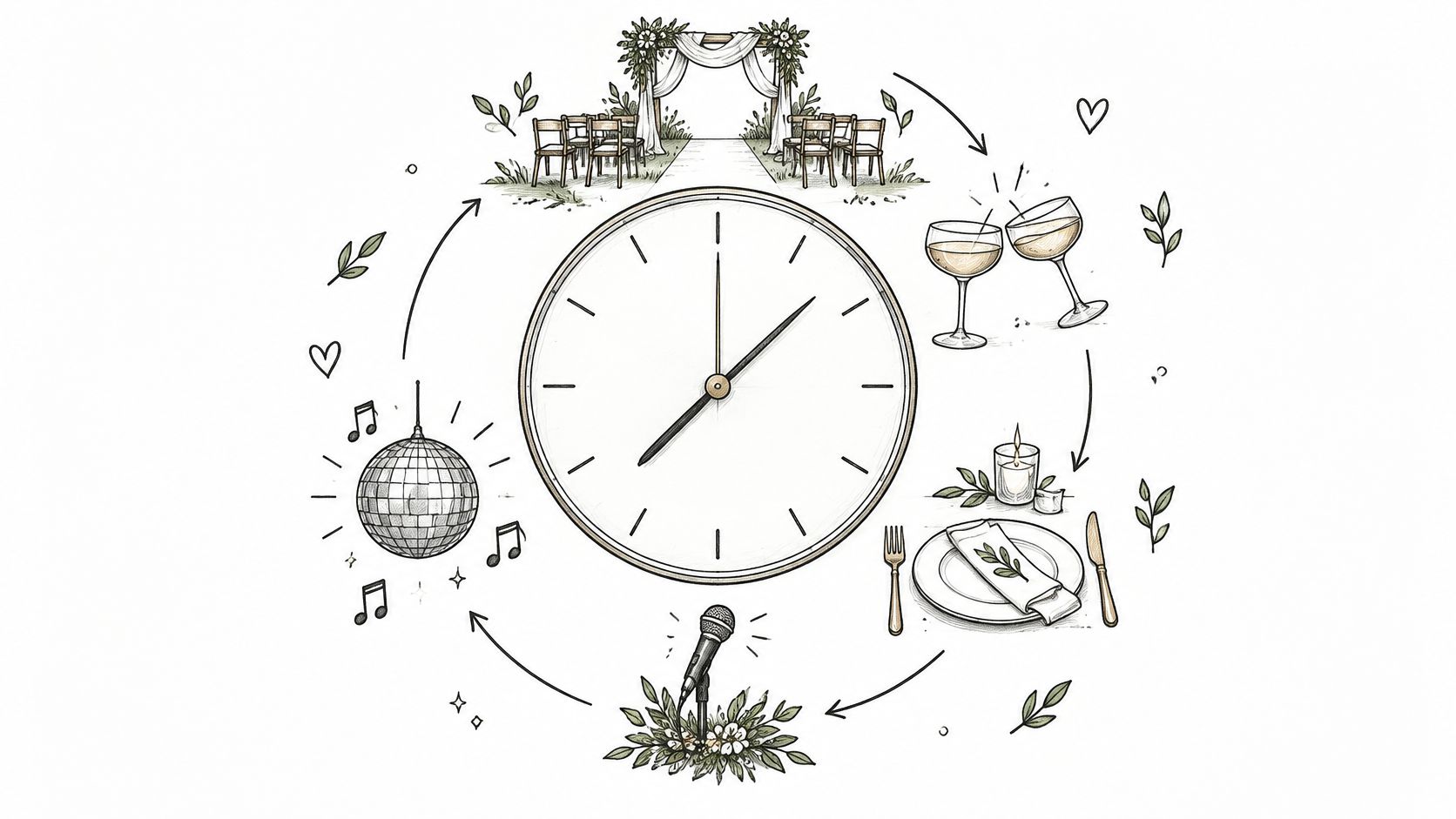
The linear schedule is the one most guests expect, and it's still the safest structure when ceremony and reception share a site. A 5:00 p.m. ceremony on the lawn, cocktail hour from 5:30 to 6:30 inside the reception hall while you shoot portraits, and a 6:30 p.m. dinner service is the whole shape. Toasts at 7:15, first dance at 7:30, open floor at 7:45, last song at 10:30.
Where the setup hours actually go
Load-in decides whether that 5:00 p.m. start holds. WeddingBot's day-of operations guide puts florists and rental teams at roughly 2 to 4 hours on site, caterers at about 2 to 3 hours, and DJs or bands at around 1 to 2 hours before service. Build the run sheet from venue access forward, not from hair and makeup forward, and stagger arrivals so two crews never want the same door at once.
One habit that saves this timeline: publish two versions, a guest-facing schedule and a production schedule that carries load-in, sound check, and strike times. Guests need five times. Vendors need thirty.
Three adjustments keep the linear schedule honest:
- Buffer 15 minutes between every major block. Ceremony to cocktails, dinner to toasts, toasts to dancing. The buffer is where late arrivals and missing aunts get absorbed.
- Send the final version to the venue manager and caterer two weeks out, not the morning of. They schedule staff from it.
- Keep the ceremony at least 90 minutes before sunset if outdoor portraits follow, and confirm the indoor backup location.
Start from the event day schedule template and delete any block your vendor list doesn't need.
2. First Look Photography Timeline
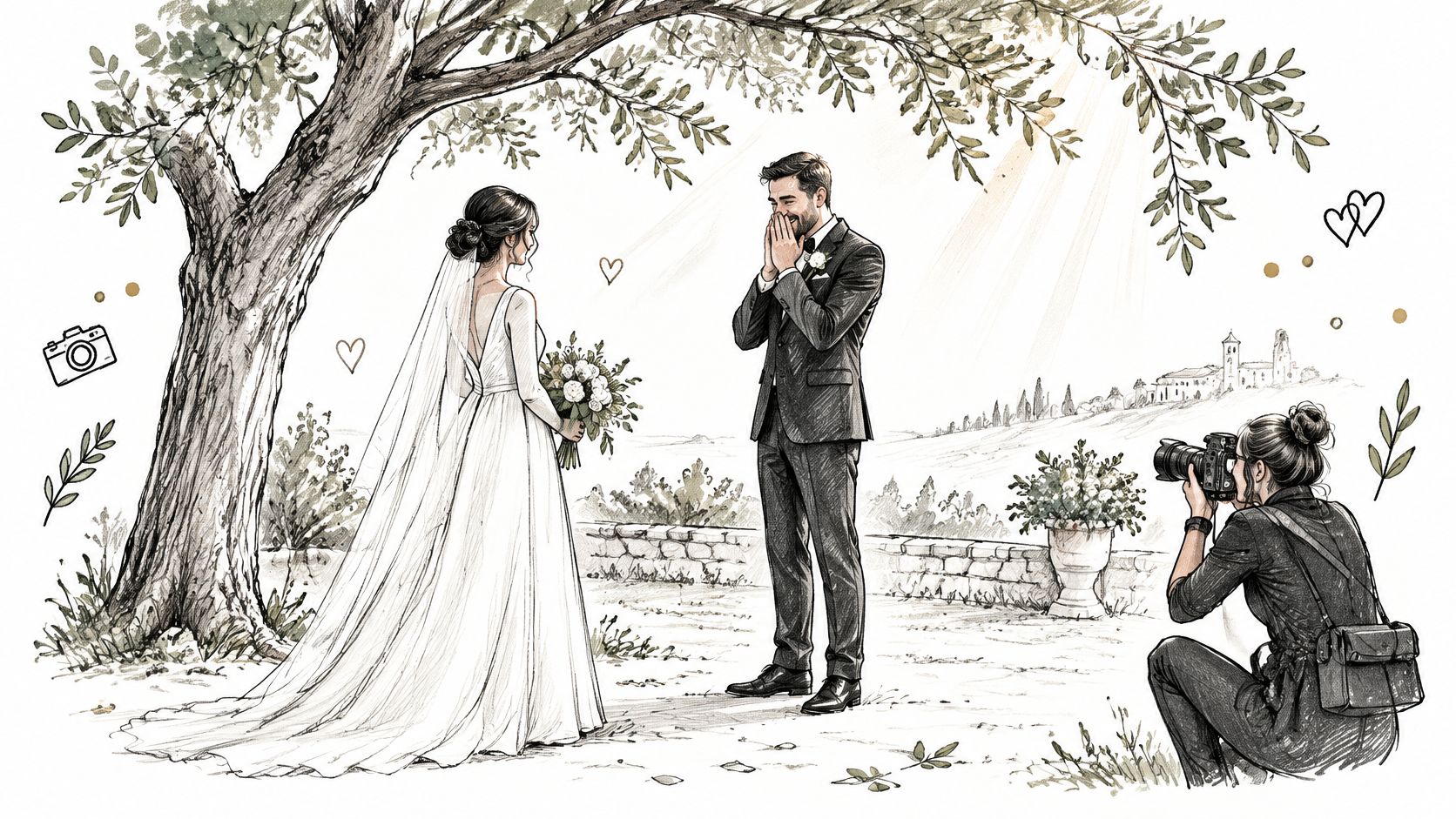
Move the portraits ahead of the vows and the back half of your day stops being a race. With a 4:30 p.m. ceremony, a first look at 2:15 in a shaded grove buys you couple portraits, bridal party shots near the water features, and immediate family groupings finished by 3:50. You get announced at 5:00 instead of vanishing for another 45 minutes of photos.
Set a hard portrait cutoff
Photographers work to the light and the shot list. They don't police your clock. Give them a firm cutoff and one named person who calls names for family groupings, because twelve combinations take four times as long when nobody is fetching people. At 3:50, the couple goes inside whether or not the last cousin has arrived. Late family gets photographed during cocktail hour, which is exactly what that hour is for.
The first look isn't a photo trick. It's the only way to buy back an hour of your reception without cutting dinner or dancing.
- Walk the first-look spot during your venue tour and check what's behind you. A parking lot in the background ruins a good grove.
- Hand the shot list to the wedding party a week ahead so groomsmen know they're needed at 2:45, not "sometime before the ceremony."
- Build in 10 minutes alone after the look, before the party joins. It's the only quiet moment until the drive home.
On a large property, photo geography matters as much as the times. Group locations within a few minutes' walk of each other so the party isn't hiking between shots in formal shoes.
3. Golden Hour Outdoor Ceremony Itinerary
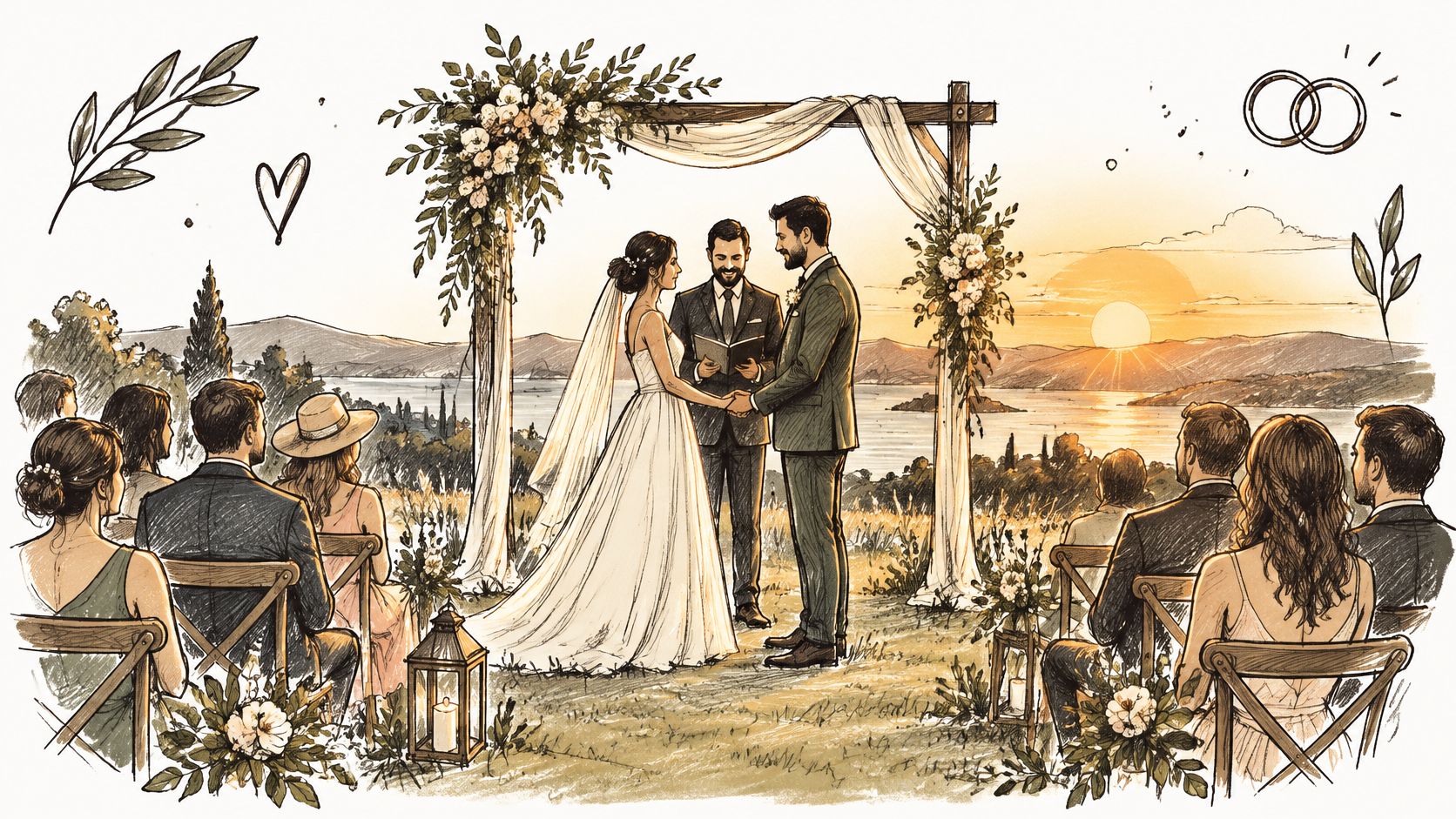
Golden hour is roughly the last hour before sunset, and it's the reason some couples push the ceremony later than feels comfortable. If sunset on your date lands near 8:00 p.m., a 6:15 p.m. ceremony runs 25 minutes, puts you in portraits by 6:45, and hands you a reception that opens at 7:30 while the light is still soft. In Central Texas, the later start also means the heat has broken by the time guests are seated.
Count backward from the sun, not from dinner
Every other time in the day is adjustable. Sunset isn't. Take the official sunset time for your date, count back at least 90 minutes to get your ceremony start, and confirm the venue's indoor backup before you commit, because a spring storm takes the decision out of your hands.
The trade-off is real. A 6:15 ceremony in April means dinner near 8:00 and dancing until 11:30. Older guests and anyone driving home will leave early. Know that before you fall in love with the light.
Practical kit for an outdoor golden-hour ceremony:
- Shade and water at the seating area, plus bug spray on a table guests can reach themselves.
- A wind plan for the arch, programs, and veils, since late-day breezes arrive with the cooler air.
- A short ceremony, 20 to 25 minutes, so nobody is shifting in the heat.
More detail sits in these tips for an outdoor ceremony if you're building around a lawn or garden site.
4. Multi-Venue Split Itinerary
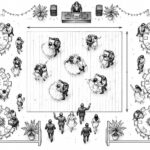
A split-site evening works when every space sits on one property, because guests never get back in a car. Ceremony on the outdoor site at 4:30, cocktails in one hall from 5:00 to 6:15, dinner and dancing in a larger hall at 6:30, and a dessert lounge opening at 9:00 so the dance floor thins out without the party ending. Moving between rooms becomes part of the entertainment.
Transitions are where this format fails. Ever After Suite's itinerary guide recommends building 10 to 15 minutes between major activities and allowing 30 to 45 minutes for longer transfers between venues. Its warning is blunt: a shorter-looking schedule isn't more efficient if it strands guests outdoors or pushes the meal back.
Direct the traffic you created
- Budget 20 to 30 minutes per transition. A cocktail hour that ends at 6:15 needs a dinner call at 6:35, not 6:16.
- Post signage at every junction, with staff standing where guests hesitate. People stop walking when they can't see the next room.
- Confirm an accessible route and parking near each space, especially for guests with mobility aids or formal shoes on gravel.
- Publish a mobility-friendly version of the schedule with seated waiting options, restroom locations, and weather shelter marked.
That last point matters more than most planners admit. A three-room evening works beautifully for a guest who moves quickly and becomes an obstacle course for a grandparent with a walker. Print the version that reflects the slowest realistic guest movement, then hold the room 10 minutes past the stated time before the next formal moment begins.
5. Texas Dance Hall Reception Itinerary
Dinner opens at 7:00 p.m. as a buffet along long handcrafted pine tables, the band takes its first set at 8:00, a 45-minute two-step lesson at 8:45 pulls three generations onto the floor, and open dancing runs until 11:30. The format suits couples who want a loud, warm, informal night rather than a staged one.
Build the music program around the room
A dance hall lives or dies on sound. Confirm the band or DJ can work with the venue's PA system and Bluetooth hookup before you book them, and ask who supplies the wireless mic for toasts.
- Schedule the dance lesson after dinner, not before. Guests who've eaten and had a drink will try it. Guests still finding their seats won't.
- Lock the bar plan early. A built-in beverage bar with host-provided drinks still needs an approved bartending company, and that booking takes longer than couples expect.
- Run two buffet lines past 200 guests, or dinner service alone eats an hour.
A two-step lesson is the cheapest way to fill a dance floor. It gives older guests permission to start and younger ones something to copy.
Long shared tables handle seating for you, which is part of the appeal. Mix families down the table instead of splitting them into round eight-tops, and seat the guests most likely to dance near the floor.
6. Rain-Plan Hybrid Itinerary
You plan an outdoor ceremony for 5:00 p.m., and the decision gets made at 2:00 p.m. Not at 4:30, not once the chairs are already set, and not by three different people. That single agreement is what keeps a rain day from turning into a schedule collapse.
Name the decision-maker before the wedding week
The call belongs to one person, usually whoever holds the venue contract, working with the venue manager on facility questions and the photographer on light. Set the criteria in writing: a forecast threshold, a radar check at 2:00, and a hard switch time.
- Keep an indoor setup kit ready: ceremony chairs, aisle runner, sound system, and an officiant spot that isn't a doorway.
- Move portraits first, ceremony second. Indoor portrait locations get claimed fast, so send the photographer to the backup spot the moment the call is made.
- Notify guests in one message through a text group or wedding website update, with parking and entrance directions for the new location.
The rain plan isn't a second schedule. It's a decision time and a named person, written into the document everyone already carries.
If the ceremony moves into a climate-controlled hall, the timeline barely changes. Cocktail hour still starts when the ceremony ends, dinner lands at the same time, and the only real loss is the aisle photograph. Read more on what to do if it rains on your wedding day before the week of.
7. Full 16-Hour Exclusive Access Itinerary
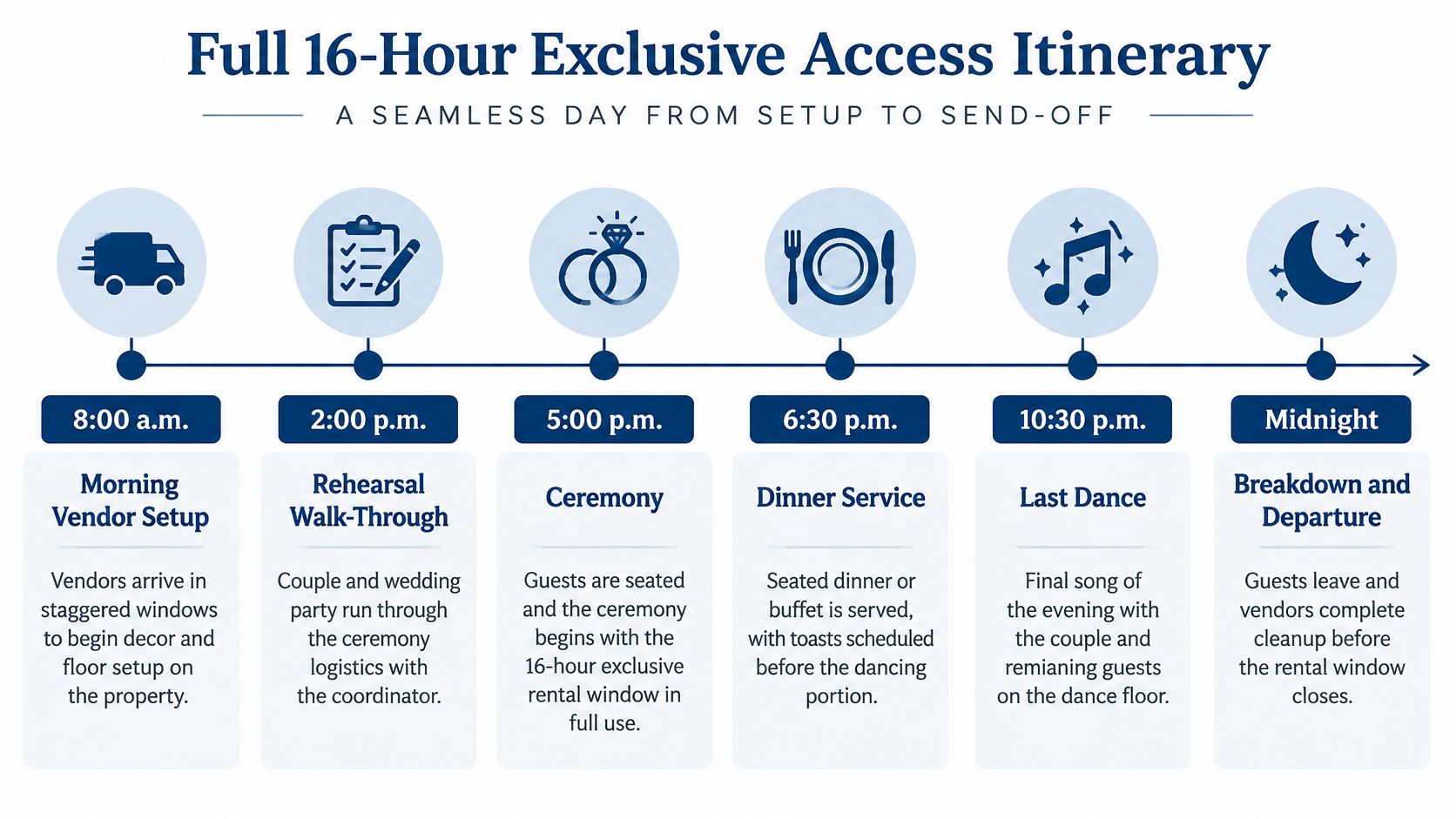
Extended access changes every other constraint, because décor, catering, and portraits no longer happen in the same four hours. WeddingClever's planning checklist advises documenting every vendor's arrival time, contact information, setup responsibility, ceremony cue, reception activity, and breakdown task, then distributing the final version to vendors, the wedding party, and the venue team. Its sample sequence for a venue with a 16-hour window runs from 8:00 a.m. venue access and vendor load-in through a midnight exit.
Here's how that spacing works in practice:
- 8:00 a.m. to 12:30 p.m. Vendor load-in, hair and makeup, décor and sound checks, then portraits and detail photography.
- 2:00 p.m. Rehearsal, run in the actual ceremony space with the actual sound system.
- 5:00 p.m. ceremony, 6:30 p.m. dinner, 10:30 p.m. last dance.
- 11:30 p.m. guest departure, midnight breakdown complete.
With a long window, the risk inverts. Couples don't run out of time; they lose the urgency that keeps a morning moving. Put the load-in deadline on the sheet and check it at noon.
Three rules for a long rental:
- Share one document with vendor arrival times and confirm it with the venue manager, because a 16-hour window still has one correct order of operations.
- Assign a day-of coordinator or point person to hold the schedule, separate from the person getting married.
- Set a guest departure time so breakdown finishes inside the window instead of running past it.
Wedding day schedule formats at a glance
Use the ceremony format to choose a starting timeline, then adjust the blocks around its main constraint. These examples give you a concrete ceremony time or timing range, plus the decision that most affects the day.
| Item | Typical Ceremony Time | Best For | Key Timing Constraint |
|---|---|---|---|
| Traditional Ceremony-Then-Reception Timeline | 4:00–5:30 p.m. | Couples who want a familiar, linear event | Schedule outdoor ceremonies at least 90 minutes before sunset if photos are planned |
| First Look Photography Timeline | Often earlier afternoon; first look is 60–90 minutes before the ceremony | Couples who want portraits done before the ceremony and more time with guests | Set a firm portrait cutoff so the ceremony starts on schedule |
| Golden Hour Outdoor Ceremony Itinerary | Timed to finish 30–45 minutes before sunset | Outdoor ceremonies with warm natural light and cooler late-day temperatures | Adjust the schedule to the date's sunset time |
| Multi-Venue Split Itinerary | 4:30 p.m. | Couples who want distinct spaces for different parts of the event | Allow 20–30 minutes for each transition |
| Texas Dance Hall Reception Itinerary | Evening; example dinner begins at 7:00 p.m. | Couples seeking a lively, informal celebration with regional character | Allow time for a dance lesson before open dancing |
| Rain-Plan Hybrid Itinerary | Example ceremony at 5:00 p.m. | Couples who want an outdoor plan with a ready indoor backup | Make the weather decision 2–3 hours before the ceremony |
| Full 16-Hour Exclusive Access Itinerary | Example ceremony at 5:00 p.m. | Couples who want a relaxed day with ample setup and breakdown time | Complete guest departure and breakdown by midnight |
The multi-venue example uses a 4:30 p.m. ceremony as its anchor. Build the transfer into the timeline: allow 20–30 minutes for each move between spaces, rather than treating travel as an informal gap. That time comes out of portraits, guest mingling, or the reception, so decide which block can flex before setting the schedule.
Turn These Schedules Into Your Wedding Day Plan
Pick the schedule closest to your ceremony format and stop reading the rest. Then build backward in this order: sunset first, portrait window second, dinner start third, ceremony start fourth, load-in fifth. Everything else in the day is negotiable.
That sequence matters because each step constrains the one before it. If dinner must start at 6:30 and your caterer needs kitchen access hours ahead, your load-in time is set. If the ceremony has to finish an hour before sunset, your portrait window is set. Most schedule arguments between couples and vendors disappear once the order is right.
A wedding day itinerary example gets you to a first draft. The 15-minute buffers, the two printed versions, and the one named person who holds the clock are what make it survive contact with a real Saturday.
Our own calendar makes the compression visible. Texas Old Town runs a 16-hour exclusive window from 8:00 a.m. to midnight, with an on-site venue manager during the event and four halls across a 55-acre property, so a ceremony can sit outdoors, indoors, or move between them on a weather call. That's enough room to test a golden-hour start against a rain backup in the same afternoon, and it's why a rehearsal block at 2:00 p.m. is realistic here rather than aspirational.
If your family sets the date by the panchang, check today's tithi and nakshatra before you lock the ceremony block, since the muhurta time becomes the fixed point everything else counts back from.
Book a personal tour and walk the ceremony site, the portrait locations, and the hall you'd use if it rained, all before you commit to times on paper.
Texas Old Town sits on 55 acres in Kyle, between Austin and San Antonio, with four private halls and dedicated outdoor ceremony sites for each one, plus an indoor climate-controlled hall that can host the ceremony when weather turns. Bring your draft schedule to a tour and we'll map your setup, portrait, and dinner blocks against the actual rooms and the light at your ceremony hour. Visit Texas Old Town to request a tour and check availability for your date.