You're trying to pick a rehearsal start time, but your wedding party is still sending flight details, your parents want to know when dinner begins, and nobody's confirmed who will cue the music. The temptation is to book dinner first and squeeze the practice in beforehand. A workable wedding rehearsal timeline does the opposite: it protects the ceremony walkthrough, allows people to move between locations, and gives the evening a definite finish.
Table of Contents
- Rehearsal Day Schedule at a Glance
- How to Run the Ceremony Walkthrough Step by Step
- Plan the Rehearsal Dinner as a Timed Production
- How Much Rehearsal Time Complex Ceremonies Need
- Schedule Guest Welcome Events Around the Rehearsal
- Commit the Start Time and Venue Access
Rehearsal Day Schedule at a Glance
Print this default schedule, then add your locations, participant names, and contact details. The timings below combine Zola's rehearsal dinner guidance, which recommends reserving an hour for rehearsal and approximately 2–3 hours for dinner, with the walkthrough procedure detailed below.
Rehearsal day schedule for a 4:00 p.m. start
| Time | Block | Length | What Happens |
|---|---|---|---|
| 4:00 p.m. | Arrival and role check | 10 minutes | Confirm officiant, couple, party, readers, musicians and children |
| 4:10 p.m. | Mark positions and test sound | 15 minutes | Set aisle spacing, sightlines, microphone and music cues |
| 4:25 p.m. | Slow run, then full-speed run | 15–20 minutes | Walk the processional and recessional, including handoffs |
| 4:45 p.m. | Corrections and questions | 10–15 minutes | One person calls cues, not the couple |
| 5:00 p.m. | Transition buffer | 30–60 minutes | Transport, restrooms, photos and seating |
| 6:00 p.m. | Rehearsal dinner | 2–3 hours | Welcome remarks, toasts and day-of logistics |
Treat the arrival times as appointments, not suggestions to leave the hotel. Everyone should know whether the meeting point is the ceremony aisle, a dressing suite, or the reception entrance. A venue address alone doesn't tell a reader carrying a microphone where to report.
The table reserves the full transition window before dinner. If everyone reaches the dinner location early, they can settle in without bringing food service forward unexpectedly. Don't promise a photo session, hotel stop, and leisurely drive within that same window unless you've checked the actual route.
Why this is an operating schedule
The rehearsal booking needs to cover more than people walking down an aisle. Someone must open the space, gather participants, check equipment, answer questions, and release the group toward dinner. The caterer also needs a clear distinction between guests arriving and service beginning.
Use an event-day schedule template to record those handoffs. Give each block an owner so the officiant, venue contact, and dinner host aren't all waiting for someone else to act.
Scheduling rule: Protect the transitions before adding optional activities. Empty space on a schedule isn't automatically spare time.
For a later-start example, move every clock time in the table forward by an hour without shrinking the blocks. That produces a rehearsal beginning at 5:00 p.m. and dinner beginning at 7:00 p.m., a straightforward shift from Zola's hour-long rehearsal and dinner-duration guidance. Choose that version only when participants can arrive reliably and you're comfortable with the later dinner finish.
How to Run the Ceremony Walkthrough Step by Step
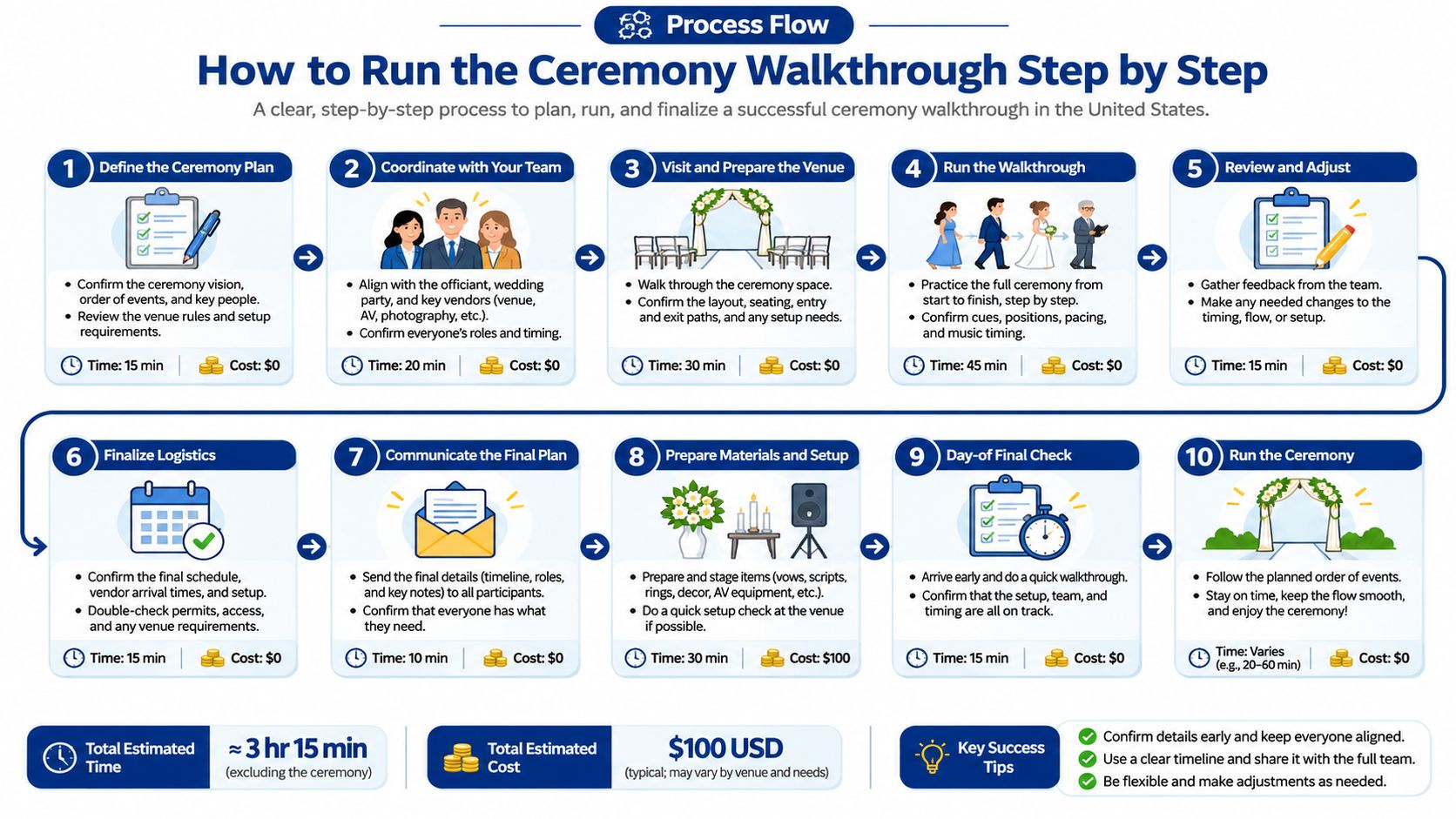
Arrive with a printed processional order and a cue sheet, not just a ceremony script. The script tells the officiant what to say; the cue sheet tells everyone who moves, on what signal, and where they stop.
Let's Get Rehearsed recommends a 60-minute operating block, including a 10-minute arrival check, 15 minutes for positions and technical checks, a 15–20-minute practice sequence, and 10–15 minutes for corrections. Use those allocations for the steps below, treating the slow demonstration and normal-paced run as a shared practice block rather than separate appointments.
Confirm the people and roles. Check the officiant, couple, wedding party, readers, musicians, children, mobility assistance, processional order, and emergency contact. Resolve missing participants before arranging the line, because an absent escort or reader can change everyone else's instructions.
Walk the positions physically. Set starting points, aisle spacing, standing marks, microphone placement, sightlines, and music cues in the ceremony space. A diagram won't reveal that someone blocks a seated guest's view or can't comfortably reach the microphone.
Demonstrate the sequence slowly. Walk the processional and recessional while the cue caller explains each handoff. Participants should see the entire sequence, not just receive instructions for their own entrance.
Repeat at ceremony pace. Run the complete movement sequence without stopping for minor commentary, including the transition from the ceremony's closing words into the recessional. Save small corrections until afterward so everyone learns how the movements connect.
Correct the uncertain parts and release the group. Ask readers to identify their cue, escorts to confirm their partners, and musicians to confirm who signals them. Assign a single cue caller who isn't either member of the couple, then resolve any remaining questions before people leave.
Keep the visual reference with the printed cue sheet.
Separate venue support from ceremony direction
At Texas Old Town, each rental includes an on-site venue manager. Put that venue contact on the run sheet, but explicitly name whoever is responsible for lining up the party and calling ceremony cues. Don't assume venue management, officiating, and day-of wedding coordination are interchangeable responsibilities.
For an outdoor ceremony, write down the rain-plan location before beginning. Make sure the officiant and music operator understand which equipment and cues apply if the location changes.
A clean run doesn't require memorized vows or polished readings. The processional reaches its marks without stopping, readers recognize their signals, and the recessional begins without everyone looking at the couple for permission. Once those pieces work, stop rehearsing and let people leave with clear instructions.
Plan the Rehearsal Dinner as a Timed Production
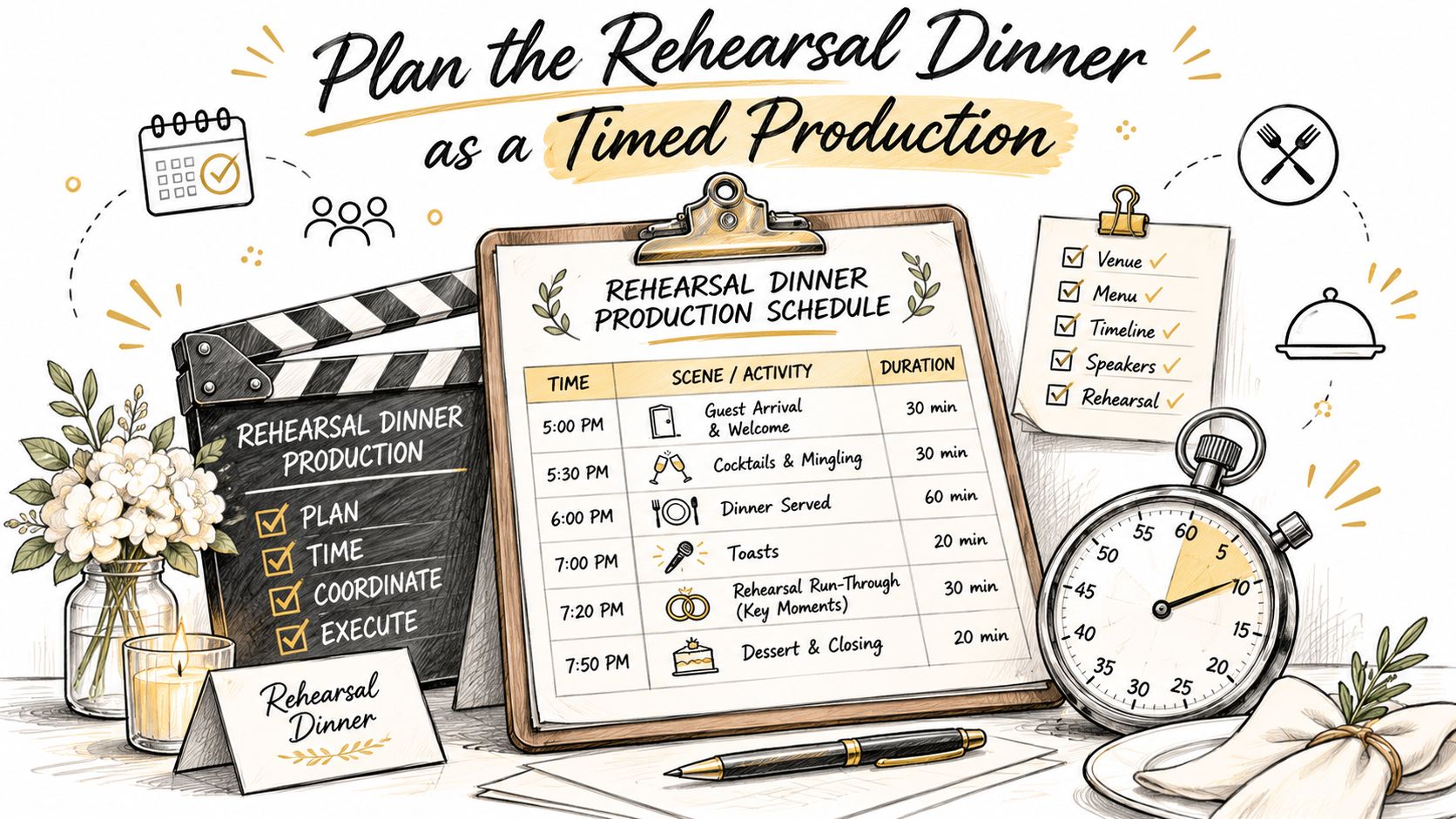
Give dinner its own run sheet rather than writing “dinner and toasts” across the evening. Joy's rehearsal dinner planning guide outlines 30 minutes for arrival, 60–90 minutes for dinner, 15–20 minutes for toasts, and up to 30 minutes for gifts or closing activities, typically occupying 2.5–3.5 hours overall. Those are planning ranges, not a requirement to use every maximum.
Keep the production schedule visible to the host and catering lead.
Dinner planning milestones before the rehearsal
The advance deadlines below follow Joy's guidance; printing the final run sheet is your closing administrative task.
| Milestone | Target Timing | Why It Matters |
|---|---|---|
| Lock venue and caterer | 4–6 months before | Secures the dinner slot and the service entry |
| Send invitations with address, parking, dress code and start time | 6–8 weeks before | Guests plan travel, parking and arrival time |
| Finalize dietary needs and guaranteed headcount | 2–3 weeks before | Caterer sets the final order and seating |
| Print one-page run sheet | Day before | Shows movement times, AV duties and the weather backup |
Name an emcee before inviting speeches. Joy recommends approximately 2–3 minutes per speaker and an unassigned 15-minute contingency between major segments. Tell speakers their limit privately beforehand, and give the emcee permission to close the microphone rather than inviting spontaneous contributions indefinitely.
Coordinate speeches with service. A heartfelt toast loses its audience when servers are clearing plates behind the speaker, and hot food shouldn't wait while someone finds a slideshow cable. Assign microphone handling, slideshow playback, and the signal to begin clearing.
Leave contingency time unassigned. If you fill it with another activity, it's no longer a buffer.
When comparing rehearsal dinner venues near Austin, separate guest-facing hours from vendor access. The run sheet should show movement times, service-entry access, AV responsibilities, and the weather backup.
The avoidable mistakes are treating dinner as a meal-only booking, omitting parking or travel instructions, and overlooking the time guests need to move comfortably. If the proposed evening leaves everyone returning to lodging late, remove an optional presentation or simplify service before asking guests to sacrifice rest.
How Much Rehearsal Time Complex Ceremonies Need
A short walkthrough works when participants share a clear understanding of the ceremony. It's a poor fit when the group needs interpretation, unfamiliar ritual instructions, or help navigating the site. DreamEvent's rehearsal planning framework contrasts a 30-minute simple civil rehearsal with 60–90 minutes for ceremonies involving accessibility accommodations, cultural traditions, or numerous participants.
Identify the actual tasks before choosing the block. A mobility device may require a different entrance route; an interpreter needs an unobstructed position and clear signals. Older relatives, young children, multiple entrances, several readings, and live musicians can each require additional explanation or practice.
Rehearsal length by ceremony complexity
These are planning allocations, not guarantees. Reserve the space according to the work your ceremony requires.
| Ceremony Type | Rehearsal Block | Added Preparation |
|---|---|---|
| Simple civil ceremony with few participants | 30 minutes | One run-through and one cue caller |
| Standard ceremony with a typical wedding party | 60 minutes | Full operating block with arrival check |
| Accessibility needs, cultural rituals or many participants | 60–90 minutes | Written cue sheet and a separate accessibility check |
| Indoor and outdoor ceremony at one venue | 60 minutes plus route test | Sound check in both spaces and a rain plan |
Plan for tasks, not assumptions about people. Ask participants what assistance or information they need rather than deciding based on age or appearance. Someone unfamiliar with a ritual may need a plain-language explanation, while an experienced participant using a mobility device may need the correct route confirmed.
For a multigenerational wedding, make sure instructions reach the people waiting at the back, not just those beside the officiant. Provide written cues where useful and let interpreters finish before demonstrating the next movement.
A shorter rehearsal isn't more efficient if participants leave unsure what to do.
For indoor and outdoor movement, physically test the route, check sound in both spaces, identify the weather alternative, and confirm everyone can move safely. Which factor applies to your ceremony, and which table row gives you enough room to address it?
Schedule Guest Welcome Events Around the Rehearsal
A rehearsal day works better when ceremony practice and guest hospitality stay on separate tracks. That lets the wedding party focus on processional cues while travelers and out-of-town guests get a clear, warm welcome without being pulled into a private work session.
Wedding Venture's rehearsal dinner guide reports that 75% of U.S. couples host rehearsal dinners and 26% plan a broader welcome celebration. The useful distinction is purpose. Ceremony practice, family hospitality, and a guest welcome are three different events, even when they happen on the same evening.
Three audiences and how to schedule them
This example keeps invitations distinct and uses a firm finish. Treat it as a printable default, then resize only the blocks your ceremony needs.
| Audience | Event | Timing | End Time | Purpose |
|---|---|---|---|---|
| Wedding party, readers, musicians and children | Ceremony rehearsal | 4:00–5:00 p.m. | 5:00 p.m. | Walk processional, positions and cues |
| Wedding party and immediate family | Rehearsal dinner | 6:00–9:00 p.m. | 9:00 p.m. | Host welcome, toasts and day-of logistics |
| All guests, especially long-distance travelers | Guest welcome | 9:15–10:00 p.m. | 10:00 p.m. | Short social welcome without rehearsal load |
A late dinner creates a real trade-off. Wedding Venture recommends ending by 9:30–10:00 p.m. and notes that buffet or cocktail formats can compress food service to approximately 90 minutes. If you want a guest welcome after dinner, run the tighter food format and start the gathering while people are still willing to move. A 9:15 p.m. start gives you enough time for a short visit without turning it into a second dinner.
Hotel-based welcomes reduce unnecessary driving, especially when guests are already staying in one area. Keep directions, meeting points and transportation details on a single card or message. If you're assembling guest-room supplies yourself, you can shop Avistar's hotel amenities collection for toiletries, while keeping event directions and transportation instructions on a separate, easy-to-find card.
Test the whole journey from lodging to ceremony space, dinner, and any optional gathering. Label invitations clearly so nobody mistakes a private rehearsal for an open welcome. Include the venue name, event time, dress expectation, and who to contact if plans shift.
Texas Old Town reception halls each have their own parking lot. Directions should tell guests to use the designated lot for their venue, with exceptions for the couple and guests with disabilities. That detail matters when the rehearsal, dinner, and welcome are happening at once. Clear parking language keeps late arrivals from circling the property while the wedding party is still finishing cues.
Commit the Start Time and Venue Access
The right start time is the one you can support with confirmed attendance, workable access, and a realistic finish. An attractive timetable isn't useful if the officiant can't arrive, the caterer can't enter, or the wedding party is still traveling.
Make the booking decision in this order:
Count the people who must practice. Include escorts, readers, musicians, children, and anyone helping with a ritual or accessibility arrangement. Choose the rehearsal block according to their tasks, not the size of the wedding guest list.
Choose earlier or later deliberately. I would choose the earlier default for a complicated ceremony or a group whose travel needs more flexibility, provided they can arrive. A later start suits a straightforward walkthrough when everyone is already nearby, but it leaves less room for a relaxed dinner.
Work backward from the evening's finish. Allocate food service, planned remarks, departure, and vendor responsibilities before committing to the start. Confirm that the contracted access covers preparation and closing duties, not merely the hours guests are seated.
Approve and distribute the schedule. Send the agreed version to the venue contact, caterer, officiant, cue caller, and every required participant. Include the rain-plan location, emergency contact, meeting point, and the person authorized to resolve timing changes.
Confirm what the booking actually covers
Don't assume wedding-day access automatically includes the previous evening. Identify the rehearsal date and space explicitly, along with the dinner location and any permission needed for early setup. Keep the confirmation with the contract rather than relying on a conversation remembered differently by each person.
If the evening runs too late on paper, move the start earlier or remove optional content. Shorten the walkthrough only when the ceremony's actual requirements justify it, not because dinner was booked without enough room.
This week, secure the access window and send the printable schedule to everyone who must rehearse. Ask required participants to acknowledge their arrival time and role, so missing information is resolved before the group assembles.
Texas Old Town offers rehearsal dinners and indoor and outdoor wedding settings in Kyle, with an on-site venue manager included in each rental. Visit Texas Old Town to request a personal tour and discuss the rehearsal access, dinner location, and movement between spaces before committing to your schedule.