The forecast looked beautiful when you checked it last week. Now it's wedding morning in Central Texas, there's a heat advisory, and your ceremony chairs are sitting in full sun. The difference between a rushed scramble and a calm adjustment isn't optimism. It's a written plan that tells the coordinator where guests should go, which vendors need to move, and who can authorize the change.
Say you've already approved an indoor ceremony layout, saved the processional music for either location, and assigned someone to send the guest update. You can keep getting dressed while the team makes the switch. Without those decisions, the same people spend your preparation time asking you questions.
An outdoor wedding trades a controlled environment for scenery, natural light, and atmosphere. That trade can be worthwhile, but you'll need to plan for the less photogenic details, including wet ground, warm drinking water, dark parking routes, and microphones that pick up wind.
Treat your outdoor wedding checklist as a calendar of decisions, not a shopping list.
Start with booking-time commitments, then work through rental approvals, vendor confirmations, final forecast decisions, and post-event breakdown. Give every milestone a named owner, a due date, and a clear completion test. A task isn't finished because someone discussed it. It's finished when the person responsible knows what to do.
Table of Contents
- 1. Weather Contingency Plan
- 2. Shade, Seating, and Cooling Stations
- 3. Sound System and Microphone Setup
- 4. Lighting for Evening Events
- 5. Insect, Wildlife, and Ground Safety
- 6. Beverage Service and Alcohol Compliance
- 7. Catering and Food Safety in Heat
- 8. Parking, Accessibility, and Guest Transportation
- 9. Restroom and Dressing Suite Access
- 10. Day-of Coordination and Post-Event Clean-Up
- Outdoor Wedding Checklist at a Glance
- From Checklist to Celebration Putting It All Together
1. Weather Contingency Plan
Lock this before booking. An indoor backup only works if the full guest count fits and the team knows how to arrange the ceremony without blocking dinner service.
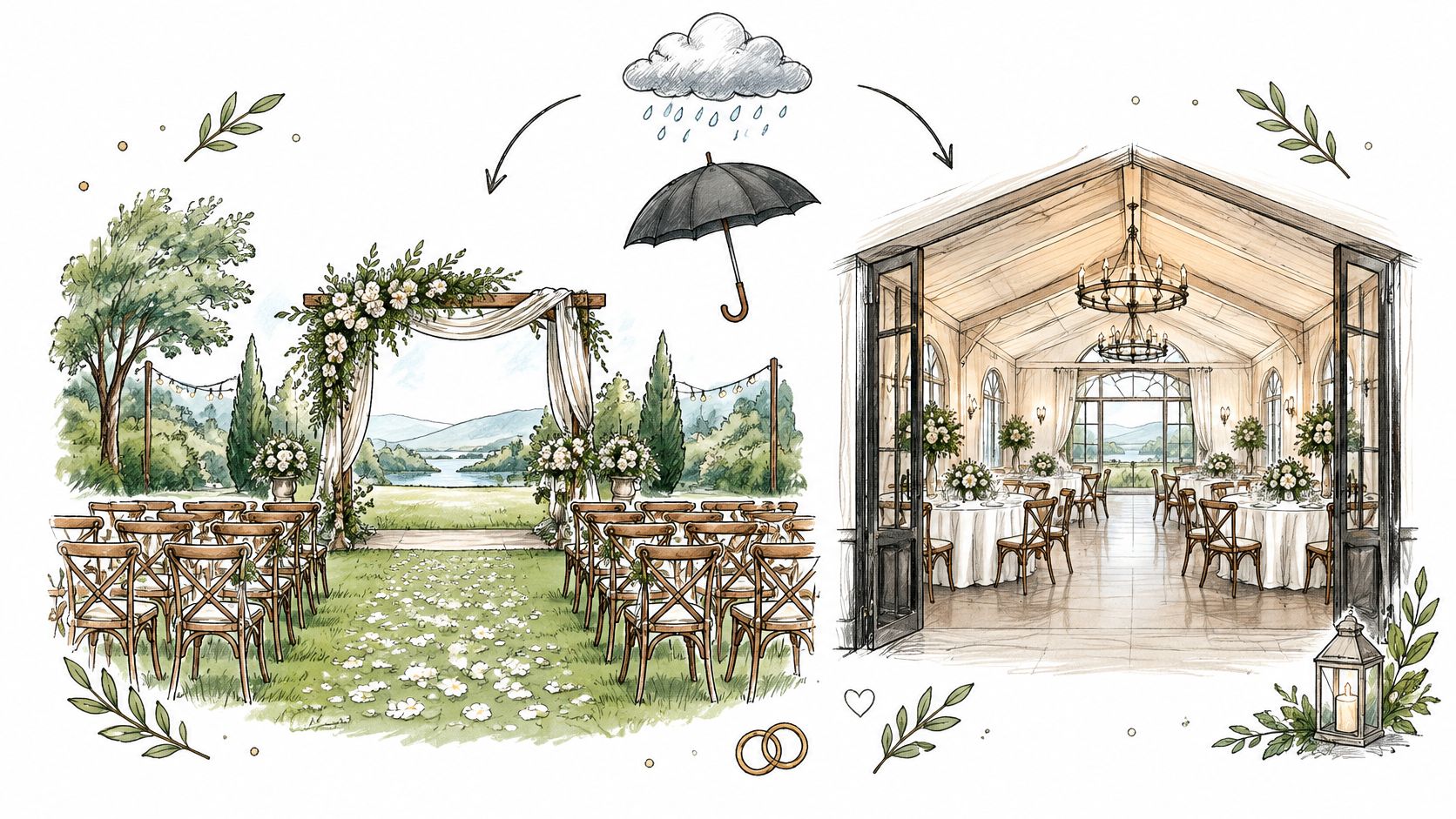
Approve layouts for both locations, including the aisle, reserved seating, musicians, and accessible entry. Put the relocation labor in writing. Moving chairs is a staffing assignment, not something to leave for whoever happens to arrive early.
The DTN event-weather planning paper supports a weather decision deadline 24–48 hours before the event, with named authority, hazard monitoring, and communication procedures. Treat that as the planned setup decision, not permission to ignore deteriorating conditions afterward.
Write the triggers before emotions get involved
- Decision owner: Authorize the coordinator or another designated lead to activate the backup.
- Conditions monitored: Include lightning, wind, heat, flooding, and smoke, not just rain.
- Communication: Prepare separate messages for guests and vendors.
- Transition: Identify who relocates flowers, signs, seating, and ceremony audio.
For example, if storms threaten the arrival period, the coordinator can direct guests straight indoors while the florist installs the ceremony arrangement there. Nobody needs to debate the layout while guests wait outside.
Use our rainy wedding-day planning guidance to work through the transition. Keep a printed backup timeline with the people running it.
2. Shade, Seating, and Cooling Stations
Reserve heat protection when you reserve rentals. A basket of handheld fans won't compensate for exposed seating, inaccessible water, or a long wait before the processional.
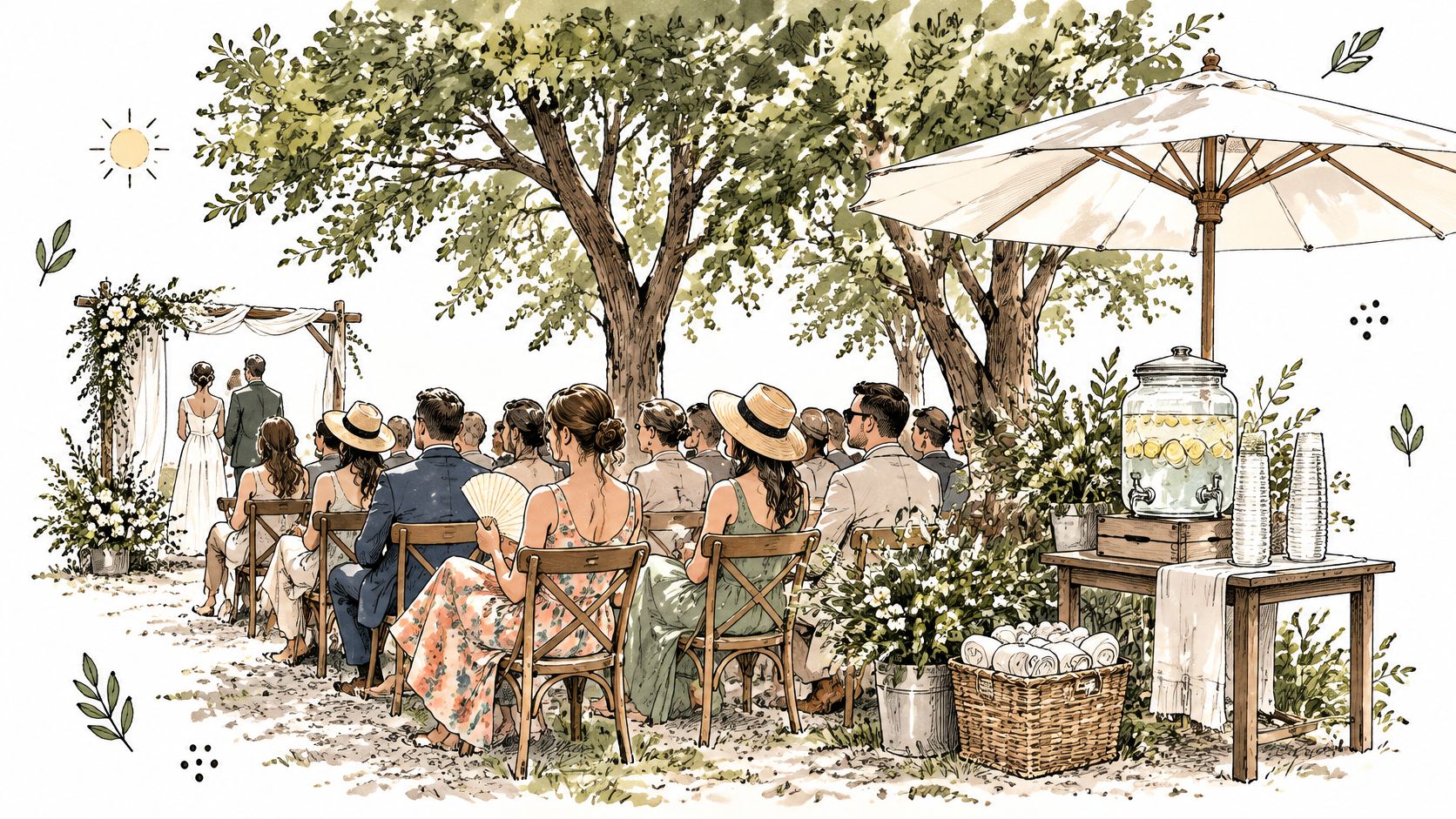
Walk the ceremony site at the intended ceremony time before finalizing chair placement. Shade over the lawn during a morning tour may leave guests exposed later. Plan against forecast heat conditions and available cooling, not air temperature alone.
The CDC's extreme-heat guidance recommends shade, regular breaks, fluids, air-conditioned spaces, and scheduling outdoor activities during cooler parts of the day. Build those protections into the arrival experience, especially for older adults, children, and guests wearing heavy formal clothing.
Practical rule: Guests should reach drinking water without joining the alcohol-service line.
For a late-day ceremony, position water before the seating entrance, reserve shaded seats for guests who need them, and keep an indoor waiting option available. Have an attendant invite guests outside when the ceremony team is ready rather than seating everyone while preparations continue.
Before the final rental order, confirm canopy placement, anchoring permission, fan power, and who replenishes water. Fans move air, but they aren't a substitute for an indoor relocation when conditions become unsafe. Assign someone to respond to illness, and seek emergency medical assistance if heat stroke is suspected.
3. Sound System and Microphone Setup
A ceremony can look perfect while guests hear wind instead of vows. Approve the audio plan during the vendor walkthrough, then test the actual equipment before guests arrive.

Start with the people speaking. Decide whether the officiant will use a lavalier microphone or handheld, how the couple's vows will be captured, and who handles readings. Don't assume a microphone attached to the officiant will clearly capture someone speaking softly beside them.
Test from the back row
Have the audio operator listen from the farthest guest seats while someone speaks at ceremony volume. Check for feedback, wind noise, uneven coverage, and competing sounds from nearby activity. Use a proper microphone windscreen rather than trying to solve wind entirely through volume.
- Playback owner: Name the person who starts and stops each processional track.
- Backup equipment: Provide a spare microphone, fresh batteries, and locally saved music.
- Weather switch: Identify which equipment moves indoors and which stays protected.
- Power route: Keep connections sheltered and cables out of guest paths.
For example, a phone connected through Bluetooth can receive an unexpected call or notification. Use a dedicated playback device with interruptions disabled, and keep an appropriate wired connection available.
Finish with a rehearsal of cues, not just a speaker test. The operator needs to know when the officiant invites guests to stand, when music fades, and which announcement directs everyone toward the reception.
4. Lighting for Evening Events
Inspect the property after sunset before approving decorative lighting. A daytime walkthrough won't reveal the dark step between the reception and restroom or the confusing turn toward parking.

Separate the lighting plan into navigation, work areas, and atmosphere. Guests need continuous visibility along walking routes. Caterers and bartenders need enough light to work, while photographers may want a different arrangement for portraits and the dance floor.
A string-light canopy can look beautiful without illuminating the route beneath it evenly. Decorative lanterns also shouldn't narrow a walkway or become obstacles near a step.
Approve power before adding fixtures
Ask the lighting vendor to document electrical loads and coordinate circuits with catering and entertainment. Have qualified vendors handle temporary distribution and outdoor connections. A nearby outlet doesn't prove that the circuit can support every appliance someone intends to plug into it.
For example, place pathway fixtures along the route to the designated pickup area, then use warmer decorative lighting around the social spaces. Keep bright work lights aimed away from guest seating and the photographer's portrait background.
Before the event opens, the coordinator should walk the complete departure route with the lights switched on. Check signs, changes in level, cable covers, and parking visibility. If rental lighting requires removal that night, keep essential route lighting operating until guests and vendors have safely left.
5. Insect, Wildlife, and Ground Safety
A smooth-looking lawn can hide ant activity, soft patches, irrigation holes, and roots. Schedule a ground inspection before approving the layout, then repeat it after rain and before setup.
Place chairs on stable ground and check that they don't rock or sink under weight. Use secured, purpose-built temporary pathways where necessary. Loose rugs and curled mats can create another problem instead of fixing the original one.
For mosquito planning, use event mosquito prevention from FullScope Pest Control as a discussion guide with the property team and pest professional. Coordinate treatment around product instructions, venue permission, catering, and guest access rather than scheduling a last-minute spray beside an occupied ceremony.
- Ground owner: Assign someone to mark and report ant mounds, damaged surfaces, or animal activity.
- Guest supplies: Offer labeled repellent away from food and drinks.
- Footing: Inspect aisle edges, chair legs, temporary flooring, and transitions.
- Response: Keep first-aid supplies accessible and identify who calls emergency services.
Say overnight rain leaves the planned cocktail lawn soft while the main path remains firm. Move the gathering area instead of expecting guests in heels or using walkers to negotiate the mud.
A dry forecast doesn't mean the ground is ready. Inspect what guests will actually walk on.
Avoid disturbing wildlife or asking untrained staff to remove nests. Keep food waste contained, and let the property team arrange an appropriate response.
6. Beverage Service and Alcohol Compliance
Set the service arrangement before purchasing alcohol. Buying beverages first can leave you with products the bartender can't serve under the agreed setup, inadequate cold storage, or a bar menu that slows every order.
Confirm the applicable alcohol-service requirements with your contracted bartender and venue. Our policy requires an approved bartending company, so clear that approval before signing the service contract. Ask the company to document staff training, insurance, service responsibilities, and its procedure for refusing service.
Use our outdoor wedding bar planning guide to organize the setup questions before placing beverage orders.
Plan the queue as carefully as the menu
Position the bar so waiting guests don't block the ceremony exit, restroom route, or catering access. Give the bartender a delivery plan for beverages and ice, plus a defined location for empties and waste. Separate drinking ice from ice used to chill containers.
For example, a couple serving beer, wine, and a signature cocktail can have the bartender prepare the approved cocktail components before guests arrive. That's more workable than asking each bartender to assemble an elaborate drink while the entire ceremony audience arrives together.
At final confirmation, settle who supplies cups, garnishes, water, mixers, ice, and disposal containers. Keep nonalcoholic choices visible and appealing, with water available independently of the bar. Don't use alcohol purchases as a substitute for a hydration plan, especially when guests have already spent time outside.
7. Catering and Food Safety in Heat
An outdoor menu needs more than shade. Before signing the catering contract, require a service plan that explains temperature control, protected preparation, replenishment, and waste handling.
A shaded buffet may improve working conditions, but it doesn't replace proper hot or cold holding. Likewise, a decorative ice display isn't enough unless the caterer can maintain the food under appropriate conditions throughout service. Leave temperature limits and monitoring procedures to the qualified food-service team and applicable requirements.
Choose the service style around the site
A buffet concentrates guests in a queue and exposes the display during service. Plated dining requires coordinated staffing and a practical path from preparation to tables. Food trucks need an approved operating position that doesn't obstruct emergency access or force guests to wait in full sun.
- Before contracting: Review the caterer's outdoor-event procedures and equipment.
- Before the final layout: Confirm service access, power, water, waste, and holding locations.
- Before guests arrive: Verify that food protection and monitoring are operating.
- Before departure: Confirm responsibility for leftovers, catering equipment, and food waste.
For example, the caterer might keep the main food supply in controlled holding and replenish smaller serving displays as guests progress through dinner. That's preferable to setting the entire meal outside early for the sake of a photograph.
Our vendor policy lets couples choose their own caterer. Coordinate that choice with the site plan, including deliveries and service access, so flexibility doesn't become a collection of disconnected assumptions.
8. Parking, Accessibility, and Guest Transportation
Map the entire guest journey before invitations and transportation details go out. An accessible entrance doesn't help if the ceremony route crosses loose gravel or the restroom requires an awkward detour.
The ADA Information Center's accessible-event guidance recommends firm, stable, slip-resistant circulation paths. Walk from the actual drop-off point to seating, refreshments, restrooms, reception, and weather shelter.
Our accessibility features guide can help you prepare for that route review. At our property, guests should use the designated parking lot for their selected venue, with the stated exceptions for the couple and guests with disabilities.
Publish directions people can use
- Arrival: Provide the correct venue name and entrance instructions, not just the property address.
- Drop-off: Identify a stable unloading location that stays clear of deliveries.
- Assistance: Name the person guests can contact about mobility needs.
- Departure: Establish a clearly marked pickup location and a transportation fallback.
Say a guest uses a walker and can manage a firm path but not an uneven lawn. Reserve seating reached by the suitable route and explain the drop-off arrangement before arrival. Don't wait for that guest to ask for help from the parking lot.
At final confirmation, verify transportation availability rather than assuming ride-share vehicles will be nearby at closing. Any cart assistance must have an approved route, responsible operator, and suitable passenger arrangements. A cart isn't automatically an accessible replacement for a continuous usable path.
9. Restroom and Dressing Suite Access
Restrooms and preparation spaces need a schedule, not just a pin on the map. Resolve access before finalizing the getting-ready timeline and outdoor activity areas.
Count the facilities available to your event with the property team and compare them with the guest count, service duration, and layout. If supplemental restrooms are necessary, arrange accessible placement, servicing, handwashing, lighting, and a delivery route before approving their location.
Guests shouldn't have to cross a catering work area or enter a private preparation room to find a restroom. Keep signs readable from the main walking routes, including after dark.
Protect preparation time and privacy
Use a room-access plan for the wedding party, beauty team, photographer, and anyone delivering personal items. Identify where bags will go after preparation and who will remove belongings at the end of the rental.
For example, schedule portraits so the wedding party can return indoors for touch-ups without passing through arriving guests. Have a designated helper relocate garment bags and spare shoes before the room needs to be cleared.
During the final walkthrough, test the practical details: doors open freely, accessible routes remain clear, supplies are stocked, and someone owns replenishment. Decide who handles a spill, plumbing problem, or locked door while the coordinator is managing the ceremony.
A quiet indoor retreat can also help guests who need a break from noise or activity. Keep that function separate from the wedding party's private belongings rather than assuming every available room can serve both purposes.
10. Day-of Coordination and Post-Event Clean-Up
Publish the operating plan before final vendor confirmations. Include the timeline, contact list, site map, delivery sequence, weather authority, power plan, and breakdown assignments in a mobile-readable document.
The Knot's 2025 Real Engagements & Weddings Survey, published by the Plumb Club, reports that 90% of wedding planning occurs online. Make the final operating file easy to open on a phone, but keep printed copies available for the people directing the event.
Give revisions a clear label and withdraw outdated copies. A timeline buried in a group text isn't a reliable operating plan.
Assign the finish before the celebration starts
- Coordinator: Runs cues, transitions, and vendor communication.
- Venue manager: Handles property questions and venue responsibilities.
- Personal-items lead: Collects gifts, clothing, keepsakes, and remaining décor.
- Vendor leads: Pack their equipment and meet contracted pickup requirements.
For example, distinguish furniture breakdown from packing your candles, floral vessels, and guestbook. Our included clean-up and furniture breakdown don't eliminate the need to assign ownership of personal items and vendor collections.
If the event needs additional crowd or access management, review responsibilities when hiring licensed guards for weddings, then confirm local requirements with the contracted provider.
Before you leave: Someone other than the couple should know where every remaining item goes.
Keep departure routes clear during breakdown. Vendors shouldn't start moving carts through guests just because the last song has ended.
Outdoor Wedding Checklist at a Glance
| Item | When to Finalize | Primary Owner | Biggest Risk Addressed |
|---|---|---|---|
| Weather Contingency Plan | Before booking; set decision checkpoints 7 days, 48–72 hours, and event day | Couple and venue coordinator | Severe weather disrupting the event |
| Shade, Seating, and Cooling Stations | Before booking rentals; confirm setup before the event | Couple and venue | Heat-related discomfort or safety issues |
| Sound System and Microphone Setup | Confirm at least one week before; test during the walkthrough | DJ or audio provider | Guests unable to hear vows or announcements |
| Lighting for Evening Events | Plan before booking rentals; verify power and layout in advance | Venue and lighting provider | Poor visibility and unsafe navigation after dark |
| Insect, Wildlife, and Ground Safety | Arrange pest control several days ahead; inspect grounds before the event | Venue and couple | Insect exposure, trips, and falls |
| Beverage Service and Alcohol Compliance | Confirm approved service and venue requirements before signing contracts | Couple and bartending provider | Alcohol-related legal or liability issues |
| Catering and Food Safety in Heat | Finalize with the caterer before the event; confirm the safety plan and setup | Caterer | Foodborne illness from unsafe temperatures |
| Parking, Accessibility, and Guest Transportation | Confirm capacity and accessible routes before invitations are finalized | Venue and couple | Guest access difficulties or arrival delays |
| Restroom and Dressing Suite Access | Confirm capacity and suite access before booking; schedule access for event day | Venue and couple | Inadequate facilities or inaccessible routes |
| Day-of Coordination and Post-Event Clean-Up | Finalize the timeline and cleanup terms at least two weeks before the event | Coordinator and venue manager | Disorganization, missed timing, or unexpected cleanup charges |
From Checklist to Celebration Putting It All Together
Your next step is to transfer this outdoor wedding checklist onto a dated planning calendar. Start with weather backup approval and venue confirmation, then work backward from the commitments each vendor needs. Rental orders depend on the layout, lighting depends on the power plan, and transportation instructions depend on the final arrival route.
Give each task a named owner and a visible completion test. Weather planning is complete when the indoor layout is approved, the decision authority is assigned, and vendors know how they'll receive the call. Accessibility planning is complete when someone has walked the full guest route, documented any obstacles, and assigned the necessary corrections.
Separate commitments from event-day checks
Some decisions need to be settled before contracts are signed. Others remain active until the celebration ends.
- Commit early: Secure usable backup space, essential rentals, service agreements, and transportation.
- Confirm before setup: Reconcile layouts, deliveries, electrical needs, catering access, and vendor responsibilities.
- Check before arrival: Inspect ground conditions, test sound, open water stations, and verify signs.
- Monitor during the event: Watch changing weather, guest comfort, route conditions, and departure needs.
Use forecast information to prepare, not to make promises. NOAA climate normals summarized in the Texas outdoor-venue weather guide from PIX Wedding identify March, April, October, and November as generally favorable Austin periods for outdoor events. Historical patterns can help you choose a season, but they can't approve your ceremony location on the day.
Our Texas Old Town property in Kyle provides a concrete setting for this planning exercise. Each of our four venues has a dedicated private outdoor ceremony site across the 55-acre Hill Country property, plus a climate-controlled indoor hall that can host the ceremony if weather shifts. Indoor and outdoor sound systems and private parking address several major checklist requirements.
The remaining work is to connect those features to your guest count, vendors, and schedule. During a tour, trace the arrival route, picture the indoor ceremony arrangement, and identify where guests will wait if conditions change. Make those decisions before finalizing vendor contracts, while you can still adjust the plan without undoing someone else's work.
A successful outdoor wedding doesn't require pretending the forecast will cooperate. It requires a team that knows what to do when it doesn't.
At Texas Old Town, we offer private outdoor ceremony sites, climate-controlled halls, indoor and outdoor sound systems, and on-site venue management. Schedule a tour to walk your guest routes, review the indoor ceremony option, and map your outdoor wedding checklist onto the property before you finalize vendor contracts.