A couple can fall in love with the idea of an outdoor wedding, then hit the first real bill and feel the whole plan tighten up. The guest list looks too big, the ceremony site adds another rental, and every extra chair, microphone, and hour of setup starts to matter. That pressure is exactly why outdoor wedding on a budget ideas need to start with the biggest cost drivers, not with the centerpieces.
The fastest savings usually come from the choices made before anyone picks napkins. Guest count, date, venue layout, and what the property already includes can move the budget more than small décor swaps. The ten ideas below use the Texas Old Town campus in Kyle as a working example, because one property with outdoor ceremony space, indoor backup, included furniture, PA systems, and full-day access shows how the math changes when infrastructure is already there.
Table of Contents
- 1. Use the On-Site Outdoor Ceremony Site with an Indoor Backup
- 2. Choose a Weekday, Off-Peak, or Shoulder-Season Date
- 3. Right-Size Your Guest List and Match It to the Right Venue Hall
- 4. Bring Your Own Beverages with an Approved Bartending Company
- 5. Hire a Flexible Caterer or Choose Central Texas Barbecue or Food Truck Catering
- 6. DIY Hill Country-Inspired Décor Using Natural and Budget Materials
- 7. Use the Included Tables and Chairs Instead of Renting Extras
- 8. Run Music from the Included PA System Instead of Hiring a Full Band or DJ
- 9. Build a Structured Payment Plan and Savings Timeline
- 10. Combine the Ceremony and Reception at One Property with Full-Day Access
- 10-Point Budget Outdoor Wedding Comparison
- Turn These Ideas Into One Budget Outdoor Wedding Plan
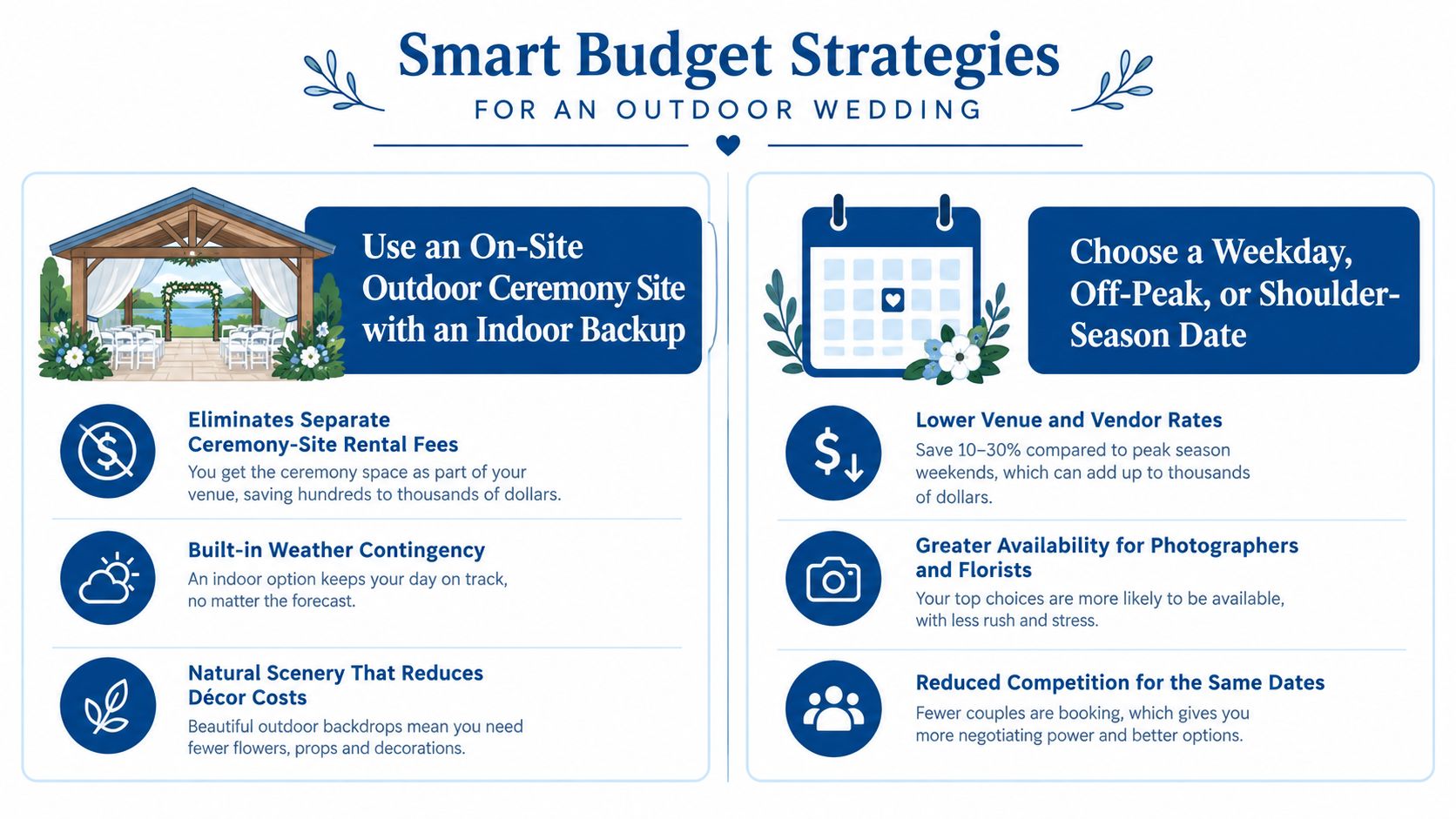
1. Use the On-Site Outdoor Ceremony Site with an Indoor Backup
The cleanest savings start with the ceremony itself. If the venue already has an outdoor ceremony site with mature grounds and a climate-controlled hall that can host the ceremony too, you avoid paying for a second location, shuttle logistics, and a fresh round of setup and teardown. At Texas Old Town, that combination is built into the property, so the couple can keep the day on one site and keep the backup close by.
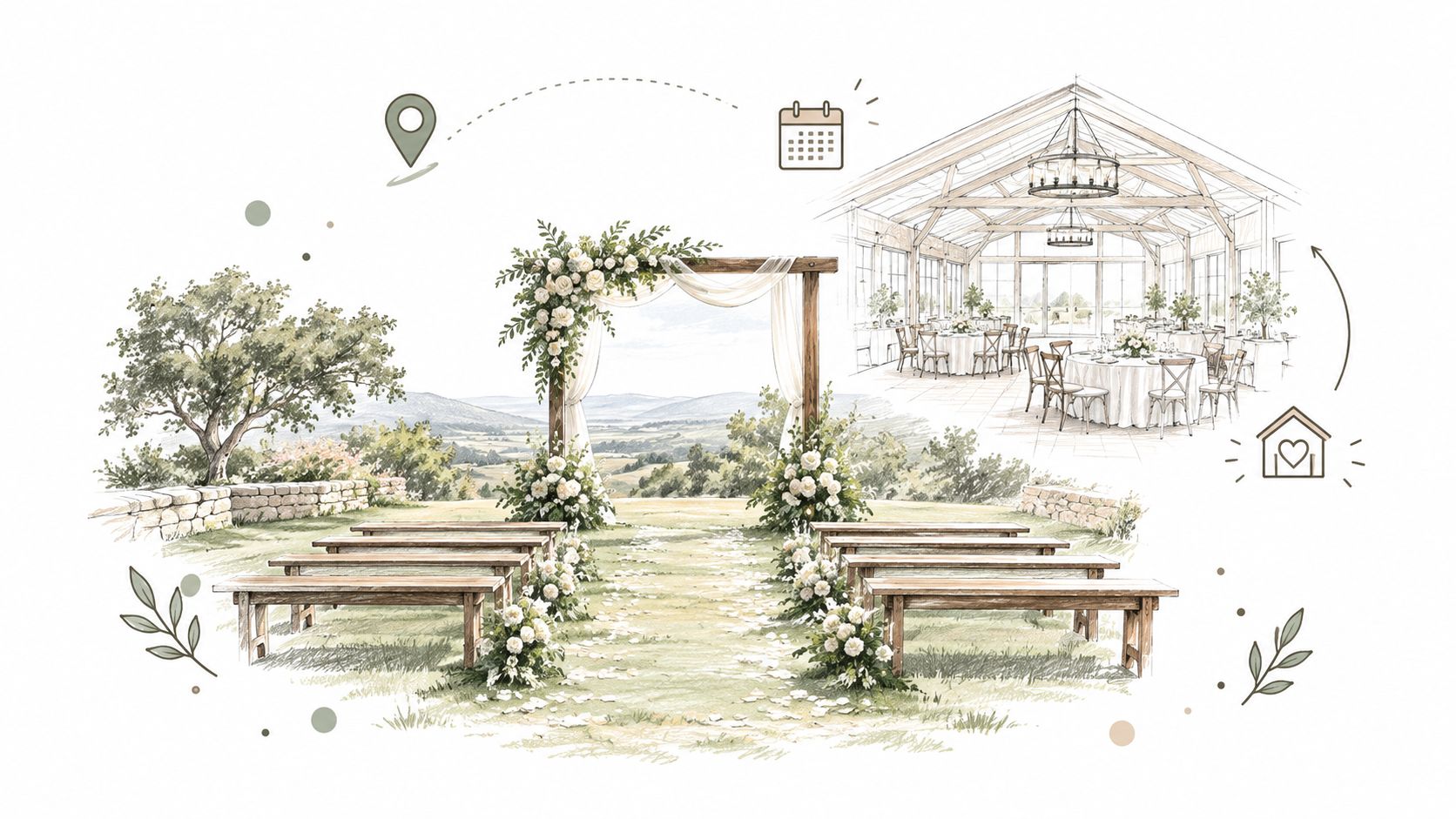
A late-afternoon outdoor ceremony works well in Central Texas if you schedule around the sun and heat. A couple can keep the ceremony on the grounds, move inside for dinner, and still feel like the whole wedding belonged to one setting. That saves on ceremony décor too, because the natural surroundings themselves become the backdrop.
Practical rule: if the backup space can host the ceremony with almost no rearranging, you're buying flexibility instead of paying for panic.
A sun-direction walkthrough matters here. Ask where the light lands at the ceremony time you want, then confirm how fast the hall can be flipped if weather changes. It also helps to test the wireless microphone and Bluetooth connection during the tour or rehearsal, because a pretty outdoor site doesn't help if guests can't hear the vows. For a venue-specific rain plan example, Texas Old Town's own guidance is a useful reference, What to Do If It Rains on Your Wedding Day.
2. Choose a Weekday, Off-Peak, or Shoulder-Season Date
Date choice is one of the most underused budget tools. A Friday, Sunday, or weekday often leaves more room in the budget than a peak Saturday, and shoulder-season dates can be easier to book without competing with the most in-demand weekends. In Central Texas, spring and fall usually give you the best balance of outdoor comfort and venue demand.
The biggest savings here are broad. A less competitive date can lower venue pressure, reduce vendor markups, and make it easier to secure the exact hall or ceremony layout you want without upgrading to a more expensive option. It also gives you more room to choose an outdoor setting that already looks good, instead of overpaying to transform a space.
A couple planning a Friday in late October gets a useful middle ground. The weather is often friendlier for guests, and the event avoids the highest-pressure Saturday slot in the same month. The budget gains show up in more than one line item, especially when vendors don't need to block off their busiest night.
Ask for two quotes, one for your first-choice date and one for the cheaper alternative. That comparison tells you whether the savings are real or just marketing.
Avoid holiday weekends and major Austin event dates if you can. Those weekends can push up lodging and vendor availability, which creates stress before the ceremony even starts. Share the date early with guests too, because a budget date only works if the people you care about can still come.
3. Right-Size Your Guest List and Match It to the Right Venue Hall
Guest count is one of the strongest budget levers in wedding planning. The Knot's Real Weddings Study surveyed 10,474 U.S. couples married between January 1 and December 31, 2025, and found that couples spending under $12,000 hosted an average of 92 guests, compared with 117 guests for weddings costing $12,000 to $41,000 and 141 guests for weddings exceeding $41,000, according to The Knot's average wedding guest list size data. That pattern makes sense, because every extra guest affects food, rentals, beverages, invitations, and ceremony seating.
Texas Old Town's four halls give that math some real shape. A couple with about 120 guests doesn't need to default to the biggest room on the property. Matching the guest count to the smallest suitable hall helps prevent empty space, extra tables, and a bigger catering footprint than the event needs.
Build the list in tiers. Start with must-invite guests, then move to would-like-invite, then optional. That makes it easier to see what happens to the budget if you trim just a little. Ask for the published furniture counts and layout diagrams before you choose a hall, because the seating plan should be driven by the room, not by wishful thinking.
- Build a tiered list first: It shows the actual cost of each invite before you send anything.
- Use a 10 to 15 percent RSVP buffer: That keeps the room from feeling too tight if a few extra guests accept.
- Match the hall to the headcount: Smaller spaces usually mean less unused furniture and less wasted floor plan.
- Plan around included chairs and tables: That helps you avoid paying for rentals you never needed.
4. Bring Your Own Beverages with an Approved Bartending Company
Beverages can eat budget faster than couples expect. A bring-your-own-drink setup lets you buy alcohol and nonalcoholic drinks at retail or wholesale prices instead of paying venue markup on every pour. At Texas Old Town, hosts can provide their own beverages, but the bar still needs an approved bartending company and a structured setup.
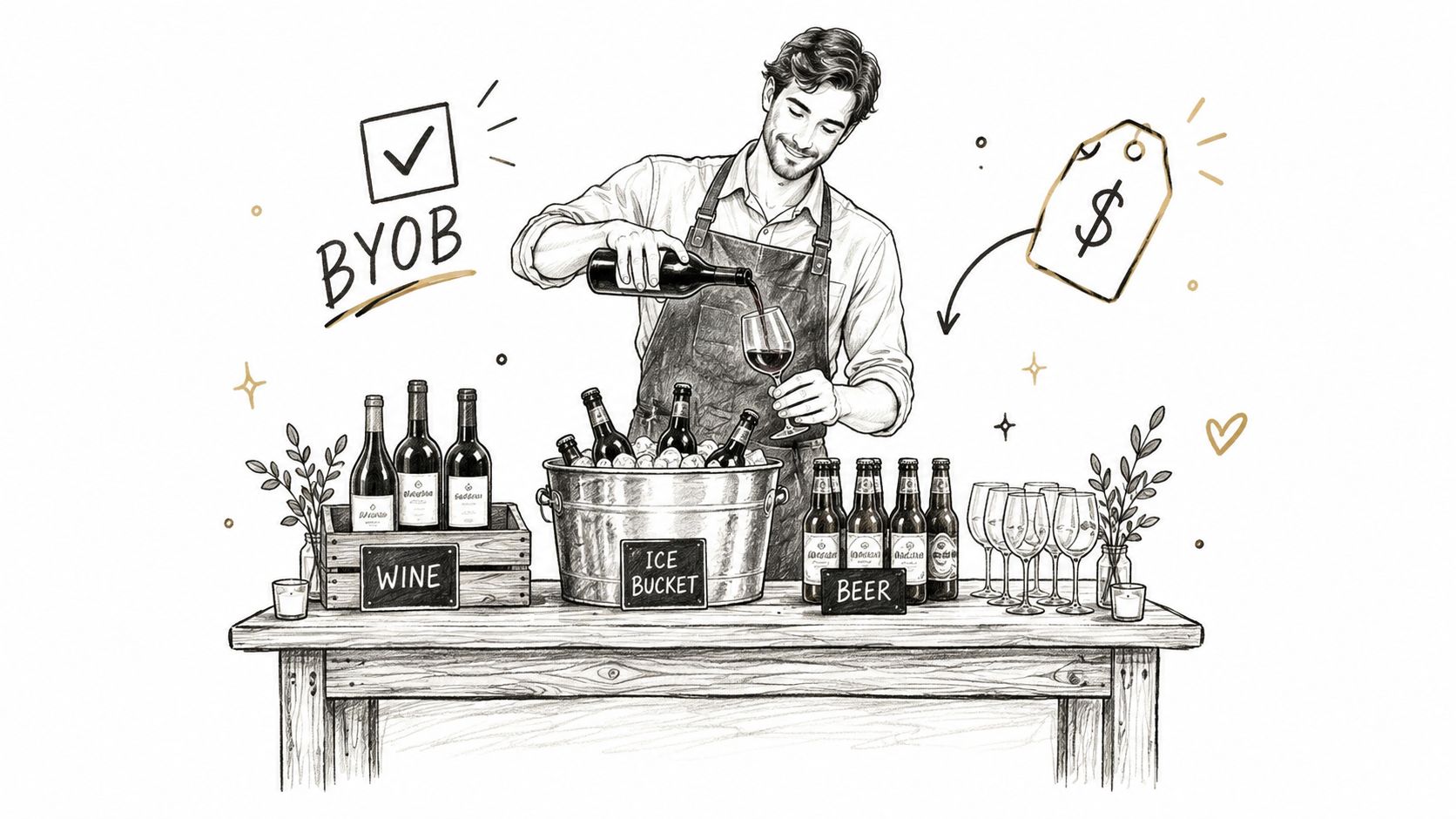
A beer-and-wine bar with one signature cocktail usually keeps things simpler than a full bar. It reduces inventory, keeps the menu easier to manage, and cuts waste from bottles nobody opens. That matters at an outdoor reception, where guests often drink more slowly than they would at a nightclub-style event.
Keep the bar menu short. The more bottles you stock, the more leftover product and the more decision fatigue at the bar.
The bartending company should spell out staffing, glassware, ice, delivery, and pickup before you compare pricing. Also confirm the timing with the venue manager, because beverage delivery has to fit the event flow. The venue's BYOB policy is detailed in Texas Old Town's BYOB wedding venues information.
If you're estimating quantities, build around the first part of the evening being the heaviest. After that, interest usually settles. A smaller menu makes the drinks feel intentional instead of cheap, which is the true win.
5. Hire a Flexible Caterer or Choose Central Texas Barbecue or Food Truck Catering
Food is usually one of the biggest wedding expenses, so flexibility here matters. A venue with a flexible vendor policy lets you hire a caterer that fits the budget instead of forcing you into a house style that costs more than you want to spend. In Central Texas, barbecue, taco bars, and food trucks are practical because they fit the region and hold up well in outdoor conditions.
The budget benefit isn't just the menu. Flexible catering can also reduce staffing pressure, especially if the caterer can use a prep kitchen with a separate service entry. That keeps service cleaner and usually avoids the cost of forcing a complicated plated meal into an outdoor setup that doesn't need it.
A barbecue buffet with brisket, sausage, and sides often works better than a delicate plated dinner for a Hill Country reception. It's easier to serve, it's more forgiving in warm weather, and it doesn't need the same level of formal table service. Food trucks can also make sense if the guest count and site access fit the truck's setup.
- Get at least three quotes: A barbecue caterer, a food truck, and a traditional caterer can reveal how much each service style changes the total.
- Ask what the per-person price includes: Staff, serveware, setup, and cleanup should all be clear before you compare.
- Confirm prep-kitchen use: The kitchen and service entry should support the way the food will be plated or passed.
- Choose heat-safe food: Fully cooked proteins and sturdy sides usually travel better than fragile dishes or fussy desserts.
A late snack can be worth it if the reception runs long. It doesn't need to be elaborate, just planned. A small, smart menu usually beats a big menu that strains both the budget and the service timeline.
6. DIY Hill Country-Inspired Décor Using Natural and Budget Materials
Outdoor weddings already come with a head start on décor. Native landscaping, trees, views, and water features can do a lot of visual work before you spend anything. That's why budget décor should usually act as an accent, not a full rebuild of the scene.
The best low-cost décor choices are the ones that look intentional without demanding a lot of labor. Wildflowers, greenery, string lights, mason jars, wooden signage, and simple linens can give the wedding a Hill Country feel without chasing an overbuilt design. At a place with native scenery, you don't need to cover every surface.
A couple using wildflower bundles in mason jars along the aisle gets a natural look that fits the setting. Add a simple arch or a wooden welcome sign, and you've got one or two visible statements instead of twenty small purchases that nobody notices from the back row. If the décor can be reused as a favor, like potted herbs or succulents, that's even better.
The cheapest décor is the décor that doesn't need replacing after the first gust of wind.
Use weights, clips, or other fastening methods for anything light. Outdoor décor fails fast when it isn't secured properly. Also plan the visual story for both ceremony and reception spaces, because one outdoor setup and one indoor room still need to feel connected.
7. Use the Included Tables and Chairs Instead of Renting Extras
Furniture rentals can turn into a quiet budget leak. Outdoor couples often assume they need to bring in chairs, tables, or lounge pieces without checking what the venue already supplies. At Texas Old Town, tables and chairs are included according to published furniture counts, which changes the arithmetic right away.
That's valuable because it turns furniture from a major rental category into a planning exercise. Instead of asking what to rent, you ask how to build the seating chart around what's already on site. That can save money and also reduce delivery windows, load-in stress, and post-event pickup.
A couple planning for 140 guests can map the room to the venue's published counts and keep the rental list minimal. Maybe you only add a small lounge grouping for cocktail hour, or a dessert display that doubles as décor. The big difference is that you're buying only what the venue doesn't already provide.
The smartest move is to ask for the floor plan before you lock the headcount. Then place the ceremony seating, dining tables, and cocktail areas on paper first. That's where you'll see whether the included inventory already does the job.
If you rent anything extra, make it visible. A single statement piece looks deliberate. A room full of mismatched add-ons looks like a budget mistake.
8. Run Music from the Included PA System Instead of Hiring a Full Band or DJ
Music can cost a lot more than couples expect, especially if they assume they need a full DJ package or a live band. A venue with indoor and outdoor PA systems, Bluetooth hookup, and a wireless microphone gives you another option. You can run a curated playlist from a phone or laptop and still keep the ceremony and reception flowing.
A playlist works best when someone owns it. That person should know the order of songs, have everything downloaded offline, and be ready to switch between ceremony, cocktail hour, dinner, and dancing. The wireless microphone covers toasts and announcements, which takes pressure off the whole evening.
A couple using the venue's system for the ceremony and reception can keep the music simple without making it feel improvised. That works especially well if you want a low-cost emcee for a few key moments instead of paying for full-time entertainment. The savings go straight to one of the most visible line items in the budget.
- Download music in advance: Cell service and venue Wi-Fi aren't things you want to depend on.
- Test the playlist on-site: Bluetooth can behave differently in a real room than it does at home.
- Assign one person to music duty: It keeps the ceremony from stalling when no one knows what's next.
- Keep a backup device charged: A dead phone can stall a reception fast.
Use the microphone during the tour or rehearsal and check the volume from the guest side of the room. That one step avoids a lot of awkward rework later.
9. Build a Structured Payment Plan and Savings Timeline
A payment plan changes the budget line that causes the most stress, timing. Instead of paying the venue, catering, beverages, music, and deposits in one rush, you spread those costs across the months before the wedding and keep cash flow under control.
Texas Old Town offers personalized payment plans and transparent pricing, which you can review in payment plans for weddings. That matters because the venue fee is often the first large line item couples need to cover, and clear due dates keep it from crowding out the rest of the budget.
The practical move is to assign every major cost a payment month. In a Central Texas venue scenario, the ceremony site payment might come first, then furniture or beverage charges later, then music and final catering balances as the date gets closer. That reduces the chance of using credit or draining savings all at once, but the couple still has to track what is already included and what is billed separately.
A savings timeline works best when it matches the contract. If the venue takes installments, build your monthly transfers around those deadlines and keep a small reserve for tax, gratuity, or last-minute vendor changes. I have seen couples stay calm only because the money was labeled before the invoice arrived.
Write down every included item before you sign. If the quote says no hidden fees, ask for the details anyway. A written breakdown of venue, catering, beverages, music, attire, and contingency gives you a budget you can monitor.
10. Combine the Ceremony and Reception at One Property with Full-Day Access
One property, one rental, one cleanup window. That's the simplest way to keep an outdoor wedding on budget when the venue gives you enough time to use the space without rushing. Texas Old Town's 16-hour rental window, from 8:00 a.m. to midnight, makes it possible to set up, host the ceremony, move into the reception, and break down without needing a second venue or a second schedule.
That matters because time is a cost. A short rental often forces extra labor, compressed vendor load-ins, and more pressure on every part of the day. When the property can handle getting ready, the ceremony, dinner, dancing, and cleanup in one window, the couple doesn't have to pay for a second location just to make the day function.
A practical version of this looks simple. The couple arrives in the morning, decor goes up, the ceremony happens in the afternoon, dinner follows in the hall, and dancing runs into the night. Because setup and cleanup are already included, the budget doesn't have to absorb the same kind of overtime risk that comes with a multi-site wedding.
One venue only works when the timeline is realistic. If the schedule is cramped, the savings disappear into stress and labor.
For couples traveling from Austin or San Antonio, plan transportation early and share the route with guests. If the venue also provides dressing suites, that gives the wedding party a place to start without paying for an off-site prep space. Full-day access is one of the few planning choices that helps both the budget and the mood.
10-Point Budget Outdoor Wedding Comparison
| Strategy | Implementation Complexity | Resource Requirements | Expected Outcomes | Ideal Use Cases | Key Advantages |
|---|---|---|---|---|---|
| Use the on-site outdoor ceremony site with an indoor backup | Medium, coordinate outdoor setup and backup logistics | Venue seating, PA systems, indoor backup space; minimal transport | Lower venue/transport costs with built‑in weather contingency | Couples who want an outdoor feel but need a guaranteed backup | Eliminates second-site fees; included sound and backup space |
| Choose a weekday, off-peak, or shoulder-season date | Low, select date and negotiate pricing | Flexibility from guests; potential vendor availability differences | Lower venue and vendor rates; improved availability | Budget-conscious couples with flexible guest schedules | Reduced costs and less competition for dates |
| Right-size your guest list and match to the right hall | Medium, guest prioritization and layout planning | Accurate headcount, venue capacity/furniture counts | Lower per-guest costs; avoids paying for unused space | Couples aiming to cut costs by trimming invites | Direct reduction in catering, rental, and beverage expenses |
| Bring your own beverages with an approved bartending company | Medium, coordinate purchases and bartending logistics | Retail/wholesale drink purchases, approved bartenders, ice/glassware | Lower beverage spend but requires delivery and management | Couples willing to buy/transport alcohol and manage inventory | Avoids venue markups; control over menu and costs |
| Hire a flexible caterer or choose BBQ/food truck catering | Medium, obtain quotes and coordinate service style | Caterer/food truck, use of prep kitchen, serving staff | Lower per-guest food costs and regional menu fit | Casual/rustic weddings or those favoring local cuisine | Cost-effective menus and fewer serving staff required |
| DIY Hill Country‑inspired décor using natural materials | Medium to High, time and volunteer labor required | Materials (wildflowers, jars, lights), volunteer workforce | Significant décor savings; personalized aesthetic | Creative couples with time and DIY skills | Affordable, customizable décor that complements the landscape |
| Use the included tables and chairs instead of renting extras | Low, plan layout to match inventory | Venue‑provided tables/chairs; floor plan from venue | Saves rental and transport fees; reduces setup labor | Couples matching guest count to venue furniture | Eliminates extra rental costs; venue handles breakdown |
| Run music from the included PA system instead of hiring DJ/band | Low to Medium, prepare playlists and assign operator | Venue PA, playback device(s), playlist manager, backup device | Major entertainment cost savings; possible lower energy than pro DJ | Couples comfortable managing playlists and transitions | Eliminates or reduces DJ/band fees; easy Bluetooth setup |
| Build a structured payment plan and savings timeline | Low, set payment schedule and track expenses | Financial planning tools, regular savings contributions | Predictable cash flow and reduced upfront stress | Couples needing to spread payments over months | Improves budgeting and reduces financial strain |
| Combine ceremony and reception at one property with full‑day access | Low to Medium, create detailed all‑day timeline | Full‑day venue rental, on‑site manager, dressing suites | Fewer logistics, lower transport costs, smoother day‑of flow | Couples wanting single-site convenience and extended access | Eliminates multiple locations; includes clean‑up and on‑site oversight |
Turn These Ideas Into One Budget Outdoor Wedding Plan
Start with the guest count and a shortlist of dates, then price every other choice against that number. The venue, hall, ceremony site, and bar policy shape the rest of the budget, so those decisions should come first, not last. Request the published furniture counts, included services, and payment terms in writing, then add a contingency before you sign anything.
After that, line up the practical pieces in order. Choose whether the ceremony stays outdoors or moves inside if needed. Decide whether you want BYOB, a flexible caterer, or both. Then map the music plan, furniture plan, and décor plan so you aren't paying separately for things the property already covers.
A budget outdoor wedding works best when every line item has a reason to exist. If a purchase doesn't change the guest experience, remove it. If a venue already includes the infrastructure, use it instead of renting over it. That mindset is what keeps the wedding looking complete without letting the budget sprawl.
Texas Old Town fits that approach because it combines outdoor ceremony spaces, indoor backup, included furniture, PA systems, and payment planning in one place. If you're comparing venues for a Central Texas outdoor wedding, visit Texas Old Town and look at how its included services change the cost of ceremony, reception, and weather backup planning.