You and your partner have an afternoon free, a phone full of venue photos, and a guest list that keeps changing. On the tour, it's easy to spend your time discussing ceremony backdrops and forget to ask who removes the decorations when everyone's exhausted.
Consider two couples touring the same venue on the same Saturday. One leaves with a good feeling and a signed contract. The other leaves with written answers about rental hours, bar requirements, weather backup, and the money they could lose if plans change.
The difference isn't how much they love the venue. It's whether they know what they're buying.
The tour is your chance to ask before you sign. You can clarify details later, but you'll have less bargaining power once you've paid and started booking vendors around that location.
Bring your likely guest count, your working budget, and a rough schedule. At Texas Old Town, ask about the specific hall you're considering, whether that's Tejas, Sage, Stone, or Redbud, rather than assuming every space works identically.
A useful answer names the person responsible, the deadline, the cost, and where the agreement appears in writing.
These questions to ask during wedding venue tour appointments prioritize the mistakes that can become expensive after booking. Listen for specifics, and treat friendly but incomplete answers as follow-up work, not permission to assume.
Table of Contents
- 1. What Is Your Availability for Our Date, and What Is the Exact Rental Window?
- 2. What Is the Full Price, and Does It Include Tax, Gratuity, and All Required Services?
- 3. What Are the Payment Schedule, Deposit, Cancellation, and Refund Terms?
- 4. Which Venue Fits Our Guest Count, and What Are the Seating and Furniture Counts?
- 5. What Is the Ceremony Plan, Including Outdoor Options and Weather Backup?
- 6. What Is the Vendor Policy for Caterers, Florists, DJs, and Other Outside Providers?
- 7. What Are the Beverage, Bar, and Alcohol Service Requirements?
- 8. Who Is On Site During the Event, and What Clean-Up and Breakdown Is Included?
- 9. What Insurance, Liability, and Venue Rules Apply to Decor, Music, and Guest Conduct?
- 10. What Are the Accessibility, Parking, Amenities, and Add-On Services?
- How the Ten Tour Questions Compare by Risk, Cost Impact, and Documentation Needed
- Turn Your Tour Notes Into a Decision You Can Defend
1. What Is Your Availability for Our Date, and What Is the Exact Rental Window?
Mistake this prevents: Booking the right date without enough time to deliver, decorate, celebrate, and clear out.

Start with the calendar, then open your draft timeline. Availability means little until the venue confirms which spaces you can use and when vendors can enter.
Texas Old Town runs rentals on a 16-hour access window, 8:00 a.m. to midnight, with exclusive use of your chosen hall. Confirm how that window covers vendor load-in and load-out, and ask for the contractual opening and closing times in writing rather than treating the access period as reception time.
Test the window against your actual day
Your florist needs to install ceremony flowers before the photographer arrives. Your caterer needs delivery access, and your rental company wants to collect equipment after guests leave. Put those activities on one timeline and ask the venue manager to check it against the contracted hours.
A long window is only useful if setup and breakdown fit inside it. If your vendors need time before 8:00 a.m. or after midnight, find out now, not after the contract is signed.
- Date security: What holds the date, when does that hold expire, and what payment makes it binding?
- Reserved space: Does the agreement name Tejas, Sage, Stone, or Redbud and its associated ceremony area?
- Exclusivity: Which areas are private, and could other events affect parking or deliveries?
- Closing requirement: Must guests leave by closing, or must every vendor and decoration be gone?
Red flag answer test: A promise of all-day access without written boundaries isn't enough. Request the access clause before paying, and confirm whether rehearsal access requires a separate arrangement rather than assuming it's included.
2. What Is the Full Price, and Does It Include Tax, Gratuity, and All Required Services?
Mistake this prevents: Comparing an apparently inexpensive rental with a more complete package and choosing the wrong value.
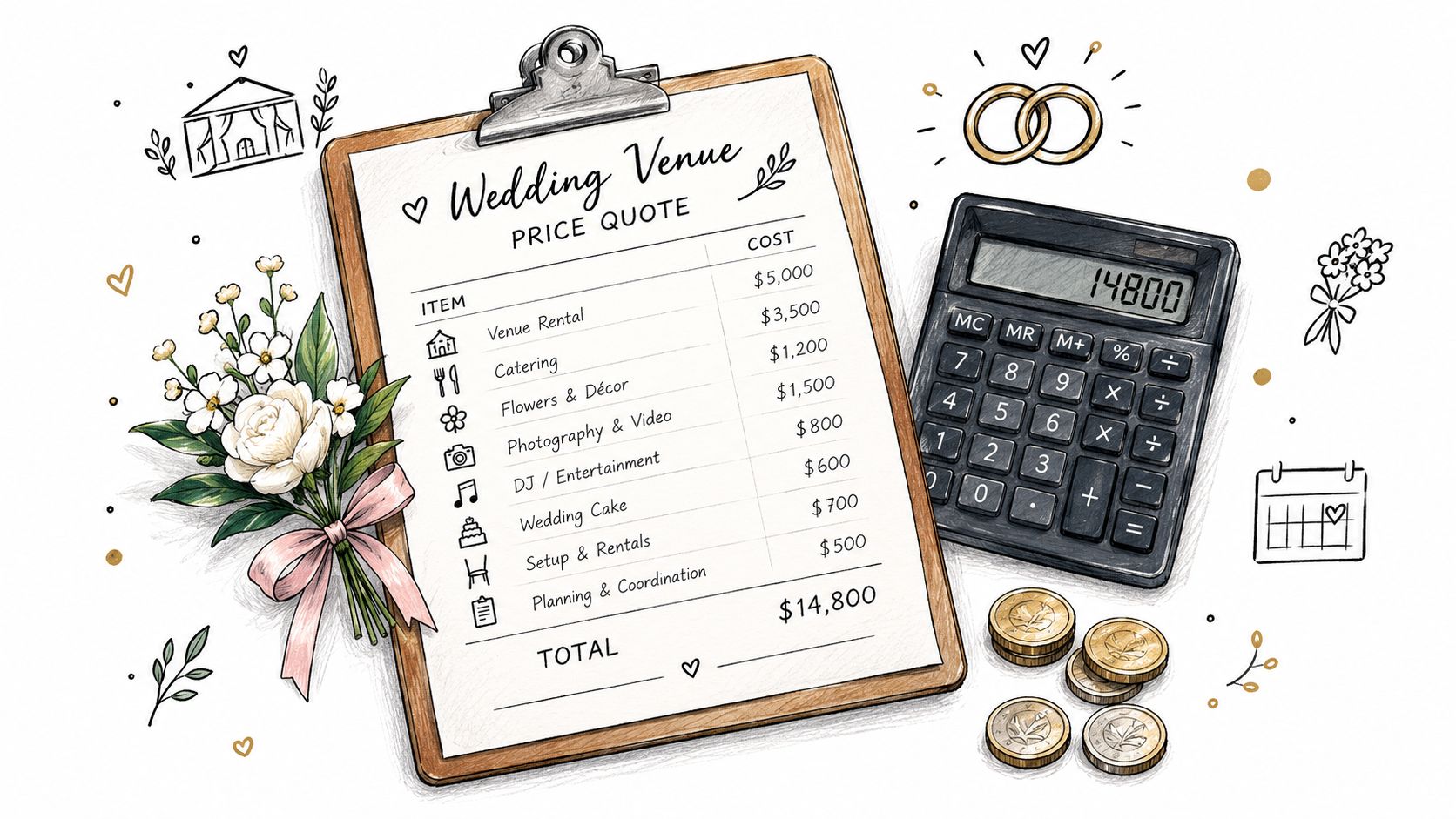
The Knot's Real Weddings Study reported that couples spent about $12,200 on the venue itself in 2024, according to The Knot Worldwide's study announcement. That national average isn't your budget target; your useful comparison is what each venue charges for your actual plan.
Start with Texas Old Town's wedding package pricing, then request an itemized quote. Confirm the stated inclusion of sales tax and gratuity, and distinguish venue inclusions from services you'll purchase separately.
Ask what changes the quote
Have the representative price your ceremony location, guest count, catering arrangement, bar service, setup needs, and expected finish. Tables and chairs may be included while linens, place settings, or specialty rentals are not.
- Included services: Identify furniture, sound equipment, dressing suites, management, cleanup, and breakdown.
- Separate purchases: Identify catering, bartending, security, insurance, and specialty rentals.
- Conditional charges: Ask what happens after a guest-count change, late vendor departure, or unusually demanding cleanup.
For example, bringing your own beverages doesn't eliminate the expense of approved bar staff, ice, glassware, or transport.
Red flag answer test: A broad no-hidden-fees assurance without an exclusions list should trigger a written scenario quote. A good answer separates included, optional, and required purchases so you can compare complete totals.
3. What Are the Payment Schedule, Deposit, Cancellation, and Refund Terms?
Mistake this prevents: Committing money you can't recover under circumstances you haven't considered.
An affordable total can still create an unmanageable payment schedule. Ask Texas Old Town how its personalized payment plans work for your booking, including whether a shorter planning period changes when balances are due.
Cancellation and postponement are different decisions. You need to know whether moving from your original date to another date changes the price, transfers previous payments, or requires a new agreement.
Follow the money through a change of plans
Say a family emergency means you need to postpone. Ask the representative to explain what happens to each payment already made, what remains due, and whether a replacement booking affects your obligations.
- Payment milestones: Request amounts, due dates, accepted methods, and any payment-processing charges.
- Cancellation consequences: Identify which payments are refundable and when future obligations end.
- Rescheduling terms: Confirm date restrictions, transfer conditions, and possible price changes.
- Venue cancellation: Ask what remedies apply if the venue cannot provide the contracted space.
Review any force majeure language carefully. Don't assume that mentioning severe weather or emergencies guarantees a refund; the contract needs to explain the consequence.
The same discipline applies to your vendor agreements, including the details covered by wedding florist contract essentials.
Red flag answer test: An assurance that staff will work something out later isn't a rescheduling policy. Ask for the actual clause, and get important concessions added to the signed agreement.
4. Which Venue Fits Our Guest Count, and What Are the Seating and Furniture Counts?
Mistake this prevents: Booking a room that fits your guests on paper but not your reception.
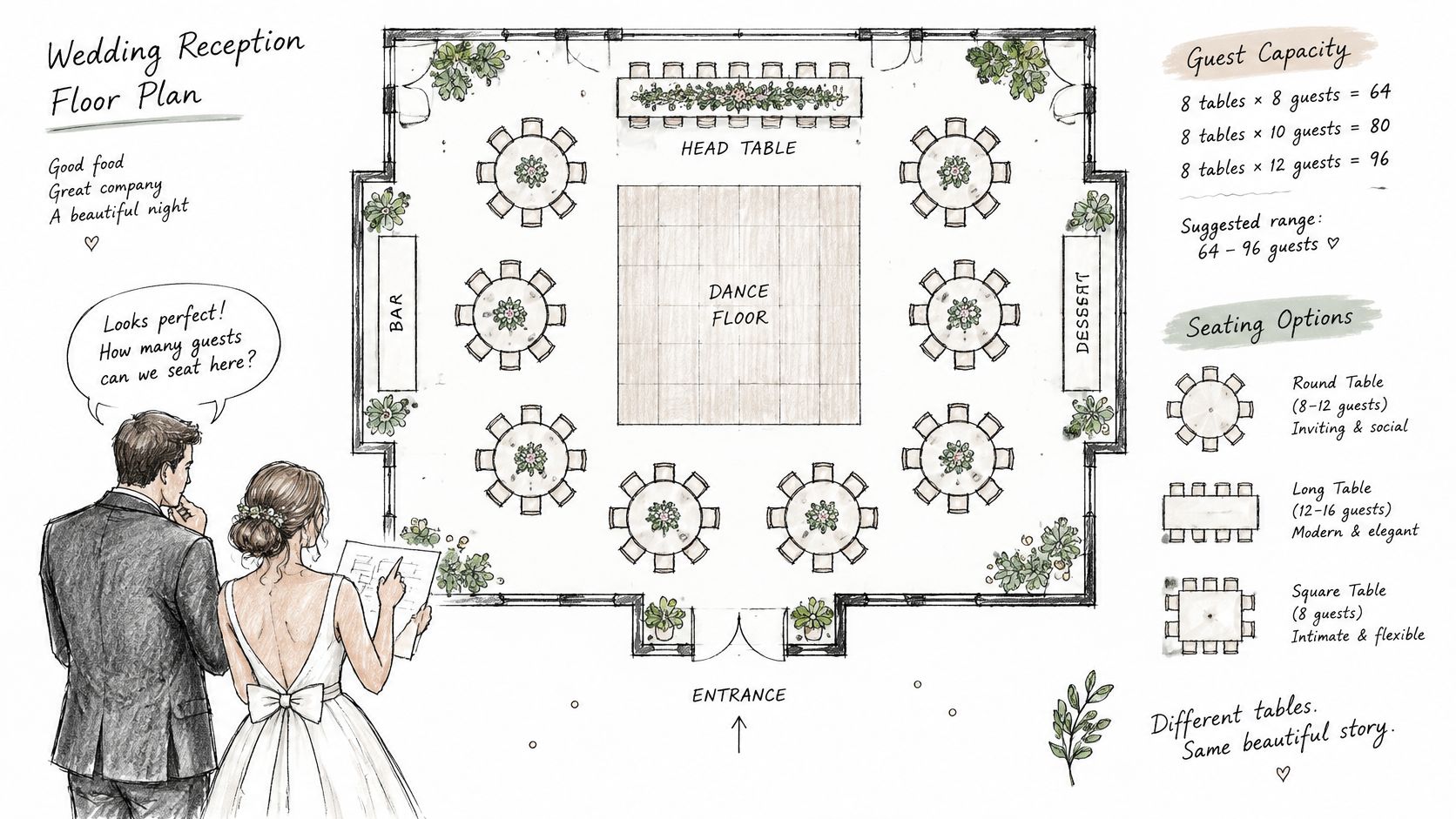
A maximum capacity isn't a finished floor plan. Your band, buffet, head table, wheelchair seating, and dance floor all need usable space.
At Texas Old Town, compare Tejas, Sage, Stone, and Redbud using the same reception layout. Ask for the current published capacity and furniture inventory for each hall you're seriously considering, rather than choosing from photographs alone.
Make the representative place the furniture
For a smaller wedding, Redbud might suit your preferred atmosphere, but you still need room for catering and dancing. A larger hall may provide breathing room, although you might need a more deliberate layout to keep a modest guest list from feeling scattered.
- Seated layout: Request a plan showing actual tables, chairs, aisles, and service stations.
- Entertainment footprint: Mark the DJ booth or band equipment, speakers, and electrical access.
- Furniture inventory: Confirm table shapes, chair types, condition, and quantities assigned to your rental.
- Guest-count changes: Ask when the layout becomes final and what happens if attendance changes.
Include children and vendor seating in the planning conversation. Ask who verifies the final layout rather than assuming the caterer and venue will resolve it between themselves.
Red flag answer test: A statement that everyone will fit, without a scaled plan, should pause your decision. A good answer shows where people sit, how servers move, and what must change if you add guests.
5. What Is the Ceremony Plan, Including Outdoor Options and Weather Backup?
Mistake this prevents: Paying for an outdoor ceremony without a workable alternative.
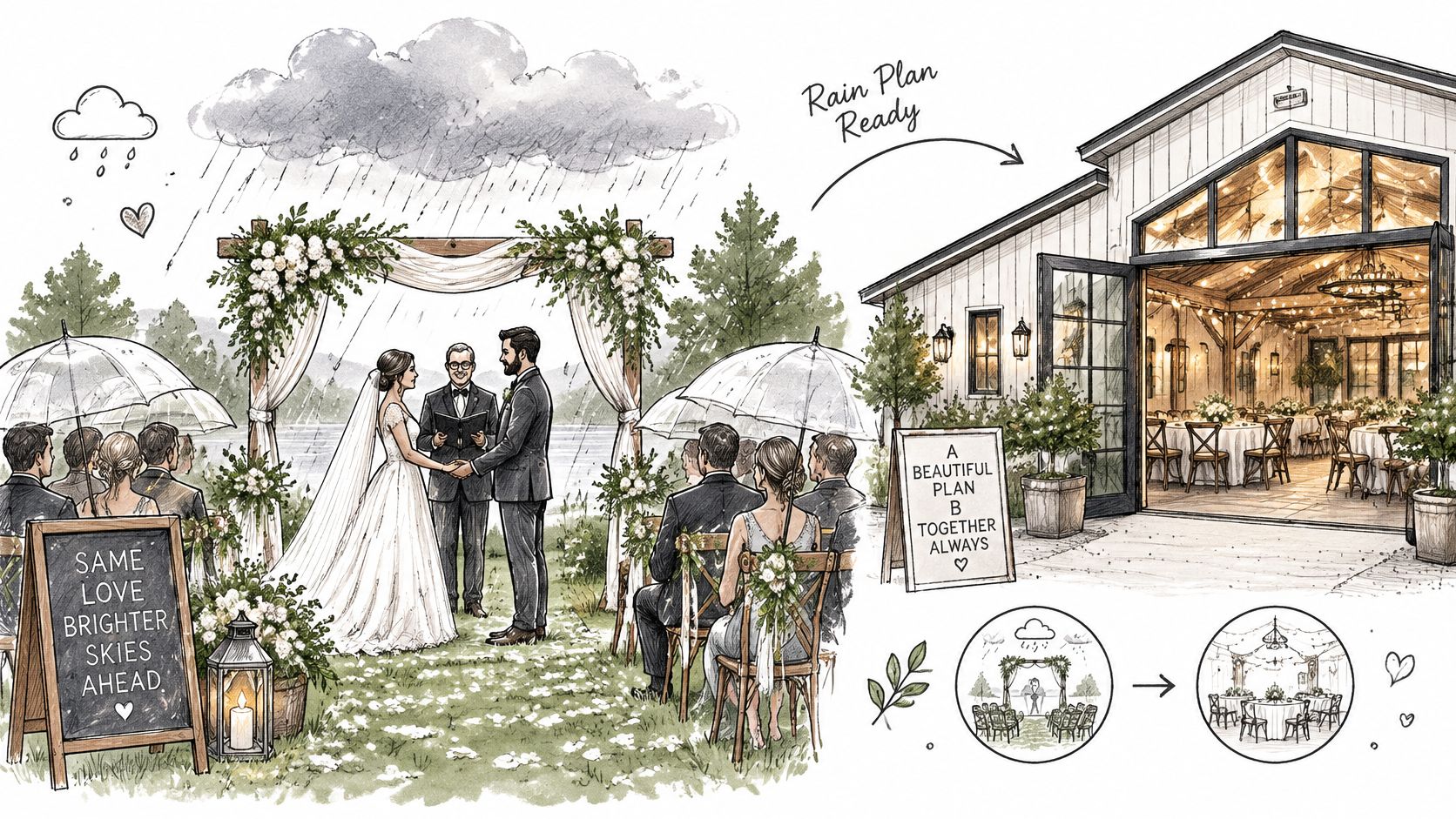
Walk the outdoor ceremony site, then immediately walk the backup arrangement. Texas Old Town's indoor, climate-controlled halls offer another setting, but you need to understand how your particular ceremony and reception would share that space.
An empty hall can look like an easy solution until reception tables, catering equipment, and guests occupy it.
Evaluate the backup as a wedding you'd willingly host, not merely a roof you could stand under.
Rehearse the change without moving furniture
Ask the representative to describe the sequence from the weather decision through the start of the ceremony. Who approves the move, who relocates chairs, and where do guests wait?
For example, a storm forecast might require moving indoors before vendors finish decorating. Your florist needs an approved indoor installation plan, and your coordinator needs to know whether the reception layout stays in place.
- Decision authority: Name who makes the call and the deadline for doing so.
- Labor and cost: Confirm who moves furnishings and whether the change adds charges.
- Sound continuity: Test the indoor and outdoor PA systems and wireless microphone.
- Guest comfort: Check shade, shelter, restroom routes, and paths after rain.
Red flag answer test: An assurance that ceremonies can move inside, without a layout or staffing plan, is incomplete. Request the backup floor plan and transition responsibilities before treating the weather question as settled.
6. What Is the Vendor Policy for Caterers, Florists, DJs, and Other Outside Providers?
Mistake this prevents: Hiring a vendor who can't operate under the venue's rules.
Vendor flexibility gives you choice, but it also leaves you responsible for checking compatibility. Texas Old Town allows outside catering and provides a prep kitchen with a separate service entry; your caterer still needs to inspect what that kitchen can support.
Review Texas Old Town's outside-catering guidance, then ask whether the preferred vendor list is optional and how outside providers receive approval.
Let your vendors verify their working conditions
Say you hire a specialty caterer from San Antonio. A prep kitchen may be suitable for staging and plating without providing everything the caterer needs for cooking, refrigeration, dishwashing, or waste disposal.
Send kitchen photos and equipment details to the caterer before signing their agreement. Give the DJ electrical and setup information, and ask the florist about installation access and removal.
- Approval requirements: Request insurance, licensing, documentation, and submission deadlines.
- Delivery access: Confirm unloading locations, vehicle restrictions, and setup windows.
- Working facilities: Identify available equipment, storage, sinks, power, and disposal arrangements.
- Responsibility: Name who communicates the final vendor schedule to the venue.
A shared production schedule, like the approach in this checklist for successful event organisation, helps keep those handoffs visible.
Red flag answer test: Broad permission to hire anyone isn't enough if nobody can provide the operating rules. A good answer includes written requirements and a contact your vendors can reach directly.
7. What Are the Beverage, Bar, and Alcohol Service Requirements?
Mistake this prevents: Treating bring-your-own beverages as an unrestricted, fully staffed bar package.
Texas Old Town's bring-your-own-beverage policy pairs host-provided drinks with an approved bartending company. Ask how that arrangement works before buying alcohol or promising guests a particular bar menu.
The purchasing flexibility can help you control selection. The trade-off is that someone must coordinate buying, delivery, storage, service supplies, leftovers, and collection.
Price the service, not just the bottles
Say you want beer, wine, and signature cocktails. Your bartender needs to specify mixers, ice, garnishes, cups or glassware, tools, staffing, and who supplies each item.
Ask whether the built-in bar has the refrigeration and preparation space your menu needs. A visually appealing bar doesn't tell you how chilled drinks will reach guests throughout the reception.
- Approved providers: Request the current list and the process for approving another company.
- Service requirements: Ask about TABC certification, insurance documentation, and any venue-specific conditions.
- Delivery and storage: Confirm when drinks can arrive, where they stay, and who removes leftovers.
- Restrictions: Clarify permitted beverages, shots, self-service, corkage, service charges, and last call.
Don't turn certification or insurance questions into assumptions about what the law requires. Ask the venue and bartending provider to identify their contractual requirements.
Red flag answer test: A statement that you can bring your own drinks, without approved-provider details or service rules, is incomplete. Get the bar requirements before comparing beverage budgets or placing orders.
8. Who Is On Site During the Event, and What Clean-Up and Breakdown Is Included?
Mistake this prevents: Assuming the venue manager is your wedding coordinator and that cleanup includes every task.
Texas Old Town provides on-site management, cleanup, and furniture breakdown. Those services matter, but their scope determines whether your family still has work to do after the reception.
A venue manager generally handles the property and venue operations. Your coordinator may handle ceremony cues, vendor timing, personal belongings, and changes to the wedding schedule.
Planning rule: Give every end-of-night task a named owner before the wedding day.
Divide the responsibilities before you need help
For example, a late rental delivery might require the manager to direct the truck while your coordinator decides whether the delay changes setup. Neither role automatically includes locating a missing bouquet or organizing family portraits.
Ask who handles trash during the event, checks restrooms, responds to spills, and troubleshoots venue equipment. Then separate ordinary cleaning from packing personal décor.
- Venue team: Confirm the event contact and how your planner reaches them.
- Included breakdown: Identify furniture handling, floor cleaning, trash removal, and exclusions.
- Host responsibilities: Assign gifts, cards, flowers, signage, leftover drinks, and personal belongings.
- Rental collection: Confirm who supervises pickup and whether overnight storage is permitted.
Red flag answer test: A promise that the team takes care of everything should trigger a task-by-task review. A good answer clearly distinguishes venue cleaning, vendor strike, and your own property, including what happens if collection runs late.
9. What Insurance, Liability, and Venue Rules Apply to Decor, Music, and Guest Conduct?
Mistake this prevents: Spending money on plans the venue won't permit or accepting liability you don't understand.
Before you order sparklers, book special effects, or approve a hanging installation, request the rules for your chosen hall and outdoor ceremony area. Policies may differ between indoor finishes, manicured grounds, and amplified outdoor entertainment.
Review Texas Old Town's venue rental contract information and request the agreement and rules that will govern your event. Don't rely on an inspiration photo as proof that a setup is permitted.
Get approval for the actual design
Say your decorator proposes suspended flowers in Stone or a candle-lined entrance at Tejas. Send the attachment method, materials, location, and removal plan for approval before paying for fabrication.
Likewise, confirm entertainment rules before you find memorable reception activities and book equipment. A karaoke setup still needs approved sound levels, power, placement, and an operating end time.
- Decor restrictions: Ask about flames, confetti, adhesives, fasteners, fog, and spark effects.
- Music conditions: Confirm indoor and outdoor sound rules and equipment shutdown requirements.
- Insurance: Request coverage requirements, certificate instructions, and submission deadlines.
- Damage responsibility: Clarify deposits, inspections, documentation, and how charges are assessed.
Red flag answer test: Informal permission that conflicts with the written rules isn't reliable approval. Ask the authorized representative to document any exception, and photograph existing damage before setup so later discussions have a clear reference.
10. What Are the Accessibility, Parking, Amenities, and Add-On Services?
Mistake this prevents: Choosing a beautiful setting that some guests can't comfortably get around.
Don't finish the tour at the dressing suite. Walk from the parking area to the ceremony, reception, restrooms, and pickup point as a guest would.
The Massachusetts guidance for accessible events recommends unobstructed entrances and paths at least 36 inches wide for wheelchairs and mobility devices. Use that as a practical inspection prompt, not as a statement of Texas legal compliance.
Follow the route, not the accessibility label
At Texas Old Town, inspect the route serving your selected hall and outdoor ceremony site. Ask what changes after rain and whether guests encounter gravel, soft ground, slopes, heavy doors, or poorly lit transitions.
For example, an older relative may manage the ceremony comfortably but struggle with the return trip after dark. Identify a step-free route, nearby restroom, resting place, and suitable drop-off point before finalizing guest instructions.
- Parking and transport: Locate accessible spaces, shuttle access, and the departure pickup area.
- Dressing suites: Confirm availability, privacy, restrooms, vanity space, and when access begins.
- Guest amenities: Check restroom locations, shade, seating, and a quieter space.
- Additional access: Ask how rehearsal dinners, engagement photos, or bridal portraits are scheduled and priced.
Red flag answer test: A general assurance that the property is accessible should trigger a physical walkthrough. A good answer shows the exact route and documents any accommodation your guests will rely on.
How the Ten Tour Questions Compare by Risk, Cost Impact, and Documentation Needed
| Item | Core Concern | Texas Old Town Detail | Get in Writing |
|---|---|---|---|
| Availability and rental window | Confirm the date, exclusive use, and time for setup through breakdown. | 16-hour exclusive access from 8:00 a.m. to midnight; venue options include Tejas, Sage, Stone, and Redbud. | Reserved venue and date, rental hours, vendor access times, and date-hold requirements. |
| Full price and included services | Understand the complete cost, including taxes, gratuity, and add-ons. | Quoted price includes sales tax and gratuity; venue, PA system, dressing suites, furniture, and clean-up may be included. | Itemized quote listing included services, exclusions, add-ons, and any costs that vary by guest count or hours. |
| Payment, cancellation, and refunds | Clarify deposit, payment dates, cancellation, rescheduling, and refund terms. | Personalized payment plans are available; deposit and other terms are defined by contract. | Deposit amount, due dates, refund policy, rescheduling terms, and force majeure provisions. |
| Capacity, seating, and furniture | Match the venue and layout to the guest count and event setup. | Tejas accommodates up to 320, Sage and Stone up to 300 each, and Redbud up to 150. | Seated capacity for the planned layout, floor plan, furniture counts, and any extra rental costs. |
| Ceremony and weather backup | Plan ceremony location, sound, and a response to weather. | Outdoor ceremony site with seating; indoor climate-controlled hall can host the ceremony; indoor and outdoor PA systems and wireless microphone are available. | Weather policy, decision deadline, indoor setup arrangements, sound coverage, and ceremony seating inclusions. |
| Outside vendors | Confirm vendor choice, requirements, access, and kitchen facilities. | Any caterer may be chosen; prep kitchen has a separate service entry; preferred vendor list is available. | Vendor fees and insurance or licensing requirements, kitchen access, load-in times, and whether the preferred list is optional. |
| Beverage, bar, and alcohol service | Understand BYOB rules, approved bartenders, fees, and service limits. | Built-in beverage bar; host-provided beverages allowed; approved bartending company required. | Approved bartender list, certification and insurance requirements, fees, delivery and storage rules, and bar hours. |
| On-site support and clean-up | Clarify staff duties and what clean-up and breakdown cover. | On-site venue manager, clean-up, and furniture breakdown are provided. | Manager's responsibilities and availability, staffing, clean-up scope, and charges for extra labor or late breakdown. |
| Insurance, liability, and venue rules | Check décor, music, guest conduct, insurance, and damage policies. | Venue rules may cover décor, sound limits, event end times, and insurance requirements. | Full rules document, insurance requirements, indoor and outdoor restrictions, damage terms, and potential fees. |
| Accessibility, parking, amenities, and add-ons | Confirm guest access, parking, restrooms, suites, and optional services. | Large private parking lot, accessible layout, dressing suites with private restrooms, and a 55-acre campus; add-ons include rehearsal dinners and photo sessions. | Accessible routes and restrooms, suite access, parking arrangements, add-on availability, and associated fees. |
Turn Your Tour Notes Into a Decision You Can Defend
Before leaving, sit down with your notes and identify what remains unanswered. Record the representative's name, the document they promised, and the next action needed from either side.
Don't mark a question resolved because the conversation felt reassuring. Mark it resolved when you understand the answer and know where the relevant commitment appears.
Separate a firm answer from an unfinished one
A representative who needs to check a detail isn't automatically a concern. A candid follow-up with a clear owner is more useful than an immediate promise nobody can document.
The distinction is what happens next:
- Confirmed: The quote, floor plan, policy, or contract states the answer clearly.
- Pending: A named person will verify the point before you commit.
- Unresolved: The answer remains vague, conflicts with another document, or depends on an unspecified exception.
Use those labels across every venue you visit. They'll help you tell a genuine planning risk apart from a minor detail that staff only need to verify.
Compare the wedding you'll actually host
Compare complete plans rather than base rental prices. Include required vendors, bar service, rentals, staffing, insurance, weather-related work, and the labor your family would otherwise provide.
Weigh the trade-offs carefully. A flexible catering policy may suit your food priorities while requiring more coordination; included cleanup may be valuable even if another venue's headline rental price looks lower.
Then compare the normal plan with the fallback. Ask whether you'd still be happy hosting indoors, whether the accessible route remains usable after rain, and whether your vendors can finish within the contracted access period.
The best comparison is not which venue promises the most. It's which venue documents a workable plan you can afford.
Bring your marked-up notes to the contract review. Check that the reserved hall, ceremony area, access terms, payment obligations, inclusions, and approved exceptions match what you discussed.
If a verbal answer and the contract disagree, resolve that difference before signing. Don't assume a sales conversation overrides the agreement you're about to accept.
You don't need to eliminate every uncertainty in wedding planning. You need to know which decisions remain yours, which responsibilities belong to the venue, and what changes will cost. Clear answers let you book because the venue works for your wedding, not just because you enjoyed the tour.
Texas Old Town offers Tejas, Sage, Stone, and Redbud, outdoor ceremony settings, flexible catering options, and on-site venue management in Kyle. Visit Texas Old Town to arrange a tour, bring your guest count and draft timeline, and ask the team to walk through the pricing, backup plan, and operating details for your preferred hall.