You've found the caterer. The menu feels personal, the tasting was excellent, and the chef understands your family's dietary and cultural needs. Then, during the venue call, you hear the sentence that changes the search: outside catering isn't allowed.
That situation is common in Central Texas. A wedding venue that allows outside catering gives you more control, but it also shifts important work onto your planning team. The venue, caterer, rental company, bar staff, and coordinator must agree on access, equipment, timing, cleanup, and responsibility before the wedding day.
Table of Contents
- Why Outside Catering Venues Are Harder to Find
- Where to Search for Flexible Venues
- Questions to Ask Before You Book
- Contract Clauses and Hidden Costs
- Outside Catering Versus In-House Models
- Texas Old Town as a Working Example
- Planning Timeline and Final Checklist
Why Outside Catering Venues Are Harder to Find
Most couples start with the visual search. They save Hill Country barns, garden courtyards, dance halls, and modern event spaces, then compare dates and guest capacity. Catering policy often appears later, after a tour or proposal, when changing venues becomes emotionally and logistically expensive.
The market structure explains why. The Knot's 2026 venue study, summarized by this 2026 wedding venue market analysis, found that 16% of venues operate as space-only rentals, while 41% include catering and 37% include alcohol in their packages. The same source reports that 73% include rentals such as tables, chairs, and linens. Flexible vendor policies are therefore a deliberate venue model, not the default.
What the venue model tells you
A bundled venue may be easier to manage because food, staffing, rentals, and sometimes bar service sit under one operating system. A space-only or flexible venue may let you choose the chef, cuisine, service format, and beverage approach, but you'll need to coordinate the separate providers yourself.
That trade-off affects your shortlist immediately. If the caterer matters as much as the architecture, confirm the policy before scheduling a tour. Ask whether the venue permits any licensed caterer, only approved caterers, or outside catering with an additional fee. Those are three different planning environments.
Practical rule: Treat catering permission as a search filter, not a detail to resolve after you fall in love with the property.
Vendor freedom changes the comparison
Couples often compare venues by location, ceremony setting, guest capacity, and appearance. With outside catering, add prep access, loading routes, refrigeration, waste handling, bar requirements, and the venue's willingness to document those terms.
A venue that says “bring your own caterer” but offers no practical prep space may create more risk than a venue with a preferred list and a properly equipped kitchen. The useful question isn't only whether outside food is allowed. It's whether the building can support the caterer you've chosen without forcing staff to improvise.
Where to Search for Flexible Venues
A venue's search listing rarely explains how outside catering works on event day. Start with wedding directories and search terms such as BYO catering, outside catering allowed, space-only, flexible vendors, and preferred caterers. Check The Knot, WeddingPro, Here Comes the Guide, and regional directories, then read each venue's policy. A preferred list may limit your choices, so call when the wording is unclear.
For Central Texas, search Kyle, Buda, Driftwood, Dripping Springs, Georgetown, Wimberley, Austin, and San Marcos separately. A venue near Austin may follow different rules from one near Kyle. Rural properties can provide more room for trucks and prep, while established halls may have clearer procedures for loading, kitchen use, staffing, and cleanup.
Use a first-contact script
Send the venue your wedding date, guest count, ceremony preference, caterer status, and service style. Ask these questions before booking a tour:
- Catering policy: Can we hire any licensed caterer, or only one from a preferred list?
- Kitchen access: Is there a prep kitchen, and which equipment may the caterer use?
- Access window: When can the caterer load in, prep, serve, and remove equipment?
- Bar rules: May we provide beverages, and which bartending companies are approved?
- Fees and insurance: Are outside-vendor fees, cleaning charges, or insurance required?
- Weather plan: Can the meal move indoors if the ceremony or reception changes?
Keep a shortlist of five to eight venues that answer clearly. A polished website does not confirm a workable service plan. If the representative cannot explain where the delivery truck parks, how long the crew has access, or who receives food, mark the property as unverified.
For guest memories, a guest-upload system can help couples collect wedding memories effortlessly while the planning team stays focused on setup and service flow. For a Central Texas DIY model, compare the Texas Old Town DIY venue information with the written catering rules, access hours, kitchen details, and cleanup requirements. A venue offering extended access, such as a 16-hour window, may reduce rushed setup, but only if the contract assigns that time to the caterer and other vendors.
Tour with the caterer's route in mind
Walk from the delivery entrance to the prep area, then from prep to the dining room. Check stairs, narrow doors, long outdoor paths, guest traffic, refrigeration access, and places where hot food might sit unattended. A room can look spacious to guests while creating extra labor for the catering crew. Capture the route in your notes and confirm any restrictions in writing before signing.
Questions to Ask Before You Book
A venue tour should function as a site inspection, not only a room viewing. Bring your caterer when possible. Otherwise, request a measured floor plan, kitchen photographs, access rules, and the name of the person assigned to receive vendors. The goal is to trace the caterer's actual work from delivery through cleanup.
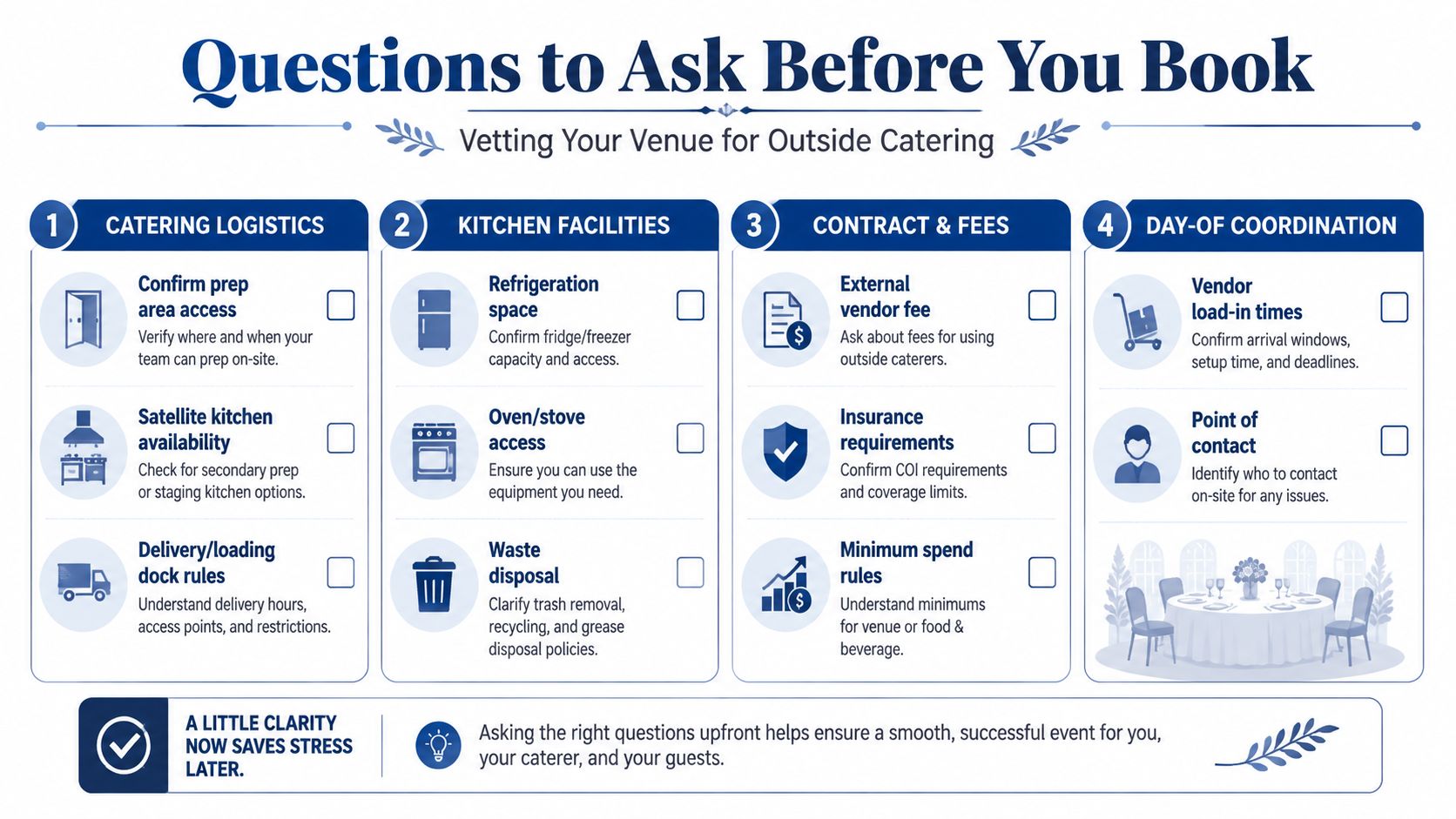
Confirm the prep area, satellite kitchen feasibility, weather backup space, and a named receiving contact before signing. These details determine where food is prepared, how equipment reaches the service area, and who handles delays. The outdoor wedding logistics guidance from Anaviv supports using this checklist during venue review.
Inspect the working areas
Ask the representative to show you the exact rooms where the caterer will prep, plate, stage, and store food. “Kitchen access” might mean a commercial kitchen, a warming area, or an empty room with power. Those options create very different staffing and equipment needs.
Use these questions on site:
- Where does the truck unload? Confirm the route, door dimensions, parking restrictions, and whether deliveries pass through guest areas.
- What can the kitchen support? Ask about refrigeration, sinks, ovens, stovetops, prep tables, outlets, and permitted equipment.
- Where does waste go? Clarify grease, food scraps, cardboard, glass, compost, and end-of-night disposal.
- What happens in bad weather? Identify the indoor meal location, covered prep path, and backup arrangements for power or heating equipment.
- Who receives the vendor? Get a primary contact, a backup contact, and the time each person will be on site.
Put answers into a comparison sheet
Record each answer, who provided it, and whether the contract includes it. A verbal promise about a refrigerator or service entrance is difficult to enforce after the event team changes. For a Central Texas example, review Texas Old Town's preferred vendor information alongside the venue's written operating rules.
Ask how the venue coordinates all vendors during setup, service, and room transitions. If documentation is part of the plan, confirm access, restricted areas, and meal-service boundaries with your Luxury Wedding Content Creator. The question is operational: who may enter each area, when, and without disrupting food preparation or guest movement.
Contract Clauses and Hidden Costs
A venue manager says, “Outside caterers are permitted,” but the agreement says nothing about delivery doors, kitchen access, or cleanup. On event day, those omissions become labor, delays, or extra charges. Outside catering works only when the contract assigns each operational task to a person, vendor, or venue.
The Knot's Real Weddings 2024 Vendor Report found that 44% of couples said catering was included in their venue fee, according to WeddingPro's venue report. Couples still need to confirm what that fee covers and what happens when they bring a separate caterer. Treat access, equipment, staffing, and waste removal as contract terms, not informal assurances.
Clauses worth negotiating
Request written language covering:
- Access and load-in: State arrival time, vehicle parking, delivery routes, door dimensions, early delivery, and late removal fees.
- Kitchen and equipment: List included rooms, appliances, refrigeration, prep tables, outlets, storage, and permitted equipment.
- Staffing: Identify who supplies servers, bartenders, bussers, dishwashers, and cleanup labor.
- Cleanup: Separate table clearing, kitchen cleaning, trash and grease disposal, rental breakdown, and furniture reset.
- Insurance: Specify policy types, additional-insured wording, and the submission deadline.
- Bar service: Confirm alcohol ownership, restrictions, approved bartenders, service hours, ice, glassware, and closing duties.
- Weather changes: State whether an indoor plan exists and who can authorize the change.
The caterer's proposal is only one line in the budget. Add labor, warming equipment, transport, waste handling, linens, refrigeration, insurance, and coordination time. A venue with long access hours and a prep kitchen can reduce rushed setup, but only if those resources are included in writing. Texas Old Town's BYOB wedding venue information is a useful example of why beverage rules and venue access need separate review.
Read venue-package data before negotiating
| Model | Share |
|---|---|
| Space-only rentals | 16% |
| Venues including catering | 41% |
| Venues including alcohol | 37% |
As noted earlier, these figures come from The Knot's 2026 venue study summary. They describe package structures, not the price or workload of your event. Use them to frame questions, not to predict a proposal.
For a specific venue, ask which category its contract resembles and what services sit outside the advertised package. A space-only quote may still require paid kitchen access, mandatory staffing, or venue-approved rentals. A catering package may exclude the cuisine, staffing level, or service format you want. Compare the full operating plan, including every required fee, before deciding that flexibility costs less.
Outside Catering Versus In-House Models
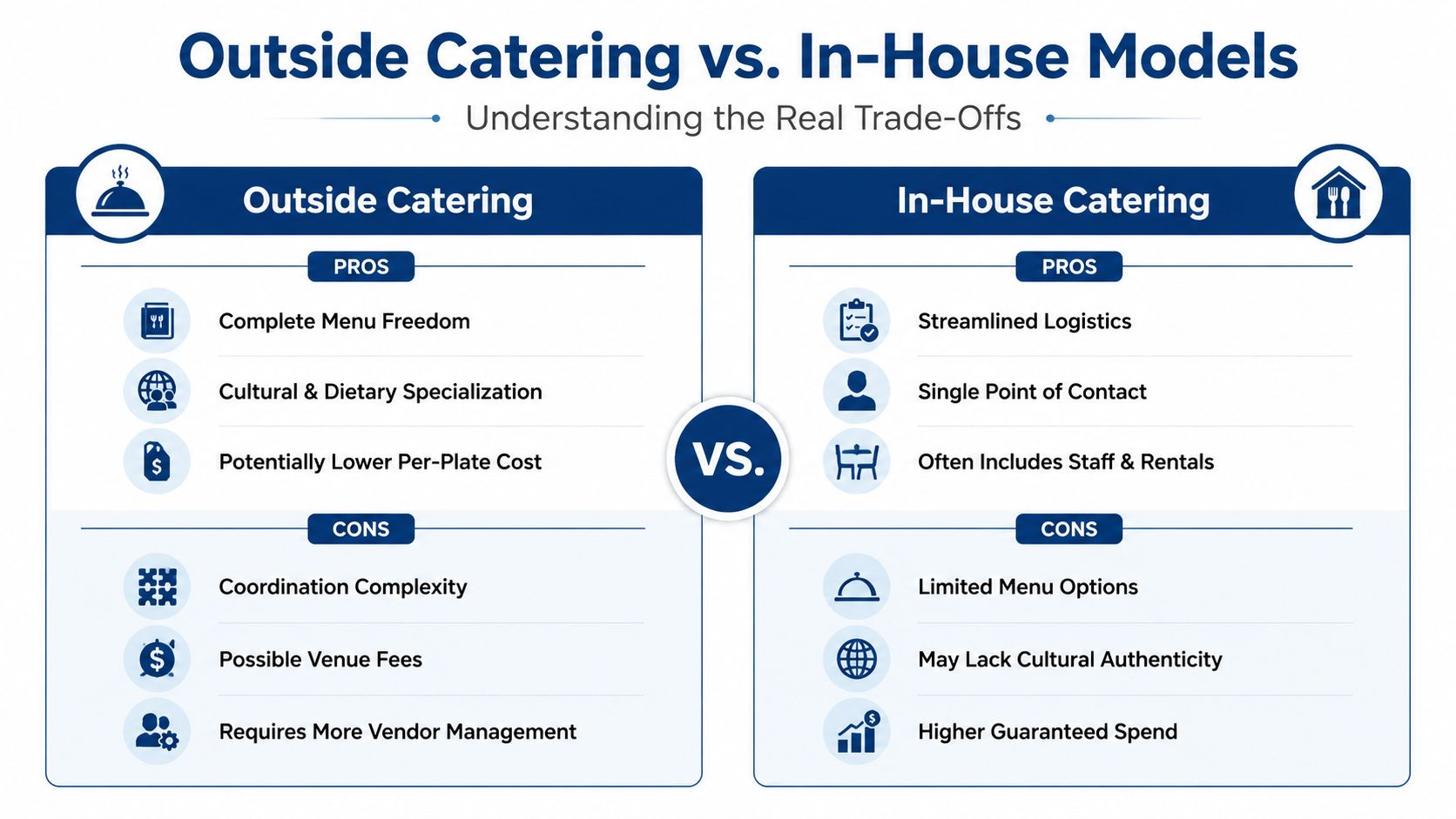
The right choice depends on what you're protecting. Outside catering protects menu authorship, cultural fit, dietary precision, and service style. In-house catering protects simplicity, accountability, and a shorter chain of communication.
The Knot's venue-report summary states that 70% of couples are choosing outdoor settings, according to WeddingPro's consumer insights for wedding venues. Outdoor celebrations often work well with customizable vendor policies, but the setting also makes access, weather, power, and food holding more important.
Choose outside catering when the menu leads
Outside catering makes the most sense when you need a specific regional cuisine, a family recipe, halal or kosher preparation, a plant-forward menu, allergy controls, fusion courses, or interactive stations that the venue's kitchen doesn't normally offer. It also helps when your preferred chef already understands your family and can explain exactly how the meal will be served.
The trade-off is coordination. You'll need to verify the caterer's insurance, staffing, equipment, delivery plan, waste process, and communication with the venue. A custom menu doesn't improve the day if the crew can't reach the prep space or keep food at service temperature.
Choose in-house catering when simplicity leads
In-house service usually gives you one operational contact and a more established process for staffing, rentals, kitchen access, and cleanup. The menu may be less customizable, and the service may not suit every cultural or dietary requirement, but the venue team already knows how that caterer works in the building.
Use a simple decision filter. If the meal is central to the identity of the wedding, outside catering may justify the extra coordination. If the venue's layout is complex, access is restricted, or your planning team is already carrying several moving parts, an in-house model may reduce stress.
Texas Old Town as a Working Example
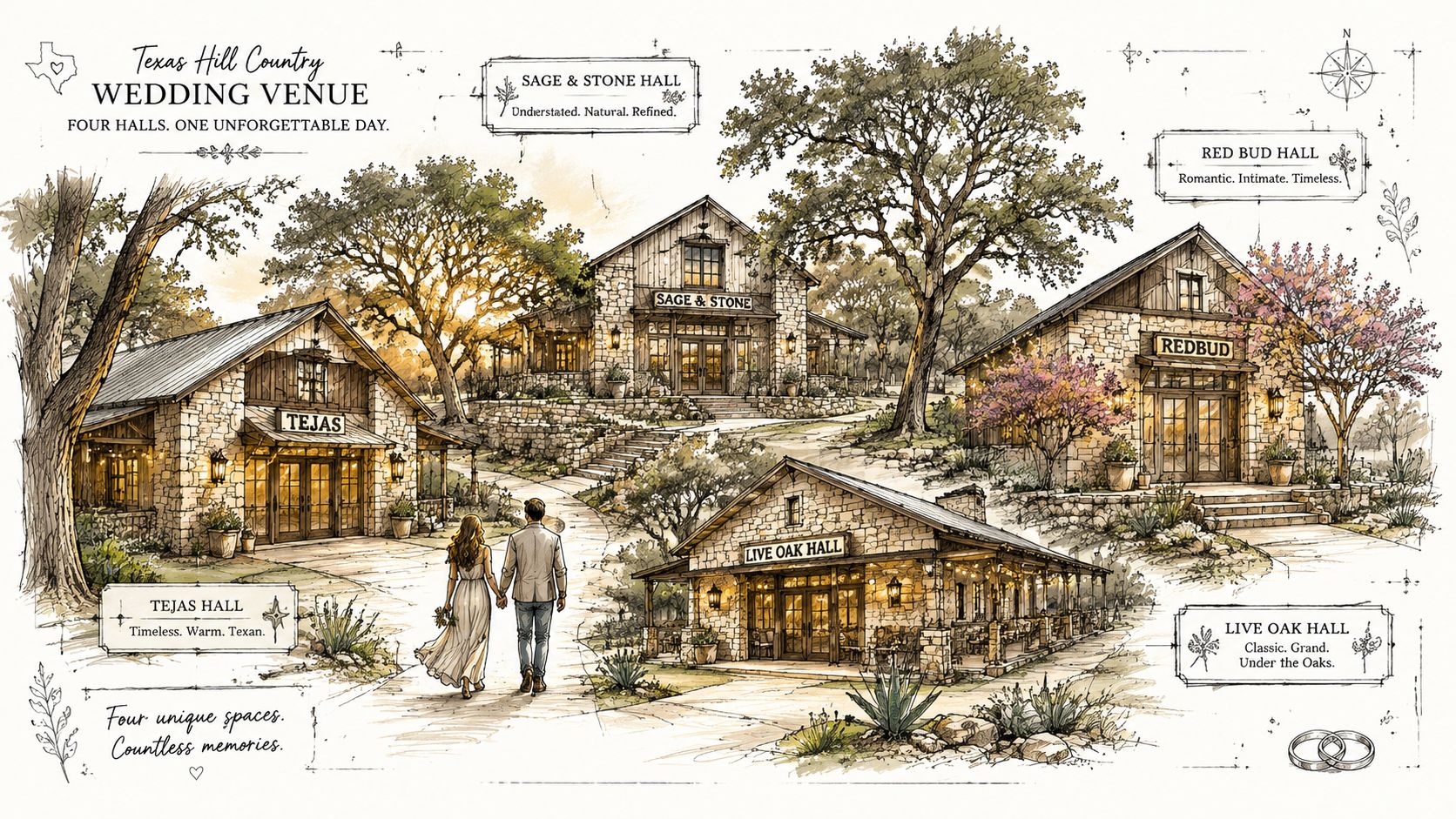
Texas Old Town in Kyle offers a useful Central Texas example because its outside-catering policy connects to practical venue infrastructure. The property has four halls, including Tejas for up to 320 guests, Sage and Stone for up to 300 guests, and Redbud for up to 150 guests, according to the venue's published information. Each hall has a distinct setting and scale, so couples can match the room to the guest experience rather than force every wedding into one layout.
Match access to the caterer's schedule
The venue provides 16-hour exclusive access, from 8:00 a.m. to midnight, which gives the catering crew room to load in, prepare, serve, and clear equipment without compressing every task into a short rental window. Long access doesn't eliminate planning, but it gives the team more workable options when setup involves a satellite kitchen, outdoor ceremony, room flip, or detailed meal service.
Texas Old Town also lists a prep kitchen with a separate service entry and the ability to choose any caterer. Those details answer two of the most important vetting questions: where food preparation happens and how the crew enters without moving through the guest experience.
Connect venue amenities to event-day responsibility
The property includes indoor and outdoor ceremony options, climate-controlled reception halls, indoor and outdoor sound systems, dressing suites, furniture, a built-in beverage bar, an on-site venue manager, and cleanup and furniture breakdown. The venue's BYOB approach still includes structured bar-service requirements, including an approved bartending company, so beverage planning remains a contract issue rather than an assumption.
The 55-acre Hill Country property offers outdoor settings with gardens, water features, and streams, while the halls provide an indoor backup. For an outside caterer, that combination matters because the meal can remain tied to the selected hall even when the ceremony plan changes.
The practical lesson isn't that every flexible venue needs the same features. It's that the policy works best when vendor freedom, prep access, long setup time, management, and cleanup appear together in the operating plan.
Planning Timeline and Final Checklist
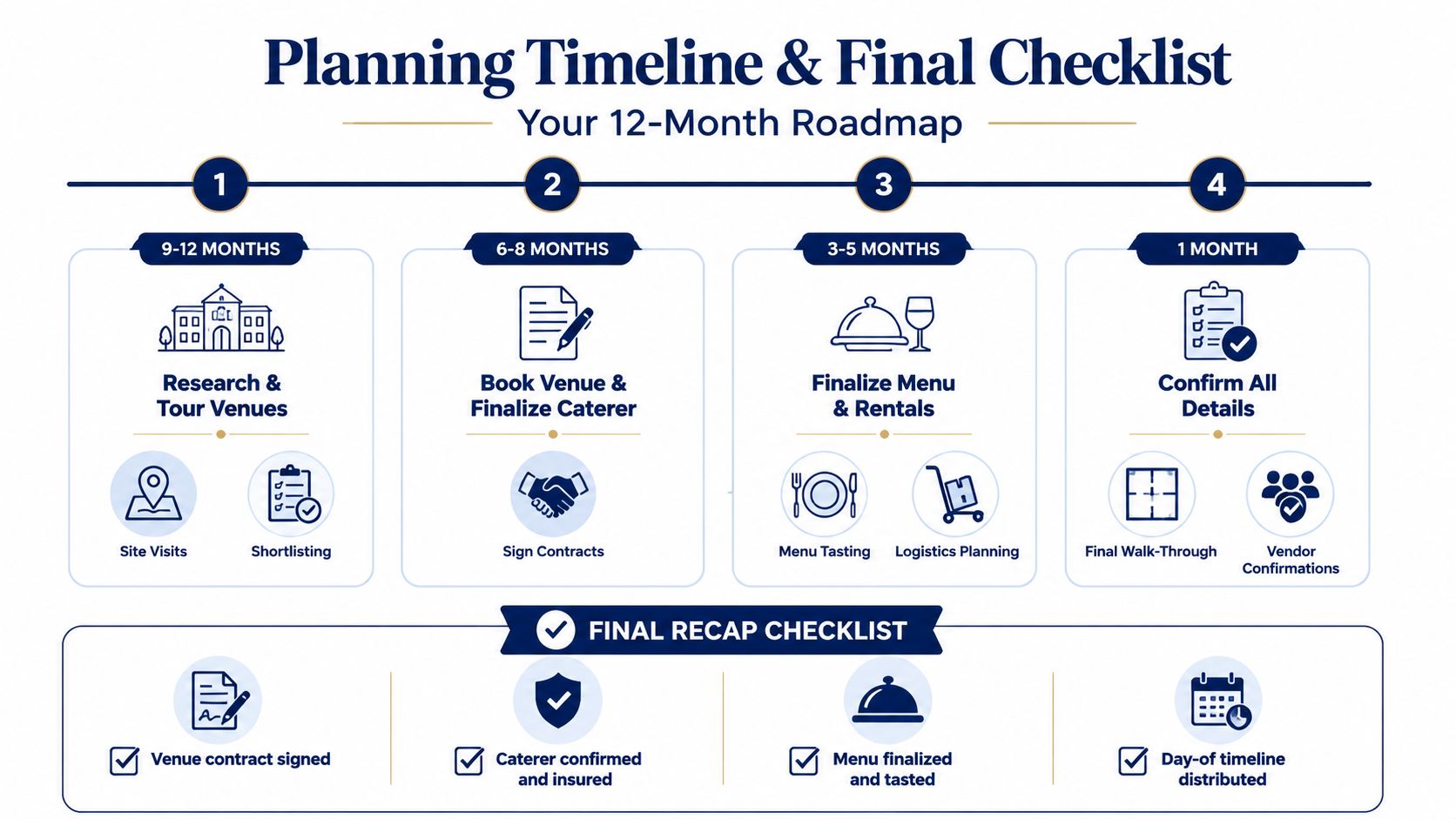
Outside catering needs decisions earlier than couples often expect because the venue and caterer must design one shared production plan. Use the timeline below as a working schedule, then adjust it around your date, guest count, menu complexity, and vendor availability.
Build the plan in stages
Nine to twelve months out, search by catering policy before touring. Shortlist venues, confirm dates, inspect the prep route, and ask for complete proposals. If the venue can't answer basic questions about kitchen access, loading, or weather backup, don't treat the tour as a confirmation of flexibility.
Six to eight months out, book the venue and finalize the caterer. Send both contracts to the person coordinating the wedding, then compare their access windows, insurance requirements, staffing assumptions, equipment lists, and cleanup responsibilities.
Three to five months out, finalize the menu, schedule the tasting, confirm rentals, and map the dining layout. Include allergy procedures, cultural requirements, children's meals, late-night food, beverage service, refrigeration, waste, and the location of every vendor station.
One month out, hold a final walkthrough with the venue, caterer, planner, bar team, and rental company. Confirm the receiving contact, delivery route, load-in time, weather decision process, guest-facing service schedule, emergency contacts, and final invoice responsibilities.
Keep one final document
Your completed checklist should show:
- Venue contract signed: Catering permission, access hours, kitchen use, bar rules, cleanup, and weather terms are written down.
- Caterer confirmed and insured: The caterer's contract, insurance documents, staffing plan, equipment list, and arrival time are complete.
- Menu finalized and tasted: Dietary requirements, service style, rentals, holding equipment, and waste procedures are assigned.
- Day-of timeline distributed: The venue, caterer, bar team, planner, rental company, photographer, and content creator have the same schedule.
If you're still comparing venues, don't ask only whether outside catering is permitted. Ask whether the building, contract, access window, and staff can support it cleanly.
Texas Old Town offers four private halls, indoor and outdoor ceremony options, a prep kitchen with a separate service entry, flexible caterer selection, 16-hour exclusive access, on-site management, and included cleanup. Visit Texas Old Town to tour a Central Texas venue where outside catering is supported by a documented event-day setup.