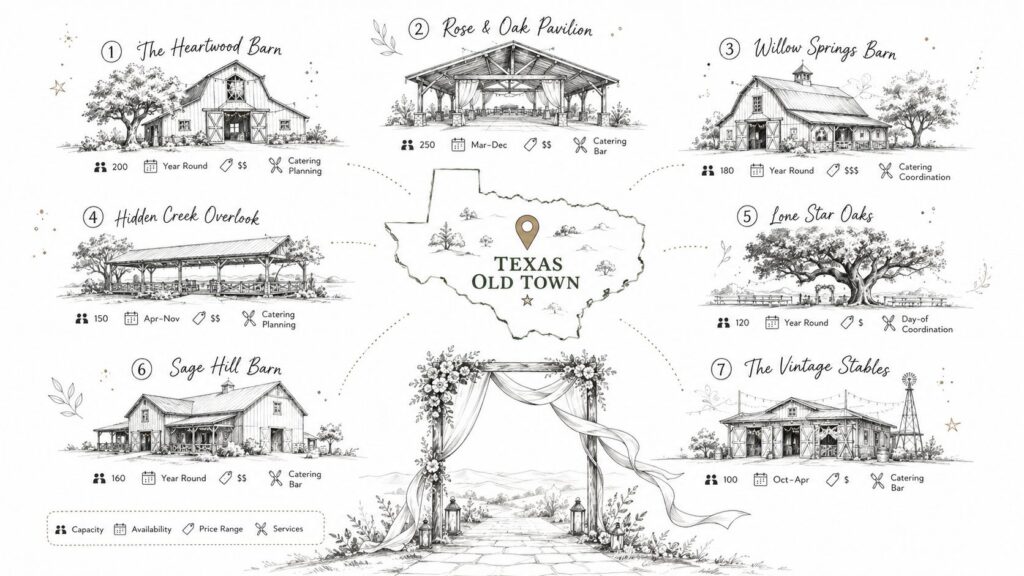
7 Top Outdoor Wedding Venues Austin: Your 2026 Guide
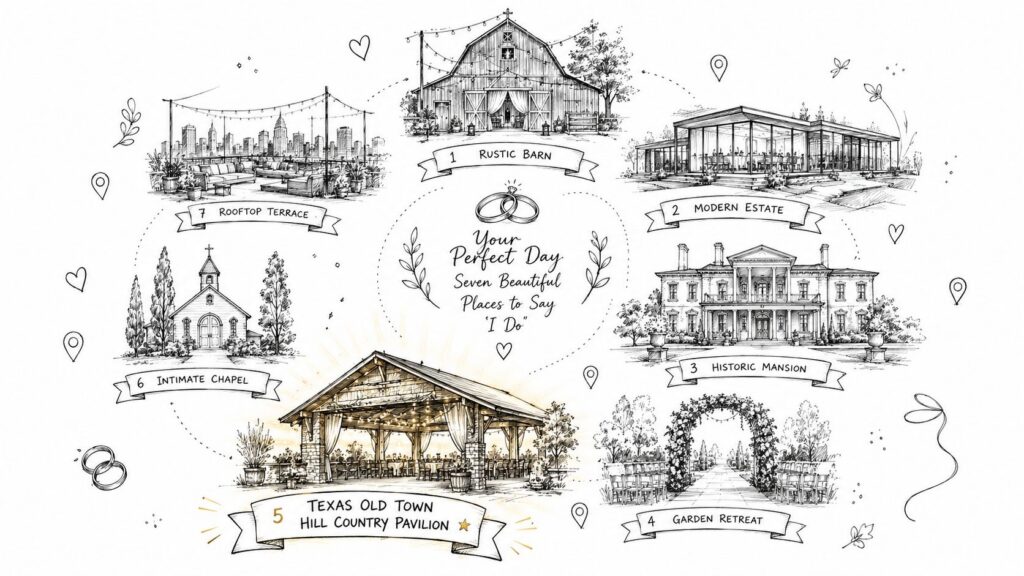
You're probably looking at venue tabs with the same questions open in your head. Will the ceremony site still look good in summer heat, what happens if it storms, how hard is load-in for vendors, and are the “included” items enough to keep rental costs under control? That's the essential work behind choosing among outdoor wedding venues in Austin. Exchanging vows under a Texas sky sounds easy until logistics show up. This guide gets straight to the venues couples shortlist, with practical notes on flow, flexibility, backup plans, and where each one shines in photos. Texas Old Town leads the list because it gives couples unusually strong control over layout, vendor choices, and day-of timing. If you're also thinking about guest comfort and event furniture durability, the same mindset applies when selecting durable NZ dining chairs. Table of Contents 1. Texas Old Town Why Texas Old Town works so well in practice Best fit and real trade-offs 2. The Addison Grove Where it stands out 3. Prospect House Who should book it 4. Pecan Springs Ranch Planning notes that matter here 5. Barr Mansion, Ballroom & Farmstead What it does better than most 6. The Contemporary Austin – Laguna Gloria When this venue makes sense 7. Camp Lucy Best use case 7 Austin Outdoor Wedding Venues Comparison Plan Your Venue Visit and Secure Your Date 1. Texas Old Town If you want one of the most versatile outdoor wedding venues in Austin, Texas Old Town is the one I'd put at the top of the tour list. It sits on a Hill Country campus in Kyle and gives couples four separate private venue options: Tejas, Sage, Stone, and Redbud. That matters because you're not forcing one wedding style into one fixed shell. You can match the hall and ceremony area to the guest count and tone of the day. The biggest operational advantage is time. Bookings include exclusive access from morning through midnight, so hair and makeup, vendor setup, photos, ceremony, dinner, dancing, and breakdown don't feel compressed. That longer access window is one of the clearest quality-of-life upgrades a venue can offer, especially for outdoor events where lighting and weather may shift your timeline. Why Texas Old Town works so well in practice Each venue includes a beautifully arranged outdoor ceremony area plus an indoor climate-controlled reception space, which is exactly what couples need in Central Texas. If the forecast looks rough, you can move indoors without the event feeling like a compromised backup. The built-in indoor and outdoor PA systems, Bluetooth hookup, wireless microphone, dressing suites, prep kitchen, and private parking lot cover the basics that often get treated as add-ons elsewhere. Practical rule: Outdoor beauty is only valuable if the indoor backup feels event-ready, not like a last-minute emergency room. The vendor policy is another strong point. Couples can choose any caterer, which is a major budget and style advantage, and the venue also keeps a preferred vendor list for people who want tested partners. The beverage setup is bring-your-own with an approved bartending company, which gives you more control over bar costs but does require one more coordination step. Best fit and real trade-offs Texas Old Town is especially good for couples who want outdoor ceremony charm without losing indoor security. It also works well for larger family events because the campus offers distinct spaces and practical infrastructure, not just a pretty backdrop. Tejas fits the biggest guest list, Redbud is the most intimate, and the middle options give a lot of flexibility depending on how formal or relaxed you want the room to feel. A few trade-offs are worth noting: Strongest advantage: You get exclusive use, on-site venue management, clean-up, and furniture breakdown, which removes a lot of end-of-night stress. Budget reality: Pricing isn't posted as a flat public rate, so you'll need to contact the team or schedule a tour for exact numbers. Bar planning: The host-provided beverage model gives control, but you need to plan alcohol purchasing and coordinate with an approved bartending company. Timeline limit: Events conclude by midnight, so after-parties need a second location if you want to keep going. For photos, this property gives you a lot to work with. Wide Hill Country views, manicured grounds, water features, and multiple venue personalities support everything from classic ceremony portraits to sunset wedding party shots and quiet golden-hour couple images away from guests. It's one of the few venues in the area where the practical side is just as strong as the visual side. 2. The Addison Grove The Addison Grove has a polished, modern-Hill-Country look that appeals to couples who want nature without a rustic overload. The barn is light-filled and climate-controlled, and the ceremony choices give you several outdoor moods on one property, including an oak grove, pond area, and patio. That variety is useful if your planner is trying to map guest flow without needing a second off-site portrait stop. What I like here is that the rental feels organized. Included furniture inventory reduces the amount of supplemental rental scrambling, and the venue is built for a smooth indoor-outdoor transition rather than a hard split between ceremony and reception. If you're sorting through venue priorities, this guide on how to choose a wedding venue is a useful framework for comparing real logistics, not just aesthetics. Where it stands out The Addison Grove tends to work best for larger weddings that still want an intimate visual feel. It's shuttle-friendly, parking is manageable, and there's an on-site coordinator or site manager presence that helps the day move cleanly. Rain backup is also built into the appeal, which matters more than couples often realize until the week of the wedding. Couples usually regret underestimating weather logistics more than they regret overplanning them. The trade-off is control. The bar is in-house, so this isn't the venue for couples who want a BYOB setup or total beverage flexibility. Rates also vary by date and season, so you'll need a custom estimate rather than