Indoor Climate Control for Event Venues: A Practical Guide
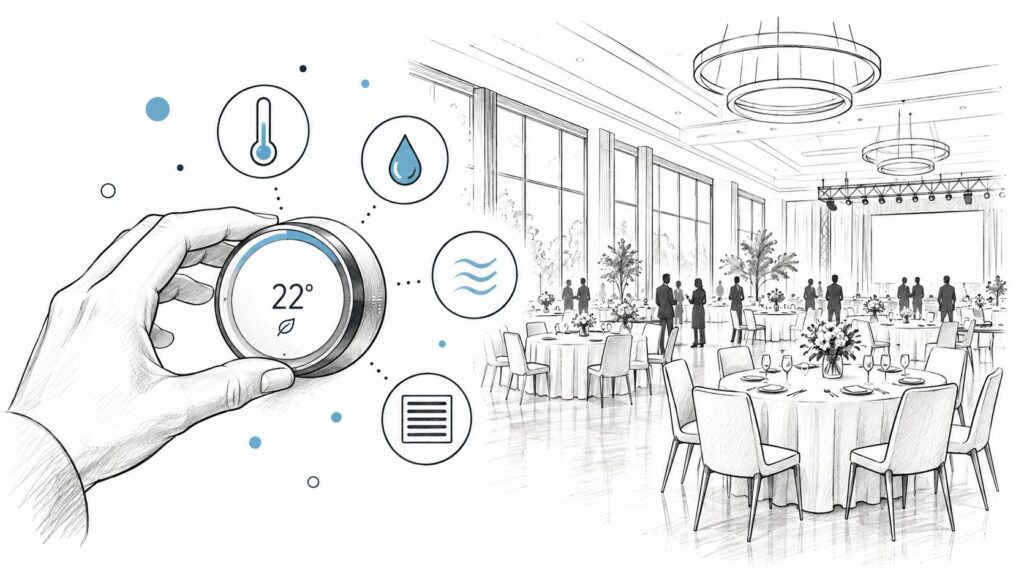
You've chosen the Hill Country setting, booked the caterer, and planned the ceremony. Then someone asks the question that sounds simple but isn't: “Will the hall be comfortable all day?” In Central Texas, the answer depends on far more than whether the thermostat displays a pleasant number. A venue has to manage heat, moisture, air movement, and fresh-air supply as guests move from setup to ceremony, dinner, speeches, and dancing. The right indoor climate control plan starts early, because a room that feels fine at breakfast can feel warm, damp, or stuffy after hours of activity. Table of Contents Why Indoor Climate Control Matters at Your Event Comfort starts before guests arrive The Four Pillars of Indoor Climate Control Temperature is only the starting point How Central Texas Seasons Shape Venue Comfort Match the plan to the season HVAC Features Worth Asking Any Venue About Questions for the venue tour Comparing Climate-Ready Venues Side by Side Compare the whole operating model Common Misconceptions About Venue Cooling Myth one, colder is always better Myth two, one thermostat tells the whole story Myth three, opening doors fixes stuffiness A Venue Tour Checklist for Indoor Comfort Why Indoor Climate Control Matters at Your Event At an event venue in Kyle, the day may begin with a quiet bridal suite, a lightly occupied reception hall, and doors opening to a cool morning. Later, vendors bring in food, lighting, décor, and sound equipment. Guests arrive from an outdoor ceremony or parking area, doors open repeatedly, and the room fills with people who are seated, eating, moving, and dancing at different times. That changing pattern is why indoor climate control isn't just a thermostat setting. It combines temperature, humidity, airflow, and ventilation. The U.S. General Services Administration identifies HVAC as an average of 39% of a facility's energy use, which makes the system important not only for comfort but also for operating efficiency and building management. The GSA's HVAC guidance explains why these systems are among a facility's largest opportunities for controlling energy waste. Comfort starts before guests arrive A venue manager shouldn't wait until the ceremony begins to discover that the main hall has a hot corner near the windows or a draft beside an entrance. The team should review the event timeline, expected occupancy, outdoor conditions, catering schedule, and high-activity periods before guests arrive. That preparation also supports indoor air quality. Ventilation, filtration, moisture control, and sensible occupancy planning all contribute to a more comfortable room, so planners can use this practical resource on improving indoor air quality when discussing broader building conditions with a venue or contractor. The transition between an outdoor ceremony and an indoor reception deserves special attention. A couple may feel comfortable beneath open skies, then enter a hall carrying heat, humidity, or cool evening air on clothing and skin. The reception room needs time to recover, especially when doors remain open for photographs, late arrivals, catering service, or guests moving between spaces. For planners comparing ceremony and reception layouts, an indoor and outdoor event space offers a useful way to think about that transition. Ask how the venue manages both settings, not just whether the reception hall has air conditioning. Practical rule: A comfortable event is planned as a continuous day, not switched on at ceremony time. The Four Pillars of Indoor Climate Control A hall can have a reasonable thermostat reading and still feel unpleasant. Guests experience a combination of environmental conditions, so it helps to think of indoor climate control as a four-legged table. If one leg is weak, the whole experience becomes unstable. Temperature is only the starting point Temperature describes the heat level of the air. It is the number many notice first, but it doesn't tell you whether guests near a sunny window feel warmer than guests in the center of the room. Radiant heat from glass, walls, lighting, and equipment can change how a space feels even when the air temperature appears steady. Humidity is the amount of moisture in the air relative to its capacity to hold moisture. Think of the difference between a damp towel and a dry sponge. In warm, humid Central Texas conditions, a room can feel sticky even when the thermostat looks comfortable. EPA guidance explains that high relative humidity can encourage mold and mildew, while ASHRAE-related guidance uses below 60% relative humidity as a useful upper-control target for limiting mold growth. EPA's HVAC and indoor-air-quality guidance provides useful context for this relationship. Airflow is the movement of air through the room. Gentle circulation can prevent stagnant pockets, but a strong stream aimed at a dinner table or ceremony aisle creates a draft. Fans, supply diffusers, return-air locations, ceiling height, and furniture arrangement all affect this experience. Ventilation and air quality concern freshness and dilution. Fresh outdoor air helps manage pollutants and occupant-generated carbon dioxide, but outdoor air also brings heat and moisture into a Texas building. The system must introduce enough air for the occupied space while conditioning it properly. Comfort isn't one number. It's the interaction of heat, moisture, movement, and freshness. How Central Texas Seasons Shape Venue Comfort Central Texas gives venue operators four different comfort problems across the year. A spring ceremony may begin pleasantly and turn warm by afternoon. A summer reception can challenge dehumidification as guests arrive from the heat. A mild fall evening may need little intervention early, while a winter cold snap can make guests near doors or windows feel chilly even when the center of the hall is comfortable. A 16-hour event day shows why scheduling matters. During morning setup, the hall may need gradual pre-conditioning while vendors move in and doors open. Before an outdoor ceremony, the reception space may remain lightly occupied. During dinner, people sit close together and catering activity adds heat and moisture. Dancing creates a different load again, because active guests generate more heat and may perceive the room as warmer than they did while seated. Match the plan to the season Spring: