You've opened a wedding checklist and found a wall of vendor names: venue, caterer, photographer, florist, rentals, transportation, beauty, cake, entertainment, coordinator, and more. The list makes every hire look equally urgent, but they aren't. The right question isn't what vendors do you need for a wedding. It's which professionals your venue, guest count, format, and priorities require.
A typical couple works with an average of 14 vendors, according to The Knot's wedding vendor resources. That number sounds intimidating until you separate the team into layers. A venue and a few high-impact specialists establish the structure, while other vendors add comfort, style, convenience, and personality.
Table of Contents
- Building Your Core Wedding Vendor Ecosystem
- Essential Vendors You Must Book First
- Secondary and Optional Vendors to Elevate the Day
- How Your Venue Choice Changes Your Vendor List
- Budgeting and Contract Tips for Your Vendor Team
- Timeline for Hiring Your Wedding Vendors
- Finalizing Your Vendor Roster and Next Steps
Building Your Core Wedding Vendor Ecosystem
Your vendor list should function as a system, not a shopping spree. Each provider either creates a hard logistical condition, fulfills a legal or operational requirement, or improves the atmosphere and guest experience. Once you classify vendors that way, the planning process becomes much easier to control.
Start with the venue, because it determines the shape of everything else. Guest capacity, ceremony and reception locations, catering rules, furniture, sound equipment, parking, access hours, cleanup, and preferred-vendor policies all influence who you'll need to hire independently. A venue that includes tables and chairs removes one decision. A venue with in-house catering changes another. A venue without day-of management may make coordination a priority.
The core ecosystem usually includes:
- Venue: Provides the physical setting and establishes the event's operational boundaries.
- Planner or coordinator: Manages decisions before the wedding or directs the day itself.
- Photographer: Preserves the visual record and affects portrait timing, family-photo organization, and lighting needs.
- Caterer and bar team: Handles food, beverage service, staffing, equipment, and service flow.
- DJ or band: Provides music, announcements, sound reinforcement, and reception pacing.
- Officiant: Leads the ceremony and handles the required formalities for your wedding format.
- Florist and décor team: Shapes the visual environment, though these services may be scaled or replaced with venue décor.
- Attire and beauty professionals: Prepare the couple and wedding party for the ceremony and photographs.
The most recent vendor data from The Knot says couples hire the dress-purchase category at 91%, venues at 90%, and photographers at 87%, with an average vendor team of 14 providers. Those figures show a useful pattern: the venue, attire, and photography sit near the center of the planning workflow, while the rest of the team depends more heavily on the wedding's design and format. Preferred-vendor lists such as this one from Texas Old Town can also reduce research time by giving couples a starting point for local providers.
Think in layers, not obligations
The first layer keeps the event possible. The second makes it run smoothly. The third makes it feel like your wedding.
That distinction protects your budget. You may need a caterer if the venue doesn't provide food, but you might not need a separate rental company if the venue supplies furniture. You may need a DJ for announcements and sound, but you might skip a separate emcee. You may want a florist, but a ceremony in a naturally green setting may require less décor than a blank ballroom.
Practical rule: Don't add a vendor until you can name the specific problem they'll solve or the experience they'll improve.
Write your first draft in three columns: required by the venue or law, needed for smooth operations, and chosen for style or convenience. That simple filter prevents a generic checklist from dictating your wedding.
Essential Vendors You Must Book First
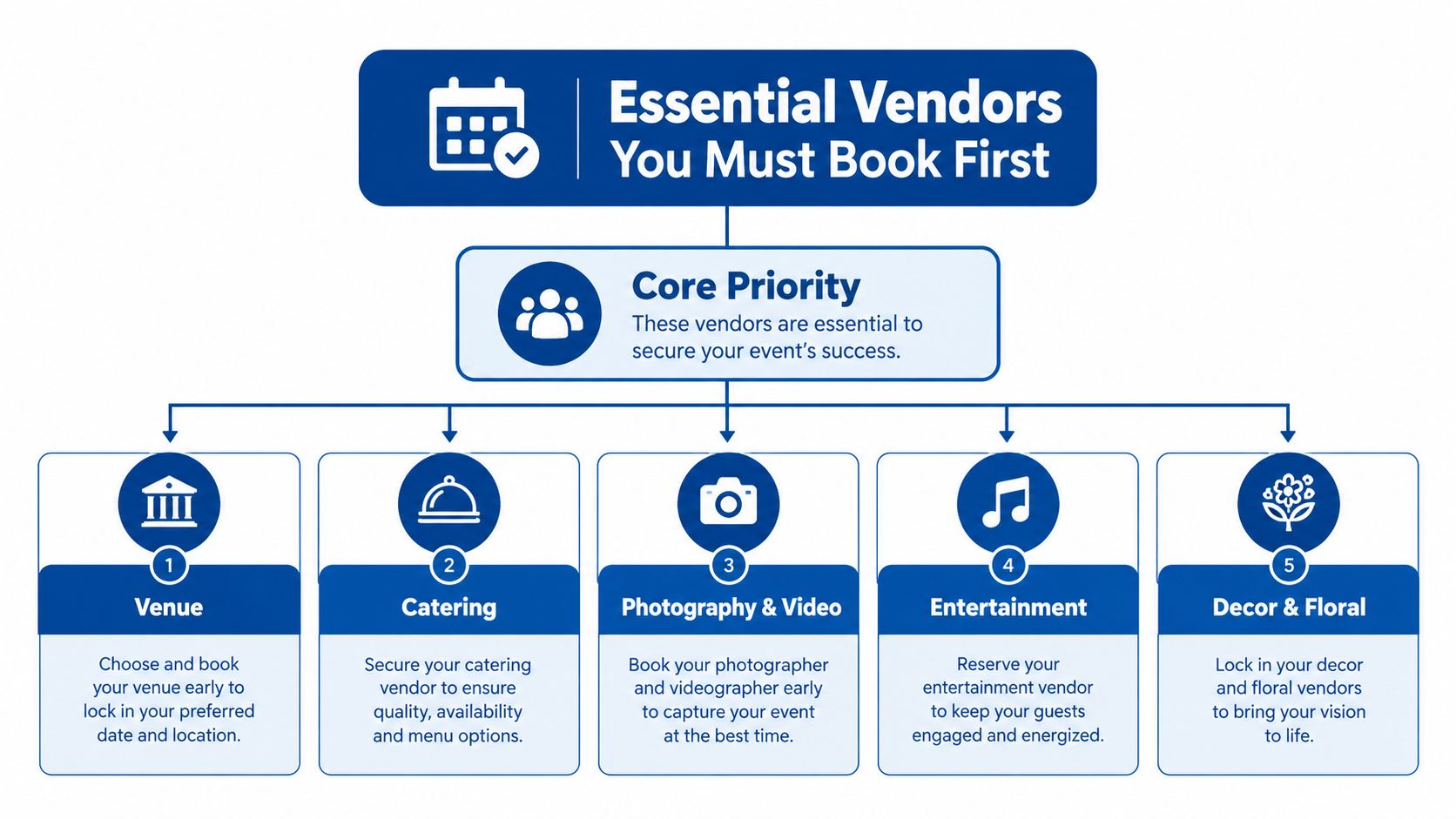
Some vendors control the conditions under which every other provider works. Book those first, because a late decision can force changes to guest count, menus, load-in plans, power requirements, photography timing, or the ceremony schedule.
Start with the venue
The venue is your first serious contract. Confirm the date, capacity, ceremony options, access window, rain plan, catering rules, beverage policy, furniture, sound equipment, dressing rooms, parking, cleanup, and required insurance before you compare other vendors.
Venue policies create downstream decisions. A caterer needs to know whether there's a prep kitchen and service entrance. A band needs to know about electrical access, sound limits, stage dimensions, and load-in routes. Your photographer needs to understand where portraits can happen and how much time the venue allows before guests arrive.
Industry planning guidance places the venue and planner first, followed by photography or videography, catering, and entertainment, because sought-after providers may be reserved 9 to 18 months ahead in major markets. The booking sequence and lead-time guidance are summarized in The Knot's wedding vendor checklist.
Add the people who control the day
A planner or coordinator is the next decision if you don't have strong venue management or family members who can handle logistics without becoming guests responsible for the event. A full-service planner helps with design, sourcing, contracts, and scheduling. A day-of coordinator takes over the operational load closer to the wedding.
Your photographer deserves early attention because the photographer's availability and working style influence the timeline. Ask how they handle family portraits, dark interiors, difficult weather, large wedding parties, and coordination with videography. Don't choose on portfolio style alone. You'll spend much of the day near this person, so communication matters.
Catering is a major operational hire, not just a menu choice. Review staffing, service format, rentals, dietary accommodations, kitchen requirements, bar responsibilities, setup, cleanup, and overtime. Use this practical guide to choosing a wedding caterer to structure your questions before tastings and proposals.
Secure ceremony and reception leadership
Your officiant should understand your ceremony format, legal responsibilities, religious or cultural requirements, and preferred level of personalization. Book early if you want a friend or family member to lead the ceremony, because they'll need time to prepare and confirm eligibility.
Finally, choose the DJ or band before the reception schedule becomes fixed. Entertainment affects announcements, meal pacing, first dances, electrical needs, microphones, speakers, and the energy of the room. A DJ may also serve as emcee, which can eliminate a separate hire. Confirm that role in writing rather than assuming it's included.
Secondary and Optional Vendors to Elevate the Day
Once the core team is secure, you can decide which specialists add enough value to justify another contract. These vendors aren't automatically unnecessary. They're more dependent on your venue, priorities, guest profile, and design choices.
Compare necessity with enhancement
A florist is valuable when flowers carry the visual identity of the celebration, but you can scale the brief from full installations to personal flowers and a few focal arrangements. A cake designer matters if the cake is a central tradition or design feature. If dessert variety matters more than a formal cake, a bakery or dessert provider may be the better fit.
Hair and makeup are practical hires for couples who want consistent styling, a controlled getting-ready schedule, and professional products. They become less essential when the wedding party is small, the couple prefers a simple look, or the venue makes independent preparation easy. Build in a trial when the look is important, and confirm travel, early-start fees, touch-ups, and the number of artists assigned.
The same comparison applies to transportation:
- Hire transportation when guests travel between locations, parking is limited, the venue is remote, or alcohol service makes guest safety a concern.
- Skip a dedicated vehicle when ceremony and reception share one site and guests can arrange reliable transportation independently.
- Consider a shuttle when a hotel block or concentrated guest lodging makes group movement practical.
- Book a getaway car only if the departure experience matters to you, not because a checklist says it should.
Rentals sit in a similar category. You may need them for linens, specialty chairs, tables, lounge furniture, tents, place settings, or décor. You may need nothing beyond the venue's included inventory.
Spend on the experience guests notice
Optional vendors should answer a clear question. Will this improve comfort, solve a real access problem, protect the schedule, or express something meaningful about the couple? If the answer is no, leave it off the roster.
Beauty details can also support the getting-ready experience. If you're coordinating robes for the wedding party, SEYANTE's bridal robe guide offers useful considerations around fabric, fit, photographs, and gifting.
A coordinator remains worthwhile when you're handling several independent providers, even if the venue offers basic management. Compare that role carefully with what the venue provides, using this guide to day-of wedding coordination as a reference point for separating venue oversight from personal timeline management.
How Your Venue Choice Changes Your Vendor List
Your venue contract can remove more vendors than your inspiration board adds. Couples often compare venues by appearance and capacity, then discover later that furniture, cleanup, sound, coordination, or catering restrictions create extra work and extra contracts.
Read the inclusion list as a vendor filter. Ask whether the venue supplies:
- Tables, chairs, bars, linens, or basic furniture
- Ceremony seating and an indoor rain alternative
- Indoor and outdoor sound equipment
- Dressing suites and private restrooms
- Cleanup and furniture breakdown
- On-site management during the event
- A prep kitchen and separate catering access
- Parking and accessible guest routes
- Exclusive access for setup, celebration, and breakdown
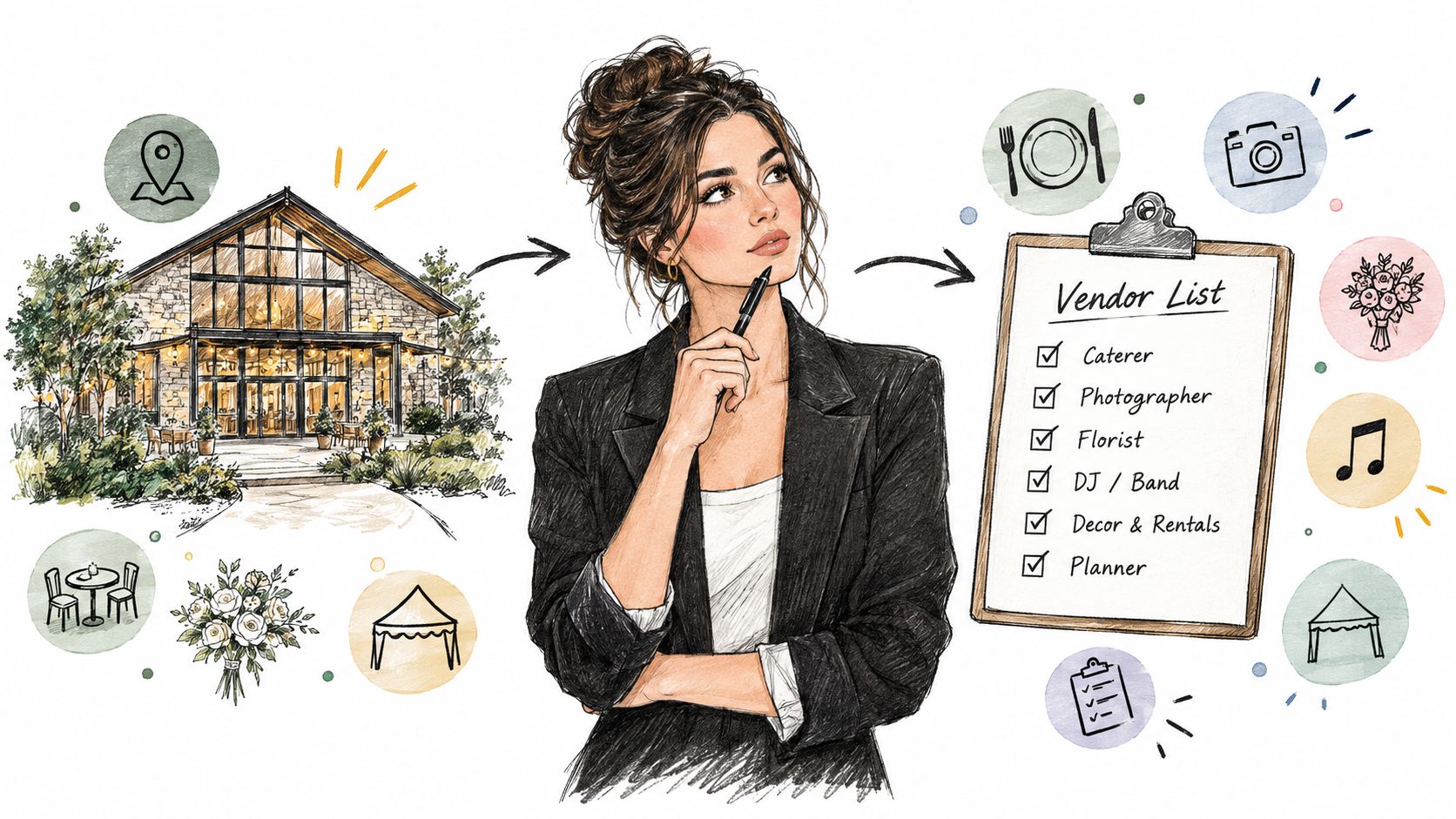
Texas Old Town in Kyle, Texas, is one example of this bundled model. Its four private halls, outdoor ceremony options, tables and chairs, indoor and outdoor PA systems, dressing suites, prep kitchen, on-site venue manager, cleanup, and furniture breakdown can reduce the number of separate providers a couple must coordinate. Couples can choose their caterer, while the venue requires an approved bartending company for beverage service.
Ask what the contract eliminates
The venue's included services matter because separate hires often bring separate delivery windows, insurance requirements, payment schedules, labor minimums, and load-in plans. A venue with furniture removes a rental delivery. Included cleanup removes a post-event staffing question. On-site management may reduce the need for a logistics coordinator, though it won't necessarily replace someone managing your personal timeline and vendor communications.
Venue cost data reinforces why this review matters. The average venue cost is $12,900, average planner cost is $2,100, average rentals are $2,000, and lighting and décor average $1,900, according to The Knot's average wedding cost guide. Those figures shouldn't become your personal budget, but they show why bundled inclusions deserve careful comparison.
A venue coordination checklist such as Fiore's guide to venue coordination can help you identify responsibilities that otherwise get overlooked. Ask every venue to identify what it manages, what it supplies, what it permits, and what remains your responsibility.
Budgeting and Contract Tips for Your Vendor Team
Treat the vendor budget as one connected allocation, not a collection of unrelated purchases. The venue affects rentals and coordination. Catering affects staffing and bar service. Photography affects timeline design. Entertainment affects sound, power, and reception flow.
Available planning guidance commonly assigns the largest budget shares to the venue and rentals, catering and drinks, and photography and videography. The allocation below uses the verified category shares published by The Knot and keeps the remaining categories qualitative rather than inventing a full budget.
| Vendor Category | Average Budget Share | Priority Level |
|---|---|---|
| Venue and rentals | 29% | Foundational |
| Catering and drinks | 24% | Foundational |
| Photography and videography | 10% | High impact |
| Florals, attire, beauty, entertainment, transportation, cake, and other services | Varies by wedding | Based on priorities and venue inclusions |
The source for the listed allocation is The Knot's wedding budget guidance.
Protect the money before you sign
Read every proposal beside the contract. The proposal sells the service. The contract defines what you're really buying.
Check these points before paying a retainer:
- Deliverables: Identify hours, staff, edited images, albums, meals, rentals, setup, breakdown, and revision limits.
- Payment schedule: Confirm the retainer, installment dates, final-payment deadline, taxes, service fees, delivery fees, and overtime rates.
- Cancellation terms: Understand what happens if you cancel, postpone, change venues, or move the date.
- Substitution language: Ask whether the vendor can replace assigned staff and how you'll be notified.
- Venue requirements: Confirm insurance, permits, approved vendors, power access, load-in times, and cleanup duties.
- Contingency planning: Clarify weather plans, equipment failure, illness, delayed delivery, and force-majeure terms.
High-impact vendors deserve several consultations before booking. Expert planning guidance commonly recommends 3 to 5 consultations for major providers such as the venue, photographer, and caterer, because those vendors shape hard constraints and guest-facing results. The recommendation appears in Bespoke Bride's wedding vendor checklist.
Don't compare catering proposals by menu price alone. Compare staffing, equipment, service format, bar responsibilities, dietary coverage, setup, cleanup, and what the venue already supplies.
Timeline for Hiring Your Wedding Vendors
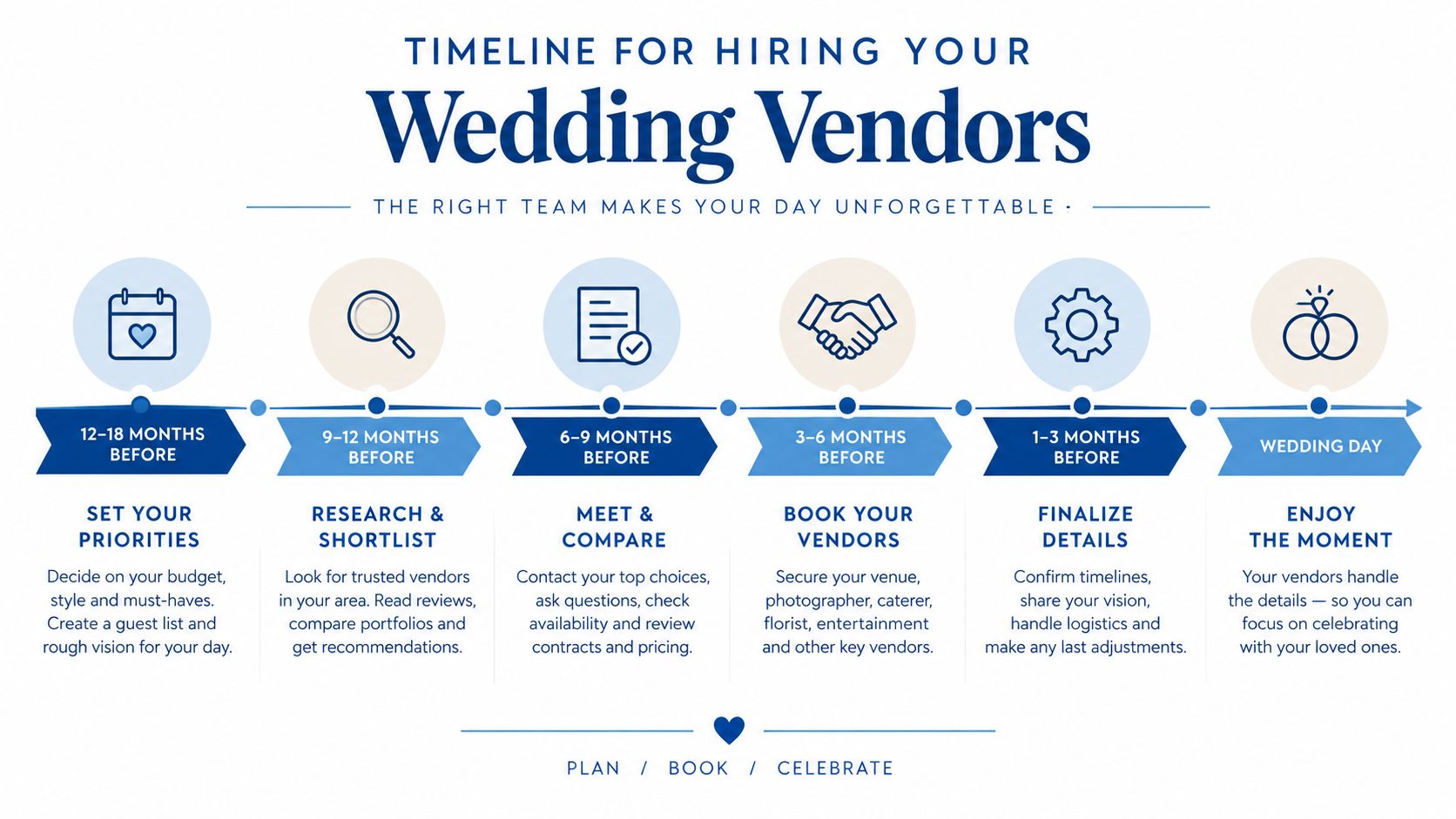
Your booking timeline should follow dependency, not excitement. The venue comes first because its date, rules, access, and inclusions determine the feasibility of every later contract.
Begin with the fixed conditions
At the start, choose your preferred date range, guest-count range, ceremony format, and venue priorities. Once the venue is booked, review its vendor policy and inventory before contacting caterers, rental companies, or bartenders.
The next wave should include the planner or coordinator, photographer, caterer if not included, and DJ or band. These providers affect the event's operations and may have limited availability, particularly for popular dates. If videography matters to you, place it alongside photography rather than treating it as a last-minute add-on.
Then book the officiant, florist, attire, and beauty team. Your attire decision affects alterations and styling. Your florist needs the ceremony and reception layouts. Your beauty team needs the getting-ready location, start time, party size, and photography schedule.
Work backward from the wedding day
Use this practical sequence:
- Venue and planner or coordinator: Establish the date, capacity, rules, access, and management structure.
- Photographer, videographer, caterer, and entertainment: Secure the professionals who shape the timeline, service flow, sound, and guest experience.
- Officiant and attire: Confirm ceremony leadership and allow time for fittings or alterations.
- Florist, beauty, cake, and transportation: Finalize the visual, personal, culinary, and movement details.
- Rentals and specialty services: Fill only the gaps left by the venue and core team.
- Final confirmations: Send the timeline, confirm headcounts, verify deliveries, and distribute contact details.
For a more detailed task sequence that you can adapt to your date, use EventUploader's wedding planning to-do list.
The right timing also protects your decision-making. Booking the venue first prevents you from choosing a caterer who can't work in the kitchen, a band that can't meet sound restrictions, or a rental plan that conflicts with the venue's furniture and access rules.
Finalizing Your Vendor Roster and Next Steps
A complete vendor roster isn't finished when every contract is signed. It's finished when every provider knows what they're doing, where they're going, who has authority, and how their work connects to everyone else's.
Create one master document with the legal names, company names, phone numbers, email addresses, arrival windows, departure responsibilities, balance due, insurance status, and primary contact for each vendor. Include the venue manager and coordinator at the top. Keep the latest version in a shared folder, then give the working team a copy they can access without asking you for it on the wedding day.
Build one operational plan
Your final timeline should show more than ceremony and reception moments. Add vendor arrival, load-in, setup, hair and makeup, photography, meal service, speeches, cake delivery, transportation, teardown, and final departure. Mark which person makes each decision when timing changes.
Confirm these details directly with the relevant vendors:
- Final headcount: Give the caterer, rental team, and venue the approved number and deadline.
- Load-in route: Share parking, service entrances, elevator access, unloading rules, and storage locations.
- Power and sound: Confirm outlets, equipment placement, microphones, speakers, and backup procedures.
- Food and beverage: Verify dietary meals, bar staffing, last call, glassware, ice, and cleanup.
- Photography schedule: Finalize family lists, portrait locations, sunset preferences, and restricted areas.
- Payment and gratuity: Record balances, accepted payment methods, service charges, and who handles envelopes.
- Emergency contacts: Name a planner, coordinator, venue manager, or trusted host instead of directing vendors to you.
Your job is to make decisions before the wedding, not answer operational questions while getting dressed. If three vendors each have a different version of the schedule, you don't have a team yet. You have separate contractors.
The strongest vendor roster is the smallest team that can deliver your priorities without leaving critical work unassigned.
Review the roster against the venue contract one last time. Remove duplicate services, assign every remaining responsibility, and identify any gap that could affect safety, timing, guest comfort, or the ceremony itself. Then stop hiring. More vendors won't automatically create a better wedding. Clear ownership will.
Texas Old Town offers four private halls, indoor and outdoor ceremony options, documented venue amenities, flexible catering, approved bartending requirements, on-site management, and included cleanup and furniture breakdown in Kyle, Texas. Visit Texas Old Town to review the venue details and see which outside vendors your chosen package can eliminate or simplify.