Most couples start shopping for a caterer the same way. They ask who has good food, who fits the date, and who can work within budget. That's a sensible start, but it's rarely enough.
At a flexible-vendor Hill Country venue, the caterer affects far more than dinner. They shape when guests eat, how long lines get, whether cocktail hour feels relaxed, whether grandparents get served smoothly, whether allergy concerns are handled carefully, and whether the room turns over cleanly for dancing instead of stalling out in the middle of the night. A beautiful menu on paper doesn't fix weak staffing, vague contracts, or a team that can't handle your guest count and layout.
I've seen weddings where the food was simple but the service was so steady that the whole night felt polished. I've also seen the opposite. A menu can sound impressive, then struggle once real timing, real guests, and real venue logistics enter the picture. That's usually where couples realize they weren't just hiring someone to cook. They were hiring a production team.
Table of Contents
- Introduction to Choosing a Wedding Caterer With Confidence
- Setting Your Budget and Matching Service Style to Your Wedding
- Vetting Caterers Through Tastings Staffing and Safety Checks
- Decoding the Catering Contract and Uncovering the True Total Cost
- Aligning Your Caterer With Venue Logistics and Guest Experience
- Final Checklist for Booking the Right Caterer With Confidence
Introduction to Choosing a Wedding Caterer With Confidence
A couple sits down after touring venues, opens three catering PDFs, and immediately gets stuck. One quote looks affordable but says very little about staffing. Another has a polished menu but rolls bar, rentals, labor, and service fees into one total. A third has food they loved at a tasting, but they're not sure that team can serve a large guest list on time in a Hill Country setting with indoor and outdoor movement.
That's a normal place to be.
Catering decisions feel personal because food is personal. Guests remember whether they were fed on time, whether the meal felt generous, and whether the service matched the tone of the wedding. But from the venue side, catering is also a logistics decision. It touches load-in, prep space, power use, trash flow, timeline management, bar support, rental coordination, and cleanup.
Practical rule: Choose your caterer the way you'd choose both a chef and an operations manager. You need both.
At flexible-vendor properties, that matters even more. Having options is a real advantage. You're not locked into one kitchen or one package. But freedom creates work. Couples have to compare vendors who may use very different pricing structures, service models, and staffing assumptions. Two proposals can look similar at first glance and lead to very different wedding-day experiences.
A good caterer does more than serve tasty food. They arrive with a plan. They know how many staff they need for your service style. They understand how to serve efficiently without turning the reception into a waiting game. They can explain how they'll handle special meals, where they'll stage service, how they'll reset after dinner, and what their team is responsible for before they leave.
That's the standard to use when deciding how to choose a caterer for a wedding.
What actually separates strong caterers from risky ones
Some differences show up early if you know where to look:
- Clear proposals: Good caterers break out food, labor, rentals, bar, and service charges so you can compare real totals.
- Operational confidence: They can describe setup, service timing, and cleanup without sounding vague.
- Staffing transparency: They tell you who is serving, supervising, bartending, and supporting the kitchen.
- Dietary seriousness: They treat allergies and mixed-diet service as execution issues, not side notes.
If a caterer can only talk about the menu, you still don't know how your wedding will run.
That's why the smartest process starts before you sign anything. Budget first. Then service style. Then tasting, staffing, safety checks, and contract review. That order saves money and avoids the most common surprises.
Setting Your Budget and Matching Service Style to Your Wedding
Catering gets expensive fast because it scales in two directions at once. Guest count pushes the total up, and service style changes the labor behind it.
Recent U.S. wedding market data puts the average wedding catering spend at about $6,927, with a national average of roughly $80 per person, while regional averages can range from $62 to $123 per guest depending on location, according to The Knot's wedding catering cost guide. The same source notes that a 200-guest wedding at $80 per person lands near $16,000 before add-ons, and domestic destination weddings average about $104 per person, which is useful context if travel and logistics are part of your event.
That doesn't mean your wedding should hit those exact numbers. It means you need a working baseline before you start collecting quotes.
Start with a realistic range
Another pricing guide shows buffet service commonly falls around $40 to $70 per person, while plated dinners often run $80 to $150 per person. That same guide says wedding catering and bar can account for about 20% to 30% of the total wedding budget. A couple spending $30,000 overall might reasonably expect $6,000 to $9,000 to go toward catering and beverages before upgrades, according to Paperlust's wedding catering pricing overview.
Those numbers are useful for one reason. They help you spot outliers.
If one vendor comes in far below everyone else, ask what's missing. If one comes in far above everyone else, ask whether the menu, staffing model, rentals, or bar structure justify the difference.
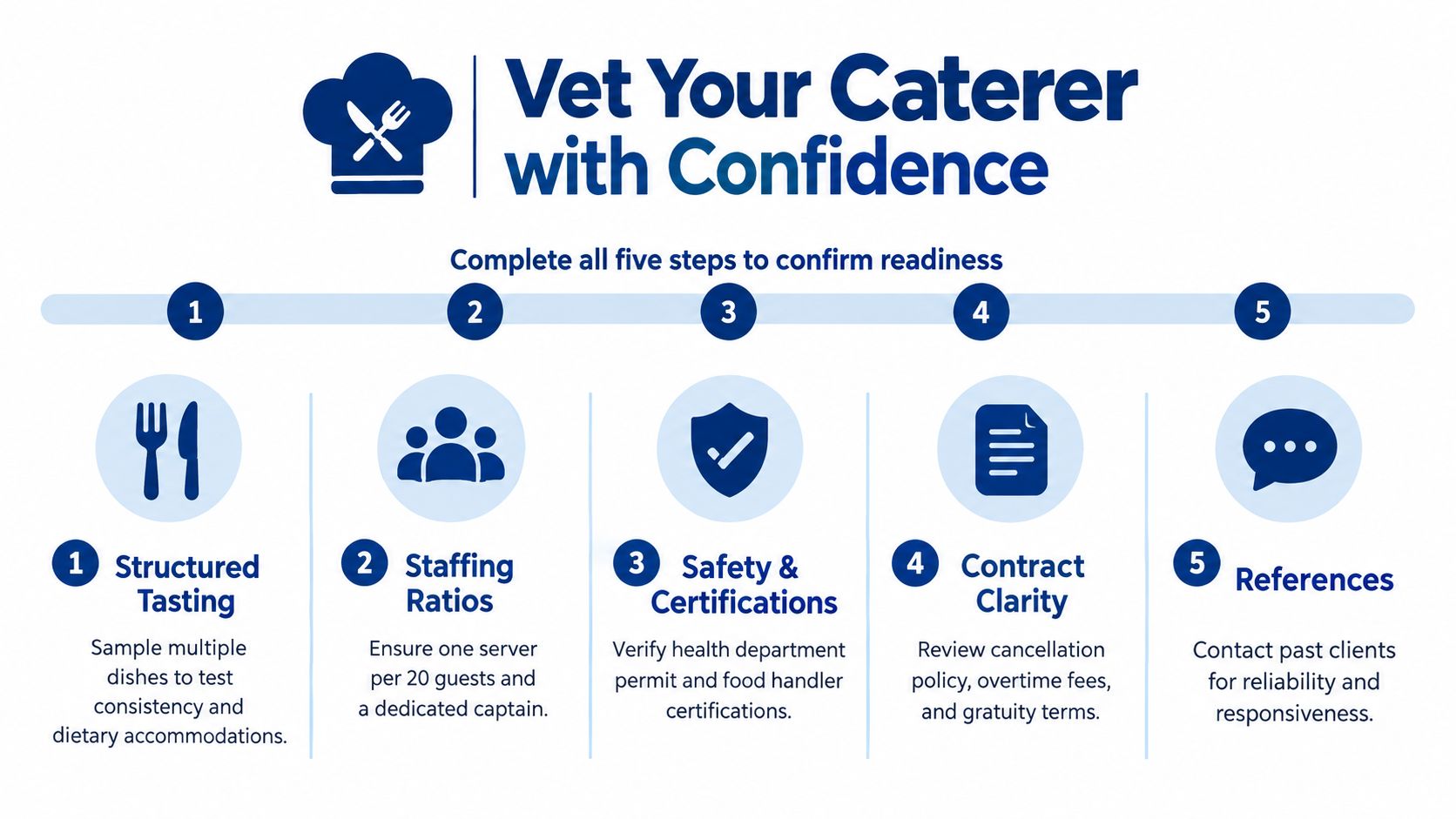
Wedding Catering Service Styles Compared
| Service Style | Typical Per-Person Range | Best For |
|---|---|---|
| Buffet | $40 to $70 | Larger guest counts, relaxed flow, couples who want menu variety |
| Plated dinner | $80 to $150 | Formal receptions, structured timelines, polished table service |
| Family-style | Varies qualitatively | Guests who value shared-table energy and don't mind more table handling |
| Stations | Varies qualitatively | Social cocktail-style receptions and mixed menus |
| Drop-off catering | Varies qualitatively | Casual events where the host is comfortable handling more service responsibility |
Match the format to the room, not just the menu
Couples often oversimplify the decision. Buffet isn't automatically cheaper in practice if the layout creates long lines or if the caterer needs extra attendants to keep stations full and tidy. Plated service sounds formal, but it also depends on enough trained servers and a realistic kitchen plan. Stations can be lively, but they need space and traffic management.
At a flexible-vendor venue, ask yourself:
- How many guests will move at once? A service style that works for an intimate room can bog down a larger reception.
- How much time do you want devoted to dinner? A long dinner service can compress toasts, dancing, and photography.
- How much labor does this style require? Some formats are staff-heavy even when the food cost looks reasonable.
- Does the layout support it? Indoor-outdoor weddings, multiple gathering zones, and bar placement all affect guest flow.
One practical shortcut is to start with a shortlist of caterers who already understand your venue type. A curated preferred vendor list can help narrow the field to teams that are more likely to understand local logistics, load-in patterns, and guest flow in a Hill Country setting.
Ask for itemized proposals every time
This is one of the simplest ways to avoid confusion later.
Request separate line items for:
- Food and menu pricing
- Service staff
- Rentals and disposables
- Bar service
- Delivery or travel
- Taxes, gratuity, and service charges
A catering quote is only comparable when you can see what's inside it.
Without that breakdown, it's easy to think you're comparing apples to apples when one vendor included staffing and another did not. That's how couples end up “saving” money on paper, then paying more once all the missing pieces show up.
Vetting Caterers Through Tastings Staffing and Safety Checks
Dinner service falls behind by 20 minutes, the gluten-free plate goes to the wrong guest, and the bar line backs up just as toasts are supposed to start. I have seen versions of that night more than once, and the problem usually started long before the wedding. The caterer looked good on paper, but nobody pressed on staffing, service flow, or how the team would work inside a real venue schedule.
A tasting helps, but execution matters more than one strong bite.
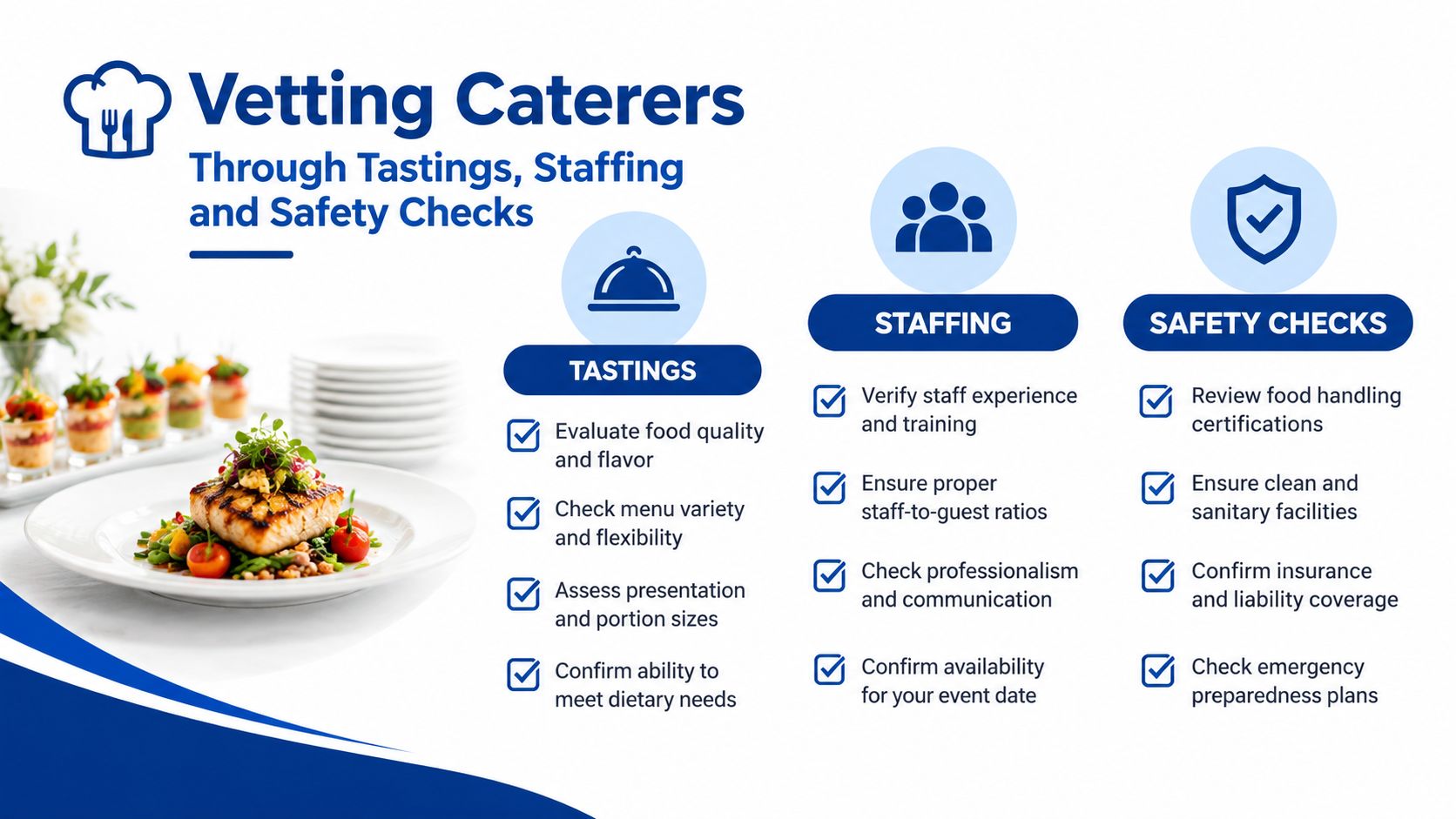
Run a tasting like an operations review
Couples often leave a tasting talking about the brisket, the pasta, or the late-night snack. Fair enough. What matters on booking day is whether the caterer can reproduce that quality for a full guest count, on a fixed timeline, with special meals handled correctly.
Ask direct questions while you taste. Which dishes hold best during a long service window? What gets plated in the kitchen versus finished on site? If the venue has indoor and outdoor spaces, how does the food travel between them without losing temperature or texture?
The answers tell you how the caterer thinks under real event conditions.
Watch for a few patterns:
- Balance across the full menu: Entrées, sides, salads, and vegetarian meals should feel equally considered.
- Food that holds well: Crispy, creamy, or delicate items may taste great in a sample and struggle during live service.
- Clear dietary process: The team should explain allergy handling, labeling, and delivery without hesitation.
- Straight answers: Specific process beats polished sales language every time.
A good tasting also shows restraint. Experienced caterers will tell you when a menu choice is risky for your guest count, service style, or weather. That kind of pushback is useful.
Staffing reveals whether the service plan will hold up
Food quality gets the attention. Staffing is what guests feel.
At a flexible-vendor venue, this matters even more because the caterer may be working in an unfamiliar kitchen setup, staging area, or load-in path. Ask for the staffing plan in writing. Not just a total headcount. Ask who is coming and what each role covers: captain, servers, buffet attendants, bartenders, kitchen staff, dish crew.
Industry guidance from Café Services on evaluating wedding caterers recommends reviewing staffing levels, service responsibilities, and experience with events similar to yours before you book. That is the right approach. A plated dinner, stations reception, and buffet each need different labor to stay on schedule.
Use these questions to pressure-test the proposal:
- Who is leading the team on site?
- How many servers are assigned to dinner service?
- Who resets tables, clears plates, refills water, and handles trash?
- If you have multiple bars or service areas, how is staff divided?
- What happens if service runs long or a staff member calls out?
If the answer is vague, the plan is vague.
I would also ask whether the caterer has worked events with your size, format, and pacing before. A company can be excellent at a 75-person indoor dinner and still struggle with 200 guests spread across a ceremony lawn, cocktail area, and reception hall.
Safety checks should be plain, specific, and easy to explain
Special meals are not a side note anymore. They are part of the core service plan.
Ask how allergen-sensitive meals are prepped, stored, labeled, and handed off. Ask who verifies that the vegan, nut-free, or gluten-aware plate reaches the correct guest. Ask what the team does to reduce cross-contact during prep and service. Equally Wed's caterer selection checklist covers these interview points well, especially for couples managing a mixed-diet guest list.
Strong caterers answer in plain language. Weak caterers stay general.
Here is a simple filter:
| What You're Checking | Strong Sign | Weak Sign |
|---|---|---|
| Tasting | Menu tastes consistent, dishes fit service conditions, substitutions are thoughtful | One standout item, little detail on execution |
| Staffing | Roles are named, captain is identified, labor matches service style | Single staff total, no role breakdown |
| Safety | Labeling process, cross-contact precautions, special meal handoff are clear | “We can do that” without explanation |
| Capacity | Experience with similar guest count, layout, and timing | No examples that match your event |
One last check matters at Hill Country properties. Ask how the caterer handles heat, distance, and transitions between spaces. A team that cooks well but cannot move food cleanly from prep area to reception floor will create delays your guests can feel.
Decoding the Catering Contract and Uncovering the True Total Cost
The proposal looks fine until you read the last page. That's where catering budgets usually change.
A practical contract review sequence is simple. Confirm the event date, time, and location first. Then verify the full menu and dietary accommodations. Then lock the guaranteed headcount and final-count deadline. After that, total every fee including service charge, gratuity, tax, delivery, and overtime, as recommended in this catering contract review guide.
That order matters because it keeps the essentials from getting buried under pretty formatting.
Read the quote as an operations document
Many couples read a proposal as if it's mainly a menu agreement. It isn't. It's the service blueprint and the billing blueprint.
Start with the lines that define what is being delivered:
| Line Item | What to Confirm | Why It Matters |
|---|---|---|
| Event date and venue | Correct date, venue name, access time, service window | Prevents timing and location disputes |
| Guest count terms | Minimums, guaranteed count, final count deadline | Affects ordering, staffing, and billing |
| Menu details | Exact dishes, substitutions, dietary meals | Avoids day-of confusion |
| Staffing | Number of servers, bartenders, kitchen staff, captain | Determines service speed and coverage |
| Rentals and equipment | What's included versus rented separately | Changes total cost quickly |
| Bar service | What staff provide, what host provides | Prevents responsibility gaps |
| Service charge and gratuity | Whether both apply, and how they're calculated | Avoids surprise increases |
| Tax | Whether tax is included or added later | Affects final comparison |
| Delivery and travel | Mileage, travel labor, setup transport | Important for destination-style logistics |
| Overtime | Hourly rate, trigger point, approval process | Protects you if the timeline runs long |
| Cleanup | What staff remove, bus, break down, and haul out | Keeps the venue handoff smooth |
Expect the first number to rise
One industry guide notes that service charge, staffing, rentals, delivery, overtime, and dietary surcharges can increase an initial catering quote by 20% to 30%, which is why buyers should verify those extras up front, according to Pro Catering's guide to finding a reliable catering company.
That's the reason itemization matters so much. A low opening quote can become an expensive contract once labor, equipment, and timing are fully priced.
Don't ask, “What's your price per person?” Ask, “What will we actually pay when the event is over?”
Review the legal language with the same care
The fee section gets the most attention, but the protective clauses matter just as much.
Check these closely:
- Cancellation terms: Know what happens if your plans change.
- Force majeure language: Make sure major disruptions are addressed clearly.
- Insurance and permits: Confirm the caterer carries the required coverage and licenses.
- Indemnity terms: Understand who is responsible if something goes wrong.
- Change process: Initial every change and keep the final signed version.
If you want a benchmark for broader venue budgeting, a published wedding package pricing page can help you place catering costs inside the bigger event picture. That doesn't replace contract review, but it does make it easier to spot when one line item is swallowing too much of the total celebration budget.
Aligning Your Caterer With Venue Logistics and Guest Experience
A caterer can serve great food at a tasting and still struggle on a wedding day.
I see it happen when a team is chosen for menu appeal without enough attention to how they work inside the property. At a flexible-vendor Hill Country venue, catering is part food service and part logistics. Parking, load-in path, kitchen access, ceremony-to-reception distance, bar timing, bussing, and cleanup all shape what guests experience at the table.
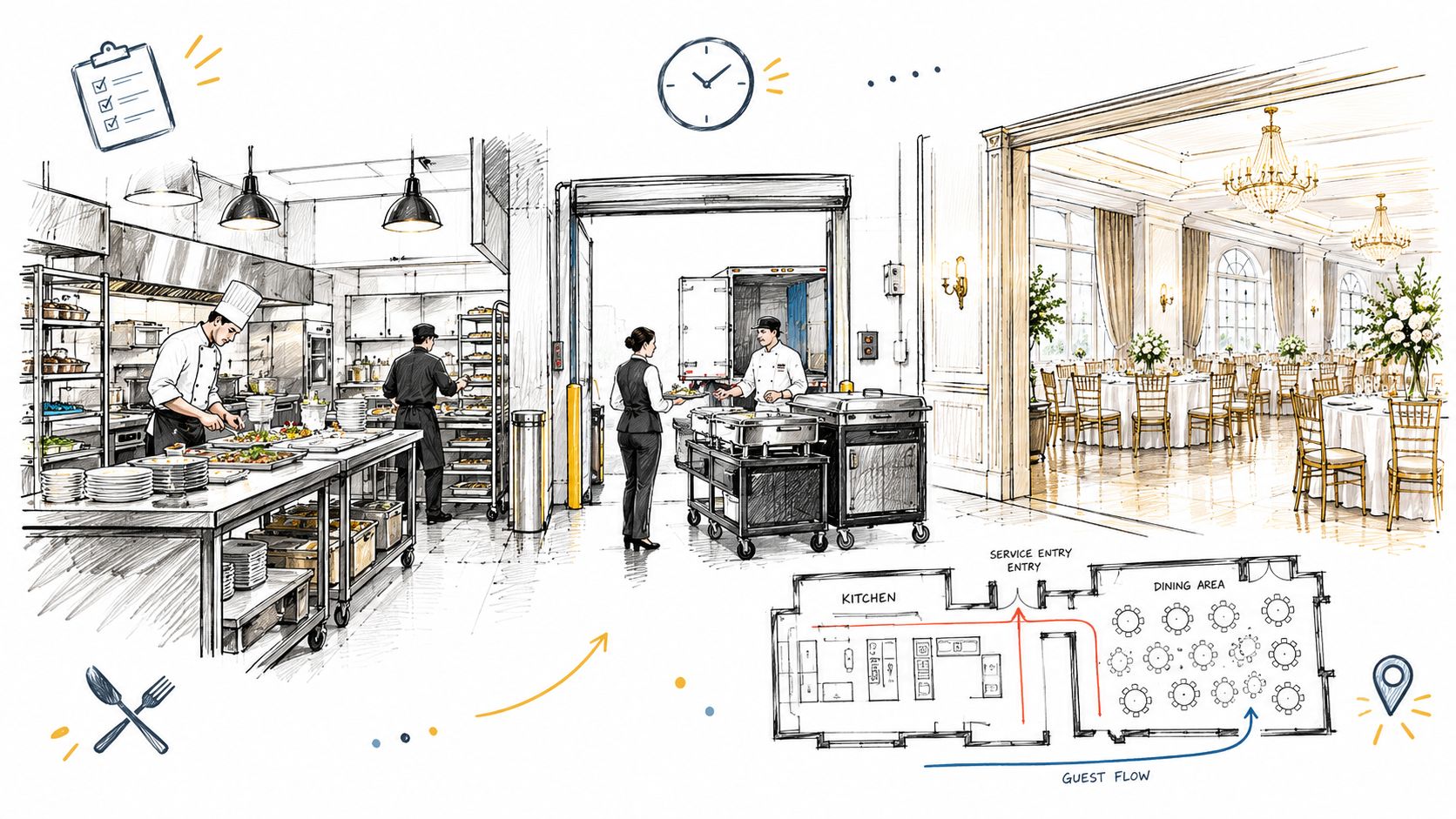
Logistics shape guest experience more than couples expect
At venues with multiple event spaces, the strongest caterers think in routes and timing, not just courses. They know how long it takes to unload, where hot food can be held, how many staff are needed to cover cocktail hour and dinner at the same time, and what changes if weather pushes part of the event indoors.
That matters because service style and staffing ratio show up in the guest experience fast. A buffet with too few attendants backs up. Plated service with a long walk from prep space needs more runners. Family-style service can feel warm and generous, but it also needs table space, steady replenishment, and a team that can clear efficiently without interrupting toasts.
Ask venue-specific questions before you book:
- How would you staff this property based on our guest count and service style?
- How much time do you need for load-in, setup, and kitchen prep on site?
- What equipment are you bringing, and what do you expect the venue to provide?
- Who handles water service, bussing, trash, and end-of-night kitchen reset?
- If rain changes the floor plan or timeline, who on your team adjusts service in real time?
Clear answers usually signal real event-day experience. Vague answers usually mean the venue team will spend the night solving problems that should have been handled by the caterer.
Bar timing, floor plan, and cleanup affect the meal
Catering rarely operates in isolation. If the bar opens late, guests hit the buffet all at once. If cocktail tables are placed too far from passed appetizers, food gets missed. If stations are spread across the room without enough signage or attendants, guests cluster in one spot while another line sits empty.
Floor plan discipline matters too. I have seen caterers design attractive station service on paper, then lose dance floor space, block guest circulation, or crowd a cake table once rentals are in place. A good caterer can walk the room and adjust. A better one catches the issue before the layout is finalized.
Cleanup deserves the same attention. Couples remember the party. Venue teams remember whether the caterer left the prep area reset, removed trash correctly, and cleared on schedule without dragging breakdown into the end of the rental window.
One of the best planning exercises is simple. Ask the caterer to talk through the day from arrival to exit at your actual venue. Listen for specifics.
Smooth vendor handoffs behind the scenes usually create a calmer, more enjoyable wedding for guests and for the couple.
For menu inspiration before tastings, collections of unforgettable party food recipes can help couples pinpoint flavors, presentation ideas, and service formats they like.
Venue policy affects this decision too. If you want freedom to bring in your own team, review venues that allow outside catering and then ask how those properties support load-in, prep, service, and cleanup in practice. That is where flexibility either works well or creates friction.
Final Checklist for Booking the Right Caterer With Confidence
The right caterer usually becomes obvious once you stop judging the decision by food alone.
If one team has a slightly flashier menu but can't explain staffing, allergy handling, venue workflow, or contract details, that isn't a safer choice. If another team serves food you enjoy, gives you a clear proposal, states exactly who will work the event, and understands the property logistics, that's usually the better booking.
The pre-booking test that actually works
Use this short final screen before you sign:
- Budget fit: The quote matches your guest count, service style, and overall event priorities without hiding major add-ons.
- Menu confidence: You liked the tasting, and the caterer treated special meals like a real service plan.
- Staffing proof: They gave real numbers, named responsibilities, and showed they can support your timeline.
- Safety readiness: Their allergy, labeling, and prep process sounded specific, not improvised.
- Contract clarity: Dates, menu, fees, overtime, cleanup, insurance, and cancellation terms are all explicit.
- Venue fit: They understand how your venue operates and have a workable load-in, setup, and cleanup plan.
- References and documents: They can provide proof of insurance and references for events similar in size and service style.
What I'd trust and what I wouldn't
I'd trust documented capacity over enthusiasm. I'd trust itemized proposals over round numbers. I'd trust a caterer who answers practical questions cleanly over one who keeps returning to how “amazing” the food is.
I would also book earlier than you think, especially for strong Central Texas dates. The caterers who run organized operations tend to fill their calendars with the same speed as the venues that host busy weekends.
Good catering feels easy to guests because a lot of careful decisions were made before the wedding day.
That's the heart of how to choose a caterer. You're not just choosing dinner. You're choosing the team that will carry a major part of the guest experience from first drink to final cleanup. Pick the team that can prove it, not just promise it.
If you want a venue where this process gets easier, Texas Old Town gives couples a flexible-vendor setup, practical event logistics, and on-site support that helps caterers work smoothly from load-in through cleanup. You can explore the property, capacities, and planning details, then schedule a visit at Texas Old Town.